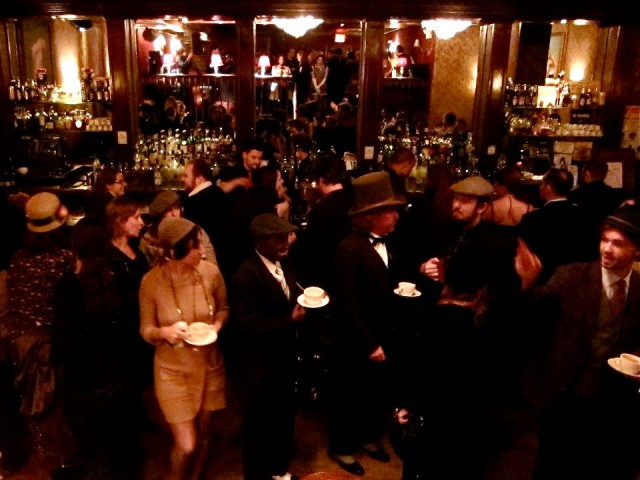
Immersive production re-creates shady tale in 1930s New York City (photo © Margee Challa, 2012)
102 Norfolk St.
First monthly Saturday and Monday, September 7 – December 14, $55 general admission, $145 VIP
800-838-3006
www.speakeasydollhouse.com
New York has gone crazy for immersive theatrical productions recently, as the audience interacts with the actors in various ways in such hit shows as Sleep No More at the McKittrick Hotel and Natasha, Pierre & the Great Comet of 1812 at the temporary Klub Kazino. Things go even further in Speakeasy Dollhouse, a flashy, lurid tale of murder and deception taking place in a series of rooms in an underground location on Norfolk St. Once you purchase your tickets — which just jumped from $30/$55 to $55/$145 — you start receiving e-mails from Cynthia von Buhler detailing the real-life murder of her grandfather Frank Spano and its cover-up, which reached all the way inside Tammany Hall. “My grandmother died in the 1980s and I never knew my grandfather,” one von Buhler missive explains. “He was mysteriously killed in 1935. He died on the very same day my mother was born. She told us that he was shot and nobody knew why. It was a secret. They boarded up the club and bakery after that.” Speakeasy Dollhouse re-creates that time period, acting out the events that led to the shooting, based on both facts and supposition, as von Buhler seeks to uncover the truth. Attendees are given a password and asked to dress in Prohibition-era costumes, which is a good idea, as the vast majority of people do so. Upon entering the nightclub, each person receives a piece of paper from the Fortune Teller (Jordana Rollerdazzler) giving them a specific role to carry out. For the next few hours, the cast, crew, and audience mingle as they travel from room to room and various plot elements are revealed, from an autopsy and a secret lovers tryst to back-room machinations and a card game.
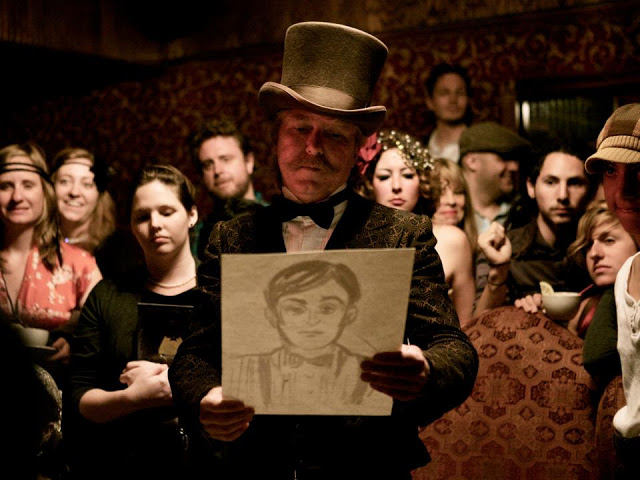
Evidence is presented as SPEAKEASY DOLLHOUSE seeks to find answers to real-life murder (photo © Margee Challa, 2012)
The story revolves around the killing of club owner Frank Spano (Russell Farhang) by barber John Guerrieri (Silent James), which soon involves such figures as Detective Thomas Crane (Justin Moore), mobster Dutch Schultz (Travis Moore), Tammany Hall party boss Jimmy Hines (Charley Layton), and Magistrate Hulon Capshaw (Scott Southard). To further the atmosphere, there are a series of live performances by burlesque singers and dancers and the Howard Fishman Quartet. Meanwhile, a cash bar serves drinks and a bakery offers cannoli and other pastries. Originally planned as a one-time-only presentation, Speakeasy Dollhouse is now playing the first Saturday and Monday of each month through December, with each show centering on a different theme investigating the possible motive behind the killing; on October 26, there will be a special Halloween performance only for people who have previously attended a show, complete with zombies, werewolves, vampires, and unicorns. The production captures the feel of 1930s New York City, but the allowance of photography detracts a bit from the overall experience; the producers might want to have pictures spread all over social media, but there weren’t really many iPhones back in those days. Still, the more you immerse yourself in Speakeasy Dollhouse, the more fun you’re going to have. And there’s a whole lot of fun to be had as von Buhler, who appears as herself, keeps trying to get to the bottom of what happened to her family.

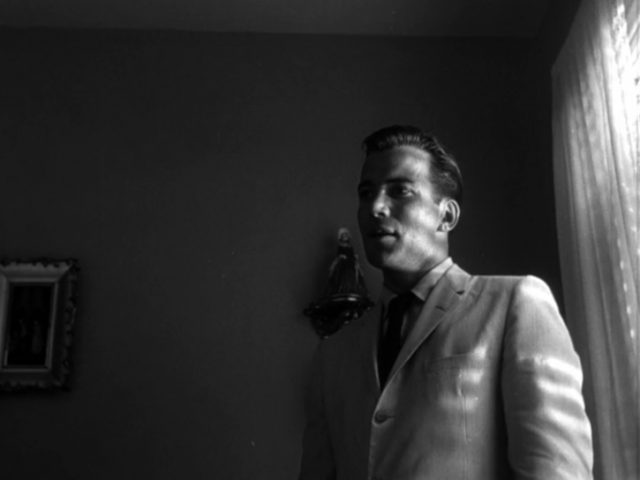
 Exploitation master Roger Corman shot out of the gates in the mid-1950s, directing and/or producing more than three dozen films between 1955 and 1961, directing doomsday disasters (Day the World Ended, Last Woman on Earth) and sci-fi quickies (It Conquered the World, Attack of the Crab Monsters), cheapie Westerns (Gunslinger, The Oklahoma Woman) and teen rave-ups (Sorority Girl, Teenage Doll), crime dramas (Machine-Gun Kelly; I, Mobster) and horror (A Bucket of Blood, The Undead), as well as the tales of Poe (House of Usher, The Pit and the Pendulum). But he tried something a little different with 1962’s The Intruder, a gripping, yet still exploitative, story of integration set in the ultraconservative south. Adapted by Charles Beaumont from his 1959 novel, which itself was inspired by the Little Rock Nine, the film stars William Shatner as Adam Cramer, a self-styled “social reformer” who arrives in the small southern town of Caxton just after integration has become law and just as ten black students, led by Joey Greene (Charles Barnes), are about to join whites at the local high school. Under the auspices of the John Birch-like Patrick Henry Society, Cramer is determined to continue the fight against integration, stirring the locals to potential mob violence through carefully orchestrated speeches filled with hate and lies. He allies himself with wealthy plantation owner Verne Shipman (Robert Emhardt) and cozies up to high school girl Ella McDaniel (Beverly Lunsford), daughter of newspaper editor Tom McDaniel (Frank Maxwell), one of the only reasonable white men in town. The manipulative Cramer will do just about anything to rile up the masses to keep the blacks from ruining America, but his own questionable personal morality might just get in the way, especially as he flirts with Vi (Jeanne Cooper), the wife of traveling salesman Sam Griffin (Leo Gordon).