twi-ny recommended events

PUBLIC WORKS: THE TEMPEST

Central Park
Delacorte Theater
September 6-8, free, 8:00
www.publictheater.org

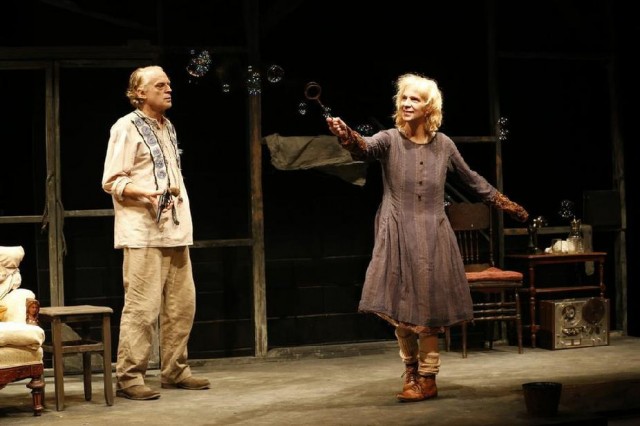
For more than fifty years, the Public Theater has been presenting free, star-studded productions of Shakespeare in the Delacorte Theater in Central Park. In 1958, New York Shakespeare Festival founder Joe Papp defended the free admission, writing, “I am trying to build our theater on the bedrock of municipal and civic responsibility — not on the quicksands of show business economics. I am interested in a popular theater — not a theater for the few. . . . The only practical means of insuring the permanence of our theater is to tie it in with civic responsibility.” The Public Theater is continuing that legacy with its new Public Works program, a collaboration between the theater and the community. Inspired by a 1916 participatory production of Caliban by the Yellow Sands at CCNY that involved some 1,500 people, the Public is unveiling a new musical adaptation of The Tempest September 6-8 at the Delacorte that brings together professional actors and community organizations from all five boroughs, resulting in more than two hundred performers onstage. The primary cast features Todd Almond, who wrote the music and lyrics, as Ariel, Laura Benanti as the goddess, Carson Elrod as Caliban, Jeff Hiller as Trinculo, Tony nominee Norm Lewis as Prospero, and Jacob Ming-Trent as Stephano. Director Lear deBessonet and choreographer Chase Brock have their work cut out for them, as they will also be managing cameo appearances from members of the Children’s Aid Society, DreamYard, the Fortune Society, the Brownsville Recreation Center, Domestic Workers United, Ballet Tech of the NYC Public School for Dance, the Calpulli Mexican Dance Company, the Kaoru Watanabe Taiko Ensemble, the Middle Church Jerriese Johnson Gospel Choir, the New York City Taxi Workers Alliance, and the Raya Brass Band, in addition to soap-bubble performance artist Stephen Duncan. “Theater isn’t a commodity, it’s an experience,” Public Theater artistic director Oskar Eustis said in a statement announcing the initiative. “Public Works aims to reclaim that territory by making participation central to the theatrical event.” Free tickets, two per person, will be available beginning at 12 noon at the Delacorte the day of the show as well as via a daily virtual ticketing lottery online here.

THE TWO-CHARACTER PLAY

(photo by Carol Rosegg)

Felice (Brad Dourif) and Clare (Amanda Plummer) intermingle fantasy and reality in Tennessee Williams’s THE TWO-CHARACTER PLAY (photo by Carol Rosegg)

New World Stages
340 West 50th St. between Eighth & Ninth Aves.
Wednesday – Monday through September 29, $72.50-$92.50
www.thetwocharacterplay.com
www.newworldstages.com

Former home to a low-priced, second-run movie theater, New World Stages primarily presents spectacle productions and award-winning musicals that have left Broadway; its current roster includes Peter and the Starcatcher, Avenue Q, Gazillion Bubble Show, and iLuminate: Artist of Light. But occupying its fifth stage is something very different, a thrilling version of one of Tennessee Williams’s lesser-known later works, The Two-Character Play. Williams might be considered one of the greatest playwrights of the twentieth century, both a critical and popular favorite, but his name is not usually associated with such cutting-edge experimental dramatists as Pirandello, Pinter, Brecht, and Beckett. Yet The Two-Character Play (produced in various versions over the years, sometimes titled Out Cry) is just that, a surreal, highly intellectual, and wonderfully unpredictable self-referential story about theater itself and, more abstractly, Williams’s life and career. Brother and sister Felice (Brad Dourif) and Clare (Amanda Plummer) are in a dilapidated theater, having been abandoned by the rest of their acting troupe. The pair is getting ready to perform The Two-Character Play, but there are problems with the unfinished set, props, and costumes, as they have run out of money. They can’t even afford a place to stay, so the theater, appropriately enough, has become their home. Over the course of two hours, Felice and Clare seamlessly glide between the play and the play-within-a-play, blurring the line between fantasy and reality, fact and fiction, as the events of the play directly relate to the events in their personal lives, becoming one and the same. The major exception is that in the play-within-the play, Clare can suddenly cut scenes and move the story ahead by hitting a key on a piano, infuriating Felice, who does not want to see his work edited so brazenly. Things are further complicated in that both Felice and Clare just might be certifiably insane, which only adds to the bittersweet confusion while also relating to Williams’s beloved sister and muse, Rose, who spent most of her life in an institution. Meanwhile, Felice may or may not be breaking the fourth wall, as he peers through imaginary curtains at the actual, seated audience while talking about them as if they are still filtering in.
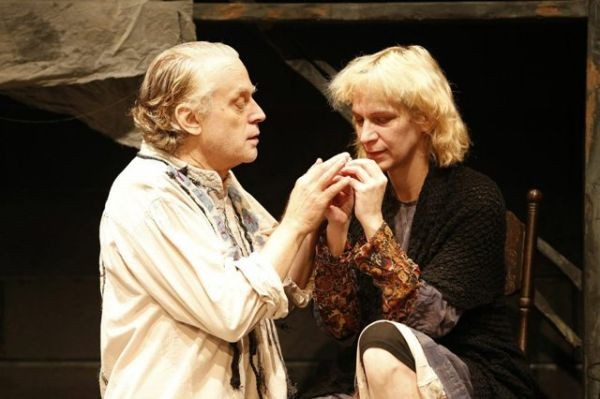
Brother and sister battle sanity and the theater itself in dazzling revival of late Williams experimental drama (photo by Carol Rosegg)

Brother and sister battle sanity and the theater itself in dazzling revival of late Williams experimental drama (photo by Carol Rosegg)

Evoking Pirandello’s absurdist classic Six Characters in Search of an Author, Williams makes the production of the play-within-the-play the central focus, as Felice and Clare appear to be otherwise trapped in the theater (referencing Williams’s three-month confinement in a hospital in 1969), unable to leave to take care of personal business involving the owner of Grossman’s Market and a potential settlement from the Acme Insurance Company. As darkness continues to envelop both them and the characters they are playing, the only brightness comes from an enormous sunflower hovering over them in the background, but it is not necessarily a sign that positive things await. Dourif (One Flew over the Cuckoo’s Nest, Deadwood) and Plummer (Agnes of God, Pulp Fiction) are marvelous together, delivering intimate, intricate performances in which every breath, sound, and movement is filled with meaning. Director Gene David Kirk (Boy Meets Boy, Real Babies Don’t Cry) does an excellent job of integrating the dual stories while incorporating the third part of the play, involving the actual audience watching the production. After all, the crowd has come to see Tennessee Williams’s multilayered The Two-Character Play, which is about two characters putting on a show called The Two-Character Play. In the play’s original program notes, Williams wrote, “To be effective in the theater now existing, the two performers, who must be very gifted whether they are ‘stars’ or not, must relieve the dark content of the plays, interior and total, with a carefully measured lightness — the jokes of the condemned? — and of course by that virtuousity of performance that very gifted performers always bring to a difficult work. This is a play that has to seek out its kind with great care, since it is as vulnerable as Clare and Felice, and as deviant.” This production, which continues through September 29 at New World Stages, is all that and more, a compelling and intriguing melding of care, virtuosity, vulnerability, and deviance, performed by two immensely gifted actors.

AN AUTEURIST HISTORY OF FILM REPRISE: THE LIFE OF OHARU

LIFE OF OHARU

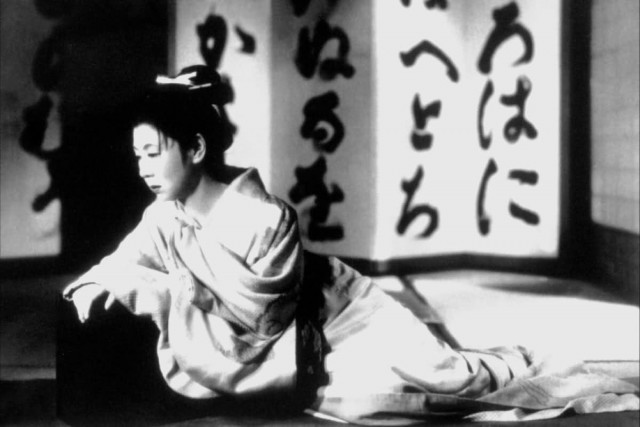
Oharu (Kinuyo Tanaka) lives a life filled with misery after misery in Mizoguchi melodrama

THE LIFE OF OHARU (SAIKAKU ICHIDAI ONNA) (Kenji Mizoguchi, 1952)
MoMA Film, Museum of Modern Art
11 West 53rd St. between Fifth & Sixth Aves.
Tuesday, September 3, 4:30
Tickets: $12, in person only, may be applied to museum admission within thirty days, same-day screenings free with museum admission, available at Film and Media Desk beginning at 9:30 am
212-708-9400
www.moma.org

We used to think that Aki Kaurismäki’s The Match Factory Girl was the saddest film ever made about a young woman who just can’t catch a break, as misery after misery keeps piling up on her ever-more-pathetic existence. But the Finnish black comedy has nothing on Kenji Mizoguchi’s The Life of Oharu, a searing, brutal example of the Buddhist observation of impermanence and the role of women in Japanese society. The film, based on a seventeenth-century novel by Ihara Saikaku, is told in flashback, with Oharu (Kinuyo Tanaka) recounting what led her to become a fifty-year-old prostitute nobody wants. It all starts to go downhill after she falls in love with Katsunosuke (Toshirô Mifune), a lowly page beneath her family’s station. The affair brings shame to her mother (Tsukie Matsuura) and father (Ichiro Sugai), as well as exile. The family is redeemed when Oharu is chosen to be the concubine of Lord Matsudaira (Toshiaki Konoe) in order to give birth to his heir, but Lady Matsudaira (Hisako Yamane) wants her gone once the baby is born, and so she is sent home again, without the money her father was sure would come to them. Over the next several years, Oharu becomes involved in a series of personal and financial relationships, each one beginning with at least some hope and promise for a better future but always ending in tragedy. Nevertheless, she keeps on going, despite setback after setback, bearing terrible burdens while never giving up. Mizoguchi (Sansho the Bailiff, The 47 Ronin, Street of Shame) bathes much of the film in darkness and shadow, casting an eerie glow over the unrelentingly melodramatic narrative. Tanaka, who appeared in fifteen of Mizoguchi’s films and also became the second Japanese woman director (Love Letter, Love Under the Crucifix), gives a subtly compelling performance as Oharu, one of the most tragic figures in the history of cinema. Winner of the International Prize at the 1952 Venice International Film Festival, The Life of Oharu is screening September 3 at 4:30 as part of MoMA’s “An Auteurist History of Film Reprise,” which gives film enthusiasts a second chance to catch works that have previously been shown at MoMA at earlier hours in the day, when many people cannot see them.
MATT CHARMAN AND JOSIE ROURKE: THE MACHINE

(photo by Helen Maybanks)

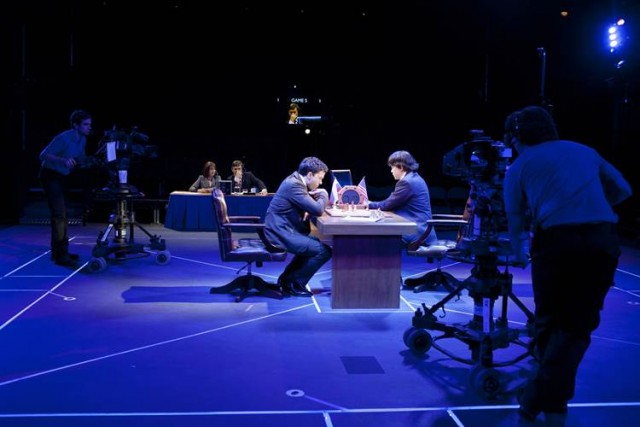
Garry Kasparov takes on Deep Blue in epic chess battle being re-created at the Park Avenue Armory (photo by Helen Maybanks)

Park Avenue Armory, Wade Thompson Drill Hall
643 Park Ave. at 67th St.
September 4-18, $45-$90
212-933-5812
www.armoryonpark.org
www.donmarwarehouse.com

A seminal moment in the history of man vs. machine took place in 1996-97, when Russian grandmaster Garry Kasparov played the IBM supercomputer Deep Blue in a series of highly publicized chess matches that would serve as a critical turning point in the ascendance of artificial intelligence. That epic battle has now been dramatized by England’s Donmar Warehouse, which will be staging the U.S. premiere of The Machine at the Park Avenue Armory September 4-18. Written by Matt Charman (A Night at the Dogs, The Five Wives of Maurice Pinder) and directed by Donmar artistic director Josie Rourke (The Physicists, The Cryptogram), the two-and-a-half-hour multimedia show features Hadley Fraser as Kasparov, Francesca Annis as Clara Gasparyan, Phil Nichol as television commentator Mandy Dinkleman, and Kenneth Lee as Feng-Hsiung Hsu (or Tsu), the computer scientist, known as Crazy Bird, who built Deep Blue. The production, which should look spectacular in the armory’s expansive 55,000-square foot Wade Thompson Drill Hall, is designed by Lucy Osborne, with lighting by Mark Henderson, sound by Ian Dickinson, choreography by Jonathan Watkins, and video projection by Andrzej Goulding. On September 7 there will be an artist talk with Rourke and Charman in the Veterans Room, moderated by armory artistic director Alex Poots ($15, 5:00).

SUBLIMING VESSEL: THE DRAWINGS OF MATTHEW BARNEY

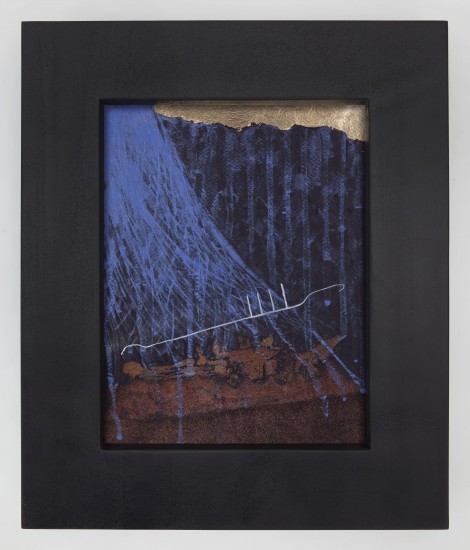
Matthew Barney, “Khu: Djed,” brush and ink, gold leaf, iron, and lapis lazuli on black paper in polyethylene frame, 2011 (copyright Matthew Barney / courtesy Gladstone Gallery, New York and Brussels)

Matthew Barney, “Khu: Djed,” brush and ink, gold leaf, iron, and lapis lazuli on black paper in polyethylene frame, 2011 (copyright Matthew Barney / courtesy Gladstone Gallery, New York and Brussels)

Morgan Library & Museum
225 Madison Ave. at 36th St.
Daily through September 8, $12-$18 (free Fridays from 7:00 to 9:00)
212-685-0008
www.themorgan.org
www.drawingrestraint.net

No, the banner outside the Morgan Library proclaiming that its Matthew Barney exhibition ends September 2 is not a restraint to stop drawing visitors to the show, which actually closes September 8. For the first-ever museum retrospective of his drawings, the California-born multidisciplinary artist chose two very specific venues, both of which had to be libraries: the Morgan first, followed by the Bibliothèque nationale de France. For “Subliming Vessel: The Drawings of Matthew Barney,” the Park Slope-based former college quarterback and premed student combines pieces from the institutions’ holdings with his own works and research paraphernalia to lend new insight into his creative process and influences. Since the late 1980s, Barney has been making drawings that relate to his films, installations, and live performance events, the works serving not only as rehearsals or storyboards but also acting as part of the central focus of the narrative as well as continuing into the aftermath. “I would describe a system that I’ve always visualized as an inverted pyramid, where the narrative is at the widest point, at the top of the structure,” Barney tells artist Isabelle Dervaux in an interview in the exhibition catalog. “The narrative in most projects is film-based, video-based, in some projects performance-based, but it’s the most developed aspect of the project. From there a process of distillation happens. Sculpture comes next in the sense that sculpture often tries to articulate a relationship in the narrative between characters or between places. Drawing is at the bottom of this structure and is the most distilled aspect of it. In that way it’s one of the more rewarding — possible the most rewarding part of the process, to get down to the purest form, the most distilled form of the narrative.”

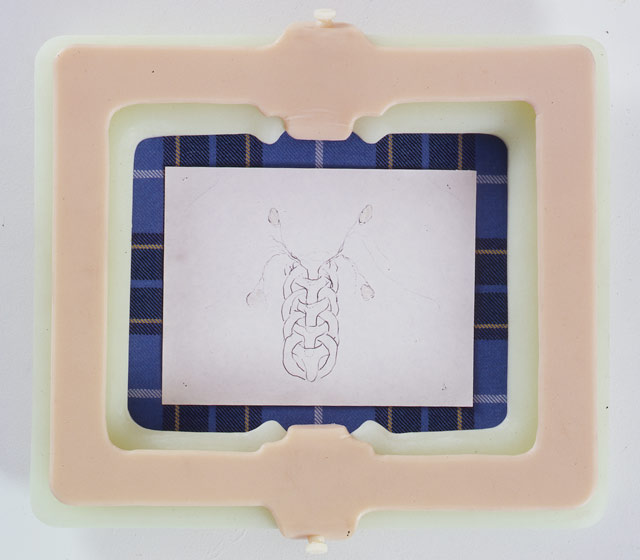
Matthew Barney, “Cremaster 4: Manx Manual,” graphite, lacquer, and petroleum jelly on paper in cast epoxy, prosthetic plastic, and Manx tartan, 1994-95 (copyright Matthew Barney / courtesy Gladstone Gallery, New York and Brussels)

Matthew Barney, “Cremaster 4: Manx Manual,” graphite, lacquer, and petroleum jelly on paper in cast epoxy, prosthetic plastic, and Manx tartan, 1994-95 (copyright Matthew Barney / courtesy Gladstone Gallery, New York and Brussels)

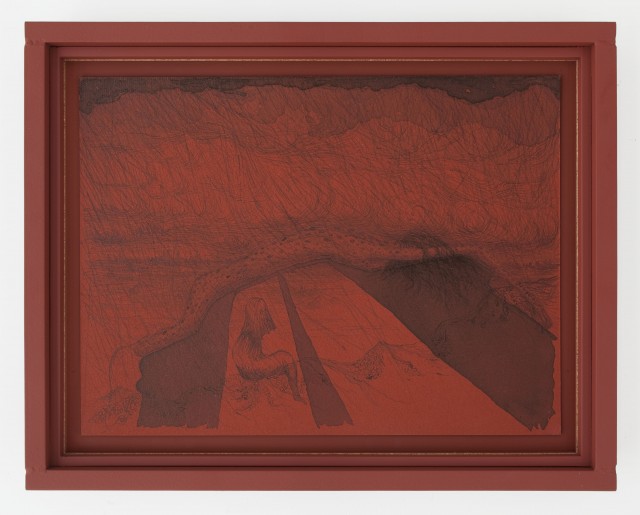
Hanging on the walls are fully realized ink and pencil drawings, several incorporating one of Barney’s signature materials, petroleum jelly, in self-lubricating plastic frames, that relate to such ambitious projects as the five-part Cremaster Cycle film series, which explores the ascending and descending muscle that determines gender; his Drawing Restraint performances, in which he creates art while limiting his physical mobility, one of which was recently held at the Morgan (the result of which can be seen in the Clare Eddy Thaw Gallery); the OTTOshaft trilogy, in which Barney uses Oakland Raiders center Jim Otto, who wore number 00, as the impetus for an exploration of athletic endurance that also involves Harry Houdini and the Hubris Pill; De Lama Lâmina (“From Mud, a Blade”), a collaboration with musician Arto Lindsay about environmental activist Julia Butterfly Hill; and River of Fundament, inspired by Norman Mailer’s Ancient Evening, which delves into the Egyptian belief of the soul’s death and rebirth as experienced by a 1967 Chrysler Crown Imperial. Barney’s most accomplished drawings are those done in red, comprising the “River Rouge” series, while his pieces on black are the most mysterious, the details visible from only certain angles.

Matthew Barney, “River Rouge: Crown Victoria,” ink on paper in painted steel frame, 2011 (copyright Matthew Barney / Courtesy Gladstone Gallery)

Matthew Barney, “River Rouge: Crown Victoria,” ink on paper in painted steel frame, 2011 (copyright Matthew Barney / Courtesy Gladstone Gallery)

The show also includes vitrines filled with objects chosen specifically by Barney from his own collection as well as the Morgan’s that relate to his work, from Walt Whitman’s Leaves of Grass to a Diane Arbus photo of Mailer, from a third-century papyrus copy of the Egyptian Book of the Dead to a page from a thirteenth-century book depicting sailors on the back of a whale, from the Goya drawing “Locura (Madness)” to Joseph Smith’s The Book of Mormon. In addition to adding insight into Barney’s ever-evolving narrative, they reveal his endless fascination with the human body. “The first pieces I made of Vaseline were about wanting to moisten something,” he told Gerald Matt in a 2008 interview. (The quote is included in the wall text for the 1991 drawing “Delay of Game [manual] C.”) “I was thinking of all things that I was making at the time as literally extensions of my body somehow, and I wanted these objects to feel like they had just come out of me or could be put into me.” In many ways, that gets to the heart of Barney’s intense creative process and intriguing, confusing, highly abstract, and extremely stylized output. While Barney might often physically restrain himself, the worlds he has brought to life, which have oozed out of him and into him, on paper, on film, and in live performance, seem to have no limits.

FAMILY FILMS: SINGIN’ IN THE RAIN

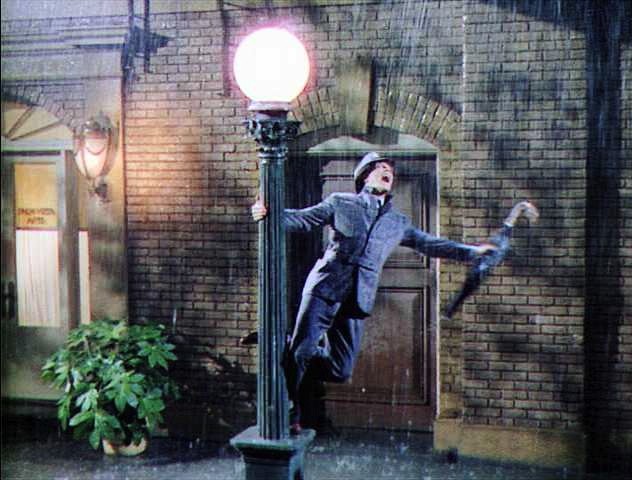
Gene Kelly dazzles during unforgettable solo scene in classic MGM musical SINGIN’ IN THE RAIN

Gene Kelly dazzles during unforgettable solo scene in classic MGM musical SINGIN’ IN THE RAIN

SINGIN’ IN THE RAIN (Stanley Donen & Gene Kelly, 1952)
Film Society of Lincoln Center, Francesca Beale Theater, Film Center Amphitheater
144 West 65th St. at Amsterdam Ave.
Sunday, September 1, and Monday, September 2, 2:00
Series continues through February 17
212-875-5601
www.filmlinc.com

The 1952 MGM musical Singin’ in the Rain is one of the all-time-great movies about movies, in this case focusing on the treacherous transition from silent films to talkies. It’s the mid-1920s, and the darlings of the silver screen are handsome Don Lockwood (Gene Kelly) and blonde bombshell Lina Lamont (Jean Hagen). They’re supposedly just as hot offscreen as on, as Don explains to radio gossip host Dora Bailey (Madge Blake, later best known as Aunt Harriet on the Batman TV series) at their latest Hollywood premiere, but in actuality the debonair Don can’t stand the none-too-bright yet still conniving Lina. After accidentally bumping into Kathy Selden (Debbie Reynolds), an independent-thinking young woman who claims to not even like the movies, Don is soon trying to chase her down, determined to get to know her better. Meanwhile, studio head R. F. Simpson (Millard Mitchell) decides he has to capitalize on the surprise success of the first talking picture, The Jazz Singer, by turning the latest Lockwood-Lamont movie, The Dueling Cavalier, into a talkie, with initially disastrous results, threatening to bring everything and everyone crashing down.
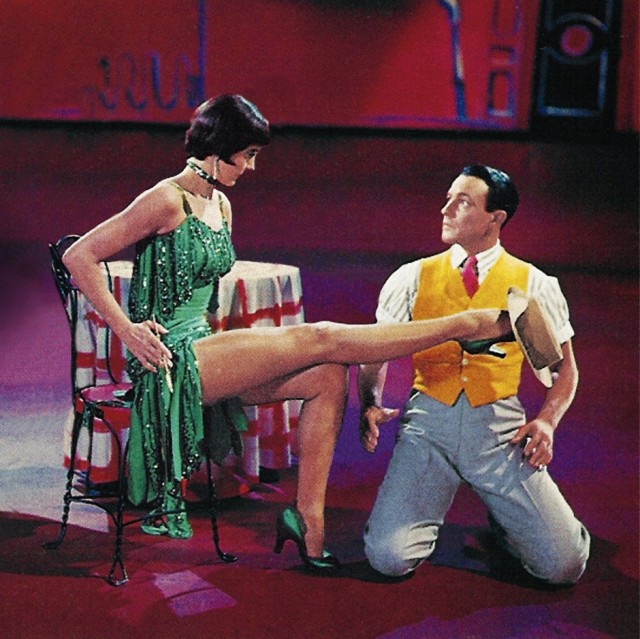
Cyd Charisse joins Gene Kelly for fantastical Broadway Melody ballet in SINGIN’ IN THE RAIN

Cyd Charisse joins Gene Kelly for fantastical Broadway Melody ballet in SINGIN’ IN THE RAIN

Written by the legendary team of Betty Comden and Adolph Green and directed by Kelly and Stanley Donen (On the Town, Charade), Singin’ in the Rain is an endlessly thrilling and entertaining film, featuring gorgeous Technicolor set pieces photographed by Harold Rosson (the Broadway Melody ballet with Cyd Charisse is particularly spectacular), terrific tunes adapted from previous productions (“Fit as a Fiddle [And Ready for Love,]” “Moses Supposes,” “Good Morning”), and delightful performances by Kelly, whose solo foray through the title song is deservedly iconic; Donald O’Connor as Don’s longtime best friend, Cosmo Brown, who dazzles with a comic Fred Astaire-like turn in “Make ’em Laugh”; and Hagen channeling Judy Holliday from Born Yesterday. (Hagen served as Holliday’s understudy when Born Yesterday hit Broadway in 1947.) While all the elements come together beautifully (although things do get a little too mean-spirited in the end), this is Kelly’s film all the way, his smile and charm dominating the screen as only a genuine movie star can, so to see him playing a movie star merely doubles the fun. (It’s hard to imagine that Howard Keel was supposedly the first choice to play the role.) Curiously, Singin’ in the Rain was nominated for only two Oscars, with Hagen getting a nod for Best Supporting Actress and Lennie Hayton for Best Musical Score. Singin’ in the Rain’ is screening on September 1 & 2 at 2:00 as part of the Film Society of Lincoln Center’s “Family Films” series, which continues with such Jack Arnold sci-fi flicks as It Came from Outer Space, The Incredible Shrinking Man, and Creature from the Black Lagoon in 3-D.

WEST INDIAN AMERICAN DAY CARNIVAL

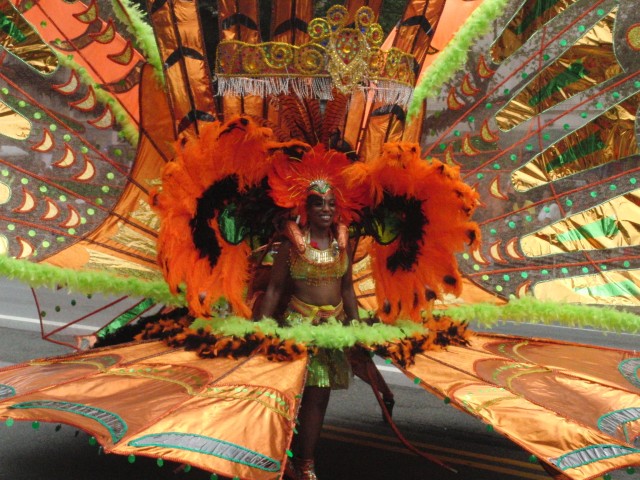
Spectacular costumes are all part of the fun of annual West Indian American Day Carnival on Labor Day in Brooklyn (photo by twi-ny/mdr)

Spectacular costumes are all part of the fun of annual West Indian American Day Carnival on Labor Day in Brooklyn (photo by twi-ny/mdr)

Eastern Pkwy. from Rochester Ave. to Grand Army Plaza
Monday, September 2, free, 11:00 am – 6:00 pm
718-467-1797
www.wiadca.com
2012 parade slideshow

Every Labor Day, millions of people line Eastern Parkway, celebrating the city’s best annual parade, the West Indian American Day Carnival, waving flags from such nations as Jamaica, Trinidad & Tobago, Barbados, the Bahamas, Grenada, the Cayman Islands, Antigua, Saint Kitts and Nevis, Aruba, Curaçao, and many more. The festivities begin with the Junior Carnival on Saturday from Kingston Ave. to the Brooklyn Museum grounds ($2 at museum gate), followed by the Steel Band Panorama at the museum at 3:00 ($45), with Pan Sonatas, CASYM, Crossfire, Pantonics, Adlib, Metro, and the NYU Steel Orchestra, among others. On Sunday at 7:00 ($35), the museum hosts Dimanche Gras, with live performances by David Rudder, Calypso Rose, Panther, Liam Teague, Robert Greenidge, Devyn, Swallow, the Something Positive Dance Troupe, and more. The Labor Day partying commences at 2:00 am with the traditional J’Ouvert Morning, a precarnival procession featuring steel drums and percussion and fabulous, inexpensive masquerade costumes, marching from Grand Army Plaza to Flatbush Ave. and on to Empire Blvd., then to Nostrand Ave. and Linden Blvd.

(photo by twi-ny/mdr)

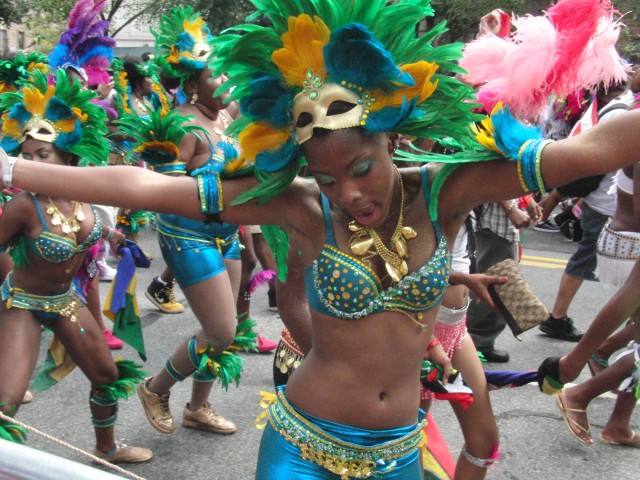
Colorful parade features great music, dancing, food, and more (photo by twi-ny/mdr)

The Parade of Bands begins around 11:00 am, as truckloads of blasting Caribbean music and groups of ornately dressed dancers, costume bands, masqueraders, moko jumbies, and thousands of others bump and grind their way down Eastern Parkway to Grand Army Plaza, participating in one last farewell to the flesh prior to Lent. This year should feature even more politicians than usual, since the primaries are the next week; the grand marshals are the Trini from Tunapuna and MC Wassy (Christopher Bowen). Don’t eat before you go; the great homemade food includes ackee and saltfish, oxtail stew, breadfruit, macaroni pie, curried goat, jerk chicken, fishcakes, rice and peas, and red velvet cake. The farther east you venture, the more closed in it gets; by the time you get near Crown Heights, it could take you half an hour just to cross the street (although the police have been opening more areas to cross to reduce the outrageous congestion the last few years), so take it easy and settle in for a fun, colorful day where you need not hurry. In addition, be prepared to see a whole of twerkin’ going on, putting Miley Cyrus to shame.