twi-ny recommended events

AFTER TILLER

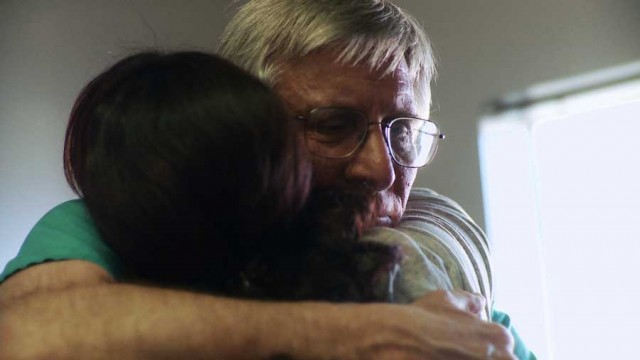
Dr. Robinson

Dr. Susan Robinson has to make difficult choices when deciding whether to perform a late abortion

AFTER TILLER (Martha Shane & Lana Wilson, 2013)
Film Forum, 209 West Houston St., 212-727-8110
Film Society of Lincoln Center, Walter Reade Theater, Elinor Bunin Munroe Film Center, 212-875-5600
Opens Friday, September 20
www.aftertillermovie.com

In After Tiller, directors and producers Martha Shane and Lana Wilson manage to humanize one of the most contentious, controversial, and complicated issues of our age: late abortion. In May 2009, Dr. George Tiller, who specialized in third-trimester abortions, was assassinated in front of his clinic in Wichita, Kansas. That left only four doctors in the United States who performed late abortions, each of whom had either trained or worked with Dr. Tiller. “It was absolutely no question in any of our minds that we were going to keep on doing his work,” one of those four doctors, Susan Robinson, says in the film. As After Tiller begins, Dr. Robinson works with Dr. Shelley Sella at Southwestern Women’s Options in Albuquerque, New Mexico, Dr. LeRoy Carhart is a former U.S. Air Force colonel who operates the Abortion & Contraception Clinic of Nebraska, and Dr. Warren Hern is director of the Boulder Abortion Clinic in Colorado. Shane and Wilson follow these four dedicated doctors who continue doing their work despite the personal danger associated with their profession, including harassment, murder, assault, and bombings. “When I walk out the door, I expect to be assassinated,” Dr. Hern says. The filmmakers show the doctors in their offices, meeting with women who are requesting late abortions for various reasons; Shane and Wilson also follow the abortion providers into their homes as they go on with their daily lives, offering an intimate portrait of these men and women who are so often called monsters but are firm in their belief that what they are doing is important and absolutely necessary, performing their jobs with care and understanding. However, Dr. Hern wonders if he should stop providing late abortions and just settle down peacefully with his new wife and adopted son, while Dr. Carhart and his wife opt to move out of Nebraska after a law change and meet resistance as they try to move their clinic to Maryland or Virginia.
Dr. Hern

Dr. Warren Hern is one of only four doctors in America who provides late abortions

The film also reveals that deciding to perform a late abortion is often an extremely difficult choice for the doctors as well as the patients and not something the providers do automatically when a woman comes to them. One of the most compelling scenes occurs when Drs. Sella and Robinson have a heart-wrenching disagreement over whether to proceed with a late abortion for a young woman, evaluating whether her reason is valid enough and lamenting that the ability of the woman to tell her story could affect the final decision. It’s a pivotal moment that also brings into focus the concerns of the American people; while less than one percent of the abortions performed in the country occur in the third trimester, the procedure is often the centerpiece of the antiabortion movement, but even pro-choice supporters will find themselves questioning the efficacy of all late abortions. The women come to the doctors for many reasons, ranging from the health of the child to economic situations to admitting that they either didn’t know or refused to accept that they were pregnant until it was too late. “It’s guilt no matter which way you go,” one desperate patient, whose child would be born with severe disabilities and would likely die within a year, tells Dr. Sella. “Guilt if you go ahead and do what we’re doing, or bring him into this world and then he doesn’t have any quality of life.” Although Shane and Wilson include footage of protestors, news reports, and congressional hearings, After Tiller is a powerful, deeply emotional documentary about the doctors and patients who must make impossible choices and live with their decisions for the rest of their lives. The film, which raises fascinating, difficult questions for which there are no easy answers, opens September 20 at Film Forum and the Film Society of Lincoln Center. Shane (Bi the Way) and Wilson will be at Film Forum on September 20-21 at the 8:10 screenings and September 22 at 4:30 to discuss the film; they will also participate in a series of Q&As at Lincoln Center, including September 20 at 7:00 with NARAL Pro-Choice New York, September 21 at 7:00 with the New York Abortion Access Fund, September 22 at 3:00 with Nancy Northup of the Center for Reproductive Rights, and September 26 at 7:00 with Dr. Sara Miller of the Reproductive Health Access Project, in addition to a panel discussion on September 23 at 7:00 with Kassi Underwood of Exhale.

NYFF OPENING ACT: NIGHT AND DAY

Sungam (Youngho Kim) battles displacement and loneliness in Hong Sang-soo’s NIGHT AND DAY

NIGHT AND DAY (BAM GUAN NAT) (Hong Sang-soo, 2008)
Film Society of Lincoln Center, Walter Reade Theater
165 West 65th St. at Amsterdam Ave.
Friday, September 20, 9:00
Series runs September 20-26
212-875-5601
www.filmlinc.com

Korean writer-director Hong Sang-soo returned to the New York Film Festival for the fifth time with Night and Day, a character-driven tale about displacement and loneliness. Youngho Kim stars as Sungam, a married painter in his forties who flees South Korea for France after having been turned in for smoking marijuana with U.S. tourists. A fish out of water in Paris, he settles into a Korean neighborhood, spending most of his time with two young art students, Yujeong (Eunhye Park) and Hyunju (Minjeong Seo). He also meets an old girlfriend, Minsun (Youjin Kim), who is still attracted to him. And every night he calls his wife, Sungin (Sujung Hwang), wondering when he’ll be able to return home. Hong (Woman Is the Future of Man, Tale of Cinema) tells the story in a diary-like manner, with interstitials acting like calendar pages. Sometimes a day can be filled with talk of art, a party, and a chance encounter, while others can consist of a brief, random event with no real bearing on the plot, reminiscent of Jim Jarmusch’s Stranger Than Paradise, just without the existential cynicism and dark humor. As with 2006’s Woman on the Beach, Hong lets Night and Day go on too long (it clocks in at 141 minutes), with too many inconsequential (even if entertaining) vignettes, but it’s so much fun watching Youngho’s compelling performance that you just might not care about the length. Night and Day is screening September 20 at 9:00 as part of the Film Society of Lincoln Center’s “NYFF: Opening Act” series, featuring sixteen films from directors whose latest works will be shown at the fifty-first New York Film Festival, which runs September 27 through October 13. “NYFF: Opening Act” also includes outstanding films as Spike Jonze’s Adaptation., Paul Greengrass’s Bloody Sunday, Hirokazu Kore-eda’s Maborosi, Joel Coen’s Miller’s Crossing, and Kiyoshi Kurosawa’s Pulse. Hong’s delightful Nobody’s Daughter Haewon screens at this year’s New York Film Festival on September 29 and 30.

JAMES TURRELL

James Turrell

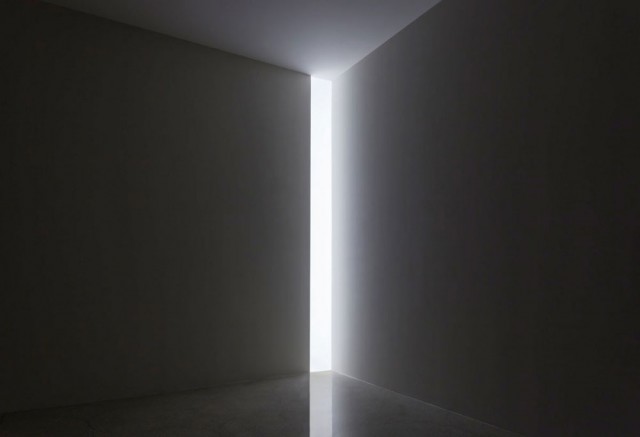
James Turrell’s “Aten Reign” bathes the Guggenheim in meditative colored light display (photo by David Heald / © Solomon R. Guggenheim Foundation, New York)

Solomon R. Guggenheim Museum
1071 Fifth Ave. at 89th St.
Friday – Wednesday through September 25, $18-$22 (pay-what-you-wish Saturday 5:45-7:45)
212-423-3587
www.guggenheim.org

During the last few years, the Guggenheim has staged several exhibitions in which the bays that line the winding interior have remained empty. In 2010, Tino Sehgal had trained men and women speak with visitors making their way to the top, with no physical art present at all. In 2011, Maurizio Cattelan’s career retrospective, “All,” consisted of an amalgamation of his works hung from the ceiling like a massive mobile, with nothing in the bays. Now James Turrell has created the site-specific “Aten Reign,” a dazzling, meditative spectacle in which five rings of light that echo the museum’s shape, beginning at the oculus at the top of the rotunda, slowly change colors in mystifying and intoxicating ways. Visitors have access only to the main floor and the first section of the spiraling ramp, with special arched benches at the bottom for more comfortable viewing, but make sure to walk around, as the display, which explores light, space, and perception, seemingly shifts form ever so slightly when seen from different positions and angles, affected by the natural daylight as well. Constructed with interlocking cones and LED fixtures, “Aten Reign” is like one of Turrell’s Skyscapes (such as his open-air “Meeting” at MoMA PS1) mixed with more subdued elements of the psychedelic Joshua Light Show while incorporating the Gazfeld effect. “I really felt to be using light as a material [is] to work or affect the medium of perception,” the L.A.-born Turrell explains in a promotional video. “For me, it’s trying to orient toward what the perception really is, rather than the object of perception, to actually, sort of, remove that. I have an art that has no image. It has no object. And even very little a place of focus, or one place to look. So, without image, without object, without specific focus, what do you have left? Well, a lot of it is this idea of seeing yourself see, understanding how we perceive.” The overall individual, hallucinatory experience grows the more you immerse yourself in its splendor, allowing it to take you to other places in your mind, body, and spirit. Take your time and let it envelop you, not worrying about anything else anywhere in the world.

James Turrell, “Afrum I (White),” projected light, 1967 (photo by David Heald / © Solomon R. Guggenheim Foundation, New York)

James Turrell, “Afrum I (White),” projected light, 1967 (photo by David Heald / © Solomon R. Guggenheim Foundation, New York)

The show is supplemented with several rooms of other works, including a series of white-light pieces from the late 1960s that play with physical space and altered reality; “Prado (White)” appears to be a rectangular hole in the wall, “Afrum I (White)” looks like a floating cube, and the vertical “Ronin” has a special trick to it. Expect a ridiculously long line to see 1976’s “Iltar,” a mysterious wall piece that you’re not allowed to get too close to; don’t ask the guard what it actually is, because he’s not allowed to tell you. The Guggenheim is also screening a pair of short exhibition-related films, David Howe’s James Turrell, Second Meeting Art21 Exclusive and Peter Vogt and Erin Wright’s James Turrell’s Roden Crater, which examine other works by the artist; on September 20 they will be joined by Carine Asscher’s Passageways: James Turrell. Also on September 20, the afternoon symposium “James Turrell: Sensing Space” will feature presentations by Thomas Crow, Miwon Kwon, and Mark Taylor and a panel discussion moderated by exhibition co-curator Nat Trotman. Expect extended wait times for the last week of the much-talked-about show, which closes September 25, but it’s well worth it.

WORLD MAKER FAIRE NEW YORK 2013

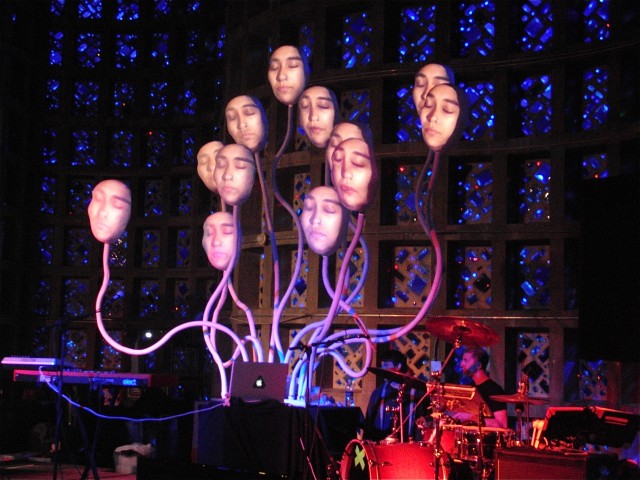
Synarcade’s Lumiphonic Creature Choir performed at the 2012 Maker Faire (photo by twi-ny/mdr)

Synarcade’s Lumiphonic Creature Choir performed at the 2012 Maker Faire (photo by twi-ny/mdr)

New York Hall of Science
47-01 111th St., Flushing Meadows Corona Park
September 21-22, $15-$30 per day, weekend pass $25-$55
718-699-0005
www.makerfaire.com
2012 maker faire slideshow

Maker Faire returns to the New York Hall of Science this year, two days of special programs and displays showing off the latest in cutting-edge technology, letting visitors geek out to their heart’s content. The 2013 edition once again features such favorite attractions as the Coke Zero and Mentos fountain explosions, the Life-Size Mousetrap, the Power Racing Series, and Circus Warehouse. The discussions, presentations, demonstrations, and live performances include Rick Schertie and Keith Violette’s “The Air Rocket Glider,” Carla Diana’s “Designing Friendly Robots: Looks Do Matter!,” Ericka Basile’s “Post-Crowdfunding Condundrum: Where Do We Go from Here?,” AnnMarie Thomas’s “Children as Makers, Makers as Children,” Dr. Seth Adventure’s “The New Flesh Worskhop: DIY Super-Humans,” Benedetta Piantella’s “Solving World Challenges Through Making — the Hard Truths,” Sam Ortega’s “NASA: Challenging America to Invent,” Arlene Ducao’s “MindRider and the Maker’s Brain,” and Mark Hatch’s “The Maker Movement Manifesto.” Both inside and outside, you’ll find amazing toys, 3-D printers, games, robotics, clothing, food, tools, jewelry, environmentally friendly planting methods, interactive activities, and even a device to keep you from biting your tongue while you sleep. You really don’t have to be a techno-nut to have a great time — and learn a whole lot — at this crazy-fun event.

MARCO BENEVENTO PRESENTS: A CIRCUIT BENT PIANO ROCK PICTURE SHOW IN EXPLODING COLOR

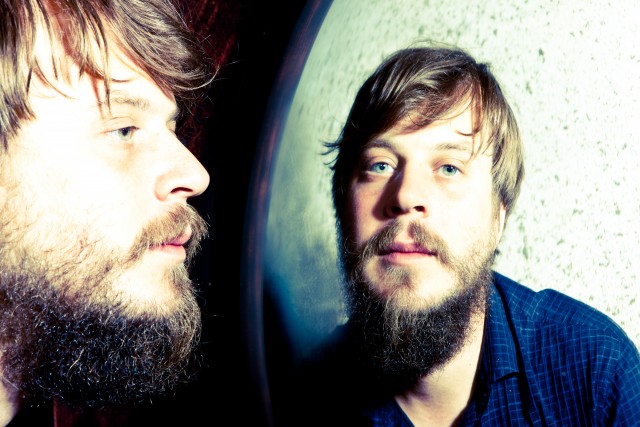
Marco Benevento

Marco Benevento will combine music and images at special presentation at the Winter Garden

Brookfield Place Winter Garden
200 Vesey St.
Thursday, September 19, free, 8:00
212-945-0505
www.brookfieldplaceny.com
www.marcobenevento.com

Pianist Marco Benevento, who has melded jazz, pop, and indie on such records as Between the Needles & Nightfall, Me Not Me, and his latest, the just-released TigerFace, will be at the Brookfield Plaza Winter Garden on September 19 for the special free presentation “A Circuit Bent Piano Rock Picture Show in Exploding Color.” Benevento will be joined by bassist Dave Dreiwitz (Ween), drummer Andy Borger (Norah Jones, Ani DiFranco), and video artist Jay Cooper, playing original songs to projections that will include new images as well as their previous videos. Benevento is entering another phase of his career, reaching the point where he can do exactly what he wants. “It’s nice to try to create with people who are in the same boat as me – they’re kind of doing well, but they’re also kind of trapped in this vague cloud of ‘what kind of music are you?’” he explained in a statement. Formerly known as the World Financial Center, Brookfield Plaza has been home to numerous productions that have combined live music with projected images, from DJ Spooky’s “Rebirth of a Nation” to the Alloy Orchestra performing to Buster Keaton shorts, so this evening should add to that welcome tradition.

TWI-NY TALK: MEGAN V. SPRENGER

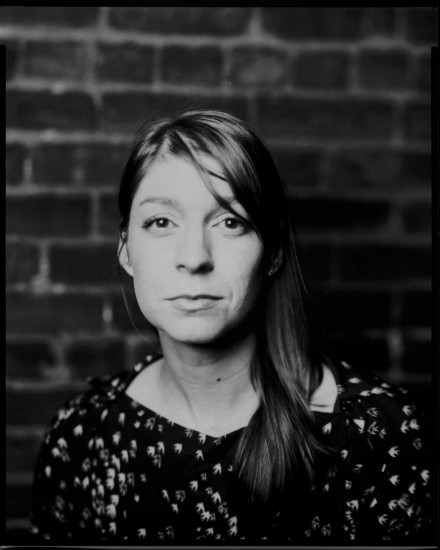
Megan Sprenger will premiere her latest evening-length piece, FLUTTER, this week at the Chocolate Factory (photo by Tei Blow)

Megan Sprenger will premiere her latest evening-length piece, FLUTTER, this week at the Chocolate Factory (photo by Tei Blow)

The Chocolate Factory
5-49 49th Ave., Long Island City
September 18-21, $15, 8:00
718-482-7069
www.chocolatefactorytheater.org
www.mvworks.org

Since 2005, dancer and choreographer Megan V. Sprenger and her MVworks company have been exploring the relationship between audience and performer, individuality and personal identity, and the making of connections in today’s world, drawing on inspiration from such visual artists as Gregory Crewdson and Jacob Landau and such mathematicians as Blaise Pascal and Fibonacci. In her first evening-length piece, 2007’s quietly affecting No where, Sprenger incorporated Pascal’s triangle both thematically and structurally, built around three woman dancers moving within a confined space. Two years later, Sprenger went in a different direction with the immersive, explosive . . . within us., in which four dancers interacted with the audience members first by speaking with them, then charging around them in a flurry of energy. Sprenger, who has also choreographed and performed such solo pieces as One-Shot, While Waiting, and Direction Lost, will be holding the world premiere of her third evening-length piece, Flutter, this week at the Chocolate Factory in Long Island City, examining abstract and non-narrative methods of storytelling through movement and sound. Between preparing for that and working in public relations, the always amiable and charming Sprenger took time out to discuss her creative process and more with twi-ny.

twi-ny: For Flutter, you developed movements that were very particular to the unique personalities of each of the four performers. You’ve worked with Tara O’Con since 2007, while Donna Cicchesi, Michael Ingle, and Anna Adams Stark are new to MVworks. What was that process like, especially because you are much more familiar with one of the dancers than the others?

Megan V. Sprenger: One of the most fascinating and rewarding aspects of making this work has been getting to know all of the dancers better. Regardless of how long I’ve known or worked with each of them, the process of making their “mini movement biographies” was the same. Each of the dancers was asked to improvise for a set amount of time that varied slightly per rehearsal. This process resulted in hours of footage that I culled down into four-to-five-minute solos that became the base for the work.

twi-ny: In most of your pieces, including Flutter, the dancers perform to silence or to avant-garde soundscapes, never to more traditional songs or music. Is that something you consciously set out to do with each new dance? How would you describe the role of music/sound in your creative process?

Megan V. Sprenger: Working with original sound is a critical part of my process. Jason Sebastian and I have worked together since 2007, and with each process we begin by discussing the inspiration and tone of the work and then decide what we think might be the best general direction for the composition. It’s true that both No where and …within us. utilized more of an environmental soundscape; however, for this work we decided that we wanted something more melodic and the result is a composition that is much more instrumental than what you might expect.

MVworks rehearses FLUTTER this past June

twi-ny: For many years you worked in the marketing department of Dance Theater Workshop and then New York Live Arts, specifically promoting dance. You’re now at a company that handles much more than just dance. What has that experience been like?

Megan V. Sprenger: What I love most about working at Polskin Arts & Communications Counselors is how much I am learning about other artistic fields such as music, visual art, and architecture. It has been extremely rewarding to see how what I know about dance is transferable and at the same time to be learning more about other genres.

twi-ny: In 2006, 2008, and 2010 you performed solo pieces, and in 2011 you participated in Bill T. Jones’s Continuous Replay at New York Live Arts. Are you getting the urge to get back on stage yourself? Might you be working on something you will perform in?

Megan V. Sprenger: I haven’t decided what will be next for me artistically. Making work for yourself can be a tricky business, though I love performing and I do miss it. Who knows, a short solo for myself isn’t out of the question.

twi-ny: You’ve now been involved in the New York City dance world for ten years. What are some of the most important changes you’ve noticed over the last decade? One thing that strikes me is how the internet has come into play; for example, people can go to your website and follow the progress of Flutter, as you’ve posted videos of a number of rehearsals going back nearly a year.

Megan V. Sprenger: Over the past ten years the internet has definitely played an increased role in the dance industry. In particular, crowdsourcing platforms like Kickstarter, Indiegogo, and RocketHub and video sharing websites like Vimeo and YouTube have changed the way dances are made, promoted, and shared. I would also add that popular culture interest in dance through television shows like So You Think You Can Dance have significantly shifted how dance is viewed and appreciated across the country.

twi-ny: In your free time, if you have any, do you try to keep up with what’s going on in the dance world, or do you prefer to see other types of art and live performance?

Megan V. Sprenger: I try to see as many dance performances as possible. That’s honestly one of the things I miss most about working at New York Live Arts, where I was constantly exposed to new work and artistic voices.

twi-ny: Are there any companies that you consider a must-see?

Megan V. Sprenger: Must-sees? That’s a really hard question. I suppose I would just encourage people to try something new. I vary rarely regret going to a show that I know very little about or created by an artist I am not familiar with.

THE MACHINE

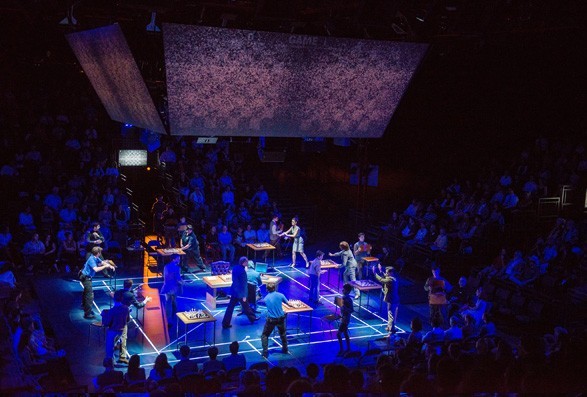
THE MACHINE depicts the epic battle between grandmaster Garry Kasparov and IBM computer Deep Blue (photo by Stephanie Berger)

THE MACHINE depicts the epic battle between grandmaster Garry Kasparov and IBM computer Deep Blue (photo by Stephanie Berger)

Park Avenue Armory, Wade Thompson Drill Hall
643 Park Ave. at 67th St.
Through September 18, $45-$90
212-933-5812
www.armoryonpark.org
www.donmarwarehouse.com

In The Machine, playwright Matt Charman and director Josie Rourke turn the 1997 chess match between grandmaster Garry Kasparov and IBM’s Deep Blue computer into a lively, riveting, edge-of-your-seat multimedia sports event. With the audience sitting on raised bleachers on all four sides of the stage in the Park Avenue Armory’s massive Wade Thompson Drill Hall, Kasparov (Hadley Fraser) battles Deep Blue, operated by its cocreator Dr. Feng-Hsiung Hsu (Kenneth Lee). As the hard-fought six-game match continues, flashbacks reveal critical moments in the main competitors’ lives. Kasparov, who lost his father at a young age, is still a child when he takes on grandmaster Anatoly Karpov (Cornelius Booth), his mother (Francesca Annis) determined to have him be accepted to Karpov’s famous school. Hsu, at Carnegie Mellon, teams up with fellow student Murray Campbell (Trevor White) to attempt to improve a chess computer built by their professor, Dr. Hans Berliner (John Ramm), while struggling to commit to his cheerleader girlfriend, Tamsin (Antonia Bernath). During the match itself, cameras move around Lucy Osborne’s inventive set, projecting images onto an overhead Jumbotron while a pair of announcers detail the action. Two of the most thrilling moments occur when at first chessboards, then computers are pushed around the square stage along lighted tracks, beautifully choreographed scenes (by Jonathan Watkins) that continue the theme of man vs. machine, equating the two fields. Fraser plays Kasparov with a nervous energy that highlights his growing fear and worry as the games go on, while Lee’s Hsu is jumpy and awkward as he gives up any chance of a personal life in order to invent the best. During the course of the show, Kasparov is alternately referred to as both “too human” and a “monster,” while he accuses the IBM team of cheating because Deep Blue made what he believes to clearly be human moves in the second game, as this engaging Donmar Warehouse production once again focusing on the similarities between the machine that is man and the machine that is built by man. Be sure to arrive early, as there are many chess sets at the armory where visitors are encouraged to sit down and play.