twi-ny recommended events

A DIFFERENT KIND OF ORDER: THE ICP TRIENNIAL

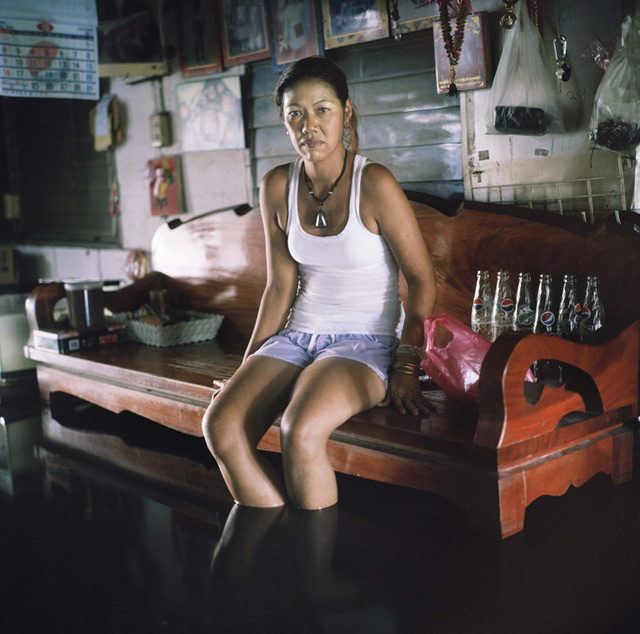
Gideon Mendel, “Shopkeeper Suparat Taddee, Chumchon Ruamjai Community, Bangkok, Thailand,” chromogenic print, November 2011 (photo courtesy the artist)

Gideon Mendel, “Shopkeeper Suparat Taddee, Chumchon Ruamjai Community, Bangkok, Thailand,” chromogenic print, November 2011 (photo courtesy the artist)

International Center of Photography
1133 Sixth Ave. at 43rd St.
Tuesday – Sunday through September 22, $10-$14 (pay what you wish Fridays 5:00 – 8:00)
www.icp.org

For the International Center of Photography’s fourth triennial, curators Kristen Lubben, Christopher Phillips, Carol Squiers, and Joanna Lehan have organized “A Different Kind of Order,” a powerful survey of sociopolitical and environmentally conscious work from around the world with a focus on digital technology and manipulation and the widespread reuse of internet images. In “Touch Parade,” A. K. Burns re-creates five odd fetish videos she found on YouTube. Mishka Henner’s “Dutch Landscapes” series at first appear to be aerial shots of the countryside overlaid with abstract splotches but turn out to be actual Google images that the Dutch government has censored. Thomas Hirschhorn’s “Touching Reality” video depicts a hand scrolling through photos of victims of war, from bloody corpses to bodies missing limbs, occasionally stopping to pinch the shot into close-up, not usually the kind of images people look at on their phones. Gideon Mendel’s “Drowning World” photos and video (in the gallery as well as in a window display) show people in communities that have been devastated by massive flooding, as men, women, and children, each of whom she specifically identifies, wade through environmental calamities in England, India, Nigeria, Thailand, and other locations.
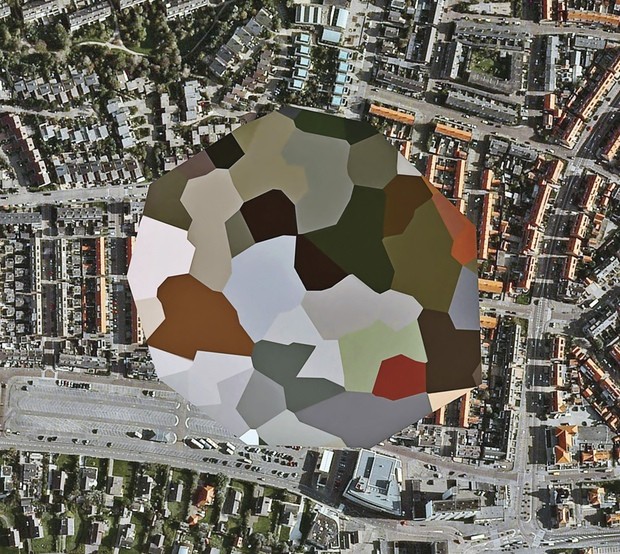
Mishka Henner, “Unknown Site, Noordwijk aan Zee, South Holland,” from the series “Dutch Landscapes,” archival inkjet print, 2011 (photo courtesy the artist)

Mishka Henner, “Unknown Site, Noordwijk aan Zee, South Holland,” from the series “Dutch Landscapes,” archival inkjet print, 2011 (photo courtesy the artist)

For his “Blow Up” project, Rabih Mroué narrates frightening scenes of Syrians risking their lives taking camera-phone pictures of the military firing on its citizens, and them, found images that might or might not be real. Mikhael Subotzky captures contemporary Johannesburg in a trio of lightboxes (“Windows,” “Doors,” “Televisions”) that examines the psyche of the city that reveal what is going on in each room of the fifty-four-floor Ponte City building, which Subotzky and collaborator Patrick Waterhouse explain “has always been a place of myth, illusion, and aspiration. Sohei Nishino creates maps of New York and Jerusalem by combining thousands of photographs he takes while making his way through those cities. Meanwhile, Lucas Foglia’s photographs of people living off the land harken back to a time pre-internet. The exhibition also includes intriguing works by Luis Molina-Pantin, Andrea Longacre-White, Oliver Laric, Elliott Hundley, Jim Goldberg, Wangechi Mutu, Trevor Paglen, Walid Raad, and others that explore the nature of images — both how they are made and how they are viewed — in a technology-obsessed world.

ART SEEN / LOCAL COLOR: CUTIE AND THE BOXER

CUTIE AND THE BOXER

Documentary tells the engaging story of a pair of Japanese artists and the life they have made for themselves in Brooklyn

CUTIE AND THE BOXER (Zachary Heinzerling, 2013)
Nitehawk Cinema
136 Metropolitan Ave. between Berry St. & Wythe Ave.
Thursday, September 19, 7:30
718-384-3980
www.nitehawkcinema.com
www.facebook.com/cutieandtheboxer

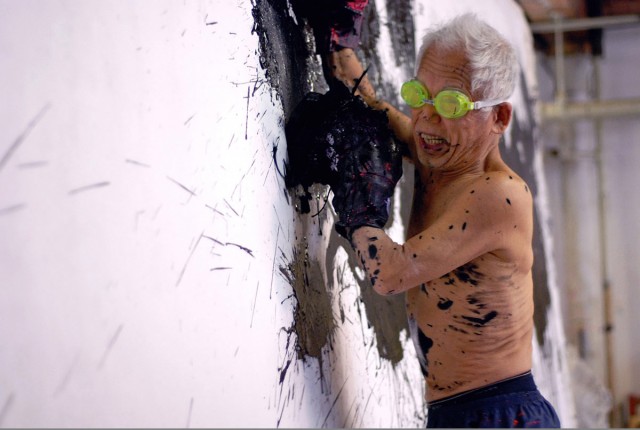
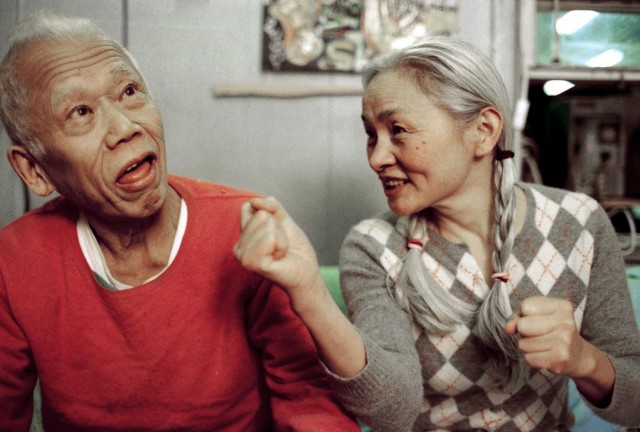
Zachary Heinzerling’s Cutie and the Boxer is a beautifully told story of love and art and the many sacrifices one must make to try to succeed in both. In 1969, controversial Japanese Neo Dada action painter and sculptor Ushio Shinohara came to New York City, looking to expand his career. According to the catalog for the recent MoMA show “Tokyo 1955-1970: A New Avant-Garde,” which featured four works by Ushio, “American art had seemed to him to be ‘marching toward the glorious prairie of the rainbow and oasis of the future, carrying all the world’s expectations of modern painting.’” Four years later, he met nineteen-year-old Noriko, who had left Japan to become an artist in New York as well. The two fell in love and have been together ever since, immersed in a fascinating relationship that Heinzerling explores over a five-year period in his splendid feature-length theatrical debut. Ushio and Noriko live in a cramped apartment and studio in DUMBO, where he puts on boxing gloves, dips them in paint, and pounds away at large, rectangular canvases and builds oversized motorcycle sculptures out of found materials. Meanwhile, Noriko, who has spent most of the last forty years taking care of her often childlike husband and staying with him through some rowdy times and battles with the bottle, is finally creating her own work, an R. Crumb-like series of drawings detailing the life of her alter ego, Cutie, and her often cruel husband, Bullie. (“Ushi” means “bull” in Japanese.) While Ushio is more forthcoming verbally in the film, mugging for the camera and speaking his mind, the pig-tailed Noriko is far more tentative, so director and cinematographer Heinzerling brings her tale to life by animating her work, her characters jumping off the page to show Cutie’s constant frustration with Bullie.

Ushio Shinohara creates one of his action paintings in CUTIE AND THE BOXER

Ushio Shinohara creates one of his action paintings in CUTIE AND THE BOXER

During the course of the too-short eighty-two-minute film — it would have been great to spend even more time with these unique and compelling figures — the audience is introduced to the couple’s forty-year-old son, who has some issues of his own; Guggenheim senior curator of Asian Art Alexandra Munroe, who stops by the studio to consider purchasing one of Ushio’s boxing paintings for the museum; and Chelsea gallery owner Ethan Cohen, who represents Ushio. But things never quite take off for Ushio, who seems to always be right on the cusp of making it. Instead, the couple struggles to pay their rent. One of the funniest, yet somehow tragic, scenes in the film involves Ushio packing up some of his sculptures — forcing them into a suitcase like clothing — and heading back to Japan to try to sell some pieces. Cutie and the Boxer is a special documentary that gets to the heart of the creative process as it applies both to art and love, focusing on two disparate people who have made a strange yet thoroughly charming life for themselves. Cutie and the Boxer is screening September 19 at 7:30 as part of two Nitehawk Cinema monthly series, “Art Seen” and “Local Color,” and will be followed by a Q&A with the director. “Art Seen” continues September 21-22 with Chris Marker’s La Jetée and Ben Rivers’s Slow Action, while “Local Color” returns October 30 with Amy Nicholson’s Zipper.

MIXER READING AND MUSIC SERIES: LUCY CORIN, ALINA SIMONE, AND RAYYA ELIAS

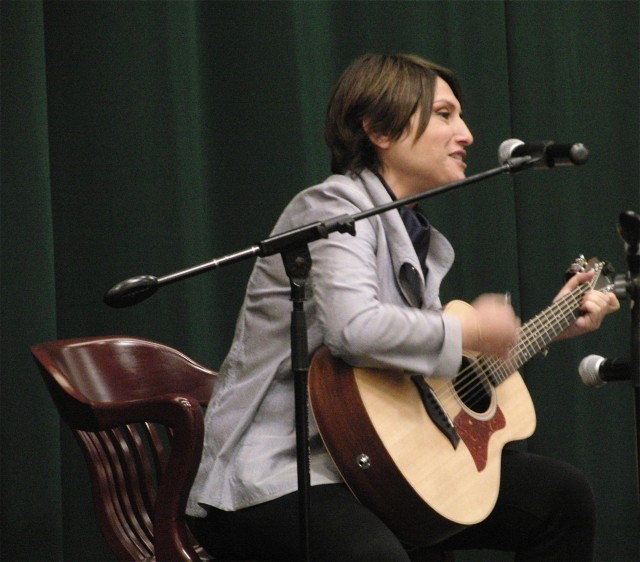
Rayya Elias will read from her memoir and play a twenty-minute set at free Mixer series at Cake Shop on September 18 (photo by twi-ny/mdr)

Rayya Elias will read from her memoir and play a twenty-minute set at free Mixer series at Cake Shop on September 18 (photo by twi-ny/mdr)

Cake Shop
152 Ludlow St.
Wednesday, September 18, free, 7:00
212-253-0036
www.cake-shop.com

Hosts Melissa Febos and Rebecca Keith have put together another eclectic collection of writers for this month’s edition of the Mixer Reading and Music Series, taking place September 18 at 7:00 at Cake Shop. Lucy Corin will be reading from her new collection, One Hundred Apocalypses and Other Apocalypses (McSweeney’s, August 2013), Alina Simone will share parts of her latest novel, Note to Self (Faber & Faber, June 2013), and Rayya Elias will be delving into her debut, Harley Loco: A Memoir of Hard Living, Hair, and Post-Punk from the Middle East to the Lower East Side (Viking, April 2013). In addition, Elias, who has been a hair stylist to the stars, a punk rocker, a homeless woman, a drug addict, and an incarcerated prisoner during her remarkable life, will be playing a twenty-minute set of songs that serve as the soundtrack to her book.

ANNA NICOLE

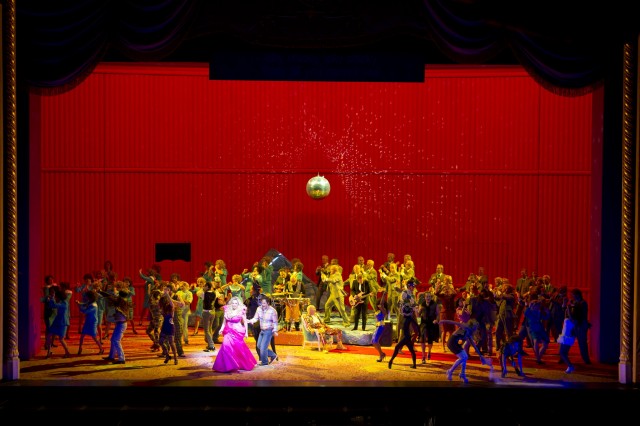
(photo by ROH/Bill Cooper)

The Royal Opera House’s award-winning, lavish production of ANNA NICOLE comes to BAM this month (photo by ROH/Bill Cooper)

NEXT WAVE FESTIVAL
BAM Howard Gilman Opera House
30 Lafayette Ave. between Ashland Pl. & St. Felix St.
September 17-28, $25-$235
718-636-4100
www.bam.org
www.roh.org.uk

Opera can tend to be a bit high-brow, but British musician, composer, and actor Richard Thomas tends not to choose the most erudite, cerebral subjects for his operas. Ten years ago, Thomas collaborated with Stewart Lee on Jerry Springer: The Opera, which was indeed about the daytime talk-show host; the show went on to win a Laurence Olivier Award for Best New Musical. Next, Thomas turned his attention to another controversial pop-culture figure, Anna Nicole Smith. Anna Nicole, which premiered in February 2011 at the Royal Opera House in Covent Garden, comes to BAM for seven hotly anticipated performances September 17-28. The two-and-a-half-hour show is presented with New York City Opera, whose chorus and orchestra are part of the production; Sarah Joy Miller plays the title character, who lived a tragic only-in-America tabloid life, with James Barbour as her father, Ben Davis as her first husband, Robert Brubaker as her second husband, Mary Testa as her aunt Kaye, and John Easterlin as Larry King. The score was composed by Mark-Anthony Turnage (Greek, The Silver Tassie), while Thomas wrote the libretto; Richard Jones (Lady Macbeth of Mtsensk, the Bitter Tears of Petra von Kant) directs, with Steven Sloane conducting. Nicky Gillibrand designed the costumes, with sets by Miriam Buether and choreography by Aletta Collins. On September 16 at 7:00 ($15), Turnage, Thomas, and Jones will be at BAMcafé for the discussion “The Making of Anna Nicole,” moderated by Elaine Padmore. And on September 22 at noon, in conjunction with the Brooklyn Book Festival, Simon Critchley will host the free talk “On Truth (and Lies) in Beauty” with Hilton Als and Alexander Nehamas.

FIAF FALL FSTVL: CROSSING THE LINE

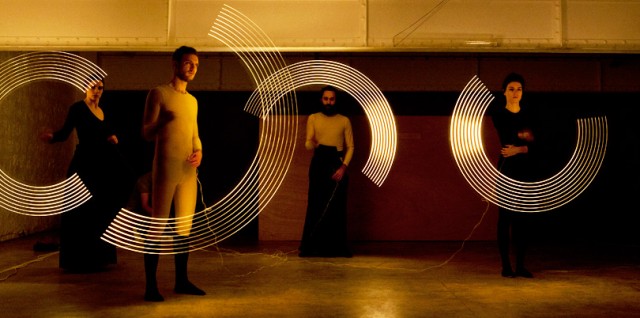
Eliane Radigue and Xavier Veilhan’s SYSTEMA OCCAM kicks off FIAF’s seventh annual Crossing the Line festival

Eliane Radigue and Xavier Veilhan’s SYSTEMA OCCAM kicks off FIAF’s seventh annual Crossing the Line festival

French Institute Alliance Française and other locations
Florence Gould Hall, 55 East 59th St. between Madison & Park Aves.
Le Skyroom and FIAF Gallery, 22 East 60th St. between Madison & Park Aves.
September 19 – October 13, free – $30
212-355-6160
www.fiaf.org

Curators Lili Chopra, Simon Dove, and Gideon Lester have once again put together an impressive, wide-ranging program for the Crossing the Line festival, now in its seventh year. Sponsored by the French Institute Alliance Française and taking place there as well as at other venues around the city, CTL features cutting-edge art, dance, music, theater, discussion, and more from an international collection of multidisciplinary performers, with many events free and nothing costing more than $30. The twenty-five-day festival begins September 19 with electronic music composer Eliane Radigue and artist Xavier Veilhan collaborating on Systema Occam (Florence Gould Hall, $30), a multimedia performance installation that is part of CTL’s “New Settings” series, a joint venture with Hermès; the fashion company will be hosting Martine Fougeron’s “Teen Tribe” photo exhibition at the Gallery at Hermès from September 20 to November 8. In Capitalism Works for Me! True/False (September 20, October 6-9, free), Steve Lambert will keep score in Times Square as people vote on whether capitalism indeed works for them. The award-winning Nature Theater of Oklahoma presents episodes 4.5 and 5 at FIAF of their massive undertaking, Life and Times (September 20-21, $30), accompanied by the FIAF Gallery show “10fps,” consisting of 1,343 hand-colored drawings (September 21 – November 2, free). For “The Library,” Fanny de Chaillé invites people to FIAF’s Haskell Library on September 24 and 26 and the NYPL’s Jefferson Market Branch on September 27 (free), where they can choose books that are actually men and women who will share their stories verbally one on one.

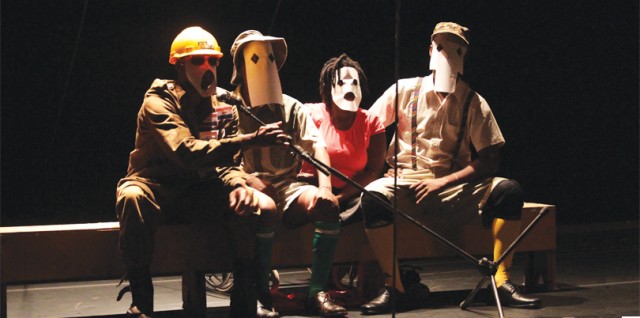
Boyzie Cekwana and Panaibra Canda look at postcolonial Africa in THE INKOMATI (DIS)CORD

Boyzie Cekwana and Panaibra Canda look at postcolonial Africa in THE INKOMATI (DIS)CORD

In The Inkomati (dis)cord (September 25-26, New York Live Arts, $20), Boyzie Cekwana and Panaibra Canda use contemporary dance to examine postcolonial Africa. De Chaillé teams up with Philippe Ramette for Passage à l’acte / Acting Out (September 26-28, Invisible Dog, $30), using absurdist human sculpture to “rationalize the irrational.” Dancer and choreographer Nora Chipaumire will perform the CTL-commissioned solo piece rite riot (October 3-5, Le Skyroom, $30), exploring African stereotypes, collaborating with writer Teju Cole and visual artist Wangechi Mutu. Pascal Rembert’s large-scale A (micro) history of world economics, danced (October 11-13, La MaMa, $20) features New Yorkers discussing how the financial crisis impacted their lives. The festival also includes works by Annie Dorsen, Ernesto Pujol and Carol Becker, Bouchra Ouizguen, Tim Etchells, and Kyle deCamp and Joshua Thorson, in addition to a series of talks and conversations.

ALL THE FACES OF THE MOON

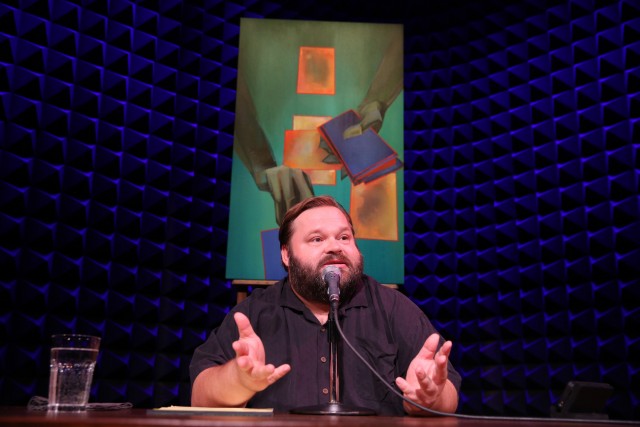
Mike Daisey mixes reality and fantasy in ambitious, epic twenty-nine-night tale at Joe’s Pub (photo by Joan Marcus)

Mike Daisey mixes reality and fantasy in ambitious, epic twenty-nine-night tale at Joe’s Pub (photo by Joan Marcus)

Joe’s Pub
425 Lafayette St.
Nightly through October 3, $26.50 ($20 with code DAISEY), no food or drink minimum, 7:00
212-967-7555
www.joespub.com
www.mikedaisey.blogspot.com

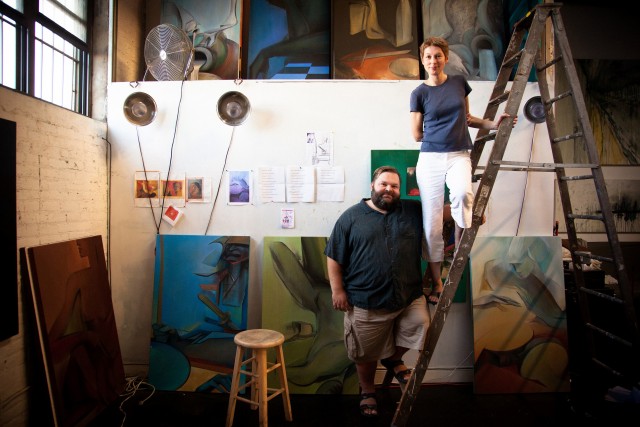
Monologist Mike Daisey is currently in the midst of an epic New York story at Joe’s Pub, a twenty-nine-consecutive-night “theatrical novel” that continues through October 3. Each evening, Daisey sits at a table for between sixty and seventy-five minutes, with a glass of water, a handkerchief to mop his perpetually sweaty face and brow, and a pad on which he has written an outline of what he is going to talk about. Behind him on an easel is a painting by Larissa Tokmakova (There There), who created a different canvas for each night. Daisey, whose last piece, The Agony and the Ecstasy of Steve Jobs, stirred up quite a controversy when it was revealed that not every word in his story of Chinese workers who make Apple products at the massive Foxconn facility in Shenzhen was true, this time very deliberately mixes fact and fiction, reality and fantasy. The first part of each show generally deals with Daisey’s personal and professional life, as he discusses his childhood in Maine, self-deprecatingly talks about his girth, cynically examines life in the American theater, relates his bout with suicidal thoughts, makes fun of the price of food audience members are eating (unlike most shows at Joe’s Pub, there is no food or drink minimum), and brings up the potential of having sex in strange places with his wife, Jean-Michele Gregory, who is also the director.

(photo by Sabrina Fonseca)

Mike Daisey and painter Larissa Tokmakova in the studio, preparing for ALL THE FACES OF THE MOON (photo by Sabrina Fonseca)

Working from an outline, Daisey veers off into riotous tangents, his inflections suddenly going from soft and gentle to loud and sharp as he rants, raves, and rages about Dungeons and Dragons, Bob Dole, McDonald’s, Apple, McSweeney’s, vampires, the First Church of Christ IKEA Redeemer, Manhattan Theatre Club, and, at the center of it all, a changing New York City. But then, about halfway through, Daisey shifts gears, delving into a fantastical, surreal world where parties go on for years, Death follows him, and a mysterious character known as the Big Guy hires an even more mysterious figure named Jack to kill him (the Big Guy). At first this transition is confusing, seemingly arriving out of nowhere, but it eventually all comes together, especially if you see or listen to multiple shows. (A podcast of each performance is posted online by noon the next day.) Daisey is an engaging performer who is not afraid to take risks, a master storyteller who puts it all out there, adapting to the situation as necessary, whether sensing a lull in the proceedings or making a reference that very few people get. There’s an immediacy and intimacy about his presentation that instantly grabs the audience, which is willing to forgive Daisey his past problems and join him on this wildly ambitious ride, which features such intriguing chapter titles as “The Naked Emperor Is Still Laughing,” “Jupiter Is a King Who Never Came Back,” “Saturn Is a Father Devouring His Children,” and “The World Is More Than We Will Ever Know.” As a bonus, ticket holders receive a special tarot card for that specific show, featuring the name of the chapter and a color image of Tokmakova’s painting for that night; the tarot cards are also available to those who write legitimate reviews of individual podcasts.

JOHN ZORN SELECTS: INVESTIGATION OF A CITIZEN ABOVE SUSPICION

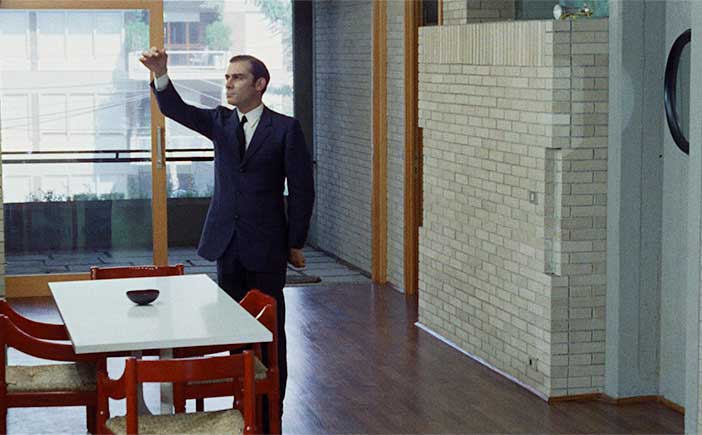
Gian Maria Volontè stars as a man seemingly above the law in Elio Petri’s 1970 Italian absurdist farce

INVESTIGATION OF A CITIZEN ABOVE SUSPICION (INDAGINE SU UN CITTADINO AL DI SOPRA DI OGNI SOSPETTO) (Elio Petri, 1970)
Anthology Film Archives
32 Second Ave. at Second St.
Sunday, September 15, 9:00, and Friday, September 27, 9:00
Series runs September 12-30
212-505-5181
www.anthologyfilmarchives.org

As Investigation of a Citizen Above Suspicion begins, a man (Gian Maria Volontè) kills a woman (Florinda Bolkan) in the midst of some rather kinky sex. The man then goes out of his way to leave behind evidence tying him to the brutal crime, including making sure he is spotted as he exits the woman’s building complex. It is soon revealed that he is the former head of homicide in Rome who has just been promoted to chief of political intelligence, his victim a married lover of his who enjoyed acting out real murder cases with him. “How will you kill me this time?” she asks in a flashback, not knowing where their games will ultimately lead. For the rest of Elio Petri’s (A Quiet Place in the Country) absurdist farce, the man practically dares his colleagues to catch him as he continues to build a case against himself and rails against criminal and political terrorists and subversives in neo-fascist romps, filmed in daring close-up, that emphasize the importance of keeping the masses repressed. Shot in broad colors and featuring a playful score by Ennio Morricone, Investigation of a Citizen Above Suspicion is an enticing police procedural — in which the culprit is the man in charge of the case — as well as a satiric look at the state of Italian politics in 1970, as social unrest and sexual freedom grew throughout Europe and America. “Repressing all those evils is to cure them,” the man declares in a fiery speech to his department. Volontè (A Fistful of Dollars, For a Few Dollars More) clearly has a ball as a man who either wants to be caught or is out to prove that he is indeed above the law, Petri carefully keeping his motive ambiguous in this wonderful black comedy.
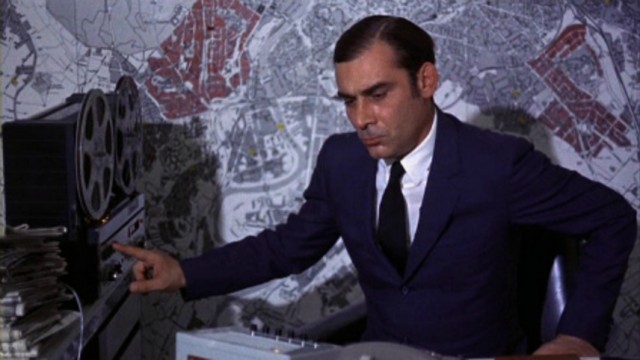
John Zorn chose INVESTIGATION OF A CITIZEN ABOVE SUSPICION for series because of its playful Ennio Morricone score

John Zorn chose INVESTIGATION OF A CITIZEN ABOVE SUSPICION for series because of its playful Ennio Morricone score

Winner of the Oscar for Best Foreign Language Film and the Grand Prize at Cannes, Investigation of a Citizen Above Suspicion is screening September 15 and 27 as part of the Anthology Film Archives series “John Zorn Selects,” comprising a dozen works chosen by the master experimental musician and Anthology composer-in-residence on the occasion of his sixtieth birthday, focusing on the soundtracks. “Morricone has written so many dynamic and brilliant scores in his huge career (often for Leone) but few have had as original and striking an orchestration as this one,” Zorn explains about Investigation. “The jew’s harp takes a major role here, adding, as so often is the case with Ennio’s scores, a feeling of irony and commentary on the sardonic vibe and black humor of the story. After recording The Big Gundown, my Morricone tribute album, Walter Hill called me in to score one of his Hollywood films. What he wanted was IRONY – which he asked for a bit too often in the form of Cyro Baptista’s cuica ‘laughing’ at the onscreen action. I couldn’t do it then and I can’t do it now. I have no idea why people think they hear ‘irony’ or ‘sarcasm’ in my work. There is NONE and never has been. My score was junked and saved me from being offered further work in the Hollywood dream factory.” The festival runs through September 30 and includes such other films as Roy William Neill’s Frankenstein Meets the Wolf Man, Roman Polanski’s Chinatown, Sidney J. Furie’s The Ipcress File, and Irving Lerner’s Murder by Contact. From September 20 to 28, Anthology will present “A Pocketful of Firecrackers: The Film Scores of John Zorn,” consisting of such films as Marc Levin’s Protocols of Zion, Michael Glawogger’s Workingman’s Death, and Joseph Dorman’s Sholom Aleichem: Laughing in the Darkness, but the real highlight are two nights of Zorn performing live to short films.