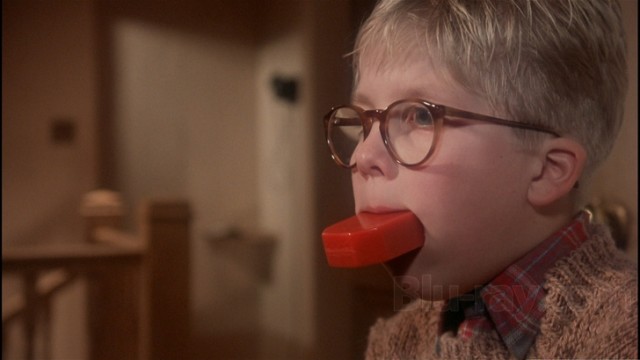
Nitehawk Cinema is serving up quite a tasty treat at special screening of A CHRISTMAS STORY
DECEMBER BRUNCH & MIDNITE — NAUGHTY AND NICE: A CHRISTMAS STORY (Bob Clark, 1983)
Nitehawk Cinema
136 Metropolitan Ave. between Berry St. & Wythe Ave.
Wednesday, December 11, $75, 7:15
718-384-3980
www.nitehawkcinema.com
 Once upon a time, there was a little cult movie that so perfectly captured the real Christmas spirit that it was a special holiday gift for those few who knew of its myriad charms. But when word got out, it sure got out, making A Christmas Story more ubiquitous in December than It’s a Wonderful Life. In fact, TBS will once again host a twenty-four-hour marathon of the film beginning at 8:00 on Christmas Eve, and the stage musical is back in New York City, running December 11-29 at the Theater at Madison Square Garden. In A Christmas Story — which is directed by Bob Clark, who also made Porky’s and another holiday favorite, 1974’s Black Christmas — radio legend Jean Shepherd narrates stories based on his own life, which deal with light-up leg lamps and crossword puzzles, saying fffffffffff-udge and eating soap, shopping for trees and visiting Santa, but mostly, of course, they’re about family. And this is one crazy family, with Darren (Kolchak) McGavin as the grumpy Old Man, Melinda Dillon as his much-too-sweet wife, Ian Petrella as younger brother Randy, and Peter Billingsley as Ralphie, who dreams of getting his very own official Red Ryder carbine-action two-hundred-shot range model air rifle. And yes, little Scotty Schwartz, who plays Flick the pole licker, did indeed become a porn star, appearing in such naughty romps as New Wave Hookers 5, Dirty Bob’s Xcellent Adventures 35 & 36, and Still Insatiable. There are many ways to see A Christmas Story this holiday season, but the best might just be at Nitehawk Cinema’s “Naughty and Nice” Film Feast on December 11 at 7:15, when the movie will be shown along with a menu specially created for the screening. The four-course dinner begins with chestnut and cranberry stuffing bites with snap ginger liqueur whipped cream, paired with an Ovaltini (Lovely, Beautiful, Glorious Christmas), followed by bacon-wrapped meatloaf served with Yukon gold mashed potatoes and braised red cabbage, to be washed down with “Oh Fuuudddggggeee” chocolate stout (Mrs. Parker’s Comfort Food). Next up is roasted duck breast with Bumpuses’ egg roll in a spiced orange reduction, accompanied by hot mulled wine (Chinese Turkey). And finally, for dessert, there’s coconut snowball cake (Pink Nightmare). Now, that sounds like a Christmas dinner you’ll never forget.

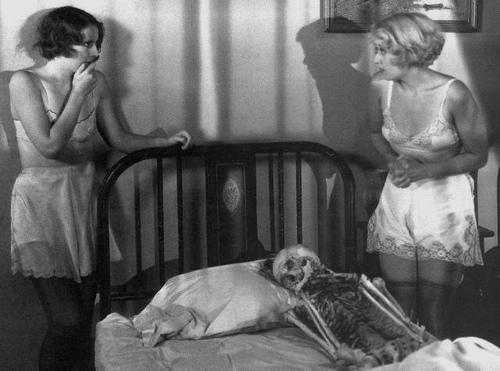
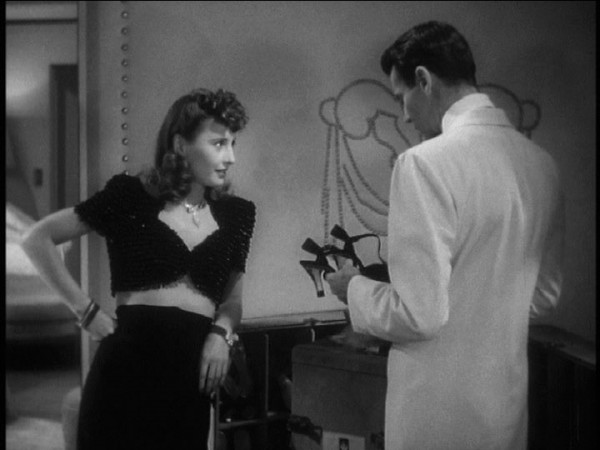
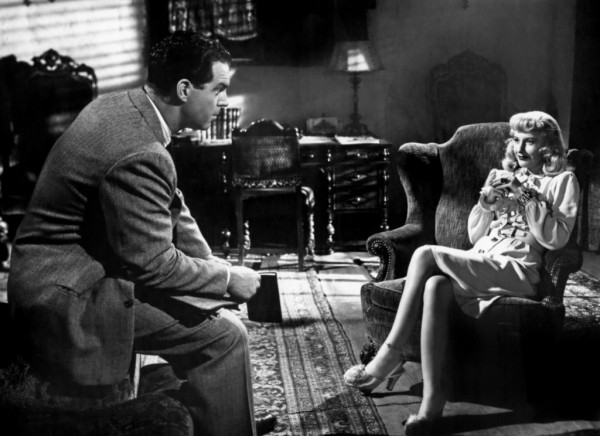
 William A. Wellman’s rarely screened 1931 doozy, Night Nurse, is the first of five collaborations between Wellman and Barbara Stanwyck. Based on Dora Macy’s 1930 novel, Night Nurse stars Stanwyck as Lora Hart, a young woman determined to become a nurse. She gets a probationary job at a city hospital, where she is taken under the wing of Maloney (Joan Blondell), who likes to break the rules and torture the head nurse, the stodgy Miss Dillon (Vera Lewis). Shortly after treating a bootlegger (Ben Lyon) for a gunshot wound and agreeing not to report it to the police, Lora starts working for a shady doctor (Ralf Harolde) taking care of two sick children (Marcia Mae Jones and Betty Jane Graham) whose proudly dipsomaniac mother (Charlotte Merriam) is being manipulated by her suspicious chauffeur (Clark Gable). Wellman pulls out all the stops, hinting at or simply depicting murder, child endangerment, rape, alcoholism, lesbianism, physical brutality, and Blondell and Stanwyck regularly frolicking around in their undergarments. It’s as if Wellman is thumbing his nose directly at the soon-to-be-in-place Hays Code in scene after scene. Although far from his best film — Wellman directed such classics as Wings (1927), The Public Enemy (1931), A Star Is Born (1937), Nothing Sacred (1937), Beau Geste (1939), and The Ox-Bow Incident (1943) — Night Nurse is an overly melodramatic, dated, but entertaining little tale with quite a surprise ending. Night Nurse is screening twice on December 8 as part of Film Forum’s epic “Stanwyck” series and will be shown in a double feature with the uncensored, dastardly sordid version of Alfred E. Green’s 1933 Baby Face, in which Stanwyck plays a woman who was pimped out by her father in her early teens and now knows how to use her body to get exactly what she wants. The festival is being held in conjunction with the first major biography of the glamorous star, Victoria Wilson’s A Life of Barbara Stanwyck: Steel-True 1907-1940; Wilson will be introducing several films over the course of the series, which runs December 6-31, and will give the illustrated talk “Stanwyck Before Hollywood” on December 8 at 3:30 before the screening of Baby Face.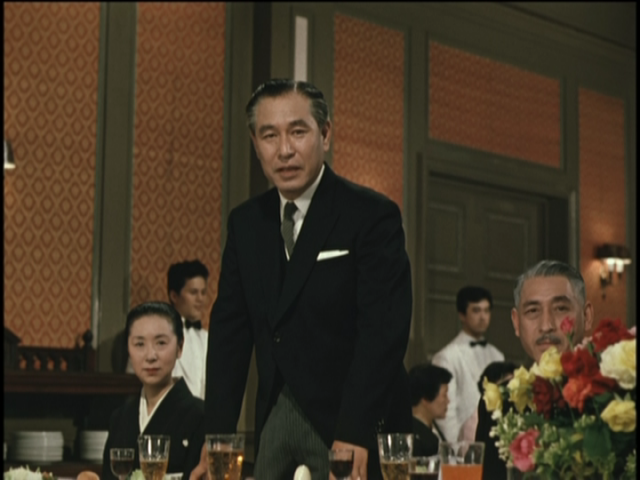
 Yasujirō Ozu’s first film in color, at the studio’s request, is another engagingly told exploration of the changing relationship between parents and children, the traditional and the modern, in postwar Japan. Both funny and elegiac, Equinox Flower opens with businessman Wataru Hirayama (Shin Saburi) giving a surprisingly personal speech at a friend’s daughter’s wedding, explaining that he is envious that the newlyweds are truly in love, as opposed to his marriage, which was arranged for him and his wife, Kiyoko (Kinuyo Tanaka). Hirayama is later approached by an old middle school friend, Mikami (Ozu regular Chishu Ryu), who wants him to speak with his daughter, Fumiko (Yoshiko Kuga), who has left home to be with a man against her father’s will. Meanwhile, Yukiko (Fujiko Yamamoto), a friend of Hirayama’s elder daughter, Setsuko (Ineko Arima), is constantly being set up by her gossipy mother, Hatsu (Chieko Naniwa). Hirayama does not seem to be instantly against what Fumiko and Yukiko want for themselves, but when a young salaryman named Taniguchi (Keiji Sada) asks Hirayama for permission to marry his older daughter, Setsuko (Ineko Arima), Hirayama stands firmly against their wedding, claiming that he will decide Setsuko’s future. “Can’t I find my own happiness?” Setsuko cries out. The widening gap between father and daughter represents the modernization Japan is experiencing, but the past is always close at hand; Ozu and longtime cowriter Kōgo Noda even have Taniguchi being transferred to Hiroshima, the scene of such tragedy and devastation. Yet there is still a lighthearted aspect to Equinox Flower, and Ozu and cinematographer Yuharu Atsuta embrace the use of color, including beautiful outdoor scenes of Hirayama and Kiyoko looking out across a river and mountain, a train station sign warning of dangerous winds, the flashing neon RCA Victor building, and laundry floating against a cloudy blue sky. The interiors are carefully designed as well, with objects of various colors arranged like still-life paintings, particularly a red teapot that shows up in numerous shots. And Kiyoko’s seemingly offhanded adjustment of a broom hanging on the wall is unforgettable. But at the center of it all is Saburi’s marvelously gentle performance as a proud man caught between the past, the present, and the future. Equinox Flower is screening December 8-12 as part of the Film Society of Lincoln Center festival “Ozu and His Afterlives,” which honors the 110th anniversary of the master filmmaker’s birth and the 50th anniversary of his death; he died on his birthday at the age of sixty in 1963. The series also features Ozu’s An Autumn Afternoon in addition to seven works that were either directly or indirectly inspired by Ozu and his unique style, including Hirokazu Kore-eda’s Still Walking, Jim Jarmusch’s Stranger Than Paradise, Aki Kaurismäki’s The Match Factory Girl, Claire Denis’s 35 Shots of Rum, Pedro Costa’s In Vanda’s Room, and Wim Wenders’s Tokyo-Ga.