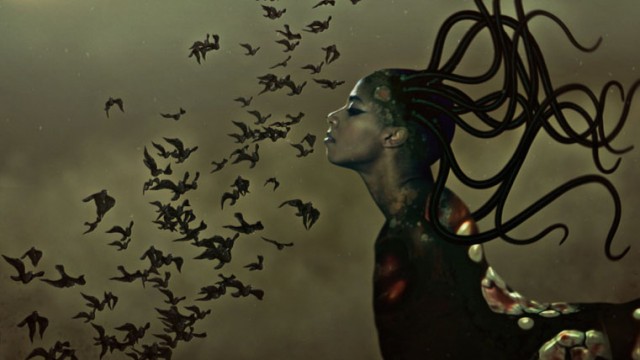
Wangechi Mutu, still from “The End of eating Everything,” animated video, color, sound, 8 min., 2013 (courtesy of the artist / © Wangechi Mutu)
Brooklyn Museum
200 Eastern Parkway at Washington St.
Saturday, December 7, free, 5:00 – 11:00 (some events require free tickets distributed in advance at the Visitor Center)
212-864-5400
www.brooklynmuseum.org
The December edition of the Brooklyn Museum’s free First Saturdays program takes a look at Brooklyn-based Kenyan visual artist Wangechi Mutu in conjunction with the midcareer survey “Wangechi Mutu: A Fantastic Journey.” The evening will include a curator talk by Saisha Grayson on the Mutu show, an arts workshop demonstrating how to make Mutu-inspired collages, pop-up gallery talks, an artist talk by Nigerian-born Njideka Akunyili, a screening of Arthur Jafa and Kahlil Joseph’s 2013 documentary Dreams Are Colder Than Death about being black in America, live music by Pegasus Warning and Rebellum, a spoken-word performance by Saul Williams, and book club readings by Kiini Ibura Salaam and Bridgett M. Davis, followed by a discussion examining their work in the context of Mutu’s art, moderated by Tayari Jones and presented by Bold as Love magazine. In addition, the galleries will be open late, giving visitors plenty of opportunity to check out “War / Photography: Images of Armed Conflict and Its Aftermath,” “Twice Militant: Lorraine Hansberry’s Letters to ‘The Ladder,’” “Divine Felines: Cats of Ancient Egypt,” “Life, Death, and Transformation in the Americas,” “Connecting Cultures: A World in Brooklyn,” “The Fashion World of Jean Paul Gaultier: From the Sidewalk to the Catwalk,” and other exhibits.
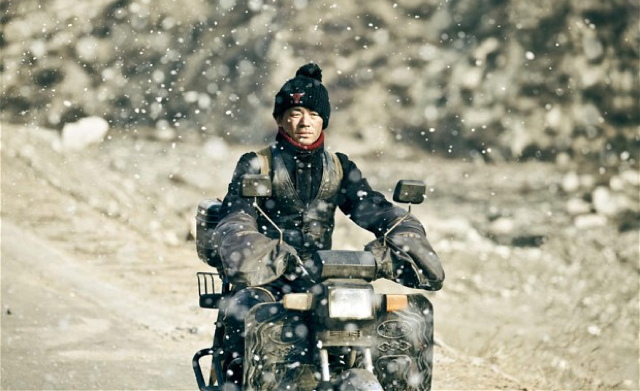
 During his sixteen-year career, Sixth Generation Chinese filmmaker Jia Zhangke has made both narrative works (The World, Platform, Still Life) and documentaries (Useless, I Wish I Knew), with his fiction films containing elements of nonfiction and vice versa. Such is the case with his latest film, the powerful A Touch of Sin, which explores four based-on-fact outbreaks of shocking violence in four different regions of China. In Shanxi, outspoken miner Dahai (Jiang Wu) won’t stay quiet about the rampant corruption of the village elders. In Chongqing, married migrant worker and father Zhao San (Wang Baoqiang) obtains a handgun and is not afraid to use it. In Hubei, brothel receptionist Ziao Yu (Zhao Tao, Jia’s longtime muse and now wife) can no longer take the abuse and assumptions of the male clientele. And in Dongguan, young Xiao Hui (Luo Lanshan) tries to make a life for himself but is soon overwhelmed by his lack of success. Inspired by King Hu’s 1971 wuxia film A Touch of Zen, Jia also owes a debt to Max Ophüls’s 1950 bittersweet romance La Ronde, in which a character from one segment continues into the next, linking the stories. In A Touch of Sin, there is also a character connection in each successive tale, though not as overt, as Jia makes a wry, understated comment on the changing ways that people connect in modern society. In depicting these four acts of violence, Jia also exposes the widening economic gap between the rich and the poor and the social injustice that is prevalent all over contemporary China — as well as the rest of the world — leading to dissatisfied individuals fighting for their dignity in extreme ways. A gripping, frightening film that earned Jia the Best Screenplay Award at Cannes this year, A Touch of Sin is screening December 7 at 7:00 as part of MoMA’s annual series “The Contenders,” which consists of exemplary films that MoMA believes will stand the test of time, continuing with such works as Spike Jonze’s Her, Noah Baumbach’s Frances Ha, and J. C. Chandor’s All Is Lost.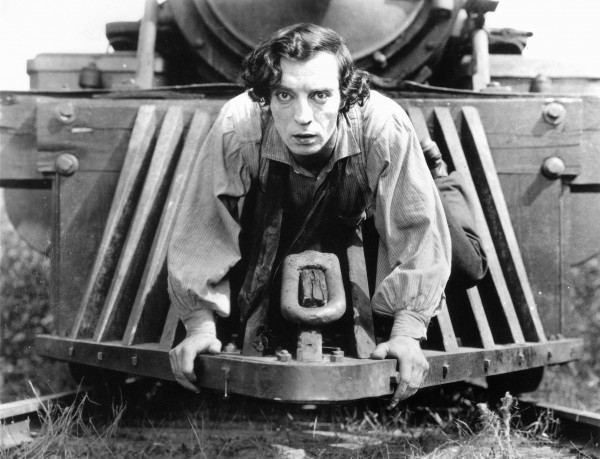
 Buster Keaton’s Civil War-set The General was a box-office failure upon its release in 1926-27, but it is now deservedly recognized as a silent-film classic. Based on William Pittenger’s memoir, The Great Locomotive Chase, the film stars Keaton as Johnnie Gray, a Georgia train man who is rejected by the Confederate army when he tries to enlist to impress his fiancée, Annabelle Lee (Marion Mack). Little does he know that he was turned away because the Confederacy believes he will be more valuable to them as a civilian engineer; meanwhile, Annabelle and her family think he’s a coward, not believing he even tried to sign up to fight in the first place. But when Union spies led by Captain Anderson (Glen Cavender) steal his beloved train, affectionately known as the General — and capture Annabelle in the process — Johnnie steams into action, doing whatever it takes to get his two loves back while also trying the save the South from a sneak attack. Directed by the Great Stone Face with regular collaborator Clyde Bruckman, The General is a thrilling ride chock-full of dangerous stunts that Keaton performed himself, often involving the moving Western & Electric Railroad train. Keaton manages to make the South sympathetic, depicting the North as evil and conniving, while avoiding any political aspects of the war. And in another sly turn, he casts his father, Joe, who appeared in more than a dozen of his films, as a Union general. The riotous romp was entered into the Library of Congress’s National Film Registry in its inaugural year, 1989, alongside such other classics as The Best Years of Our Lives, Casablanca, Citizen Kane, Dr. Strangelove, Gone with the Wind, The Grapes of Wrath, High Noon, Modern Times, Mr. Smith Goes to Washington, On the Waterfront, Singin’ in the Rain, The Searchers, Sunrise, The Wizard of Oz, and others, which is high praise indeed. The General is screening on December 7 at 5:30 at Anthology Film Archives; at 3:30, Anthology will be showing four of Keaton’s shorts, One Week, Neighbors, The Scarecrow, and The Play House.
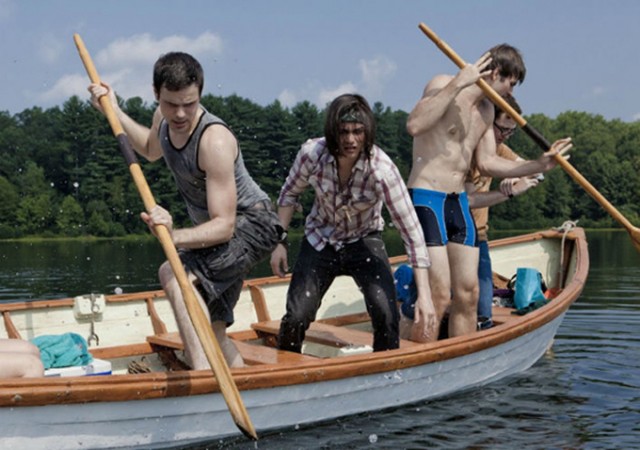
 Jaws and Friday the 13th meet Lifeboat and Lord of the Flies in indie filmmaker Larry Fessenden’s latest thriller, Beneath. Made for Syfy’s Chiller TV channel, Beneath is the first feature film Fessenden (