twi-ny recommended events

COMPLEXIONS CONTEMPORARY BALLET: DREAM ON

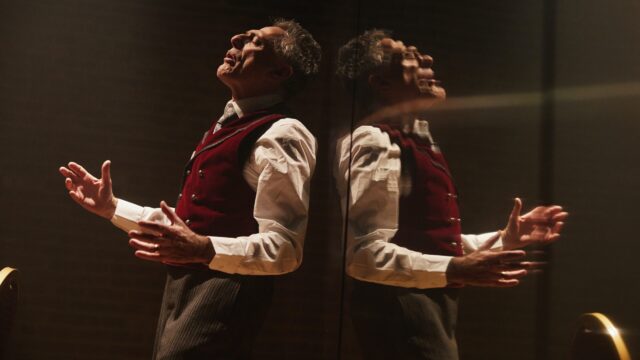
Dwight Rhoden’s Ballad Unto . . . is part of Complexions two-week season at the Joyce

COMPLEXIONS CONTEMPORARY BALLET
The Joyce Theater
175 Eighth Ave. at 19th St.
November 14-26, $62-92
212-691-9740
www.joyce.org
www.complexionsdance.org

Complexions Contemporary Ballet returns to the Joyce this week, kicking off its two-week fall season displaying the diversity that has been its trademark since its founding by Dwight Rhoden and Desmond Richardson in 1994. The company will present three programs plus a sold-out gala, offering work from a wide range of choreographers.

The gala, honoring artistic advisor and Ailey instructor Sarita Allen, will be held on November 14, with Dream On, set to a poem by CCB inaugural poet-journalist-in-residence Aaron Dworkin; Rhoden’s Black Is Beautiful, a 2022 pandemic film making its live debut, with the Pre-Professional Students of Howard University; Justin Peck’s The Dreamers, a 2016 duet set to music by Bohuslav Martinů; Rhoden’s 2015 Ballad Unto . . . , set to music by Bach; and excerpts from Ricardo Amarante’s Love Fear Loss (inspired by the life of Édith Piaf) and the world premieres of Jenn Freeman’s Regardless and Rhoden’s For Crying Out Loud (with music from the U2 album Songs of Surrender).

Program A consists of Ballad Unto . . . , For Crying Out Loud, Love Fear Loss (with pianist Brian Wong), and Regardless (with drummer Price McGuffey). Program B comprises The Dreamers and Rhoden’s 2020 solo Elegy, 2023 Blood Calls Blood, 2020 eight-movement Endgame / Love One, and Ballad Unto. . . . Program C features The Dreamers, Elegy, Blood Calls Blood, For Crying Out Loud, and Ballad Unto. . . .

The November 15 performance will be followed by a Curtain Chat, and there will be a family matinee on November 18. The CCD dancers include Alberto Andrade, Christian Burse, Jacopo Calvo, Kobe Atwood Courtney, Jasmine Heart Cruz, Jillian Davis, Vincenzo Di Primo, Angelo De Serra, Chloe Duryea, Joe Gonzalez, Alexander Haquia, Aristotle Luna, Marissa Mattingly, Laura Perich, Miguel Solano, Lucy Stewart, Candy Tong, Manuel Vaccaro, and April Watson.

“We are thrilled to be headed back to the Joyce with ‘Dream On,’ a dynamic program that showcases the talent and incredible range and diversity that has always been the bedrock of our company,” Rhoden said in a statement. “‘Dream On’ is an affirmation of the dream Desmond and I had twenty-nine years ago, and the passion, pride, and possibility that have brought us this far and encourage us to keep going.”

[Mark Rifkin is a Brooklyn-born, Manhattan-based writer and editor; you can follow him on Substack here.]
TARIQ “BLACK THOUGHT” TROTTER IN CONVERSATION WITH JON STEWART

Tariq Trotter (photo by Joshua Kissi) will discuss his new new memoir at BAM with Jon Stewart this week

Who: Tariq Trotter (Black Thought), Jon Stewart
What: Book launch and conversation
Where: Brooklyn Academy of Music, Harvey Theater at the BAM Strong, 651 Fulton St., 30 Lafayette Ave. between Ashland Pl. & St. Felix St.
When: Tuesday, November 14, $44-$68, 8:00
Why: “The story of my life starts with the fire. A lot of people know I burned down my family’s home when I was six years old, but are not aware of the magnitude of that moment — ­and all that began to unravel after it. That, I have never spoken of publicly, and rarely even to those closest to me,” Tariq Trotter, aka Black Thought, writes at the beginning of his new memoir, The Upcycled Self: A Memoir on the Art of Becoming Who We Are (One World, November 2023, $26.99). “You sometimes hear stories about people who have ‘lost it all’ and rebuilt their lives, but what I learned at a young age is that sometimes shit is just lost forever, or the cracks are so bad the building blocks never quite Lego-­fit the way they once did. We lost everything we had in that fire. Yes, material goods are just ‘things,’ but the things we collect and value — ­especially when we’re young, or broke, or struggling — ­are extensions of who we are. Our visible, tangible losses, then, represent something deeper. In the fire, we lost ourselves.”

Written with Jasmine Martin, the book features such chapters as “A Creative Reckoning,” “Family,” “An Epidemic,” “New City, New Self,” and “The (Square) Roots” as Trotter traces the arc of his life and career. Born in Philadelphia in 1973, Trotter was a graffiti artist and drug dealer before hooking up with Ahmir “Questlove” Thompson in high school and Malik B. in college and finding success as a rapper and MC in the Roots while also establishing a solo career as a musician, actor, film producer, and stage composer and lyricist. He also leads the Roots as the house band on The Tonight Show Starring Jimmy Fallon.

On November 14 at 8:00, Trotter will be at BAM’s Harvey Theater, discussing the book with talk show legend and activist Jon Stewart, the former host of The Daily Show and The Problem with Jon Stewart, which is ending after just two seasons over creative differences with Apple about coverage of China and AI. The $68 tickets come with a copy of Trotter’s book, in which he also writes, “Our lives are a response to the call of our childhoods. Somewhere in the echoes of the past, we find our truest selves. Who am I? Who are you?”

If you can’t make it to BAM, Trotter will be at Columbia’s Miller Theatre on November 28, speaking with journalism dean Jelani Cobb.

JewCE!: THE JEWISH COMIC EXPERIENCE

THE FIRST ANNUAL JEWISH COMIC BOOK CONVENTION
Center for Jewish History
15 West Sixteenth St. between Fifth & Sixth Aves.
Sunday, November 12, $40 (children eight and under free)
jewce.org
www.cjh.org

Jews played key roles in the development of the comic book industry in the United States, as artists, illustrators, editors, and publishers. In 2006-7, the Jewish Museum presented with the Newark Museum the outstanding exhibit “Masters of American Comics,” which explored the work of fourteen artists, several of whom were Jewish.

This weekend the Center for Jewish History is hosting “JewCE!: The Jewish Comic Experience,” being held in conjunction with the exhibit “The Museum and Laboratory of the Jewish Comics Experience,” consisting of original art, historical memorabilia, and interactive installations focusing on Jewish history, culture, and identity as depicted in comic books, on view through December 29.

Awards will be handed out Saturday night, in such categories as Career Contributions to Jewish Comics, Diverse Jewish Representation, Historical Narratives, Autobiographical Content, Contemporary Topics, and Combating Prejudice. The big day is Sunday, with a full slate of lectures, panel discussions, workshops, artist booths, and more. The guest of honor is Trina Robbins, the Brooklyn-born cartoonist and activist who is in the Will Eisner Hall of Fame and is one of the three characters in the Joni Mitchell song “Ladies of the Canyon” (“Trina takes her paints and her threads / And she weaves a pattern all her own”).

Among the events are “Jewish Roots of the Comic Industry,” “Queering Jewish Comics,” “Kids Comics for Mini Mensches,” “Jewish Female Narratives in the Graphic Arts,” and “Holy Graphic Novels!”; the lineup of participants includes Frank Miller, Stephanie Phillips, Neil Kleid, Koren Shadmi, Fabrice Sapolsky, Yehudi Mercado, Dean Haspiel, Chari Pere, Ken Krimstein, Danny Fingeroth, Barry Deutsch, Roy Schwartz, Amy Kurzweil, E. Lockhart, Ben Kahn, Emily Bowen Cohen, Jenny Caplan, Karen Green, Leela Corman, Paul Levitz, Tahneer Oksman, Terri Libenson, Simcha Weinstein, JT Waldman, Jessica Tamar Deutsch, and Stan Mack, as well as Source Point Press, Big Apple Comics, Jews in Doodles, Israeli Defense Comics, Jewish Arts Salon, Stand Up! Comics/Stand Up! Records, and Torah Comics. Below is the full schedule.

Exhibition continues at the Center for Jewish History through December 29

Jewish Roots of the Comic Industry, with Arie Kaplan, Roy Schwartz, and Simcha Weinstein, moderated by Danny Fingeroth, auditorium, 10:00

Jewish Folklore in Comics, with Dani Colman, Trian Robbins, Chanan Beizer, and Yehudi Mercado, moderated by Eddy Portnoy, Kovno Room, 10:00

Jump into Drawing Comics!, with Joshu Edelglass, for kids ages 8-12, Discovery Room, 10:00

From Strength to Strength: Jewish Superheroes through the Ages!, with Brian Michael Bendis, E. Lockhart, Dean Haspiel, and Frank Miller, moderated by Roy Schwartz, auditorium, 11:30

Queering Jewish Comics, with Ben Kahn, Shira Spector, Barry Deutsch, and Miriam Libicki, moderated by Tahneer Oksman, Kovno Room, 11:30

Jewish Comics Trivia Game: JewCE Edition, with Sholly Fisch and Jeremy Arcus-Goldberg, Discovery Room, 11:30

Breaking the Mainstream: Getting Past Ashkenormativity and Secularism in Comics, with Daniel Lobell, Emily Bowen Cohen, Joshua Sky, and Carol Isaacs, moderated by Arnon Shorr, auditorium, 1:00

Kids Comics for Mini Mensches, with Yehudi Mercado, Terri Libenson, Chari Pere, and Barry Deutsch, moderated by Jeremy Dauber, Kovno Room, 1:00

Torah Comic Workshop, with Andrew Galitzer, for kids ages 6-12, Discovery Room, 1:00

Canons Are Made to Blow Up! Retconning, Rebooting, Jossing, and Other Paradigm Shifts, with Brian Michael Bendis, Brian Azzarello, Joshua Sky, and Barbara Slate, moderated by Jenny Caplan, auditorium, 2:30

Jewish Comics and Remembrance Culture, with Rafael Medoff, Ken Krimstein, Stan Mack, and Trina Robbins, moderated by Samantha Baskind, Kovno Room, 2:30

From Perek to Panel: Using Pictures to Explore Interpretation, with Ben Schachter, for teens and adults, Discovery Room, 2:30

Will Eisner: The First Poet Laureate of the Jewish Graphic Novel, with Paul Levitz and Jules Feiffer (via Zoom), auditorium, 4:00

Telling Other People’s Stories, with Tracy White, Stephanie Phillips, Koren Shadmi, and Neil Kleid, moderated by Julian Voloj, Kovno Room, 4:00

Jewish Comics Trivia Game: JewCE Edition, with Sholly Fisch and Jeremy Arcus-Goldberg, Discovery Room, 4:00

Jewish Female Narratives in the Graphic Arts, with Leela Corman, Amy Kurzweil, Alisa Whitney, and Miriam Libicki, moderated by Karen Green, auditorium, 5:30

Holy Graphic Novels!, with JT Waldman, moderated by Jordan B. Gorfinkel, Kovno Room, 5:30

[Mark Rifkin is a Brooklyn-born, Manhattan-based writer and editor; you can follow him on Substack here.]
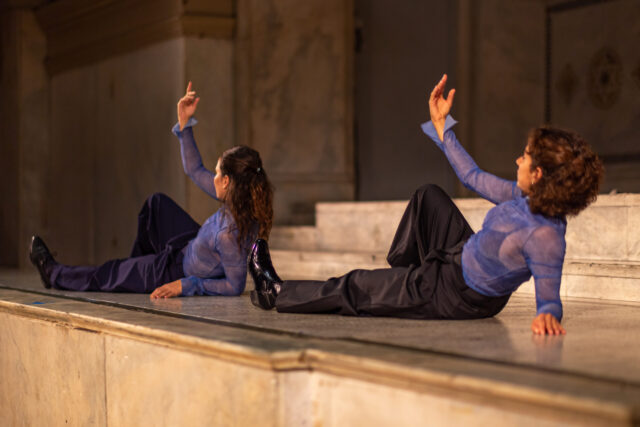
ALL THE DEVILS ARE HERE: HOW SHAKESPEARE INVENTED THE VILLAIN

Patrick Page explores the history of villainy in Shakespeare’s plays in captivating one-man show at DR2 (photo by Julieta Cervantes)

ALL THE DEVILS ARE HERE: HOW SHAKESPEARE INVENTED THE VILLAIN
Daryl Roth Theatre
103 East 15th St. between Irving Pl. & Park Ave.
Tuesday – Sunday through March 31, $110-$160
allthedevilsplay.com

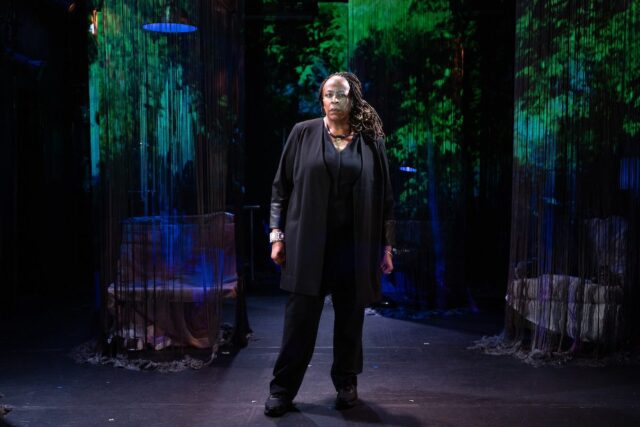
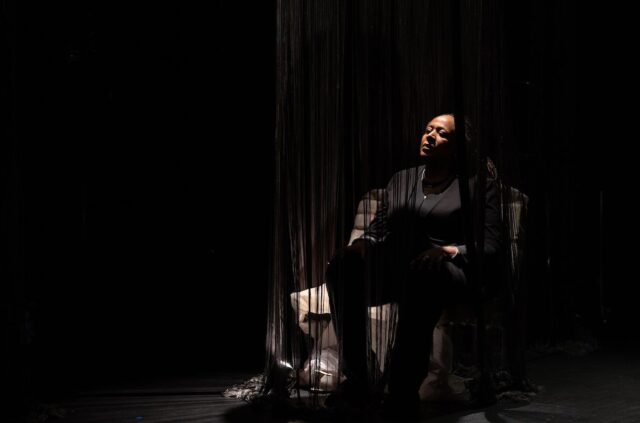
In May 2021, Tony nominee Patrick Page presented a streaming version of his one-man show All the Devils Are Here: How Shakespeare Invented the Villain, recorded in Shakespeare Theatre Company’s empty Sidney Harman Hall in DC. At the time, I wrote, “Page knows what of he speaks; in addition to having portrayed his fair share of Shakespeare baddies, he has played Scar in The Lion King, Scrooge in A Christmas Carol, the Green Goblin in Spider-Man: Turn Off the Dark, Hades in Hadestown, and the Grinch in Dr. Seuss’s How the Grinch Stole Christmas, villains all in one form or another. His command of Shakespeare and the concept of evil is bold and impressive, but he is down-to-earth enough to throw in plenty of surprising modern-day pop-culture references to keep it fresh and relevant to those who might not know much about the Bard or Elizabethan theater.” His bravura performance provided a vital dose of theater to the drama-starved during the lockdowns, and I named it Best Solo Shakespeare Play in twi-ny’s third Pandemic Awards.

He has now brought the show to the Daryl Roth Theatre in Union Square, adapting it for a live audience in the intimate space that seats a mere ninety-nine people. Arnulfo Maldonado’s set features a desk and a chair in front of a red curtain, with various props stored on lighting scaffolds on either side of the stage. Primarily dressed in a red velvet outfit with a vest (the costumes are by Emily Rebholz, with chilling lighting by Stacey Derosier and sinister sound by Darron L West), Page makes only minor garment changes and uses minimal props, including a skull, a dagger, a book, and other items, as he portrays Lady Macbeth (Macbeth), Richard of Gloucester (Richard III), Shylock (The Merchant of Venice), Malvolio (Twelfth Night), Claudius (Hamlet), Angelo (Measure for Measure), Iago (Othello), and other villainous Shakespeare creations. He connects the development of these evildoers to Shakespeare’s own maturation as a playwright, comparing Barabas from Christopher Marlowe’s The Jew of Malta to Aaron the Moor from Titus Andronicus. Exploring the mindset of psychopaths, Page draws a through line among the characters.

“Think of it: It’s a superpower!” he proclaims. “You might become a wizard on Wall Street or an Academy Award–winning producer. You might even become president of the United States. That is a psychopath.”

Page regularly drops in contemporary references, from Facebook and House of Cards to Succession and Uma Thurman as well as a bit of juicy gossip about the Bard.

With his deep, resonant voice and buff body, Page is a mesmerizing performer; it’s easy to be carried away by his imposing stage presence, and the audience’s trust in him is well placed. Simon Godwin, the artistic director of Shakespeare Theatre Company, previously directed Page as King Lear and expertly lets him strut his stuff in All the Devils Are Here as Page delivers a master class in villainy.

Patrick Page beckons the audience to join him on a unique Shakespeare ride in All the Devils Are Here (photo by Julieta Cervantes)

At a talkback after the show I saw, I asked Page about how he adapted the streaming film into the current live play. He responded, “A one-man show is already such a strange thing for an actor because acting is by its very nature a reciprocal process. You really are a reactor. You don’t generate a lot of stuff when you’re in a play with people. You’re simply reacting, listening, reacting, listening, reacting, listening, reacting. So in a one-man show, it’s different. With no audience, of course, you have to make up a lot in your imagination of what might be going on. Now I still have to make up some, but at least you’re there.

“So I feel the vibrations, I feel the energy, I feel the listening, I hear the laughs (as much as I can hear), and that you become my acting partner in the show. And my overall objective, of course, is to communicate this story to you as clearly as I can. And it’s very, very helpful to have someone there listening and thinking, you know, how you would tell a story differently to different people. And so I’m aware that there are people in the audience who have, let us say, a depth of experience with Shakespeare. I’m aware that there are people who’ve had very little experience with Shakespeare. I’m aware that there are people who have had only bad experiences, which many of us have had. It’s likely that you have had bad experiences. And someone tried to get you to read King Lear when you were in high school and, of course, it was completely indecipherable, never meant to be read in that way. So I’m aware of that as I’m telling the story. And that’s part of what animates it.”

With humor and gravitas, Page (Coriolanus, Cymbeline, Casa Valentina, Spring Awakening) deepens our experience of Shakespeare, offering a gift that will stay with you as you continue on your personal adventures with the Bard.

[Mark Rifkin is a Brooklyn-born, Manhattan-based writer and editor; you can follow him on Substack here.]
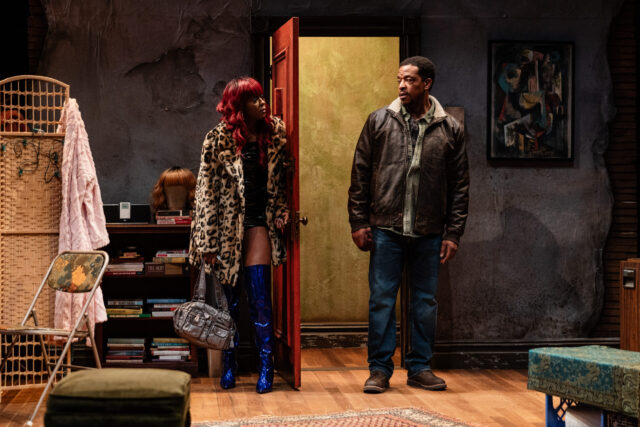
DELIVER ME FROM NOWHERE: THE MAKING OF BRUCE SPRINGSTEEN’S NEBRASKA

Who: Warren Zanes
What: Literary and music discussion
Where: The National Arts Club, 15 Gramercy Park South
When: Wednesday, November 8, free with RSVP, 8:00
Why: Following the international success of his international 1980–81 River tour through North America and Western Europe totaling 140 dates, New Jersey native Bruce Springsteen went into his bedroom on January 3, 1982, with a Teac four-track cassette machine and recorded fifteen songs by himself, then mixed them with an Echoplex. He carried the cassette, sans case, around with him for a few weeks, intending to teach the E Street Band the tunes that could be their next album. It was eventually decided that the songs worked best as they were, and on September 30, 1982, Nebraska was released. In ten songs over forty-one minutes — including “Atlantic City,” “Johnny 99,” “Open All Night,” and “Reason to Believe” — Springsteen took a stark look at Reagan’s America. Two years later, Bruce and the band would explode with Born in the USA — the title song was originally part of the bedroom recordings — but Nebraska has stood the test of time, filled with characters who are still searching for the American dream.

In the spring of 2021, Springsteen invited music journalist and Del Fuegos cofounder Warren Zanes to his Colts Neck home to discuss the evolution and legacy of Nebraska, in time for its fortieth anniversary; the result is Deliver Me from Nowhere: The Making of Bruce Springsteen’s Nebraska (Crown, May 2023, $28). In the first chapter, Zanes writes, “I wanted to know where Nebraska came from, what it led to. It sat between two of Springsteen’s most celebrated recordings, in its own quiet and turmoil. He described it to me as ‘an accident start to finish’ but also as the album that ‘still might be [his] best.’ The recording came from a place and a time in which Springsteen was facing troubles in his life, troubles that had no name as of yet. Wordsworth defines poetry as ‘the spontaneous overflow of powerful feelings . . . recollected in tranquillity.’ Quite differently, Nebraska came from the middle of that ‘overflow,’ was not a thing ‘recollected in tranquillity.’ It came from the heart of trouble and led to still more, its stark character the lasting reward. Nebraska was unfinished, imperfect, delivered into a world hovering at the threshold of the digital, when technology would allow recorded music to hang itself on perfect time, carry perfect pitch, but also risk losing its connection to the unfixed and unfixable. Springsteen’s manager, Jon Landau, recalled for me, over several afternoons at his Westchester home, the way in which Nebraska arrived. Chuck Plotkin, among Springsteen’s producers and a key player in the last stages of Nebraska’s creation, would talk about the anxious labor of trying to make the album conform to industry standards. But Springsteen knew the most by far, because it came from his bedroom.”

Bruce Springsteen and Warren Zanes discuss the making of Nebraska (photo courtesy Warren Zanes)

On November 8, Zanes will be at the National Arts Club to talk about the book, which features such chapters as “The Rhinoceros Club,” “The King of Pop and the Beer Can,” and “Darkness on the Edge of Bed.” The first question Zanes asks Bruce is “Are there any photographs of the room where you recorded Nebraska?” Bruce says no. Zanes writes, “I wanted to see that room because something important was made there, and I wanted to know if by looking at a photograph of the space, I could see traces of what happened, the outlines of Nebraska. And maybe those photographic traces could bring it back to life for me, a resurrection. Photographs of his previous place, the Holmdel farmhouse, are easy to find online. Whether you see Springsteen in them or not, whether the amps and guitars are in the room or not, you look at them knowing who was there once and what got done at the time, Darkness on the Edge of Town and much of The River. The rooms begin to breathe.”

[Mark Rifkin is a Brooklyn-born, Manhattan-based writer and editor; you can follow him on Substack here.]

LAURA ORTMAN & RAVEN CHACON LIVE IN BROOKLYN BRIDGE PARK

Raven Chacon and Laura Ortman will perform a free show in Brooklyn Bridge Park on November 5

Who: Laura Ortman & Raven Chacon
What: Live concert presented by Public Art Fund
Where: Empire Fulton Ferry Lawn, Brooklyn Bridge Park
When: Sunday, November 5, free (advance RSVP recommended), 4:00
Why: Following an earlier rainout, Laura Ortman (White Mountain Apache) and Raven Chacon (Navajo) will activate Nicholas Galanin’s Brooklyn Bridge Park sculpture, In every language there is Land / En cada lengua hay una Tierra, with a free concert on November 5 at 5:00. Chacon is a Pulitzer Prize–winning composer, performer, and installation artist based in Red Hook and Albuquerque, while Ortman is a multi-instrumentalist and composer who has collaborated with Tony Conrad, Jock Soto, Nanobah Becker, Okkyung Lee, Martin Bisi, Jeffrey Gibson, Caroline Monnet, New Red Order, and many others.

Discussing the large-scale immersive piece, Galanin, who is based in Sitka, Alaska, said in a promotional video, “Creative sovereignty and creating work is a form of reclamation of our ideas, our knowledge, our language, our place, while including other perspectives and other ideas and other people’s experiences to be accessed through that work too.”

Ortman and Chacon have worked together previously, including at Ende Tymes X in Brooklyn, the American Academy in Berlin, the Center for Contemporary Arts in Santa Fe, and other locations. In Brooklyn Bridge Park, they will present an improvisational site-specific performance incorporating local field recordings and a mix of instruments. Admission is free, though advance registration is recommended, and attendees are encouraged to bring a blanket to sit on.

[Mark Rifkin is a Brooklyn-born, Manhattan-based writer and editor; you can follow him on Substack here.]
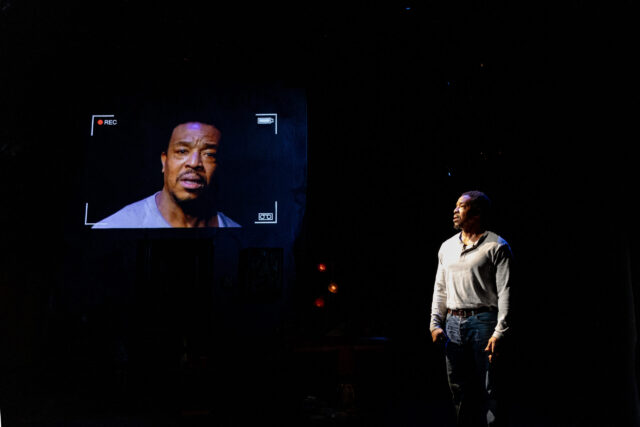
WATCH NIGHT

Bill T. Jones leads rehearsal for upcoming Watch Night at PAC NYC (photo by Stephanie Berger)

WATCH NIGHT
Perelman Performing Arts Center (PAC NYC)
251 Fulton St.
November 3-18, $52-$138
pacnyc.org

Bill T. Jones’s home base might be New York Live Arts, where he’s the artistic director, but he stages works all over New York (and the world). In August, Bill T. Jones/Arnie Zane Company presented the free, site-specific Dance for Sunset in Brookhaven, Long Island. In April, his Deep Blue Sea dazzled audiences at Park Avenue Armory, where he debuted the immersive Afterwardsness the previous year. And last month he was back at NYLA with Curriculum II, kicking off his troupe’s forty-first season.

So it’s no surprise that he is presenting the first dance work at the brand-new Perelman Performing Arts Center (PAC NYC) in Lower Manhattan, by Ground Zero. Running November 3-18, Watch Night will explore tragedy, justice, and forgiveness in these ever-more-difficult times. The multimedia work was conceived by director and choreographer Jones and librettist/poet Marc Bamuthi Joseph; the score is by Brooklyn musician and composer Tamar-kali.

The cast features approximately two dozen dancers portraying such characters as the Wolf, Super/Natural, and members of an Echo Chamber, with an eight-person ensemble including violin, viola, cello, bass, flute, oboe, and clarinet. The set is by Tony-nominated designer Adam Rigg, with costumes by Kara Harmon, lightning by Robert Wierzel, sound by Mikaal Sulaiman, and projections by Lucy Mackinnon.

In a program note, Jones lists dos and don’ts; for example:

DO NOT:
Create an event too easily digested in its desire to succeed by standards not of my making.
Be cowed by the city and this theater site’s precarious history in our fractious era.
Be oppressed by personal fear and anger.
Try to heal the world in this event.
Ignore each character’s worldview, individual psychological motivations that give them dimension and substance.
Attempt to be understood by all viewers and stake holders.

DO:
Acknowledge the privilege of this opportunity and the platform provided by the Perelman Performing Arts Center in its Inaugural Season.
Acknowledge this event is informed by real tragedies, real people, and real consequences.
Explore the potential of this new historic theater, built on contested land and a site of trauma.
Challenge my own taste and notions of abstraction and movement.
Attempt to “see this event” through the eyes of many people — different from myself and very much like me.
Stay alert, grateful, and hungry for joy!

Jones will be on hand for two postshow talkbacks, on November 9 with Joseph, Tamar-kali, and dramaturg Lauren Whitehead, moderated by rabbinical consultant Kendell Pinkney, delving into the creative inspiration behind the show, and on November 12, when Jones and guests from the Interfaith Center of New York will discuss faith and forgiveness. In addition, on December 4, Jones will speak with Joseph at NYLA as part of the ongoing “Bill Chats” series.

In her program note, Whitehead explains, “Every massacre has its moment. In the aftermath of every staggering act of violence we are inundated, for a time, with outrage and rallying cries, marches and memorials, public lament and lengthy speeches and great groanings of grief. And then, as is our way, we metabolize the grotesque. We will ourselves into movie theaters, send our children into schools again. We weep, we wail, and then we walk on. What our show is attempting to do is to ask ‘what if?’ What if we were unsatisfied by platitudes of forgiveness and forgetting? What if instead of moving on, we pointed our rage and discontent in a different direction?”

Don’t expect any easy answers to those challenging questions in what promises to be a memorable experience.

[Mark Rifkin is a Brooklyn-born, Manhattan-based writer and editor; you can follow him on Substack here.]