JODY OBERFELDER PROJECTS — 4CHAMBERS: A SENSORIAL JOURNEY INTO THE HUMAN HEART
Arts@Renaissance, Garden Level
2 Kingsland Ave. at Maspeth Ave., Greenpoint
January 21 – March 22, $60 before February 1, $75 after, Thursdays at 6:30 & 8:00, Fridays & Saturdays at 7:00 & 8:30
866-811-4111
www.jodyoberfelder.com
www.renaissancenbk.org
Last summer, New York-based choreographer, director, and filmmaker Jody Oberfelder presented 4CHAMBERS on Governors Island, an immersive journey inside the human heart in which six dancers led twelve audience members through an abandoned, specially renovated former officer’s house, each room representing another chamber, incorporating film, interactive video, factual information, and plenty of physical contact. “You will be touched by the performers, both literally and figuratively,” we wrote back in July. Although it was her first site-specific installation piece, 4CHAMBERS is not the first time Oberfelder has delved into the nature of the human heart; she previously examined the blood-pumping, life-giving organ in 2012’s Throb. For more than two decades, Jody Oberfelder Projects has been addressing such emotions as love and the search for social identity in such works as LineAge, The Title Comes Last, Approaching Climax, and Sung Heroes. Oberfelder is now bringing back 4CHAMBERS, restaging the sixty-minute piece at Arts@Renaissance in Greenpoint, in a building that previously was home to, appropriately enough, a hospital. A few days before opening night — the show runs Thursdays, Fridays, and Saturdays from January 23 to March 22, with bonus performances January 21-22 — Oberfelder discussed transformation, collaborating with her husband, people’s hunger for real experience, and more.
twi-ny: 4CHAMBERS was initially performed on a hot and sweaty summer weekend on Governors Island, and now it will be performed in what so far has been a pretty cold winter. Even though the performance takes place inside, do you think the weather will have any impact on the audience and dancers? Cold and heat do have very different effects on the heart.
Jody Oberfelder: On Governors Island, people came in from an outside temperature of about 98.6, matching their actual body temperature. There was something beautiful about this, since our piece has so much to do with getting under the skin, an internal experience. Thankfully, at Arts@Renaissance, we have our thermostat set to a comfy 72 degrees. It’s perfect. This time people will venture out from cold, nasty weather and to an inside space that is warm and breathing and atmospheric.
twi-ny: How did you find this new space in Brooklyn?
Jody Oberfelder: I’d seen Then She Fell at Arts@Renaissance in fall of 2012. The creators, Third Rail, did a tremendous job of transforming the space as a trip down the Alice in Wonderland rabbit hole. A@R has a competitive open call for their three-month residencies. Lo and behold, my project was selected.
It was clearly a raw space with potential. After several site visits with my video collaborator, Jason Bahling, lighting designer, Kryssy Wright, set designer, Juergen Riehm, and a couple of dancers (Mary Madsen and Mercedes Searer), we found where each of our four chambers could live, figured out how to create passageways that would need to be created for arteries and veins, etc., and drew up a plan of how to site this particular work. At the time of our application, we’d not yet been given the Governors Island opportunity. Our first rendering was in an old officer’s house, with built-in metaphors of house as heart — with plumbing, walls, and corridors — whereas A@R is a former hospital.
Sited work is particular. It’s not like transplanting a proscenium work to a stage where you adjust the lights and wings and find out how many steps to the green room. We have transformed the entire floor level to a labyrinthian sensorial journey.

Jody Oberfelder explores the human heart in immersive site-specific dance piece (photo by Ian Douglas)
twi-ny: Did you have to make significant changes to the space to incorporate the main themes of the show, or did you make any changes in the performance to mold it to the space?
Jody Oberfelder: One of the challenges was to carve out the flow of traffic. We conceptualized this piece as a moving in one direction like the flow of blood, through four chambers. And each room has different needs in terms of architecture, lighting, technology, and space. The floor was too hard for the performers to really go for it, so we built a custom sprung floor and created specialized wall space. (I don’t want to give too much away.)
twi-ny: You mentioned your set designer, architect Juergen Riehm, who is also your husband. What is the collaboration process like between the two of you? Is it possible to separate the professional from the personal?
Jody Oberfelder: Fun question. Let’s just say we have a rule. We set up appointments to talk with each other about the piece. Otherwise I’d be bugging him first thing in the morning, at every meal, etc. There is crossover, of course. It’s great to have a production stage manager (Katie Houff) as intermediary. On the upside, Juergen Riehm knows me, and is very sensitive to my needs, won’t let me go the way of kitsch, or schlocky, catches my abundant imagination and helps me hone.
Thankfully, there are other key collaborators. Video artist Jason Bahling has been part of this piece almost from conception. And visual elements figure in prominently. Sound is now a major factor — since Governors Island, Sean Hagerty has come in and worked some magic.
twi-ny: On Governors Island, the performers did multiple shows in one day. Will some of the dancers again be doing back-to-back shows? The performance is extremely physical. Is there any special training involved?
Jody Oberfelder: The dancers do two shows a night. Physically, dancers are athletic and endurance poses no problem. I look for dancers who are unique, not cookie cutter, whose “technique” is present and ever felt. What takes energy in 4CHAMBERS is a discreet attention to audience members. It’s like being in a relationship for a night. The ratio is 1:2. We call the performers “docents” — we guide the audience, as a museum docent might, and encourage audience members to be in their bodies — to connect. That’s an evening of intensity.
twi-ny: There is a lot of interaction between those “docents” and the audience members, whom you refer to as “guests,” including a lot of touching. Were there any surprises for you regarding how that relationship between guest and performer played out on Governors Island?
Jody Oberfelder: We’ve found that people are hungry for real experiences. That putting away multitasking for an hour and slipping into a present dilated moment is something we all are craving. The performers are instructed to try to meet guests where they are and guide. We don’t have a “toolbox” of techniques for this but have practiced and learned each guest is different. It’s individual. The most intellectual people living in their heads also have a body under their necks, and once you crack that code, the rest is porous and smooth sailing. Yes, some guests are self-conscious at first, but that goes away. That’s why we’ve chosen to do it this intimately. There are no outside voyeurs. It’s intimate.
twi-ny: What’s the most significant thing you’ve learned about the human heart during the whole 4CHAMBERS project?
Jody Oberfelder: Everybody has a human heart. The body is a container for this vital organ. We often do a drive-by of living, plow through life, with our heart doing its job of keeping us alive. I’ve learned that the heart and the mind work together. 4CHAMBERS gives people a sense of being alive.
4CHAMBERS runs January 21 – March 22 at Arts@Renaissance and is performed by Megan Bascom, Zachary Denison, Rayvawn Johnson, Joey Kipp, Mary Madsen, Shane Rutkowski, Mercedes Searer, Lonnie Poupard Jr, and Lily Bo Shapiro, with set design by Juergen Riehm, lighting by Kryssy Wright, sound by Sean Hagerty, and music by Matt McBane, Richard Einhorn, and Jonathan Melville Pratt. Film and video feature appearances by Ishmael Houston-Jones, Edward Einhorn, Dr. Wendy A. Suzuki, Dr. André A. Fenton, Sarah Trignano, Lonnie Poupard Jr, Christina Noel Reaves, Jake Szczypek, and Jessica Weiss.

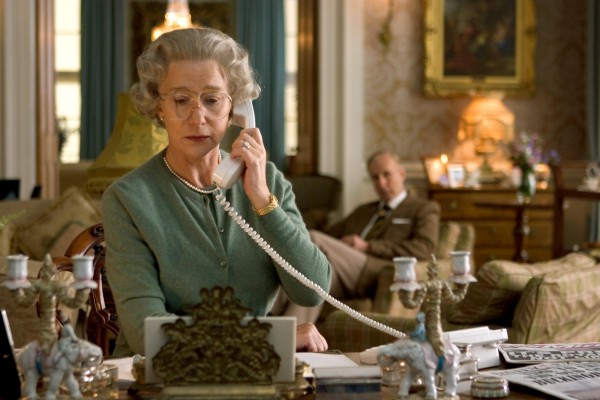
 It’s tradition versus modernization in Stephen Frears’s re-creation of the Royal Family’s reaction to the death of Princess Diana on August 31, 1997. While the world mourns, Queen Elizabeth II (a stoic Helen Mirren), Prince Philip (an acerbic James Cromwell), and the Queen Mum (Sylvia Syms) just continue their daily routine as if nothing has happened. They take Diana and Prince Charles’s (Alex Jennings) children up to Balmoral to hunt stag, refusing to publicly acknowledge the tragedy. Meanwhile, Tony Blair (Michael Sheen, reprising the role from Frears’s 2003 British television movie THE DEAL) has been swept into the office of prime minister in a landslide victory for forward-thinking change. Noting the public response to Diana’s death, Blair implores the queen to respond, but protocol, pride, and dignity get in the way. Frears cleverly, if obviously, displays the differences between the old and the new in depicting the simple home life of the Blairs against the opulence of the Royal Family, each way of life representing the ever-growing gap in British society. Through exhaustive research, screenwriter Peter Morgan imagines the relationship between Blair and the queen, including numerous private conversations held over the phone and in person, and as intriguing as they are, there’s just no way to know how much of it really happened. (A similar fate befell The Last King of Scotland, in which cowriter Morgan imagined conversations Idi Amin had with a made-up character.) Nominated for six Oscars including Best Picture, Best Director, and Best Original Screenplay, The Queen is a compelling film, with solid acting (Cromwell is a screaming riot, and Mirren won an Oscar for Best Actress for her stellar performance) and appropriately calm direction, but it never quite reaches the heights it aspires to. The Queen is screening January 18 at 3:00 as part of the Museum of the Moving Image series “Stephen Frears: The Chameleon,” being held in conjunction with the success of the director’s most recent work, Philomena, which has been nominated for four Academy Awards, including Best Picture and Best Actress (Dame Judi Dench).
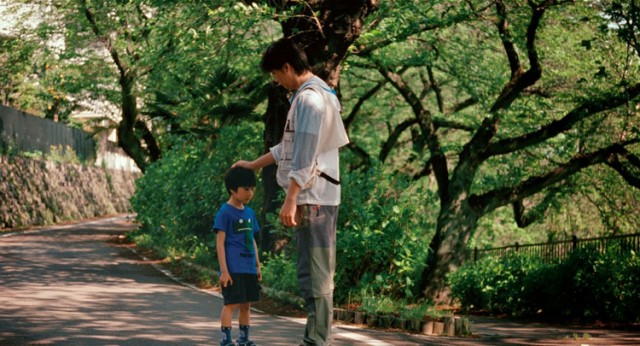
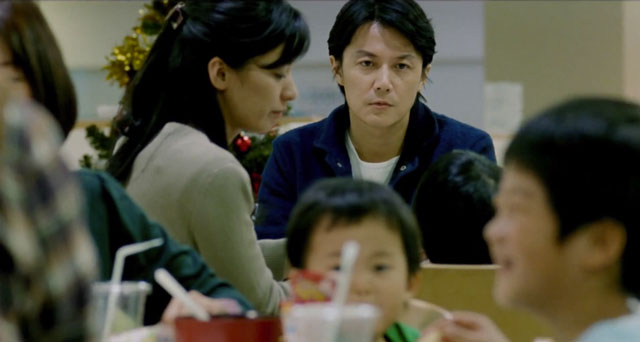
 International cinema’s modern master of the family drama turns out another stunner in the Cannes Jury Prize winner Like Father, Like Son. Ryota Nonomiya (Masaharu Fukuyama) thinks he has the perfect life: a beautiful wife, Midori (Machiko Ono), a successful job as an architect, and a splendid six-year-old son, Keita (Keita Ninomiya). But his well-structured world is turned upside down when the hospital where Keita was born suddenly tells them that Keita is not their biological son, that a mistake was made and a pair of babies were accidentally switched at birth. When Ryota and Midori meet Yudai (Lily Franky) and Yukari Saiki (Maki Yoko), whose infant was switched with theirs, Ryota is horrified to see that the Saikis are a lower-middle-class family who cannot give their children — they have three kids, including Ryusei (Shôgen Hwang), the Nonomiyas’ biological son — the same advantages that Ryota and Midori can. Meanwhile, the two mothers wonder why they were unable to realize that the sons they’ve been raising are not really their own. As the two families get to know each other and prepare to switch boys, Ryota struggles to reevaluate what kind of a father he is, as well as what kind of father he can be.