twi-ny recommended events

TWI-NY TALK: BERNARDI ROIG

(photo by twi-ny/mdr)

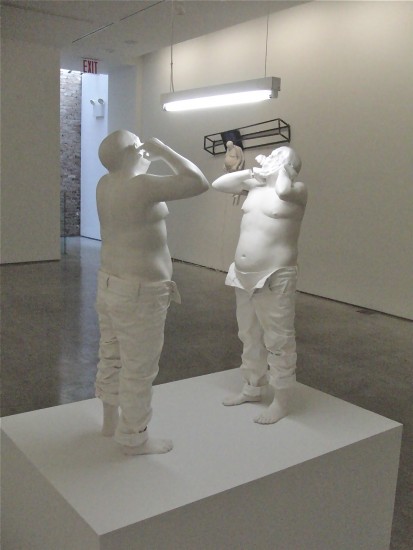
Bernardí Roig’s “The Mirror (exercises to be another)” will continue to intrigue visitors at Claire Oliver through January 11 (photo by twi-ny/mdr)

BERNARDÍ ROIG: THE MIRROR (exercises to be another)
Claire Oliver
513 West 36th St. between Tenth & Eleventh Aves.
Through January 11, free, 10:00 am – 6:00 pm
212-929-5949
www.claireoliver.com

The centerpiece of Spanish artist Bernardí Roig’s latest exhibition at the Claire Oliver Gallery in Chelsea, “The Mirror (exercises to be another),” is the all-white title work, a sculpture of two men on a platform facing each other as if looking in a mirror, a bright fluorescent light both blinding and dividing them. Cast in polyester resin and marble dust, the men stand barefooted, their bellies hanging over their unbuttoned pants, one of the figures with his fingers in his ears, the other having apparently just ripped off part of his face, including his mouth and an eye. It’s a wry comment on one of Roig’s primary themes, people’s inability to communicate in contemporary society, slyly referencing the iconic “See no evil, hear no evil, speak no evil” trope, while also engaging in a search for truth and reality, as one man is a distorted version of the other. In the far corner, “The Invisibility of Memory (La invisibilidad de la memoria)” features a similar white figure (though with a third arm), his head downtrodden, his body defeated, hanging from a metal frame that holds a video screen showing unclear images that eventually fade away. Roig also includes fourteen charcoal drawings, inspired by Ingres’ “Portrait of Monsieur Bertin” and Federico de Madrazo’s “Portrait of Gertrudis G. de Avellaneda,” which, like the sculptures, examine identity through the subject, the viewer, and the artist.

Roig, who was born in Palma de Mallorca and had the first show in this space back in 2002 — he’s been with Claire Oliver for fourteen years — recently said, “Images are like the foam of the subconscious mind.” Although his sculptures are instantly engaging, extremely pleasing to the eye, they are loaded with deeper meaning, inviting those who gaze upon them to go well beyond the surface. “It is gratifying to see the response to his work from curators, critics, and collectors alike; we have watched him grow as an artist and are proud to represent his works,” Oliver told twi-ny. “Working with the artist is a pleasure; Roig is highly intellectual but remains grounded and humorous as well. His thought process is deliberate and the works produced, without exception, are of the highest quality.” A provocative thinker with a strong art-historical bent, Roig discussed language, dialogue, running out of ideas, and the human body while staying in New York City with his family during the run of the show, which closes January 11.

twi-ny: What was your initial impetus behind creating all-white sculptures cast from real people? Do you have favorite models?

Bernardí Roig: I started by casting my father’s body, which was what was closest at hand, to address the symbolic figure of the great castrator. It was a big, heavily built body . . . and then afterwards there came other similar ones, always bulky and always people connected to me. Once positivized, they are white for two reasons: firstly, to gain in visual lightness and refute their affirmative and statuary quality so that they are simply images and, secondly, to help me detain the moment. Sculpture is an instant trapped in a form. All Goethe’s Faust can be reduced to one single sentence: “Time stands still! You are so beautiful. . . .” Only then does one understand that the moment is white. This brooks no doubt. And in all certainty it is white, because light, once stilled, coagulates. We might then say that the gaze has been submerged in a glass of milk, and in this glass of milk we recognize the annunciation of a form of knowledge where the signifieds have still not copulated.

twi-ny: These white figures, especially when bright light is projected onto them, are a kind of blank slate, setting up a potentially wide-open, complex dialogue between object and viewer. While some of your regular themes involve blindness, death, and the individual’s uneasy search for identity, there is something inherently aesthetically pleasing about your sculptures; people immediately react with happiness upon seeing them. Is there an intended contradiction there?

BR: I’d say that the intentions are contradictory because they are made of opposites, just like our thoughts. The themes my work engages with are by no means strange; they are embedded in the medulla of all thinking people. I’m not very sure of people’s relationship with my work. It’s hard to really tell, and I imagine that the spectrum of readings is as wide as the number of individual spectators. The images we make come from deep down, from far back, and they rise like foam to the surface of the unconscious.

Language was invented to try to bridge the gap of noncommunication, but it obviously falls short. I also accept that a convulsive image can produce a feeling of happiness, something that also happens with Surrealism.

twi-ny:The exhibition at Claire Oliver also features charcoal drawings, including several based on Ingres’ “Portrait of Monsieur Bertin” and Madrazo’s “Portrait of Gertrudis G. de Avellaneda.” What struck you about those two portraits?
Bernardí Roig

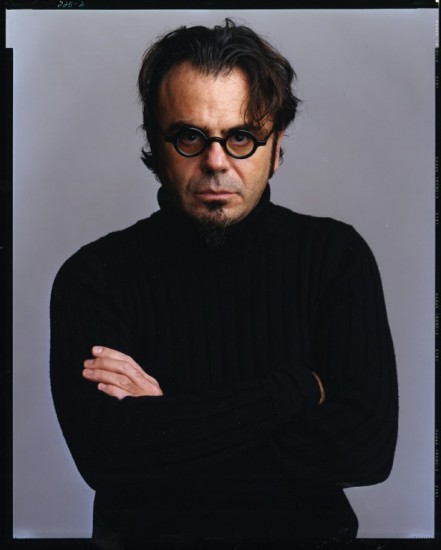
Bernardí Roig explores language, communication, the human body, and more in latest exhibit (photo by Timothy Greenfield-Sanders)

BR: I started out from two historic paintings to make this new series of fourteen large drawings which I’ve called “Je est un autre.” Seven male portraits reinterpreting the “Portrait of Monsieur Bertin” by Ingres (1832), housed in the Louvre, facing seven female portraits reinterpreting the “Portrait of Gertrudis G. de Avellaneda” (1857) by Madrazo, on view at the Lázaro Galdiano Museum in Madrid. The title of the series, “Je est un autre,” is a celebrated sentence from Rimbaud’s Lettre du voyant (“Letter of the Seer”) to his friend Paul Demeny, where the poet accepted the loss of identity and splitting of the self through negation.

These fourteen drawings play with the superimposition of reflected identities, revealing how any representation of identity contains the latent experience of its opposite. “Monsieur Bertin” is a frontal depiction of a bourgeois man, opulent, arrogant and powerful, even more powerful than the emperor himself, while Gertrudis de Avellaneda is an enlightened, cosmopolitan Spanish poet, born in Cuba, who represents female resistance to the hermetic, masculine, and oppressive academic world in Spain in the mid-nineteenth century.

twi-ny: For “Instante Blanco,” which is currently at el Museo Nacional de Escultura, you placed your white sculptures among the institution’s polychrome works, creating a kind of intervention. Are you pleased with the way it turned out? Do you plan on doing more of these types of installations?

BR: The use of polychrome is in search of realism, to bring the carved wood closer to the truth, to try to produce belief through a whole itinerary marked out by the palpability of the flesh. Most of the works in the Museo Nacional de Escultura were originally devotional religious images whose contemplation held out some kind of guarantee. What I proposed was an itinerary of whispered dialogues with the space itself and not so much with the works.

When you work with historic museum spaces you expand the boundaries of experience. Each exhibition I do has to produce the unforeseen. Though my works hit you immediately as sculptures, I work above all with places and for each place I pose different questions. But I don’t try to answer them. I don’t believe that the purpose of art is to come up with answers but perhaps to hone the incisiveness of the questions.

I’ve already done these kinds of interventions in the Cathedral of Burgos, in Cà Pesaro Galleria Internazionale d’Arte Moderna at the fifty-fourth Venice Biennale, and at the Lázaro Galdiano Museum in Madrid, and at the current moment I am working on a project for the “Intersections” program at the Phillips Collection in Washington.

twi-ny: You’re often quite critical of your own work. You recently said, “I have the feeling that I am always repeating the same ideas and that I am incapable of saying new things. . . . Every time you want to delay more the moment of showing anything, but you have to do it.” Is it difficult for you to let go and open a new exhibition? Is it hard for you to accept praise? The general public, and critics, seem to take pure delight in your work.

BR: It’s true that I find it increasingly more difficult to add something to what has already been said. . . . The edges of words are more and more frayed all the time. That said, it is equally true that you are part of a chain of images from which you can’t escape, and that’s why it is better to get them out of your head before they explode inside it. These images are often only leftover scraps that the head spits out; other times they have the necessary density to guarantee the meaning of the work, just at the moment when the unforeseen appears. That would be the most fertile ground. As Guido, the character played by Marcello Mastroianni in Fellini’s 8½, says: “I really have nothing to say, but I want to say it all the same.”

twi-ny:You just spent the holidays in New York, and now you’ve gotten to see the city blanketed with snow, in a way emulating your sculptures. How are the holidays different in New York than in Mallorca?

BR: There’s one big difference: right now in New York there is a major exhibition of an artist who, in a place infested by banal low-intensity images, makes you believe again in grand Art: Richard Serra. It is worthwhile living in a world where an artist can still produce a shiver in the gaze.

DANCE GOTHAM 2014

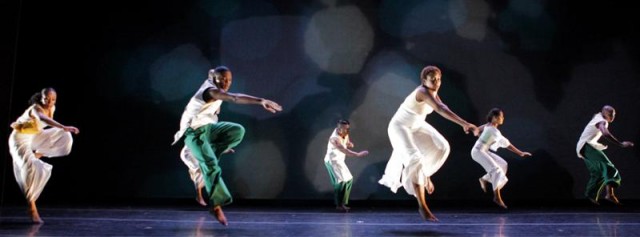
Ronald K. Brown’s powerful TORCH is part of Dance Gotham festival at NYU’s Skirball Center (photo by Ayodele Casel)

Ronald K. Brown’s powerful TORCH is part of Dance Gotham festival at NYU’s Skirball Center (photo by Ayodele Casel)

New York University, Skirball Center for the Performing Arts
566 La Guardia Pl. at Washington Square South)
January 10-12, $18
212-352-3101
www.focusdance.us
www.nyuskirball.org

Part of Focus, the annual celebration of American dance, the seventh edition of Dance Gotham moves into the NYU Skirball Center this weekend, boasting an all-star lineup curated by American Dance Festival director Jodee Nimerichter. The January 10 program consists of the multimedia, unconventional The Very Unlikeliness (I’m Going to KILL You!) by Chris Yon (makes / dances), Stephen Petronio Company’s bold and beautiful Like Lazarus Did (LLD), Rosie Herrera Dance Theater’s immersive food-related Dining Alone, and Camille A. Brown & Dancers’ New Second Line, which was inspired by Hurricane Katrina. Saturday night brings together Paul Taylor 2’s Arden Court, which recently joined the Alvin Ailey repertoire; Adele Myers and Dancers’ Einstein’s Happiest Thought, which examines different usages of the word “fall,” particularly regarding imbalance; Gallim Dance’s Fold Here, Andrea Miller’s piece incorporating cardboard boxes; and Ronald K. Brown/Evidence’s Torch, a touching tribute to the life and memory of former Brown student Beth Young, who passed away in January 2012. And January 12 features David Dorfman Dance’s Come, and Back Again, about messiness, family, and love; Hubbard Street 2’s By the Skin of My Teeth, choreographed by Gregory Dolbashian; Dušan Týnek Dance Theatre’s mysterious Transparent Walls; and preview excerpts from LeeSaar the Company’s latest work, Princes Crocodile.

THE GREAT FLOOD

THE GREAT FLOOD (Bill Morrison, 2011)
IFC Center
323 Sixth Ave. at West Third St.
January 8-16
212-924-7771
www.ifccenter.com
www.icarusfilms.com

Sound and image meld together beautifully in Bill Morrison’s meditative, elegiac The Great Flood. Inspired by John M. Barry’s 1997 book Rising Tide: The Great Mississippi Flood of 1927 and How It Changed America, Morrison teamed up with improvisational musician Bill Frisell on the project. The two had previously worked together on a pair of short works, The Mesmerist and The Film of Her, after meeting at the Village Vanguard when Morrison was a dishwasher at the jazz club where Frisell was playing. Morrison, who specializes in using deteriorated and degraded archival footage and experimental scores, scoured the National Archives, the Library of Congress, the Hoover Presidential Library, and other sources to come up with remarkable scenes of the flooding of the Mississippi in 1927. Divided into such chapters as “Sharecroppers,” “Swollen Tributaries,” “Evacuation,” “Aftermath,” and “Watershed,” with snippets of informational text but without narration, the film follows the southern blacks who were most affected by the massive flood, being forced to shore up the levees around white areas, losing their own homes, and ultimately heading north as part of the Great Migration, bringing the Delta blues with them. Guitarist Frisell, joined by Ron Miles on cornet, Tony Scherr on guitar and bass, and Kenny Wollesen on drums and vibes, has composed a gorgeous, moving score, heavily influenced by a trip his band and Morrison took in early 2011 up the Mississippi, with the group playing in multiple cities while the river threatened to flood again.
Each chapter, from an overhead view of a computerized map that details the 1927 flood to a fast and furious foray through the Sears Roebuck catalog, from a Baptist church procession to a series of rare clips of such bluesmen as Big Bill Broonzy, Son House, Sonny Boy Williamson, and Robert Lockwood, features a different piece of music, highlighted by Frisell’s always inventive guitar and Miles’s deeply expressive horn. Of course, as the images pass by, it’s impossible not to think of Hurricanes Katrina and Sandy and be awed by the devastating power of nature, as well as realize how little has changed with regard to the reaction of politicians and who the victims tend to be. But the film is rarely mournful; instead, there’s often a celebratory quality about it, centered on people’s natural instinct to survive. The Great Flood is scheduled to run January 8-16 at the IFC Center, with Morrison, who has also created such other unique cinematic experiences as Spark of Being and The Miners’ Hymns, on hand to talk about the film at the 8:05 screenings on January 9 and 11. In addition, the IFC Center will screen Morrison’s masterpiece, Decasia, in an HD digital projection daily at 2:40 and 6:20.

DECASIA

DECASIA (Bill Morrison, 2002)
IFC Center
323 Sixth Ave. at West Third St.
January 8-16
212-924-7771
www.icarusfilms.com
www.billmorrisonfilm.com

Experimental filmmaker Bill Morrison’s production company is called Hypnotic Pictures, and for good reason; the Chicago-born, New York-based auteur makes mesmerizing, visually arresting works using archival found footage and eclectic soundtracks that are a treat for the eyes and ears. Several of his films were shown at a terrific 2012 retrospective at the World Financial Center, including The Miners’ Hymns, Spark of Being, The Great Flood, and his masterpiece, Decasia. Now, in conjunction with the theatrical release of The Great Flood, running January 8-16 at the IFC Center, Decasia will be screening there as well, in an HD digital projection, daily at 2:40 and 6:20. Made in 2002, Decasia is about nothing less than the beginning and end of cinema. The sixty-seven-minute work features clips from early silent movies that are often barely visible in the background as the film nitrate disintegrates in the foreground, black-and-white psychedelic blips, blotches, and burns dominating the screen. The eyes at first do a dance between the two distinct parts, trying to follow the action of the original works as well as the abstract shapes caused by the filmstrip’s impending death, but eventually the two meld into a single unique narrative, enhanced by a haunting, compelling score by Bang on a Can’s Michael Gordon, which begins as a minimalist soundtrack and builds slowly until it reaches a frantic conclusion. The on-screen destruction might seem random, but it is actually carefully choreographed by Morrison, who wrote, directed, produced, and edited the film.

TWI-NY TALK: NORA WOOLLEY / KIM KATZBERG / RAQUEL CION OF “HIP” / “DARKLING”

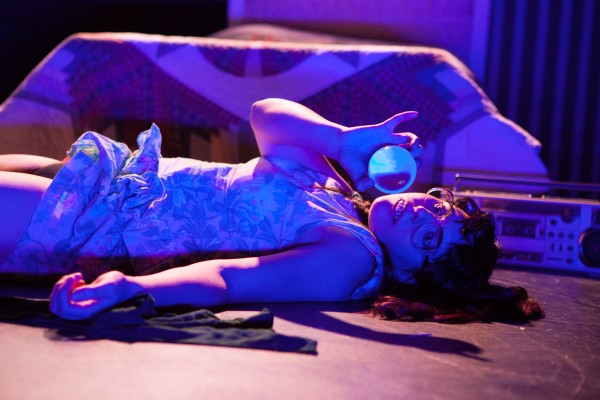
Nora Woolley channels multiple characters in Williamsburg-set HIP

Nora Woolley channels multiple characters in Williamsburg-set one-act HIP (photo by Sarah Rogers)

HIP / DARKLING
IRT Theater
154 Christopher St. near Washington St.
Through January 12, $12-$15
www.irttheater.org

A pair of one-woman multicharacter shows that explore self-identity and searching for one’s place in the world, Nora Woolley’s thirty-minute Hip and Kim Katzberg’s hour-long Darkling were developed to run in tandem with each other, and they are doing so beautifully at the tiny IRT Theater on Christopher St., where they continue through January 12. In Hip, Woolley first appears as Wythe, an angry, leather-jacketed, mustached Williamsburg musician who claims that Julian Casablancas and the Strokes stole songs from him. She also plays Wythe’s temporarily bed-ridden grandmother, a trendy lifestyle photographer whose child Wythe baby-sits, and an Eastern European landlord attempting to rent an apartment to the cash-poor musician. Woolley’s knowing, spot-on portrayals of hipsters in their unique little worlds are searingly recognizable as well as extremely funny. As she changes costume for each character, videos by the Strokes and Wythe’s band are projected onto a back screen; the short films were made by Mariclare Lawson.

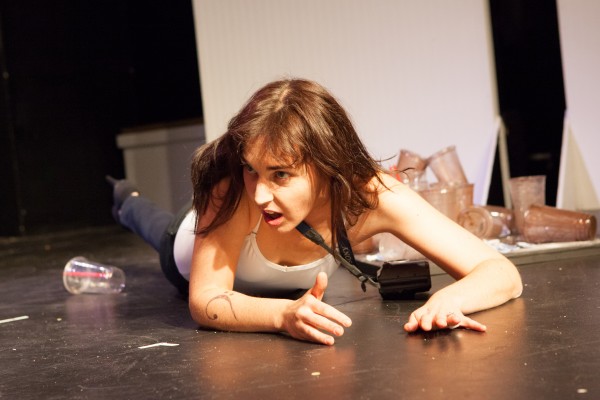
In Darkling, Katzberg appears as Trinity, a thirteen-year-old girl with terrible buck teeth who is just beginning to experiment with boys, especially an older hottie named Kevin. It’s 1987, and Trinity is deep into the awkward phase of adolescence, although she doesn’t realize it. A bold girl with seemingly no boundaries, she worships her older sister, Morgan (Katzberg), who has been sent off to a home for troubled girls but has escaped with her friend Chiara (Maia Cruz Palileo); their exploits are shown in a series of video postcards Morgan sends to Trinity. Katzberg also plays their mother in a very clever scene as well as a Goth marketing witch on-screen. Darkling is breathtaking in its ability to both attract and repel the audience’s identification with this most unusual yet quintessentially archetypal adolescent; Katzberg dives right into that nameless raw emotion that exists between laughing at and crying over something, at times evoking Todd Solondz’s cult classic, Welcome to the Dollhouse, in addition to the multimedia oeuvre of artist and filmmaker Ryan Trecartin.

Under Raquel Cion’s confident, smartly paced direction, Hip and Darkling work extremely well together. Cion — who is also an actor and cabaret performer performing as herself and sometimes as her alter ego, Cou-Cou Bijoux — knows how to get the best out of Woolley and Katzberg, who show off their mad skillz as they go from character to character and scene to scene, holding nothing back. The three women recently discussed collaboration, the Strokes, virginity, and more with twi-ny.

twi-ny: The three of you met back in 1998. Did you immediately hit it off?

Raquel Cion: Oh, we’re going back to the twentieth century, now are we? Okay, so, in ’98 my dear friend Raïna von Waldenburg’s play Das Kaspar Theatre was produced at the Experimental Theater Wing (ETW) at NYU. I was the associate director. Raïna was my classmate at ETW and then became both Kim and Nora’s acting teacher there. I can say from the moment Nora and Kim auditioned that they made a huge impression on me. The show dealt with very intense subjects: family dysfunction, sexual abuse, how one survives and heals. They were both so incredibly facile with their acting and willingness to jump into anything thrown at them. We later did a reading of a revised version of Raïna’s play for the hotINK Festival in 2006 that I directed.

Nora Woolley: Raquel and Kim have always been two of my favorite artists. I remember being blown away by Kim’s brave and charged work in acting school. Raquel directed us in a play and I could tell she was intensely gifted at getting actors to hone in on the meat. I asked Raquel to direct another show of mine (Selling Splitsville, cowritten by Christine Witmer) and she really understands me as a performer, so of course I hoped she’d direct Hip.

Kim Katzberg: I was pretty intimidated by Nora when I was in college in 1998. I had an inferiority complex back then, not to mention zero self-esteem. Plus, Nora was one of the stars in the drama department at NYU. Raquel scared me as well. She was very blunt as a director and she didn’t let you get away with any bullshit acting.

Thirteen-year-old Trinity (Kim Katzberg) gazes into her future in DARKLING

The very strange thirteen-year-old Trinity (Kim Katzberg) gazes into her future in DARKLING (photo by Sarah Rogers)

twi-ny: How did this collaboration come about?

NW: I saw Kim in Penetrating the Space and thought it was one of the most beautiful solo plays I had ever seen. Still do. She was doing and saying things I had never seen before. Referencing white tigers, taping her eyes for effect, talking about suicide with humor — it blew me away. I had never made a solo piece before, so I asked Kim if she wanted to get together and just play around in a rehearsal studio. We each brought some work we had been thinking about and then we began improvising for each other. This continued every couple of weeks for a couple of years. Our rehearsals were so important to me — they were a space to take huge risks and to challenge ourselves emotionally, physically, etc., a mini acting school. I secretly hoped, but for the first year or so I never considered, that we would present them together. Then it became clear to me that I wanted to create a shorter piece and perform both pieces in the same evening. That sounded fun and really interesting — a structure I had never done before. Plus, I was kind of terrified to devote a whole evening to myself. 🙂

RC: Though New York is a huge city, it’s also a very small town amongst the like-minded and we just were in each others’ circles, I suppose. Nora asked me to direct Selling Splitsville at the undergroundzero festival at PS122 in 2009. Kim came to that show and was beginning work on Penetrating the Space. We discussed working together then but schedules didn’t allow it. Kim and Nora had told me that they were developing work together. They kept me in the loop and here we are in 2014 collaborating and it is pure joy! We’re having a blast, all three of us.

KK: A bunch of years ago I saw Selling Splitsville. I thought it was brilliant and hilarious. I could relate to the kind of character work that Nora was doing and I loved Raquel’s bold direction and thought maybe both of them would be interested in my kind of characters too. Then Nora saw Penetrating the Space and liked it and asked me if I wanted to meet up twice a month in a studio space so that we could bounce work off of each other. Then Nora reintroduced me to Raquel and the rest is herstory.

twi-ny: What’s the single best piece of advice you’ve received from one another?

NW: I learn so much from Kim on a daily basis — for real. I don’t know any performers who own silence like Kim does. Her timing is profound in that she creates these incredibly moving, suspended moments that land in your heart. She takes her time in a way that is supremely rare and extremely hard to pull off. At some point early on in our rehearsal process, I remember watching her work and thinking that I should challenge myself to take lots more time in my own work — it was a revelation. Also, of course, Kim’s characters are beyond comparison. She has always encouraged me to let my characters say what they were afraid to say. I could go on. . . .

Raquel is an acting savant, so it is hard to define one piece of her advice as “best.” She has an impeccable eye and can navigate any moment onstage — from helping me find the deepest, most interesting route to emotional-connectedness to filling in the occasional flimsy playwriting with the perfect single word or two. I always feel like Raquel is an acting surgeon with X-ray vision. It blows my mind how often she hones in on that heartbreaking space between funny and sad, then makes it possible for me to repeat. After a show the other day, she called out the exact moment in the performance when I was not enjoying the work. Raquel reminds me not to take myself too seriously.

KK: The best advice I got from Nora was more that she didn’t offer advice but instead gave me unconditional support throughout the process. I felt free to be a bad actor sometimes and to bring in work that totally failed. We were able to create a safe space in which to take risks and explore. I also felt incredibly challenged by Nora being that the work she brought in was always at such a high level. I felt that I had to at least try to match that in order for her to want to keep working with me. I was also continually inspired by Nora, as a human being and as an artist, so that made the rehearsals thrilling and motivating.

Working with Raquel felt equally safe, challenging, and inspiring. Raquel pushed me to go farther than I thought was possible. The audition dance in Darkling where I put on the horse head and get down to Patti Smith’s “Horses” scared the shit out of me, and at first I didn’t want to do it. It was Raquel’s idea to put that dance in and I felt so embarrassed by it and didn’t think I could go there. That is one of the riskiest moments in the play for me as an actor, and it’s because of Raquel’s genius and bravery that moments like that burst through in the show.

twi-ny: Raquel, you met Nora and Kim some fifteen years ago. What were they like then, compared to how they are now?

RC: Hmmm, when we met, I believe, there was an implied hierarchical structure in place since I was coming into a school. However, I do feel that both Nora and Kim are profoundly themselves and have always been. They are both huge risk takers as performers. Now, though, we are fully equals, friends, all artists making our own work. I don’t know, it may be an age thing. When you’re older the commonalities become more present. Once one’s passed thirty, the years all kind of meld together anyhow. I am still blown away by their talent, as I was when we initially met, but being let into someone’s process for their own work is a very different dynamic than being cast in another’s play. Simply put, they are freaking amazing creators of theater with very distinct points of view. Not to mention that they are incredibly versatile and just damn good actors and writers. So whip-smart, funny as hell, and so poignant. That comes with time and trust for themselves and each other. I am so honored that they trust me with their work. I really am in awe of what they create.

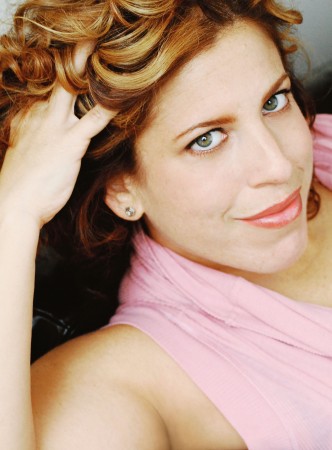
Burlesque and cabaret performer Raquel Cion directs HIP and DARKLING at IRT

Actor and cabaret performer Raquel Cion directs intimate doubleheader at IRT (photo by Colman Domingo)

twi-ny: What’s the difference between the Raquel of 1998 and the Raquel of 2014?

KK: The Raquel of 1998 was a scary, cool, untouchable older sister–like figure. The Raquel of 2014 is a close friend and colleague that I feel very bonded to. She is an equal now, as opposed to an authority figure.

NW: I have always called Raquel “the smartest girl in the room.” She is one of those people who knows not even a little, but a lot, about most topics. It is kind of amazing, actually. I am not sure I have ever referenced something that she didn’t have some solid familiarity with. When she is directing, those smarts are, of course, funneled into the scene, so working on original material is especially fun with her because she will encourage me to take it in the most interesting (and scariest) direction. I remember feeling that way in 1998 but was more shy around her and probably a little intimidated because I wanted her to think I was “good.” Actually, let’s be real: I still want her to think I am “good,” but I can laugh really hard with her nowadays.

twi-ny: Hip partly revolves around Wythe’s obsession with the Strokes. Why the Strokes?

NW: It’s funny. I didn’t really listen to the Strokes when they first came out. I liked one or two songs I had heard, but I never actually owned any of their music or gave them much thought. When I first started conceiving of this piece, I thought a lot about what it means to be “cool,” like cool as hell — something I have never been. The image of a musician came to mind and when I started physicalizing him, the dark side of cool — self-consciousness — really came out, and with it a flood of pain and heartbreak. I happened to know that one of the Strokes was in my class at Tisch, and dramaturgically that meant that I could tap into the feeling that all struggling artists have in regard to the fact that so-and-so “made it” and why haven’t I. I did some research, which consisted mostly of watching lots of early Strokes videos ad nauseam and listening to their music day and night and found that they were the exact embodiment of cool that I was looking for in that early 2000s era — young and absolutely on fire, raised in NYC and Europe, children of supermodels, seemingly really nice guys, and distinctive looking.

twi-ny: How much of Darkling is autobiographical — or, at least, how much are you willing to admit to?

KK: My sister did go to a lock-up boarding school and ran away. She was punk and I did worship her. I did lose my virginity to a punk on acid and it did hurt like hell. Lots of other things in the piece are true too….

twi-ny: While you both go through numerous costume changes, Nora, you do it behind temporary walls, where the audience can’t see you, but Kim, you change in front of the walls, in the corners, where the audience can peek if they want to. Is there any specific reason for the difference, or is it merely a case of time and/or personal modesty?

NW: Modesty? Please. I was very adamant early on about each piece using the stage space itself very differently. Kim’s piece needs to breathe and I wanted mine to feel a bit claustrophobic, hence the walls and their configurations. I only change behind the walls because they are there and changing in front of them would quite literally take center stage.

RC: Modesty?!? You should see the dances Nora does in her white leotard for us. She’s said that one night she’ll take her bow in said leotard. We are working in a tiny black-box theater, putting up two very different shows. Each of the shows has a very distinct aesthetic. We worked very closely with our wonderful lighting and set designer, Josh Iacovelli, who has made magic with our small budget and space. We have four flats and a box with a two-sided “headboard” that serves as two beds and a car. Both shows use projections and video to further expand the narrative. In Hip, along with video there are projections that are very funny and very text heavy. It’s tough to read when you see someone off to the side in their underwear. So it simply serves the piece better to give that reprieve. Kim’s videos are filled with fast cuts and multiple characters. There is a very DIY quality to them that is very compelling, so seeing Kim change becomes another aspect to that visual component and doesn’t detract from it.

KK: I liked the idea of Darkling being kind of Brechtian in that the audience can also see me in a stripped-down aesthetic as just myself. I stole it from Karen Finley. Every time I saw her perform she changed right in plain view; it was part of the performance, and I always thought it was punk rock.

AMERICAN REALNESS 2014

Adrienne Truscott moves from her day job at the Kitchen to live performance at Abrons Arts Center in ...TOO FREEDOM...

Adrienne Truscott moves from her day job at the Kitchen to live performance at Abrons Arts Center in …TOO FREEDOM…

Abrons Arts Center and other venues
466 Grand St. at Pitt St.
January 9-19, $20
212-598-0400
www.americanrealness.com
www.abronsartscenter.org

January in New York City is a veritable feast of live performance festivals, including PS 122’s Coil, the Public’s Under the Radar, Here’s Prototype, and Winter Jazzfest. Over at Abrons Art Center, American Realness will be celebrating its fifth anniversary with seventeen new movement-based shows and encore presentations as well as several off-site events. Tina Satter’s House of Dance (also part of Coil) follows a tense tap-dance competition. Ishmael Houston-Jones and Emily Wexler team up for the world premiere of 13 Love Songs: dot dot dot, which involves deconstructing romantic lyrics by Bryan Adams, Mary J. Blige, Ja Rule, Stephen Merritt, Nina Simone, Madonna, and others. Miguel Gutierrez explores gay sex and lost love in the intimate myendlesslove. Eleanor Bauer combines text, music, and movement in Midday and Eternity (The Time Piece); she’ll also lead the “Dancing, not the Dancer” class and host the anything goes Bauer Hour on January 19. Choreographer Juliana F. May and dancers Benjamin Asriel, Talya Epstein, and Kayvon Pourazar explore the physical and emotional naked body in Commentary=not thing. The Kitchen house manager Adrienne Truscott delves into day jobs and artistic creativity in . . . Too Freedom . . . , which also features Neal Medlyn, Gillian Walsh, Laura Sheedy, and Mickey Mahar. Lucy Sexton (the Factress), Anne Iobst (the Naked Lady), Scott Heron, and DANCENOISE join forces for Prodigal Heroes: An Evening of Legendary New York. Moriah Evans and Sarah Beth Percival play with human-connection tropes in Out of and Into (8/8): Stuff. Medlyn’s King concludes his seven-part foray into iconic stars, this time taking on Michael Jackson. And Melinda Ring’s Forgetful Snow and Roseanne Spradlin’s Indelible Disappearance — A Thought not a Title will be presented together for free on January 12.

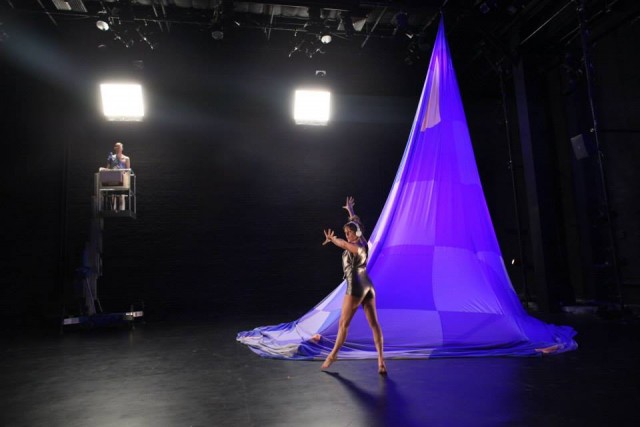
Moriah Evans and Sarah Beth Percival team up in OUT OF AND INTO (8/8): STUFF for American Realness festival

Moriah Evans and Sarah Beth Percival team up in OUT OF AND INTO (8/8): STUFF for American Realness festival

Also on the schedule are Adam Linder’s Cult to the Built on What, Michelle Boulé’s Wonder (Boulé will also lead a “Persona & Performance” class on January 17), Rebecca Patek’s ineter(a)nal f/ear, Jillian Peña’s Polly Pocket, and Dana Michel’s Yellow Towel. The festival heads to MoMA PS1 on January 10-12 for Mårten Spångberg’s four-and-a-half-hour La Substance, but in English and to MoMA’s main Midtown location on January 15-16 for Eszter Salamon’s Dance for Nothing, based on John Cage’s Lecture on Nothing. In addition, there will be art exhibits throughout Abrons (Sarah Maxfield’s “Nonlinear Lineage: Over/Heard,” Ian Douglas’s “Instant Realness,” Medlyn and Fawn Krieger’s “The POP-MEDLYN Hall of Fame,” and Ann Liv Young’s interactive “Sherry Art Fair”), and Coil, Under the Radar, Prototype, and American Realness will be copresenting free live concerts every night from January 9 to 19 in the Lounge at the Public Theater, including Invincible, Christeene, Ethan Lipton, Heather Christian & the Arbonauts, Sky-Pony, Timur and the Dime Museum, the Middle Church Jerriesse Johnson Gospel Choir, M.A.K.U. Sound System, DJ Acidophilus, and Nick Hallett, Space Palace, and Woahmone DJs.

LOUISA MATTHIASDOTTIR: PAINTINGS AND WORKS ON PAPER

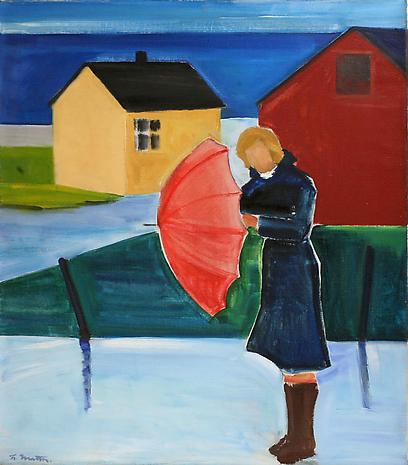
Louisa Matthiasdottir, “Woman in Reykjavik with Umbrella,” oil on canvas, circa 1980

Louisa Matthiasdottir, “Woman in Reykjavik with Umbrella,” oil on canvas, circa 1980

Tibor de Nagy Gallery
724 Fifth Ave. between 56th & 57th Sts.
Tuesday – Friday through January 11, free, 10:00 am – 6:00 pm
212-262-5050
www.tibordenagy.com
www.louisamatthiasdottir.com

Looking for a peaceful escape from the bitterly cold weather? The Tibor de Nagy Gallery has just the thing, a beautiful collection of works by Reykjavik-born artist Louisa Matthiasdottir (1917-2000), depicting idyllic scenes in Iceland and Maine. Matthiasdottir concentrates not on the frosty parts there but on the pastoral beauty of the landscape using bright, bold colors in composing pictures that fall somewhere between realism and abstract expressionism. Grass has rarely been so green, the ocean so blue, as in these seventeen oil paintings on canvas and watercolors on paper. Upon entering the gallery, visitors immediately come upon the delightful “Woman in Reykjavik with Umbrella,” in which a faceless woman in brown boots and a blue coat is either opening or closing her red umbrella, with two small houses, the sea, and the sky behind her. None of Matthiasdottir’s figures have faces, yet the works emit a powerful rush of emotion, as in a 1993 self-portrait and “Girl, Sheep, and House.” As poet John Ashbery wrote in a 1982 catalog essay for Matthiasdottir’s show at Schoelkopf House, “One returns to these pictures, as year after year they paradoxically both expand and simplify the world they have chosen to explore, for their strange flavor, both mellow and astringent, which no other painter gives us.” Using long, confident brushstrokes, Matthiasdottir, who also lived and studied in Denmark, Paris, and New York with such teachers as Marcel Gromaire and Hans Hoffman, creates landscapes bursting with color and geometric shapes, most wonderfully in “National Theatre, Reykjavik,” “Harbor Scene,” and the endlessly charming “Icelandic Village.” “Louisa Matthiasdottir: Paintings and Works on Paper” continues at Tibor de Nagy through January 11, along with David Kapp’s far more urban-centric “Collages.” Coincidentally, Matthiasdottir’s husband, Leland Bell — they were married from 1944 until 1991, when Bell passed away at the age of sixty-nine — is one of the featured artists in the National Academy show “See It Loud: Seven Post-War American Painters,” which includes, among other pieces, 1965’s “Croquet Party,” a portrait of six faceless people standing on the grass; Bell was named a National Academician in 1979, Matthiasdottir in 1988.