Teen sailor Laura Dekker goes on the journey of a lifetime in MAIDENTRIP
MAIDENTRIP (Jillian Schlesinger, 2013)
IFC Center
323 Sixth Ave. at West Third St.
January 17-23
212-924-7771
www.ifccenter.com
www.maidentrip.com
 In 2009, thirteen-year-old Laura Dekker announced that she was going to try to become the youngest person to sail around the world solo. After a long battle with the Dutch court, the teen, who was born on a boat in New Zealand and spent her first five years at sea, took off on her journey in her thirty-eight-foot ketch appropriately dubbed Guppy. Laura’s inspiring — and controversial — story is told in the winning documentary Maidentrip. Jillian Schlesinger’s debut feature-length film follows Laura as she circumnavigates the globe by herself, sailing across long stretches of sometimes treacherous ocean and making stops to experience a variety of lands and cultures. The bulk of Maidentrip is told in Laura’s own voice, as she films herself on board Guppy and talks not only about her adventure but also about her personal life, including discussing the effects of her parents’ divorce on her and her sister when she was five. “I love being alone,” Laura says at one point. “And I guess, yeah, I feel like freedom is when you’re not attached to anything.” As serious as she is about sailing, she is still a teenager, dancing in front of the camera playfully and throwing a little hissy fit when a visitor annoys her. It all makes for an intimate coming-of-age story as Laura, who values her privacy, grows up in public. Should her parents, particularly her father, who she chose to live with, have allowed the teen to go on this trip in the first place? Is it the court’s responsibility to intercede in such situations? Schlesinger gets the controversy out of the way early, never again revisiting what many people will consider a wrongheaded and dangerous decision, but they’re likely to change their mind once they watch Laura persevere and flourish at sea. Winner of the Audience Award at the Cannes Film Festival and SXSW, Maidentrip opens January 17 at the IFC Center, with Schlesinger and producer Emily McAllister on hand to talk about the film at the 6:25 and 8:25 screenings on Friday and Saturday night.

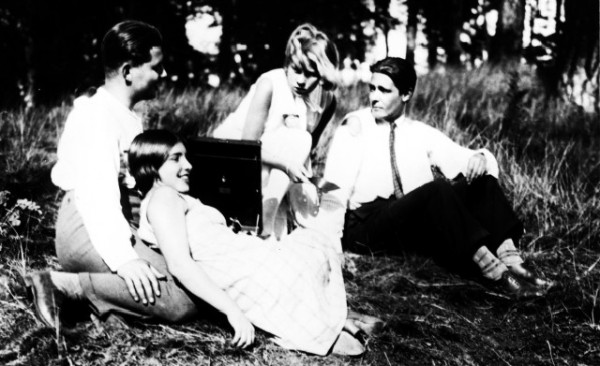
 In 1930, a group of young filmmakers from Germany and Austria-Hungary got together to make an extremely low-budget silent picture about men and women just like themselves, the petite bourgeoisie of Berlin. Influenced by such documentaries as Dziga Vertov’s Man with a Movie Camera and such photographers as August Sander, the men — who would go on to become Hollywood legends — came up with the delightful seventy-three-minute People on Sunday, a light, refreshing mix of fiction and nonfiction about regular life in Germany on the heels of the Great Depression and at the dawn of the rise of National Socialism. A collaboration between directors Robert Siodmak (The Killers, Criss Cross) and Edgar G. Ulmer (The Black Cat, Detour), screenwriter Billie (Billy) Wilder (Double Indemnity, Sunset Boulevard), writer Kurt (Curt) Siodmak (The Wolf Man, The Beast with Five Fingers), cameraman Fred Zinnemann (From Here to Eternity, A Man for All Seasons), and cinematographer Eugen Schüfftan (Metropolis, Eyes without a Face), People on Sunday focuses on five ordinary folks who had never acted on-screen before, and each of whom returned to their jobs after filming was over: Somewhat goofy taxi driver Erwin Splettsdösser, flirty blond record salesgirl Brigitte Borchert, dashing wine merchant Wolfgang von Waltershausen, snooty film extra Christl Ehlers, and lackadaisical model Annie Schreyer. When Wolfgang comes upon Christl looking lost in the middle of the street, he asks her to join him at an outdoor café, and soon they have a date for the next day, Sunday. Wolfgang decides to bring along his friend Erwin, who is only too happy to leave his sleepy, bored wife, Annie, in bed. Christl, in the meantime, has brought along her friend Brigitte, and the four go on a double-date picnic that takes them to the beach, a lake, the woods, a park, and other outdoor locations. But when Wolfgang starts paying too much attention to Brigitte, Christl is none too happy.