
Stockbroker Jordan Belfort (Leonardo DiCaprio) and his team thinks they’re invincible in THE WOLF OF WALL STREET
THE WOLF OF WALL STREET (Martin Scorsese, 2013)
Opened December 25
www.thewolfofwallstreet.com
 Based on Jordan Belfort’s 2007 memoir, The Wolf of Wall Street relates the rise and fall of a fast-talking, high-living stockbroker, played to the hilt by an impressive Leonardo DiCaprio. But Martin Scorsese’s picture, his fifth starring DiCaprio, has trouble walking that fine line between glorifying Belfort’s money, drugs, and women lifestyle and portraying him as a greedy con man who ransacked innocent people’s savings and ruined their lives. In 1987, Belfort gets a job working for rather strange LF Rothschild trader Mark Hanna (Matthew McConnaughey) and immediately gets a taste for the business; however, Black Monday strikes, and he soon finds himself selling penny stocks with a rag-tag group of losers out of a Long Island storefront run by a man named Dwayne (Spike Jonze). But he’s able to excel at the job, taking home big bucks and eventually opening his own firm, Stratton Oakmont, with right-hand man Donnie Azoff (Jonah Hill). Nearly instant success leads to endless partying, strippers, prostitutes, dwarf tossing, cocaine, ludes, and absurdly lavish expenses that enrage Belfort’s father, Max (a hysterical Rob Reiner), when he goes over the books. But nothing can stop Jordan and Donnie as they rake in the dough and do whatever they want, seemingly without consequence, even when the Feds, led by FBI agent Patrick Denham (Kyle Chandler), start sniffing around. Even when it does come crashing down, it still doesn’t seem to have too much of an effect on Belfort and his buddies, who keep feeling invincible.
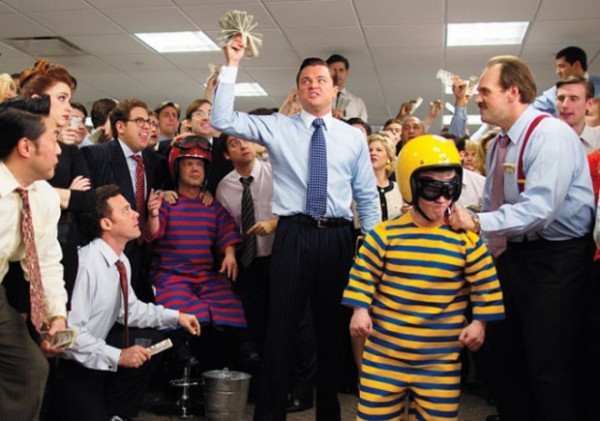
Things get a little out of hand at Stratton Oakmont in Scorsese financial epic
Written by Terence Winter, who previously celebrated criminals in The Sopranos and currently on Boardwalk Empire — two cable series that deal with the good/evil delineation much better — The Wolf of Wall Street is far too long at three hours, and it features a surprising number of bad continuity and synching edits by longtime Scorsese collaborator Thelma Schoonmaker. And the soundtrack lacks the usual Scorsese power, found in such films as Goodfellas, which bears a strong thematic resemblance to Wolf. The large cast also includes Jean Dujardin as Swiss banker Jean-Jacques Saurel, Cristin Milioti as Belfort’s first wife, Margot Robbie as Belfort’s second wife, Joanna Lumley as her aunt, Jon Favreau as his lawyer, Jake Hoffman as Steve Madden, Sharon Jones as a singer, Fran Lebowitz as a judge, and private investigator Bo Dietl as private investigator Bo Dietl. The real Belfort, who recently took to Facebook to explain that he is using one hundred percent of his profits from the book and film to pay back the victims of his shady dealings, makes a cameo appearance at the end of the film as an emcee. Despite its drawbacks — even PETA has attacked the film for its treatment of animals — The Wolf of Wall Street nails the feeding frenzy that was the financial fury of the late 1980s, which set the table for future economic disasters.
Nominated for five Academy Awards: Best Picture, Best Director (Martin Scorsese), Best Actor (Leonardo DiCaprio), Best Supporting Actor (Jonah Hill), Best Adapted Screenplay (Terence Winter)
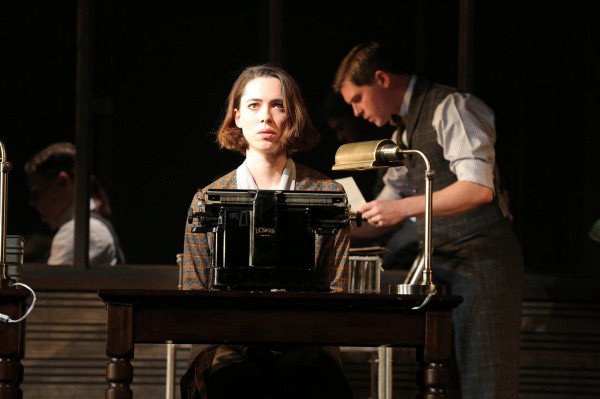
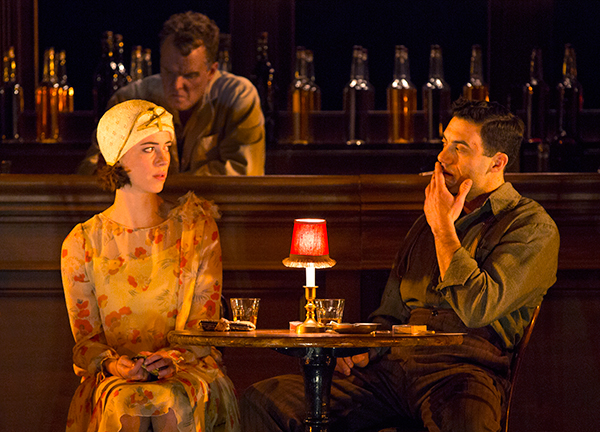
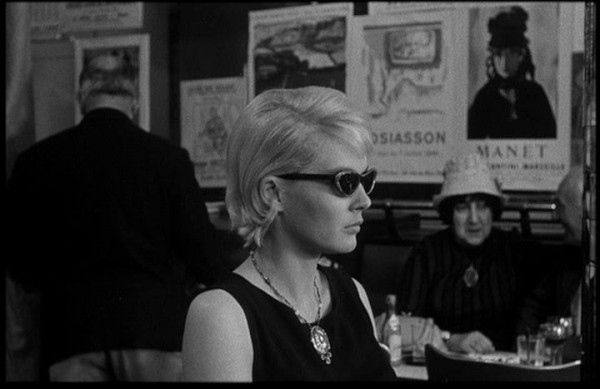
 After getting a biopsy taken and drawing the death card while consulting a fortune-teller, popular French singer Cléo (Corinne Marchand) begins looking back at her life — and wondering just what’s left of it — while awaiting the dreaded results. The blonde beauty talks with old friends, asks her piano player (Michel Legrand, who composed the score) to write her a song, and meets a dapper gentleman in the park, becoming both participant and viewer in her own existence. As Cléo makes her way around town, director (and former photographer) Agnès Varda (Le Bonheur, Vagabond) shows off early 1960s Paris, expertly winding her camera through the Rive Gauche. Just as Cléo seeks to find out what’s real (her actual name is Florence and that gorgeous hair is a wig), Varda shoots the film in a cinema verité style, almost as if it’s a documentary. She even sets the film in real time (adding chapter titles with a clock update), enhancing the audience’s connection with Cléo as she awaits her fate, but the movie runs only ninety minutes, adding mystery to what is to become of Cléo, as if she exists both on-screen and off, alongside the viewer. A central film in the French Nouvelle Vague and one of the first to be made by a woman, Cléo de 5 à 7 is an influential classic even as it has lost a step or two over the years. A new digital restoration of Cléo de 5 à 7 is screening January 28 at 4:00 & 7:30 as part of the FIAF CinéSalon series “Remastered & Restored: Treasures of French Cinema”; the later screening will be introduced by French author Catherine Cusset. The three-month festival continues with such other recently restored French classics as Jean Renoir’s Boudu Saved from Drowning (introduced by Henry Bean), Jacques Demy’s Une chambre en ville (introduced by Adam Gopnik), and Max Ophüls’s Lola Montès (introduced by Lola Montes Schnabel).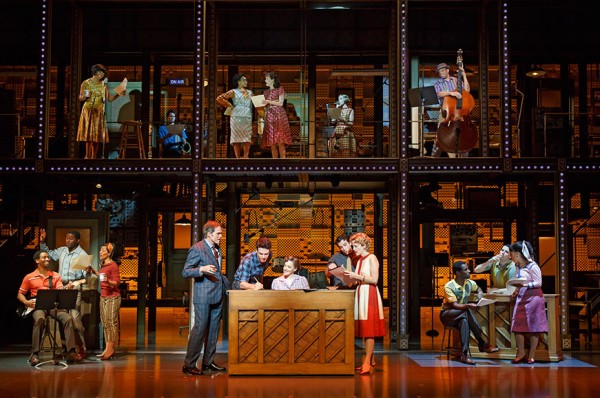


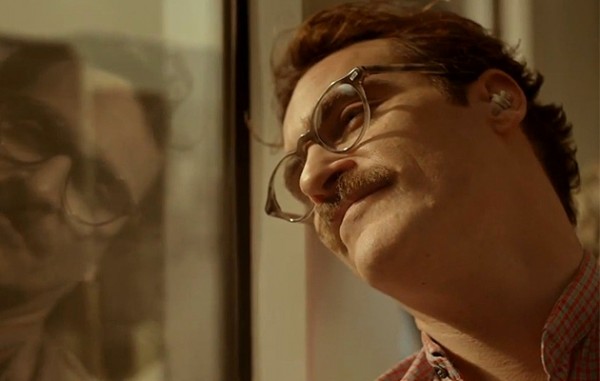
 The brilliant mind of Spike Jonze dazzles again with the spectacularly original romance her. In the very near future, geeky nerd Theodore Twombly (a radiant Joaquin Phoenix) makes his living writing personally commissioned letters for Handwritten Greeting Cards, developing relationships with the people he writes for, considering them family. Meanwhile, he and his wife, Catherine (Rooney Mara), are divorcing, although he is hesitant to sign the final papers. His life takes an unexpected turn when he buys the world’s first AI operating system and slowly falls in love with her during an extremely romantic twenty-first-century-style courtship. The talking OS (the sexy, gravelly voice of Scarlett Johansson), who names herself Samantha, wants to experience the world, so she and Theodore go everywhere together, including on a double date that is pure genius. When he shares his news with his best friend, Amy (Amy Adams), she doesn’t act the slightest bit concerned for his sanity, instead showing true happiness for his blossoming relationship. But as their love grows, so does their need for something more from each other, which doesn’t always work out quite as planned.