twi-ny recommended events

WINTER JAM NYC 2014

Central Park Bandshell and surrounding area
Enter at 72nd St.
Saturday, January 25, free, 11:00 am – 3:00 pm
212-360-1319
www.nycgovparks.org

Two years ago, the City of New York Parks & Recreation’s annual Winter Jam had to be canceled because the weather was too warm. That wasn’t a problem last year, when record-breaking amounts of snow were being dumped on New York, and it won’t be a problem on January 25 either when the festival makes its way into Central Park. It’s expected to snow tomorrow, which should add to all the wintry fun around the Naumburg Bandshell, where special events include skiing and snowboarding lessons, cross-country skiing, and snowshoeing at the Lake Placid Snow Field, along with the Taste NY Winter Market, fitness classes, and the Iams Doggie Bowl (with a photo booth, free grooming, an “Ask the Expert” booth, the Tail-Gate café, and prizes for dogs in football jerseys). Equipment is available for free or you can bring your own, and Gore Mountain personnel will be on hand to blow yet more fresh snow everywhere. And look out for the Pro2 Truck from the Red Bull Frozen Rush. In addition, New York Cares will be collecting much-needed coats, so go through your closets and bring that new or gently used jacket you didn’t even realize you still had.

RICHIE’S FANTASTIC FIVE — KUROSAWA, MIZOGUCHI, OZU, YANAGIMACHI & KORE-EDA: HIMATSURI

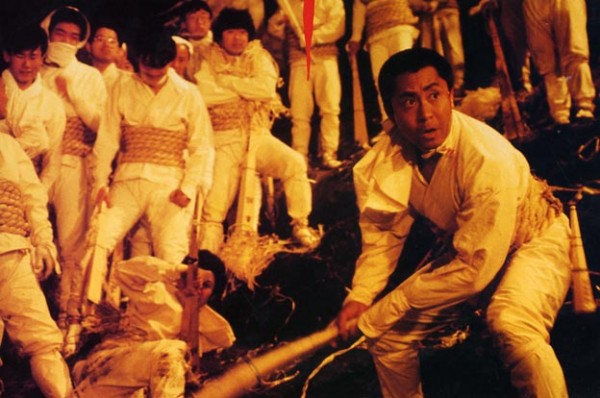
Tatsuo (Kinya Kitaoji) battles more than nature in Mitsuo Yanagimachi’s controversial HIMATSURI

Tatsuo (Kinya Kitaoji) battles more than nature in Mitsuo Yanagimachi’s controversial HIMATSURI

HIMATSURI (FIRE FESTIVAL) (Mitsuo Yanagimachi, 1985)
Japan Society
333 East 47th St. at First Ave.
Friday, January 24, $12, 7:00
Series runs monthly through February
212-715-1258
www.japansociety.org

There’s something always lurking just beneath the surface of Mitsuo Yanagimachi’s 1985 drama, Himatsuri, and when it finally arrives, it’s shocking and explosive. In the small coastal village of Nigishima, the fishermen are at odds with the lumberjacks. Someone is dumping oil in the water, killing the fish, and the chief suspect is Tatsuo (Kinya Kitaoji), a strong woodsman who chops down trees, raises dogs to hunt down wild boars, shoots monkeys, cheats on his wife with a former girlfriend turned hussy (Kiwako Taichi), and is the only villager who refuses to sell his property to a company intent on building a marine park there. He both cavorts with and defies nature and the local spiritual beliefs, at one point swimming naked in the waters leading to a sanctuary. “Only I can make the goddess feel like a woman,” he proclaims. Carefully watching and worshiping Tatsuo is young Ryota (Ryota Nakamoto), who also oversteps boundaries, using sacred branches in animal traps, and is forced to expose himself to the goddess in retribution. Soon a storm comes, transforming Tatsuo and leading to a horrific conclusion. Set in the area where the Japanese creation myth takes place, Himatsuri is a strange creature indeed, with confusing plot twists, bizarre transitions, and some very weird scenes, with a creepy score by Tōru Takemitsu and lush photography by Tamura Masaki. Yanagimachi’s tale, written by Kenji Nakagami, is no mere clarion call to save the environment; instead, it’s an examination of man’s inhumanity to nature, the disregard for the trees, the oceans, the animals (while also commenting on religion, homosexuality, and contemporary society). Yanagimachi (God Speed You! Black Emperor; Ai ni tsuite, Tokyo) mixes genres, from horror to thriller to romance to musical, as he tells the story of one man who just can’t stop himself.

Fire Festival doesn’t sit well for Tatsuo (Kinya Kitaoji) in Yanagimachi’s HIMATSURI

Fire Festival doesn’t sit well for Tatsuo (Kinya Kitaoji) in Yanagimachi’s HIMATSURI

Himatsuri is screening on January 24 at 7:00 at Japan Society, introduced by Bard College professor Ian Buruma, as part of the monthly tribute series “Richie’s Fantastic Five: Kurosawa, Mizoguchi, Ozu, Yanagimachi & Kore-eda,” which honors Ohio-born writer, critic, scholar, curator, and filmmaker Donald Richie, who died in February 2013 at the age of eighty-eight. Richie was a tireless champion of Japanese culture and, particularly, cinema, and the series features six works by five of his favorite directors. Here’s what Richie said about Himatsuri: “The power of Fire Festival has allowed the film to live on in the minds of those who have experienced it. It is occasionally revived in art cinemas abroad though it remains unseen in Japan. Its power is such that it is impossible to forget once seen. Not only does it reach beyond appearances to suggest a further reality, it also displays a seriousness of intent rare in any national cinema.” The series concludes on February 19 with Hirokazu Kore-eda’s After Life, appropriately on the one-year anniversary of Richie’s passing.

SEE IT LOUD: SEVEN POST-WAR AMERICAN PAINTERS

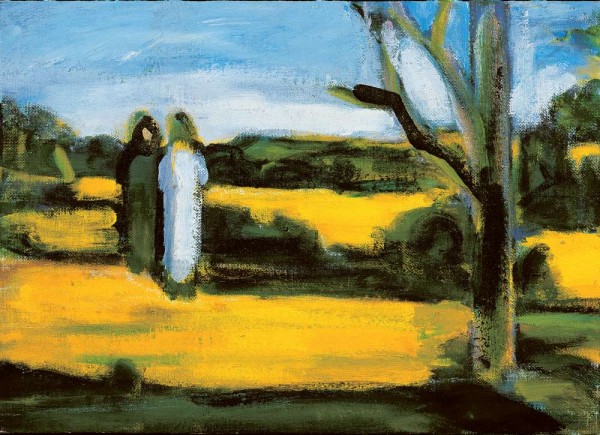
Albert Kresch, “Conversation,” oil on panel, 1994 (Collection of the Center for Figurative Painting, New York)

Albert Kresch, “Conversation,” oil on panel, 1994 (Collection of the Center for Figurative Painting, New York)

National Academy Museum
1083 Fifth Ave. at 89th St.
Through Sunday, January 26, $15, 11:00 am – 6:00 pm
212-369-4880
www.nationalacademy.org

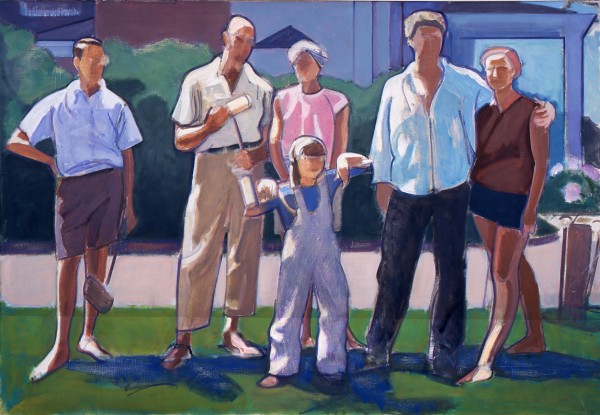
“You can’t escape your time,” Paul Resilka says in a promotional video for the National Academy exhibit “See It Loud: Seven Post-War American Painters,” continuing, “Some embrace it. Some fight it. As for myself, I suppose I had a contrarian streak in me.” The show, hung throughout the entire museum, consists of nearly eighty landscapes, portraits, still-lifes, and other paintings by Leland Bell (1922-91), Paul Georges (1923-2002), Neil Welliver (1929-2005), Peter Heinemann (1931-2010), Albert Kresch (1922-), Stanley Lewis (1941-), and Resika (1928-), dating from 1963 to 2011. The seven men broke away from the Abstract expressionists and turned toward a more representational style, resulting is dazzling canvases with bold use of line and color, inspired by such artists as Hans Hoffmann, Piet Mondrian, Joan Miró, Jean Helion, and Pierre Bonnard. Eight works by Bell, who was married to fellow painter and National Academician Louisa Matthiasdottir, combine figuration and abstraction, particularly two versions of “Figure Group with Bird,” as geometric patterns give way to men, women, and animals. Paul Georges’s “The Mugging of the Muse,” a cartoonlike rendering of a street-corner attack, led to a libel suit brought by two men who believe they were the ones being maligned in the work; however, Georges’s “Artist in Studio” is a more impressive canvas, the artist standing defiant in the center, brush in his left hand, a seated nude in the right foreground. Ten self-portraits by a never-smiling Heinemann feature unique framing devices except for the final one, in which he wears sunglasses and a hat and is accompanied by a cat.

Leland Bell, “Croquet Party,” oil on canvas, 1965 (Collection of the Center for Figurative Painting, New York)

Leland Bell, “Croquet Party,” oil on canvas, 1965 (Collection of the Center for Figurative Painting, New York)

Welliver concentrates on rocky areas, woods, and winding rivers; his “Blueberries in Fissures” gives a dizzying sense of space. The baby of the group, Lewis incorporates his sculpture background into canvases rich with texture, in addition to several splendid drawings on paper. New York City native Resika’s peaceful works often include the moon and small houses in gorgeous coloration, while “Dark Lady” begs for meditative moments. But Kresch nearly steals the show with his mostly small, horizontal landscapes with glowing patches of sunlight and faceless figures; you can practically hear what the two women are saying to each other in “Conversation,” while “Landscape with House” couldn’t be more inviting. Painting, especially figurative, may have been declared dead many times during the twentieth century, but these seven men — several of whom are still at work in this new century — kept it alive with bold, daring works that knowingly spit in the face of the Abstract Expressionists.

VISUAL AIDS: POSTCARDS FROM THE EDGE 2014

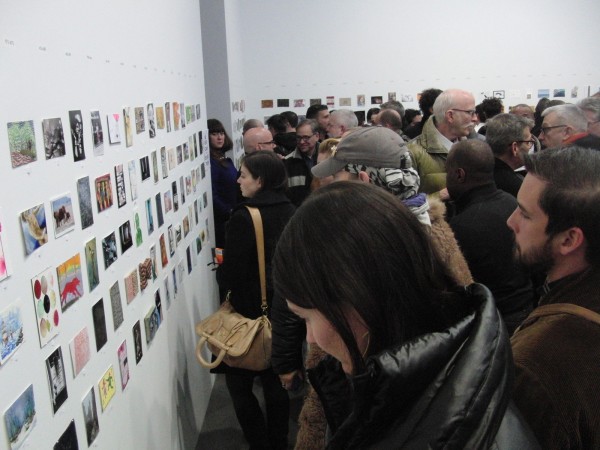
Art lovers and collectors crowd in and take notes at VIP preview for sixteenth annual Postcards from the Edge benefit (photo by twi-ny/mdr)

Art lovers and collectors crowd in and take notes at VIP preview for sixteenth annual Postcards from the Edge benefit (photo by twi-ny/mdr)

Luhring Augustine
531 West 24th St. between Tenth & Eleventh Aves.
January 24 preview party: $50 (includes two raffle tickets), 5:00 – 8:00
January 25-26, suggested admission $5 (all works $85)
www.visualaids.org

On your mark, get set . . . The sixteenth annual Visual AIDS Postcards from the Edge benefit sale takes place this weekend, offering art connoisseurs, beginning collectors, and just about anyone else the opportunity to purchase an original piece of art by a major, internationally renowned artist — for a mere eighty-five dineros. On Saturday from 10:00 am to 6:00 pm and Sunday from 12 noon to 4:00, folks will be lining up to get into Luhring Augustine in Chelsea, where upwards of 1,500 postcard-size works of art are expected to be available. The only catch is that you find out who the artist is after you buy the 4×6 drawing, painting, photograph, collage, sculpture, print, etc., as the creator signs the back, not the front, and you need to pay for it before seeing which artist you got. On Saturday, if you buy four, you get a fifth free; on Sunday, every two purchases gain you a free third postcard. Admission is a suggested five dollars on Saturday and Sunday; you can get a sneak peek at the art on Friday night at the VIP Preview, where for fifty bucks you can check out the works on display, write down the numbers of the ones you want, and make a beeline straight to the cashier on Saturday while everyone else is surveying the merchandise and making their choices. (Stay away from #1000, as that one’s ours.) You also get raffle tickets that could get you first pick or allow you to ask one question about any work of art on the wall. (There’s a silent online auction going on right now as well.) Of course, it’s hard to go wrong when the participating artists include Vito Acconci, Catherine Opie, Glenn Ligon, Justin Vivian Bond, Ed Ruscha, Zarina Hashmi, Lorraine O’Grady, Trevor Winkfield, Fred Wilson, Sarah McEneaney, Robert Longo, Penelope Umbrico, Joel Shapiro, Julie Mehretu, John Baldessari, Roger Hiorns, Rob Wynne, Lesley Dill, John Kelly, Kerry James Marshall, William Wegman, Guido Van Der Werve, Matthew Buckingham, Donald Baechler, Jim Hodges, John Waters, Maria Elena Gonzalez, Marcel Dzama, Kiki Smith, Ernesto Pujol, Milton Glaser, Kay Rosen, Lawrence Weiner, Rirkrit Tiravanija, Harmony Hammond, Danh Vo, and Barbara Takenaga. All proceeds go to Visual AIDS, whose mission for more than twenty-five years has been to “utilize art to fight AIDS by provoking dialogue, supporting HIV+ artists, and preserving a legacy, because AIDS is not over.”

OSCAR WATCH: 12 YEARS A SLAVE

12 YEARS A SLAVE

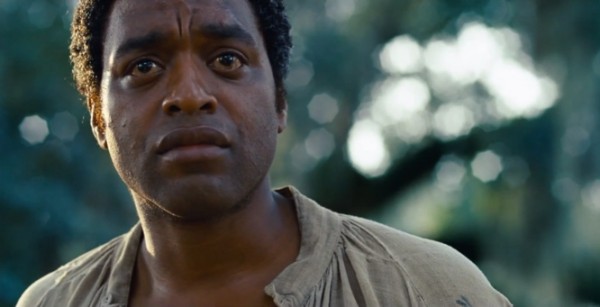
Solomon Northup (Chiwetel Ejiofor) can’t believe the turn his life has taken in 12 YEARS A SLAVE

12 YEARS A SLAVE (Steve McQueen, 2013)
Opened October 18
www.12yearsaslave.com

Steve McQueen’s 12 Years a Slave is an extraordinary cinematic achievement, an epic historical drama that is as much about contemporary issues of race in America as it is about slavery. Chiwetel Ejiofor gives a staggeringly rich performance as Solomon Northup, a free man in Saratoga Springs in 1841, a successful carpenter and musician and accepted member of society, living with his wife (Kelsey Scott) and two children in a beautiful home. When Brown (Scoot McNairy) and Hamilton (Taran Killam) offer him a temporary job playing the fiddle in a traveling circus, he is tricked and sold into slavery, auctioned off to the highest bidder by a greedy man with no moral base (Paul Giamatti). Renamed Platt, he is soon working on a New Orleans plantation owned by William Ford (Benedict Cumberbatch), where he is regularly harassed by John Tibeats (Paul Dano), who is responsible for keeping the slaves in line. When Northup and Tibeats’s battle comes to a head, Ford sells Solomon to Edwin Epps (Michael Fassbender), a far less benevolent slave owner whose wife, Mary (Sarah Paulson), rules him with an iron fist. As Epps grows a fondness for the slave Patsey (Lupita Nyong’o), who can pick more cotton than any of the others, Solomon starts thinking of a way out, risking his life to regain his freedom and return to his family.
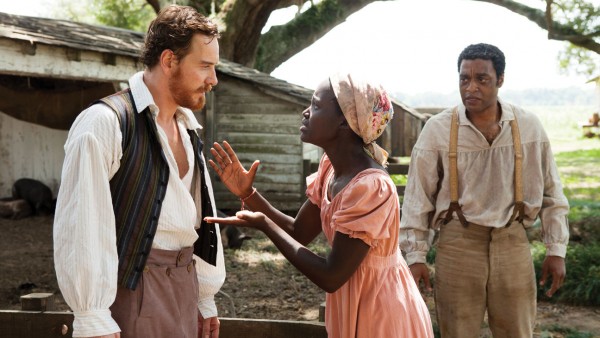
Michael Fassbender, Lupita Nyong’o, and Chiwetel Ejiofor all received Oscar nods in Steve McQueen’s harrowing historical epic

Michael Fassbender, Lupita Nyong’o, and Chiwetel Ejiofor all received Oscar nods in Steve McQueen’s harrowing historical epic

McQueen’s third film, following Hunger, about IRA member Bobby Sands’s prison hunger strike, and Shame, which dealt with severe sex addiction, 12 Years a Slave is a harrowing experience, a very difficult film to watch. McQueen holds nothing back, including unforgettable scenes of brutal torture and psychological and emotional torment. Every moment is nerve-racking, particularly when Solomon is hanged from a tree for an extended period of time, his toes barely touching the ground to keep him from being strangled to death. Ejiofor (Dirty Pretty Things, Kinky Boots) is mesmerizing as Solomon, able to make viewers share his pain with just a glance; McQueen uses his background as an experimental video artist to make unexpected choices that are powerful and unforgiving. The film features numerous outstanding supporting performances, including the brave Nyong’o as the relentlessly brutalized Patsey, McQueen regular Fassbender as the slave owner who thinks he might love her, and producer Brad Pitt as one of the only white men in the South who seems to really understand what is going on. The film was written by novelist and screenwriter John Ridley (Three Kings, Love Is a Racket), who adapted the story from Northup’s 1853 memoir, imbuing it with a freshness and vitality while subtly drawing parallels to the racism that is still prevalent today. Watching 12 Years a Slave isn’t easy, but if you pass it up, you’ll be missing one of the best, and most important, films of this short century.

Nominated for nine Academy Awards: Best Picture, Best Director (Steve McQueen), Best Actor (Chiwetel Ejiofor), Best Supporting Actor (Michael Fassbender), Best Supporting Actress (Lupita Nyong’o), Best Adapted Screenplay (John Ridley), Best Film Editing (Joe Walker), Best Production Design (Adam Stockhauser and Alice Baker), and Best Costume Design (Patricia Norris)

KING LEAR

(photo by Richard Termine)

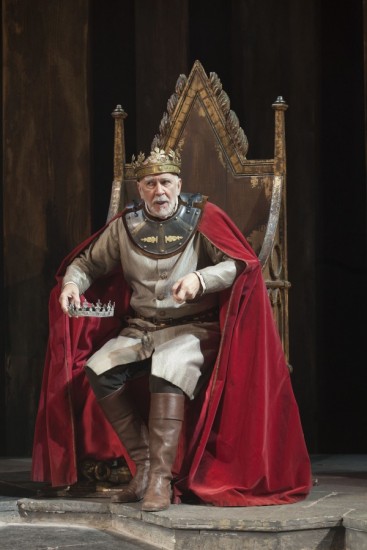
Frank Langella stars as a physically powerful Lear at BAM (photo by Richard Termine)

Brooklyn Academy of Music
BAM Harvey Theater
651 Fulton St. between Ashland & Rockwell Pl.
Through February 9, $25-$125
718-636-4100
www.bam.org

Bayonne-born Frank Langella has some rather big shoes to fill as he steps onto the stage as King Lear at BAM’s Harvey Theater, site of two recent memorable productions, the 2007 Royal Shakespeare Company version starring Sir Ian McKellen and the 2011 presentation from the Donmar Warehouse boasting Sir Derek Jacobi in the title role. But the three-time Tony winner is more than up to the task in the Chichester Festival Theatre’s intense production of Shakespeare’s greatest tragedy. Although there’s a sizable hitch in his gait when he first appears, hunched over a bit, Langella’s Lear is no feeble king at the start. There’s a strength and power to his body, the way he raises his arms and sits on the throne, that belies his seventy-six years. (In comparison, McKellen was sixty-eight when he played Lear at BAM, Jacobi seventy-four.) As he asks his daughters, Cordelia (Isabella Laughland), Goneril (Catherine McCormack), and Regan (Lauren O’Neil), to declare their love for him in return for their share of his kingdom, it’s clear Lear has not gone over the edge quite yet, even as he rails against his former favorite, Cordelia, who can only say she loves him as any daughter loves a father. But he soon feels his faculties starting to slip, begging the fool (a terrific Harry Melling), “Oh, don’t let me go mad; not mad, sweet heaven! Keep me sane. I don’t want to be mad!” But it’s too late. When Lear comes out for the second act, in tattered clothes and barefoot, wearing a ridiculous straw hat, it’s clear there’s no return from his downward spiral.

(photo by Richard Termine)

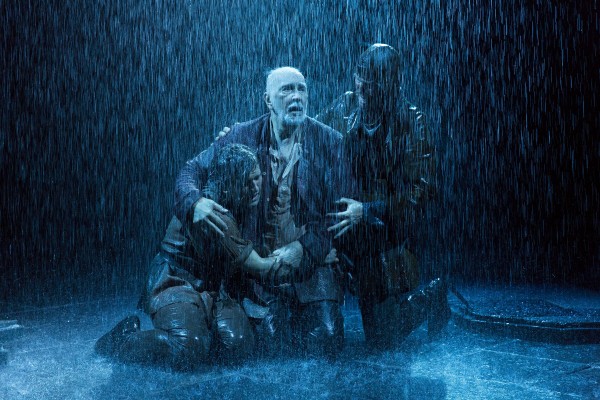
The fool (Harry Melling) and Kent (Steven Pacey) hold on to the king (Frank Langella) during brutal storm (photo by Richard Termine)

The closest Langella, who has not done a lot of Shakespeare in his long career, previously came to Lear was when Lee J. Cobb was playing the ill-fated king in 1968 at the Vivian Beaumont, in repertory with William Gibson’s A Cry of Players, in which Langella appeared as the Bard. But now that he has taken on the role himself, he attacks it with a hunger that energizes director Angus Jackson’s streamlined production. Robert Innes Hopkins’s spare set is backed by large wooden beams, some teetering, as if about to fall, like Lear. During the storm, a hard rain pours over Lear, bathed in a stunning blue light, the fool holding on to him as if trying to prevent him from melting away right then and there. Max Bennett is a splendidly conniving Edmund, while Sebastian Armesto excels as he transforms from the wronged Edgar to the wild creature Tom, leading his blinded father, Gloucester (Denis Conway), to his apparent doom. Langella’s early sturdiness makes his tragic fall all the more heartbreaking as he cradles Cordelia at the end, his body weak and frail, his mind realizing just what he’s done. It’s another memorable moment in yet another memorable Lear at the Harvey.

DUKE RILEY: SEE YOU AT THE FINISH LINE

(courtesy MagnanMetz Gallery)

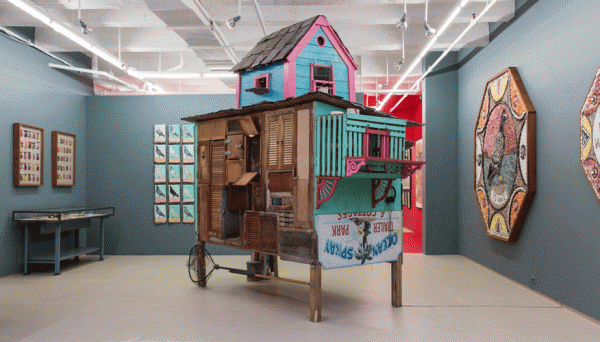
Duke Riley, “Pigeon Coop,” reclaimed wood, roofing, and construction materials, 2012-13 (photo courtesy Magnan Metz Gallery)

Magnan Metz Gallery
521 West 26th St. between Tenth & Eleventh Aves.
Extended through January 25, free, 10:00 am – 6:00 pm
212-244-2344
www.magnanmetz.com
www.dukeriley.info

There are only a few more days left to see Duke Riley’s intensely fascinating “See You at the Finish Line” as it races toward its twice-extended conclusion on Saturday. The fourth solo exhibition by the Boston-born, Brooklyn-based multimedia installation artist is divided into two parts, both filled with exacting details and, well, flights of fancy. In “Trading with the Enemy,” Riley investigates the relationship between Cuba and Key West, which includes smuggling because of the continued U.S. embargo. After four years of planning, Riley bred and trained fifty homing pigeons for eight months in a Key West loft. The pigeons, with tiny cameras attached to them, were released, with some eventually returning to their home coop bearing Cohiba cigars. He named the birds after such smugglers as Jean Lafitte, Whitey Bulger, Billy Hayes, Margaret Sanger, and Pablo Escobar and such controversial filmmakers as Mel Gibson and Larry Clark and reports which ones survived and which ones didn’t. The display includes such elements as the cigars that were brought across the Atlantic, the harnesses the pigeons wore, and the date and cause of death of those that died. Riley has transplanted the entire pigeon coop to the middle of the gallery, an astonishing piece, still an active home to several of the live birds who successfully made the journey. A trio of mosaics made out of found seashells and wood proclaim, “To Have,” “To Have Not,” and “Forget Me Not When Far Away,” while the trip is also documented in the three-channel video See You at the Finish Line, consisting of footage shot by several pigeons equipped with the cameras. It’s hysterical to see how one family responds when a pigeon lands on its boat.

In a back room, visitors can immerse themselves in “The Rematch,” in which Riley restaged the mythological Chinese race that established the zodiac and the measurement of time in a yearly cycle, a race that was won by a cheating rat. Riley went to the Caogang River in Zhujiajiao, China, where a dozen gondolas with live animals, a person wearing an animal mask, and an opera singer performing a song told from the animal’s perspective raced to the Fengshang Bridge, passing by areas where new development has displaced long-standing communities. The exhibit includes video footage of the race, the masks with the legends behind them, the songs, and raffle tickets spread over the floor. Among the songs are the Rabbit’s “I’ve Been Walking Around for 500 Years Depressed with a Broken Nose,” the Rat’s “How Dare They Question My Title,” and the Goat’s “I Probably Would Have Done Something Irresponsible with the Prize.” The exhibit seemingly explores the nature of legend, but Riley explains, “No calendars will be reset at the finish line nor will any closer understanding of that mythical day be realized. The only realization will be a brief moment of divine absurdity between two shores.” Both “The Rematch” and “Trading with the Enemy” deal with animals, history, contemporary issues, and water, a regular theme of Riley’s, displayed as only Riley can, examined from multiple angles through a variety of media. As he says in his artist statement, “I combine populist myths and reinvented historical obscurities with contemporary social dilemmas, connecting past and present, drawing attention to unsolved issues. Throughout my projects I profile the space where water meets the land, traditionally marking the periphery of urban society, what lies beyond rigid moral constructs, a sense of danger and possibility.” In “See You at the Finish Line,” Riley has created another endlessly intriguing, imaginative, and entertaining exhibit, one that requires lengthy attention but is well worth the time.