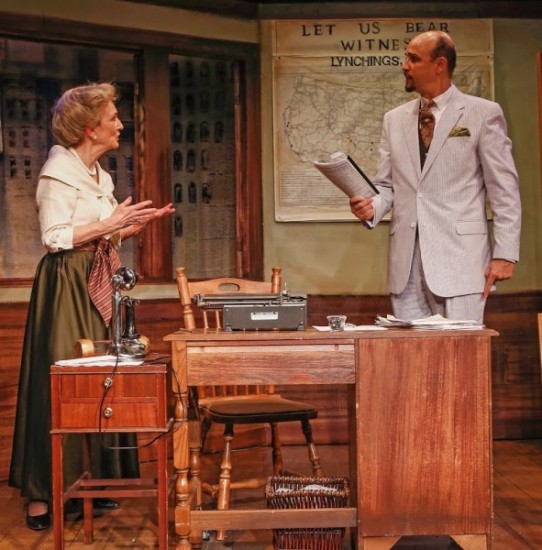
Miss Mary White Ovington (Kathleen Chalfant) and Dr. W. E. B. Du Bois (Timothy Simonson) discuss the state of the NAACP and more in world premiere play (photo by Ronald L. Glassman)
Castillo Theatre
543 West 42nd St. between Tenth & Eleventh Aves.
Thursday – Sunday through February 16, $25
212-941-1234
www.castillo.org
www.newfederaltheatre.com
On an early summer Sunday morning on Fifth Ave. in 1915, a white woman and a black man both unexpectedly show up at their place of employment, unable to rest from their crusade for justice and equality. Clare Coss’s slight but affecting Dr. Du Bois and Miss Ovington, presented by Woodie King Jr.’s New Federal Theatre at the Castillo, offers the unique opportunity of spending ninety minutes with social activists Mary White Ovington (Kathleen Chalfant) and Dr. William Edward Burghardt (W. E. B.) Du Bois (Timothy Simonson) as they discuss racism, politics, war, family, and more in the office of the NAACP, which they helped cofound and where Dr. Du Bois writes and edits The Crisis, the organization’s controversial magazine. Angered once again by disagreements with the board, Dr. Du Bois has come to the office to revise his resignation letter, while Miss Ovington is there because she was troubled as well by the previous evening’s board meeting. Ever determined, she says, “Fate has thrown us together now. Let us take advantage of this propitious moment.” And take advantage they do, often speaking in pedagogical, resolute phrases as Miss Ovington tries to convince Dr. Du Bois that he must stay with the NAACP. “Here, we unite against the greatest odds, because we value the worth of every single human being, We must not fail,” she says. “We must not fail, for our task is to transform three hundred years of alienation between black and white in our country,” he replies poetically, “and stir a great awakening in the American Negro — an inner revolution.” As they continue sharing their passions, they grow closer physically as well. Directed by longtime Castillo veteran Gabrielle L. Kurlander (Sally and Tom [The American Way]), the play is anchored by solid performances from Chalfant (Wit, Angels in America) and Simonson (Adam), who instill their characters with an endearing grace and warm familiarity, although Simonson includes an additional dose of earnestness. Chris Cumberbatch’s set is an office torn in half; on the left is Miss Ovington’s desk, with a typewriter and a window that looks out onto the city, while on the right is Dr. Du Bois’s darker, more claustrophobic space, with a dictaphone and a record player with an old horn speaker, echoing their respective roles in changing America’s views on racism. Dr. Du Bois and Miss Ovington is an intimate look at a critical moment in time whose ultimate impact can still be felt today.

 For twenty years, Baltimore has been defined by such television series as Homicide: Life on the Street, The Corner, and The Wire, shows filled with rampant violence and drugs. This past November, the U.S. Census Bureau released data showing that the poverty rate from 2010 to 2012 in the city of Baltimore was more than twenty-five percent. During that same period, debut filmmaker Lofty Nathan embedded himself with a group of teens and young twentysomethings who ride two- and four-wheel dirt bikes through the streets and parks of Charm City, popping vertical wheelies that point up at the sky. Nathan documents their activities in 12 O’Clock Boys, offering an inside look at this dangerous phenomenon (which has spread to other inner cities as well). “This is our tradition, our culture, this is what we do. Can’t nobody take it from us. This is our release,” one rider says as he puts on a mask. “Baltimore City Sunday: F@ck city council, f@ck the police. I pity them that try to stop us. This is our sh*t.” Indeed, the police are rarely far away, either in marked cars or helicopters, but they are limited in how they can chase the riders because of public safety concerns. Nathan focuses in on twelve-year-old Pug, a tough-talking, smart street kid who starts skipping school, instead dedicating his every waking moment to trying to become a Twelve O’Clock Boy. Meanwhile, there’s little his mother, Coco, a former exotic dancer raising five children on her own, seems to be able to do to stop him. It’s sad to see Pug make this choice, turning his back on education while declaring the police to be the enemy, but Nathan makes no moral judgments about him or any of the other boys and men who take part in this illegal activity, which seems to exist primarily to fight authority. He also doesn’t delve into the political, socioeconomic, and racial factors that have impacted the rise of such a scenario. Instead, he lets Pug, Superman, Shawn Sean, Wheelie Wayne, and Albert Lemon — a former copy now running a regional security outfit — speak for themselves. And it’s a scary story, one that, regardless of which side you’re on, can only have a tragic outcome if something isn’t done about it.
 Sound and image meld together beautifully in

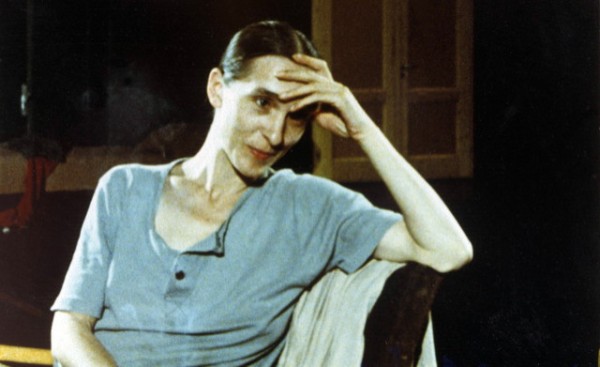
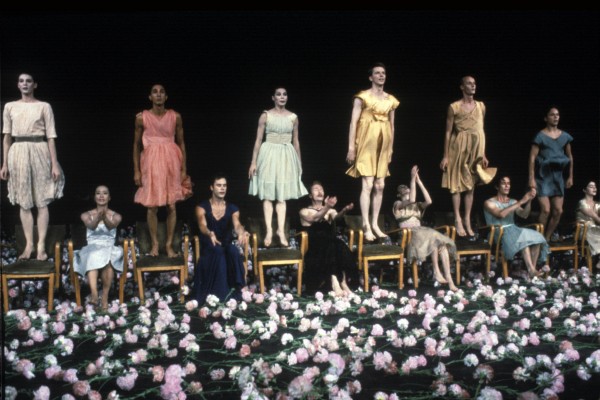
 In 1982, Belgian filmmaker Chantal Akerman followed Pina Bausch’s Tanztheater Wuppertal on a five-week tour of Europe as the cutting-edge troupe traveled to Milan, Venice, and Avignon. “I was deeply touched by her lengthy performances that mingle in your head,” Akerman says at the beginning of the resulting documentary, “One Day Pina Asked…,” continuing, “I have the feeling that the images we brought back do not convey this very much and often betray it.” Akerman (Jeanne Dielman, 23 Quai du Commerce, 1080 Bruxelles; Je tu il elle) needn’t have worried; her fifty-seven-minute film, made for the Repères sur la Modern Dance French television series, is filled with memorable moments that more than do justice to Bausch’s unique form of dance theater. From 1973 up to her death in 2009 at the age of sixty-eight, Bausch created compelling works that examined the male-female dynamic and the concepts of love and connection with revolutionary stagings that included spoken word, unusual costuming, an unpredictable movement vocabulary, and performers of all shapes, sizes, and ages. Akerman captures the troupe, consisting of twenty-six dancers from thirteen countries, in run-throughs, rehearsals, and live presentations of Komm Tanz Mit Mir (Come Dance with Me), Nelken (Carnations), 1980, Kontakthof, and Walzer, often focusing in on individual dancers in extreme close-ups that reveal their relationship with their performance. Although Bausch, forty at the time, is seen only at the beginning and end of the documentary, her creative process is always at center stage. At one point, dancer Lutz Förster tells a story of performing Gershwin’s “The Man I Love” in sign language in response to Bausch’s asking the troupe to name something they’re proud of. Förster, who took over as artistic director in April 2013, first performs the song for Akerman, then later is shown performing it in Nelken. (Bausch fans will also recognize such longtime company members as Héléna Pikon, Nazareth Panadero, and Dominique Mercy.)