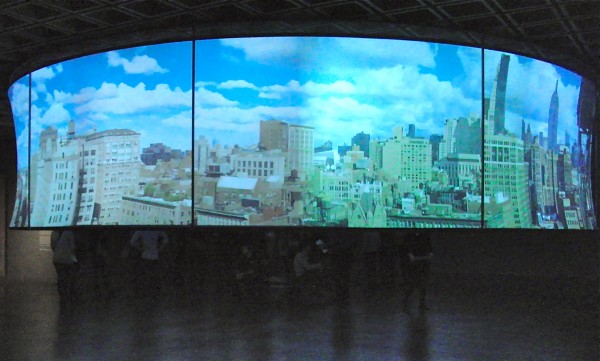
T. J. Wilcox’s “In the Air” gives visitors a panoramic view of New York City both past and present (photo by twi-ny/mdr)
Whitney Museum of American Art
Mildred and Herbert Lee Galleries, second floor
945 Madison Ave. at 75th St.
Through Sunday, February 9, $16-$20 (pay-what-you-wish Fridays, 6:00 – 9:00)
212-570-3600
www.whitney.org
In his Whitney installation “In the Air,” Seattle-born, New York-based artist T. J. Wilcox invites visitors into his Union Square rooftop studio for a swirling look at his view of the city, past and present. Upon entering the second floor galleries, people can duck into a 360-degree panorama of the city composed of shots from six projectors. Over the course of one day compressed into thirty-five minutes, the film breaks into half a dozen short narratives on individual panels, each of which explores a part of New York history associated with that area. The short documentaries look at heiress and jeans designer Gloria Vanderbilt, the plan to have zeppelins dock on top of the Empire State Building, Andy Warhol preparing silver Mylar balloons to greet Pope Paul VI’s motorcade passing by the Factory, Manhattanhenge glowing in the distance, fashion illustrator Antonio Lopez, and Wilcox’s building super describing in detail how he watched 9/11 unfold from the roof. In the short pieces, Wilcox, a pop-culture junkie who has previously made short films about Marie Antoinette, Jerry Hall, and Marlene Dietrich, relates how the subject influenced him as an artist and a human being. “I became really interested in this idea that I was seeing the view in the present tense as I was looking at the New York City scape but that I was also looking across time,” Wilcox says in a video about the piece on the Whitney website. Part of the fun of “In the Air” is spinning around, wondering where the next of the six documentaries is going to appear; it also makes viewers create their own narratives, peering out at a section of the city and being hit with a personal memory. Wilcox supplements the installation with fifteen works selected from the Whitney’s permanent collection that all involve ways of looking (in general and at New York specifically), including videos, assemblages, photographs, and paintings by Charles Atlas, Hiroshi Sugimoto, Helen Levitt, Joseph Cornell, Felix Gonzalez-Torres, Joan Jonas, Claes Oldenburg, Yoko Ono, and Gordon Matta-Clark.
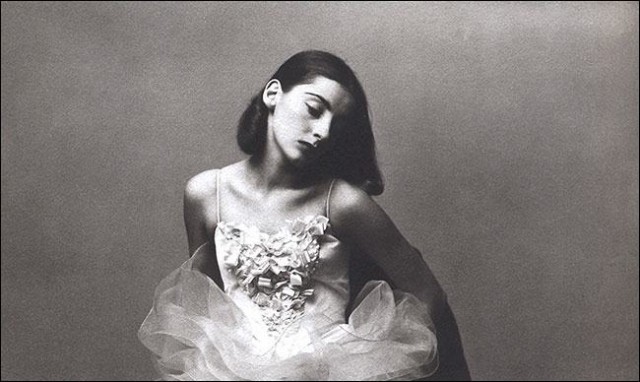
 “Tanny’s body created inspiration for choreographers,” one of the interviewees says in Nancy Buirski’s documentary Afternoon of a Faun: Tanaquil Le Clercq. “They could do things that they hadn’t seen before.” The American Masters presentation examines the life and career of prima ballerina Tanaquil Le Clercq, affectionately known as Tanny, who took the dance world by storm in the 1940s and ’50s before tragically being struck down by polio in 1956 at the age of twenty-seven. Le Clercq served as muse to both Jerome Robbins, who made Afternoon of a Faun for her, and George Balanchine, who created such seminal works as Western Symphony, La Valse, and Symphony in C for Le Clercq — and married Tanny in 1952. In the documentary, Buirski (
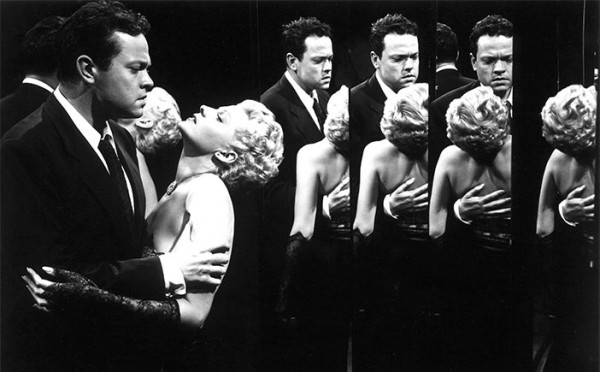
 Orson Welles followed up the creepy black-and-white Holocaust thriller,
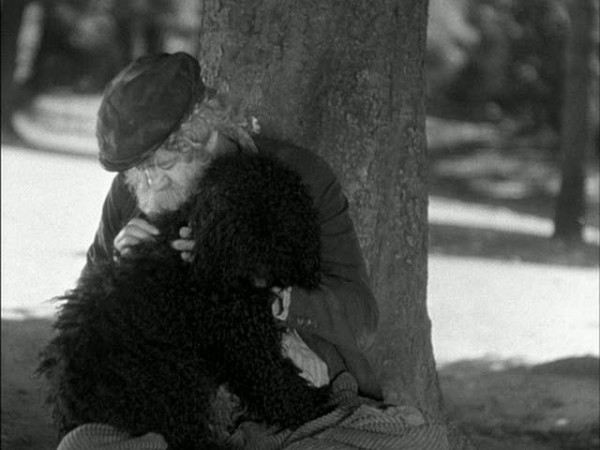
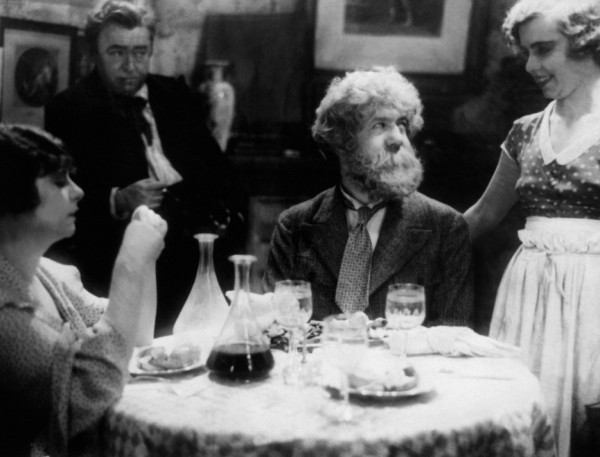
 After his dog runs away, a homeless tramp jumps into the Seine, only to be rescued by a bookseller who brings him home to stay with his family in Jean Renoir’s 1932 masterpiece, Boudu Saved from Drowning. Adapted by Renoir from René Fauchois’s play — the brief opening scene takes place onstage, announcing that what is to follow is essentially a fable — the depression-era social satire centers on the relationship between the wacky, unpredictable bum, Priapus Boudu (Michel Simon, who also played the lead in the play), and Edouard Lestingois (Charles Granval), a bourgeois bookstore owner cheating on his wife, Emma (Marcelle Hainia), with one of their maids, Anne-Marie (Sévérine Lerczinska). Lestingois first spots Boudu while looking through his telescope at the masses on the Pont des Arts, like a filmmaker shooting a documentary; “I’ve never seen such a perfect tramp!” he declares. (Indeed, Renoir regularly comments on the art of filmmaking in Boudu, especially with his use of music, nearly all of which is eventually revealed to be coming from natural sources.) Lestingois helps save the suicidal Boudu, nursing him quickly back to health and letting him stay at the house, much to the chagrin of his wife. Rather than being thankful, Boudu is a whirling dervish of ill manners, breaking dishes, using fancy lingerie to shine his shoes, and daring to eat sardines with his hands. Despite Boudu’s rudeness, Edouard, Emma, and Ann-Marie are all drawn to him in different ways, particularly Edouard, who dresses Boudu in his clothes as if he were a kind of doppelgänger, an alternate version with a completely different set of expectations and responsibilities. But there’s no controlling the bushy-haired Boudu, who reacts to all stimuli like a child who does whatever he wants, not caring about the consequences. One of the keys to the film is that very barrier, the question as to whether Boudu is a conniving tramp who knows exactly what he’s doing or just a pitiable poor soul with no self-control. Boudu — and, therefore, Simon, who gives a towering, spectacular performance, one of the greatest of early cinema — is part Charlie Chaplin, part Buster Keaton, part Little Rascal, and the influence of the character extends to Denis Lavant’s underground creature in Léos Carax’s Merde short in the Tokyo! omnibus and Eddie Murphy’s Billy Ray Valentine in John Landis’s Trading Places. (The film has also been remade twice; Paul Mazursky’s Down and Out in Beverly Hills stars Nick Nolte as the tramp, while Gérard Depardieu plays the role in Gérard Jugnot’s 2005 Boudu.)