
Joe (Stacy Martin) learns about sexual pleasure in Lars von Trier’s controversial NYMPHOMANIAC
NYMPHOMANIAC: VOLUME 1 (Lars von Trier, 2013)
Film Society of Lincoln Center, Elinor Bunin Munroe Film Center, 144 West 65th St. between Broadway & Amsterdam Ave., 212-875-5600
Landmark Sunshine Cinema, 143 East Houston St. between First & Second Aves., 212-330-8182
Opens Friday, March 24
www.magpictures.com
In Breaking the Waves, Danish Dogme 95 cofounder Lars von Trier’s 1996 breakthrough, Stellan Skarsgård plays a paralyzed man who convinces his wife (Emily Watson) to have sexual liaisons with other men and then tell him about the encounters in graphic detail. In von Trier’s latest controversial, polarizing work, Nymphomaniac: Volume 1, Skarsgård stars as Seligman, a single man who takes in a woman named Joe (Charlotte Gainsbourg) who is soon sharing her own sexual adventures with him, in extremely graphic detail. After finding Joe severely beaten in an alley, Seligman nurses her back to health while carefully listening to her life story. She repeatedly says she is a bad, irredeemable human being because of the things she has done, which started to go off the rails when she was a small child discovering the pleasure sensations to be had in her nether regions. Her sordid tale is told in flashbacks, as her younger self (Barking at Trees’ Stacy Martin) goes from lover to lover to lover to lover to lover ad infinitum. (The specific numbers are plastered over the screen.) Along the way, Seligman offers his own interpretation of her life, praising her sense of freedom while comparing her sexuality to fly-fishing, which von Trier (Dancer in the Dark, Melancholia, Antichrist) relates in a playful way that is at first absurdly silly but actually ends up coming together. Unfortunately, however, Martin is far too bland as Joe as she beds victim after victim, including Jerôme (a miscast Shia LaBeouf), perhaps the only one who truly loves her. And then the film abruptly ends, showing clips from Volume 2, which opens on April 4. As it turns out, there are multiple versions of Nymphomaniac: The four-hour edit, which has been shown internationally and at festivals, has been broken up into two parts in the United States, while a five and a half hour director’s cut will be released later this year. The result is that Nymphomaniac: Volume 1 feels like an unfinished movie, like something is missing, and indeed two hours (and more) are yet to come. The official press notes proudly confirm that “the films contain graphic depictions of sexuality to a degree unprecedented in a mainstream feature film,” while a disclaimer in the credits says that all scenes involving actual penetration, and there are several, were performed by body doubles. What does it all mean? We’re not really sure yet, because until we see Volume 2, we don’t feel comfortable either recommending or dismissing Volume 1 (which also features Christian Slater and Connie Nielsen as Joe’s parents and Uma Thurman as a scene-stealing wronged wife). But perhaps it says something that we still even want to see the second half, but then again, we’ve always been completionists, as well as gluttons for cinematic punishment.

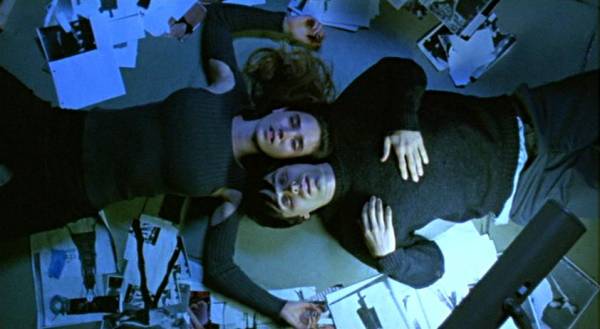
 Darren Aronofsky’s Requiem for a Dream is a devastating portrait of addiction, featuring one of the most brutal endings in cinema history. Based on the novel by Hubert Selby Jr. (Last Exit to Brooklyn), who cowrote the screenplay with Aronofsky, the Coney Island-set film focuses on four central figures: Sara Goldfarb (Ellen Burstyn), a lonely widow living in Brighton Beach who learns that she might appear on a television program so is desperate to lose weight to fit into her red dress, ultimately getting lost in a haze of prescription drugs; her son, Harry (Jared Leto), a junkie looking to make a big score; Harry’s girlfriend, Marion Silver (Jennifer Connelly), who dreams of becoming a fashion designer but has to decide how far she will go for her next taste; and Harry’s partner in crime, Tyrone Love (Marlon Wayans), who shoots up while remembering the warm comfort of his mother’s arms. Using repetitive fast-paced editing, enhanced sound effects, and a harrowing score by Clint Mansell, Aronofsky creates a nightmare world where delusional dreams come crashing down with horrific consequences. The acting throughout is a veritable tour de force, led by Burstyn’s Oscar-nominated descent into hell. Requiem for a Dream is screening March 21 at 7:00, kicking off the Museum of the Moving Image’s weekend tribute to Aronofsky in celebration of the release of his latest film, Noah. The series also includes Pi, The Fountain, The Wrestler, and Black Swan before concluding with a members-only preview of his new biblical epic on March 27.
 Winner of the Un Certain Regard prize at Cannes and nominated for a Best Foreign Language Film Academy Award, Rithy Panh’s The Missing Picture is a brilliantly rendered look back at the director’s childhood in Cambodia just as Pol Pot and the Khmer Rouge began their reign of terror in the mid-1970s. “I seek my childhood like a lost picture, or rather it seeks me,” narrator Randal Douc says in French, reciting darkly poetic and intimately personal text written by author Christophe Bataille (Annam) based on Panh’s life. Born in Phnom Penh in 1964, Panh, who has made such previous documentaries about his native country as S21, The Khmer Rouge Killing Machine and Duch, Master of the Forges of Hell and wrote the 2012 book L’élimination with Bataille, was faced with a major challenge in telling his story; although he found remarkable archival footage of the communist Angkar regime, there are precious few photographs or home movies of his family and the community where he grew up. So he had sculptor Sarith Mang hand-carve and paint wooden figurines that Panh placed in dioramas to detail what happened to his friends, relatives, and neighbors. Panh’s camera hovers over and zooms into the dioramas, bringing these people, who exist primarily only in memory, to vivid life. When people disappear, Panh depicts their carved representatives flying through the sky, as if finally achieving freedom amid all the horrors. He delves into the Angkar’s propaganda movement and sloganeering — the “great leap forward,” spread through film and other methods — as the rulers sent young men and women into forced labor camps. “With film too, the harvests are glorious,” Douc states as women are shown, in black-and-white, working in the fields. “There is grain. There are the calm, determined faces. Like a painting. A poem. At last I see the Revolution they so promised us. It exists only on film.” It’s a stark comparison to cinematographer Prum Mésa’s modern-day shots of the wind blowing through lush green fields, devoid of people.