New York City Center
130 West 56th St. between Sixth & Seventh Aves.
March 19-22, $35-$95
212-581-1212
www.alvinailey.org
www.nycitycenter.org
After enjoying a terrific experience choreographing Rust for the Martha Graham Dance Company last year, Nacho Duato asked if he could create another piece for the famed company, and artistic director and former Graham dancer Janet Eilber jumped at the opportunity. The result is the tentatively titled Depak Ine, which will have its world premiere March 20 as part of the Martha Graham Dance Company’s too-brief upcoming season at City Center, which runs March 19–22. The season includes the Graham classics Appalachian Spring, Maple Leaf Rag, and The Rite of Spring in addition to two pieces by Andonis Foniadakis, one act of Clytemnestra and the world premiere of Echo. The Spanish-born Duato discussed the new commission and showed unadorned advance excerpts (as well as Graham’s Lamentation and a scene from Rust) at a recent “Works & Process” presentation at the Guggenheim, explaining how he choreographs to make the most of each dancers’ individual talent, something the performers were all smiles about at the reception afterward. Duato, who studied with the Martha Graham Dance Company when he was much younger and feels a kinship with Graham’s gestural sensibilities, talked about how he wanted to work with the women as well in the new commission, since Rust was for five male dancers. The former artistic director and current resident choreographer of the Mikhailovsky Theatre ballet company and the incoming head of the Staatsballett Berlin, Duato noted that the title, Depak Ine, might change — it is currently named for the musical piece by John Talabot that is used in it (along with Arsenije Jovanovic’s “Athos — Montana Sacra”) — and he also pointed out that he still had to figure out what to do with the last three minutes. Hopefully all will be in place by March 20, when this exciting work makes its debut.


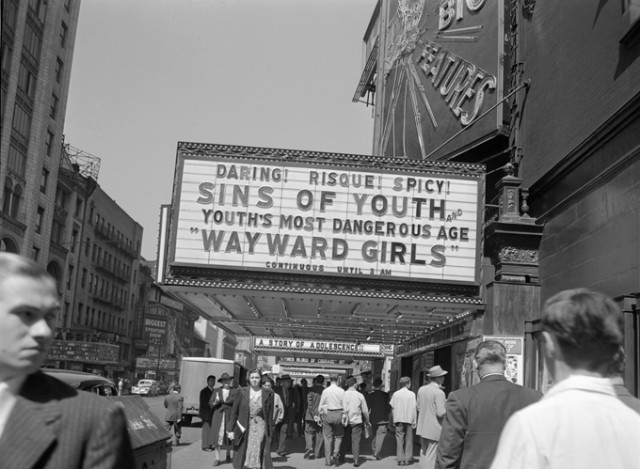
 Writer-director Matt Wolf (Wild Combination: A Portrait of Arthur Russell) and cowriter Jon Savage (England’s Dreaming) explore the explosion of youth culture in the first half of the twentieth century in the innovative documentary Teenage. Based on Savage’s 2007 book, Teenage: The Creation of Youth Culture, and various other sources, the film concentrates on the social, economic, cultural, and political development of boys and girls who came of age before, during, and after WWI, the Great Depression, and WWII. Using 135 photographs, 272 rare footage excerpts, and four dramatic re-creations, Wolf, editor Joe Beshenkovsky, and cinematographer Nick Bentgen create a virtually seamless chronological examination of how the young generation took shape from the slavelike child labor of the early 1900s and transformed throughout various movements that ultimately led to a new kind of freedom post-WWII. Narration adapted from original sources is delivered by Jena Malone as an American girl, Ben Whishaw as a British boy, Julia Hammer as a German girl, and Jessie Usher as an American boy; the re-creations feature Leah Hennessey as Brenda Dean Paul of England’s Bright Young People, Ivy Blackshire as Melita Maschmann (voiced by Daniela Leder) of Germany’s Hitler Youth, Ben Rosenfield as Tommie Scheel of the Hamburg Swings, and Malik Peters as Warren Wall, who represents the African American experience. The film delves into the beginnings of the Boy Scouts (preparing America’s youth for military service), the effects of jazz and swing music on the younger generation, fashion trends, consumerism, drugs, race, unemployment, and eventual public rebellion as “teenagers” — a word that didn’t exist until around 1921 — started to take responsibility for themselves as they lost faith in their parents, authority, and the government. Teenage, whose form and structure recall the work of such filmmakers as Bill Morrison, Guy Maddin, and Ken Burns, offers unique insight into the growth of youth culture, making compelling and sometimes surprising connections without stating the obvious or using overly familiar visuals, all set to a subtle score by Deerhunter leader Bradford Cox. Teenage opens March 14 at the Landmark Sunshine, with Wolf participating in Q&As following the 7:40 and 9:45 screenings on March 15.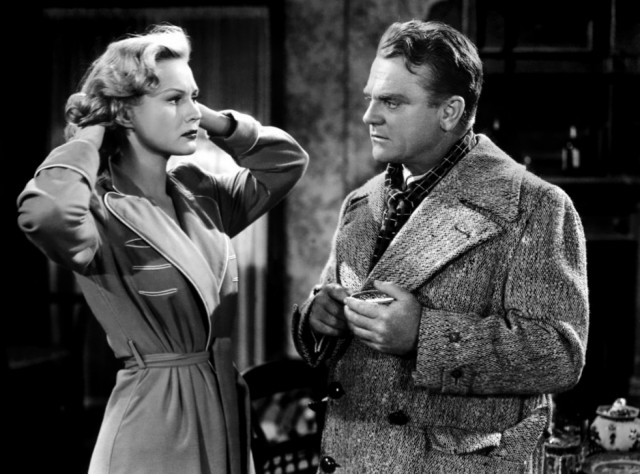
 “‘If you haven’t got the story, you haven’t got anything’: Raoul Walsh used to say this,” Martin Scorsese explains in A Personal Journey with Martin Scorsese through American Movies. BAMcinématek is celebrating the careers of both men in “Under the Influence: Scorsese/Walsh,” a two-week series focusing on both men’s gangster films, including what is arguably the first of the genre, Walsh’s 1915 Regeneration. One of Walsh’s best is the film noir classic White Heat, which is being shown on St. Patrick’s Day. It might have been nominated for a mere single Oscar, losing for Best Motion Picture Story (to The Stratton Story), but it quickly came to be considered one of the greatest gangster pictures ever made. The 1949 film, which is loosely based on the true story of Francis “Two Gun” Crowley, stars James Cagney as Cody Jarrett, a devout criminal married to the beautiful moll Verna (Virginia Mayo) but still deeply (and unhealthily) attached to his mother (Margaret Wycherly). While doing time for a train robbery gone wrong, Jarrett finds out that his gang has been taken over by his former flunkie Big Ed Somers (Steve Cochran), who also seems to have taken over Verna as well. Jarrett decides he must break out of jail, setting the stage for an unforgettable climax. Walsh (High Sierra, They Died with Their Boots On) doesn’t concentrate just on the action, of which there is plenty, instead focusing on Jarrett’s troubled psyche as he blindly seeks revenge. “Under the Influence: Scorsese/Walsh” continues through March 26 with such other Walsh or Scorsese films as Raging Bull, Gentleman Jim, Taxi Driver, The Roaring Twenties, Casino, and The Man I Love.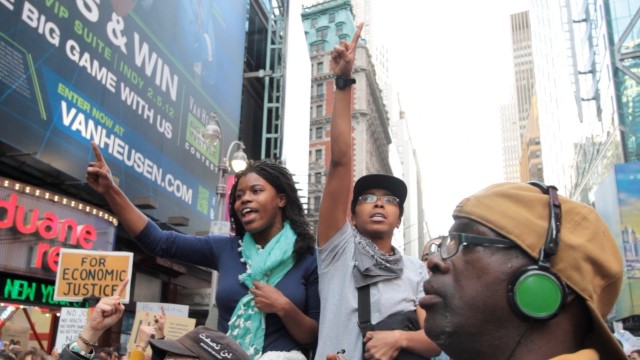
 Ira McKinley has had plenty of opportunities to give up on life and turn his back on society. His father was shot and killed by the police when Ira was fourteen. He suffered through a crack addiction, has PTSD after serving in the Air Force, spent three years in prison for attempted robbery, and has been homeless and jobless for virtually all of his adult life. But he was determined to not end up just another throwaway, someone with no present and no future. “They look at you like you’re nothing, like you’re, like I said, a throwaway. And they expect you to fail,” McKinley says in the powerful hour-long documentary The Throwaways, which he codirected with Bhawin Suchak. “That’s when I started my activism. I told people, ‘Listen, you’re in here messing with the wrong person.’” McKinley went to Northampton, Massachusetts, where he learned about filmmaking at a public access station. He then went out with his camera, using it as a “tool,” a “weapon,” and an “equalizer” as he talked to people in the abandoned streets of Albany, attended press conferences by Van Jones, mayor Jerry Jennings, and police chief Steven Krokoff, and met with such activists as Michelle Alexander, author of The New Jim Crow: Mass Incarceration in the Age of Colorblindness, a book that has had a profound influence on McKinley. He also visits places from his past that are filled with a mix of painful and poignant memories. The documentary was initially supposed to be about social justice in the state capitol, but the focus turned to McKinley when Suchak couldn’t line up enough talking heads — and, perhaps more important, because McKinley, a big bear of a man, proved to be such a fascinating character, one who the camera is naturally drawn to. McKinley has been through it all, so he’s not afraid to get up in people’s faces, which is not always the best way to try to implement change, but he’s determined to show the government and society at large that human beings should not be thrown away like yesterday’s trash and that something can be done about it.