Charles Laughton series at Film Forum actually deserves a big thumbs-up
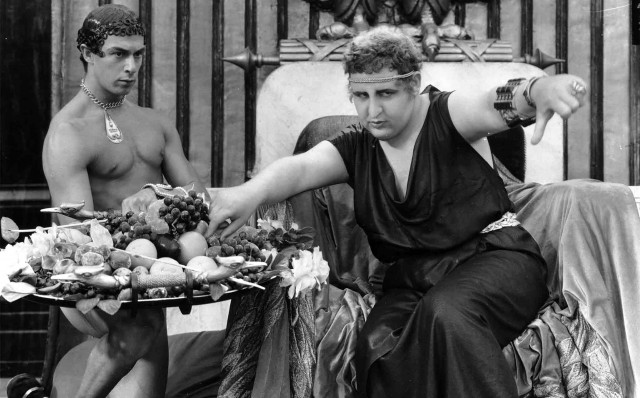
Who: Charles Laughton What:Three-week retrospective Where:Film Forum, 209 West Houston St., 212-727-8110 When: Daily through February 26 Why: We might have learned just a little too much about English stage and screen actor and director Charles Laughton from Scotty Bowers’s 2012 tell all, Full Service: My Adventures in Hollywood and the Secret Sex Lives of the Stars, so it’s probably best to keep what we know about Laughton to his legendary career, which is being celebrated at Film Forum with a wide-ranging retrospective through February 26. The series continues Monday night with E. A. Dupont’s 1929 silent Piccadilly (with live piano accompaniment by Steve Sterner), in which Laughton has a cameo as a nightclub diner, followed on Tuesday by Lewis Milestone’s Arch of Triumph, with Charles Boyer and Ingrid Bergman, and a double feature of Henry Koster’s romantic comedy It Started with Eve and Richard Wallace’s theater-set Because of Him. Wednesday pairs Robert Z. Leonard’s crime film The Bribe, which stars Laughton and Robert Taylor, Ava Gardner, and Vincent Price, with Burgess Meredith’s The Man on the Eiffel Tower, in which Laughton plays George Simenon’s Inspector Maigret. The festival concludes on Thursday with Laughton as Nero in Cecil B. DeMille’s 1932 epic The Sign of the Cross, as South Carolina senator Seabright Cooley in Otto Preminger’s Advise and Consent, Laughton’s last film, and his lone solo directorial effort, the gripping thriller The Night of the Hunter.
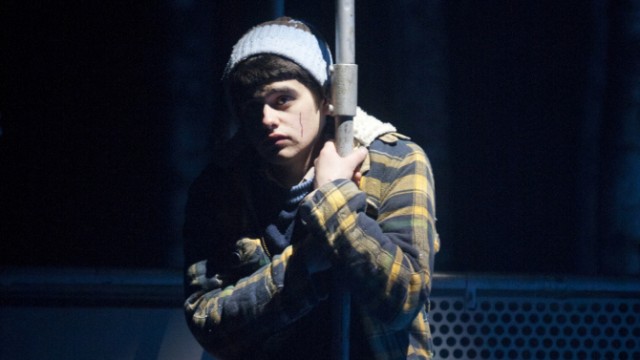
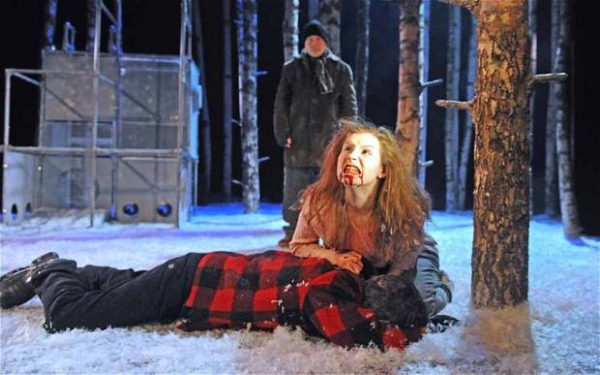
In 2007, the National Theatre of Scotland brought their highly touted Black Watch to St. Ann’s, sending theatergoers flocking to DUMBO, then came back for a pair of return engagements. The troupe is once again in Brooklyn, now scaring audiences with its thrilling adaptation of Let the Right One In, based on John Ajvide Lindqvist’s 2004 novel and Tomas Alfredson’s 2008 Swedish film (which was remade in English as Let Me In in 2010 by Matt Reeves). As the crowd filters in to St. Ann’s temporary home on Jay St., random characters start walking across the stage, a snowy woods featuring a metal play set off to one side. Things get going when a creepy old man named Hakan (Cliff Burnett) captures a passerby, strings him up upside down from a tree, and slices his throat, collecting the dripping blood in a container. The blood is for Eli (Rebecca Benson), a hungry vampire girl who prefers not to have to kill her own prey. New in town, she befriends Oskar (Cristian Ortega), an odd adolescent who is relentlessly bullied by two of his classmates, Micke (Andrew Fraser) and Jonny (Graeme Dalling). Eli and Oskar hang out on the play set, talking about life, sharing a Rubik’s Cube, and discussing her foul odor. She encourages him to stand up for himself, which he is loath to do, but soon the battle lines are drawn, and violence awaits.
Rebecca Benson is ferocious as a hungry vampire in National Theatre of Scotland production at St. Ann’s
Adapted by Jack Thorne (Stuart: A Life Backwards, The Borough) and directed with a dark, stark intensity by Black Watch helmer John Tiffany (Once,The Glass Menagerie), Let the Right One In is a fierce tale of loneliness, desperation, and finding one’s place in the world. Ortega gives Oskar a bittersweet tenderness, Burnett garners sympathy as the obsessed Hakan, Fraser and Dalling keep Micke and Jonny from becoming caricatures, Susan Vidler does a sensitive turn as Oskar’s mother, and Gary Mackay excels in multiple roles (including Oskar’s father). But they’re all at the beck and call of Benson (The Wheel, Little Otik), who is electrifying as the feral Eli, surviving any way she can while knowing exactly what she is; Benson is so riveting, her voice gruff and primal, that you can practically smell her from your seat. The staging is often breathtaking, with movement choreography by Black Watch veteran and assistant director Steven Hoggett (The Curious Incident of the Dog in the Night-time,Peter and the Starcatcher), concluding with the unforgettable water-tank scene. A riveting take on the vampire legend, Let the Right One In paints a bleak portrait of modern life, streaked in dripping red, with danger around every corner, but that shouldn’t prevent you from stepping inside, accepting its invitation.
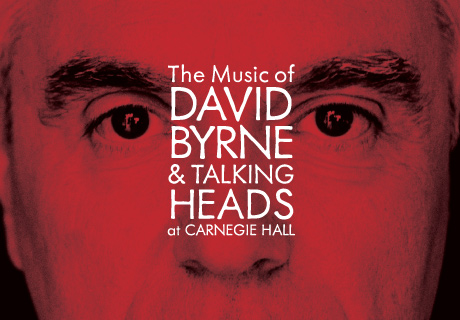
THE MUSIC OF DAVID BYRNE & TALKING HEADS
Carnegie Hall, Stern Auditorium / Perelman Stage, 881 Seventh Ave. at West 57th St.
Monday, March 23, $48-$160, 8:00 www.musicof.org
LIVE REHEARSAL SHOW
City Winery, 155 Varick St.
Sunday, March 22, $35-$55, 8:00 www.citywinery.com
For his eleventh “Music of” presentation benefiting music and education organizations for children, City Winery owner Michael Dorf will celebrate the career of David Byrne, both as a solo artist and the leader of Talking Heads. Past years have paid homage to Prince, Paul Simon, the Rolling Stones, Bruce Springsteen, Neil Young, R.E.M., Joni Mitchell, Bob Dylan, and others, with a wide-ranging group of musicians paying tribute by covering many of the songs that helped define the artist. Those gathering on March 23 at Carnegie Hall to sing the songs of Byrne and the Heads are Amanda Palmer and Jherek Bischoff, Sharon Jones, O.A.R., Steve Earle, Todd Snider, Thievery Corporation, Glen Hansard, Esperanza Spalding, CeeLo Green, Pete Molinari, Alexis Krauss, Billy F. Gibbons, Santigold, Beth Orton, the Roots, Bebel Gilberto, Forro in the Dark, and Cibo Matto with Nels Cline; Antibalas will serve as the house band. The night before the event, many of the artists will be at City Winery for a live rehearsal show that is open to the public. All proceeds will benefit Midori & Friends, the Center for Arts Education, Little Kids Rock, Grammy in the Schools, Fixing Instruments for Kids in Schools, and the Church Street School for Music & Art.
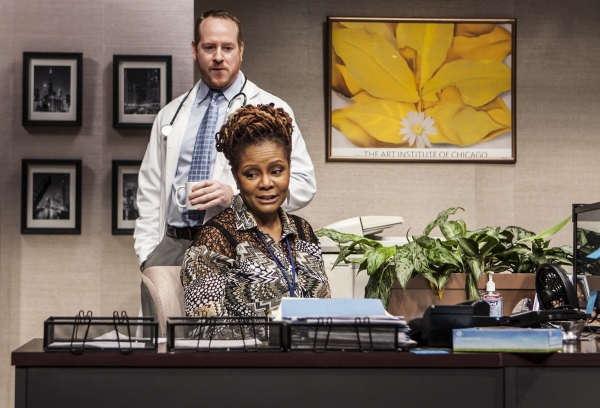
Jaclyn (Tonya Pinkins) and Ileen (Dianne Wiest) get involved in racism and office politics in RASHEEDA SPEAKING (photo by Monique Carboni)
The New Group at the Pershing Square Signature Center
The Romulus Linney Courtyard Theatre
480 West 42nd St. between between Ninth & Tenth Aves.
Tuesday – Sunday through March 22, $77-$97 www.thenewgroup.org www.signaturetheatre.org
The New Group’s twentieth anniversary season, and first at the sparkling Pershing Square Signature Center, continues with Joel Drake Johnson’s clever, if straightforward, pared-down examination of race and office politics, Rasheeda Speaking. The white Ileen (Dianne Wiest) and the black Jaclyn (Tonya Pinkins) work for the white Dr. Williams (Darren Goldstein), taking care of patients and handling the bills and forms. As the show opens, the surgeon is wheedling Ileen into reporting on Jaclyn, whom he clearly doesn’t like; he wants Ileen, whom he is promoting to office manager, to write down all of Jaclyn’s faults so he can ultimately replace her through human resources. “I don’t think she fits in,” Dr. Williams tells Ileen. “Her attitude is terrible. And she hates me.” After five days out sick, Jaclyn returns, complaining about toxins, the sorry state of her plants, and poisonous rays. She mistreats elderly white patient Rose Saunders (Patricia Conolly), accuses Ileen of being in love with their boss, doesn’t speak well of Mexicans, and claims Dr. Williams “doesn’t think white people should socialize with black people.” But just when it seems that Jaclyn is somewhat of a conspiracy theorist, both Dr. Williams and Ms. Saunders make comments that show that Jaclyn might not be that crazy after all.
Dr. Williams (Darren Goldstein) and Jaclyn (Tonya Pinkins) are not exactly the best of friends in New Group production (photo by Monique Carboni)
Played beautifully by Tony winner Pinkins (Jelly’s Last Jam; Caroline, or Change) and two-time Oscar winner Wiest (All My Sons, Bullets over Broadway), Jaclyn and Ileen are an engaging odd couple, bantering back and forth with aplomb, the former a ball of fire who speaks her mind, the latter a gentle soul who loves life and prefers to avoid confrontation. Pinkins commands the stage, stomping around Allen Moyer’s splendid doctor’s office set, while the rest of the cast treads far more lightly. Wiest might smile a lot as Ileen, but there’s something lurking right below the surface, and Goldstein (Bloody Bloody Andrew Jackson, The Affair) is appealing as the pastry-munching, suspicious surgeon who lets others do his dirty work. First-time director Cynthia Nixon keeps it all moving fluidly despite the office furniture clutter, giving appropriate space for Chicago playwright Johnson’s (Four Places, The Fall to Earth) razor-sharp dialogue. The narrative is too often overly direct and explicit, but the hundred-minute play does reveal the latent racism that is still so prevalent in today’s supposedly postracial society, letting us know that each and every one of us has plenty of work to do.
Who:This Will Destroy You What: Two-night stand in Brooklyn Where:Saint Vitus Bar, 1120 Manhattan Ave. at Clay St. When: Thursday, February 26, and Friday, February 27, $18-$20, 8:00 Why: Experimental Texas instrumental foursome This Will Destroy You will be playing two nights in Brooklyn at the end of the month prior to their West Coast spring fling, highlighting tracks from their latest release, Another Language (Suicide Squeeze, September 2014). The album takes listeners on another progressive sonic journey that is encapsulated by the slowly building “Invitation” and the finishing blast of “Serpent Mound.” TWDY — founding guitarists Jeremy Galindo and Chris King, bassist and keyboard player Donovan Jones, and drummer Alex Bhore — will be at Saint Vitus Bar on February 26 with Christopher Tignor and So Hideous and on February 27 with Sannhet and Planning for Burial.
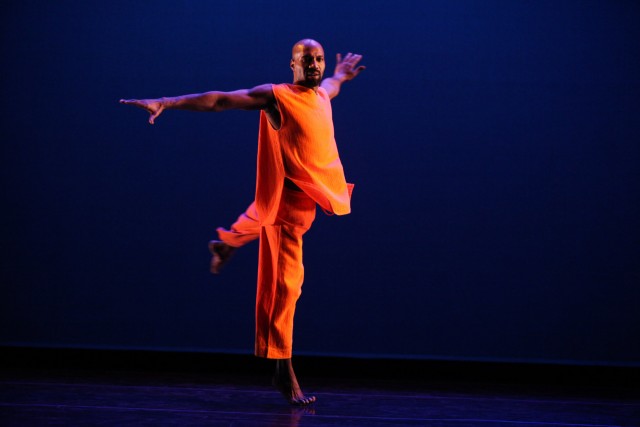
Ronald K. Brown will celebrate the thirtieth anniversary of Evidence, a Dance Company, at the Joyce starting February 24 (photo by Ayodele Casel)
EVIDENCE, A DANCE COMPANY
Joyce Theater
175 Eighth Ave. at 19th St.
February 24 – March 1, $10-$49
212-242-0800 www.joyce.org www.evidencedance.com
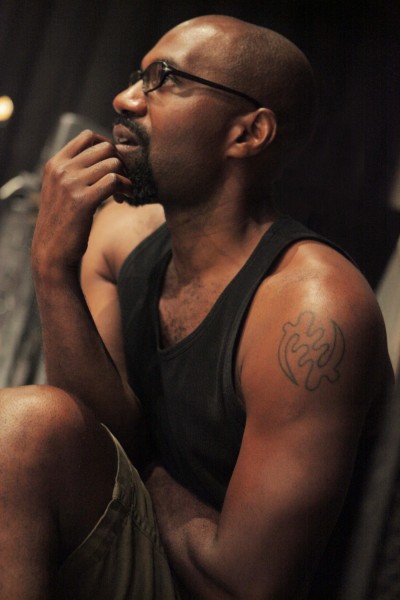
When he was in second grade, Brooklyn-born dancer and choreographer Ronald K. Brown wanted to be Arthur Mitchell, the first African American to dance with the New York City Ballet and founder of the Dance Theatre of Harlem. In 1985, Brown, then only nineteen, formed his own troupe, which he named Evidence, a Dance Company, to honor family, ancestors, teachers, tradition, faith, and the African diaspora. From February 24 through March 1, Brown, who has also choreographed works for Alvin Ailey American Dance Theater, Muntu Dance Theater of Chicago, and Ballet Hispanico in addition to The Gershwins’ Porgy and Bess on Broadway, will be celebrating his company’s thirtieth anniversary with a pair of special programs at the Joyce. Program A includes 2014’s The Subtle One, about experiencing the love of another, with live music by Selma composer Jason Moran and the Bandwagon; the gorgeous Grace, created for Alvin Ailey in 1999; and the excerpts “Exotica” and “March” from 1995’s Lessons, the latter set to the words of the Reverend Dr. Martin Luther King, Jr., performed by Annique Roberts and Coral Dolphin. Program B comprises the Evidence premiere of 2014’s Why You Follow/Por Que Sigues, commissioned for Havana’s MalPaso Dance Company (who will be at the Joyce March 3-8); 1999’s Gatekeepers, a piece originally for Philadanco that delves into Native American mythology and African traditions; excerpts from 2007’s multimedia One Shot: Rhapsody in Black & White, inspired by Pittsburgh photographer Charles “Teenie” Harris; and the New York premiere of Brown’s 2014 solo piece, Through Time and Culture, which brings a unique perspective to his long career. A charming and engaging Guggenheim Fellow and dedicated Brooklynite who is currently an artist in residence at BRIC in Fort Greene, where Evidence will perform in November 2015, Brown recently discussed his life and career, particularly about these past ten years.
twi-ny: Back in 2005, we had lunch together and talked about your twentieth anniversary season. How has the last decade treated you and Evidence?
Ronald K. Brown: The time has been full since that conversation ten years ago. These past ten years have brought Evidence and me more than we could have imagined. In 2010, we had a U.S. State Department tour as a part of DanceMotion/USA and went to Senegal, Nigeria, and South Africa; we were gone for twenty-nine days, performed five times, and taught classes for all ages during our time away. We did have one day off in Grahamstown, South Africa, and were able to go on a safari and relax . . . but the work was great.
I choreographed my first work for Chicago’s Muntu Dance Theatre, and The Gershwins’ Porgy and Bess, which opened first at the American Repertory Theater and then on Broadway.
In November 2013, Evidence moved our offices to Bedford Stuyvesant Restoration Corporation, so for the first time our rehearsals, summer workshops, and daily administrative operations are in the same building — down the hall. That feels great.
twi-ny: Back then, you said, “We have to find out what’s going on in the world. We can’t be disconnected and feel like we’re safe.” How does that relate to you and your work today?
RKB: One thing that I have also learned is that we have to make sure we are connected to those close to us . . . and then that opens up the capacity to be connected to the world. In one of our pieces, On Earth Together, we added dancers from the community in Brooklyn for performances a couple years ago, in South Bend, Indiana, last week, and right now in Pittsburgh. Creating a large cast, talking about grief and compassion, unlocks things that bring the cast closer together . . . and then we can share that compassion with the issues that are happening in the world. Just in talking about the work in South Bend, first an elder confessed that she had lost her husband a month prior. The next day a ten-year-old boy broke down; he had lost his granny two years prior. Then another elder confessed that she had recently lost her husband. And finally, on the last night, a mother and daughter who were in the cast mentioned to [associate artistic director] Arcell [Cabuag] that this particular night was the anniversary of them losing her other daughter. So here we are in this dance, On Earth Together, and the compassion and support was real onstage. Then we could talk about the other things that were going on in the world that were in the recent news.
I’m grateful for the openness of folks who come to the audition and the classes, not knowing that there will be a space to share themselves in a safe place.
twi-ny: From February 24 through March 1, you’ll be presenting your thirtieth anniversary season, at the Joyce. How did you go about choosing which of your pieces will be part of the two programs?
RKB: When we put a program together, we want the evening to have a flow that makes sense. That feels right. I also want to make sure there is a range in the work, things that are new but with something different added, like having The Subtle One being performed live with composer Jason Moran and his group the Bandwagon. I also want to make sure there is work that has not been seen in a while and again with an added surprise. This year the male duet “March” will be danced by two women.
twi-ny: What was the impetus behind creating your new solo piece, “Through Time and Culture”?
RKB:Through Time and Culture was commissioned last year by the American Dance Festival. I wanted to build a solo that demonstrated a sense of perseverance and pressing through, because of the support that family and teachers have given me.
I selected music that would allow me to show the connections of dances from around the world. The dance also is a way that I could breathe the stages of grief as I dealt with the transition of my father to join the ancestors a couple years ago, and my mother in 1996.
Ronald K. Brown will perform a solo piece as part of anniversary season at the Joyce (photo by Julieta Cervantes)
twi-ny: You travel around the world, adding elements of African movement to your work. Where have you been recently that has influenced your choreography?
RKB: My last two trips to Havana, in 2013 and 2014, definitely had an impact on the work. Seeing the social, folklore, and contemporary dance and work helped me understand more fully what I do, similar to seeing artists in Nigeria during that 2010 trip, where I saw B-Boys, breakdancers, folks improvising, traditional artists, young people showing Evidence some dances from Atlanta, and a choreographer who has been creating Contemporary African Dance for over fifteen years. All these moments helped me understand the expansion of the dance world and what is possible.
The lessons are really to continue to study and then go in to the studio to create, grateful to have an increased sense of freedom with more techniques and rhythms to call on.
twi-ny: You’ve now choreographed five pieces for the Alvin Ailey American Dance Theater. Is your approach to that different from how you choreograph for Evidence?
RKB: When I choreograph on Ailey, or any other company, for the most part I create something that is specifically for them. I generally have three weeks to set a work on Ailey; that first day I am teaching material so that I can identify two casts, and by Wednesday I need to provide a list of dancers selected for the piece. With such a set deadline up front, I come to the studio with some material to teach.
With Evidence on the first day . . . I have the title . . . some music . . . and perhaps some written text and images that I use to fuel the movement that will come once I get in the zone of discovery . . . in the moment and dance it out. This cannot happen with Ailey until I have cast it.
The great thing about Ailey is that the artistic staff there continues to give me time to clean up and clarify things in further rehearsals before the New York season and U.S. or European tours.
In Evidence, the dancers will let me know that I can continue to clarify and shape the piece and make changes to allow the piece to be . . . what it is meant to be, and as long as I am not taking time away from us rehearsing repertory. For the most part, Evidence agrees. . . . “Ron, finish the new work and we will do our homework for when you are ready to rehearse us in the older work.”
twi-ny: You mentioned earlier choreographing the Broadway revival of Porgy and Bess. Do you have any future plans for more Broadway productions?
RKB: This past fall Arcell Cabuag and I worked with director/writer Moises Kaufman on an Afro-Cuban musical version of Carmen. It premiered at the University of Miami, with four professional actors from New York and the other roles played by students form the theater department of U of M. I’m not sure what the life of the piece will be after that, ideally a regional theater further development of the work and hopefully a Broadway run. But that is the hope, who the creative team will be. . . .
A couple years ago I met with a company that commissions works for Broadway and I have begun thinking of some ideas and will begin writing something soon. I will look for collaborators when the time is right.
But right now, I’m focused on Evidence and our upcoming season at the Joyce, a project at Williams College, and a new work for Ailey in 2015. I am also talking to a company in Detroit about setting something. If someone comes to me with a fit for Broadway and it works out time-wise, I would consider it . . . but the commitment for Porgy and Bess was major. Incredible . . . but major. The Porgy national tour was also a wonderful revisit. But the timing made sense. Complicated, but it worked out.
twi-ny: You have a special relationship with Brooklyn. You were born and raised there, and your company has been based there from the beginning, becoming an integral part of the community. And you recently moved into the Bedford Stuyvesant Restoration Center for Arts and Culture. How has that move gone?
RKB: The move to Restoration in November 2013 was a nice move for Evidence. In December 2014 we had to move all of our costumes and props there as well.
It feels great to have a home. We have rehearsed at Restoration for over ten years. When the company is in rehearsal down the hall, I can take care of admin assignments and then go to the studio to rehearse, give notes, and go back to my admin hat.
A few years ago, when we moved our Summer Dance Workshop Series from Medgar Evers Preparatory School to Restoration, the staff at Restoration and Arcell both saw how much sense it made for Evidence to have our educational efforts also happen at BSRC. When our office was in Fort Greene, there was the additional chore of bringing the set-up supplies to another location. Now we just walk down the hall.
I think the dancers who come from all over to take our summer workshop and/or my weekly Tuesday-night class appreciate that Evidence has a home. I also appreciate that it was the first place I took a dance class when I was eight years old and where I competed in storytelling contests; mine was the collection of Anansi the Spider. (The contests took place in the atrium, what used to be an ice-skating rink.)
twi-ny: Brooklyn has changed significantly over the last thirty years. What would you consider the best and worst parts of that change?
RKB: I know that there is an effort to increase the presence of new business and create new corridor around Bedford Stuyvesant Restoration Plaza. The farmers market across the street from BSRC and some of the new businesses are wonderful assets to the community.
The worst parts are the multitude of condos going up surrounded by folks who cannot afford them. Improvements in neighborhoods for the people who live there is a beautiful thing, but when folks are displaced or outpriced . . . this is another thing. We all deserve healthy food choices and respectful neighbors.
twi-ny: Congratulations on your thirtieth anniversary. When you were a kid in Bed-Stuy, dancing at home, dressing up as Arthur Mitchell, did you ever think that things would turn out this way?
RKB: Thank you. I had no idea of how things would turn out. There are models of what is possible. Alvin Ailey, Katherine Dunham, Arthur Mitchell, Pearl Primus, but also my grandfather Ruben McFadgion. I remember two conversations I had with my Poppi; every summer we would drive down from Brooklyn to Raeford, North Carolina, where my grandfather (Poppi) was building a house.
I asked him, “Where are the plans for the house?” He responded, “I don’t need plans; I know what I want.”
This house is five bedrooms, two bathrooms, a basement the same length of the house, where we would roller skate (until he finished).
I asked, “Why is the house so big?” He said, “So you have somewhere to go.”
Flash forward: I’m in the house working on the laptop and he says, “You went to school for that? I would never be able to do that.”
My response: “No, Poppi, I did not go to school for this. . . . I think I have your genes.”
His response: “That’s right, Kevin . . . keep God first.” [ed note: Brown’s family calls him by his middle name, Kevin.]
I tell people, there is freedom in listening and obeying. I try to do that. . . . I had no idea things would turn out the way they did.
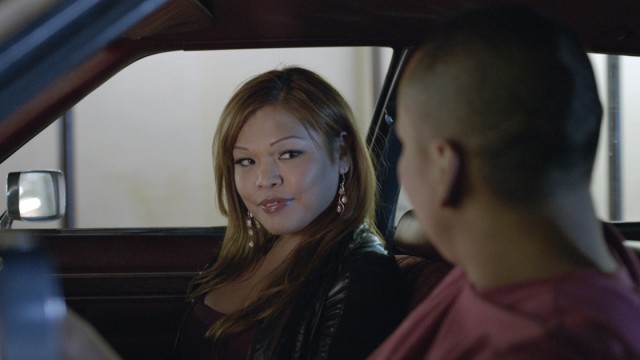
Award-winning film festival favorite Drunktown’s Finest is a refreshingly original look inside life on a Navajo reservation in New Mexico. “They say this land isn’t a place to live; it’s a place to leave. Then why do people stay?” asks Nizhoni Smiles (MorningStar Angeline) at the beginning of writer-director Sydney Freeland’s debut feature, which opens with a shot of a town that could be any town. The story follows three teenagers trying to improve their lot by getting off the reservation. Sick Boy (Jeremiah Bitsui), who is about to have a child with Angela Maryboy (Elizabeth Frances), is trying to stay out of trouble the weekend before joining the army. Felixia (Carmen Moore) is a transsexual model attempting to jump-start her career by appearing in a Women of the Navajo calendar. And Nizhoni decides to track down her birth family before leaving to go to college in Michigan. The lives of the three protagonists intersect in unexpected ways as outside forces — and questionable decisions — complicate their chosen paths.
Drunktown’s Finest, which boasts Robert Redford as executive producer, might deal specifically with the plight of young Native Americans, but it works because of the universality of the emotions and desires it explores. Freeland lets the stories play out at a natural pace, not forcing any of the issues it raises, which include adoption, child abuse, crime, alcoholism, violence, and gender. The three leads all offer cogent portraits of their complex characters, making their plights sympathetic, believable, and relatable. Films like Drunktown’s Finest often get bogged down in oversentimentality and heavy messages, but Freeland’s smart, subtle script lifts it well above such narrow vanity projects. More than eight years in the making, Drunktown’s Finest was shot in fifteen days and completed via a successful Kickstarter campaign. The soundtrack includes several songs by the 1960s Navajo Nation band the Wingate Valley Boys, beginning and ending with their intoxicating, powerful “Beggar to a King,” a worthy metaphor for this gentle, bittersweet film and its characters’ struggles.

 Award-winning film festival favorite Drunktown’s Finest is a refreshingly original look inside life on a Navajo reservation in New Mexico. “They say this land isn’t a place to live; it’s a place to leave. Then why do people stay?” asks Nizhoni Smiles (MorningStar Angeline) at the beginning of writer-director Sydney Freeland’s debut feature, which opens with a shot of a town that could be any town. The story follows three teenagers trying to improve their lot by getting off the reservation. Sick Boy (Jeremiah Bitsui), who is about to have a child with Angela Maryboy (Elizabeth Frances), is trying to stay out of trouble the weekend before joining the army. Felixia (Carmen Moore) is a transsexual model attempting to jump-start her career by appearing in a Women of the Navajo calendar. And Nizhoni decides to track down her birth family before leaving to go to college in Michigan. The lives of the three protagonists intersect in unexpected ways as outside forces — and questionable decisions — complicate their chosen paths.