twi-ny recommended events

CROSSING THE LINE: CHAMBRE

(photo by Julieta Cervantes)

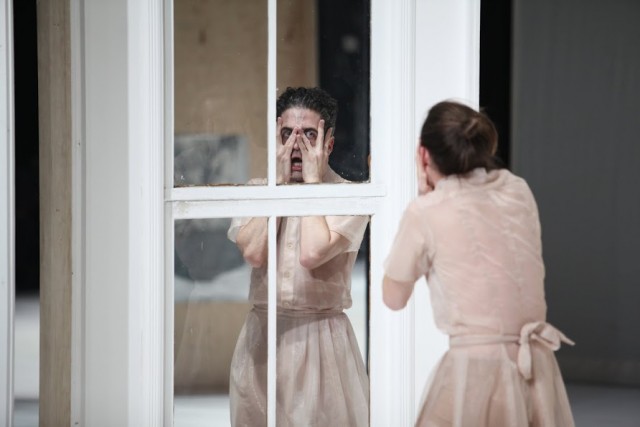
Jack Ferver reimagines Jean Genet’s THE MAIDS in performance installation at the New Museum (photo by Julieta Cervantes)

New Museum Theater
235 Bowery at Prince St.
Installation: September 23 – October 4
Performances: September 24-25, October 1-2, 7:00, and September 26-27, October 3-4, 3:00, $15
www.fiaf.org
www.jackferver.org

No one tells a story quite like Jack Ferver. In such deeply personal psychodramas as Rumble Ghost, Night Light Bright Light, and Two Alike, the Wisconsin-born, New York-based performer shares intimate, cathartic memories brought to life through a loving pop-culture lens. Melding dance, spoken word, electronic sound scores, and visual art, Ferver explores suicide, abused queer youth, rape, and other serious topics while incorporating references to Tennessee Williams, Poltergeist, Fred Herko, Cleopatra, Madonna, and the 1985 cult film Return to Oz. In Chambre, which runs September 24 to October 4 at the New Museum as part of FIAF’s Crossing the Line festival, Ferver turns to Jean Genet’s The Maids, the 1947 play inspired by a pair of real-life sisters, Christine and Léa Papin, who committed a horrific crime in France in 1933. For the project, which includes eight live performances, Ferver is working with several of his longtime collaborators; the music is composed by Roarke Menzies, the costumes are designed by Reid Bartelme, the art installation (which is on view during museum hours throughout the show’s run) is by Marc Swanson, and Ferver will be joined onstage by Michelle Mola and Jacob Slominski.
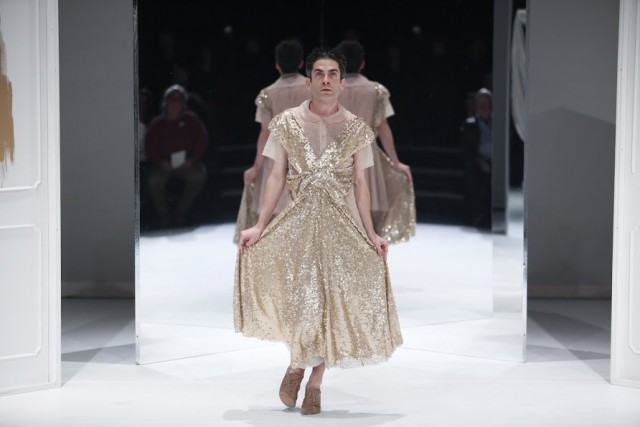
Jack Ferver and Marc Swanson will present CHAMBRE as part of FIAFs annual Crossing the Line festival (photo by Julieta Cervantes)

Jack Ferver and longtime collaborators will present CHAMBRE as part of FIAF’s annual Crossing the Line festival (photo by Julieta Cervantes)

“While I’ve been mulling over the material for Chambre for years, we started our first residency at Baryshnikov [Arts Center] two years ago this month. It’s been exciting, to say the least, for me to see how much it has changed,” Ferver told twi-ny about the evolution of the show. “This iteration of Chambre at the New Museum is very different from our premiere at Bard [last year]. The context of the museum obviously has factored into it. Marc and I also originally envisioned it for the white cube. The space is more intimate than where we have performed it so far. Marc’s installation becomes a room in a room, and it is changing the performance, creating a more nuanced, vulnerable, and frightening experience for me. Michelle, Jacob, and I have already started rehearsing in the space. The script and choreography are changing as the psyche of the piece changes in the space of the New Museum.” Menzies added, “The evolution of the score for this work was interesting. I wrote maybe three separate scores before arriving at the final version. A lot of the first music cues I created really capitalized on the notion that this is a murder story. Originally, the main theme had this very suspenseful beat and dark, brooding piano melodies — very campy, and very much in the language of Friday the 13th or Halloween, which has one of the great horror scores in cinema. But I think I ended up scrapping all of those references in lieu of much more raw, uncomfortable, barely recognizable sounds that I created by manipulating and contorting recordings of my voice. As we got to the core of the work, it became clear that the real source of the horror in this piece isn’t the murder but the horror of being embodied, the horror of having to live in this cruel, terrible world. All we really have to escape that horror are the endless games we play.” Sounds like classic Jack Ferver to us, so we can’t wait to catch this highly anticipated New York City premiere.
BAM NEXT WAVE FESTIVAL: TAPE

(photo by Mats Baecker)

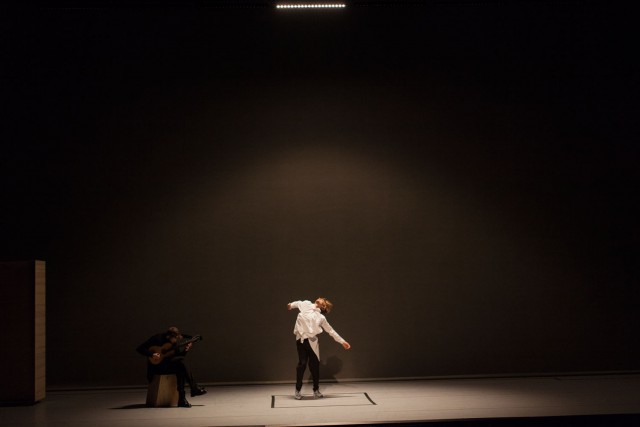
Kenneth Kvarnström incorporates dance, Baroque music, spoken word, and duct tape in U.S. premiere at BAM (photo by Mats Baecker)

BAM Fisher, Fishman Space
321 Ashland Pl.
September 23-26, $25, 7:30
718-636-4100
www.bam.org

There’s almost nothing you can’t accomplish with a good roll of duct tape. Finnish-born, Swedish-based choreographer Kenneth Kvarnström makes unique use of the product, originally created as “duck tape” for the U.S. military during WWII, in the sixty-minute production TAPE, making its U.S. premiere at the BAM Fisher as part of the Next Wave Festival. Originally choreographed as part of a double bill featuring his own K. Kvarnström & Co/Kulturhuset City Theatre Stockholm and Skånes Dansteater in Sweden, TAPE involves dancers and duct tape as Jonas Nordberg traverses the stage, playing Baroque music by J. S. Bach, François Couperin, Francis Poulenc, and others on lute, theorbo, and guitar. The performers, who also take turns at a microphone, addressing such topics as music, dance, and baking, wear black and white costumes by Swedish fashion designer Astrid Olsson; the set and lighting design is by Jens Sethzman. In addition to the evening performances on September 23-26, there will be a working dress rehearsal on Wednesday at 2:00, open to Level 3 BAM members.

HAMLET IN BED

(photo by Tristan Fuge)

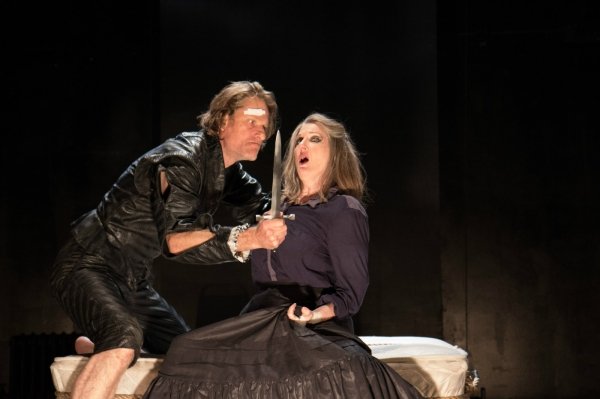
Michael Laurence and Annette O’Toole play actors rehearsing HAMLET at the Rattlestick (photo by Tristan Fuge)

Rattlestick Playwrights Theater
224 Waverly Pl. between Eleventh & Perry Sts.
Wednesday – Monday through October 25, $35
866-811-4111
www.rattlestick.org

For several decades, people have been adding the phrase “in bed” at the end of fortune-cookie predictions to come up with playful sexual innuendos. But writer and actor Michael Laurence takes it a lot deeper by adding the two words to what he considers the greatest work in the English language. At the beginning of Hamlet in Bed, making its world premiere at the Rattlestick, Laurence stands in the middle of a spare stage, talking into a microphone like a confessional stand-up comic. “Here’s the plot; let’s get that out of the way. OK, not the plot, but the premise: An actor and an actress perform a play. (It’s a play within a play.) The actor and the actress may or may not be mother and son, and they may or may not know it. You know the play, the play is Shakespeare’s Hamlet. Yes, that mother and son.” Laurence gives himself three plum roles: his (apparently) real self, an actor who has written Hamlet in Bed; a fictionalized version of himself, an unemployed actor who thinks he might have found his birth mother; and the great Dane of literary legend. Obsessed with Hamlet — he arrives onstage holding a skull as if it’s Linus’s blanket, like he cannot exist without it — Laurence tells a story in flashback of how he purchased a nearly forty-year-old diary of Anna May Miller (Annette O’Toole), an actress who was playing Ophelia in a New York City production of Hamlet. She discusses getting pregnant by the man playing Hamlet and giving the baby up for adoption, and giving up acting as well. Laurence thinks that child might be him, so he tracks down the woman, now a lonely barfly living in a seedy rent-controlled apartment, and pretends that he’s staging a unique version of Hamlet — taking place mostly in bed — and wants her to audition for the role of Gertrude. He believes that if they play a fictional mother and son, he can determine if he really is her child. As they delve into rehearsal, Laurence keeps dropping hints about their possible relationship while the sexual tension between them grows, adding possible incest to the already complicated, multilayered mix.

Annette OToole is mesmerizing as woman trying to escape her past in HAMLET IN BED (photo by Tristan Fuge)

Annette O’Toole is mesmerizing as a woman trying to escape her past in HAMLET IN BED (photo by Tristan Fuge)

Hamlet in Bed is overly self-aggrandizing, self-conscious, self-referential, and self-satisfied — yet it’s also compelling and gripping for most of its ninety minutes. Laurence (The Few, Krapp, 39) and O’Toole (Cat People, Smile) take turns at microphones giving long, intimate soliloquies about their failed lives (he talks about not being able to fix the flusher on his toilet; she details yet another late-night pickup), but it’s their scenes together that are fired by an intense chemistry. Rachel Hauck’s set consists of a couple of microphones, a ratty mattress, and a scrim on which Dave Tennent projects occasional words and images that give the proceedings a noir feel. Directed by Lisa Peterson (An Iliad, Shipwrecked), the play is often too stagnant, but Laurence and O’Toole are a pleasure to watch, he appropriately edgy and nervous, she much harder to decipher, at times seeming to turn into her nineteen-year-old self. “I have this thing,” Laurence says at the start. “I think I am Hamlet and Hamlet is me. . . . Most of all, I want to do that scene with Hamlet’s mother, the queen.” By writing and starring in Hamlet in Bed, he allows himself to do just that; but fortunately, what could have come off like a vanity project is much more. After all, as Hamlet and Laurence both say, “The play’s the thing.”

WIM WENDERS — PORTRAITS ALONG THE ROAD: A TRICK OF THE LIGHT

A TRICK OF THE LIGHT

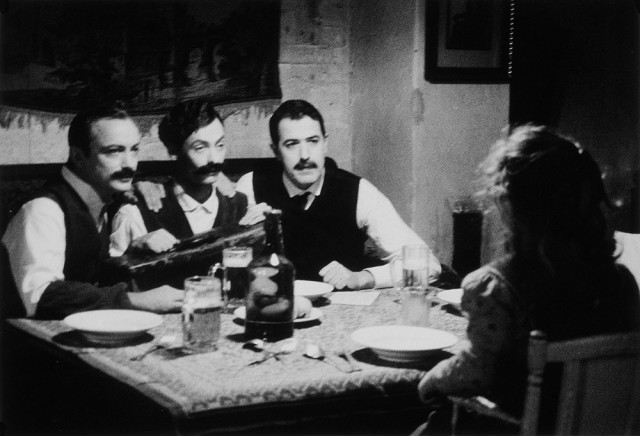
The Skladanowsky brothers attempt to please the demanding Gertrud in Wim Wenders’s affectionate early-cinema tribute, A TRICK OF THE LIGHT

A TRICK OF THE LIGHT (DIE GEBRÜDER SKLADANOWSKY) (Wim Wenders, 1995)
IFC Center
323 Sixth Ave. at Third St.
Through September 24
212-924-7771
www.ifccenter.com
www.wim-wenders.com

German director Wim Wenders pays tribute to the invention of cinema in the charming, delightful, yet bittersweet 1995 film A Trick of the Light, finally getting its long-overdue U.S. theatrical premiere engagement at the IFC Center. Using a vintage 1920s hand-crank camera for the old-fashioned black-and-white silent flashback scenes (shot at eighteen frames per second) that make up the bulk of the film, Wenders and cinematographer Jürgen Jürges iris in and out to tell the story of the real-life Skladanowsky brothers, who were inventing a mechanism to project moving pictures in the late nineteenth century, only to have their work, the bioskop, overshadowed by the Lumière brothers’ cinématographe. The technical genius is Max Skladanowsky (Udo Kier), who films the comic exploits of his brother, Eugen (Christoph Merg), while sibling and ladies’ man Emil (Otto Kuhnle) does the editing and runs the projector. Cheering them on is Max’s demanding young daughter, Gertrud (Nadine Büttner), who wants her father and uncles to capture a more precise depiction of reality. Meanwhile, a spy (Alfred Szczot) keeps a close eye on what they are doing. Working with students from his University of Television and Film Munich class, Wenders occasionally intercuts scenes in almost garish full color in which he interviews Max’s last surviving daughter, ninety-one-year-old Lucie Hürtgen-Skladanowsky, in the same house the family has owned since 1907.
A TRICK OF THE LIGHT

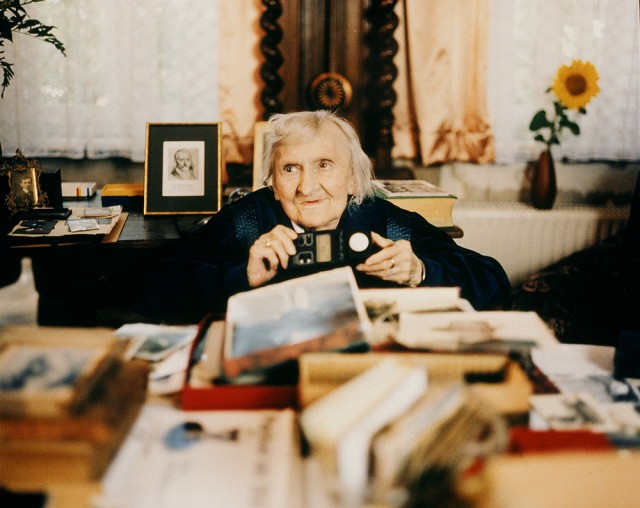
Lucie Hürtgen-Skladanowsky shares fond memories of her father and uncles in A TRICK OF THE LIGHT

Hürtgen-Skladanowsky shares fond memories while examining old photo albums, hand-colored glass plates, and other artifacts from her father’s and uncles’ heyday; she also shares her thoughts on the flashback scenes with Wenders and his small crew. Wenders, Jürges, camera assistant German Kral, soundwoman Barbara Rohm, and sound assistant Florian Gallenberger are shown sitting across the table from Lucie, who entertains them with her comments and recollections. Wenders adds a nostalgic touch by having Gertrud and Eugen occasionally enter the modern-day scenes, turning the film back into black-and-white. Also deserving of praise is Peter Przygodda’s editing and Laurent Petitgand’s lovely carnivalesque score, which help beautifully capture the look, feel, and sound of early cinema. The main film is only about an hour long, but fifteen minutes of credits include fun bonuses. A Trick of the Light, which is “dedicated to the many forgotten pioneers of film,” is part of the IFC Center’s “Wim Wenders: Portraits Along the Road” tribute to the iconoclastic director, playwright, and photographer on the occasion of his seventieth birthday; the series continues through September 24 with such other works as Buena Vista Social Club, Nick’s Film: Lightning over Water, The Soul of a Man, Tokyo-Ga, Pina, and a sneak preview of Every Thing Will Be Fine in 3D.

UNTITLED STANZAS: STAFF/UN/SITE

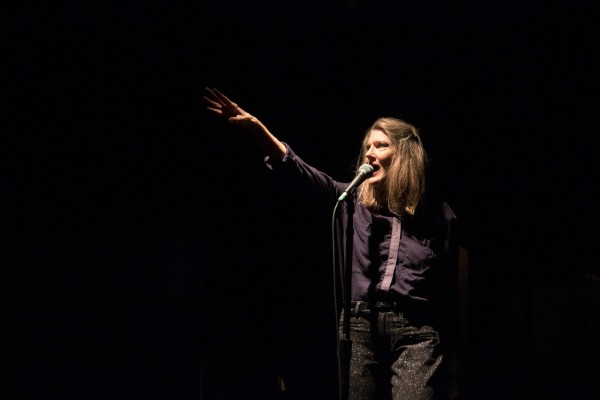
Kevin Beasley will perform new composition on the High Line this week (photo by Jean Vong, courtesy the artist and Casey Kaplan, New York)

Kevin Beasley will perform new composition on the High Line this week (photo by Jean Vong, courtesy the artist and Casey Kaplan, New York)

Who: Kevin Beasley
What: Untitled Stanzas: Staff/Un/Site
Where: High Line at the Rail Yards, on the High Line at West 30th St. & 12th Ave.
When: September 22-24, free, 6:00
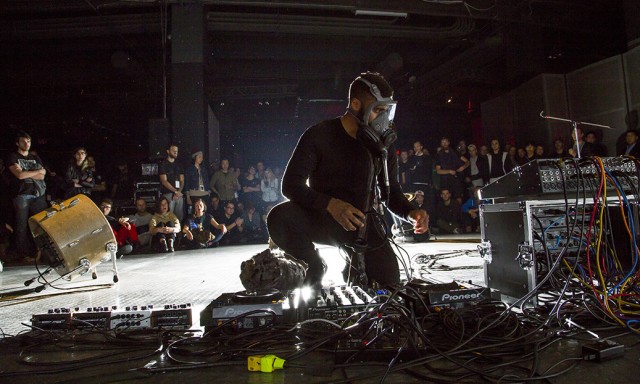
Why: Virginia-born, New York-based artist Kevin Beasley has been roaming the High Line for months, recording sounds of traffic, insects, construction, and other aural vibrations. On September 22, 23, and 24 at 6:00, Beasley, who staged I Want My Spot Back at MoMA in 2012, will perform a composition based on these found sounds, taking place at the open-air Twelfth Avenue Overlook on the High Line at Thirtieth St. In addition to layering his prerecorded sounds, he will add a recording of each show to the next performance.

WAYNE McGREGOR, OLAFUR ELIASSON, AND JAMIE xx: TREE OF CODES

(photo by Stephanie Berger)

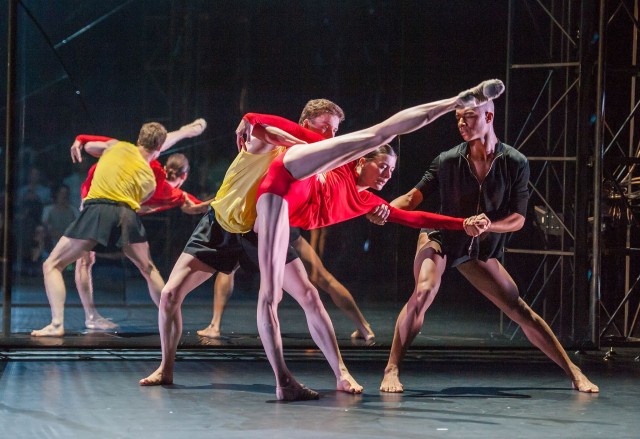
Wayne McGregor’s movement, Jamie xx’s music, and Olafur Eliasson’s visual concept come together to reimagine Jonathan Safran Foer’s TREE OF CODES, which reimagines Bruno Schulz’s STREET OF CROCODILES (photo by Stephanie Berger)

Park Ave. Armory
643 Park Ave. between 66th & 67th Sts.
Through September 21, $30-$90
212-933-5812
armoryonpark.org

Choreographer Wayne McGregor, composer Jamie xx, and artist Olafur Eliasson have created quite an audiovisual spectacle with Tree of Codes, their sparkling adaptation of Jonathan Safran Foer’s 2010 book of the same name, which used die cuts to repurpose Bruno Schulz’s Street of Crocodiles. As ticket holders enter the vast Wade Thompson Drill Hall, they encounter large screens to the north and south on which their elongated silhouettes are projected in different colors, reminiscent of Nam June Paik’s “Three Camera Participation / Participation TV,” welcoming them to the show while letting them know they are part of it. The performance itself takes place in the center of the vast Wade Thompson Drill Hall, the audience sitting in rising rows on the east side. Over the course of seventy-five dazzling minutes, various mirrored, translucent, and transparent walls descend from above, altering the perception of the highly athletic dancers, who move about virtually nonstop in an impressive array of solos, duets, and trios, set to a multilayered score that ranges from choral singing to soul, from pulsating dance beats to indie pop, sometimes all at the same time. Just as Safran Foer cut into Schulz’s story, Eliasson’s props cut into themselves, altering space and time, with refracted sections, orbiting circles, and spotlights that wander over the audience, and Jamie xx’s diverse score does the same to itself, coming up with new sounds as the music forms a kind of aural palimpsest. The dancers, meanwhile — consisting of Jérémie Bélingard, Julien Meyzindi, Sébastien Bertaud, Lydie Vareilhes, Lucie Fenwick, and the extraordinary Marie-Agnès Gillot from the Paris Opera Ballet and Louis McMiller, Daniela Neugebauer, Anna Nowak, James Pett, Fukiko Takase, and Jessica Wright from Company Wayne McGregor — are reflected multiple times in the mirrors, or fade away in ghostly images. At times, dancers in front of a see-through partition interact with dancers on the other side as if they are physically together; at other times, they appear to be dancing with multiple versions of themselves. The experience changes depending on where you sit, as the reflections and colors shift based on your angle of vision — and you might even get to see yourself in the background mirror as the spotlight hits you. It never gets very deep, but you can’t stop immersing yourself in its splendor. The performance actually begins with some cool but gimmicky Pilobolus-like moments, but don’t let that worry you. It quickly evolves into a beautifully rendered treat.

QUEER/ART/FILM: HUSH . . . HUSH, SWEET CHARLOTTE

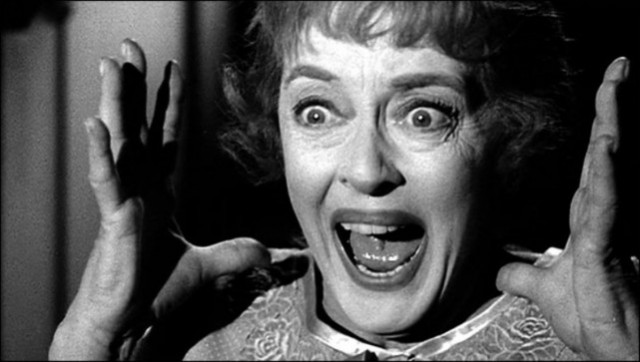
Bette Davis is a scream in cult classic HUSH . . .  HUSH, SWEET CHARLOTTE

Bette Davis is a scream in cult classic HUSH . . . HUSH, SWEET CHARLOTTE

HUSH . . . HUSH, SWEET CHARLOTTE (Robert Aldrich, 1964)
IFC Center
323 Sixth Ave. at Third St.
Monday, September 21, 8:00
212-924-7771
www.ifccenter.com

Hot on the heels of their success with What Ever Happened to Baby Jane?, director Robert Aldrich and star Bette Davis sought to make a kind of thematic sequel again with Joan Crawford, another campy psychological thriller about jealousy, family, and the wounds of time. Crawford pulled out of the production, but she was replaced by one of Davis’s good friends, Olivia de Havilland, which added a terrific edge to what became another hit, Hush . . . Hush, Sweet Charlotte. The film is screening September 21 at 8:00 as part of the monthly IFC Center series “Queer/Art/Film,” curated by Adam Baran and Ira Sachs, consisting of influential works selected by gay artists. Hush . . . Hush, Sweet Charlotte was chosen by self-described “actor, playwright, novelist, screenwriter, director, and drag legend” Charles Busch (The Tale of the Allergist’s Wife, Die Mommie Die!), who will be on hand for a postfilm discussion. “I had my father take me to the opening day,” Busch says on the IFC Center website. “The stars were there, promoting the film. I was transfixed, studying how a legendary actress behaves.” The film is set on a Louisiana plantation where Charlotte Hollis (Davis) lives as a recluse with her devoted housekeeper, the batty Velma Cruther (Agnes Moorehead). It is 1964, thirty-seven years after Charlotte’s lover, the married John Mayhew (Bruce Dern), was brutally behanded and beheaded at a party thrown by Charlotte’s father, the controlling Big Sam (Victor Buono, who also appeared in Baby Jane). The Hollis mansion must be torn down to make way for a bridge, but Charlotte refuses to leave, causing major headaches for the sheriff (Wesley Addy) and the construction foreman (George Kennedy). Charlotte’s poor cousin, Miriam Deering (de Havilland), arrives to help the deeply tortured Charlotte, but Miriam and family doctor Drew Bayliss (Joseph Cotten) seem to have other plans. Meanwhile, kindly old reporter Harry Willis (Cecil Kellaway) starts poking around, trying to get to the truth behind all the mystery and madness.

Hush . . . Hush, Sweet Charlotte is a grisly southern gothic centered on the relationship between the crazed Charlotte and the calm, collected Miriam, allowing Davis and de Havilland to play off each other beautifully, the former chewing up huge swaths of scenery, the latter cleaning it all up neatly with a spritz of cold menace. The supporting cast, which features numerous Twilight Zone veterans and a cameo by Mary Astor in her final role, provides able support as Aldrich (The Dirty Dozen, Kiss Me Deadly) wishes a fond farewell to the Old South in striking black-and-white, courtesy of cinematographer Joseph F. Biroc, who also worked with Aldrich on such diverse films as The Flight of the Phoenix, The Killing of Sister George, and The Longest Yard. Composer Frank De Vol is responsible for the chilling soundtrack. It’s all great fun, with legitimate scares, helping it earn seven Oscar nominations, including for Moorehead, Biroc, and De Vol (as well as for art direction, costume design, editing, and song). It should be quite a blast getting Busch’s take on this cult classic. “Queer/Art/Film” continues October 9 with Agnès Varda’s Vagabond (with K8 Hardy) and November 23 with Alan Parker’s Fame (with Kia LaBeija).