twi-ny recommended events

A VERY JEWISH CHRISTMAS

Marion Grodin will be part of the Christmas Eve festivities at Gotham Comedy Club

Marion Grodin will be part of the Christmas Eve festivities at Gotham Comedy Club

Who: Marion Grodin, Jon Fisch, Gary Vider, Gregg Rogell, Sherry Davey, and Jon Laster
What: A Very Jewish Christmas
Where: Gotham Comedy Club, 208 West Twenty-Third St. between Seventh & Eighth Aves., 212-367-9000
When: Thursday, December 24, $25 (plus two-beverage minimum), 7:30 & 9:30
Why: While the goyim come together to celebrate Christmas Eve with a big family dinner and a visit to church, it has become traditional for comedy clubs to host special December 24 gigs aimed at the Chosen People. At Gotham Comedy Club in Chelsea, “A Very Jewish Christmas” will feature predominantly but not exclusively Jewish laugh makers at 7:30 and 9:30, with Marion Grodin, Jon Fisch, Gregg Rogell, Gary Vider, Sherry Davey, and Jon Laster.

NIGHT IS A ROOM

(photo by T Charles Erickson)

Marcus (Bill Heck) and Liana (Dagmara Dominczyk) face some shocking changes in brilliant play by Naomi Wallace (photo by T Charles Erickson)

The Pershing Square Signature Center
The Alice Griffin Jewel Box Theatre
480 West 42nd St. between Tenth & Eleventh Aves.
Tuesday – Sunday through December 20, $35-$85
212-244-7529
www.signaturetheatre.org

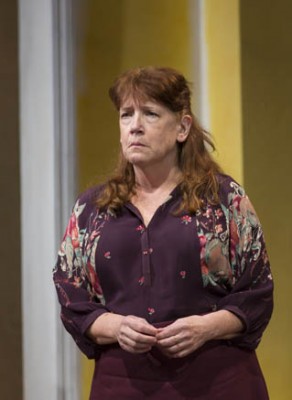
Naomi Wallace’s Night Is a Room is a brilliantly conceived drama that is as poetic as it is shocking. In modern-day Leeds, England, Liana (Dagmara Dominczyk) has tracked down her husband’s birth mother, Doré (Ann Dowd), and wants her to have a surprise reunion with Marcus (Bill Heck) for his fortieth birthday. A stylish and successful marketing account executive, Liana manages it all; she even brings festive party balloons for Doré, blowing a few up as they talk in Doré’s small garden. Doré gave up Marcus, who she called Jonathan, when she was fifteen; she is a plain, frumpy woman who speaks in disconnected non sequiturs, takes everything very literally, and has apparently lived a rather droll, boring life. “So. What do you enjoy? In your spare time?” Liana asks. Doré, who cleans houses, responds, “I like to do Sudoku at the back of the newspaper those little squares all waiting for me imagine someone thinks it up everyday maybe a computer I don’t know but there they are for me I’ve always been good at numbers I skip the news it’s gossip mostly grubby isn’t it?” A moment later she says, “The lottery numbers each week I like to add them up then divide them by the day of the week as fast as I can and then times them by the month I can look at a number any long number and break it down quicker than you can crack an egg do you like eggs?” It takes a while for Liana to convince Doré to meet with Marcus/Jonathan, but they finally agree to the reunion. The second act takes place in Liana and Marcus’s living room, where the couple is in the midst of some hot and heavy sexual activity as they await Doré’s arrival. Liana and Marcus, who have a daughter working at the Art Institute of Chicago, are redecorating their home. But a whole lot more than the décor is about to change.

(photo by T Charles Erickson)

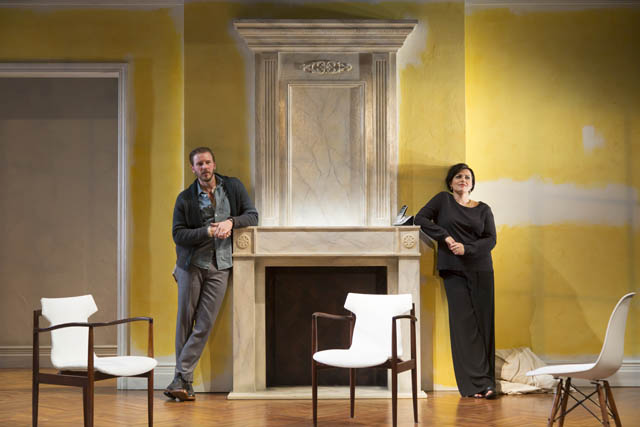
Doré (Ann Dowd) is in for some rather strange goings-on in NIGHT IS A ROOM (photo by T Charles Erickson)

What happens next makes it impossible to discuss the plot any further, built as it is around a head-shaking, jaw-dropping twist that will have some members of the audience considering leaving at intermission and others scanning their brains, wondering just where things can possibly go in the third act. But sticking around is a necessity, as the surprises keep coming as two of the characters become mired in a spectacular, unpredictable verbal face-off, even if the denouement is a bit too pat. Night Is a Room concludes Wallace’s (The Fever Chart: Three Visions of the Middle East, One Flea Spare) three-play Signature residency, which began with And I and Silence and continued with The Liquid Plain; all three works take their titles from poems — Silence from Emily Dickinson, Plain from Phillis Wheatley, and Night from William Carlos Williams’s “Complaint” (“Night is a room / darkened for lovers / through the jalousies the sun / has sent one golden needle!”). Night has a lyrical elegance to it, despite, or maybe even because of, the subject matter. Heck (Cabaret, The Orphans’ Home Cycle) is fine as Marcus, but the play belongs to Dominczyk (Closer, The Violet Hour) and longtime character actor Dowd (Compliance, Candida), who are exceptional together, their rapport utterly fascinating in light of their shifting relationship. Oregon Shakespeare Festival artistic director Bill Rauch (All the Way, The Clean House) helms the production with an innate intelligence and a subtle beauty, letting the tension build and the story unfold at just the right momentum. Rachel Hauck’s three sets all focus on chairs, perhaps to encourage the audience to remain seated and not leave. Night Is a Room is one of the strangest, most challenging family dramas you’re ever likely to see, and it’s also one of the most rewarding if you allow yourself to get swept away in its unique and memorable world.

DIVA JAZZ ORCHESTRA CELEBRATES ELLA FITZGERALD’S SWINGIN’ CHRISTMAS

DIVA Jazz Orchestra will pay tribute to Ella Fitzgerald Christmas album at JALC this weekend (photo by Lawrence Sumulong)

DIVA Jazz Orchestra will pay tribute to Ella Fitzgerald Christmas album at JALC this weekend (photo by Lawrence Sumulong)

Who: The DIVA Jazz Orchestra with vocalists Camille Thurman, Christine Fawson, and Sue Giles
What: Holiday concerts
Where: Dizzy’s Club Coca-Cola, Jazz at Lincoln Center, Broadway & 60th St., fifth floor, 212-258-9595
When: December 18-20, $40-$45 cover charge, 7:30 & 9:30
Why: The twelve-piece, New York-based, all-woman DIVA Jazz Orchestra, led by drummer Sherrie Maricle, pays tribute to the fifty-fifth anniversary of Ella Fitzgerald’s Ella Wishes You a Swinging Christmas by playing selections from that classic album, which features such seasonal favorites as “Jingle Bells,” “Santa Claus Is Coming to Town,” “Have Yourself a Merry Little Christmas,” “Winter Wonderland,” and “White Christmas.”

PIERROT LE FOU

Film Forum will host brand-new restoration of Godard classic

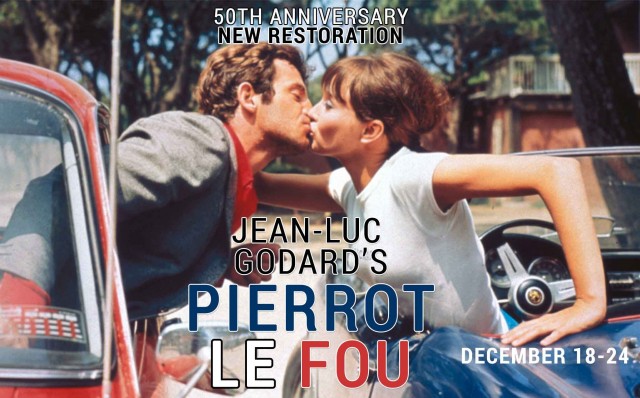
Jean-Paul Belmondo and Anna Karina are excited about brand-new restoration of Jean-Luc Godard classic

PIERROT LE FOU (Jean-Luc Godard, 1965)
Film Forum
209 West Houston St.
December 18-24
212-727-8110
www.filmforum.org

Art, American consumerism, the Vietnam and Algerian wars, Hollywood, and cinema itself get skewered in Jean-Luc Godard’s fab faux gangster flick / road comedy / romance epic / musical Pierrot Le Fou. Based on Lionel White’s novel Obsession, the film follows the chaotic exploits of Ferdinand Griffon (Jean-Paul Belmondo) and Marianne Renoir (Anna Karina, Godard’s then-wife), former lovers who meet up again quite by accident. The bored Ferdinand immediately decides to leave his wife and family for the flirtatious, unpredictable Marianne, who insists on calling him Pierrot despite his protestations. Soon Ferdinand is caught in the middle of a freewheeling journey involving gun running, stolen cars, dead bodies, and half-truths, all the while not quite sure how much he can trust Marianne.

Filmed in reverse-scene order without much of a script, the mostly improvised Pierrot Le Fou was shot in stunning color by Raoul Coutard. Many of Godard’s recurring themes and styles appear in the movie, including jump cuts, confusing dialogue, written protests on walls, and characters speaking directly at the audience, who are more or less along for the same ride as Ferdinand. And as with many Godard films, the ending is a doozy. Two years ago, when the film was shown at Anthology Film Archives as part of a series selected by John Zorn, the avant-garde musician explained, “Pierrot holds a special place in my heart — I am really a Romantic, not a Postmodern — and this film’s music never ceases to reduce me to tears.” You can see and hear for yourself December 18-24 when Film Forum unveils the brand-new fiftieth-anniversary restoration of this Nouvelle Vague favorite.

GOTHAM HOLIDAY SWING

Buster

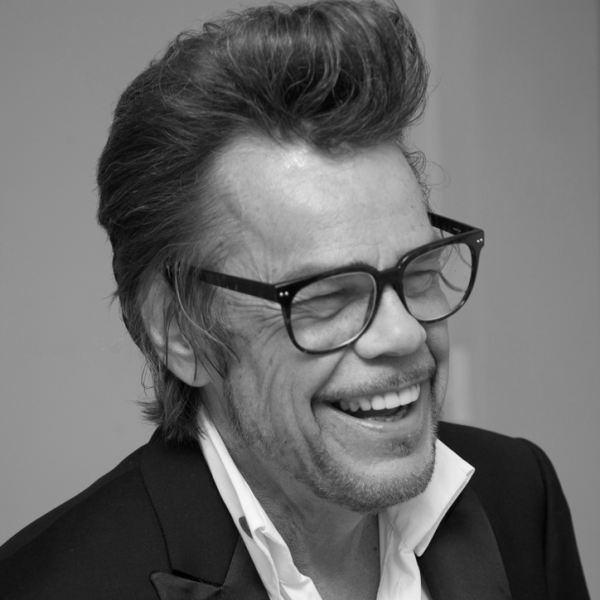
Buster Poindexter hosts third annual Gotham Holiday Swing at the Town Hall

Who: Henry Butler, Steven Bernstein & the Hot 9, Madeleine Peyroux, Raul Midon, Mercury Rev, Hal Willner, Carole Bufford, Basya Schechter, Terry Reid, Lee Fields, and Basya Schechter, hosted by Buster Poindexter
What: Third annual Gotham Holiday Swing variety show
Where: The Town Hall, 123 West 43rd St. between Sixth Ave. & Broadway, 212-997-6661
When: Friday, December 18, $45-$65, doors at 7:30
Why: Buster Poindexter hosts an evening of old and new holiday favorites melding the jazz-soul sounds of New York City and New Orleans at the Town Hall, where he will be joined by an impressive gathering of vocalists, producer extraordinaire Hal Willner, experimental band Mercury Rev, and house band Butler, Bernstein & the Hot 9, a new collaboration between Henry Butler and Steven Bernstein. The show is part of a food drive in which the Town Hall is partnering with City Harvest; attendees are encouraged to donate dried food and food in boxes, cans, and bottles the night of the performance.

INCIDENT AT VICHY

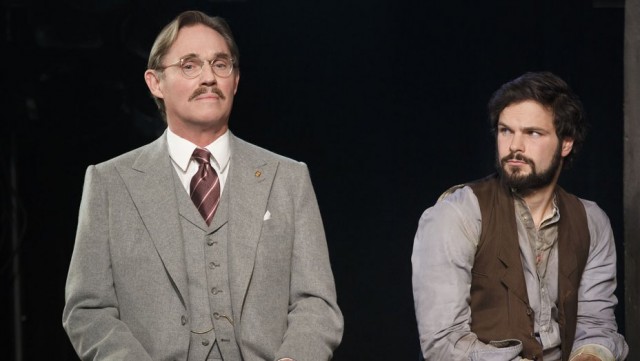
Von Berg (Richard Thomas) and Lebeau (Jonny Orisini) discuss their fate in Signature revival of Arthur Millers INCIDENT AT VICHY (photo by Joan Marcus)

Von Berg (Richard Thomas) and Lebeau (Jonny Orisini) discuss their fate in Signature revival of rarely performed Arthur Miller play (photo by Joan Marcus)

The Pershing Square Signature Center
The Irene Diamond Stage
480 West 42nd St. between Tenth & Eleventh Aves.
Tuesday-Sunday through December 20, $55-$85
212-244-7529
www.signaturetheatre.org

Arthur Miller’s 1964 play, Incident at Vichy, currently being staged in a stark, powerful production at the Signature Theatre, isn’t set in the Twilight Zone, but it shares that series’ atmosphere of postwar anxiety. In the classic 1961 Twilight Zone episode Five Characters in Search of an Exit, an existential drama that combines Luigi Pirandello with Jean-Paul Sartre, series creator and host Rod Serling announces in the beginning, “Five improbable entities stuck together into a pit of darkness. No logic, no reason, no explanation; just a prolonged nightmare in which fear, loneliness, and the unexplainable walk hand in hand through the shadows. In a moment, we’ll start collecting clues as to the whys, the whats, and the wheres. We will not end the nightmare; we’ll only explain it.” Adding a bit of Beckett and Kafka to that mix, Miller tells the story of nine men and one teenager who have been escorted off the streets of 1942 Paris and left to wait in a dank, dilapidated detention room (the set is by Jeff Cowie), where they contemplate who they are, why they have been brought there, and how — and if — they will get out. In the room are Lebeau (Jonny Orsini), an antsy, nervous artist who desperately wants to know what is going on; Bayard (Alex Morf), a Communist electrician who has heard frightening rumors; Marchand (John Procaccino), a businessman who wants this all over so he can attend an important meeting; a quiet, nervous teenage boy (Jonathan Gordon); Monceau (Derek Smith), an actor who refuses to believe that anything bad is going to happen to them; a waiter (David Abeles) who has served the Major (James Carpinello) in his restaurant and assures everyone that the German officer is a decent guy; a Gypsy (Evan Zes) laying on the floor and clutching a pot; an old Jewish man (Jonathan Hadary) holding tight to his ragged bundle; Leduc (Darren Pettie), a brave, bold psychoanalyst and army veteran who has faced the Major on the field of battle; and Von Berg (Richard Thomas), an effeminate prince from an Austrian royal family.

Why they have all been abducted remains a mystery for quite some time, as the nine men and the boy appear to have little in common, from age, status, and looks to wealth, education, and rank and, most important, religion. It takes until twenty minutes into the play for Von Berg to ask the question that has been on everyone’s mind, including the audience’s: “Have you all been arrested for being Jewish?” It’s a tribute to the skill of the writing and the strength of Michael Wilson’s direction that this line is so strong without being overly obvious; it also helps make the play that much more relevant in the twenty-first century. “You don’t get any . . . special flavor, huh?” Lebeau asks Marchand, who replies, “What flavor?” Lebeau says, “Well, like . . . some racial . . . implication?” To which Marchand states definitively, “I don’t see anything to fear if your papers are all right.” Incident at Vichy might ultimately be about Jews in occupied Paris, but it just as easily could have been about the communist witch hunt led by Sen. Joseph McCarthy in the 1950s; the exploits of the House Un-American Activities Committee, which resulted in the blacklisting of many Hollywood writers (Miller himself was called to testify in front of the commission in 1956 but refused to name names; perhaps not coincidentally, most of the character names are not used in the show itself but identified only in the program); as well as the current debate over how to treat Muslim immigrants and Syrian refugees.
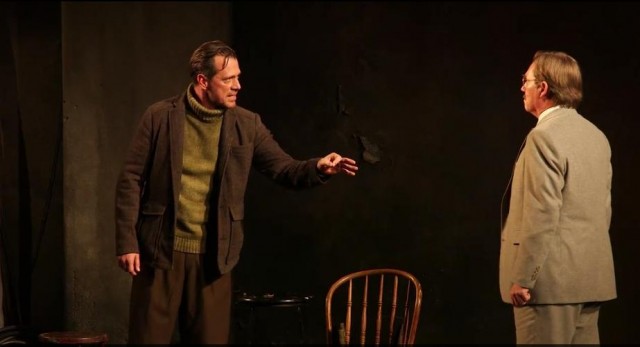
Leduc and Von Berg (Richard Thomas) are at odds in INCIDENT AT VICHY (photo by Joan Marcus)

Leduc (Darren Pettie) and Von Berg (Richard Thomas) are at odds in INCIDENT AT VICHY (photo by Joan Marcus)

The second half of the intermissionless ninety-minute play does indeed get more didactic as the characters debate their fate, particularly Leduc and Von Berg, but the bulk of the play still holds up extremely well. The acting is exceptional throughout, with stand-out performances by Thomas (Race, The Waltons) as the gentle Von Berg, who finds Nazism to be “an outburst of vulgarity”; Morf (Of Mice and Men, War Horse) as the very serious Bayard; Carpinello (Rock of Ages, Xanadu) as the possibly conflicted Major; the always engaging Procaccino (Love and Information, Nikolai and the Others) as the self-centered, well-attired businessman; and Pettie (Strange Interlude; Detroit, This) as the heroic Leduc. Leduc delivers one of the most critical lines, explaining, “Jews are not a race, you know. They can look like anybody,” making us all potential victims of Fascism. AJ Cedeño is the police captain, while Brian Cross is Professor Hoffman, the mastermind behind the operation. The tale also serves as a microcosm of the Jewish response as Nazism took hold in Germany and spread through Eastern Europe. Wilson (The Old Friends, The Trip to Bountiful) guides it all with a firm yet respectful hand, adding occasional strobe flashes that signal it’s time for the next person to meet his fate. Miller, who died in 2005 at the age of eighty-nine, had considered reviving Incident at Vichy during his 1997–98 residency at the Signature, which has finally brought it back for the ongoing celebration of the centennial of Miller’s birth, with A View from the Bridge now on Broadway and The Crucible to follow in the spring. The play debuted on Broadway in 1964, was first performed in London in 1966 with Alec Guinness, Anthony Quayle, and Nigel Davenport, and was made into a 1973 TV movie directed by Stacy Keach. The play, which was never considered one of Miller’s best, was revived in 2009 by the Actors Company Theatre, but otherwise it has not been seen in New York City for fifty years, making the Signature revival not only a welcome revisiting of the work but a timely, relevant one as well. “Where are we? What are we? Who are we?” the Major asks in Five Characters in Search of an Exit. “None of us knows, Major,” the Ballerina answers. “We don’t know who we are. We don’t know where we are. Each of us woke up one moment and here we were in the darkness.” These are questions and answers that are in serious need of discussion in order to try to shed light on what is going on in today’s world.

A CHARLIE BROWN CHRISTMAS 2015

Macy’s holiday window display celebrates fiftieth anniversary of A CHARLIE BROWN CHRISTMAS (photo byt twi-ny/mdr)

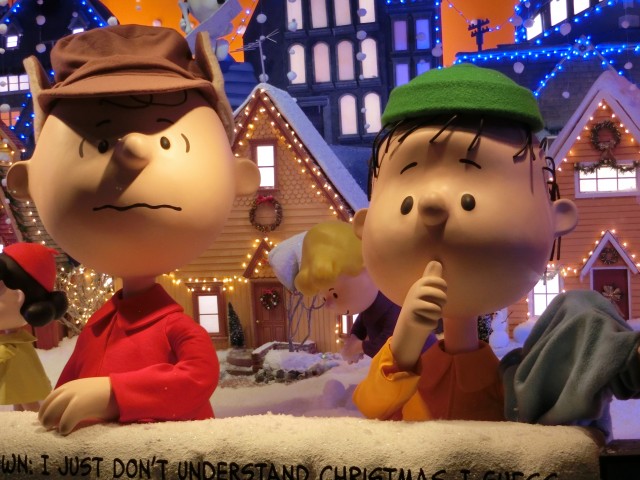
Macy’s holiday window display celebrates fiftieth anniversary of A CHARLIE BROWN CHRISTMAS (photo by twi-ny/mdr)

Fifty years ago, on December 9, 1965, CBS broadcast what was to become an all-time holiday favorite, Charles M. Schulz’s A Charlie Brown Christmas. The twenty-five-minute animated program was directed by Walt Disney and Warner Bros. veteran Bill Melendez and featured a jazzy score by the Vince Guaraldi Trio that quickly became part of the national lexicon. The golden anniversary of the television show, which focuses on the noncommercial aspects of the Christmas season, is being celebrated with several special events this month, following the November release of the big-screen Peanuts Movie, in which Charlie Brown declares, “I just need to know the secret for doing something great.” A Brooklyn staple for seven years, A Charlie Brown Christmas Live is moving from the Lyceum to Redwood Studios in Gowanus, being performed December 11-13 and 18-20 ($12), with adults Justin Tyler as Charlie Brown, Gillian Smith-Esposito as Lucy, Susan Forman and Lauren Orkus as Snoopy, and Alden Ford, Doug Aho, and Sean Bradley as Linus; the show is directed by Mollie Vogt-Welch, with music by Stephanie Sanders on keyboards and Jon Shaw on bass. At the Metropolitan Museum of Art, you can catch A Charlie Brown Christmas in the Grace Rainey Rogers Auditorium on December 19 & 20 ($45-$80), with the big-screen projection accompanied by an inventive live musical score by the Rob Schwimmer Trio, followed by an audience sing-along of holiday tunes. Tickets include museum admission, so you can also check out the Met’s Christmas Tree and Neapolitan Baroque Crèche while you’re there.

Over at David Geffen Hall, the New York Philharmonic Principal Brass Quintet and the Canadian Brass join together again for the twentieth annual Holiday Brass concert on December 13 ($49-$69), consisting of tunes from A Charlie Brown Christmas as well as a Chanukah medley, Bach’s Bells, “Penny Lane,” “Joy to the World,” and other holiday songs, performed with the New York Philharmonic Percussionists. The festivities continue December 20 at the Carnegie Hall Family Holiday Concert, as music director and conductor Steven Reineke and the New York Pops play A Charlie Brown Christmas and sing-along favorites with the TADA! Youth Theater, Essential Voices USA, and members of the New York Theatre Ballet. But you don’t need any tickets to see Macy’s Herald Square Christmas windows, which depict six scenes, designed by Roya Sullivan, from the classic Charlie Brown Christmas show, with interactive elements that allow visitors to play Schroeder’s piano and to add their own character to the celebration. The windows will remain on view through January 4; you can see all the windows here.