twi-ny recommended events

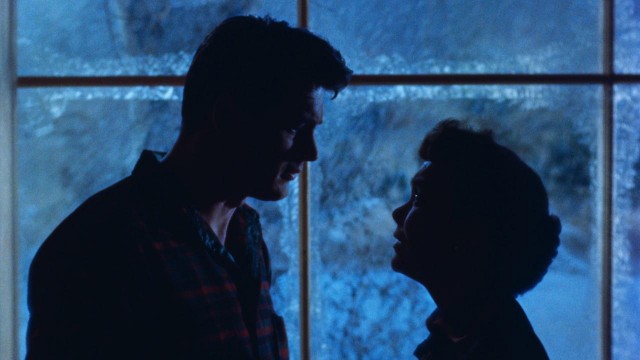
TODD HAYNES — THE OTHER SIDE OF DREAMS: FAR FROM HEAVEN

Todd Haynes’s FAR FROM HEAVEN reveals the dark underside of suburbia

FAR FROM HEAVEN (Todd Haynes, 2002)
Film Society of Lincoln Center, Walter Reade Theater
165 West 65th St. between Eighth Ave. & Broadway
Friday, November 27, 2:00, and Sunday, November 29, 6:30
Series continues through November 29
212-875-5050
www.filmlinc.org

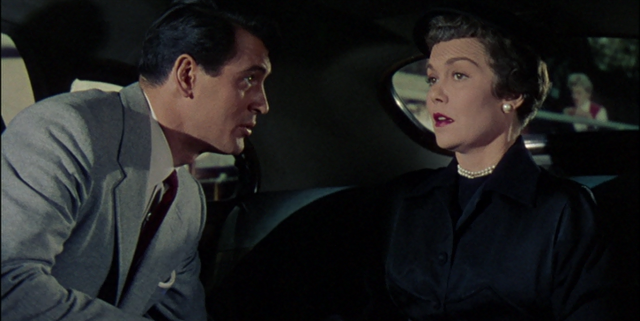
Douglas Sirk and Thomas Mann would be proud. In Todd Haynes’s wonderfully retro Far from Heaven, Oscar-nominated Julianne Moore is amazing as 1950s housewife Cathy Whitaker, who thinks she has the perfect idyllic suburban life — until she discovers that her husband (Dennis Quaid) has a secret that dare not speak its name. Mr. & Mrs. Magnatech they are not after all. When she starts getting all chummy with the black gardener (Dennis Haysbert), people start talking, of course. Part Imitation of Life and All That Heaven Allows, part Death in Venice, and oh-so-original, Haynes’s awesome achievement will have you believing you’re watching a film made in the 1950s, propelled by Elmer Bernstein’s excellent music, Edward Lachman’s remarkable photography, and Mark Friedberg’s terrific production design. Far from Heaven is screening at the Walter Reade Theater on November 27 at 2:00 and November 29 at 6:30 in the Film Society of Lincoln Center series “Todd Haynes: The Other Side of Dreams,” with DP Lachman on hand for a Q&A following the latter show. The series, being held in conjunction with the release of Haynes’s latest film, Carol, continues through November 29 with Haynes pairing his films with works that directly influenced him, bringing together thematically (but not as double features) Safe and Douglas Sirk’s Imitation of Life, his Mildred Pierce miniseries and Alan J. Pakula’s Klute, Poison and Rainer Werner Fassbender’s Fox and His Friends, Velvet Goldmine and Nicolas Roeg’s Performance, and Far from Heaven and Max Ophüls’s The Reckless Moment, among other duos.

TURKEYS FOR THANKSGIVING: SORCERER

Roy Scheider goes on an existential voyage of the soul in William Friedkin’s SORCERER

Roy Scheider goes on an existential voyage of the soul in William Friedkin’s SORCERER

SORCERER (William Friedkin, 1977)
BAMcinématek, BAM Rose Cinemas
30 Lafayette Ave. between Ashland Pl. & St. Felix St.
Saturday, November 28, 2:00, 4:30, 9:50
Series runs November 20-29
718-636-4100
www.bam.org

In the mid-1970s, Chicago-born director William Friedkin was riding high, earning an Oscar for The French Connection and another nomination for The Exorcist, two huge critical and box-office successes. For his next film, he decided to reimagine a seminal work that had had a profound influence on him, Henri-Georges Clouzot’s haunting 1953 suspense thriller, The Wages of Fear. “It turned out to be the most difficult, frustrating, and dangerous film I’ve ever made, and it took a toll on my health as well as my reputation,” Friedkin wrote in his 2013 memoir, The Friedkin Connection. Friedkin’s adaptation of Clouzut’s classic, itself based on a novel by Georges Arnaud, follows four unlikable men — a thief (Roy Scheider), a hit man (Francisco Rabal), an embezzler (Bruno Cremer), and a terrorist (Amidou) — hiding out under fake identities in a depressed, nowhere village in South America. When a nearby oil well catches fire, the company needs four men to drive two rickety trucks more than two hundred miles over treacherous terrain to deliver cases of rotting, highly unstable dynamite that will be used to blow the whole thing up and put out the fire. Oil man Corlette (Ramon Bieri) is sending two trucks — dubbed “Lazaro” and “Sorcerer” — because he thinks only one, if any, will make it through. The journey includes a harrowing twelve-minute scene as the men try to navigate a dilapidated rope bridge in a rainstorm as well as a psychedelic trip through a fantastical landscape (shot in the Bisti Badlands in New Mexico).

SORCERER

Harrowing bridge crossing is one of the most suspenseful scenes ever caught on film

What began as a dream project — Friedkin was pretty much given carte blanche by the studio, and he initially had his ideal cast lined up, consisting of Steve McQueen, Marcello Mastroianni, Lino Ventura, and Amidou — quickly turned into a nightmare as the cast changed, location problems flared up, a cinematographer had to be fired because of improper lighting, a narc forced Friedkin to get rid of some drug-using crew members, “Marvin the Torch” had to be called in to help with an explosion, and malaria ran rampant, as did the budget. When the film was finally released in June 1977, it got lost in all the Star Wars hoopla, resulting in a critical and box-office failure that shattered Friedkin, whose next three films were The Brink’s Job, Cruising, and Deal of the Century. But Friedkin has always stood behind Sorcerer: “I had persevered to make a film that I would want to see,” he wrote in his memoir, “a relentless existential voyage that would become my legacy.” After fighting for the rights to the film, he supervised a digital restoration that confirms the film as a towering achievement, a gripping, intense work of suspense that digs deep into the soul. Scheider, who was nominated for a Best Supporting Actor Oscar for The French Connection and then was extremely upset when Friedkin refused to cast him as Father Damien in The Exorcist, gives an extraordinary performance as Jackie Scanlon, a New Jersey Irish gang member now going by the name Juan Dominguez, ready to do whatever it takes to get out of the hell he is in. Friedkin and editor Bud Smith cut the film to match Tangerine Dream’s electronic score — the German group wrote the music to the script, without seeing a single frame of the finished product — creating a stinging pace that never lets up. The digital restoration, which premiered at the Venice International Film Festival, reestablishes Friedkin’s Sorcerer legacy, as critics and audiences reevaluate it as a remarkable triumph after all these years. The title is still terrible and the final scene highly questionable, but Sorcerer is an unforgettable, powerfully realistic work of magic. It’s screening on November 28 in the BAMcinématek series “Turkeys for Thanksgiving,” which runs November 20-29 and consists of fourteen films that were considered disasters when they were first released but might actually be gems in retrospect. Then again, they might still be bombs, so you might have a (wish)bone to pick with some of the selections, which include Elaine May’s Ishtar, Steven Spielberg’s 1941, Paul Verhoeven’s Showgirls, Charlie Chaplin’s Monsieur Verdoux, Francis Ford Coppola’s Heaven’s Gate, and, most surprisingly, The Wizard of Oz.

HARRY SHEARER AND JUDITH OWEN’S CHRISTMAS WITHOUT TEARS (DOES THIS TREE MAKE ME LOOK FAT?)

Harry Shearer and Judith Owen will celebrate Christmas in their own unique way on December 1 at BAM

Harry Shearer and Judith Owen will celebrate Christmas in their own unique way on December 1 at BAM

Who: Harry Shearer, Judith Owen, Alan Cumming, Mario Cantone, Olympia Dukakis, Alfie Boe, Paul Shaffer, Artie Lange, Fred Willard, Béla Fleck, Peter Asher, Davell Crawford, Godfrey Daniels, Jerry Dixon, Amy Engelhardt, Keith Nelson, Doña Oxford, and the SongBirds
What: “Harry Shearer and Judith Owen’s Christmas without Tears (Does This Tree Make Me Look Fat?)”
Where: BAM Howard Gilman Opera House, 30 Lafayette Ave.
When: Tuesday, December 1, $35-$85, 7:30
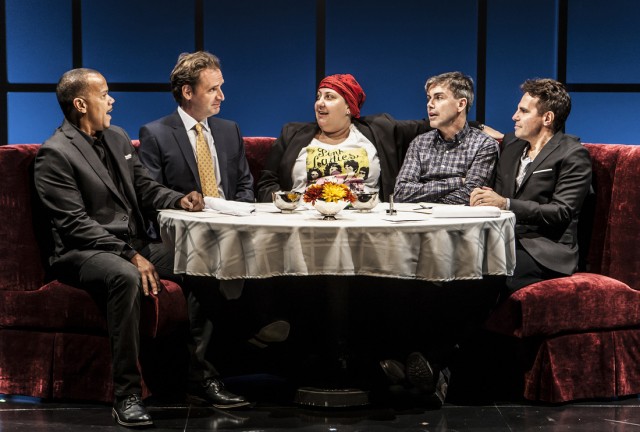
Why: Husband-and-wife Harry Shearer (The Simpsons, This Is Spinal Tap) and Judith Owen (Lost and Found, Ebb & Flow) are taking their annual “Christmas without Tears (Does This Tree Make Me Look Fat?)” holiday extravaganza to the next level this year, bringing the irreverent variety show to BAM’s elegant Howard Gilman Opera House for a performance honoring World AIDS Day in support of the Elton John AIDS Foundation. The tenth anniversary performance of what Shearer and Owen call “the perfect antidote to Christmas” will feature an all-star cast gathering around Paul Shaffer’s piano, including Alan Cumming, Fred Willard, Olympia Dukakis, Béla Fleck, and Mario Cantone, singing holiday favorites as well as originals that might not make Santa very happy. The second half of the former house party invites the audience to sing along, leading up to the grand finale of “The Twelve Days of Christmas,” done Shearer/Owen style.

FILM SOCIETY FREE TALKS: RON HOWARD

Ron Howard

Ron Howard will discuss his new movie, IN THE HEART OF THE SEA, at the Film Society of Lincoln Center on November 22

Who: Ron Howard
What: Film Society of Lincoln Center Free Talk
Where: Film Society of Lincoln Center, Amphitheater, Elinor Bunin Munroe Film Center, 144 West 65th St. between Broadway & Amsterdam Ave., 212-875-5610
When: Sunday, November 22, free, 5:00
Why: Ron Howard visits the Film Society of Lincoln Center on November 22 for a free talk about his upcoming epic, In the Heart of the Sea. The film, which opens in theaters December 11, tells the story of the real nautical events that inspired Herman Melville to write Moby-Dick. The cast features Chris Hemsworth, Benjamin Walker, Cillian Murphy, Tom Holland, Brendan Gleeson, Michelle Fairley, and Ben Whishaw as Melville. Howard, who has previously directed such films as Splash, Apollo 13, A Beautiful Mind, and Frost/Nixon, will bring along clips and trailers for this special conversation. (Free tickets are given out one per person starting at 4:00.)

NOBUHIKO OBAYASHI — A RETROSPECTIVE: BOUND FOR THE FIELDS, THE MOUNTAINS, AND THE SEACOAST

Obayashi shines a light on wartime Japan in unusual coming-of-age drama

Nobuhiko Obayashi shines a light on wartime Japan in unusual coming-of-age drama

BOUND FOR THE FIELDS, THE MOUNTAINS, AND THE SEACOAST (NO YUKI YAMA YUKI UMIBE YUKI) (Nobuhiko Obayashi, 1986)
Japan Society
333 East 47th St. at First Ave.
Saturday, November 21, $12, 4:00
Series continues through December 6
212-715-1258
www.japansociety.org

Over the opening credits of Nobuhiko Obayashi’s Bound for the Fields, the Mountains, and the Seacoast, the sweet sound of children singing can be heard over machine-gun blasts and explosions, immediately setting the tone for this unusual, highly stylized war-set drama. “It was a time of mischief in Japan. Even in wartime,” it says at the end of the black-and-white credits, before cutting to a shot of the red-and-white Japanese flag blowing in the wind. Kids slowly march to school to the beating of a drum, except for Sotaro Sudo (Yasufumi Hayashi), who skips down narrow streets by himself, wearing a pseudo-military outfit and carrying a pair of binoculars to help him spy on what’s going on. When he spots someone in the teacher’s (Jô Shishido) office who he’s never seen before, he wonders to himself, “She looks too young to be an adult, but too old to be a child.” That sets the stage for the rest of the film, in which Obayashi follows a group of boys and girls as they battle among themselves, experience bullying and budding sexuality, and grow up a little too fast, serving as a microcosm of twentieth-century Japan. “It is clear that reality and lies can divide people. We should not quarrel too hastily,” the teacher says. Sotaru becomes enamored with the young woman, Kawakita (Riki Takeuchi), whose younger brother, Sakae Osugi (Junichirô Katagiri), is new in school. “Please don’t be violent,” Kawakita tells Sakae, but it isn’t long before he may not have any other choice, especially when their parents (Taru Minegishi and Toshie Negishi) consider selling her into prostitution to pay off their mounting debts.

bound for the fields 2

Bound for the Fields, the Mountains, and the Seacoast is a fanciful fairy tale that has fun playing with Japanese storytelling conventions, mixing genres while utilizing over-the-top comic-book surrealism. Obayashi, who gained international fame for his cult hit House, instills this unique coming-of-age story with scenes that not only evoke cartoony manga panels but also the films of Yasujiro Ozu, Kenji Mizoguchi, and Shuji Terayama. Not one for subtlety, he intercuts several drawings of animals from an odd kind of textbook that Sotaru carries with him, making humorously metaphorical comparisons between humans and beasts. Though often silly and patently absurd, Bound for the Fields, the Mountains, and the Seacoast has an infectious, irresistible charm that will pull you right in even as you contemplate how ridiculous so much of it is. The film, adapted by screenwriter Nobuo Yamada from Haruo Satô’s novel A Time of Mischief, was made into black-and-white and color versions; the former no longer exists, but the latter is having a rare screening November 21 at 4:00 in the Japan Society series “Nobuhiko Obayashi: A Retrospective,” which continues through December 6 with such other Obayashi films as I Are You, You Am Me; Sada; The Discarnates; and his latest, the three-hour epic Seven Weeks, in addition to a special conversation and audience Q&A with Obayashi, moderated by series curator Aaron Gerow, on November 21 at 1:00 ($12).

ARTIST TALK: SEAN SCULLY AND GLENN FUHRMAN

Sean Scully, “Landline Deep Blue Sea,” oil on aluminum, 2015 (©Sean Scully / courtesy of Timothy Taylor Gallery, London)

Sean Scully, “Landline Deep Blue Sea,” oil on aluminum, 2015 (©Sean Scully / courtesy of Timothy Taylor Gallery, London)

Who: Sean Scully and Glenn Fuhrman
What: Artist talk
Where: The FLAG Art Foundation, 545 West 25th St. between Tenth & Eleventh Aves., ninth floor, 212-206-0220
When: Friday, November 20, free with RSVP, 7:00
Why: In 2006, Irish-born American artist Sean Scully said, “I remember growing up in Ireland and everything being chequered, even the fields and the people.” The two-time Turner Prize nominee creates abstract canvases lush with horizontal and vertical rectangles and stripes that are filled with power and emotion while always displaying the hand of the painter. The seventy-year-old artist will be at FLAG on November 20, discussing his work with FLAG founder Glenn Fuhrman in conjunction with the group exhibition “Surface Tension,” where Scully’s 2015 “Landline Deep Blue Sea” can be seen along with pieces by El Anatsui, Mark Bradford, Sam Gilliam, Sterling Ruby, Rebecca Ward, and others in an exploration of materiality, texture, and depth.

DEMOCRATS

Douglas Mwonzora and Paul Mangwana try to find common ground when drafting Zimbabwe’s new constitution in DEMOCRATS (photo courtesy of Upfront Films)

Douglas Mwonzora and Paul Mangwana try to find common ground when drafting Zimbabwe’s new constitution in DEMOCRATS (photo courtesy of Upfront Films)

DEMOCRATS (Camilla Nielsson, 2014)
Film Forum
209 West Houston St.
November 18 – December 2
212-727-8110
filmforum.org

Perhaps the most frightening aspect of Danish filmmaker Camilla Nielsson’s gripping thriller of a documentary, Democrats, is how unsurprising all of the revelations are, how we all have become inured to the pervasive power of the dictatorships that control so much of the world. Following the controversial 2008 reelection of Zimbabwe president Robert Mugabe, who had been in power since 1980, when the country officially gained its independence from the British-led Rhodesia, Mugabe’s ruling party, ZANU-PF (Zimbabwe African National Union – Patriotic Front), and election runner-up Morgan Tsvangirai’s opposition party, MDC-T (Movement for Democratic Change), agreed to form an inclusive coalition government and collaborate on a new constitution, to be drafted by COPAC, a committee co-chaired by former minister of information Paul Mangwana of ZANU-PF and human rights lawyer and parliament member Douglas Mwonzora of MDC-T. On the advice of Danish journalist Peter Tygesen, Nielsson requested access to the intense negotiations, and what she was given was an amazing, exclusive behind-the-scenes look into the process. Over the course of twelve shoots of between one and three weeks from 2010 to 2013, Nielsson alternately follows Mangwana and Mwonzora as they take their case to the people of Zimbabwe, traveling to rural communities and cities as their teams organize nearly six thousand town-hall-style meetings. Mangwana is a big, jolly fellow who believes Mugabe and his government are untouchable, that they will do anything and everything they can to maintain their leadership status. “Be seen as a man of peace. Even if you are not,” he brazenly says to the camera, adding, “The game of politics is pretending.” Meanwhile, Mwonzora, a much more deliberate man, explains, “We never imagined that a black man could suppress his own people.” As he makes his way across Zimbabwe, Mwonzora supports fighting back using pen and brains, not violence, imploring people to “tell us how much power we should have.” Amid claims of illegal busing and harassment by military veterans and the secret police on behalf of Mugabe, the entire constitution-making process is on the verge of falling apart, but the absurdity reaches a whole new level when the safety and freedom of Mangwana and Mwonzora are threatened.

DEMOCRATS (photo courtesy of Upfront Films)

Mangwana and Mwonzora find their own personal safety and freedom threatened in DEMOCRATS (photo courtesy of Upfront Films)

Nielsson (Good Morning Afghanistan, The Children of Darfur) and editor Jeppe Bødskov tell the eye-opening story like a fictional police procedural, with scenes beautifully shot by cinematographer Henrik Bohn Ipsen, underscored by composer Kristian Eidnes Andersen’s subtle score that keeps the tension mounting. Of course, Democrats is not a fictional police procedural but the very real tale of a young nation’s desperate attempt to end the suffocating rule of a military dictatorship determined to keep all of its power, despite its lip service in support of a new constitution. “Democracies in Africa . . . It’s a difficult proposition. Because always the opposition will want much more than what it deserves,” Mugabe is shown saying at the beginning of the film. But as Ernest Nyamukachi, Mwonzora’s personal assistant, says, “Everywhere you are you are afraid.” (Most of the dialogue is in English, with occasional forays into various Zimbabwe languages, sometimes within the same sentence.) In her director’s statement, Nielsson notes, “We in the West sometimes have a hard time understanding why it is so difficult to create a viable democracy in other parts of the world. The democratic values we ourselves accept in a democracy as a matter of course . . . are not taken for granted everywhere on the globe. Democrats is a sort of a primer, a form of basic research, into how difficult it is to create democracy.” What is happening in Zimbabwe might be extremely hard to swallow, but it makes for one hell of an important film. Named Best Documentary Feature at the 2015 Tribeca Film Festival, Democrats begins a two-week run at Film Forum on November 18, with Nielsson in person at the 7:10 show opening night.