twi-ny recommended events

THE GOLDEN BRIDE (DI GOLDENE KALE)

(photo by Ben Moody)

The National Yiddish Theatre Folksbiene inaugurates its new home at the Museum of Jewish Heritage with THE GOLDEN BRIDE (photo by Ben Moody)

Museum of Jewish Heritage — A Living Memorial to the Holocaust
Edmond J. Safra Plaza, 36 Battery Pl.
Tuesday-Wednesday and Thursday-Sunday through January 3, $40
866-811-4111
nytf.org
www.mjhnyc.org

The utterly delightful Yiddish operetta The Golden Bride returns to New York City at just the right time, a very tasty appetizer to the latest Broadway revival of Fiddler on the Roof. But the work, known in Yiddish as Di Goldene Kale, is more than just a mere precursor to the award-winning 1964 musical and 1971 film about the Jewish experience in Tsarist Russia; it stands alone as an engaging celebration of shtetl life as it explores the hopes and dreams of its many charming characters. The operetta premiered in February 1923 at the two-thousand-seat Second Avenue Theater and ran for eighteen weeks before going on tour around America and the world; it was last performed in 1948 before disappearing into obscurity until musicologist, librarian, and editor Michael Ochs uncovered parts of the long-lost work while preparing an exhibition in 1992, then spent more than two decades putting it back together again. The new production kicks off the National Yiddish Theatre Folksbiene’s 101st season, the first in its cozy new 375-seat home in Edmond J. Safra Hall at the Museum of Jewish Heritage. In a small, close-knit Russian village, Goldele (Rachel Policar), an abandoned child raised by innkeepers Pinkhes (Bruce Rebold) and Toybe (Lisa Fishman), has suddenly come into a large inheritance at the death of her long-absent father, making her the most desirable woman in the shtetl. She is in love with Misha (Cameron Johnson), Pinkhes and Toybe’s handsome son, but she offers her hand in marriage to any man who can find her mother, who she is sure is still alive. Thus, cobbler Berke (Jeremy Weiss), choir singer Motke (Zachary Spiegel), and tailor Yankl (Adam Kaster) set off in a race with Misha to track down Goldele’s mother and marry the Golden Bride, who in the meantime is moving to America to live with her uncle Benjamin (Bob Ader), whose wealth has already turned the shtetl “upside-down,” as Pinches and Toybe exclaim, with the help of the chorus, “We’ll become as rich as Korach, / We’ll live, laugh, it’ll be a sensation. / The dear millionaire will be my guest, / The dear millionaire will be his guest, / I’ll give him kugel with tsimmes. / She’ll give him kugel with tsimmes.” However, Benjamin wants Goldele to marry his son, Jerome (Glenn Seven Allen), who just happens to be smitten with Khanele (Jillian Gottlieb), Pinkhes and Toybe’s daughter. “Don’t you know what I want? Come here, I’ll tell you. I want a kiss from your sweet little lips,” Jerome says to Khanele, who replies, “Oh, go away — it’s Sabbath already.” “You shouldn’t kiss on Sabbath?” Jerome asks, to which Khanele declares, “Certainly you shouldn’t. A lot you know about Judaism! Even a goy knows more than you.” In the second act, the action travels overseas to America, where everyone tries to establish their future, built on love and money.

(photo by Ben Moody)

The fully restored Yiddish theater favorite DI GOLDENE KALE kicks off the National Yiddish Theatre Folksbiene’s 101st season in a big, delightful way (photo by Ben Moody)

Performed in Yiddish with English and Russian supertitles, The Golden Bride is a complete and utter joy from start to finish. The music, by little-known Lithuanian composer Joseph Rumshinsky, who actually wrote nearly one hundred Yiddish operettas, is light and bouncy, while the lyrics, by Ukrainian-born Louis Gilrod, are endearing and playful. The libretto, written by Polish native Frieda Freiman but originally published under her husband’s name, is sweet and witty. “Listen to me, friends,” Misha says when defending his love of Goldele to her other suitors. “I have a cure for your loving hearts. Each of you take a large piece of wood and knock the foolishness out of your heads.” While there is no evidence that Fiddler on the Roof lyricist Sheldon Harnick and book writer Joseph Stein ever saw or read The Golden Bride or that Rumshinsky, Freiman, and Gilrod (who all moved to America from Eastern Europe between the ages of twelve and twenty-two) were influenced by the Sholom Aleichem stories that formed the basis of Fiddler, many intriguing similarities and coincidences abound between the two works, from dialogue (Jerome seriously asks Khanele, “Do you love me?” recalling what Tevye asks his wife, named, er, Golde) to subplots (matchmaker Kalmen goes through his little black book, trying to find husbands for several young women, including one named, er, Yente: “I have for you a bridegroom, a ‘waiter’ who washes ‘dishes,’ / He’s also a ‘salesman’ at Yonah Schimmel’s Knishes”) to the general depiction of shtetl life. However, Anatevka has a very different fate in store for its residents, as Fiddler is far more political and heartbreakingly realistic than Bride, although the latter did come out right before the Immigration Act of 1924 (aka the National Origins Act), which set a restrictive quota on immigration to the U.S. from Eastern Europe and Asia. The actors, most of whom don’t know Yiddish and so perform their parts phonetically, are excellent, led by Policar, who has major operatic chops, her voice echoing beautifully throughout the theater, and Johnson, with strong turns by Rebold, Fishman, Adam B. Shapiro offering comic relief as Kalmen and the women’s chorus/ensemble of Amy Laviolette, Tatiana Wechsler, Jessica Kennedy, Liza Miller, Isabel Nesti, and Alexis Semevolos. National Yiddish Theatre Folksbiene artistic director Zalmen Mlotek conducts the fourteen-piece orchestra, situated behind the stage, while choreographer Merete Muenter makes clever use of the crowded set, which features a whimsical, homey design by John Dinning. To answer Jerome’s question, “Do you love me?” we say, yes, yes, we do love you!

(The National Yiddish Theatre Folksbiene and the Museum of Jewish Heritage have teamed up to provide free shuttle bus service to and from Columbus Circle for each performance. NYTF is also offering a free fifteen-minute Yiddish lesson and history of Yiddish theater forty-five minutes before each show. And on December 26 at 8:00, the museum will host “Dreaming in Yiddish: The Fourth Annual Adrienne Cooper Memorial Concert,” with Frank London, Sarah Gordon, Michael Winograd, and Joshua Dolgin presenting an evening of music from the 1999 album In Love and in Struggle: The Musical Legacy of the Jewish Labor Bund.)

MERRY HANUKKAH WITH JUDY GOLD

Judy Gold will once again welcome in the holiday season at Carolines on Broadway

Judy Gold will once again welcome in the holiday season at Carolines on Broadway

Who: Judy Gold
What: A Jewdy Gold Christmas
Where: Carolines on Broadway, 1626 Broadway, 212-757-4100
When: December 23-25, $31.25 – $102 (VIP), 7:30 or 8:00
Why: Six-foot-three Jewish lesbian mother Judy Gold, who has appeared in such popular one-woman shows as Judy Gold Is Mommie Queerest, 25 Questions for a Jewish Mother, The Judy Show: My Life as a Sitcom, and Jewdy, Jewdy, Jewdy!!! and currently cohosts the Kill Me Now podcast, will be back at Carolines this week for her annual skewering of the holiday season from her unique perspective. Offering support are Josh Gondelman and recent podcast guest David Feldman. As a bonus, on January 4, Gold will be at Feinstein’s/54 Below for “54 Sings The Muppet Christmas Carol,” playing Scrooge; the evening also features John Treacy Egan, Jeff Hiller, Andrew Chappelle, Allison Guinn, Molly Pope, and others.

STEVE

Close friends gather for a birthday party that turns ugly in STEVE (photo by Monique Carboni)

Close friends gather for a birthday party that goes awry in STEVE (photo by Monique Carboni)

The New Group at the Pershing Square Signature Center
The Romulus Linney Courtyard Theatre
480 West 42nd St. between between Ninth & Tenth Aves.
Tuesday – Sunday through January 3, $25-$95
www.thenewgroup.org
www.signaturetheatre.org

Be sure to arrive early for the world premiere of the New Group’s Steve, which has been extended at the Pershing Square Signature Center through January 3. As you enter the Romulus Linney Courtyard Theatre, the cast is already onstage, singing American standards and show tunes. (The music coordinator is Emmy-nominated writer, actor, musician, and radio host Seth Rudetsky.) It sets up a warm camaraderie that is about to be torn apart once the play itself begins. It’s Steven’s (Matt McGrath) birthday, and he and his friends are gathering at a Manhattan restaurant to celebrate. He’s there first with Carrie (Ashlie Atkinson), a large, gregarious lesbian with terminal cancer, something Steven refuses to acknowledge. “Dying sucks,” Carrie says. “You’re not dying,” Steven instantly responds. They are soon joined by Steven’s longtime partner, Stephen (Malcolm Gets), with whom he is raising a son, and another couple, their friends Matt (Mario Cantone) and Brian (Jerry Dixon). As the waiter, a flirty Argentine dancer named Esteban (Francisco Pryor Garat), quotes Twyla Tharp, the snark flies as the group trashes Broadway shows, movies, and celebrities, saving particularly choice bits for Mame, the Spanish version of West Side Story, Kristin Chenoweth, Audra McDonald, and Evita. “Esteban, you’ll have to forgive Stephen,” Steven says, “as he comes from a generation that fetishizes the lesser musicals of the early eighties.” The party takes a tense, nasty turn when birthday boy Steven reveals to everyone that Stephen and Brian have been secretly sexting each other. The narrative gets more interesting when debut full-length playwright Mark Gerrard and director Cynthia Nixon then present a different version of the same scene; initially, Steven had publicly admonished the electronic affair between Stephen and Brian, whereas in the alternate take, Steven proceeds with similar anger and frustration but without explicitly explaining why he is so upset. Yet another Steve becomes part of the fray when it is later learned that Brian and Matt are involved in a special relationship with trainer Steve, whom every man froths over at the gym. Despite the various issues, the friends and lovers try to make it through some tough times, all the while delivering a fast-paced patter of snide, exquisitely cynical comments. It’s hard not to enjoy the barbed banter even as you’re aware that the play depicts a nearly endless array of stereotypical images of modern gay life in New York City.

Matt (Mario Cantone) and Steven (Matt McGrath) discuss life, love, and loss in New Group world premiere STEVE (photo by Monique Carboni)

Matt (Mario Cantone) and Steven (Matt McGrath) discuss life, love, and loss in New Group world premiere (photo by Monique Carboni)

At one point, Carrie remembers how Stephen and Steven met, when the former would come to watch the latter perform as a singing waiter. “It was genius,” she says. “A love letter written in slow motion with the Broadway Song Book.” That thought can also be applied to Steve itself, although it moves at a swift, rhythmic clip and might be more deliciously decadent than outright genius. The excellent cast clearly is having a blast together, and that mood is infectious, although most of the characters end up being not very likable, doing not very likable things. But Carrie’s zest for life and her acceptance of her fate are energizing, wonderfully portrayed by a defiantly positive and upbeat Atkinson (Fat Pig), while Matt’s adorably childlike joie de vivre infuses the proceedings with sheer glee, as the cute and cuddly Cantone (Sex and the City, Laugh Whore) revels in being the comic relief. Most important, Gerrard (Andy Cohen Has a Big D***) and Nixon (Rasheeda Speaking, MotherStruck) succeed in making the audience feel like a part of this extended twenty-first-century family, from the bouncy singing at the beginning through all the bittersweet trials and tribulations to the heartfelt finale on Fire Island.

A VERY JEWISH CHRISTMAS

Marion Grodin will be part of the Christmas Eve festivities at Gotham Comedy Club

Marion Grodin will be part of the Christmas Eve festivities at Gotham Comedy Club

Who: Marion Grodin, Jon Fisch, Gary Vider, Gregg Rogell, Sherry Davey, and Jon Laster
What: A Very Jewish Christmas
Where: Gotham Comedy Club, 208 West Twenty-Third St. between Seventh & Eighth Aves., 212-367-9000
When: Thursday, December 24, $25 (plus two-beverage minimum), 7:30 & 9:30
Why: While the goyim come together to celebrate Christmas Eve with a big family dinner and a visit to church, it has become traditional for comedy clubs to host special December 24 gigs aimed at the Chosen People. At Gotham Comedy Club in Chelsea, “A Very Jewish Christmas” will feature predominantly but not exclusively Jewish laugh makers at 7:30 and 9:30, with Marion Grodin, Jon Fisch, Gregg Rogell, Gary Vider, Sherry Davey, and Jon Laster.

NIGHT IS A ROOM

(photo by T Charles Erickson)

Marcus (Bill Heck) and Liana (Dagmara Dominczyk) face some shocking changes in brilliant play by Naomi Wallace (photo by T Charles Erickson)

The Pershing Square Signature Center
The Alice Griffin Jewel Box Theatre
480 West 42nd St. between Tenth & Eleventh Aves.
Tuesday – Sunday through December 20, $35-$85
212-244-7529
www.signaturetheatre.org

Naomi Wallace’s Night Is a Room is a brilliantly conceived drama that is as poetic as it is shocking. In modern-day Leeds, England, Liana (Dagmara Dominczyk) has tracked down her husband’s birth mother, Doré (Ann Dowd), and wants her to have a surprise reunion with Marcus (Bill Heck) for his fortieth birthday. A stylish and successful marketing account executive, Liana manages it all; she even brings festive party balloons for Doré, blowing a few up as they talk in Doré’s small garden. Doré gave up Marcus, who she called Jonathan, when she was fifteen; she is a plain, frumpy woman who speaks in disconnected non sequiturs, takes everything very literally, and has apparently lived a rather droll, boring life. “So. What do you enjoy? In your spare time?” Liana asks. Doré, who cleans houses, responds, “I like to do Sudoku at the back of the newspaper those little squares all waiting for me imagine someone thinks it up everyday maybe a computer I don’t know but there they are for me I’ve always been good at numbers I skip the news it’s gossip mostly grubby isn’t it?” A moment later she says, “The lottery numbers each week I like to add them up then divide them by the day of the week as fast as I can and then times them by the month I can look at a number any long number and break it down quicker than you can crack an egg do you like eggs?” It takes a while for Liana to convince Doré to meet with Marcus/Jonathan, but they finally agree to the reunion. The second act takes place in Liana and Marcus’s living room, where the couple is in the midst of some hot and heavy sexual activity as they await Doré’s arrival. Liana and Marcus, who have a daughter working at the Art Institute of Chicago, are redecorating their home. But a whole lot more than the décor is about to change.

(photo by T Charles Erickson)

Doré (Ann Dowd) is in for some rather strange goings-on in NIGHT IS A ROOM (photo by T Charles Erickson)

What happens next makes it impossible to discuss the plot any further, built as it is around a head-shaking, jaw-dropping twist that will have some members of the audience considering leaving at intermission and others scanning their brains, wondering just where things can possibly go in the third act. But sticking around is a necessity, as the surprises keep coming as two of the characters become mired in a spectacular, unpredictable verbal face-off, even if the denouement is a bit too pat. Night Is a Room concludes Wallace’s (The Fever Chart: Three Visions of the Middle East, One Flea Spare) three-play Signature residency, which began with And I and Silence and continued with The Liquid Plain; all three works take their titles from poems — Silence from Emily Dickinson, Plain from Phillis Wheatley, and Night from William Carlos Williams’s “Complaint” (“Night is a room / darkened for lovers / through the jalousies the sun / has sent one golden needle!”). Night has a lyrical elegance to it, despite, or maybe even because of, the subject matter. Heck (Cabaret, The Orphans’ Home Cycle) is fine as Marcus, but the play belongs to Dominczyk (Closer, The Violet Hour) and longtime character actor Dowd (Compliance, Candida), who are exceptional together, their rapport utterly fascinating in light of their shifting relationship. Oregon Shakespeare Festival artistic director Bill Rauch (All the Way, The Clean House) helms the production with an innate intelligence and a subtle beauty, letting the tension build and the story unfold at just the right momentum. Rachel Hauck’s three sets all focus on chairs, perhaps to encourage the audience to remain seated and not leave. Night Is a Room is one of the strangest, most challenging family dramas you’re ever likely to see, and it’s also one of the most rewarding if you allow yourself to get swept away in its unique and memorable world.

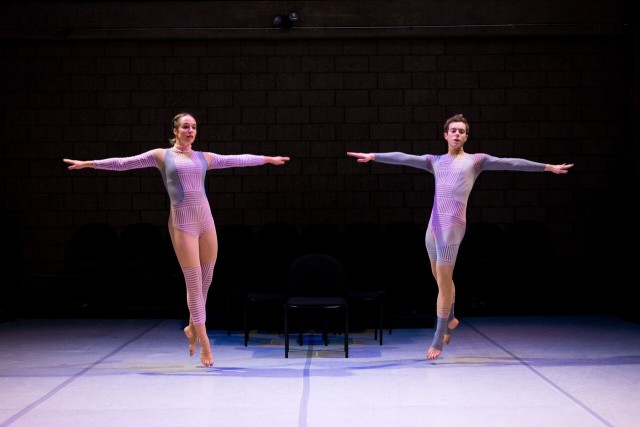
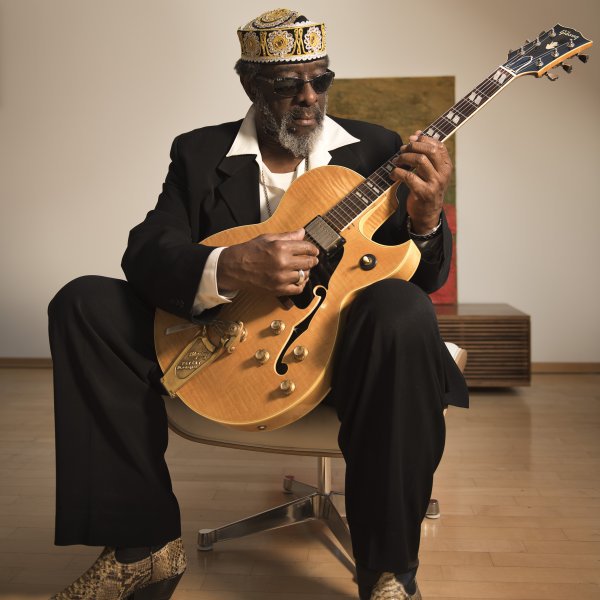
DIVA JAZZ ORCHESTRA CELEBRATES ELLA FITZGERALD’S SWINGIN’ CHRISTMAS

DIVA Jazz Orchestra will pay tribute to Ella Fitzgerald Christmas album at JALC this weekend (photo by Lawrence Sumulong)

DIVA Jazz Orchestra will pay tribute to Ella Fitzgerald Christmas album at JALC this weekend (photo by Lawrence Sumulong)

Who: The DIVA Jazz Orchestra with vocalists Camille Thurman, Christine Fawson, and Sue Giles
What: Holiday concerts
Where: Dizzy’s Club Coca-Cola, Jazz at Lincoln Center, Broadway & 60th St., fifth floor, 212-258-9595
When: December 18-20, $40-$45 cover charge, 7:30 & 9:30
Why: The twelve-piece, New York-based, all-woman DIVA Jazz Orchestra, led by drummer Sherrie Maricle, pays tribute to the fifty-fifth anniversary of Ella Fitzgerald’s Ella Wishes You a Swinging Christmas by playing selections from that classic album, which features such seasonal favorites as “Jingle Bells,” “Santa Claus Is Coming to Town,” “Have Yourself a Merry Little Christmas,” “Winter Wonderland,” and “White Christmas.”

PIERROT LE FOU

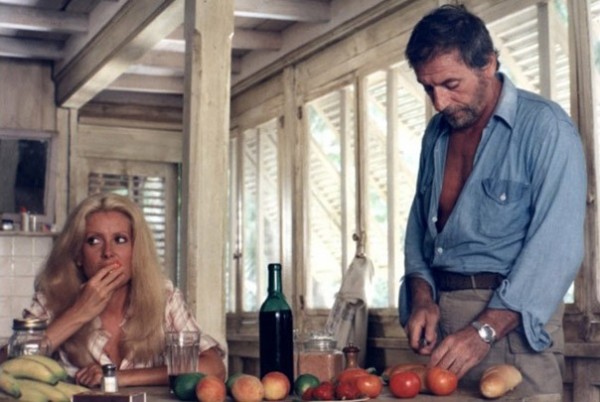
Film Forum will host brand-new restoration of Godard classic

Jean-Paul Belmondo and Anna Karina are excited about brand-new restoration of Jean-Luc Godard classic

PIERROT LE FOU (Jean-Luc Godard, 1965)
Film Forum
209 West Houston St.
December 18-24
212-727-8110
www.filmforum.org

Art, American consumerism, the Vietnam and Algerian wars, Hollywood, and cinema itself get skewered in Jean-Luc Godard’s fab faux gangster flick / road comedy / romance epic / musical Pierrot Le Fou. Based on Lionel White’s novel Obsession, the film follows the chaotic exploits of Ferdinand Griffon (Jean-Paul Belmondo) and Marianne Renoir (Anna Karina, Godard’s then-wife), former lovers who meet up again quite by accident. The bored Ferdinand immediately decides to leave his wife and family for the flirtatious, unpredictable Marianne, who insists on calling him Pierrot despite his protestations. Soon Ferdinand is caught in the middle of a freewheeling journey involving gun running, stolen cars, dead bodies, and half-truths, all the while not quite sure how much he can trust Marianne.

Filmed in reverse-scene order without much of a script, the mostly improvised Pierrot Le Fou was shot in stunning color by Raoul Coutard. Many of Godard’s recurring themes and styles appear in the movie, including jump cuts, confusing dialogue, written protests on walls, and characters speaking directly at the audience, who are more or less along for the same ride as Ferdinand. And as with many Godard films, the ending is a doozy. Two years ago, when the film was shown at Anthology Film Archives as part of a series selected by John Zorn, the avant-garde musician explained, “Pierrot holds a special place in my heart — I am really a Romantic, not a Postmodern — and this film’s music never ceases to reduce me to tears.” You can see and hear for yourself December 18-24 when Film Forum unveils the brand-new fiftieth-anniversary restoration of this Nouvelle Vague favorite.