twi-ny recommended events

COLD CASES — THE DEPARTMENT Q TRILOGY AND THE NEW NORDIC NOIR: THE PUSHER TRILOGY

Mads Mikkaelsen has a tough go of it in the Pusher trilogy

Mads Mikkelsen has a tough go of it in Nicolas Winding Refn’s Pusher trilogy

THE PUSHER TRILOGY (Nicolas Winding Refn, 1996, 2004, 2005)
IFC Center
323 Sixth Ave. at West Third St.
Pusher: Friday, June 17, 1:25, and Monday, June 20, 6:00
With Blood on My Hands: Friday, June 17, 3:30, and Monday, June 20, 8:15
I’m the Angel of Death: Friday, June 17, 5:30, and Monday, June 20, 10:15
Series runs June 17-23
212-924-7771
www.ifccenter.com
www.pusherthemovie.co.uk

Danish filmmaker Nicolas Winding Refn’s Pusher trilogy is a gritty, violent, brutal, and brilliant look at the devastation wrought by drugs. In Pusher (1996), Kim Bodnia stars as Frank, a small-time hood who loses both the money and the drugs when a deal goes bad. Over the course of a week, he grows more and more desperate as druglord Milo (Zlatko Buric) and his henchman, Radovan (Slavko Labovic), grow more and more impatient, preparing to do some serious damage to Frank. Pusher II: With Blood on My Hands (2004) focuses on Tonny (Mads Mikkelsen), Frank’s former partner who has just been released from prison. Addled by a beating he took, Tonny gets lost in a drug haze, trying to prove himself a worthy criminal to his big-time father, the Duke (Leif Sylvester Petersen), while also refusing to accept that he might be the father of Charlotte’s (Anne Sorensen) child. With the whole world crashing in on him, Tonny goes to extreme measures that affect everybody in his sphere. The gritty, powerful trilogy concludes with Refn’s masterwork, Pusher III: I’m the Angel of Death (2005), this time with Milo in the forefront. While preparing for his daughter’s (Marinela Dekic) twenty-fifth birthday party, he discovers that a major score has changed significantly, and he is forced to deal directly with a new generation of drug dealers — and by himself, because his cooking has made his crew sick. Shuttling between the ever-worsening situation, NA meetings, and his daughter’s party, Milo is faced with some deadly choices. Buric is spectacular as the aging druglord who does not like what he sees as he takes stock of his life. While the first two films feature hard-driving punk music, classical music slows things down in the far more contemplative conclusion. To add to the remarkable realism, many of the supporting actors were actual criminals. The grand finale is unforgettable, a multilayered, deeply philosophical, and extremely violent statement on the nature of drugs and the men and women addicted to that life. You can see all three films back-to-back-to-back on June 17 and 20 at IFC Center in the series “Cold Cases: The Department Q Trilogy and the New Nordic Noir,” which runs June 17-23 and includes such other cool films as Mikkel Norgaard’s Department Q threesome (A Conspiracy of Faith, The Absent One, The Keeper of Lost Causes), the original Swedish Girl with the Dragon Tattoo trilogy, Baltasar Kormákur’s Jar City, and Erik Skjoldbjærg’s Insomnia.

I’LL SAY SHE IS

(photo by Stefan Timphus)

A suspicious Napoleon (Noah Diamond as Groucho) and Josephine (Melody Jane as Beauty) face their personal Waterloo in long-awaited Marx Brothers revival I’LL SAY SHE IS (photo by Stefan Timphus)

Connelly Theater
220 East Fourth St. between Aves. A & B
Thursday – Sunday through July 3, $35
212-352-3101
www.illsaysheis.com

In his opening night review of the Marx Brothers’ Broadway debut, I’ll Say She Is, at the Casino Theatre on May 19, 1924, Robert Benchley wrote in Life magazine, “Not since sin laid its heavy hand on our spirit have we laughed so loud and so offensively. . . . I’ll Say She Is is probably one of the worst revues ever staged, from the point of view of artistic merit and general deportment. And yet when the Marx Brothers appear, it becomes one of the best.” That pretty much sums up the show’s long-awaited revival, from the husband-and-wife team of Groucho impersonator Noah Diamond and director Amanda Sisk, running at the Connelly Theater in the East Village through July 2. The original production was followed in quick succession by The Cocoanuts and Animal Crackers, both of which were made into classic films, but I’ll Say She Is languished in a kind of obscurity, never revived, while gaining some notoriety among fans as the “lost” Marx Brothers musical. But through an intense investigation of reviews, photographs, partial scripts, and various people’s personal recollections and writings, Diamond has resurrected the show in true DIY fashion. In the low-budget show, partially funded by fans from around the world, Diamond plays Groucho, with Seth Shelden as Harpo, Matt Roper as Chico, and Matt Walters as Zeppo, performing a comedy featuring original book and lyrics by political cartoonist Will B. Johnstone and music by Tom and Alexander Johnstone. The brothers are looking for jobs, so they bombard the office of theatrical agent Mr. Lee (Mark Weatherup Jr.) with their Al Jolson impressions. At first Mr. Lee wants them out of there, but he eventually shows the crazed quartet a front-page story that declares, “Society Woman Craves Excitement! Beautiful heiress promises her hand, heart, fortune to man who can give her a thrill. She is a victim of suppressed desires. She has complexes because she has never been in love.” So the boys head over to the mansion owned by “dignified dowager” Mrs. Ruby Mintworth (Kathy Biehl), who takes care of her downtrodden niece, Beauty (Melody Jane), who is seeking more out of life. And she certainly finds it when Groucho, Harpo, Chico, and Zeppo show up. “I’m getting dizzy! / Put me in a tizzy. / Let’s get busy. / Gimme a thrill!” she sings. That’s all the brothers need to try to entertain Beauty — as well as, of course, the audience in the Connelly Theater.

(photo by Stefan Timphus)

Full-fledged I’LL SAY SHE IS returns to the stage after ninety-two-year absence (photo by Stefan Timphus)

First things first: No one can fully impersonate the Marx Brothers, four unique talents, each with his own special charm. But Diamond, Shelden (who learned how to play the harp for the role), Roper, and Walters do a more-than-acceptable job, even as they’re constrained by a relatively small stage that doesn’t let them fully cut loose. As expected, Diamond, who has been channeling Groucho since he was fourteen, succeeds the best, ripping off the mustachioed Marx Brother’s one-liners with infectious glee. “It’s very difficult to tell sometimes if you’re walking toward me or a horse is walking away,” he says to Chico. When they arrive at the mansion, Ruby (think Margaret Dumont) says, “I am not the woman you’re looking for,” to which Groucho instantly replies, “You can say that again.” He also regularly acknowledges the existence of the audience. When the “Four Horsemen of the Apoplexy” go into Beauty’s reception room, Groucho declares with a sense of the obvious, “Well, we are in the parlor!” then adds, “What a stupid remark that was.” And when he tosses away his toy sword and it slides off the stage, almost hitting someone in the first row, Diamond turns it into a funny running gag. As Benchley pointed out more than ninety years ago, the show stalls during the musical numbers, which not coincidentally happen to be when the brothers are usually offstage. Joe Diamond’s set re-creates the original, looking like a large, colorful birthday cake, with minor markers added as the story ventures into Central Park, the Financial District, an opium den, and a courtroom. But as with the 1924 production, the best scene takes place at Versailles, where Napoleon (Groucho/Diamond) suspects Josephine (Beauty/Jane) of cheating on him. “Napoleon, you said you’d be in Egypt tonight. You promised me the Pyramids and the Sphinx,” Josephine says. “That remains to be seen. As far as I’m concerned, the whole thing sphinx,” a suspicious Napoleon answers, later adding, “When I look into your eyes, I know that you are true to the French Army. I only hope it remains a standing army.” The French bit is a madcap romp with smart and crisp rapid-fire dialogue; it’s also one of the scenes for which Diamond, who just published the companion book Gimme a Thrill: The Story of I’ll Say She Is, the Lost Marx Brothers Musical, and How It Was Found, had the most amount of original material. Much of the rest of I’ll Say She Is feels cobbled together, albeit as a labor of love that will have you forgiving many of its shortcomings. (For example, they never can quite get the curtain to completely close, and there’s a barrier on one side of the stage that makes it difficult for the actors to enter and exit.) But if you take it all in stride, you’re likely to have a fun time at what a 1924 Philadelphia ad called “a fast action girlie musical-dancing-comedy combination.” Marx Brothers fans will enjoy a bonus, recognizing several skits and numerous jokes that ended up in the brothers’ films.

HUDSON RIVER DANCE FESTIVAL 2016

hudson river dance festival

Who: Stephen Petronio Company, Lar Lubovitch Dance Company, and Urban Bush Women
What: Hudson River Dance Festival
Where: Hudson River Park, Pier 63 at 23rd St.
When: Wednesday, June 15, and Thursday, June 16, free, 6:30
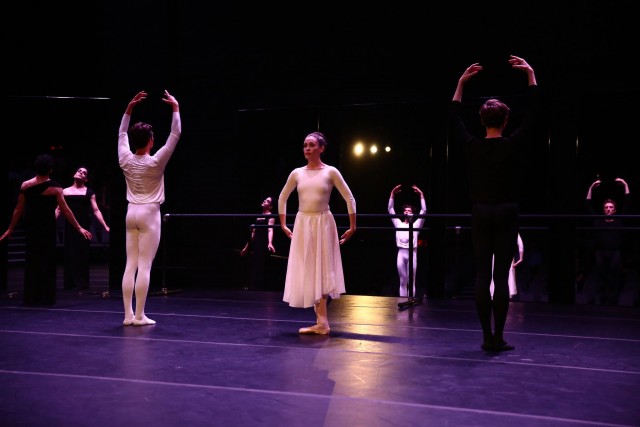
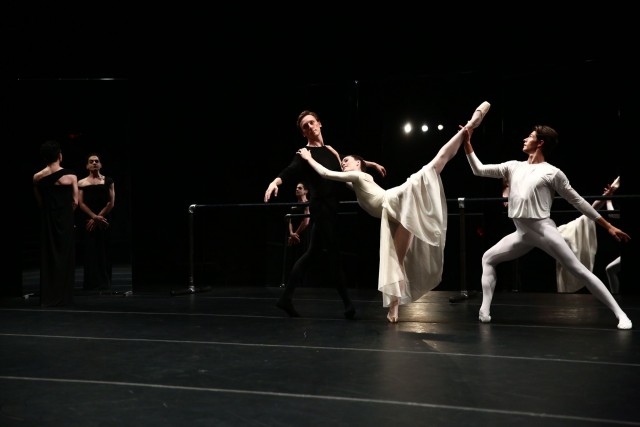
Why: The second annual Hudson River Dance Festival takes place on June 15 & 16 at Pier 63 in Hudson River Park, featuring three New York City-based companies. Sponsored and presented by SHS Foundation in association with the Joyce, the two evenings will consist of performances by Stephen Petronio Company, who will be at the American Dance Festival in Durham next week; Lar Lubovitch Dance Company, which was recently named an Irreplaceable Dance Treasure by Dance Heritage Coalition; and multiple Bessie award winner Urban Bush Women. “There’s something exciting about bringing a work that’s been sealed inside the theater out into a public space,” Petronio explained in a statement. “Sharing a performance in this way is what summer in the city is all about.” Petronio Dance Company will perform Locomotor, with music by Clams Casino and costumes by Narciso Rodriguez; Lubovitch will present two duets, the Richard Rodgers tribute . . . smile with my heart and Concerto Six Twenty-Two, set to Mozart’s Concerto for Clarinet and Orchestra; and Urban Bush Women will share 30th Anniversary Mash Up, consisting of excerpts from Give Your Hands to Struggle, Bitter Tongue, Shelter, Women’s Resistance, Batty Moves, and Walking with ’Trane. “A summertime sunset along the Hudson River waterfront is the perfect setting for experiencing the work of these three remarkable dance visionaries and their talented companies,” SHS Foundation president Richard Feldman said. “We invite everyone to join us at Hudson River Park’s Pier 63 waterfront for the unusual vision of contemporary dance with the Hudson River as its magnificent backdrop,” added Hudson River Park Trust CEO and president Madelyn Wils.

LUMINOSITY — THE ART OF CINEMATOGRAPHER MARK LEE PING-BING: FLOWERS OF SHANGHAI

FLOWERS OF SHANGHAI

Hou Hsiao-hsien gem FLOWERS OF SHANGHAI explores complex relationships between wealthy patrons and courtesans

FLOWERS OF SHANGHAI (HAI SHANG HUA) (Hou Hsiao-hsien, 1998)
MoMA Film, Museum of Modern Art
11 West 53rd St. between Fifth & Sixth Aves.
Friday, June 17, 7:30, and Wednesday, June 29, 7:30
Series runs June 16-30
Tickets: $12, may be applied to museum admission within thirty days
212-708-9400
www.moma.org

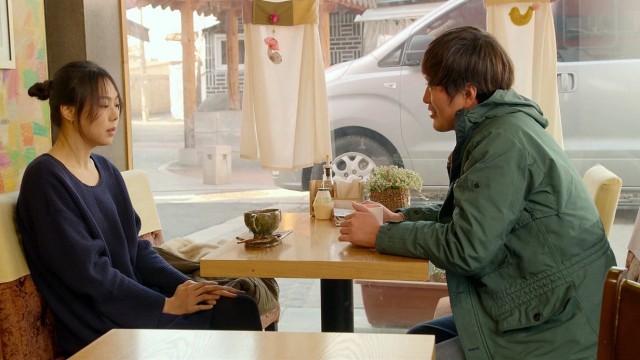
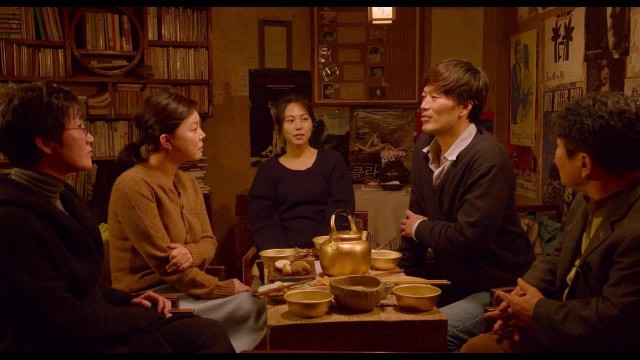
Taiwanese New Wave master Hou Hisao-hsien might be the best filmmaker whose work you’ve never seen. For more than thirty years, he has been telling intimate, meditative stories about life, family, and relationships with a gentle, deeply intuitive style, infused with gorgeous visuals and subtly beautiful soundtracks. One of his most elegant works, Flowers of Shanghai, is set in brothels, known as flower houses, in 1884 in the British Concession, where men and women congregate for social interaction and develop long-term bonds and responsibilities to one another based on much more than just sex. The men play drinking games, smoke opium, and buy the women gifts. The story, told in a series of vignettes as Mark Lee Ping-Bing’s camera slowly moves through dark, lush, reddish gas-lit interiors, focuses on Master Wang (Tony Leung Chiu-wai), who has promised to be the sole patron of Crimson (Michiko Hada) but who has also been secretly seeing the younger Jasmin (Vicky Wei) and lavishing her with presents. The elder Master Hong (Luo Tsai-erh) and Auntie Huang (Rebecca Pan), the madam, discuss the situation, bringing up issues of responsibility and honesty, attempting to come to some kind of understanding in an exchange that shows respect for both the men and women who are a far cry from the Western conception of johns and prostitutes.

FLOWERS OF SHANGHAI

Women working in a brothel discuss their futures amid intimate lighting in Hou Hsiao-hsien’s gorgeous FLOWERS OF SHANGHAI

Most scenes end by fading quietly to black, then introducing the woman protagonist of the next section — Crimson, Jasmin, Pearl (Carina Lau), Jade (Shuan Fang), and Emerald (Michelle Reis) — as the women gossip and Crimson and Hong, and other pairs, try to figure out what they want out of life and from one another. In Flowers of Shanghai, Hou explores class differences, gender roles, the Asian notion of saving face, and intimacy with grace and sophistication. When the film fades out for the final time, viewers are left knowing they’ve just experienced something special, a stunning work that uses the technologies of cinema to delve into the very nature of humanity. Flowers of Shanghai is screening at MoMA on June 17 and 29 at 7:30 in the series “Luminosity: The Art of Cinematographer Mark Lee Ping-Bing,” with Lee participating in a Q&A following the June 17 show. The series runs June 16-30 and includes such other Lee-lensed treasures as Tian Zhuangzhuang’s Springtime in a Small Town, Gilles Bourdos’s Renoir, Wong Kar Wai’s In the Mood for Love, and Hou’s Dust in the Wind, The Assassin, and The Puppetmaster. In addition, Lee will sit down with Department of Film associate curator La Frances Hui for “A Conversation with Cinematographer Mark Lee Ping-Bing” on June 18 at 5:00.

THE TOTAL BENT

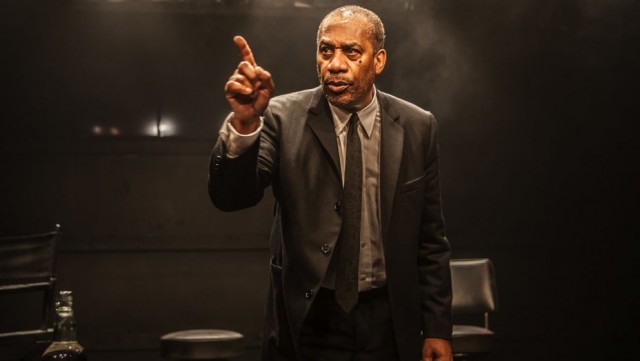
The legendary Papa Joe Roy (Vondie Curtis Hall) preaches in Bluntgomery, Alabama in THE TOTAL BENT (photo by Joan Marcus)

The legendary Papa Joe Roy (Vondie Curtis Hall) preaches in Bluntgomery, Alabama, in THE TOTAL BENT (photo by Joan Marcus)

Anspacher Theater, the Public Theater
425 Lafayette St. at Astor P.
Tuesday through Sunday through June 26, $45
212-539-8500
publictheater.org

On March 3, 1968, at Ebenezer Baptist Church in Atlanta, the Rev. Dr. Martin Luther King Jr. proclaimed, “In the final analysis, God does not judge us by the separate incidents or the separate mistakes that we make but by the total bent of our lives. In the final analysis, God knows that his children are weak and they are frail. In the final analysis, what God requires is that your heart is right. Salvation isn’t reaching the destination of absolute morality, but it’s being in the process and on the right road.” In Stew and Heidi Rodewald’s The Total Bent, the follow-up to their 2008 Broadway hit, Passing Strange, finding that right road is no easy journey. Set during the civil rights movement in 1960s “Bluntgomery, Alabama,” The Total Bent begins in a recording studio, where former R&B star and would-be faith healer Papa Joe Roy (Vondie Curtis Hall) is making what he hopes will be his crossover comeback album, with songs written by his son, Marty (Ato Blankson-Wood). “He forgave my sins / and then we made amends / And you know, that’s why, that’s why / that’s why he’s Jesus and you’re not, whitey,” Joe sings in the opening number. It immediately sets the audience, which is primarily Caucasian, on edge; Stew even makes note of the racial imbalance later in the show. Joe and Marty argue over the past and the future, the power of God and Satan, and the importance of protest. “My new songs rise to the beat of bus boycotter’s feet / Wanna take the struggle to church / And drag gospel into the street,” Marty says, while Joe points out his son’s propensity for high heels and Danny Kaye movies. And then Stew, playing guitar, chimes in, “Crossover: Black artists trying to win white audiences with a watered-down sound.” (The crack band, which includes Stew on guitar, Rodewald on bass, musical director Marty Beller on drums, John Blevins on trumpet, and Brad Mulholland on saxophone, hangs out at the back of Andrew Lieberman’s small, homey stage, relaxing on chairs, couches, and a church pew.) “Any real money in this protest shit?” Joe asks, to which Marty responds, “Jesus, Joe, it’s music to serve a liberation movement!” “So, no?” Joe replies. Joe then sings, “Shut up! / And get back on the bus / and take a back seat with a smile.” Joe’s legacy is displayed when two young men, Andrew (Jahi Kearse) and Abee (Curtis Wiley) — evoking a more contemporary kind of Amos and Andy — sneak into the recording studio twenty years later and almost melt in fear at the sight of Joe’s ghostly, glowing mic. “I can’t even bring myself to touch it,” Andrew says. “It’d be like touchin’ Tutankhamun’s wee-wee,” Abee adds, to which Andrew shoots back, “Must you always act a fool around white folks,” acknowledging the existence of the audience. (The show makes repeated references to itself as a musical theater production in front of a crowd, which gets particularly funny when a band member takes an actor’s line, much to the actor’s dismay, or when a character wonders aloud when the band had time to learn a song that was supposedly just created off the cuff.) Soon Andrew and Abee are backup singers for Marty, who has become an all-out rock star, strutting like the love child of Prince, James Brown, and Mick Jagger.

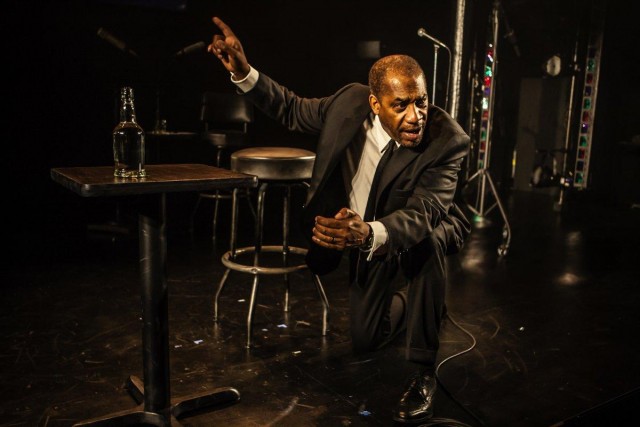
Marty (Ato Blankson-Wood) takes on his father during the civil rights era in THE TOTAL BENT (photo by Joan Marcus)

Marty (Ato Blankson-Wood) takes on his father during the civil rights era in THE TOTAL BENT (photo by Joan Marcus)

Passing Strange, which went from the Public Theater to Broadway to the big screen, made into a 2009 film by Spike Lee, was largely autobiographical. It would be interesting to know how much, if any, of The Total Bent, which has been extended at the Public’s Anspacher Theater through June 26, might be about Stew himself. Stew’s long-term band is called the Negro Problem, and, as a black man dealing with success in the white world, it could be easy to see his own inner conflicts in the characters of Joe and Marty. Regardless, however, The Total Bent is a lively, powerful show, with dynamite performances by Hall (Dreamgirls, Chicago Hope) and Blankson-Wood (Hair, Lysistrata Jones). David Cale provides comic relief as British music producer Byron Blackwell, while Kenny Brawner and Damian Lemar Hudson play a pair of deacons. Director Joanna Settle, who also helmed Stew and Rodewald’s Family Album, keeps everything more or less in line even as Stew’s book goes from esoteric to mystifying to impenetrable. Near the end of his March 3, 1968, speech, Dr. King said, “For you can stand up amid the storms. And I say it to you out of experience this morning, yes, I’ve seen the lightning flash. I’ve heard the thunder roll.” You can hear and see the thunder and lighting in The Total Bent, even if it doesn’t make complete sense. (Up next for Stew and Rodewald is Notes on a Native Song, a concert-novel tribute to James Baldwin.)

HERRING FESTIVAL 2016

The new Dutch herring arrives in the city on June 15 (photo by twi-ny/mdr)

Grand Central Oyster Bar, Grand Central Terminal, lower level, 212-490-6650
Russ & Daughters, 179 East Houston St., 212-475-4880
Restaurant Aquavit, 65 East 55th St., 212-307-7311

The new herring is almost here. After being sampled by Queen Máxima of the Netherlands, the Hollandse Nieuwe Haring from Scheveningen will be air-expressed to New York City, where it is available at several prime locations June 15 through July 1. The Grand Central Oyster Bar serves the Silver of the Sea from its special cart (marked De Haringkoning — the Herring King) in a cozy nook by the bar, accompanied by chopped egg, diced raw onion, and seeded flatbread, along with genever (Dutch gin) as desired. Each bite is a delectable taste sensation that should be slowly savored, never rushed. You can also delight in the new catch at Russ & Daughters, where the marvelous matjes herring, two fillets attached at the tail, is available for takeout at the counter, although you should strongly consider ordering in advance; there’s a reason why their latest book is called Russ & Daughters: Reflections and Recipes from the House That Herring Built. There will also be a special herring menu at Russ & Daughters Cafe on Orchard St. as well as kosher herring at their restaurant downstairs at the Jewish Museum. Tickets are also still available for the Russ & Daughters Herring Pairing at Astor Center on June 30 ($79), with chefs Fabian von Hauske and Jeremiah Stone of Contra and Wildair preparing special herring dishes accompanied by sparkling wines, spirits, and other cocktails, along with live music by the Jamie Saft Trio. And Aquavit’s annual Herring Festival runs June 20 through July 15, with various herring plates available for lunch ($16-$32), including the Adventurous, comprising matjes fillets with rhubarb, rullmop, lingonberry, sherry, horseradish, curry, and ramp. Advice columnist Ann Landers once said, “If you want to catch trout, don’t fish in a herring barrel.” Well, for the next several weeks, fishing in a herring barrel is definitely the way to go.

SHUFFLE ALONG

(photo © Julieta Cervantes)

Savion Glover’s choreography powers SHUFFLE ALONG (photo © Julieta Cervantes)

SHUFFLE ALONG, OR THE MAKING OF THE MUSICAL SENSATION OF 1921 AND ALL THAT FOLLOWED
Music Box Theatre
239 West 45th St. between Broadway & Eighth Aves.
Tuesday – Sunday through October 9, $69 – $169
shufflealongbroadway.com

Shuffle Along, or, the Making of the Musical Sensation of 1921 and All That Followed has some of the best music and dancing you’ll find on Broadway right now. Unfortunately, it doesn’t have the book to support it. The show tells the story of the historic 1921 production of Shuffle Along, a landmark musical featuring music by Eubie Blake, lyrics by Noble Sissle, and book by vaudevillians F. E. Miller and Aubrey Lyles; Blake played the piano onstage (there was no orchestra pit at the 63rd Street Music Hall), while Sissle starred as detective Jack Penrose, Miller was mayoral candidate Steve Jenkins, and Lyles was candidate Sam Peck. The 1921 cast also included Lottie Gee as Jessie Williams, Gertrude Saunders as Ruth Little (later replaced by Florence Mills), and Adelaide Hall as a Jazz Jasmine in the large ensemble. George C. Wolfe (Jelly’s Last Jam, Bring in ’da Noise, Bring in ’da Funk) wrote the book for and directs the new show, which went through significant revisions during previews — at one point it was clocking in at more than three hours (the final version is two hours and forty minutes), and six-time Tony winner Audra McDonald (The Gershwins’ Porgy and Bess, Lady Day at Emerson’s Bar & Grill), who plays Gee, had to take time off for illness. (It was later revealed that she is pregnant and will be going on maternity leave July 24, when Carolina Chocolate Drops singer Rhiannon Giddens will take over her role.)

(photo © Julieta Cervantes)

Eubie Blake (Brandon Victor Dixon) plays piano for Lottie Gee (Audra McDonald) in SHUFFLE ALONG (photo © Julieta Cervantes)

Savion Glover’s choreography is energetic and exhilarating while incorporating multiple genres, as are Ann Roth’s dazzling period costumes. But the relating of the behind-the-scenes efforts of a group of black men and women trying to storm Broadway is trite and clichéd, dragging down the rest of the show. Brandon Victor Dixon (The Color Purple, Motown: The Musical) and Joshua Henry (Violet, The Scottsboro Boys) are fine as Blake and Sissle, respectively, but Brian Stokes Mitchell (Man of La Mancha, Kiss Me, Kate) as Miller tries his best with dry lines, and Billy Porter (Kinky Boots, Miss Saigon is miscast as Lyles. Brooks Ashmanskas (Something Rotten, Fame Becomes Me) is fun as all the white men. It all makes for way too bumpy a ride, despite such songs as “Broadway Blues,” “Affectionate Dan,” “Honeysuckle Time,” “Love Will Find a Way,” “You Got to Git the Gittin’ While the Gittin’s Good,” and “(I’m Just) Wild About Harry,” with rousing orchestrations and arrangements by Daryl Waters (After Midnight, Memphis). The Playbill comes with a bonus re-creation of the original program (and some extra information) from when the show opened May 23, 1921, at the 63rd Street Music Hall. Shuffle Along wants to be both historic and historical, instead losing its focus as it gamely attempts to meld substance with style.