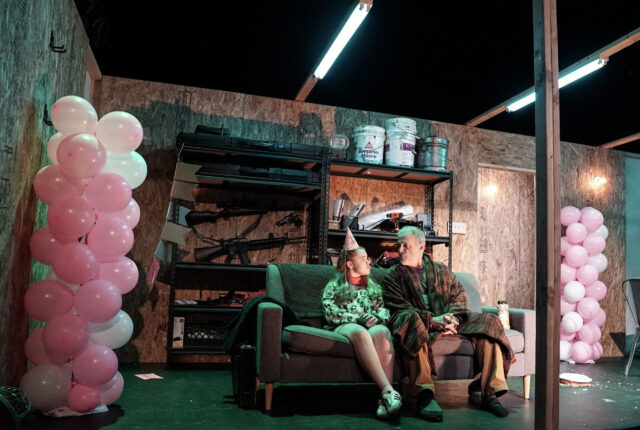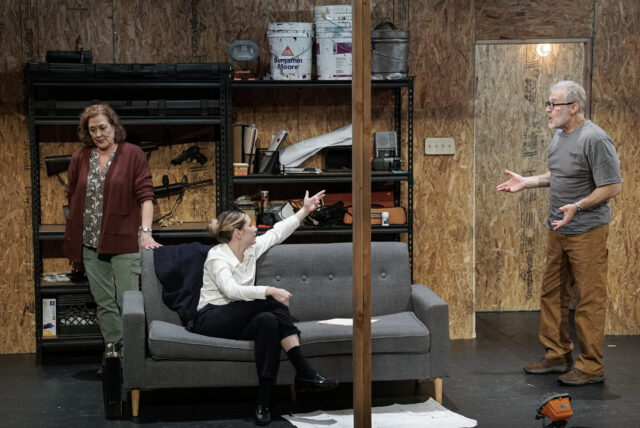
twi-ny recommended events

PMA: JESSE MALIN’S SILVER MANHATTAN AT BOWERY PALACE

Jesse Malin makes a triumphant return to the Bowery in Silver Manhattan (photo by Ehud Lazin)

SILVER MANHATTAN
The Bowery Palace
327 Bowery
Wednesday – Sunday through March 29, $52-$187
www.silvermanhattan.com
www.jessemalin.com

Upon entering the downstairs theater at the new Bowery Palace, audience members are greeted by an unusual sight: At the front and center of the small, crowded stage, surrounded by various chairs, tables with lamps, a drum kit, and vertical white fluorescent lights on a shimmering curtain, is an empty wheelchair.

It’s a haunting image, made all the more palpable when singer-songwriter Jesse Malin makes his grand entrance, carried down the aisle on a stretcher, his hands folded across his chest as if dead. But the Queens native, along with the crowd, is about to be resurrected by the power and glory of rock and roll in the heart-wrenching yet exhilarating Silver Manhattan.

“I love walking in New York,” Malin says after being placed in the wheelchair. “You hit the street, no plan, no agenda — then you bump into someone, talk to a stranger, make a new friend. You see a poster, you run into a show, a movie — you hear music from a bar, it draws you in. Next thing you know, you’ve danced all night, fallen in love, learned a good joke from a homeless person, fed a stray cat, and jumped back into bed as the sun comes up and the last garbage truck rolls by. Anything’s possible here.”

Some of those things might never be possible for Malin again, but that’s not preventing him from living his life to the fullest he can.

“The last time I walked down a New York street was May 4, 2023,” he says shortly before launching into his 2015 song “Turn Up the Mains” while sharing the story of the day he suffered a spinal stroke on his way to a one-year memorial party he was hosting and DJing for his late friend and former bandmate Howie Pyro, who he calls an “occasional Satanist.” Malin describes the event in graphic detail as the pain shot through his legs, he got down on the ground, and then was taken by ambulance to the hospital, where he received the awful diagnosis and was told that he’s “effectively paraplegic,” that he might never walk again without assistance.

The band — keyboardist Rob Clores, bassist James Cruz, drummer Paul Garisto, and musician and vocalist Bree Sharp — then kicks into the Rolling Stones’ 1971 track “Sway” and Malin picks up a guitar.

Doctor: Did you ever wake up to find / A day that broke up your mind? / Destroyed your notion of circular time.
Band: It’s just that demon life / Got you in its sway / It’s just that demon life / Got you in its sway.
Malin: Ain’t flinging tears out on the dusty ground / For all my friends out in the burial ground / Can’t stand this feeling, getting so brought down.

Malin, who was born in 1967, then returns to his childhood in Whitestone, where his single mother raises him and his sister. He recounts jumping on his bed to songs by Elton John and Paul Simon, being bullied because he has to wear an eye patch, and discovering such bands as KISS, the Sex Pistols, the Dead Boys, and the Ramones.

He sings, “Waiting on a midnight bus / To get me to the 7 train / Running from the chicken hawks / And I never went back . . . never went back . . .” in “Whitestone City Limits.”

As a teenager, he first forms the band Heart Attack (“Trendies”), then downtown punk legend D Generation (“No Way Out”). He goes solo in 2000, releasing such albums as Glitter in the Gutter, Love It to Life, and New York Before the War. He collaborates with Bruce Springsteen, Billie Joe Armstrong, Ryan Adams, and Lucinda Williams. He opens a club in the city.

And then, at the age of fifty-six, he learns that he might lose everything.

Jesse Malin is joined by his bandmates while telling his poignant story (photo by Ehud Lazin)

The preshow setlist blasting through the speakers sets the stage for the music that follows, from the Dead Boys’ “Sonic Reducer” and the Ramones’ “She’s the One” to Carly Simon’s “You’re So Vain” and Simon & Garfunkel’s “My Little Town,” letting the audience know that this is not going to be just a punk concert. Over the course of ninety pulsating minutes, Malin reaches deep into his back catalog, performing songs not in chronological order but how they relate to the narrative, which switches between his history and his efforts to not give in to his diagnosis, including seeking out special treatment in Argentina. He is joined several times by Satish Indofunk and Danny Rey on horns, adding another dimension to the songs. The often warm lighting is by Brian Scott, with propulsive sound by Angela Baughman.

Just as Marsha Ginsberg’s scenic design is cramped, so is the audience, seated in folding chairs on the floor or balcony and on narrow benches or standing in the back; it’s not the most comfortable way to enjoy music, but it works here, especially as Malin makes eye contact with as many audience members as he can as he chronicles his wild adventures, baring his heart and soul. And he never becomes treacly, even when adopting a mantra from his friend HR of Bad Brains: PMA, or Positive Mental Attitude. “Before him, I never thought how my outlook might effect where I end up,” Malin acknowledges.

He doesn’t wallow in self-pity or ask for sympathy but instead forges ahead, determined to beat the odds and, primarily, keep making music. His band doubles as characters from his life: DJ Jonathan Toubin, his doctor, his mother, Jack Flanagan, his physical therapist. As the evening progresses, he gets more and more pumped, waving his arms in the air and shaking his body in the chair. He has an infectious enthusiasm that dances over the room like a swirling disco ball. You don’t have to know anything about Malin or his music to fall for him and the presentation, which is reminiscent of Springsteen on Broadway and Bono’s Stories of Surrender, both of which were tied to memoirs; Malin’s Almost Grown (Akashic Books, $28.95) will be published on April 7.

Passionately directed by Ellie Heyman (Space Dogs, The Tattooed Lady), Silver Manhattan — named for Malin’s 2004 song that does not appear in the show; nor does his 2002 track “Almost Grown” — is an intimate journey into one man’s refusal to take no for an answer, through his entire life. It’s a thrilling, no-holds-barred celebration, tinged with loss and sadness, but ultimately it’s a triumphant homecoming for a man who has been part of the New York City music scene for five decades and is not about to stop now.

He saves some special surprises for the very end, then, as an encore, brings out a different friend each night; I saw Tony-winning actor and musician John Gallagher Jr. (American Idiot, Spring Awakening) playing the Replacements’ hit “Alex Chilton,” which features the line “I’m in love / with that song.”

Well, I’m in love / with this show.

[Mark Rifkin is a Brooklyn-born, Manhattan-based writer and editor; you can follow him on Substack here.]
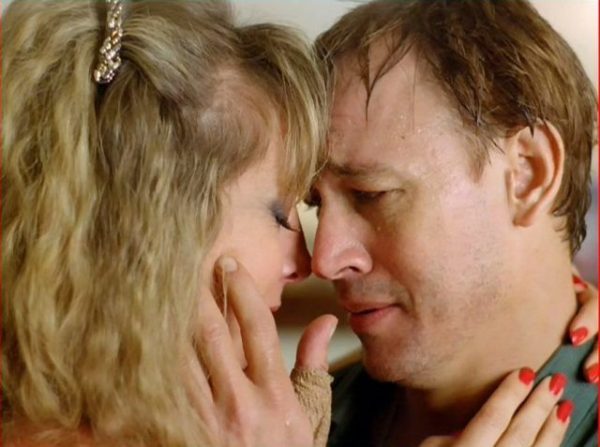
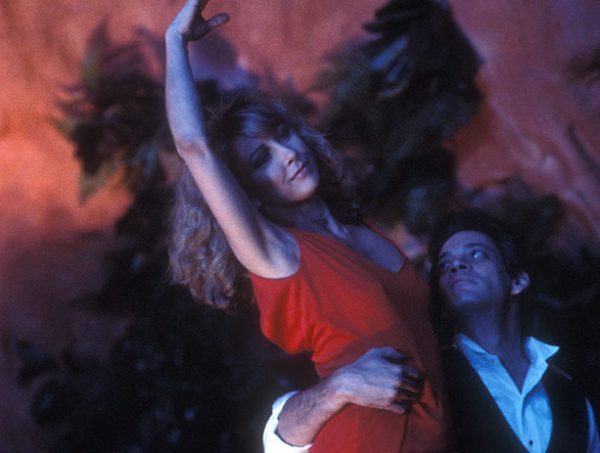
EVERY LITTLE THING THEY DO IS MAGIC: THE ILLUSION OF CINEMA AT BAM

TRIPLE CANOPY PRESENTS: MAGIC
BAM Rose Cinemas
30 Lafayette Ave.
March 6–12
www.bam.org
canopycanopycanopy.com

“I think cinema, movies, and magic have always been closely associated. The very earliest people who made film were magicians,” Francis Ford Coppola said. In its sixth annual collaboration with BAM, Triple Canopy celebrates that connection with “Magic,” a weeklong selection of programs, curated by Yasmina Price, that explores the illusion inherent in the medium.

Among the highlights are “Rituals for the Dead and Living,” consisting of short works by Noor Abed, Maya Deren, Kenneth Anger, and Ulysses Jenkins; such all-time favorites as Dario Argento’s Suspiria, Alain Resnais’s Last Year at Marienbad, and Charles Burnett’s To Sleep with Anger; such sleepers as Apichatpong Weerasethakul’s Mysterious Object at Noon, Sergei Parajanov and Dodo Abashidze’s The Legend of Suram Fortress, Raúl Ruiz’s Three Crowns of the Sailor, and Mohsen Makhmalbaf’s Gabbeh; and “Tricks, Spirits, and Flickering Lights,” featuring shorts by Walter R. Booth, Alice Guy-Blaché France, Gaston Vell, Christopher Harris, Ken Jacobs, Rea Tajiri, John Baldessari, and Cynthia Maughan.

On March 7 at 7:00, “A Night with Alex Tatarsky” will feature the American performance artist will explore “movement writing” in a special lecture-séance.

Below is a look at some of the films.

F FOR FAKE

Orson Welles explores cinematic reality and artistic forgery in F for Fake

F FOR FAKE (Orson Welles, 1976)
Sunday, March 8, 4:30
www.bam.org

Orson Welles plays a masterful cinematic magician in the riotous F for Fake, a pseudo-documentary (or is it all true?) about art fakes and reality. Exploring slyly edited narratives involving art forger Elmyr de Hory, writer Clifford Irving, Spanish painter and sculptor Pablo Picasso, and reclusive billionaire Howard Hughes, the iconoclastic auteur is joined by longtime companion Oja Kodar and a cast of familiar faces in a fun ride that will leave viewers baffled — and thoroughly entertained. Welles manipulates the audience — and the process of filmmaking — with tongue firmly planted in cheek as he also references his own controversial legacy with nods to such classics as Citizen Kane and The Third Man. It’s both a love letter to the art of filmmaking as well as a warning to not always believe what you see, whether in books, on canvas, or, of course, at the movies.

THE MAGICIAN

A traveling troupe of illusionists is forced to defend itself in Ingmar Bergman’s The Magician

THE MAGICIAN (ANSIKTET) (Ingmar Bergman, 1958)
Monday, March 9, 8:30
Tuesday, March 10, 4:30
www.bam.org

Winner of the Special Jury Prize at the 1959 Venice Film Festival, Ingmar Bergman’s darkly comic 1958 film The Magician is one of the Swedish auteur’s lesser-known, underrated masterpieces, an intense yet funny, and fun, work about art, science, faith, death, and the power of the movies themselves. When Vogler’s Magnetic Health Theater comes to town, the local triumvirate of Dr. Vergérus (Gunnar Björnstrand), police commissioner Starbeck (Toivo Pawlo), and Consul Egerman (Erland Josephson) brings the traveling troupe in for questioning, forcing them to spend the night as guests in Egerman’s home. The three men seek to prove that mesmerist Albert Emanuel Vogler (Max von Sydow), his assistant, Mr. Aman (Ingrid Thulin), a witchy grandmother (Naima Wifstrand), and their promoter, Tubal (Åke Fridell), are a bunch of frauds. The interrogations delve into such Bergmanesque topics as science vs. reason, good vs. evil, life and death, and the existence of God. As various potions are dispensed to and tricks played on a staff that includes maid Sara (Bibi Andersson), cook Sofia Garp (Sif Ruud), and stableman Antonsson (Oscar Ljung) in addition to Starbeck’s wife (Ulla Sjöblom) and Egerman’s spouse (Gertrud Fridh), a series of romantic rendezvous take place, along with some genuine horror, leading to a thrillingly ambiguous ending.

Max von Sydow is mesmerizing as mesmerist and Ingmar Bergman alter ego Albert Emanuel Vogler in THE MAGICIAN

Max von Sydow is mesmerizing as mesmerist and Ingmar Bergman alter ego Albert Emanuel Vogler in The Magician

Von Sydow is mesmerizing as the mesmerist, a silent, brooding man in a sharp beard and mustache, his penetrating eyes a character all their own. (The original title of the film is Ansiktet, which means “Face.”) His showdowns with Dr. Vergerus serve as Bergman’s defense of the art of film itself, an illusion of light and shadow and suspension of belief. Meanwhile, Tubal and wandering drunk Johan Spegel (Bengt Ekerot) add comic relief and a needed level of absurdity to the serious proceedings. The film is superbly shot in black-and-white by cinematographer Gunnar Fischer, maintaining an appropriately creepy and mysterious look throughout. It also introduces character names into Bergman’s canon, appellations such as Vogler, Vergérus, and Egerman, that will show up again in such future works as Persona (with Liv Ullmann as actress Elisabet Vogler, who has stopped speaking, and Björnstrand as Mr. Vogler), Hour of the Wolf (with Thulin as Veronica Vogler, a former lover haunting von Sydow’s painter Johan Borg), Fanny and Alexander (with Jan Malmsjö as Bishop Edvard Vergérus), and After the Rehearsal (with Josephson as theater director Henrik Vogler and Lena Olin as actress Anna Egerman).

[Mark Rifkin is a Brooklyn-born, Manhattan-based writer; you can follow him on Substack here.]
LIKE MOTHS TO A FLAME: WALLACE SHAWN AND ANDRÉ GREGORY REUNITE FOR THREE-HOUR PLAY

Hope Davis, Josh Hamilton, Maria Dizzia, and John Early star in Wallace Shawn’s What We Did Before Our Moth Days (photo by Julieta Cervantes)

WHAT WE DID BEFORE OUR MOTH DAYS
Greenwich House Theater
27 Barrow St. at Seventh Ave. South
Wednesday – Monday through May 10, $144-$174
mothdays.com

“OK. Yes, we are bored. We’re all bored now,” André Gregory says to Wallace Shawn in Louis Malle’s classic 1981 film, My Dinner with André, in which the two protagonists sit in a restaurant, eating, drinking, and talking for what was initially supposed to be three hours. Some professional and amateur critics agreed with Gregory.

Director Gregory, now ninety-one, and playwright Shawn, who is eighty-two, have been collaborating for more than fifty years, beginning in 1975 with Our Late Night and continuing with such other plays as Grasses of a Thousand Colors in 2009 and The Designated Mourner in 2013. They have reunited again for What We Did Before Our Moth Days, a three-hour absurdist comedy in which four characters sit in chairs and deliver monologues. Yes, for three hours (including two intermissions).

It’s worth every minute.

Riccardo Hernández’s set essentially announces what the audience is in for; there are four plain chairs onstage, three with a small wooden table to their right, one to the left. Behind them are three large windows onto which, before and after the show and during intermission, Oscar-nominated documentarian Bill Morrison projects moths flitting about to original music by sound designer Bruce Odland. There’s a religious atmosphere to the space, like an open confessional, and that soon becomes the case as the characters bare their souls — each in their own way — to the audience, which serves as a kind of priest or rabbi.

The characters enter one at a time, in naturalistic costumes by Hernández that look like they could have come from the actors’ closets. Tim (John Early) sits stage left, followed by Elle (Maria Dizzia), Dick (Josh Hamilton), and Elaine (Hope Davis), the only one without a cup of tea. Since there is little physical movement in the play, details such as who is drinking what can assume outsize importance, although one cannot track every minor change as a major metaphorical statement.

Since nearly the entire play unfolds with the actors seated — making their silent entrances and exits for each act downright thrilling — the dialogue has to sparkle and shine, and the performances must bring it vividly to life, defining the characters and laying out the plot. All the participants do so with expert precision. The initial interaction between actor and audience is key, and Shawn and Gregory pull it off with grace and elegance — and plenty of sardonic humor.

Hope Davis, Maria Dizzia, and Josh Hamilton chat in the dressing room of the Greenwich House Theater (photo by Julieta Cervantes)

The first to speak is Tim, who delivers a long, satirical monologue about his relationship with a teenage girl. He shares his story with a benign innocence that is both funny and awkward, shifting somewhat uncomfortably in his seat while attempting to gain the audience’s trust, searching the crowd for sympathetic eyes. Describing his situation, he says, “I got back in my car, but just before setting off for the familial apartment where my mother was now waiting alone with my father’s body, I made a quick phone call to my best friend, a girl called Rapunzel whose house was just down the street from mine in the little town where I lived. I just had to tell her that my father had died. Rapunzel was a tall girl with a deep voice and a big face that looked partly like the face of a wolf and partly like the face of a calf, and as I was twenty-five and she was thirteen, there was an age difference there. Her parents were divorced, and she lived with her father, a disturbed and horrible man who would often pull me into his bedroom when I’d come to visit his daughter and keep me more or less imprisoned there as he passed on to me the latest facts about his love affair with a wealthy married woman whose frightening gluttony in regard to sex, he would explain to me rather frantically, his eyes darting wildly around the room, was so extreme as to be, he thought, possibly dangerous, medically, to him.”

Next up is Elaine (Hope Davis), who is far more precise in her deportment, looking straight ahead, more matter-of-fact as she recalls visiting the body of her dead lover, Dick, in his bedroom, explaining, “I’d called Dick on the phone that [his wife] never answered, and, when she picked up, I knew what she would say, though her voice was different from the voice I’d always imagined she’d have. Now I felt sick, but all the same I went up to her, and I touched her arm, and I said, ‘Please, I’m sorry, I need to see him.’ She caught her breath and took a step back. I went into the room, and then she closed the door, or maybe she slammed it in a stifled sort of way. And there on an unmade bed in his wife’s apartment my lover lay before me, face up in his pajamas, partly under the covers, but the expression on his face was one I’d never seen, a sort of half-grimace, that weird ‘snapshot’ look people have when a photograph catches them at the wrong moment, and yes, he was dead, all right. There was no ambiguity about it, as perhaps I’d expected there to be. He was simply a corpse.”

Moments later, Elle (Maria Dizzia), Dick’s wife, speaks for the first time, sharing a strange memory: “There was a story I read to Tim at bedtime more than once when he was a very young boy about the monkey god Hanuman, and I remembered how I’d felt when I read him the section in which Hanuman tore open his own chest with his bare hands to show the image that stood in his heart. And I remembered saying to Tim, ‘You know, your father’s image stands in my heart.’” Elle is constantly making prolonged eye contact with individual members of the audience, even when she’s not speaking, as if making sure they understand what has happened, particularly to her, but not in a self-centered way.

Finally, we hear from Dick (Josh Hamilton), who stares into the distance, avoiding eye contact, sitting rigidly upright, like a deer in the headlights — or a moth drawn to a flame. He states, “I’d probably figured out by the age of eight that everybody had many birthdays in the course of their life but only one day on which they died, and, as I sometimes made up my own private names for things, for some reason that I don’t remember I decided to call the day on which a person died not their death day but their ‘moth day’ — partly I’m sure because I always found moths to be quite unpleasant — they were vague and powdery and fluttery — and they weren’t horrible or terrifying, but they seemed to be blind, and I didn’t like the way that they would suddenly appear and bump into me — and I guess I sort of pictured that when people died, they were sort of gently and vaguely and flutteringly escorted into death by a flock of blind moths. Well, this is all by way of saying that my own moth day, to everyone’s surprise, turned out to take place only a few days before what would have been my forty-fifth birthday.”

Three hours of watching four actors deliver monologues in chairs fly by in Moth Days (photo by Julieta Cervantes)

Those first “confessions” beautifully set the stage for everything that follows as we learn more about the characters, their strengths and insecurities, and, perhaps most critically, how they view themselves, their self-worth after an unexpected tragedy. There has been a surfeit of plays about grief since the pandemic, but Moth Days attacks the theme in a unique and affecting way, avoiding sentimentality or melodrama. While the play is certainly not interactive or immersive, the connection between each character and the audience is so palpable, so intense, that you’ll feel like you’re experiencing the events being described as they unfurl in Shawn’s unique language. Jennifer Tipton’s lighting may focus on the speaker, a spot illuminating them from above, but be sure to gauge the other characters’ reactions, or lack thereof, to what is being said. It’s utterly fascinating to watch, making it all the more breathtaking when that structure is broken for a few exhilarating minutes.

Tony nominee Davis (God of Carnage, Pterodactyls), actor, comedian, writer, singer, director, and producer Early (Showgasm, Search Party), Tony nominee Dizzia (Pre-Existing Condition, If I Forget), and Independent Spirit Award nominee Hamilton (The Antipodes, The Coast of Utopia) maintain just the right balance among their characters, calmly waiting their turn to convey their point of view, revealing their psychological makeup as they carefully avert judging the others.

According to the January 2024 Nature magazine article “Why flying insects gather at artificial light,” “Under natural sky light, tilting the dorsum towards the brightest visual hemisphere helps maintain proper flight attitude and control. Near artificial sources, however, this highly conserved dorsal-light-response can produce continuous steering around the light and trap an insect.” Each of the characters in What We Did Before Our Moth Days is trapped in their own way, drawn to a flame whether they want to or not, attempting to steer around the light. It can also be interpreted as a metaphor for theater itself, whether it takes place in complicated changing sets or four people just sitting around drinking and talking, testing the audience’s comfort level for three hours.

In My Dinner with André, the original script of which was cut by Malle to a more amenable 110 minutes onscreen, Gregory says, “Wally, don’t you see that comfort can be dangerous? I mean, you like to be comfortable and I like to be comfortable too, but comfort can lull you into a dangerous tranquility.”

Prepare to be comforted by this extraordinary, and safely tranquil, production.

[For those who, like me, cannot get enough Wallace Shawn, he will be performing his Obie-winning 1991 solo play The Fever on Sunday and Monday nights at Greenwich House. Mark Rifkin is a Brooklyn-born, Manhattan-based writer; you can follow him on Substack here.]

TRAGEDY CAN FALL OUT OF THE SKY: ROB PRUITT AT 303

Latest Rob Pruitt show at 303 Gallery is a deeply personal one (photo by twi-ny/mdr)

SKYSCAPES . . .
303 Gallery
555 West 21st. St. between 10th & 11th Aves.
Through March 7
www.303gallery.com
www.robpruitt.com

In the fall of 2023, Rob Pruitt presented “The Golden Hour” at 303 Gallery in Chelsea, a show in which the DC-born artist faced his approaching sixtieth birthday with one of his “Flea Markets,” in this case a collection of personal objects that visitors could pore over and take one home; as I write this, one of Pruitt’s cigar boxes is right next to me.

His latest exhibition at 303, today titled “Watching the Sun Set and Drinking Beer with Friends Is the Highest Form of Art” — the name changes every day; it began on January 15 as “Skyscapes” — is another deeply personal show, focusing on the loss of his sister, Gina, who died on December 7, 2025, following a stroke. The works on view include his monthly 2025 “Sunrises” watercolor and silkscreen ink calendar series, ceramic fruit bowls, selections from his “Bright Light” acrylic on linen series, two of his “Suicide Paintings,” and the concrete sculpture Karen, a cat on the floor looking up at Bright Light — Purple.

In the back room are two works by his partner, Jonathan Horowitz: the video Father land: Wilhelm Reich, Jacques Morali, et al., about gay culture and authoritarian political ideology, and the gold-plated bronze Crucifix for Two.

There is a warm radiance to the gallery as Pruitt explores time. The show is accompanied by a heart-wrenching artist statement that places everything in context and is worth adding here in full:

Tragedy, like joy, can fall out of the sky.

When I was working on this show, my sister Gina suffered multiple strokes and was rendered paralyzed from the neck down, unable to speak. She made the decision to stop treatment and end her life on her own terms. This changed the show for me and I changed the show.

As I sat with Gina and recounted memories from our childhood, I thought about what she might be experiencing. She liked the room filled with light and liked to face the sun, even with her eyes closed. I imagined that she might be seeing bright, vivid colors.

The suicide paintings started for me as an expression of my own social anxiety. They were about punching a hole through a wall to make an escape, leaving one space and entering another space. With the paintings I made for Gina, the metaphor became literal. But not suicide from a place of darkness and depression. Just a choice.

Also, while the show was coming together, I could hear my partner Jonathan Horowitz from the room next door, working day after day on a video project. He never told me what the video was about, but I would occasionally hear familiar fragments – a Village People song, clips from the movies Cruising with Al Pacino and Saturday Night Fever, chanting political rioters. When Jonathan was finished and showed me the work, I was blown away. It’s called Father land: Wilhelm Reich, Jacques Morali, et al. and it’s about hyper masculinity and gay history and the political nightmare that we’re all living through today. Somehow, the particularity of his work seemed like a perfect counterpoint to the generality of mine. I asked him if I could put his video in the project room of the gallery, coming through the wall like at our house.

These were my days when I made the show. They are embedded within the work.

Rob Pruitt

FROM PONG TO AI: CHILLING DATA AT THE LUCILLE LORTEL

Maneesh (Karan Brar) and Jonah (Brandon Flynn) take a break from work by playing ping-pong in Data (photo by T. Charles Erickson)

DATA
Lucille Lortel Theatre
121 Christopher St.
Tuesday – Sunday through March 29, $61-$126
www.datatheplay.com
lortel.org

The New York debut of Matthew Libby’s chilling Data feels like it’s been ripped from today’s headlines, but the playwright first started thinking about it in 2017, after interviewing for and not getting an internship at Palantir — one of the tech companies at the center of the current massive expansion of artificial intelligence — then reading an Intercept article about the firm’s plans, the title of which would be a major spoiler.

Data premiered in the fall of 2024 at Arena Stage in Washington, DC, directed by Margot Brodelon; director Tyne Rafaeli’s skillful adaptation opened at the Lucille Lortel on January 25 and has been extended through March 29. Karan Brar reprises his role as Maneesh Singh, a twenty-two-year-old Indian American working in the User Experience (UX) department of the fictional, highly prestigious Silicon Valley company Athena Technologies.

The play begins with Maneesh playing ping-pong in the almost blindingly white break room with fellow UX employee Jonah (Brandon Flynn), who has been assigned to be his mentor. They are not competing at championship-level table tennis but instead are hitting the ball back and forth slowly and casually, reminiscent of Pong, the 1972 Atari video game that brought digital technology into the mainstream and people’s homes. While the somewhat goofy Jonah gossips about secrecy, cutting-edge software, potential layoffs, Taco Tuesday, and an engineer in Data Analytics who left the company under mysterious circumstances, the very serious Maneesh has no interest in networking, listens to what his parents tell him to do (or not do), and, despite his obvious abilities, seems happy to stay in UX and not be promoted to Data Analytics, where the real work is being done.

When he bumps into Riley (Sophia Lillis), a college classmate now in Analytics, she is shocked that he is in UX. Next he is meeting with Alex Chen (Justin H. Min), the charming, fast-talking analytics head who used to work with Maneesh’s brother and now wants Maneesh to team up with Riley on a special project that involves signing an NDA. Maneesh is hesitant and uncomfortable, especially when Alex insists on knowing more about his breakthrough predictive algorithm, which Maneesh developed as a way to anticipate the success of baseball players and has since made it closed source, preventing access to it.

“Talk to me, bro. Cone of silence,” Alex says. Maneesh responds, “Look. As I got further and further into my thesis, and I realized what exactly it was I was creating . . . I, like, saw this conversation. Like, this exact conversation we’re having right now. Right down to the joking about baseball, because of course, the algorithm has nothing to do with baseball. The rare event model can be applied, hypothetically, to predict . . . anything, really. And so, after I presented the initial results, I started getting emails. But not from sports teams. They were from headhunters, trying to poach me, poach the project — investment firms, lobbying groups, even an oil company. And that . . . I guess I realized that scared me. I just mean — I felt it. That it’s not what I wanted.”

But it’s exactly what Alex and Athena want.

Riley (Sophia Lillis), Maneesh (Karan Brar), and Alex Chen (Justin H. Min) have different grand plans in New York City premiere (photo by T. Charles Erickson)

According to the script, the story takes place in the mid-2020s, but “it might already have happened.” The plot will make you think not only of Palantir but also about Mantic, Anthropic, OpenAI, Cambridge Analytica, and other such tech firms in the news. One of the script’s epigraphs is a quote from OpenAI CEO Sam Altman: “AI will probably most likely lead to the end of the world, but in the meantime, there’ll be great companies.” Last month, Anthropic safety researcher Mrinank Sharma quit, writing in an open letter, “The world is in peril. . . . We appear to be approaching a threshold where our wisdom must grow in equal measure to our capacity to affect the world, lest we face the consequences.”

Data marks Libby’s off-Broadway debut, and it’s an exciting one. The dialogue is keenly pointed, the characters believable, and plot twists and surprises abound in a taut hundred minutes. Only Jonah’s sexual pursuit of Riley rings false and feels forced, but otherwise Rafaeli (Weather Girl, Becoming Eve) maintains a deft touch.

Marsha Ginsberg’s set morphs from the break room to Alex’s spare, pristine office to a fascinating late shift; the whiteness recalls the streaming hit Severance, where employees are not sure what their jobs are for or what the company does while they keep their working and personal lives completely separate, one knowing nothing about the other. Scene changes are made in darkness as fluorescent lights speed around a rectangular frame accompanied by 8-bit digital music. (The lighting is by Amith Chandrashaker, with sound and music by Daniel Kluger and contemporary casual costumes by Enver Chakartash.)

Brar makes a terrific theatrical debut as Maneesh, capturing his deep unease at where his life appears to be going against his better judgment. Despite his vast tech knowledge and abilities, he represents all of us who are more concerned about the future of humanity than the success of a business, or a government. Lillis (Heroes of the Fourth Turning, A Midsummer Night’s Dream) brings a beguiling nuance to the complicated Riley, Min nails the bold, forward-thinking, eminently likable but ethically questionable tech boss, and Flynn (Kowalski, Kid Victory) lends Jonah the right balance, aside from the pervy subplot.

Libby studied cognitive science and symbolic systems at Stanford, so he knows what he’s talking about when Alex says, “It’s a geopolitical reality. Data is the language of our time. And like all languages, its narratives will be written by the victors.” But he’s also on target when Maneesh considers that AI can make “the world a worse place.”

It may have taken more than a half century to proceed from Pong to today’s video games, but so many elements of AI are moving so fast, Data could potentially be an ancient relic — like Pong — by the time it completes its run at the Lortel.

Thus, it’s better to see it now, while it’s still a legitimate cautionary tale and not a portent that the end is near, brought on by humanity itself.

[Mark Rifkin is a Brooklyn-born, Manhattan-based writer; you can follow him on Substack here.]
HIGH LINE COWBOYS AND WOMAN WARRIORS: RAVEN HALFMOON IN CONVERSATION WITH CECILIA ALEMANI

Raven Halfmoon will discuss High Line commission West Side Warrior on March 3 (photo by twi-ny/mdr)

Who: Raven Halfmoon, Cecilia Alemani
What: Artist talk about West Side Warrior
Where: Friends of the High Line Headquarters, 820 Washington St., fourth floor
When: Tuesday, March 3, free with RSVP, 12:30
Why: In a July 2023 interview with Forbes, artist Raven Halfmoon (Caddo Nation) explained, “When I was in those anthropology classes [at the University of Arkansas], not only was I learning about my own tribe and our histories, but also about the Olmec heads in Mexico and the Easter Island heads and then not only that, but the earthworks that are in America: Spiro Mounds in Oklahoma, Moundville in Alabama, Serpent Mound in Ohio. A lot of those earthworks my ancestors made, Caddo ancestors, especially in the Mississippi region, so I was always interested in large scale works and being a part of that, the idea of community being in those works.”

That description fits well with her latest piece, the High Line commission West Side Warrior, in which Halfmoon employs the ancient coiling method as she honors tradition and her heritage while exploring gender and personal experience. Located on the old railway at Little West Twelfth St., the bust, sitting on a plinth, depicts a Native American female horse rider in a cowboy hat, her left side white, her right side black; there are four vertical tattoos on her face and three stars on the back of her head, representing the Red River. In addition, the hand of the artist is present in the clay, which is not smooth. The piece refers not only to the American West, where she is from, but also to the West Side Cowboys, who protected pedestrians and carriages on Death Avenue by guiding New York Central freight trains down the street beginning in the 1850s.

(photo by twi-ny/mdr)

Raven Halfmoon’s West Side Warrior explores indigenous culture, the Old West, gender, and High Line history (photo by twi-ny/mdr)

On March 3 at 12:30, Halfmoon, who is based in her hometown of Norman, Oklahoma, will discuss West Side Warrior with High Line Art chief curator Cecilia Alemani inside the Friends of the High Line Headquarters on Washington St.; admission is free with advance RSVP. The next scheduled talk takes place March 12 at 6:30, when Saba Khan will discuss her three videos, Leaking Ocean, Water Lords, and The Dolphin, with High Line associate curator Taylor Zakarin.

[Mark Rifkin is a Brooklyn-born, Manhattan-based writer; you can follow him on Substack here.]

THE TIME IS NOW: CELEBRATING RONALD K. BROWN, WUNMI, AND TONI PIERCE-SANDS AT THE JOYCE

Ronald K. Brown/EVIDENCE returns to the Joyce for fortieth anniversary celebration

Ronald K. Brown/EVIDENCE, a Dance Company
Joyce Theater
175 Eighth Ave. at 19th St.
February 25 – March 1 (Curtain Chat February 25), $32-$82
212-645-2904
www.joyce.org
evidencedance.com

Ronald K. Brown/EVIDENCE celebrates its past while looking toward the future in its annual winter season at the Joyce, running February 25 through March 1. Because of the blizzard, opening night, February 24, has been canceled, but a 7:00 show has just been added, and great seats are available if you hurry.

The Brooklyn-based company will be presenting two exciting programs as part of its fortieth anniversary. The first honors longtime collaborator Wunmi Olaiya, a composer, costume designer, dancer, and visual artist who has been working with Brown since 1992, while the second pays tribute to TU Dance cofounding artistic director Toni Pierce-Sands, who danced with Alvin Ailey and EVIDENCE and would begin every TU Dance production with the Ulysses Dove mantra “Nothing to prove, only to share”; Pierce-Sands passed away in November at the age of sixty-three.

“Celebrating Wunmi” — born in London and raised in Lagos, she goes by one name — begins with Ebony Magazine: To a Village, a 1996 piece for Cleo Parker Robinson Dance Ensemble that EVIDENCE debuted in March 1998, featuring music and costumes by Wunmi centered around the repeated phrase “do you see what I see.” Clear as Tear Water is a 2006 solo originally choreographed for Pierce-Sands; at the Joyce, six different dancers will perform the work, which will be set to Wunmi’s “Woman Child” in Program A and Meshell Ndegeocello’s “Heaven” in Program B. Next is 1999’s Gatekeepers, a piece originally for Philadanco that delves into Native American mythology and African traditions, with music and costumes by Wunmi. Following intermission, the evening concludes with the rousing, nonstop Upside Down, an exhilarating excerpt from Brown’s 1998 Destiny, in which the company cuts loose to music by Wunmi, which she will play live with two drummers.

“With the trust Ron affords me, I dare to dream and visualize what the work he is creating is speaking on,” Wunmi explains in a Joyce interview. “Ron tells stories of human beings making their way . . . and, in there, I create costumes to make them visible. Thankful, trust is alive and well.”

Ronald K. Brown, Wunmi Olaiya, and Arcell Cabuag at the 2024 Alvin Ailey American Dance Theater gala

Planned prior to Pierce-Sanders’s death from cancer, “A Celebration of the Life and Legacy of Toni Pierce-Sands” kicks off with 2012’s Torch, a touching tribute to former Brown student and dance enthusiast Beth Young, who passed away in January 2012, followed by Clear as Tear Water. The company premiere of 2017’s Where The Light Shines Through, originally commissioned for TU at the Ordway, is choreographed by Brown and his partner, Arcell Cabuag, and set to music by Ndegeocello, Susana Baca, Ballet Folklórico Cutumba de Santiago, and Black Motion. The finale is the spectacular 1999 favorite Grace, originally choreographed for Alvin Ailey, which features twelve dancers moving, in costumes by Wunmi, to a melding of modern dance and West African idioms as only Brown and Cabuag can do, with music by Duke Ellington, Roy Davis Jr., and Fela Aníkúlápó Kuti and live vocals by Gordon Chambers; the beats will stay with you long after the show is over.

“This celebration is long overdue and I am happy the time is now,” Brown says in a program note.

The time is always now to see this extraordinary company, still going strong after forty marvelous years.

[Mark Rifkin is a Brooklyn-born, Manhattan-based writer; you can follow him on Substack here.]