twi-ny recommended events

BRYANT PARK SUMMER FILM FESTIVAL: HIGH PLAINS DRIFTER

Clint Eastwood

Mordecai (Billy Curtis) lights the way for a stranger (Clint Eastwood) in HIGH PLAINS DRIFTER

HIGH PLAINS DRIFTER (Clint Eastwood, 1973)
Bryant Park
Sixth Ave. between 40th & 42nd Sts.
Monday, August 8, free, sunset
Festival continues Mondays through August 22
www.bryantpark.org

Director and star Clint Eastwood paints the town red in High Plains Drifter, one of the best films of his long, distinguished career. In the ultimate revenge drama, Eastwood stars as an unnamed stranger who rides into the town of Lago, where a motley group of men are terrified that a trio of outlaws (Geoffrey Lewis, Dan Vadis, and Anthony James) will be returning to terrorize them further after having previously murdered their marshal while they cowered, offering their lawman no help. Hired by the town to defend them from the outlaws, the Stranger quickly starts changing things, making little Mordecai (Billy Curtis) both the sheriff and the mayor and infuriating the town’s businessmen and political leaders, cowards all, including Dave Drake (Mitchell Ryan), Lewis Belding (Ted Hartley), his wife, Sarah (Verna Bloom), Lutie Naylor (Paul Brinegar), Mayor Hobart (Stefan Gierasch), and Sheriff Shaw (Walter Barnes). The final showdown is a doozy, with a great twist ending. Written by Oscar-winning screenwriter and novelist Ernest Tidyman (The French Connection, Shaft), who was influenced by the real-life murder of Kitty Genovese as a Queens community listened and watched and did nothing (events that have been called into question by the recent documentary The Witness), High Plains Drifter of course owes a huge debt to the spaghetti Westerns of Sergio Leone, who made such classic Eastwood oaters as A Fistful of Dollars and The Good, the Bad and the Ugly, as well as Robert Altman’s anti-Western, McCabe and Mrs. Miller. Eastwood is as bold and confident, as cool and calm as ever as the mysterious, haunted Stranger, whether taking a bath, smoking his slim cigars, or teaching folks a lesson they’ll never forget. High Plains Drifter is screening August 8 at the Bryant Park Summer Film Festival, which continues August 15 with The Big Chill and concludes August 22 with Star Trek II: The Wrath of Khan.

THE MUSHROOM CURE

Adam Strauss shares his quest for magic mushrooms to beat his OCD in one-man show (photo by Dixie Sheridan)

Adam Strauss shares his quest for magic mushrooms to cure his OCD in one-man show (photo by Dixie Sheridan)

Cherry Lane Studio Theatre
38 Commerce St.
Tuesday – Sunday through August 13, $19-$26
212-989-2020
themushroomcure.com
www.cherrylanetheatre.org

A hit at the 2014 Fringe Festivals in Edinburgh and New York, Adam Strauss’s cute and charming one-man show about his real-life battle with OCD, The Mushroom Cure, has been extended at the Cherry Lane Studio, in a streamlined, finished version, pared down to a swift eighty-five minutes from its original nearly two-hour length. In the play, Strauss shares the intimate details of his struggle with obsessive compulsive disorder, but he explains that he is not a hand washer, a stove checker, a counter, or any of the more well known types of OCD sufferers. Instead, Strauss has trouble making decisions, whether selecting an MP3 player, figuring out which shirt to wear, or choosing which side of the street to walk down. “Pick the right one pick the right one pick the right one pick the right one!” he says with both frustration and determination. “Go! Go! Go! No! No! No! Go no go no go no go!” He’s tried yoga, meditation, multiple medications, psychotherapy, CBT, and other treatments, but none of them have worked. He then becomes intrigued by a Journal of Clinical Psychiatry report about a study that has shown that in some cases a single does of psychedelic mushrooms can actually cure a person’s OCD. So he sets out on a mission to get his hands on the magic fungi and rid himself of this dread mental illness. In the meantime, Strauss, who is haunted by the breakup with his previous girlfriend, Annie, becomes interested in a Kansas tourist named Grace who is in the city for a psychology conference. But the more they are drawn to each other, the more his OCD threatens to get in the way.

the mushroom cure

Written by Strauss, a Brooklyn-based stand-up comic, and directed by Jonathan Libman (The Bench, Shall I Fetch the Apparatus?), The Mushroom Cure is an intimate portrait of mental illness, romance, and dick slapping. Strauss, who walks around the nearly empty stage, occasionally sitting in a chair and taking a drink of water from several glasses on a small table, does such an excellent job of relating the character of Grace that afterward you might forget that this was a one-man show, with no actress playing her. Strauss (The Uncertainty Principle) also plays his drug dealer, Slo, as well as his goofball psychiatrist, who calls him “Guy.” Strauss sometimes moves too quickly between self-effacement and self-approval, and the lighting can get a little confusing, particularly when it goes completely off and the audience wonders whether to clap or not. But most of all The Mushroom Cure will delight you and have you laughing at the ridiculousness of it all while also making you think about your own possible OCD, or that of a loved one. “Some of you didn’t think you had OCD when you walked in here, but now you’re like, wait, did this show give me OCD?” It might also have you seeking out magic mushrooms. All profits from the Cherry Lane run will go to the Multidisciplinary Association for Psychedelic Studies, which conducted the study that set Strauss off on his quest, which he generously shares with the rest of us.

NEITHER HEAVEN NOR EARTH

Jérémie Renier

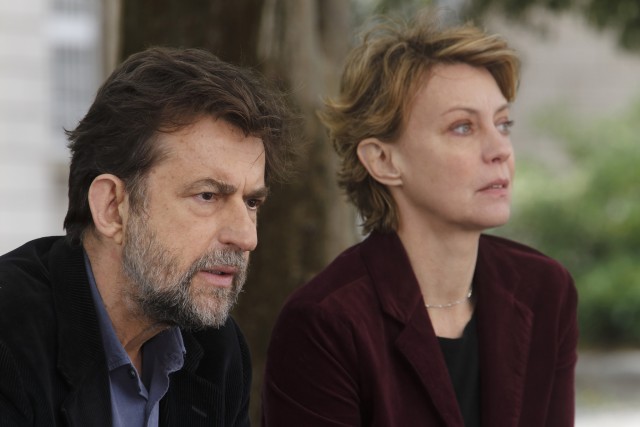
Captain Bonassieu (Jérémie Renier) keeps losing men in mysterious ways in metaphysical thriller

NEITHER HEAVEN NOR EARTH (NI LE CIEL NI LA TERRE) (THE WAKHAN FRONT) (Clément Cogitore, 2015)
Film Society of Lincoln Center, Elinor Bunin Munroe Film Center, Howard Gilman Theater
144 West 65th St. between Eighth Ave. & Broadway
Opens Friday, August 5
212-875-5050
www.filmlinc.org
www.filmmovement.com

In his photographs, short films (both fiction and documentary), and installations, Alsace-born visual artist Clément Cogitore explores different aspects of faith and ritual, focusing on the nature of the image of the sacred, in nonreligious terms. In his feature-length debut, the existential war thriller Neither Heaven nor Earth, Cogitore breaks through the boundaries of conventional Hollywood storytelling, incorporating several genres as he challenges viewers’ expectations of the sacred ritual that is watching movies. In the mountainous Wakhan Corridor in Afghanistan in 2014, a troop of French soldiers is defending a small village from the Taliban. They are stationed in the middle of nowhere, a vast, empty landscape that ends up serving as a kind of way station that is, as the title states, neither heaven nor earth. At first, the company’s dog goes missing, followed by two of the soldiers. Captain Bonassieu (Jérémie Renier) assumes that the Taliban, led by a nearby tribal leader known as the Sultan (Hamid Reza Javdan), has taken the men hostage and so he insists on their release. But when the Taliban claims that it doesn’t have the men but in fact argues that the French are taking their men, it becomes apparent that something else is going on in the valley, something that cannot be explained — but that doesn’t stop either side from taking up arms and continuing the battle. When the French encounter a young boy (Yashar Vah) who seems to know something about the disappearances, they ask him when men began vanishing. “When the soldiers came?” translator Khalil Khan (Sâm Mirhosseini) says. “No, long before,” the boy answers.

Cogitore, who lives and works in Paris and Strasbourg, transcends the traditional war drama in Neither Heaven nor Earth even as he includes such standard genre elements as a soldier (Kevin Azaïs) too frightened to shoot back at the enemy, dealing with cowardice and a wife (Chloé Astor) back home who is about to give birth; a captain determined to do whatever it takes to get back his men; evening maneuvers shot through night vision goggles; and military commanders who insist on facts, not folklore, but he tweaks them to forward this metaphysical journey that borders on the horror film. Cogitore inserts several scenes that incorporate rituals, from the sacrificing of sheep to a priest who arrives to read passages from the Bible. At one point, a shirtless soldier dances wildly in front of speakers blasting techno music; on his back is a tattoo of a large pair of eyes, staring back at the rest of the company, suspicious of what is going on, unable to see ahead of them. Renier (Saint Laurent, My Way), who was nominated for Lumières and Magritte Awards for his performance, is gritty and intense as Bonassieu, an army captain unable to accept what he is seeing, evoking Gene Hackman as surveillance expert Harry Caul in Francis Ford Coppola’s The Conversation, a man who lets paranoia overwhelm him. Through it all, Cogitore maintains an intriguing subtlety that keeps viewers guessing not only what is happening onscreen but also wondering about the futility of war in general.

SUMMER STREETS 2016

Giant slide is a highlight of Summer Streets program on Saturday mornings in August (photo by twi-ny/ees)

Giant slide is a highlight of Summer Streets program on first three Saturday mornings in August (photo by twi-ny/ees)

Park Ave. & 72nd St. to Foley Square
Saturday, August 6, 13, 20, free, 7:00 am – 1:00 pm
www.nyc.gov

Now in its seventh year, Summer Streets takes place the next three Saturday mornings, as Park Ave. will be closed to vehicular traffic from 72nd St. to Foley Square and the Brooklyn Bridge from 7:00 am to 1:00 pm, encouraging people to walk, run, jog, blade, skate, slide, and bike down the famous thoroughfare, getting exercise and enjoying the great outdoors without car exhaust, speeding taxis, and slow-moving buses. There are five rest stops along the route (Uptown at 52nd St., Midtown at 25th, Astor Pl. at Lafayette St., SoHo at Spring & Lafayette, and Foley Square at Duane & Centre), where people can stop for some food and drink, live performances, fitness classes, site-specific art installations, dog walks, bicycle workshops, and other activities, all of which are free. Below are some of the highlights.

Foley Square Rest Stop
Beachside Slide (advance preregistration required,) Adaptive Obstacle Challenge, “On Display / CitiSummerStreets” living sculpture by Heidi Latsky, “M2B, Beijing-New York” mobile bike sculpture by Niko de la Fey, historical reenactors, Department of Design and Construction: The Art and Construction of NYC’s Water Supply, Bronx Museum of the Arts workshop (August 20)

SoHo Rest Stop
Fitness classes, free bike repair and rentals, parkour fitness demonstrations, Museum of Chinese in America “Dragon Boat Crown Making” (August 6 & 20), Storefront for Art and Architecture “Manhattanisms” (August 13)

Astor Place Rest Stop
“Make It Here” interactive programs (athletics, social media vending machines, fashion showcases, Paws and Play Dog Park, “Los Trompos (Spinning Tops)” by Hector Esrawe and Ignacio Cadena

Midtown Rest Stop
A Taste of Summer Sampling Zone, Kid Bike Park, pop-up yoga, hand-cycle demonstration, helmet fittings, free bike rentals and repair, “GrowNYC Zero Waste Programs,” live dance, theater, and musical performances

August 6
Connor Larkin, Kelly Wright, the Other Brothers, Moondrunk

August 13
JHEVERE, Phone Home, Music with a Message, Evolfo

August 20
Orin Kurtz, Backtrack Vocals, Darrah Carr Dance, Drew and Joanne

Uptown Rest Stop
DOT Safety Zone, Zipline, “Unlimited NYC” athletics, Hallmark “Sounds of Shore” installation, “Make It Here” interactive programs (live performances, food tastings, sharing love stories), bike art party, Municipal Art Society tours, tai chi, Museum of the City of New York’s “Pushing Buttons: NYC Activism”

August 6
American Folk Art Museum’s “Families & Folk Art,” Publicolor’s “Color and Creativity, Sirens of Gotham, Receta Secreta, the Afro-Latineers, Robert Anderson Band, Stiletta, Washington Square Winds, Society of Illustrators’ “Draw and Groove Party,” Materials for the Arts’ “Found Object Flowers”

August 13
Risa Puno’s interactive “Win or Lose” game, ArchForKids’ “The Big Build,” Design Trust for Public Space’s “Under the Elevated,” National Museum of the American Indian’s “Inspired by Native/Indigenous Design,” Taliah Lempert’s “Street Smart Bike Art,” BumbleBee Jamboree, DreamStreet Theatre Company, Niall O’Leary School of Irish Dance, City Stompers, dancing classrooms

August 20
National Museum of the American Indian’s “Inspired by Native/Indigenous Design,” Taliah Lempert’s “Street Smart Bike Art,” “Poets House Imagination Station,” Art Gowanus workshop, Groundswell’s “Visualize Your Artist Skills,” New York Violinist Susan Keser, Opera Collective, Art of Stepping, Exit 12 Dance Group

COUNTRY BRUNCHIN’: THE GOOD, THE BAD AND THE UGLY

Clint Eastwood is the Good in classic Sergio Leone operatic oater

NITEHAWK BRUNCH SCREENINGS: THE GOOD, THE BAD AND THE UGLY (Sergio Leone, 1966)
Nitehawk Cinema
136 Metropolitan Ave. between Berry St. & Wythe Ave.
August 6-7, 11:00 am
718-384-3980
www.nitehawkcinema.com

One of the all-time-great spaghetti Westerns, Sergio Leone’s dusty three-hour operatic oater stars Clint Eastwood as the Good (Blondie), Lee Van Cleef as the Bad (Angel Eyes), and Eli Wallach as the Ugly (Tuco Benedicto Pacifico Juan Maria Ramirez, whose list of criminal offenses is a riot), three unique individuals after $200,000 in Confederate gold buried in a cemetery in the middle of nowhere. Nearly twenty minutes of never-before-seen footage was added to the film several years ago, with Wallach and Eastwood overdubbing brand-new dialogue, so if you haven’t seen it in a while, it might just be time to catch it again. Ennio Morricone’s unforgettable score and Torino delli Colli’s gorgeous widescreen cinematography were also marvelously enhanced; their work in the scene when Tuco first comes upon the graveyard will make you dizzy with delight. And then comes one of the greatest finales in cinema history. The Good, the Bad and the Ugly is screening at Nitehawk Cinema on August 6 & 7 at eleven in the morning in the dual series “Nitehawk Brunch Screenings” and “Country Brunchin’” (will spaghetti be on the menu?) and will kick off with a set by Arthur Vint & Associates, led by Arizona-born, Brooklyn-based drummer Vint; the group’s debut album, Through the Badlands, came out in January, mixing jazz, rock, and Native American spiritual music. “Nitehawk Brunch Screenings” continues in August with such other films as Gillian Robespierre’s Obvious Child, Richard Donner’s The Goonies, and Susan Seidelman’s She-Devil, among others.

THE SEEING PLACE THEATER: GETTING OUT / RHINOCEROS

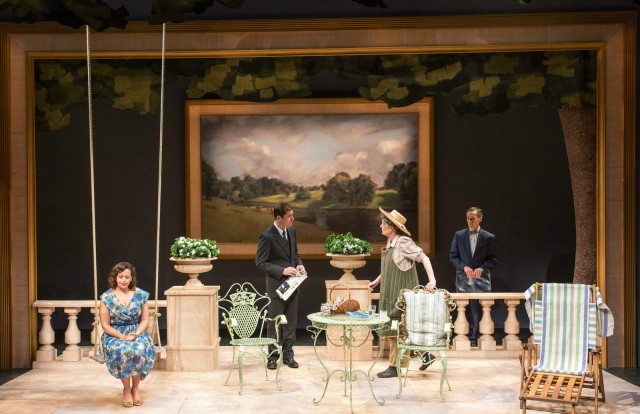
The Seeing Place Theater is presenting RHINOCEROS, above, with Marsha Normans GETTING OUT at the Lynn Redgrave Theater

The Seeing Place Theater is presenting Eugène Ionesco’s RHINOCEROS, above, in repertory with Marsha Norman’s GETTING OUT at the Lynn Redgrave Theater

The Seeing Place @ the Lynn Redgrave Theater
45 Bleecker St. at Lafayette St.
Through August 7, $15
www.seeingplacetheater.com

The actor-driven Seeing Place Theater, whose name is the English translation of the Greek word theatron, continues its presentation of two very different works through this weekend as part of its “But Who Am I, Really” season. The company’s seventh season consists of Pulitzer Prize winner Marsha Norman’s Louisville-set debut play, 1978’s Getting Out, and Romanian-French absurdist Eugène Ionesco’s 1959 classic, Rhinoceros. The former follows a Kentucky woman trying to put her life back together after being released from prison, while the latter deals with a French villager recovering from a hangover as rhinos start stampeding all around him. Getting Out is directed by TSP founding managing director Erin Cronican, who also stars as Arlene, while Rhinoceros is directed by TSP founding artistic director Brandon Walker, who plays Berenger. “The more we’ve explored these plays as a pair the more we’ve noticed the profound amount of conformity society demands of us in order to keep us ‘civilized,’” Walker explained in a statement. “In both plays our central protagonist is faced with a fateful opportunity to step into a new reality, but who really makes this choice — the individual or society?” TSP has previously staged productions of such works as Macbeth, Hamlet, Othello, Martin McDonagh’s The Pillowman, Johnna Adams’s Gidion’s Knot, Lee Blessing’s Two Rooms, and Harold Pinter’s The Lover.

MARTIN CREED: THE BACK DOOR / UNDERSTANDING

(photo by twi-ny/mdr)

A piano makes a different kind of music in “Martin Creed: The Back Door,” at the Park Ave. Armory through August 7 (photo by twi-ny/mdr)

THE BACK DOOR
Park Ave. Armory
643 Park Ave. between 66th & 67th Sts.
Through August 7, $15 (free with IDNYC card)
212-933-5812
www.armoryonpark.org
www.martincreed.com

UNDERSTANDING
Pier 6, Brooklyn Bridge Park
Through October 23, free, 6:00 am – 11:00 pm
www.publicartfund.org
understanding slideshow

Upon going through the front door of the Park Ave. Armory and entering the lobby to see “Martin Creed: The Back Door,” visitors are greeted by Creed’s recent music video “Understanding,” which features the multidisciplinary British artist playing multiple characters. “We were arguing / And I was saying, ‘I’m a victim’ / And you were saying, ‘I’m a victim’ / And I was saying, ‘I’m a victim,’” Creed sings to a bouncy pop tune. Meanwhile, to the right, a vertical white neon sculpture hangs from the ceiling, slowly turning, with the word “Other” on one side and “People” on the reverse. The pair of works serves as an excellent introduction to Creed, who over the course of his thirty-year career has worn numerous hats (and hairstyles), building an oeuvre that includes painting, sculpture, film, installation, music recordings, performance, and more that challenge the status quo and call into question political and social convention around the world. Given full rein in the first floor of the historic armory, Creed and big-time curators Tom Eccles and Hans-Ulrich Obrist have created a masterful display, emphasizing Creed’s wide diversity and whimsical nature. Doors and curtains open and close, lights go on and off, an object partially blocks entrance to a space, and a piano isn’t used quite as expected. A marching band leads a small procession, an abandoned bar invites curiosity, and short films show people puking, defecating, and, despite physical disabilities, crossing a New York City street without canes, crutches, walkers, or wheelchairs. One room is half-filled with balloons, while another features a wall of abstract portraits that call to mind the dignified paintings of military men that can be found throughout the armory; Creed’s sensibility so takes over that you might find yourself wondering whether certain of the military portraits aren’t pranks made by Creed. In the library, Creed has surreptitiously placed objects in the cabinets that display historical artifacts, exploring the very nature of labels and identification. Also in the library are small vitrines that contain exactly what their names explain they are or where they are: “Work No. 218: A sheet of paper crumpled into a ball,” “Work No. 158: Something on the left, just as you come in, not too high or low,” and “Work No. 74: As many 1″ squares as are necessary cut from 1″ masking tape and piled up, adhesive sides down, to form a 1″ cubic stack.”

(photo by twi-ny/mdr)

Martin Creed’s “Work No. 2497: Half the air in a given space” allows visitors to play in a room half-filled with white balloons (photo by twi-ny/mdr)

In the Wade Thompson Drill Hall, Creed projects his “Mouth” series onto a massive screen, short videos of people (including his mother) chewing, followed by a surprise at the back of the hall that references, among other things, what eventually happens after one eats. In the bunkers to the side, eighteen of Creed’s videos are on constant loop in different spaces, including “Let Them In” and “Border Control,” which deal with immigration and basic human rights; “Flower Kicking,” in which a man kicks a plant as if it were a soccer ball; the romantic “You’re the One for Me,” in which Creed frolics on a beach and in the ocean; and “Fuck Off,” eighty-one seconds of Creed screaming the title words. “Martin Creed: The Back Door” is an endlessly inventive intervention that confirms once again that the armory is one of the city’s most unusual and exciting places to see exhibitions that can’t be held anywhere else. (On Thursday and Friday nights, the exhibition is open till 10:00, with a bar in one of the period rooms.)

(photo by twi-ny/mdr)

Martin Creed asks for “Understanding” in Brooklyn Bridge Park (photo by twi-ny/mdr)

In a companion piece in Brooklyn Bridge Park, the Turner Prize-winning Creed, who was born in England, raised in Glasgow, and currently lives and works in London, has installed a giant revolving neon sign that very simply declares, “Understanding.” The ten-foot-tall letters, which sit atop a fifty-foot-long steel I-beam, spin around at varying speeds, sometimes coming to a brief stop, giving viewers a chance to reflect on the meaning of the word, whether seen frontward or backward. The kinetic sculpture, a project of the Public Art Fund, is visible from far away, mimicking an advertising sign, or can be viewed up close and personal, with steps that allow you to walk right up to it. As with most of Creed’s works, “Understanding” succeeds on numerous levels, particularly in a world torn apart by xenophobia, racism, hatred, and war. It is also the name of Creed’s most recent single and video, which, as noted above, can be seen in “The Back Door” (and here) and deals with victimhood. (“Understanding” can be found on Creed’s latest album, Thoughts Lined Up, which also includes such songs as “I’m Going to Do Something Soon,” “Everybody Needs Someone to Hate,” “Let’s Come to an Arrangement,” and “Difficult Thoughts.”) In addition, Lower Manhattan is visible through the letters and across the East River, where One World Trade Center has risen in the ashes of the Twin Towers. “Understanding” might seem somewhat quaint and obvious, but that’s part of the point, another thought-provoking work from an iconoclastic virtuoso who is finally getting his due.