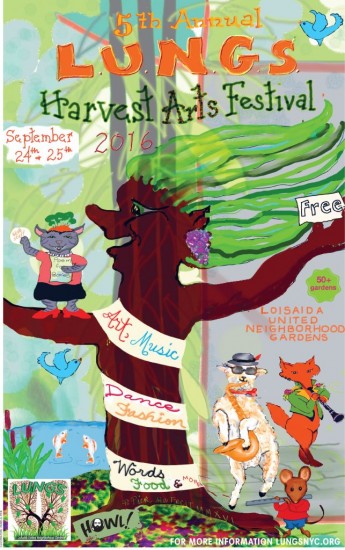
Multiple community gardens on the Lower East Side
Saturday, September 24, and Sunday, September 25, free
www.lungsnyc.org
More than fifty community gardens on the Lower East Side are participating in the fifth annual LUNGS (Loisaida United Neighborhood Gardens) Harvest Festival, a weekend of free special events, including music, dance, film screenings, walking tours, workshops, art, poetry, karaoke, meditation, and more. Below are only some of the recommended events for Saturday and Sunday; there are also activities at the M’Finda Kalunga Garden, Fireman’s Garden, Liz Christy Garden, Secret Garden, El Sol Brillante, Doroty Strelsin Suffolk St. Garden, East Side Outside Garden, Umbrella House Rooftop Garden, Creative Little Garden, Lower East Side People Care Garden, Kenkeleba House Garden, Children’s Magical Garden, Green Oasis, Elizabeth St. Garden, Toyota Children’s Garden, Sam & Sadie Koenig Garden, and many others. The festival is a great way to become familiar with and support these small gems that can be found all over the Lower East Side.
Saturday, September 24
Permaculture tour with Ross Martin and Marga Snyder, La Plaza Cultural, Ave. C at Ninth St., 12 noon
Live music with Elizabeth Ruf, Ben Cauley, Avon Faire, Tammy Faye Starlight, Witch Camp with Amber Martin & Nath-Ann Carrera, Salley May, and Val Kinzler, DeColores Garden, East Eighth St. between Aves. B & C, 1:00 – 5:00
Guided meditation, with Matthew Caban and Jaquay Saintil, the Lower East Side People Care Garden, Rutgers St. between Henry and Madison Sts., 2:00
Collaborative poetry workshop with Rhoma Mostel, La Guardia Corner Gardens, Bleecker & Houston Sts., 3:00
“The Bride” performance piece by Theresa Byrnes, La Plaza Cultural, Ave. C at Ninth St., 4:00
Dance performance with Heidi Henderson and students from Connecticut College, Kizuna Dance, John Gutierrez, Sheep Meadow Dance Theater, Rina Espiritu, Lauren Kravitz, and Shantel Prado, Cornfield Dance, Rod Rodgers Teen Dancers, El Jardín del Paraíso, Fourth St. between Aves. C & D, 4:00
Dimensions of Ecology panel discussion, with Stuart Losee, Felicia Young, Anna Fitzgerald, and Chloe Rosetti, La Plaza Cultural, Ave. C at Ninth St., 5:00
Sunday, September 25
Pysanky workshop: How to Make Ukrainian Easter Eggs, with Anna Sawaryn, 6B Garden, Ave. B at Sixth St., 11:00 am – 2:00 pm
“Garbagia Island” Creatures Performance and Fashion Show, El Jardín del Paraíso, Fourth St. between Aves. C & D, 1:00
Vangeline Theater’s “Wake Up and Smell the Coffee,” contemporary Butoh dance, El Jardín del Paraíso, Fourth St. between Aves. C & D, 2:00
“Garden to Table Nutrition,” with Vanessa Berenstein, La Guardia Corner Gardens, Bleecker & Houston Sts., 3:00
Fountain installation: “Jeux d’Eaux” by Nicholas Vargelis, Le Petit Versailles, Second St. between Aves. B & C, 4:00
Laughter Yoga, with Sara Jones, La Guardia Corner Gardens, Bleecker & Houston Sts., 5:00
Photography show: George Hirose’s “Midnight in the Garden,” Campos Garden, Twelfth St. between Aves. B & C, 6:30
Dance party with Ray Santiago Band, Campos Garden, Twelfth St. between Aves. B & C, 7:30-9:30
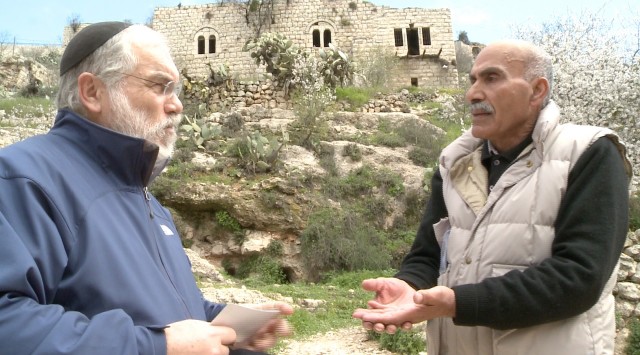
 Menachem Daum and Oren Rudavsky’s The Ruins of Lifta: Where the Holocaust and Nakba Meet is built on a faulty premise, but the film still manages to be a rather provocative and intriguing documentary. In their previous collaboration, Hiding and Seeking: Faith and Tolerance after the Holocaust, Rudavsky and Daum examined Daum’s relationship with his parents, Polish Jews who survived the Holocaust and taught Daum to distrust all non-Jews. Their latest film takes viewers to Lifta, the historic but now crumbling Palestinian village at the western entrance to Jerusalem that was abandoned during the 1948 war and has never been resettled by Palestinians or taken over by Israelis. A recent plan calls for it to be razed in order to make way for luxury villas. “Its ruins bear witness to the history of the Israeli-Palestinian conflict,” Daum, an Orthodox Jew, says about the village. “The story told by Lifta’s ruins challenges the narrative that I, the son of Holocaust survivors, believed in for most of my life.” Daum meets with members of the Coalition to Save Lifta, a small group of Jews and Palestinians, including cofounder Daphna Golan, Ilan Shatyer, and Yacoub Odeh. Daum also speaks with historians Benny Morris and Hillel Cohen and Palestinian lawyer Sami Arshid, who offer different perspectives on the conflict.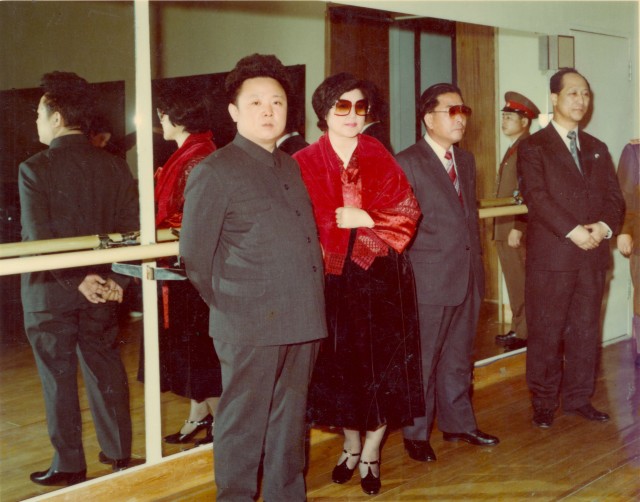
 In 1978, desperate to become an important international film producer, Kim Jong-il, son of North Korean supreme leader Kim Il-sung, kidnapped popular South Korean actress Choi Eun-hee and her ex-husband, director Shin Sang-ok. For the next several years, they made seventeen pictures together in totalitarian North Korea. Kim gave them complete artistic freedom while also manipulating them, trying to inject the films with propaganda that was favorable to North Korea while denigrating South Korea. “Let’s show the West what we are capable of,” Kim explains to Shin. This incredible story is told in the superb and exciting documentary The Lovers and the Despot, which plays out like a gripping thriller in the style of Argo, and it’s all true — although questions still abound all these years later. Together, Choi and Shin had made such award-winning films as A Flower in Hell, The Houseguest and My Mother, and Red Scarf. After their abduction, they experienced a kind of love-hate relationship with Kim, who became supreme leader in 1994. “I thought they were going to kill me,” Choi, now eighty-nine, says in the film. But she also notes, “It was one of the happiest times of my life.” The main controversy has always centered around whether Shin and Choi willingly became part of Kim’s propaganda machine or were merely just trying to stay alive, making the movies even as they plotted escape attempts. Shin and Choi secretly tape recorded hours of conversations between the two men, who appear to develop a real friendship. “In a way, we really hit it off. When he meets me, he leaves his guards outside. He completely adores me. There’s no way I can betray him,” Shin says on the tapes. But later he adds, “Whatever it takes I have to get out of here.”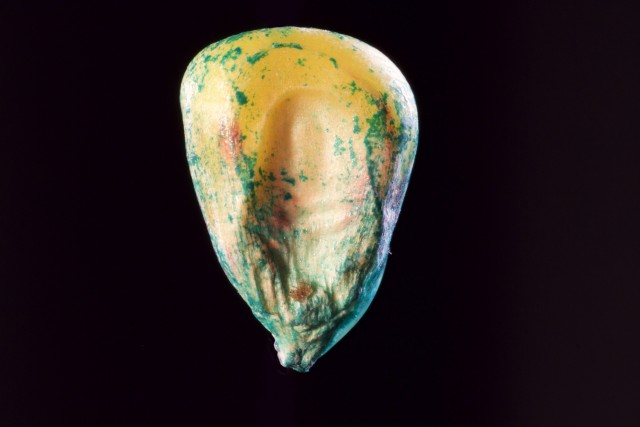
 “We’re fooling with Mother Nature,” Montana organic wheat farmer and U.S. senator Jon Tester says in Seed: The Untold Story, a crunchy activist documentary opening September 23 at Cinema Village. Produced, directed, and edited by Jon Betz and Taggart Siegel, the film focuses on how ninety-four percent of vegetable seed varieties have disappeared over the last hundred years and how farming communities around the world are now trying to save and protect seeds while battling the government and such chemical companies as Monsanto. The facts are staggering; the number of varieties of cabbage has gone from 544 to 28, beets 288 to 17, cauliflower 158 to 9, artichokes 34 to 2, and asparagus 46 to 1. Betz and Siegel, who previously collaborated on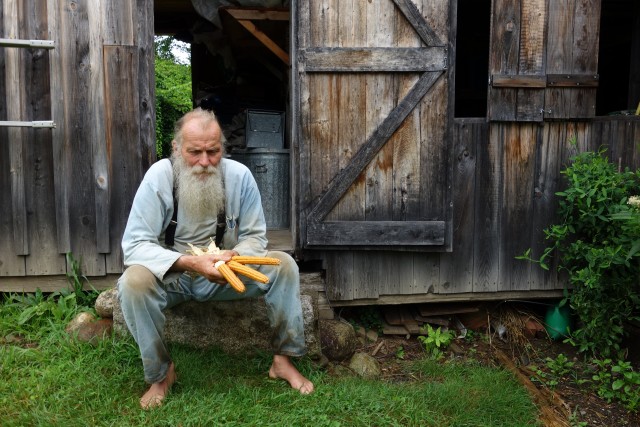
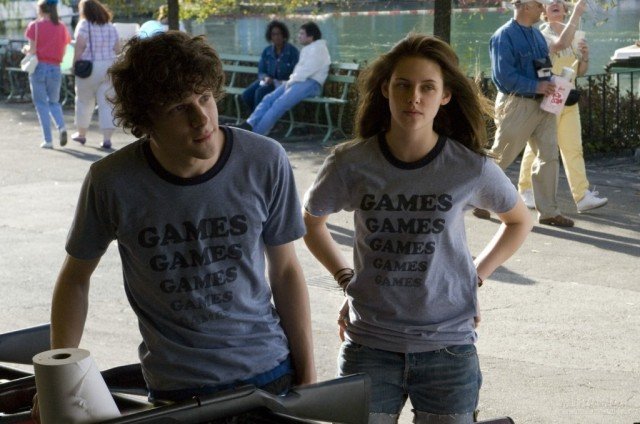
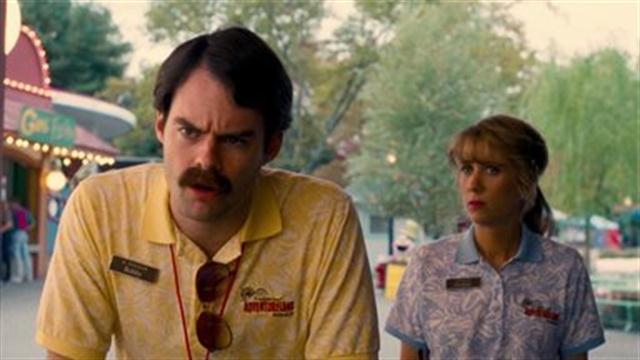
 When we were kids, it was always a treat when our parents packed us in the car and took us to Adventureland, a small amusement park in Farmingdale, Long Island. It wasn’t quite the same treat for writer-director Greg Mottola, who documents one summer he spent working as a carny there in the sweet coming-of-age comedy Adventureland, an underappreciated gem from last decade. Jesse Eisenberg stars as Mottola’s alter ego, James Brennan, a college grad in 1987 who is planning on traveling through Europe before starting grad school at Columbia — until his parents take a serious financial hit, forcing him to spend the summer working at the local amusement park in Pittsburgh called Adventureland. (Mottola had wanted to shoot the film in the actual Long Island location but found that the current state of Adventureland was too upscale compared to the one he remembers, so he found a more suitable cinematic park.) James is a hyperintellectual virgin who is waiting for true love, and he thinks he might have found it in fellow carny Em Lewin (Kristen Stewart). However, he doesn’t know that Em is also a booty call for the older Mike Connell (Ryan Reynolds), the hot maintenance man whose legendary claim to fame is that he once jammed with Lou Reed. Meanwhile, the amusement park’s hot-to-trot Lisa P. (Margarita Levieva) has returned, and she might be considering trying out a nice guy like James instead of her usual tough dudes.