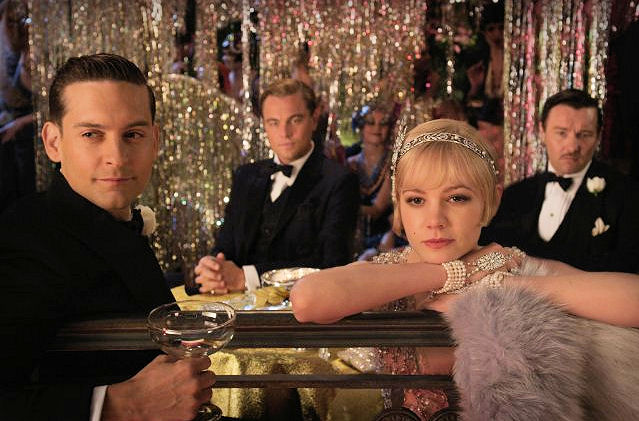
Nick (Tobey Maguire), Jay (Leonardo DiCaprio), Daisy (Carey Mulligan), and Tom (Joel Edgerton) are caught up in matters of the heart in THE GREAT GATSBY
THE GREAT GATSBY (Baz Luhrmann, 2013)
Film Forum
209 West Houston St.
Wednesday, November 16, 4:10; Saturday, November 19, 5:10; Monday, November 21, 12:30
Series runs November 11-29
212-727-8110
filmforum.org
www.thegreatgatsby.warnerbros.com
 Baz Luhrmann’s sumptuous version of The Great Gatsby is a dazzling reimagining of F. Scott Fitzgerald’s 1925 novel of old and new money and the American dream. The Australian director and his wife, costume and production designer extraordinaire Catherine Martin, have turned the classic tale into a lush spectacle without losing focus on the main story of life and love during the Roaring Twenties. Leonardo DiCaprio, who played the male lead in Lurhmann’s contemporary take on Romeo + Juliet, is superb as Jay Gatsby, the mystery man previously portrayed by Warner Baxter in 1926, Alan Ladd in 1949, Robert Redford in 1974, and Toby Stephens in 2000, adding a compelling level of vulnerability to the character. Gatsby has built a magnificent palace for himself on Long Island, hosting wild parties that he doesn’t care about; all he truly wants is Daisy (Carey Mulligan), a former love who has married successful businessman Tom Buchanan (Joel Edgerton) and lives in a mansion right across the bay. The villainous Tom is having an affair with the lower-class Myrtle Wilson (Isla Fisher), whose unaware husband, George (Jason Clarke), runs a gas station and garage in the Valley of Ashes. Although a loner, Gatsby befriends his neighbor, Nick Carraway (Tobey Maguire), a young, innocent bond trader who rents a modest home at the base of Gatsby’s enormous estate and whose cousin just happens to be Daisy. As Carraway is sucked into this glamorous, debauched society, which also includes wild and elegant golf champion Jordan Baker (Elizabeth Debicki), he is forced to reexamine his own hopes and dreams as he tries to find his place in the world.
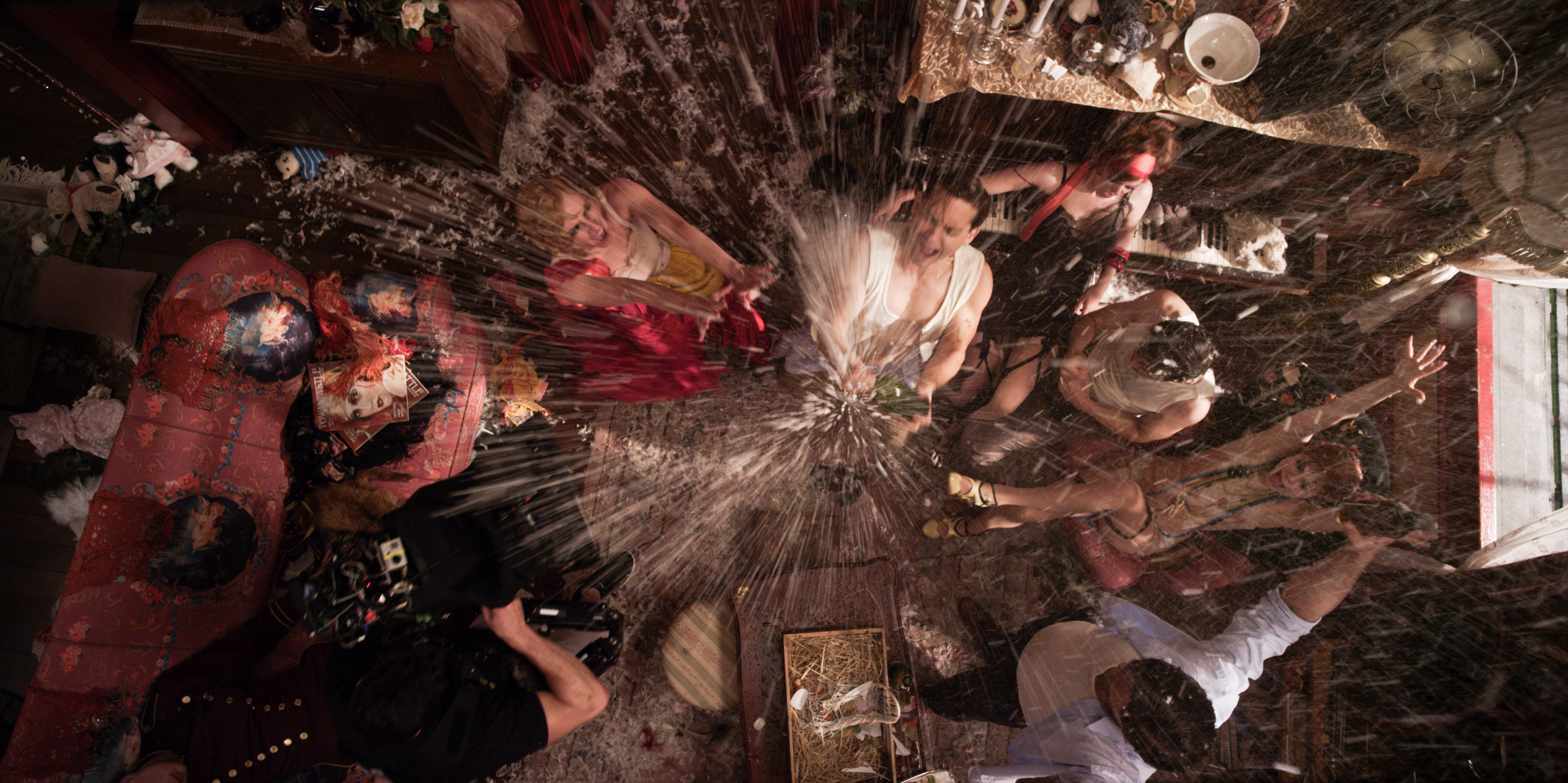
Baz Luhrmann throws one helluva party in his reimagining of THE GREAT GATSBY
Luhrmann and cowriter Craig Pearce have framed the tale by putting Carraway, the narrator of the book and film, in a sanitarium, where a doctor (Jack Thompson) convinces him that writing down what happened with Gatsby will help him overcome his alcoholism and depression; the device, which is not part of the novel, is based on Fitzgerald’s own time spent in a sanitarium. Luhrmann and Pearce, who did extensive research for the project, also include elements from Fitzgerald’s Trimalchio, the first draft of The Great Gatsby, which will certainly anger purists. Purists are also likely to be furious at the soundtrack, which features songs by Jay Z (one of the film’s producers), his wife, Beyoncé, André 3000, will.i.am, Lana Del Rey, Gotye, and the xx alongside Jazz Age re-creations by the Bryan Ferry Orchestra of Beyoncé’s “Crazy in Love” and Roxy Music’s “Love Is the Drug.” But this is not your high school English teacher’s Gatsby; instead, it’s F. Scott Fitzgerald for the twenty-first century, not meant to be seen through the billboard spectacles of oculist Dr. T. J. Eckleburg but through 3-D glasses that invite viewers into the oh-so-fashionable goings-on in eye-popping ways. “Is all this made entirely from your own imagination?” Daisy asks Gatsby at one point. In this case, it’s made from the minds of two wildly inventive men, Luhrmann and Fitzgerald, who together throw one helluva party. Winner of two Academy Awards, for Best Costume Design (Catherine Martin) and Best Production Design (Martin and Beverley Dunn), The Great Gatsby is screening November 16, 19, and 21 in “3-D Auteurs,” which runs November 11-29 at Film Forum and consists of approximately three dozen 3-D feature films and shorts, including Jean-Luc Godard’s Goodbye to Language, Werner Herzog’s Cave of Forgotten Dreams, Takashi Miike’s Hara Kiri: Death of a Samurai, Alfred Hitchcock’s Dial M for Murder, Jack Arnold’s Creature from the Black Lagoon, Three Stooges and Méliès shorts, and the wacky double feature of Johnnie To’s Office and George Sidney’s Kiss Me Kate.

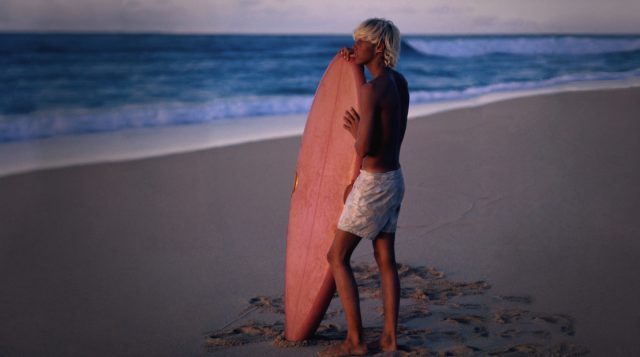
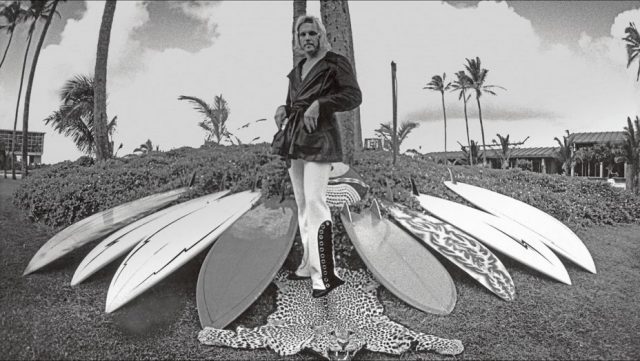
 Former Japanese national surfing champion Takuji Masuda documents the wild life and times of sugar scion Bunker Spreckels in the bumpy, oddly titled Bunker77, which is having its New York City premiere November 16 and 17 at the DOC NYC festival. Born in Los Angeles in 1949, Spreckels is described in the film by friends and relatives as “radical,” “original,” “unique,” “dangerous,” and “fun,” a blond beach bum and party lover who rode waves around the world with his specially made short boards. “That was his international persona: the hunter, the surfer, the playboy, the jet-setter, the martial artist, all in one,” skateboard legend Tony Alva says of his friend and mentor. Spreckels’s grandfather, Adolph B. Spreckels, ran the Spreckels Sugar Company and, with his wife, Alma, helped develop the cities of San Francisco and San Diego. After Spreckels’s parents, Adolph B. Spreckels II and former actress Kay Williams, divorced, his mother married Clark Gable, who helped raise Bunker and his sister, Joan, for five years. Bunker always did things his own way, but his life spiraled out of control once he turned twenty-one and gained access to his multimillion-dollar trust fund, caught up in a storm of drugs, alcohol and women. He tried to become a rock star and a screen idol while skateboarding and surfing in California, Hawai’i, Australia, and South Africa. His story is told by such surfing legends as Laird Hamilton, Vinny Bryan, Bill Hamilton, Rory Russell, Nat Young, Herbie Fletcher, Spyder Wills, and Wayne Bartholomew; childhood friends Curtis Allen (son of cowboy movie star Rex Allen) and Ira Opper; Surfer magazine photographer Art Brewer, associate editor Kurt Ledterman, chief editor Drew Kampion, and publisher Steve Pezman; longtime girlfriend Ellie Silva; and journalist C. R. Steyck III, whose extensive interview with Spreckels near the end of his life is sprinkled throughout the documentary. Masuda also includes home movies, photographs, relevant clips from Gable films, and scenes from 2005’s Lords of Dogtown, in which Johnny Knoxville plays Topper Burks, who is based on Spreckels, and 1961’s Blue Hawaii, in which Elvis Presley plays a character eerily similar to Bunker. “You can definitely have too much fun with too much money,” Bartholomew says, while Steyck adds, “He was a dangerous man, mainly dangerous to himself.”