Congregation Kol Israel
603 St. Johns Pl. at Franklin Ave.
Sunday, November 13, Bagel one-day pass $15, 9:00 am – 6:30 pm, Challah preview pass (includes Saturday night), $20
jewishcomiccon.org
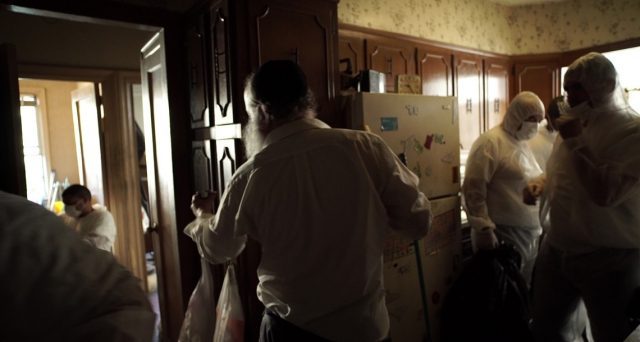
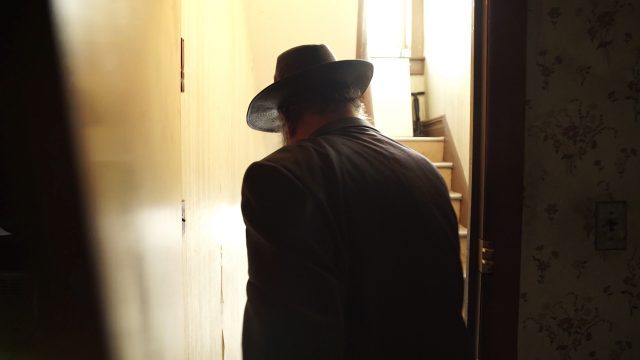
Many of the greatest comic book artists are Jewish, so it was only a matter of time before someone started Jewish Comic Con, making its debut Sunday, November 13, preceded by a preview night November 12 (with a live auction and a dramatic reading by Jeff Newelt aka JahFurry of work by Harvey Pekar). The con announces that it is “celebrating our comic book legacy,” and what a legacy it is. Started by Fred Polaniecki and Fabrice Sapolsky, the event takes place in Congregation Kol Israel, the oldest continuously running Orthodox synagogue in Brooklyn. All proceeds will go to restoring and preserving the historic landmark, which was built in 1924. Among the guests are Dean Haspiel, Josh Neufeld, Danny Fingeroth, Ariel Schrag, Arie Kaplan, Gareb Shamus, Joshua H. Stulman, Jordan Gorfinkel, and Will Torres. Advance passes are sold out, but limited tickets will be available at the door on a first-come, first-served basis. There will be kosher food for purchase, and, since this is a working shul, the morning service will be held at 8:00 and the afternoon service at 4:00. Although you are encouraged to come in costume, it is a synagogue, so the organizers ask that you be respectful and tone down the sex and violence. Below are the special programs.
Heroes & Faith, with Darren Vincenzo, Rabbi Cary Friedman, and others, moderated by Jordan Gorfinkel, 9:00 am
Eisner, Kirby, Siegel, Etc.: The Jewish Roots of Comics, with Julian Voloj and others, moderated by Arie Kaplan and/or Danny Fingeroth, 10:00
Spotlight on Mort Gerberg, with Mort Gerberg, moderated by Danny Fingeroth, 11:00 am
Breaking into Comics the Chutzpah Way!, with Danny Fingeroth, Dean Haspiel, and Fabrice Sapolsky, moderated by Arie Kaplan, 12 noon
The Mezuzah on the Batcave Door: Jewish Elements of Batman, with Jordan Gorfinkel and Sholly Fisch, moderated by Arie Kaplan and/or Danny Fingeroth, 1:30
Indie Voices: Past, Present & Future, with Ariel Schrag, Dean Haspiel, and Josh Neufeld, moderated by Arie Kaplan and/or Danny Fingeroth, 2:30
Jewish Heroes & Villains, with Greg Pak and Fabrice Sapolsky, moderated by Arie Kaplan and/or Danny Fingeroth, 4:30
Cartoonists Against the Holocaust, with Craig Yoe and Rafael Medoff, illustrated panel discussion and Q&A, 5:30
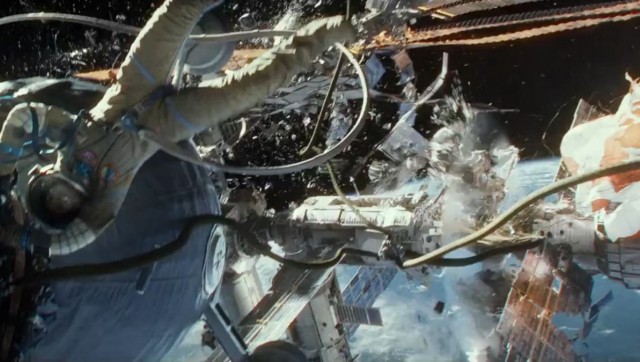
 Alfonso Cuarón’s Gravity is a breathtaking thriller that instantly enters the pantheon of such classic space fare as 2001: A Space Odyssey, Alien, and The Right Stuff. And if you haven’t seen it in 3-D, how it’s being shown in the Film Forum series “3-D Auteurs” this month, well, you haven’t really seen it. While medical engineer Dr. Ryan Stone (Sandra Bullock) is fixing a computer glitch outside the shuttle Explorer, veteran astronaut and wisecracker Matt Kowalski (George Clooney), on his final mission before retirement, is playing around with a new jetpack and Shariff (voiced by Paul Sharma) is having fun going on a brief spacewalk. But disaster strikes when debris from a destroyed Russian satellite suddenly comes their way, killing Shariff and the rest of the crew and crippling the shuttle, leaving Stone and Kowalski on their own in deep space, their communication with Mission Control in Houston (voiced by Ed Harris, in a nod to his participation in Apollo 13 and The Right Stuff) gone as well. Kowalski is cool and calm, listening to country music as he tries to come up with a plan that will get them to the International Space Station, but the inexperienced Stone is running out of oxygen fast as she tumbles through the emptiness, Earth in the background, so close yet so far. Written by Cuarón (Y Tu Mamá También, Children of Men) with his son Jonás, Gravity is spectacularly photographed by Emmanuel Lubezki, the master behind numerous works by Cuarón and Terrence Malick (The New World, The Tree of Life), among others. Lubezki and his team even created a new LED light box to increase the film’s realism, which is nothing less than awe-inspiring and mind-bending as it takes place in real time. Despite the vastness of space, Gravity often feels claustrophobic, particularly as Stone struggles to get a breath or attempts to operate a foreign module.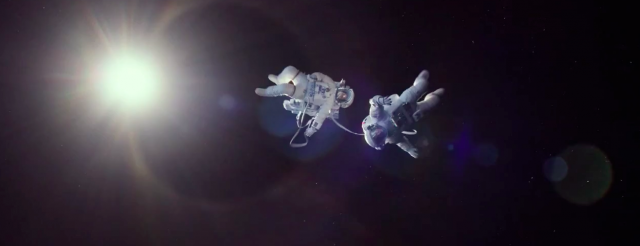
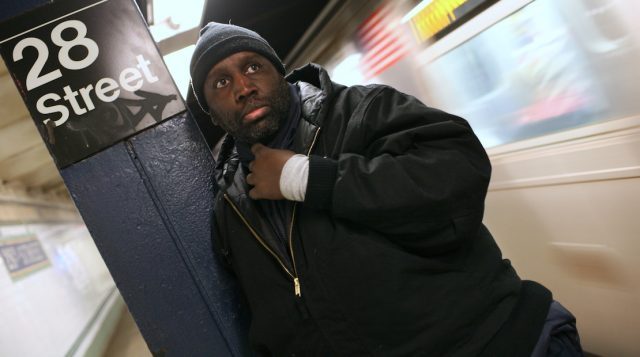
 Ever since he was a child, Darius McCollum has been obsessed with mass transit. But McCollum, who was born in Brooklyn and raised in Queens, is not just another train buff. He has spent the last thirty-five years in and out of jail, imprisoned for operating trains and buses in the metropolitan area. His surprising story is told in Adam Irving’s debut feature documentary, Off the Rails. “Over the years, I have operated trains in the New York City subway system, Metro-North, the Long Island Rail Road, New Jersey Transit, and yet, I have never ever been an employee of any of these agencies,” McCollum says at the beginning of the film while putting on an MTA uniform like it was official military dress. “I feel like I’m proud, I feel I’m worthy of something, I feel like I’m a part of something,” he said about being decked out in MTA garb. McCollum doesn’t simply take the trains and buses on joyrides but follows all MTA rules and procedures, which he knows inside out. “For Darius, it was for the joy of driving the train safely. All of his crimes were victimless, there were no crashes, he would safely make all of the stops, make the announcements,” says Jude Domski, who wrote the play Boy Steals Train about McCollum. Through first-person accounts, family photos, home movies, archival footage, reenactments, and animation, McCollum is revealed to be a sweet-natured mama’s boy who has Asperger’s syndrome. “I’m really good with trains, but I can’t seem to figure out people,” he says. “And it’s hard for me to tell what someone is thinking or feeling. I get confused in social situations. I have trouble making friends.” A large but gentle man, McCollum understands the consequences of his actions but is unable to prevent himself from hopping on board and taking over when the opportunity arises. Comparing himself to Superman, McCollum explains, “His weakness is Kryptonite; my weakness is the third rail.”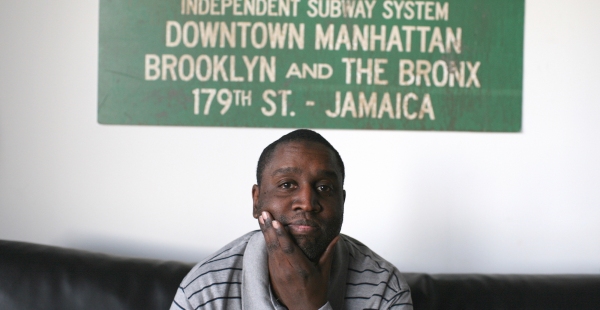
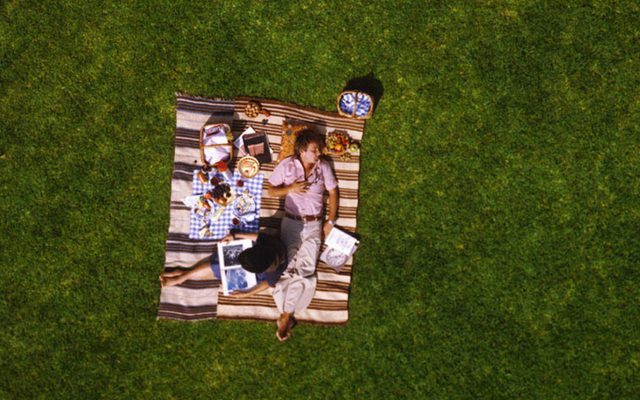
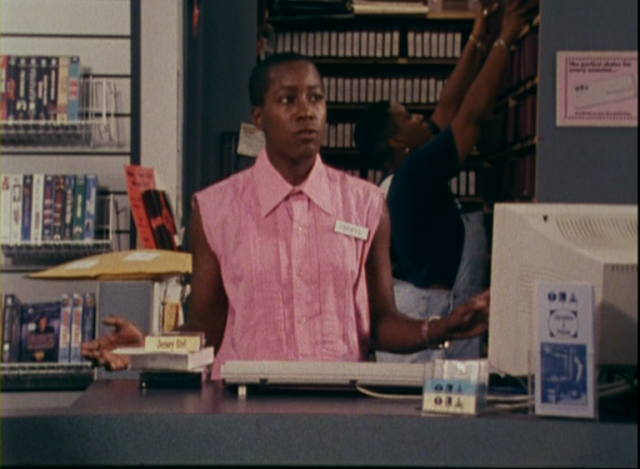
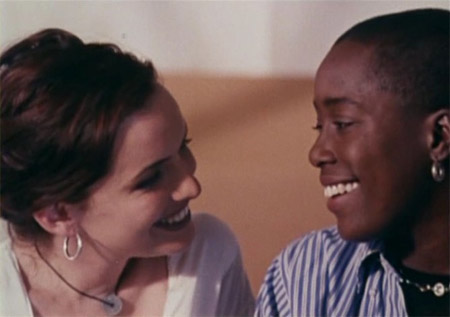
 “The idea came from the real lack of information about the lesbian and film history of African American women. Since it wasn’t happening, I invented it,” Cheryl Dunye says about her 1996 debut, The Watermelon Woman, which has undergone a twentieth-anniversary 2K HD restoration that opens at Metrograph on November 10. In the film, the first feature by a black lesbian, Dunye plays herself, a twenty-five-year-old black lesbian working at a video store with her goofy best friend, Tamara (Valerie Walker). Searching for a topic to make a movie on, Cheryl becomes obsessed with an actress who played a mammy in Plantation Memories and other 1930s films. The actress was listed in the credits as the Watermelon Woman; Cheryl decides to find out more about her, going on a journey in and around her hometown of Philadelphia, discovering more and more about the actress, also known as Fae Richards, and the battle black lesbians had to fight in the early-to-mid-twentieth century. In the meantime, Cheryl begins a relationship with Diana (Guinevere Turner), a privileged white woman who has just moved into the area, mimicking what Cheryl has found out about Richards, who had an affair with white director Martha Page.