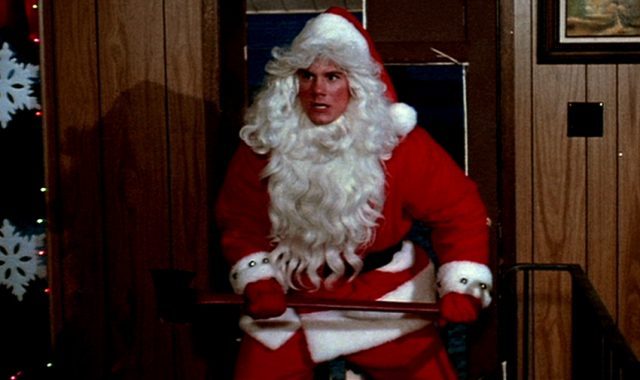
Santa goes a little psycho on holiday flasher flick, SILENT NIGHT, DEADLY NIGHT
SILENT NIGHT, DEADLY NIGHT (Charles E. Sellier Jr., 1984)
Metrograph
7 Ludlow St. between Canal & Hester Sts.
Tuesday, December 20, 9:30
Series runs through January 1
212-660-0312
metrograph.com
“Punishment is good,” Mother Superior (Lilyan Chauvin) tells eight-year-old Billy (Danny Wagner) in Charles E. Sellier Jr.’s Silent Night, Deadly Night. Some might think that watching this 1984 slasher flick is pretty severe punishment itself, while others will revel in its tongue-in-cheek campiness; you can decide for yourself when it screens December 20 at 9:30 as part of the “Christmas at Metrograph” series at the Lower East Side theater, which features such other nontraditional seasonal faves as Die Hard, Eyes Wide Shut, and the Gee Whiz It’s Christmas compilation of various shorts, including Christ Mass Sex Dance and Holidaze. Not exactly a holiday classic, Silent Night, Deadly Night, the working title of which was Slayride, was mired in controversy upon its initial release, with critics and such groups as the PTA, the Catholic Conference, and Citizens Against Movie Madness attacking the film for setting a killer Santa Claus loose on an unsuspecting public. The movie begins in 1971, when five-year-old Billy (Jonathan Best) looks on in horror as his parents (Tara Buckman and Geoff Hansen) are brutally murdered by an insane criminal Kris Kringle (veteran character actor Charles Dierkop). Haunted by nightmares, Billy is mistreated by Mother Superior at St. Mary’s Home for Orphaned Children while being befriended by Sister Margaret (Gilmer McCormick), who wants to take a more sensitive approach with the boy. When Billy (Robert Brian Wilson) turns eighteen — blossoming into quite a handsome hunk — Sister Margaret gets him a job at a local toy store run by Mr. Sims (veteran character actor Britt Leach), but when Christmas comes around, well, everyone better watch out.
Silent Night, Deadly Night has its moments, particularly when it is dealing with Billy’s tortured mind, but then it gets bogged down in genre cliches and loses its psychological focus. But it’s still subversive fun, with a crazy soundtrack that combines Perry Botkin’s synth score with original songs by Morgan Ames that you are unlikely to ever hear performed by neighborhood carolers, among them “Slayrider,” “Christmas Flu,” and the indescribable “Warm Side of the Door.” The film was followed by four sequels, but the less said about them, the better. And yes, that’s scream queen Linnea Quigley getting into some trouble on the pool table. We chose not to give Silent Night, Deadly Night a star (token) rating because our advice is essentially to avoid it at all costs if you have any sense of common decency. (Meanwhile, we’ve watched it several times, especially to see what Santa does to that poor snowman….)
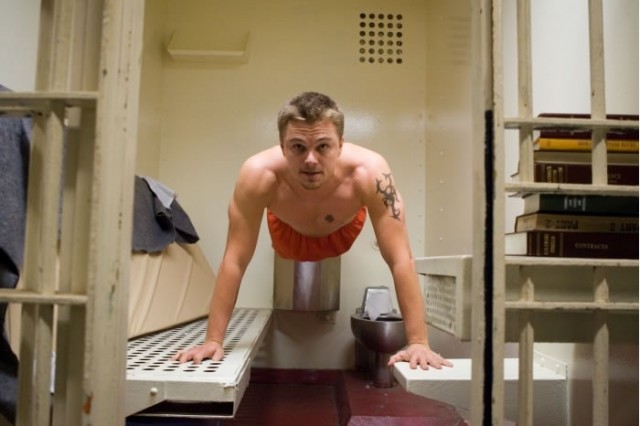
 Queens-born auteur Martin Scorsese changed the face of independent film in the 1970s with such hard-hitting dramas as Mean Streets, Alice Doesn’t Live Here Anymore, and Taxi Driver, then proceeded to expand the notion of cinema as art with such 1980s and 1990s pictures as The King of Comedy, Goodfellas, and After Hours. His more recent output, however, has been vastly overrated, as evidenced by the first part of the Queens-based Museum of the Moving Image retrospective “Martin Scorsese in the 21st Century,” being held December 16-30 in conjunction with the release of the director’s latest film, Silence, which stars Andrew Garfield, Adam Driver, and Liam Neeson. (The series accompanies the exhibition