twi-ny recommended events

NORTHERN POLE TERRITORY: A SANTASTICAL BIT OF HOLIDAY NONSENSE

Santastical

Santa Hanukklaus is among the special guests at second annual Santastical at Northern Territory in Brooklyn

Northern Territory
12 Franklin St. at Meserole St., Brooklyn
Thursday – Sunday, December 1-23, free admission ($15 Santa photos, $5 rooftop access), 6:00 – 10:00 pm
santastical.com
www.northernterritorybk.com

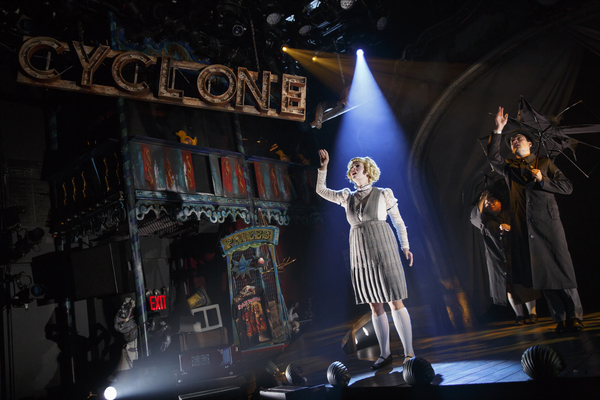
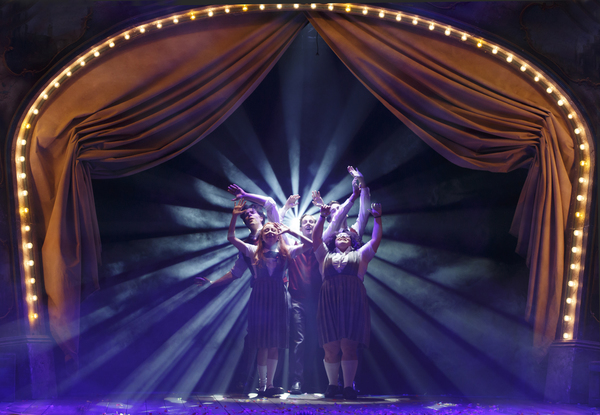
“There is no price tag on being able to say, ‘Hey I did something really strange today,’” immersive-theater impresario Timothy Haskell says, and he knows something about strange. Haskell is the mastermind behind such seasonal productions as Nightmare Haunted House and Full Bunny Contact, and now his Northern Pole Territory: A Santastical Bit of Holiday Nonsense is back for its second year. The demented adventure is presented by Psycho Clan, which consists of Haskell, production designer Paul Smithyman, props designer Faye Armon, Charles Dunham, and Nathaniel Nowak. From Thursday to Sunday evening December 1-23, Australian-American restaurant and rooftop bar Northern Territory, which is located in an old Greenpoint factory building, will host three floors of holiday mischief. On the ground floor, for fifteen dollars you can get your photo taken with the kind of Santas not usually found in department stores — Hunky Santa, Sexy Mrs. Claus, the Jewish Santa Hanukklaus, and Elvis Santa. Five bucks gains you entry to the rooftop bar, where you can engage in snowball fights, share a kiss in the mistletoe grotto, pretend ice-skate, hang out amid tacky lawn decorations and colored lights, and try to avoid the evil Krampus in the Christmas tree forest. A fifteen-dollar advance ticket gets you a photo with Santa and rooftop access. The nights are for adults only, but there will be a family brunch on Sundays from 12 noon to 3:00, when Santa photos are only ten bucks but the roof will be closed. Sunday, December 11, is Gay Afternoon/Night from 4:00 to 8:00, with a SCRUFF DJ spinning tunes. Of course, you can also have dinner at the restaurant, which serves such dishes as fish in foil, Aussie beef burger, grilled halloumi, lamb lollies, Aussie meat pie, mushy peas, and fish and chips in addition to half a dozen craft beers on tap and unique cocktails.

THIS DAY FORWARD

(photo by Carol Rosegg)

Martin (Michael Crane) doesn’t quite understand Emil’s (Joe Tippett) relationship with Irene (Holley Fain) in THIS DAY FORWARD (photo by Carol Rosegg)

Vineyard Theatre
108 East 15th St. at Irving Pl.
Tuesday – Sunday through December 18, $79-$100
212-353-0303
www.vineyardtheatre.org

Philadelphia-born New York City-based playwright Nicky Silver again explores the craziness of a dysfunctional family, and especially its matriarch, in his latest work, This Day Forward, continuing at the Vineyard through December 18. The first act takes place in 1958 in a room at the St. Regis, where the erudite Martin (Michael Crane) is excited about consummating his marriage to the seemingly beautiful, proper, and ditzy Irene (Holley Fain). However, Irene has a secret that she is frightened to reveal to Martin. “Irene, listen to me. I’m your husband and I love you. You can tell me anything. I’m your safe place. Your harbor,” the kind and caring Martin says. “Whatever it is you want to tell me, whatever you’ve done, or haven’t done, whatever it is, you can tell me. You can trust me. Always. You can tell me. Tell me.” She finally tells him, and it’s not a secret that makes him very happy, as it involves a gas station worker named Emil (Joe Tippett). Soon the maid, Melka (June Gable), and the bellboy, Donald (Andrew Burnap), get implicated in the madness and mayhem as Irene, Martin, and Emil try to figure out what happens next. The second act jumps ahead to 2004 to an oh-so-contemporary tasteful apartment in New York City, where Noah (Crane) is living with the younger Leo (Burnap). A film director considering working in television, Noah is awaiting the arrival of his sister, Sheila (Francesca Faridany), a loud, fast-talking woman who lets him know that their mother (Gable) has been growing more and more confused and disappearing. When at last everyone is together, some hard truths emerge as the results of decades of dysfunction strike deep.

(photo by Carol Rosegg)

Siblings Sheila (Francesca Faridany) and (Michael Crane) fight over what to do with their aging mother in new Nicky Silver play at the Vineyard (photo by Carol Rosegg)

Silver (Pterodactyls, The Food Chain), whose terrific The Lyons started at the Vineyard before transferring to Broadway in 2012, is unlikely to make the same trip with This Day Forward, which, like The Lyons, is directed by Mark Brokaw (How I Learned to Drive, Heisenberg). There are funny and poignant moments, particularly in the much better second act, but the play as a whole feels unfinished, as if it is still being workshopped. Allen Moyer’s sets are lovely — the posters on Noah’s walls of robot movies give quick insight into his character — and Kaye Voyce’s costumes, especially Irene’s wedding dress and Emil’s grease monkey outfit, are right on target, but the story languishes in too many places. The cast is strong up and down the line, although Melka as written is too cartoonish (but well played by Gable, who is outstanding as the mother in 2004). It’s still an enjoyable play, one that cleverly deals with the choices we all make and how that impacts future generations, but a few nips and tucks could help tighten what could have been a much more insightful and entertaining drama.

JOHN ZORN: MUSIC FOR AGNES MARTIN

John Zorn returns to the Guggenheim for special program inspired by Agnes Martin

John Zorn returns to the Guggenheim for special program inspired by Agnes Martin

Who: John Zorn
What: Music for Agnes Martin
Where: Solomon R. Guggenheim Museum, 1071 Fifth Ave. at 89th St., 212-423-3587
When: Thursday, December 1, and Friday, December 2, 7:00
Why: In 1995, avant-garde legend John Zorn released Redbird, a pair of compositions inspired by Canadian-American abstract painter Agnes Martin. The album consisted of the nine-minute “Dark River” and the forty-one-minute title opus, featuring harp, cello, and percussion. On December 1 and 2, Zorn, who last month played and discussed his “Commedia dell’arte” suite as part of the Guggenheim’s “Works & Process” series, will perform in the Solomon R. Guggenheim Museum rotunda in conjunction with the current exhibition, “Agnes Martin,” which continues through January 11. The evening comprises four Zorn compositions: “Dark River,” with William Winant and Ches Smith on bass drums; 1977’s “Curling” (yes, based on the Olympic sport), performed by Dither (guitarists James Moore, Gyan Riley, Taylor Levine, and Josh Lopez); and the premiere of two new Martin-inspired works, “Praise,” with Carol Emanuel on harp, Ikue Mori on electronics, and Winant and Zorn on vibraphone and percussion, and “Blue Stratagem, performed by the American Brass Quintet (Kevin Cobb and Louis Hanzlik on trumpet, Eric Reed on horn, Michael Powell on trombone, and John Rojak on bass trombone). Advance tickets are sold out, but standby tickets will be available starting at 6:50 each night; after the performance, attendees are invited to view the exhibition.

EVOLUTION

EVOLUTION

Young Nicolas (Max Brebant) finds much more than he expected under the water in Lucile Hadzihalilović’s EVOLUTION

IFC MIDNIGHT: EVOLUTION (Lucile Hadzihalilović, 2015)
IFC Center
323 Sixth Ave. at West Third St.
Opens Friday, November 25
212-924-777
www.ifcfilms.com

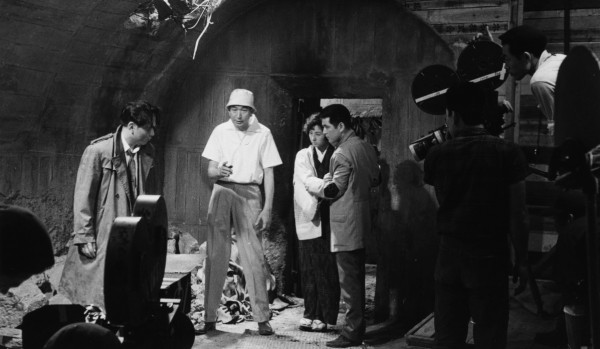
Lucile Hadzihalilović’s Evolution is a gentle and seductive, expertly made French horror film, a creepy twist on the feminist revenge thriller. Max Brebant stars as Nicolas, a clever ten-year-old boy who lives in a remote seaside village with his mother (Julie-Marie Parmentier). One day while swimming deep in the ocean, he sees a dead boy at the bottom of a coral reef, a red starfish on his chest. His mother insists he is just imagining things, but Nicolas suspects something strange is going on. “Why am I sick?” he asks as his mother gives him his usual medicine. “Because your body is changing,” she replies. We soon find out how much when he and his friends, Frank (Nissim Renard), Victor (Mathieu Goldfeld), and Lucas (Pablo-Noé Étienne), are suddenly taken to an eerie hospital run by nearly silent nurses. What goes on there evokes elements of The X-Files, Stand by Me, Rosemary’s Baby, and The Stepford Wives but is wholly original. Only nurse Stella (Roxane Duran) offers him the slightest bit of humanity, and the slightest bit of hope.

EVOLUTION

Nicolas (Max Brebant) is tended to by Stella (Roxane Duran) as his mother (Julie-Marie Parmentier) looks on in EVOLUTION

Directed by Hadžihalilović and cowritten with Alante Kavaite, Evolution is a dark journey into the waters of the subconscious, constructed around the innate fears of childbirth and adolescence. Manuel Dacosse’s gorgeous cinematography — the lighting throughout is breathtaking — is bathed in various shades of green, from underwater shots to the hospital walls, with splashes of red; one particularly memorable visual occurs when Nicolas, in a red bathing suit, runs across the rocky green landscape back to his house to tell his mother what he has seen in the sea. The film, sensuously edited by Nassim Gordji-Tehrani, moves at a slow, tense pace, with sparse dialogue. In only her second feature film, the follow-up to 2004’s Innocence — she has also made three shorts since 1996 — Hadžihalilović displays a mastery of cinematic technique, the narrative unfolding little by little while the mysterious mood remains steady, anchored by Zacarías M. de la Riva’s haunting score. “The water can make you imagine all sorts of things,” his mother tells Nicolas, but he is determined to discover the truth about what is going on. The water has made Hadžihalilović imagine the unimaginable amid a completely realistic setting, drawing the characters and viewers ever further into the depths. Winner of numerous awards at multiple film festivals, Evolution is both shocking and tender, psychologically gripping and utterly mesmerizing.

PUSHING THE ENVELOPE — A DECADE OF DOCUMENTARY AT THE CINEMA EYE HONORS: DETROPIA

DETROPIA

Performance artists find their muse in downtrodden Detroit in Oscar-nominated documentary

SCREENING + LIVE EVENT: DETROPIA (Rachel Grady & Heidi Ewing, 2012)
Museum of the Moving Image
35th Ave. at 36th St., Astoria
Sunday, November 27, $12, 4:30
Series runs through December 23
718-777-6800
www.movingimage.us
www.detropiathefilm.com

In his 1994 autobiography, Hard Stuff, former Detroit mayor Coleman Young wrote, “In the evolutionary urban order, Detroit today has always been your town tomorrow.” That’s precisely the warning that permeates Detropia, the latest documentary by director-producers Rachel Grady and Heidi Ewing, who have previously teamed up on such films as The Boys of Baraka, the Oscar-nominated Jesus Camp, and the Peabody-winning 12th & Delaware. Detroit native Ewing and former private investigator Grady examine the current sad state of the once-proud city, which has seen its population plummet, unemployment skyrocket, and its infrastructure being torn away piece by piece. At one point, Mayor Dave Bing, an NBA Hall of Famer who played for the Pistons, talks about downsizing the city as a whole — but not wanting to use that exact word when revealing the plan to the people. Grady and Ewing, along with cinematographers Tony Hardmon and Craig Atkinson (who also served as a producer), follow around such fascinating characters as UAW local 22 president George McGregor, who speaks with union members and retirees and describes in detail the loss of jobs and plants; Crystal Starr, a young video blogger giving her take on the city’s myriad problems; and Tommy Stevens, a former schoolteacher who now runs the popular Raven Lounge and wonders, at an auto show, how Detroit can possibly keep up with China, especially regarding the electric car known as the Volt. In one particularly poignant scene, a group of men tear down an old Cadillac repair shop, saving the metal to resell and burning the rest to keep warm.

The film regularly cuts back to performances at the Detroit Opera House, which is struggling to stay alive, desperate to bring culture to what is quickly becoming a ghost town visited by tourists interested in gawking at the immense decay. Even a performance of Gilbert & Sullivan’s Mikado slyly references the fall of the automobile industry. The soundtrack mixes hip-hop from the Detroit-based Blair French, better known as Dial.81, along with old-time R&B and songs from experimental band Victoire, providing unique sounds to the extraordinary visuals. It’s hard not to watch the film and see Detroit as a microcosm for America, which is trying to pull itself out of a deep, dark recession that won’t seem to go away. Nominated for an Academy Award for Best Documentary Feature, Detropia is screening November 27 at 4:30 as part of the Museum of the Moving Image series “Pushing the Envelope: A Decade of Documentary at the Cinema Eye Honors,” followed by a Q&A with Grady and Ewing; the series, which celebrates the upcoming tenth annual Cinema Eye Honors awards, continues through December 23 with such other past Cinema Eye nominees and winners as Alma Har’el’s Bombay Beach, Jeff Malmberg’s Marwencol, Lucien Castaing-Taylor and Véréna Paravel’s Leviathan, and the director’s cut of Joshua Oppenheimer’s The Act of Killing. The nominees for Outstanding Achievement in Nonfiction Feature Filmmaking for the 2017 Cinema Eye Honors are Cameraperson, Fire at Sea, I Am Not Your Negro, OJ: Made in America, and Weiner; the winners will be announced at the Museum of the Moving Image on January 11.

SWEAT

SWEAT (photo by Joan Marcus)

Lynn Nottage’s SWEAT examines the dying American dream in factory towns such as Reading, Pennsylvania (photo by Joan Marcus)

Martinson Hall, the Public Theater
425 Lafayette St. at Astor P.
Extended through December 18, $95
212-539-8500
www.publictheater.org

If Hillary Clinton or anyone from the Democratic National Committee had seen Lynn Nottage’s blistering Sweat prior to election day, they might have focused more sharply on the electorate that has made Donald Trump our next president. Originally presented last year by the Oregon Shakespeare Festival as part of its “American Revolutions: the United States History Cycle” and then at Arena Stage in Washington, DC, earlier this year, Sweat is a provocative drama that intelligently and sharply deals with such issues as race, drugs, poverty, NAFTA, education, and, primarily, jobs. The story takes place in Reading, Pennsylvania, moving back and forth between 2000, as George W. Bush seeks the Republican presidential nomination, and 2008, when former best friends Chris (Khris Davis) and Jason (Will Pullen) try to get their lives back on track after eight years in prison. Most of the play is set in a local bar run by Stan (James Colby), who spent twenty-eight years working at the steel-tubing mill before an injury on the job left him with a noticeable limp. The bar regulars include three forty-something women who currently work at the factory: Chris’s mother, Cynthia (Michelle Wilson), an African American woman whose husband, Brucie (John Earl Jelks), is a drug addict who disappears for long stretches of time; Jason’s mother, Tracey (Johanna Day), a white woman and widow; and Jessie (Miriam Shor), a divorced white woman who drowns her sorrow in booze. Meanwhile, Latino bus boy Oscar (Carlo Albán) cleans up after them. In 2008, Chris and Jason’s parole officer, Evan (Lance Coadie Williams), is trying to help them, but they both may be too far gone, overwhelmed by their anger.

SWEAT (photo by Joan Marcus)

Jason (Will Pullen), Stan (James Colby), and Chris (Khris Davis) think about a better future in SWEAT (photo by Joan Marcus)

As rumors spread about big changes at the mill, from news that the owner’s grandson is taking over and that a high-level position is open to everyone to possible layoffs and a move to Mexico, things heat up at the bar. “I’ve been on the floor for twenty-four years,” says Cynthia, who is considering applying for the opening. Tracey responds, “Well, I got you beat by two. Started in ’seventy-four, walked in straight outta high school. First and only job. Management is for them. Not us.” The floor is the only job the women have ever had, perhaps the only decent job available to them in this working-class town, filled with immigrant families of German descent. Stan, who has heard it all before, puts it into perspective: “Give me a break. That place hasn’t changed since I walked in there in ’sixty-nine. Not a lightbulb, not one single nut or bolt. As a matter of fact it hasn’t changed much since my grandfather began working there in ’twenty. Good luck, sweetheart,” he tells Cynthia. “I don’t know him, but I can tell you that Olstead’s grandson is the same brand of asshole as all of ’em, stuffing his pockets rather than improving the floor.” But Stan also recognizes that not everything is actually the same, particularly in regard to management’s treatment of the employees. “You don’t see the young guys out there. They find it offensive to be on the floor with their Wharton MBAs,” he argues. “And the problem is they don’t wanna get their feet dirty, their diplomas soiled with sweat . . . or understand the real cost, the human cost of making their shitty product.”

SWEAT (photo by Joan Marcus)

Tracey (Johanna Day) and Oscar (Carlo Albán) get into a misunderstanding in SWEAT (photo by Joan Marcus)

Brooklyn-based Pulitzer Prize winner Nottage (Ruined, Meet Vera Stark) spent a lot of time in Reading, the steel and textile town that was ranked as the most impoverished city in America in 2011 and has remained in the top ten ever since, with extremely high unemployment and low education leading to a poverty rate of more than forty percent. She met with many of the struggling people there, encountering feelings of desperation, sadness, and betrayal, and turned their stories into Sweat, which continues at the Public Theater’s Martinson Hall through December 18. (Nottage has also developed the Reading Project, which seeks to use art and activism to improve the community.) “These are the conversations we should be having, and I feel like as artists we should be socially engaged, and that at times we can be strategic in the ways we engage audiences,” she told American Theatre in July 2015. Not a single word or movement is out of place in the incendiary production, which features impeccable performances by the outstanding ensemble cast, expertly directed by longtime Nottage collaborator Kate Whoriskey (How I Learned to Drive, Ruined), who maintains a fierce powder-keg pace that ultimately explodes in shocking violence on John Lee Beatty’s rotating set. As the characters’ American dream turns into a nightmare, the bar television follows Bush’s ascendancy during the 2000 primaries, but there’s only the briefest discussion of politics in the show; Sweat is not a condemnation of any one party or politician but of everything that has led to there being so many Readings throughout the United States, as evidenced by the results of the 2016 presidential election.

The state of the economy turns friends into enemies in SWEAT (photo by Joan Marcus)

The state of the economy turns friends into enemies in SWEAT (photo by Joan Marcus)

“Between my new lady and Uncle Sam, money got a way of running outcha pocket. Nobody tells you that no matter how hard you work there will never be enough money to rest. It’s fact. A fact that should be taught to every child!” Chris, who wants to get out of the factory and become a teacher, tells Jason. “I kinda wanna do something a little different than my Moms and Pops. Yo, I got aspirations. There it is. And I won’t apologize,” he says, but it’s not that easy to break away in these small towns. “Dude, you ever given any thought to what you might do if this don’t work out?” Chris asks Jason, who responds, “Nah, not really. Knock on wood. I plan on retiring from the plant when I’m like fifty with a killa pension and money to burn, buy a condo in Myrtle Beach, open a Dunkin’ Donuts and live my life. Right, Stan?” As Stan can vouch, that’s not the way things generally turn out. Nottage has beautifully and honestly captured these characters’ lost dreams and desires, along with their frustrations and tenuous friendships, in a searing play about the literal and figurative shackles that bind too many Americans in this supposed land of plenty. (Be sure to pick up the four large broadsheets in the Public Theater lobby collectively called “Boom & Bust: The Rise & Fall of American Cities,” which details evolving economic situations in Butte, Montana, Silicon Valley, California, Eagle Ford Shale, Texas, and Detroit, Michigan; you can read more about it and other digital dramaturgy here.)

ALVIN AILEY AMERICAN DANCE THEATER: NEW YORK CITY WINTER SEASON 2016

Alvin Ailey winter season at City Center includes company premiere of Johan Ingers WALKING MAD (photo by Paul Kolnik)

Alvin Ailey winter season at City Center includes company premiere of Johan Inger’s WALKING MAD (photo by Paul Kolnik)

New York City Center
130 West 56th St. between Sixth & Seventh Aves.
November 30 – December 31, $25-$150
212-581-1212
www.alvinailey.org
www.nycitycenter.org

For many people, the coming of Thanksgiving signals that Christmas is not too far off. For others, like us, it means that Alvin Ailey’s annual season at City Center is right around the corner. From November 30 to December 31, Alvin Ailey American Dance Theater will be at the West Fifty-Sixth Street institution, presenting three world premieres, one company premiere, four new productions, and sixteen returning favorites. Mauro Bigonzetti follows up his 2008 Ailey piece, Festa Barocca, with Deep, set to music by French-Cuban twin sisters Ibeyi. Kyle Abraham’s three-part Untitled America, the first two parts of which debuted in December 2015 and this past June, will now be seen in its entirety for the first time. Longtime Ailey dancer Hope Boykin has choreographed r-Evolution, Dream., a large ensemble work inspired by the words of Dr. Martin Luther King, Jr., with music by Ali Jackson and writings recorded by Hamilton Tony winner Leslie Odom Jr. Johan Inger reimagines Ravel’s Bolero with Walking Mad, with additional music by Arvo Pärt.

GRACE will be part of an all-Ronald K. Brown evening on (photo by Paul Kolnik)

GRACE will be part of Ailey celebration of Ronald K. Brown on December 14 at City Center (photo by Paul Kolnik)

AAADT artistic director Robert Battle’s The Hunt is getting a makeover, as are Alvin Ailey’s Masekela Langage, Ulysses Dove’s Vespers, and Billy Wilson’s The Winter in Lisbon, which pays tribute to Dizzy Gillespie. The season also includes pieces by Christopher Wheeldon, Rennie Harris, Judith Jamison, Matthew Rushing, Paul Taylor, Talley Beatty, and Ronald K. Brown, who will be celebrated on December 14 with performances of Open Door, Ife / My Heart, Four Corners, and Grace. There are still tickets left for the opening-night gala ($70-$90), “An Evening of Ailey and Jazz,” with Battle’s Ella, excerpts from John Butler’s Portrait of Billie, Beatty’s The Road of the Phoebe Show, Wilson’s The Winter in Lisbon, Ailey’s For Bird – With Love and Pas de Duke, and live music and a gospel choir joining in on Revelations. On December 17 and 20, “Bold Visions” consists of r-Evolution, Dream., Vespers, The Hunt, and Revelations, while several “All Ailey” programs consist of a mix of repertory classics. Saturday matinees are followed by a Q&A with the dancers, while the always greatly anticipated season finale takes place on New Year’s Eve.