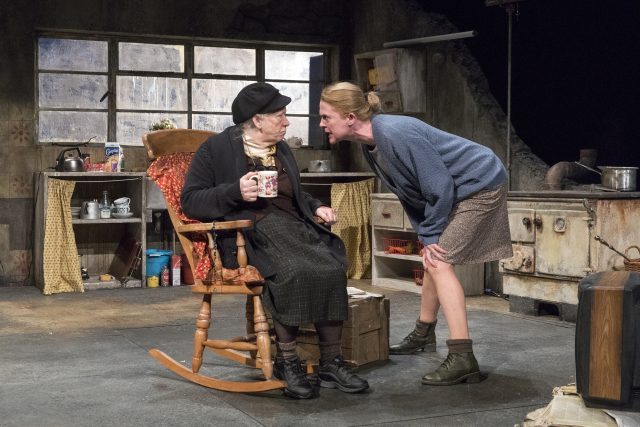
Mother (Marie Mullen) and daughter (Aisling O’Sullivan) go at it tooth and nail in THE BEAUTY QUEEN OF LEENANE (photo by Richard Termine)
Brooklyn Academy of Music
BAM Harvey Theater
651 Fulton St.
Through February 5, $35-$110
718-636-4100
www.bam.org
Galway’s Druid Theatre Company is celebrating the twentieth anniversary of one of its biggest successes, Martin McDonagh’s Olivier- and Tony-nominated The Beauty Queen of Leenane, with a searing revival running at the BAM Harvey through February 5. Written in a week and a half when the playwright, who was born and raised in London to Irish parents, was twenty-four, Beauty Queen is set in a ramshackle house in rural Connemara, where disillusioned forty-year-old virgin Maureen Folan (Aisling O’Sullivan) takes care of her bitter, nasty seventy-year-old mother, Mag (Marie Mullen). The two are at each other’s throats constantly, fighting like married couple George and Martha in Who’s Afraid of Virginia Woolf? and sisters Jane and Blanche Hudson in What Ever Happened to Baby Jane? “You’re oul and you’re stupid and you don’t know what you’re talking about. Now shut up and eat your oul porridge,” Maureen says to her mother, who spends most of her day sitting in a rocking chair, waiting for the news to come on the television, surviving on lumpy porridge, biscuits, and the nutritional drink Complan. Early on, Maureen, after being called a “whore” by Mag, tells her mother about a daydream she has about her mother’s death, which would free her to finally have a life of her own and find a man who loves her. “Not at all is that a nice dream. That’s a mean dream,” Mag says, to which Maureen replies, “I don’t know if it is or it isn’t. I suppose now you’ll never be dying. You’ll be hanging on forever, just to spite me.” Mag: “I will be hanging on forever!” Maureen: “I know you will!” Mag: “Seventy you’ll be at my wake, and then how many men’ll there be round your waist with their aftershave?” Maureen: “None at all, I suppose.” Mag: “None at all is right!” But when Ray Dooley (Aaron Monaghan) invites Maureen to a party and she comes home with his older brother, Pato (Marty Rea), who spends the night, both women up the ante as Maureen thinks Pato, who just got a job in Boston, is her way out while Mag is determined not to be left alone to rot away.
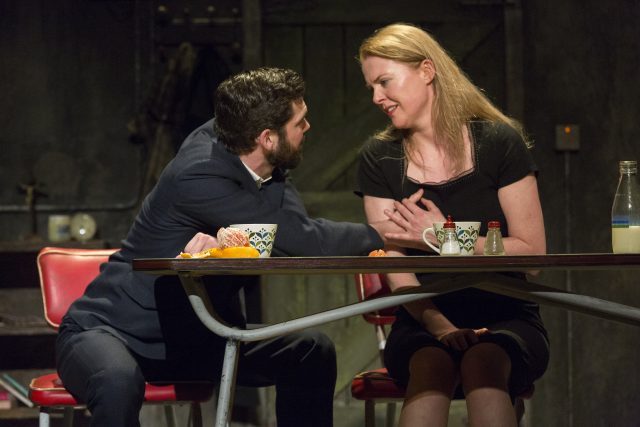
Pato Dooley (Marty Rea) and Maureen Folan (Aisling O’Sullivan) explore love and escape in THE BEAUTY QUEEN OF LEENANE (photo by Richard Termine)
Part of a trilogy with A Skull in Connemara and The Lonesome West, The Beauty Queen of Leenane is a sizzling black comedy, with nary a word or movement out of place. Original director Garry Hynes, who cofounded the Druid in 1975 with Mullen and Mick Lally, once again does a spectacular job with McDonagh’s (The Cripple of Inishmaan, The Pillowman) sharp, focused writing, which was inspired by American films; there’s a cinematic aspect to the play, as if the audience can visualize the scenes that are only referred to in the dialogue, occurring outside Francis O’Connor’s run-down kitchen set, its sides torn off as if psychologically ripped away from reality. (McDonagh has also written and directed several movies, including In Bruges and Seven Psychopaths.) In addition, the set features metal rods hanging from above like crosses and depictions of Mary and Jesus, which stand in sharp contract to mother Mag and daughter Maureen, neither of whom is a saint. The 1998 Broadway production was nominated for seven Tonys, including Best Play and nods for all four actors, and won four awards, for Best Leading Actress (Mullen as Maureen), Best Featured Actor (Tom Murphy as Ray, who beat out costar Brían F. O’Byrne as Pato), Best Featured Actress (Anna Manahan as Mag), and Best Director (Hynes, the first woman to win a Tony in that category). The four cast members of this blistering revival, who appeared together in Druid’s 2014 production of Dion Boucicault’s The Colleen Bawn, also directed by Hynes, give award-worthy performances as well. O’Sullivan is magnificent as Maureen, a nearly beaten woman who suddenly comes to life when potential love walks through the door; even her outfits, by O’Connor, are spectacular, from a sexy black dress to a slim slip. Mullen, who portrayed Maureen in the original production, is phenomenal now as Mag, who is no mere grumpy old hypochondriac. Rea is gentle and touching as Pato, wonderfully delivering the long, beautiful letter-soliloquy that opens the second act, while Monaghan serves up fine, frantic comic relief as Ray, whose wacky ramblings actually are realistic interpretations of contemporary Ireland. The heart of the story might be the relationship between mother and daughter, but Ray adds references to the state of the nation, referencing unemployment, emigration, the financial crisis, the media, and other current events that still ring true today, as does the age-old struggle for dominance in the never-ending mother-daughter battle.
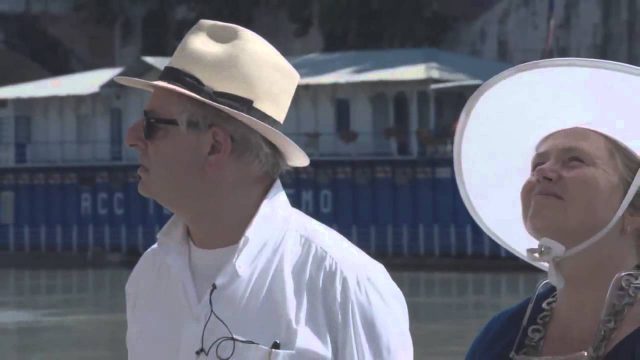
 South African multimedia artist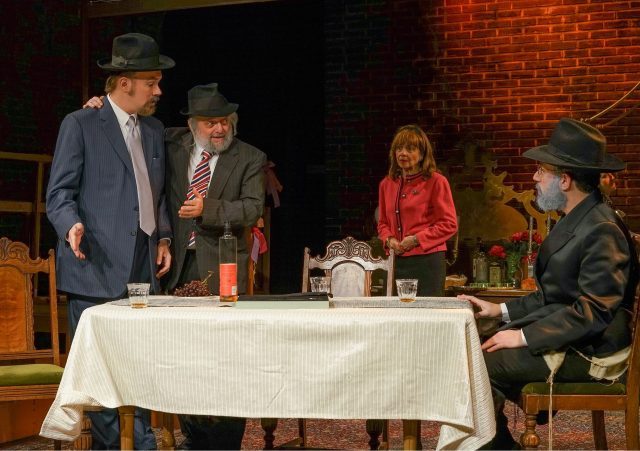
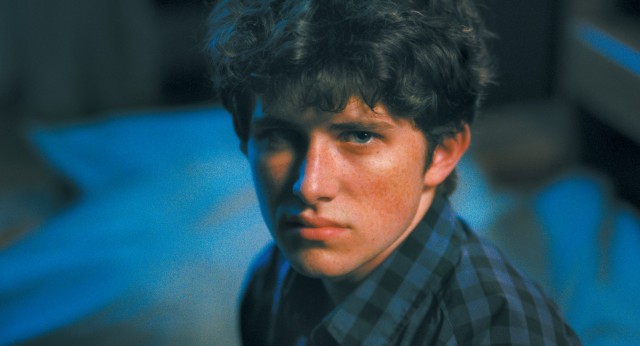
 Eugène Green returned to the New York Film Festival in 2016 with the glorious French satire / black comedy / biblical parable The Son of Joseph, a masterful blending of sound, image, and story that is as stunning to listen to as it is to watch. Newcomer Victor Ezenfis stars as Vincent, an intractable young teen who is desperate to discover who his father is, no matter how hard his single mother (Natacha Regnier), a nurse, tries to keep that information from him. “I don’t want to help people,” he says. “I love no one.” His sneaky ways finally reveal the man’s name, and Vincent tracks him down only to discover that the man, Oscar Pormenor (Mathieu Amalric), is a boorish, self-obsessed publisher who is cheating on his wife with his sexy secretary, Bernadette (Julia de Gasquet). At a party for his company’s latest book, The Predatory Mother, ever-so-chic critic Violette Tréfouille (Maria de Medeiros) mistakes Vincent for an up-and-coming novelist, with Oscar cluelessly declaring him the next Céline before finding out who the boy really is. Soon a disappointed Vincent is befriended by Oscar’s brother, Joseph (Fabrizio Rongione), but neither is aware of the connection. As Vincent is introduced to art and literature, he attempts to manipulate everyone around him in order to form the family he’s always wanted.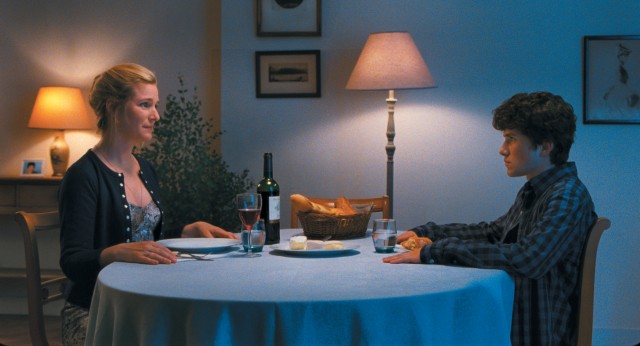
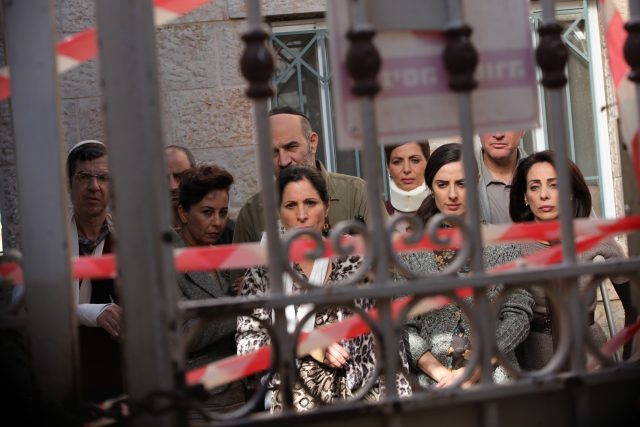
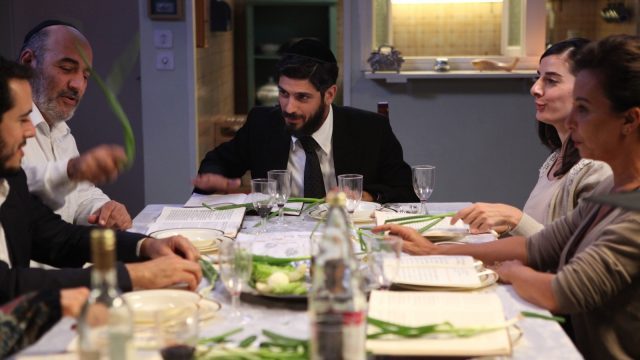
 Judaism may be matrilineal, but that doesn’t mean that women are treated as equal to men, especially among sects espousing fundamentalist religious beliefs, although women are considered holier than men in Orthodox communities. In Emil Ben-Shimon’s absolutely wonderful debut feature, The Women’s Balcony, that all comes to a head when wives, mothers, girlfriends, and daughters, relegated to a balcony in the back of a small, local shul — as if on a pedestal, farther away from the Torah but closer to G-d — come crashing down when the structure breaks, suddenly putting them on the same level as the men. It’s no coincidence that this happens during an Orthodox bar mitzvah, when a boy becomes a man, which is much different from an orthodox bat mitzvah, when a girl becomes a woman. When a fundamentalist rabbi from a nearby congregation offers to help rebuild the Mizrahi synagogue, the place of women in the shul are far from his main concern, leading to a furious and delightful battle of the sexes. With the elderly Rabbi Menashe (Abraham Celektar) flustered because the accident has left his wife in a coma, Rabbi David (Avraham Aviv Alush) is only too happy to step in, demanding further separation between the men and the women, which causes problems for such couples as gabbai Aharon (Itzik Cohen) and Tikva (Orna Banai); mild-mannered Nissan (Herzi Tobey) and Margalit (Einat Sarouf); and warmhearted shopkeeper Zion (Igal Naor) and Etti (Evelin Hagoel), who have a terrific marriage and equal partnership until things start changing at the shul. Meanwhile, everyone is hoping that Yaffa (Yafit Asulin) finds the right man as she expands her dating search, until she and Rabbi David’s assistant (Assaf Ben Shimon) take an interest in each other, a potential Romeo and Juliet romance.