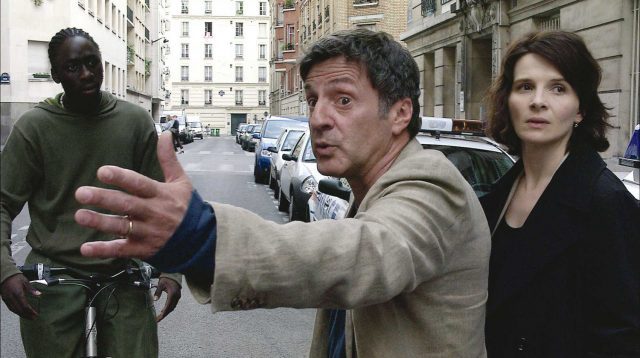
Daniel Autieul and Juliette Binoche star in Michael Haneke’s Caché
CACHÉ (HIDDEN) (Michael Haneke, 2005)
Film Forum
209 West Houston St.
Friday, November 17, 1:00, 3:45, 7:00
Thursday, November 23, 5:20
Series runs November 17-23
212-727-8110
filmforum.org
www.sonyclassics.com/cache
 In preparation for the December 22 opening of his latest feature, Happy End, Film Forum is taking a look back at the career of Austrian writer-director Michael Haneke with a mix of some of his most well known works alongside some rarely screened gems, beginning with Caché. Haneke was named Best Director at Cannes for this slow-moving yet gripping psychological drama about a seemingly happy French family whose lives are about to be torn apart. Caché stars Daniel Auteil as Georges, the host of a literary public television talk show, and Juliette Binoche as his wife, Anne, a book editor. One day a mysterious videotape is left for them, showing a continuous shot of their house. More tapes follow, wrapped in childish drawings of a boy with blood coming out of his mouth. Fearing for the safety of their son, Pierrot (Lester Makedonsky), they go to the police, who say they cannot do anything until an actual crime has been committed. As the tapes reveal more information and invite more danger, Georges’s secrets and lies threaten the future of his marriage. Caché is a tense, involving thriller that is both uncomfortable and captivating to watch. Haneke zooms in closely on the relationship between Georges and Anne, keeping all other characters in the background; in fact, there is no musical score or even any incidental music to enhance the searing emotions coming from Auteil and Binoche. Winner of numerous year-end critics awards for Best Foreign Language Film, Caché is screening November 17 and 23 at Film Forum. Oh, and be sure to pay close attention to the long final shot for just one more crucial twist that many people in the audience will miss.
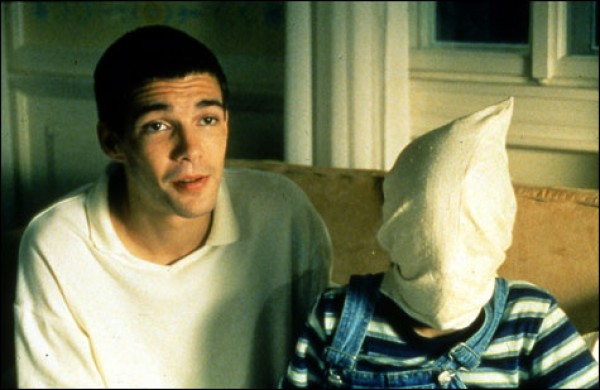
There’s nothing funny about Michael Haneke’s Funny Games
FUNNY GAMES (Michael Haneke, 1997)
Saturday, November 18, 9:20
Wednesday, November 22, 12:30, 2:40, 4:45, 9:40
filmforum.org
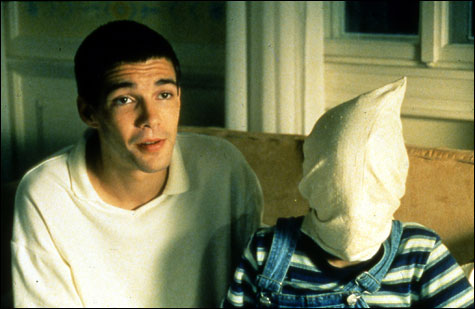
 Michael Haneke’s Funny Games is a harrowing home invasion movie that is as brutal as it is ultimately frustrating. Haneke (71 Fragments of a Chronology of Chance, The Seventh Continent) manipulates the audience nearly as much as he does the characters on-screen, even breaking the fourth wall by having one of the villains address the viewer several times. When Anna (Susanne Lothar), Georg (Ulrich Mühe from The Lives of Others), and their son, Schorschi (Stefan Clapczynski), head to their summer vacation home on a lake, they have no idea what lies in store for them. A man (Arno Frisch) claiming to be a friend of their neighbors’ shows up asking for some eggs, but there is a subtle malevolence behind his odd demeanor. He is soon joined by a companion (Frank Giering) who insists on trying out one of Georg’s golf clubs. It’s not long before the two men, who alternately call each other Peter and Paul, Tom and Jerry, and Beavis and Butt-Head, have severely broken Georg’s leg, sexually harass Anna, and put a bag over Schorschi’s head, all for no apparent reason except that they are bored and want to play some games, the more dangerous the better. It’s a tense, frightening film that never lets up, even when it appears to be over. The soundtrack juices up the horror, with classical music by Mozart and Handel offset by screeching punk by John Zorn and Naked City. Mühe and Lothar later reunited for Nicole Mosleh’s Nemesis, which was completed shortly before Mühe’s sudden death from stomach cancer in 2007. Haneke made an American remake of Funny Games in 2008, with Tim Roth as George, Naomi Watts as Anna, Brady Corbet as Peter, and Michael Pitt as Paul, with an appearance by Frisch as well. The original Funny Games is screening November 18 and 22 at Film Forum as part of the Michael Haneke tribute, which runs November 17 to 23 and also includes Haneke’s Code Unknown, Amour, The Seventh Continent, The Piano Teacher, The White Ribbon, 71 Fragments of a Chronology of Chance, Benny’s Video, and Caché.
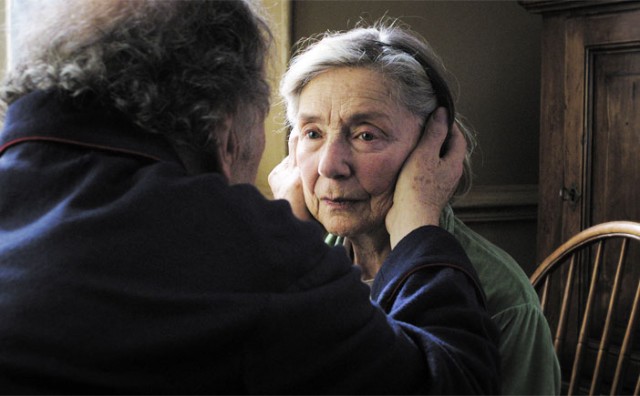
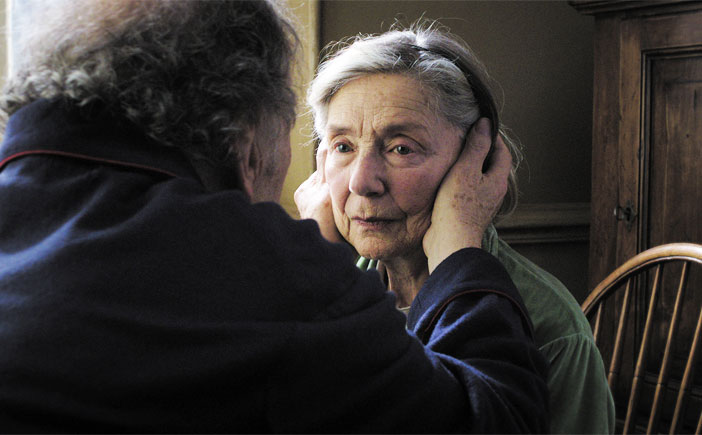
Jean-Louis Trintignant and Emmanuelle Riva play a married couple facing tragedy in Michael Haneke’s brilliant Amour
AMOUR (Michael Haneke, 2012)
Sunday, November 19, 12:30, 3:15, 6:00
Monday, November 20, 2:45
Thursday, November 23, 12:30
filmforum.org
www.sonyclassics.com/amour
 Legendary French actor Jean-Louis Trintignant puts an exclamation point on his long, distinguished career with Amour, one of the most beautiful love stories ever told. In his first film in nearly a decade, Trintignant, the star of such classics as Z, My Night at Maud’s, A Man and a Woman, and The Conformist, plays Georges, an octogenarian who is immediately concerned when his wife, Anne (Oscar nominee Emmanuelle Riva), suddenly freezes for a few moments, unable to speak, hear, move, or recognize anything. So begins a downward spiral in which Georges takes care of his ailing wife by himself, refusing help from his daughter, Eva (Isabelle Huppert), as he faces the grim situation with grace and dignity. A genuine romance for the ages, Amour is brilliantly written and directed by Michael Haneke, earning the Austrian filmmaker an Oscar for Best Screenplay and his second Palme d’Or, following 2009’s The White Ribbon. Haneke (Benny’s Video, The Piano Teacher) and cinematographer Darius Khondji allow the heartbreaking tale to unfold in long interior shots with very little camera movement, spread across more than two hours. Despite its length, the film is far from torturous; instead, it is filled with quietly beautiful moments. Trintignant, eighty-two when the film was released, is magnificent as Georges, his every physical movement and eye glance rendered with powerful yet gentle emotions, whether he’s preparing food for Anne or trying to catch a bird that has flown into the apartment. It’s an unforgettable performance in an unforgettable film. Amour, which was nominated for five Academy Awards, including Best Picture and Best Foreign-Language Film, winning the latter in addition to the screenplay honor, is being shown at Film Forum November 19, 20, and 23.