In conjunction with the excellent exhibition “Proof: Francisco Goya, Sergei Eisenstein, Robert Longo,” which equates primarily black-and-white etchings, drawings, and films by Spanish painter Francisco Goya, Russian auteur Sergei Eisenstein, and American visual artist Robert Longo as they relate to the socioeconomic and -political issues of their times, the Brooklyn Museum is hosting an artist talk with Longo and American art critic and historian Hal Foster, author of such books as Compulsive Beauty, The Return of the Real: The Avant-Garde at the End of the Century, and The Art-Architecture Complex. The exhibition features stunning large-scale, multipanel charcoal drawings by the Brooklyn-born Longo that resemble photographs, including “Untitled (Black Pussy Hat in Women’s March),” “Untitled (Bullet Hole in Window),” and “Untitled (Mecca).” Longo and Foster will discuss how art and activism, and particularly photography, can have an impact in times of emergency, like what is happening right now in the United States and around the world.
Conference: NYIT, 1871 Broadway, $45 – $215, 8:00 am – 12:30 pm
Festival: Museum of American Finance, 48 Wall Street, $95 – $215, 6:00 – 9:00
Thursday, November 16 www.politicsoffood.nyc
The Politics of Food will bring together more than 250 chefs, politicians, experts, and policy makers, examining the current state of nutrition in New York State and serving signature dishes. Held on November 16, the day begins at 8:00 in the morning at the New York Institute of Technology for a conference that includes the panel discussions “Future of food programs for NYC’s vulnerable communities,” with Barbara Turk, Donna M. Corrado, Margarette Purvis, and Joel Berg, “Legislating Nutrition and Sustainability,” with Charles Platkin, Elizabeth Balkan, Gale A. Brewer, and Kim Kessler, and “Food Dialogue with Farmers and Consumers: Common values? Common ground?” Richard Ball will deliver the keynote address, with closing remarks by Julia Turshen. The fun really begins at 6:00 at the Museum of American Finance for the Taste of Lower Manhattan Food Festival, hosted by Wylie Dufresne and boasting samples from chefs Jay Strauss, Jin Ruan, Joseph Mallol, Louis Goral, Mark Rosati, Matt Deliso, Nicolas “Nico” Abello, and Shaun Acosta and restaurants Amada, Benares, Blacktail at Pier A, Brushstroke, the Dead Rabbit, Blue Ribbon Federal Grill, Four Seasons Hotel New York Downtown, Harry’s Cafe and Steak, Harry & Ida’s Luncheonette, Jing Fong, L’Appart, Pier A Harbor House, Shake Shack, the Tuck Room, and Westville. Tickets for the conference are $45 and the food festival $95, with various VIP incentives at higher prices.
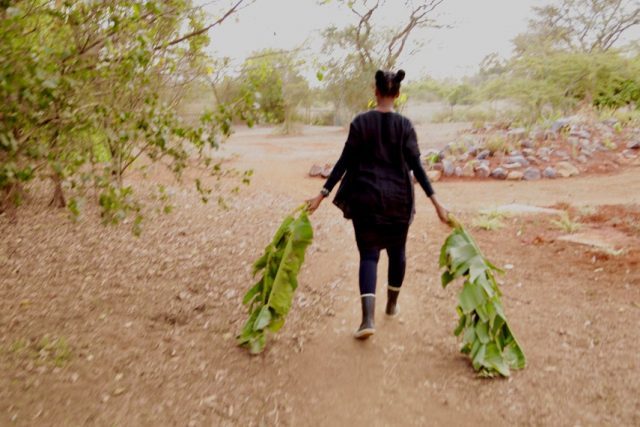
Wangechi Mutu, “Banana Stroke,” site-specific action painting, 2017 (courtesy of the artist / photo by Andrew Dru Mungai)
MetLiveArts / Performa 17
Metropolitan Museum of Art, Grace Rainey Rogers Auditorium
1000 Fifth Ave. at 82nd St.
Performance: Monday, November 13, and Tuesday, November 14, free with advance registration, 7:00
Talk: Wednesday, November 15, Performa Hub, 427 Broadway at Canal St., free, 1:00
212-570-3949 www.metmuseum.org 17.performa-arts.org
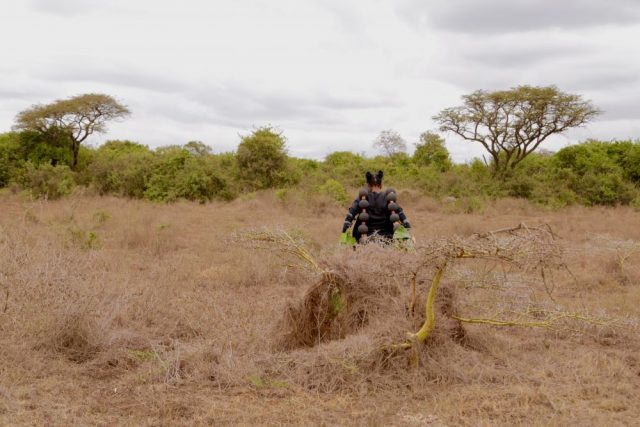
Kenyan-born artist and activist Wangechi Mutu, who is based in New York and Nairobi, will be at the Met Fifth Ave. on November 13 and 14 presenting the Performa 17 commission and MetLiveArts program Banana Stroke. The sculptor, collage painter, and multidisciplinary, multimedia artist is the founder of AFRICA’SOUT!, an organization that seeks to raise awareness and “advance radical change” regarding freedom of creative expression in Africa and the diaspora, with a particular focus on gender equality and gay rights. Banana Stroke is an immersive environment constructed from collages made with dyed, fermented, or saturated paper, a live performance, and a site-specific action painting. “A lot of my work reflects the incredible influence that America has had on contemporary African culture. Some of it’s insidious, some of it’s innocuous, some of it’s invisible. It’s there,” Mutu told Mother Jones in 2013. On November 15 at 1:00, she will be at the Performa 17 Biennial Hub at 427 Broadway for a free talk with writer and scholar Adrienne Edwards, concentrating on Mutu’s use of abstraction and performance over the last two years. The conversation is being held in conjunction with Performa’s AFROGLOSSIA program, curated by Edwards and featuring work by Mutu, Teju Cole, Tracey Rose, Julie Mehretu and Jason Moran, Yto Barrada, and others.
Wangechi Mutu, “Banana Stroke,” site-specific action painting, 2017 (courtesy of the artist / photo by Andrew Dru Mungai)
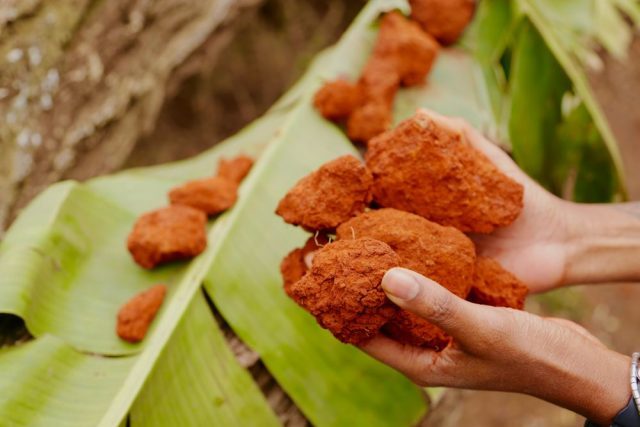
Update: Wangechi Mutu’s Banana Stroke is an intimate, immersive experience reminiscent of the Happenings of the 1960s and ’70s. A small, extremely lucky crowd is ushered into the Met’s Grace Rainey Rogers Auditorium and onto the stage, where they take seats on white benches of various heights and lengths, placed to the right and left. In between is an empty space with large white canvas boards at the front and back. Sounds of nature seep in and two related videos produced, edited, and photographed by Andrew Dru Mungai are projected onto the boards, in which the Kenyan-born Mutu rises from the ground wearing long banana branches on both hands. The videos switch from color to black-and-white while Mutu gently recites Nobel Prize–winning St. Lucian writer Derek Walcott’s “A Far Cry from Africa,” including: “Again brutish necessity wipes its hands / Upon the napkin of a dirty cause, again / A waste of our compassion, as with Spain, / The gorilla wrestles with the superman. / I who am poisoned with the blood of both, / Where shall I turn, divided to the vein? / I who have cursed / The drunken officer of British rule, how choose / Between this Africa and the English tongue I love?” In addition, such words as “Wail,” “Cry,” “Promise,” “Profane,” and “Stroke” appear on one of the walls and are spoken. The lights go out, and Mutu walks into the center, two long banana branches shackled to her arms. She moves slowly while going back and forth between the two canvases, dipping the banana leaves in metal containers of black ink and banging, dotting, and swirling them onto the stark whiteness and dragging them over the floor, the ink at times threatening to touch the audience as Mutu dances and throws her arms in the air.
Wangechi Mutu, “Banana Stroke,” site-specific action painting, 2017 (courtesy of the artist / photo by Andrew Dru Mungai)
Satisfied with her stark creations, she leaves the stage in darkness, and soon two more videos are projected over the artwork, similar to the earlier films but not exactly the same. The action paintings are essentially abstract, but Mutu carefully crafted some very specific patterns that now make sense with what’s happening onscreen. The images and words clash with the black strokes on the white screens, calling into question the effects of the artistic intervention as well as that of the colonialists. And about sixty minutes before it all started, it’s over; the audience leaves in silence, Mutu not coming out to take a bow. Banana Stroke is a powerful, provocative experience layered with meaning that will take time and effort to decipher, but it’s well worth further investigation; perhaps Mutu will shed more light on it during her November 15 talk with curator Adrienne Edwards.
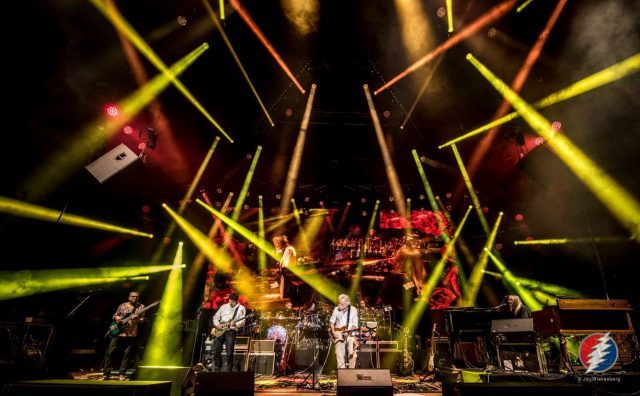
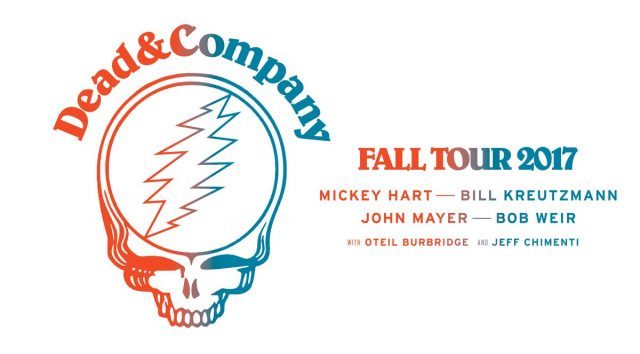
The Dead & Company fall tour comes to Madison Square Garden on November 12 and 14
Madison Square Garden
Seventh to Eighth Ave. between 31st & 33rd Sts.
Sunday, November 12, and Tuesday, November 14, $75-$500, 7:00 www.msg.com www.deadandcompany.com
When the Grateful Dead performed their five fiftieth anniversary “Fare Thee Well” concerts in 2015, the hype machine went into overdrive celebrating the legendary band’s history. Most mainstream media outlets treated “Fare Thee Well” as a one-time mega-event, roundly ignoring that the surviving members of the reuniting band had spent the twenty years following Jerry Garcia’s passing and the Grateful Dead’s demise performing together in some form or another more or less continuously in a number of guises and permutations. As recently as 2009, the four longest-tenured members of the historic psychedelic/Americana act (guitarist Bob Weir, bassist Phil Lesh, and drummers Bill Kreutzmann and Mickey Hart) had all toured together as the Dead, followed by Weir and Lesh combining forces in the group Furthur. Following the culmination of the historic “Fare Thee Well” shows, Lesh returned to fronting his long-running, rotating Phil & Friends combo in a reduced touring mode, but Weir, Kreutzmann, and Hart wasted little time in regenerating the long-running musical conversation that is the Grateful Dead’s legacy and raison d’etre.
Forming yet another new continuation of the theme — Dead & Company, which comes to the Garden on November 12 and 14 — the three took to the road in fall of 2015 with the somewhat initially curious choice of John Mayer in the lead guitarist role — a chair that has been ably filled in previous mix-and-match combinations by capable pros including Steve Kimock, Mark Karan, Jimmy Herring, Warren Haynes, John Kadlecik, and Trey Anastasio . . . though always with some controversy and always with the ubiquitous and attendant moaning or applauding of various segments of the vocal Deadhead fan base. Mayer may have seemed a peculiar choice initially, his ability as a stellar blues-influenced guitarist being somewhat overshadowed by his celebrity reputation and pop-influenced solo musical output. He had developed an interest in the Grateful Dead’s music only in recent years, but after playing with Weir on a couple of occasions, Mayer threw himself into studying the group’s material as well as its ethos. Though debate continued to rage among Deadheads over the choice, each successive tour undertaken by the nascent Dead & Co. enterprise (from 2015 to the present) has seen Mayer acclimating more and more and gradually crafting his own unique spin on the band’s repertoire — a technique sounding individualistic but still reverent to both the memory of his beatified progenitor, Garcia, and to the overall gestalt of a group that has now been creating music for more than half a century.
With a celebrated multipart documentary (Long Strange Trip) appearing on Amazon in 2017, the Grateful Dead is nothing short of an American phenomenon in the minds of casual music fans and dedicated heads alike. The Dead & Company aggregation has taken to the road again this fall to continue exploring the band’s music, pushing sonic boundaries (including the improvisational Drums-and-Space segments that were a staple of GD shows), and as always performing a completely different setlist at every unique performance. The group’s summer tour proved highly lucrative, with the shows well attended and parking lots approximating the nostalgic circus atmosphere of the Dead’s heyday. And in keeping with tradition, the repertoire over this jaunt was indeed varied, with more than one hundred different songs being played over twenty shows. Even this, though, raised some murmuring among the devoted fan base, who noted the band’s current incarnation sticking to a less-catholic assortment of material, eschewing post-Garcia compositions written by the later iterations of the band and its members. Missing in action, for instance, were any of Weir’s latter-day songs with RatDog, music explored and developed by post-Jerry outfits the Other Ones and Furthur, or material off Weir’s lauded 2016 Blue Mountain album.
Beside long-standing historical figures Weir, Kreutzmann, and Hart and alongside now-devoted disciple Mayer, the Dead & Company lineup also includes the talented keyboardist Jeff Chimenti, a veteran of all the post-Garcia lineups, and Oteil Burbridge, longtime bassist for the Allman Brothers, who has become a crowd favorite with both his dextrous playing and emerging vocal responsibilities. On the most recent tour, Burbridge began lending his vox to the mix more prominently, spelling Weir and Mayer with the occasional heartfelt lead on such songs as “Stella Blue” and “Comes a Time.” Chimenti also sings but thus far has been relegated to harmony and ensemble duties. As with Mayer via Garcia, Burbridge does not try to approximate the exact style of his long-term predecessor, Lesh, but is able to mesh his substantial talents with the music being created onstage to a degree that the group’s distinctive overall vibe is present, even as it continues to develop in new directions.
Indeed, part of what keeps the old warhorse chugging along is the sense, from night to night, that the band could do anything, that surprises could always lay in store. A new arrangement for a classic such as “Jack Straw,” a long-neglected Dylan cover pulled out of mothballs, such chestnuts as “High Time” or “Viola Lee Blues” broken out or returned to the song rotation? And all along, the debate continues to rage among concertgoers: Is Dead & Company a Dead cover band? Or are they something familiar, yet new? Is a musical conversation that began before much of the audience was even born continuing in unexpected and interesting ways? Are Dead & Company little more than a cynical cash grab? Or are they a way of keeping classic Grateful Dead material circulating, treasured songs still being performed in a way both reverential yet fresh, to the delight of thousands of fans who love both the music and the concert experience? Are the performances dynamic and ever evolving? Do they evoke nostalgia while still being vital?
The discourse shall persist. ’Twas ever thus, actually, when it comes to the music, as well as the legacy of a band that was once described as being both sociologically and sonically similar to the old parable about four blind men encountering an elephant. The long, strange trip continues apace in its latest transformative mutation, and perhaps the only way to arrive at an opinion might be to clear the mind, open one’s ears, and decide for oneself at the Garden. Or, to take a page from the Dead’s own well-trodden lyrical playbook (courtesy of Robert Hunter): “If you get confused, listen to the music play.” What you hear may surprise you.
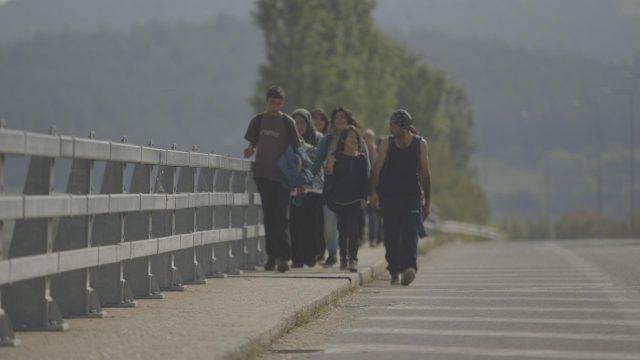
Sky and Ground follows a refugee family on a frightening journey trying to find a new home
SKY AND GROUND (Talya Tibbon & Joshua Bennett, 2017)
Sunday, November 12, SVA Theatre, 333 West 23rd St. between Eighth & Ninth Aves., $19, 6:45
Thursday, November 16, IFC Center, 323 Sixth Ave. at West Third St., $12, 10:15 am
Festival runs November 9-16 (various passes $75-$750) www.docnyc.net www.humanityonthemove.org
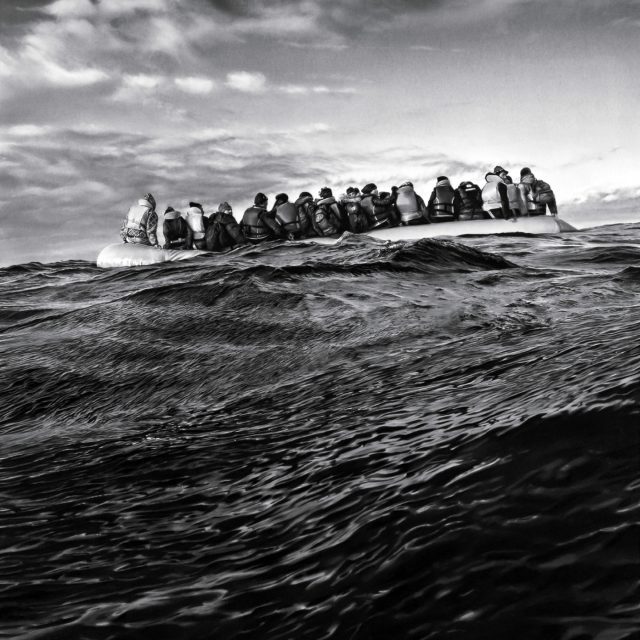
The DOC NYC festival, consisting of more than 150 nonfiction feature films and shorts, has room for stories small and large, allowing viewers to understand the world from the macro to the micro; Talya Tibbon and Joshua Bennett’s Sky and Ground, having its world premiere November 12 and 16, zeroes in on the micro. In his sweeping new documentary, Human Flow, Chinese artist and activist Ai Weiwei and his crew went to twenty-three countries and dozens of refugee camps to personalize the growing international migrant crisis. Among the places he visited was the Idomeni tent city in Greece at the now-closed Macedonian border. The makeshift camp is the starting point for Tibbon and Bennett’s startling and intimate Sky and Ground. Tibbon embeds herself with the Nabi clan, led by Abdullah Sheik Nabi, known as Guevara for his childhood admiration for Argentine rebel Che Guevara. Guevara and his family have escaped the dangerous situation in Aleppo, Syria, and are trying to get to Berlin, where Guevara’s brother, Abdo, lives. But getting there is a harrowing journey, fraught with police and military, rewards for citizens who turn them in, cheating smugglers, and more impediments to their attempts to find a new home. “If we stay here in this misery, my family will go crazy,” Guevara says of the camp, and they are soon back on the road, not knowing what fate awaits them. Using the GPS on his cell phone and staying in touch with Abdo, Guevara has taken charge because no one else could, accepting responsibility for his mother, Jalila; his sister, Shireen, and her husband, Souleiman; and his nieces and nephews. The film plays out like a gripping thriller as the family sneaks through vast landscapes, wooded areas, isolated camps, and train stations, knowing they could get caught and sent back to war-torn Syria at any moment. “Everywhere I go, I lose my home,” Shireen says, while Jalila adds, “I am very, very regretful. I’d rather have bombs dropping every day than go through this torment.” But Guevara never gives up, no matter how treacherous things become. “After trying to get in touch with ten smugglers, all of them proved to be liars and frauds,” he explains. “We have no choice but to attempt to smuggle ourselves again.”
The arresting film is beautifully photographed by Emmy winner Axel Baumann, the lush vistas and sunsets in stark contrast to the Nabis’ heart-wrenching dilemma. In addition, Guevara documents everything he can using his cell phone and a handheld camera given to him by the crew. Tibbon and Bennett, who are also two of the producers — Guevara is credited as one of the coproducers — puts the viewer right in the midst of the action, helping us understand the Nabis’ strife and fear. They could be a middle-class family from anywhere; they are not poor and uneducated but an intelligent and clever group with money and connections and yet still are thwarted at nearly every turn, though they manage to maintain their faith and even their sense of humor throughout. There is a fascinating, unspoken aspect to Sky and Ground that went on behind the scenes; the filmmakers might have embedded themselves with the Nabis, but they had access to a car and slept in hotels as they followed the family across several countries. “As a filmmaker, ‘embedding’ with your subjects poses moral and editorial dilemmas on a daily basis,” Tibbon notes in her director’s statement. “When Jalila, the family matriarch, wondered why we couldn’t get them a car (or put them in ours), or when the kids asked why do I get to go back to a hotel at the end of the evening and they don’t, I didn’t have good enough answers. They weren’t criminals and I wasn’t better than them. . . . But from the outset we knew we couldn’t do anything illegal (like sneaking through borders) and we also knew that we didn’t want to do anything that would potentially put the family at risk or alter their journey.” Sky and Ground is a terrifying film to watch not only because it is hard to know what we as free individuals can do about the crisis but also because in today’s situation across the globe, it makes you realize that this could happen to just about anyone. Part of the Humanity on the Move trilogy from Show of Force, Sky and Ground is screening on November 12 at 6:45 at the SVA Theatre and November 16 at 10:15 am at IFC Center, followed by Q&As with Tibbon, Bennett, and producers Maro Chermayeff and Jeff Dupre.
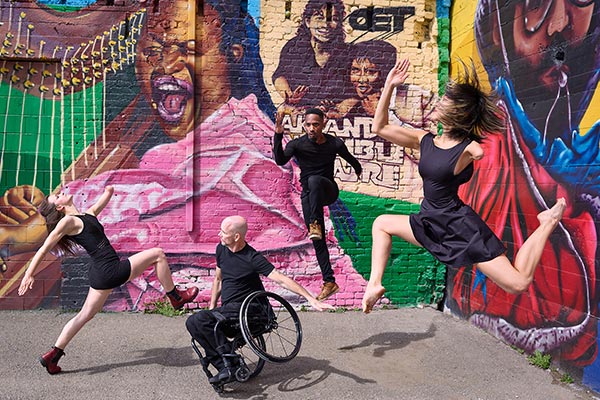
AXIS Dance marks its thirtieth anniversary with its first-ever New York season at Gibney Dance (photo by David DeSilva)
Gibney Dance Performing Arts Center, Studio H
280 Broadway between Chambers & Reade Sts.
November 16-18, $20-$25, 8:00
646-837-6809 gibneydance.org
California-based AXIS Dance Company is celebrating its thirtieth anniversary with its debut New York City season, November 16-18 at Gibney Dance. The company, founded in 1987 by Thais Mazur, brings together performers with and without physical disabilities through artistry, engagement, and advocacy. Under new artistic director Marc Brew, AXIS will present three works in Gibney’s Studio H, featuring company dancers James Bowen, Lani Dickinson, Scotty Hardwig, Carina Ho, Dwayne Schuneman, and Yuko Monden. Brew’s Radical Impact, a collaboration with composer and pianist JooWan Kim of Ensemble Mik Nawooj, explores identity politics and what it means to be human. Amy Seiwert is reworking her 2013 piece, The Reflective Surface, with an original score by Darren Johnston, seeking to surprise the audience and challenge its expectations. The evening will also include an excerpt from 2015’s In Defense of Regret, an examination of interior landscapes choreographed by Maurya Kerr, Alex Ketley, and Bobbi Jene Smith, with music by Emily Adams and Matan Dasaki. In addition, AXIS will be curating a series of integrated technique classes November 14-17 ($20, 10:00 am) with Brew (11/14), Mark Travis-Rivera (11/15), Heidi Latsky (11/16), and Alice Sheppard (11/17).
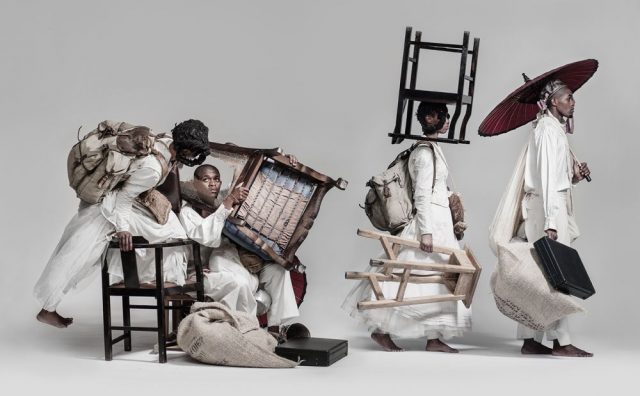
For Performa 17, South African multidisciplinary artist Mohau Modisakeng has created ZION, a procession through Manhattan invoking his native country’s history of colonialism, apartheid, and violent displacement. Beginning at 11:00 on November 11, Modisakeng and twenty dancers, carrying personal possessions, will make their way from Mother Zion Church in Harlem, zigzagging down Malcolm X Blvd. and Adam Clayton Powell Jr. Blvd. and to Hotel Theresa. At 2:00 the march stops at the Metropolitan Museum of Art and heads into Central Park, crossing the Great Lawn and Summit Rock. At 4:30, photographer, filmmaker, performance artist, and sculptor Modisakeng, whose previous work includes Passage, Metamorphosis, and Endabeni, will go from Anita’s Way public plaza to Times Square for a grand finale. The choreographed exodus equates what has happened in Cape Town’s District 6 and to Native Americans in Seneca Falls, New York, which was also the site of the first women’s rights convention, while also focusing on the current international refugee crisis.

 The DOC NYC festival, consisting of more than 150 nonfiction feature films and shorts, has room for stories small and large, allowing viewers to understand the world from the macro to the micro; Talya Tibbon and Joshua Bennett’s Sky and Ground, having its world premiere November 12 and 16, zeroes in on the micro. In his sweeping new documentary,