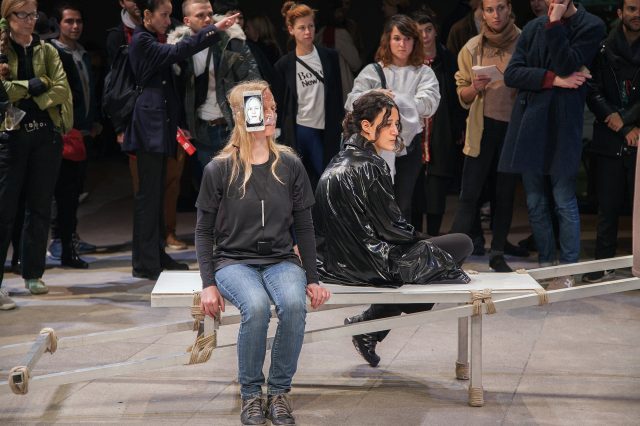
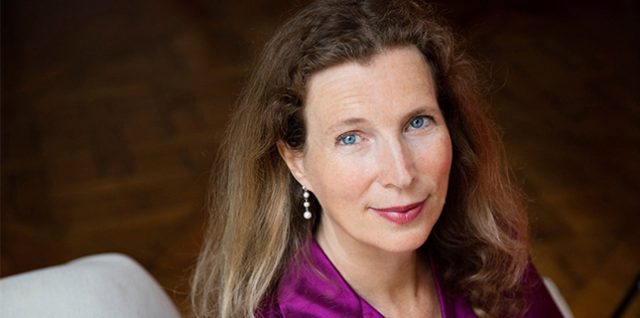
Analisa Teachworth and Jonas Wendelin, seen above performing “Dependency Demographics” last year in Germany, will be at MoMA PS1 for “Anti Bodies” on January 28 (photo courtesy Hamburger Bahnhof Museum)
MoMA PS1
22-25 Jackson Ave. at 46th Ave.
Sunday, January 28, $15, 2:00 – 6:00
718-784-2084 www.moma.org topicalcream.info
For the January 28 edition of its Sunday Sessions series held in the VW Dome, MoMA PS1 is teaming with Topical Cream, a self-described “New York-based platform [that] has supported a community of artists, writers, designers, and technologists through digital publishing and public programming initiatives.” From 2:00 to 6:00, there will be live performances, readings, film, and installations exploring how artists deal with self-preservation and resistance. The afternoon includes a performance by Analisa Teachworth with Jonas Wendelin, videos presented by Jacksonville-based artist Redeem Pettaway, live music by Zsela and Deli Girls, and a new piece by Julia Scher on surveillance and security. In addition, there will be video and poetry in the main museum building by Michelle Young Lee, Sara Hornbacher, Sarah Zapata, Maya Martinez, Rin Johnson, Sophia Le Fraga, and Natasha Stagg.
Who:Jim Boggia What: Ukulele tribute to the music of Bruce Springsteen Where:Arlene’s Grocery, 95 Stanton St. at Orchard St. When: Saturday, January 27, $10, 8:00 Why: Retro-pop nostalgia devotee Jim Boggia released three albums last decade, Fidelity Is the Enemy, Safe in Sound, and Misadventures in Stereo, and has also played with the Fab Faux and Mad Dogs & Dominos in addition to many, many others. On January 27, the vinyl-obsessed musician will be at Arlene’s Grocery, offering an alternative to the hottest show around, Springsteen on Broadway, with his own celebration, “Bruce Off Broadway: A Ukulele Tribute to the Boss.” Yes, Boggia, who was raised just outside Flint, Michigan, and is a longtime Philly dude, will be playing Springsteen songs on his ukulele, and, lo and behold, he’s pretty damn good at it, as evidenced by his videos for “Tenth Avenue Freeze-Out,”“Thunder Road,” and “Growing Up.” It might not quite be the toughest ticket going, but get one while you still can to check out what should be a very different kind of Springsteen experience.
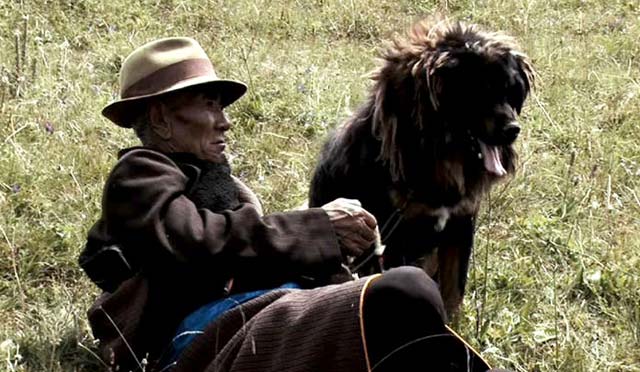
An old man (Lochey) would rather sell himself than his canine companion in Pema Tseden’s Old Dog
OLD DOG (LAO GOU/KHYI RGAN) (Pema Tseden, 2011)
Asia Society
725 Park Ave. at 70th St.
Sunday, January 28, free with advance registration, 2:00
212-288-6400 asiasociety.org
In June 2016, Tibetan filmmaker Pema Tseden, who lives and works in Beijing, was arrested by Chinese authorities at Xining airport in western China for “disrupting social order” supposedly over a luggage dispute, then was admitted to a local hospital with various injuries and illnesses. He was shortly freed following international outcry, and he went right back to making films about Tibet. The forty-eight-year-old writer and director, who spoke at Asia Society in 2010, returns to the institution this weekend for “Pema Tseden: Celebrating a Tibetan Voice,” a two-day free retrospective of all four of his feature films, two of which will be followed by Q&As with Tseden, whose Chinese name is Wanma Caidan. One of the films Tseden will be speaking after is his 2011 drama, Old Dog, a beautifully told, slowly paced meditation on Buddhism’s four Noble Truths — “Life means suffering”; The origin of suffering is attachment”; “The cessation of suffering is attainable”; and “There is a path to the cessation of suffering” — that ends with a shocking, manipulative finale that nearly destroys everything that came before it. In order to get a little money and to save the family’s sheep-herding dog from being stolen, Gonpo (Drolma Kyab) sells their Tibetan nomad mastiff to Lao Wang (Yanbum Gyal), a dealer who resells the prized breed to stores in China, where they’re used for protection. When Gonpa’s father (Lochey) finds out what his son has done, he goes back to Lao Wang and demands the return of the dog he’s taken care of for thirteen years. “I’d sell myself before the dog,” he tells his son.
And so begins a gentle tale of parents and children, set in a modern-day Tibet that is ruled by China’s heavy hand. Gonpa’s father doesn’t understand why his son, a lazy man who rides around on a motorized bike and never seems to do much of anything, doesn’t yet have any children of his own, so he pays for Gonpa and his wife, Rikso (Tamdrin Tso), to go to the doctor to see what’s wrong. Meanwhile, the old man keeps a close watch on his dog, wary that Lao Wang will to try to steal it again. Writer-director Tseden (The Sacred Arrow, The Weatherman’s Legacy) explores such themes as materialism, family, and attachment in a lovely little film that sadly is nearly ruined by its extreme final scene. Old Dog is screening January 28 at 2:00; “Pema Tseden: Celebrating a Tibetan Voice,” being held in conjunction with the upcoming exhibition “Unknown Tibet: The Tucci Expeditions and Buddhist Painting,” also includes 2005’s The Silent Holy Stones, 2009’s The Search, and 2015’s Tharlo.
Museum of Jewish Heritage — A Living Memorial to the Holocaust
Edmond J. Safra Plaza, 36 Battery Pl.
Tuesday, January 30, $25 (use code SOAP7 for $18 tickets), 7:00
866-811-4111 mjhnyc.org
In honor of International Holocaust Remembrance Day, which takes place every January 27, an impressive cast is performing seven staged readings of Jeff Cohen’s The Soap Myth in four East Coast states, from January 22 to February 1. The poignant drama was inspired by the true story of concentration camp survivor Morris Spitzer, whose one-man crusade to get Holocaust museums to include exhibits on soap made by Nazis from murdered humans was detailed in a 2000 article in Moment magazine. Reviewing the 2012 National Jewish Theater production at the Harold and Miriam Steinberg Center for Theatre, I wrote that it “offers an intriguing look into the speculative nature of history and one man’s furious dedication to setting the record straight.” The touring show is directed by Pam Berlin and stars seven-time Emmy winner Ed Asner as Milton Saltzman, two-time Tony nominee Johanna Day as Holocaust scholar Esther Feinman and Holocaust denier Brenda Goodsen, Naked Angels cofounder Ned Eisenberg as museum curator Daniel Silver, and Missing Bolts co-artistic director Blair Baker as journalist Annie Blumberg. The production will have two area performances, January 30 ($25) at the Museum of Jewish Heritage and February 1 ($36) at Hofstra Hillel at Hofstra University in Hempstead, followed by a talkback with members of the company.
Who:Catherine Cusset,Eric Mourlot What: Conversation and book signing Where:French Institute Alliance Française, Le Skyroom, 55 East 59th St. between Madison & Park Aves., 212-355-6160 When: Wednesday, January 24, $35, 7:00 Why: On January 24, French writer Catherine Cusset will be at FIAF to discuss her new book, Vie de David Hockney, which explores the intersection of the life and work of British painter David Hockney as she imagines he thinks and feels about it. Farther uptown, the Metropolitan Museum of Art is currently hosting a superb Hockney retrospective, an expansive, color-drenched exhibition that continues through February 25. Cusset, who has written such award-winning novels as Le problème avec Jane and L’autre quvon adorait, will be speaking with Eric Mourlot, the founder of Galerie Mourlot on East Seventy-Ninth St., whose family has been in the art business for more than a century. The conversation, which will take place in English, will be followed by a book signing
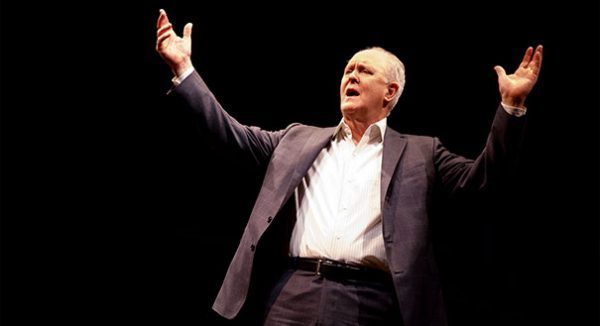
John Lithgow celebrates the power of storytelling in one-man Broadway show (photo by Joan Marcus)
American Airlines Theatre
227 West 42nd St. between Broadway & Eighth Ave.
Tuesday – Sunday through March 4, $49-$149
212-719-1300 www.roundabouttheatre.org
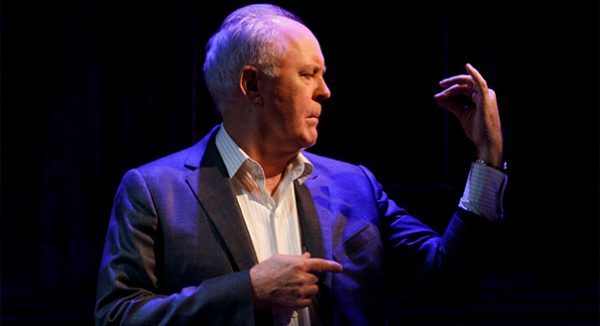
“So what the hell is this?!” John Lithgow proclaims at the beginning of his one-man Broadway show, John Lithgow: Stories by Heart, a Roundabout production that opened earlier this month at the American Airlines Theatre and continues through March 4. The two-act, two-hour presentation is a celebration of family, the art and power of storytelling, and the art of acting itself, but it’s too slight to feel like a full-fledged play. A Harvard grad and Mayflower descendant who was born in Rochester and raised in Ohio, Lithgow is one of our greatest actors, supremely accomplished on stage, screen, and television, as well as being a bestselling memoirist and children’s book author. Nominated for two Oscars, four Grammys, six Tonys (winning two), and twelve Emmys (taking home six awards), the seventy-one-year-old Lithgow (The World According to Garp, Third Rock from the Sun) has been a warming figure for five decades, a kind of thoughtful everyman who is charming even when he portrays wickedly evil villains. He’s been workshopping Stories by Heart on and off for ten years around the country, a kind of intimate, whistle-stop trunk show that combines personal memories with tour-de-force performances of a pair of classic short stories, one in each act. The format is clear and concise: Lithgow wanders around John Lee Beatty’s erudite, literary set, consisting of just a few chairs, a stool, and a small table in an elegant study, first sharing moving tales about his father, Arthur, a regional theater producer, director, and actor who operated several Shakespeare festivals, and his mother, Sarah, whom John says “was like some cheerful, unflappable road manager who always made everything turn out just fine.” Every night, Arthur would robustly read John and his siblings, David, Robin, and Sarah Jane, a story from the 1939 book Tellers of Tales, which contained one hundred short stories collected by W. Somerset Maugham. Lithgow proudly displays the treasured, beaten up, and humorously repaired copy his father used.
In John Lithgow: Stories by Heart, the master thespian pays tribute to his beloved father (photo by Joan Marcus)
In the first act, Lithgow (The Crown, Sweet Smell of Success) performs, from memory, Ring Lardner’s “Haircut,” as he remembers first picturing it in his head when his father read it to the kids in 1954. In dazzling style, Lithgow mimics every detail of giving a customer a shave and a haircut in a small town while relating the story of Jim Kendall, a troublemaker with a nasty sense of humor. In the second act, Lithgow talks poignantly about trying to take care of his aging father in the summer of 2002, turning the tables when he suddenly decides to offer to read his parents a story, and they chose P. G. Wodehouse’s wildly funny “Uncle Fred Flits By,” which Lithgow then performs onstage, playing every character, from Pongo Twistleton and Wilberforce Robinson to Mr. Walkinshaw and, of course, Uncle Fred. Lithgow is so skillful in telling the tale that, as with “Haircut,” you’ll think you are seeing all of the action happen before your eyes, even though it’s just one man with no props. But as good as each section of the play, expertly directed by Daniel Sullivan, is, and as sweetly captivating as Lithgow is, Stories by Heart does not quite come together as a Broadway production. As a play, it needs more of Lithgow talking about himself, his family, and his love of storytelling and less showing off his impressive acting abilities. Perhaps if I had seen it in Indianapolis, St. Louis, Austin, or Boulder or it ran at an off-Broadway house, I’d have a different reaction. But I found myself far more interested in Lithgow’s personal memories as they related to “Haircut” and “Uncle Fred Flits By” than by those short stories themselves, which take up the vast majority of Lithgow’s time onstage. Early on, Lithgow excitedly says to the audience, “I mean, look at you! You all look so eager and hopeful. What exactly are you hoping for? What do you hope will happen here tonight? What are you looking for? What do you want?” Stories by Heart is a grand and graceful public thank-you to Lithgow’s father, but I have to admit I was looking for something else, although there’s no doubt his father would have loved every second of it.
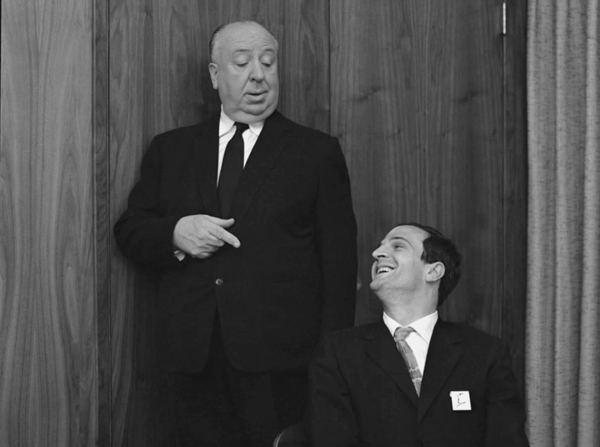
Documentary examines the extraordinary interview sessions between François Truffaut and Alfred Hitchcock (photo by Philippe Halsman)
HITCHCOCK/TRUFFAUT (Kent Jones, 2015)
Quad Cinema
34 West 13th St. between Fifth & Sixth Aves.
Monday, January 22, 5:00
Series runs January 19-25
212-255-2243 quadcinema.com cohenmedia.net/films
Founded in 2008 by Charles S. Cohen, the Cohen Media Group is an independent theatrical production and distribution company that specializes in high-quality new films and restorations of classic cinema. The Quad is paying tribute to the group’s first decade of operation with the twenty-two-film series “A Journey Through Cinema: Ten Years of the Cohen Media Group,” continuing through January 25. On January 22 at 5:00, the Quad is screening the widely praised 2015 CMG documentary Hitchcock/Truffaut. “In 1962, while in New York to present Jules and Jim, I noticed that every journalist asked me the same question: ‘Why do the critics of Cahiers du Cinéma take Hitchcock so seriously? He’s rich and successful, but his movies have no substance,’” French Nouvelle Vague auteur François Truffaut wrote in the preface to the second edition of what he called “the hitchbook,” the seminal film bible Truffaut/Hitchcock. “In the course of an interview during which I praised Rear Window to the skies, an American critic surprised me by commenting, ‘You love Rear Window because, as a stranger to New York, you know nothing about Greenwich Village.’ To this absurd statement, I replied, ‘Rear Window is not about Greenwich Village, it is a film about cinema, and I do know cinema.’” Truffaut was determined to change the prevailing belief that British director Alfred Hitchcock was a maker of studio fluff. “In examining his films,” Truffaut continued, “it was obvious that he had given more thought to the potential of his art than any of his colleagues. It occurred to me that if he would, for the first time, agree to respond seriously to a systematic questionnaire, the resulting document might modify the American critics’ approach to Hitchcock. That is what this book is all about.” The tome compiled a weeklong series of conversations between the thirty-year-old Truffaut and the sixty-three-year-old Hitchcock — the talks began on Hitch’s birthday — in the latter’s Hollywood studio office, with Helen Scott serving as translator. Although the interviews were recorded for audio, no film was shot; instead, Philippe Halsman took still photos. The story of the unique relationship between Truffaut, who as of 1962 had made only The 400 Blows and Shoot the Piano Player (he was in the midst of finalizing Jules and Jim), and Hitchcock, who was preparing his forty-eighth film, The Birds, is told in this splendid documentary, which cleverly reverses the order of Hitchcock and Truffaut’s names from the book it’s based on. Writer-director Kent Jones (head of the New York Film Festival), cowriter Serge Toubiana (former editor in chief of Cahiers du Cinéma) and editor Rachel Reichman lovingly combine Halsman’s pictures, audio clips from the original sessions, scenes from many of Hitchcock’s films (and a few of Truffaut’s), close-ups of dozens of pages from the book, rare archival footage, and new interviews with ten directors from around the world who weigh in on what makes Hitchcock’s work so special, so illuminating, so influential.
Sharing their praise are Martin Scorsese, Wes Anderson, David Fincher, Olivier Assayas, Peter Bogdanovich, Arnaud Desplechin, James Gray, Kiyoshi Kurosawa, Richard Linklater, and Paul Schrader, as they shed light on such classic films as Vertigo, Psycho, I Confess, The Wrong Man, Sabotage, Marnie, Rear Window, and others, with detailed shot-by-shot analysis while also praising the importance of “the hitchbook” itself. It all makes for an eye-opening crash course in cinema, and it’s likely to change the way you look and think about motion pictures. “It was a window into the world of cinema that I hadn’t had before, because it was a director simultaneously talking about his own work but doing so in a way that was utterly unpretentious and had no pomposity,” Gray (Little Odessa, Two Lovers) says about the book. “There was starting to be these kind of erudite conversations about the art form, but Truffaut was the first one where you really felt that they were talking about the craft of it,” Schrader (American Gigolo, Mishima) points out. “It’s not just that Truffaut wrote a book about Hitchcock. The book is an essential part of his body of work,” Olivier Assayas (Clouds of Sils Maria, Carlos) explains. “I think it conclusively changed people’s opinions about Hitchcock, and so Hitchcock began to be taken much more seriously,” Bogdanovich (The Last Picture Show, Paper Moon) asserts. And Scorsese (Taxi Driver, Raging Bull) sums up, “It was almost as if somebody had taken a weight off our shoulders and said yes, we can embrace this, we could go.” Of course, the book not only created a critical reassessment of Hitchcock but also helped Truffaut’s budding career. Narrated by Bob Balaban, the film places the work of the two men, who remained good friends until Hitchcock’s death in 1980 at the age of eighty (sadly, Truffaut died four years later at the age of fifty-two), in context of the history of cinema. “Why do these Hitchcock films stand up well? Well, I don’t know the answer,” Hitchcock is heard saying at the beginning of the documentary. By the end of the documentary, you will surely know the answer.
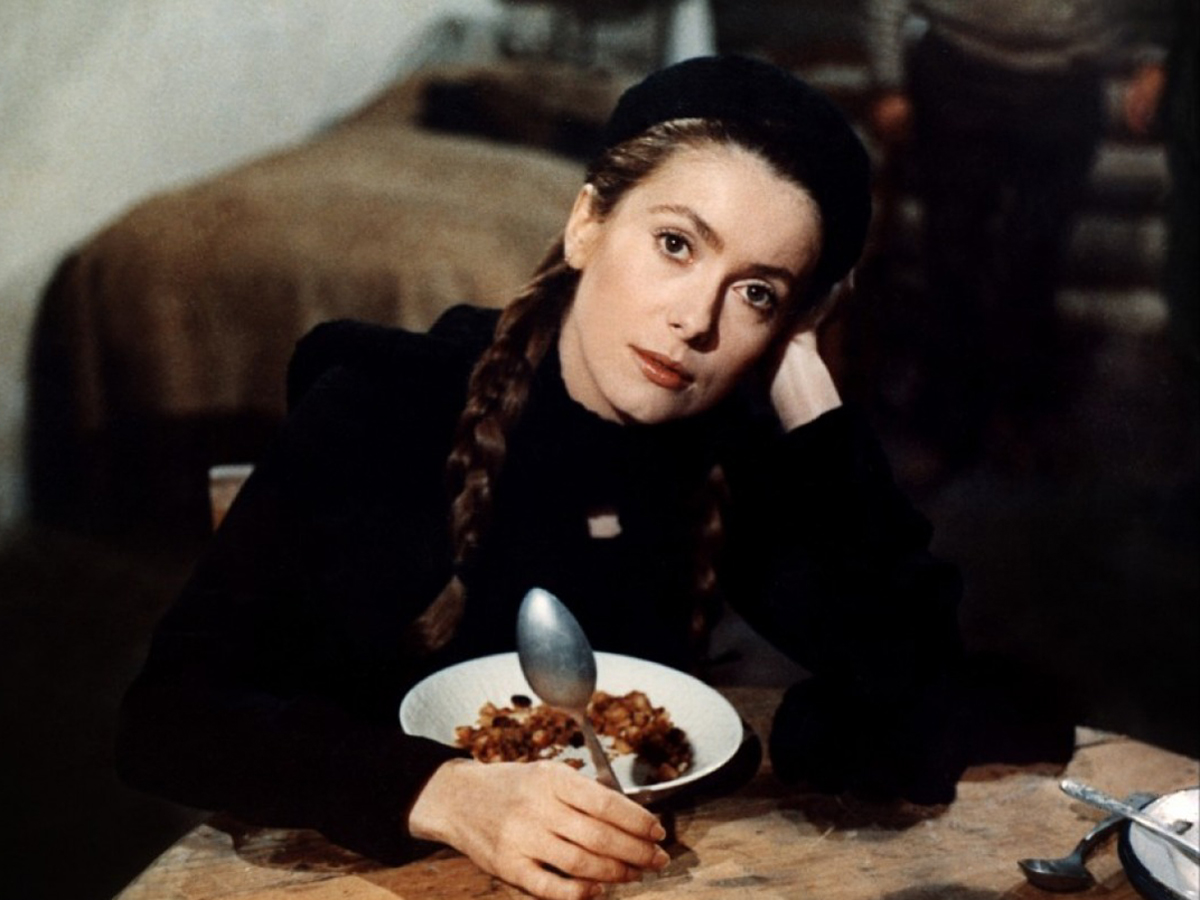
Catherine Deneuve dreams of a better life in Luis Buñuel’s Tristana
Luis Buñuel’s adaptation of Benito Pérez Galdós’s 1892 novel Tristana is an often underrated, deceivingly wicked psychological black comedy. A dubbed Catherine Deneuve stars as the title character, a shy, virginal young orphan employed in the household of the aristocratic, atheist Don Lope (Fernando Rey), an avowed atheist and aging nobleman who regularly spouts off about religion and the wretched social conditions in Spain (where the Spanish auteur had recently returned following many years living and working in Mexico). Soon Don Lope is serving as both husband and father to Tristana, who allows the world to pile its ills on her without reacting — until she meets handsome artist Horacio (Franco Nero) and begins to take matters into her own hands, with tragic results. Although Tristana is one of Buñuel’s more straightforward offerings with regard to narrative, featuring fewer surreal flourishes, it is a fascinating exploration of love, femininity, wealth, power, and a changing of the old guard. Deneuve is magnetic as Tristana, transforming from a meek, naive, gorgeous girl into a much stronger, and ultimately darker, gorgeous woman. Lola Gaos provides solid support as Saturna, who runs Don Lope’s household with a firm hand while also taking care of her deaf son, Saturno (Jesús Fernández), yet another male who is fond of the beautiful Tristana. The film is one of Buñuel’s most colorful works, wonderfully shot by cinematographer José F. Aguayo, who photographed Buñuel’s 1961 masterpiece Viridiana, which was also based on a novel by Galdós and starred Rey. Tristana is screening January 24 at 4:35 in the Quad series “A Journey Through Cinema: Ten Years of the Cohen Media Group,” which continues through January 25 with such other works as Julie Dash’s Daughters of the Dust, Ziad Doueiri’s The Attack, Asghar Farhadi’s Oscar-winning The Salesman, Deniz Gamze Ergüven’s Mustang, and Paolo and Vittorio Taviani’s The Night of the Shooting Stars.

 In June 2016, Tibetan filmmaker Pema Tseden, who lives and works in Beijing, was arrested by Chinese authorities at Xining airport in western China for “disrupting social order” supposedly over a luggage dispute, then was admitted to a local hospital with various injuries and illnesses. He was shortly freed following international outcry, and he went right back to making films about Tibet. The forty-eight-year-old writer and director, who spoke at Asia Society in 2010, returns to the institution this weekend for “Pema Tseden: Celebrating a Tibetan Voice,” a two-day free retrospective of all four of his feature films, two of which will be followed by Q&As with Tseden, whose Chinese name is Wanma Caidan. One of the films Tseden will be speaking after is his 2011 drama, Old Dog, a beautifully told, slowly paced meditation on Buddhism’s four Noble Truths — “Life means suffering”; The origin of suffering is attachment”; “The cessation of suffering is attainable”; and “There is a path to the cessation of suffering” — that ends with a shocking, manipulative finale that nearly destroys everything that came before it. In order to get a little money and to save the family’s sheep-herding dog from being stolen, Gonpo (Drolma Kyab) sells their Tibetan nomad mastiff to Lao Wang (Yanbum Gyal), a dealer who resells the prized breed to stores in China, where they’re used for protection. When Gonpa’s father (Lochey) finds out what his son has done, he goes back to Lao Wang and demands the return of the dog he’s taken care of for thirteen years. “I’d sell myself before the dog,” he tells his son.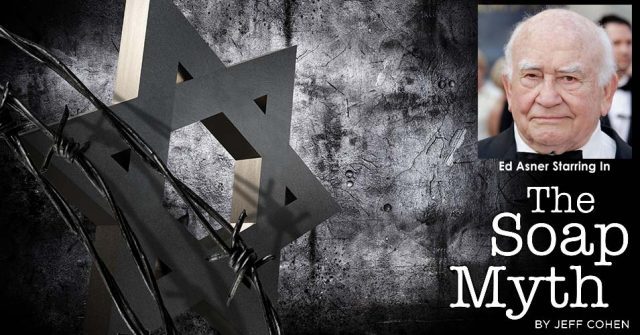
 Founded in 2008 by Charles S. Cohen, the Cohen Media Group is an independent theatrical production and distribution company that specializes in high-quality new films and restorations of classic cinema. The Quad is paying tribute to the group’s first decade of operation with the twenty-two-film series “A Journey Through Cinema: Ten Years of the Cohen Media Group,” continuing through January 25. On January 22 at 5:00, the Quad is screening the widely praised 2015 CMG documentary Hitchcock/Truffaut. “In 1962, while in New York to present Jules and Jim, I noticed that every journalist asked me the same question: ‘Why do the critics of Cahiers du Cinéma take Hitchcock so seriously? He’s rich and successful, but his movies have no substance,’” French Nouvelle Vague auteur François Truffaut wrote in the preface to the second edition of what he called “the hitchbook,” the seminal film bible Truffaut/Hitchcock. “In the course of an interview during which I praised Rear Window to the skies, an American critic surprised me by commenting, ‘You love Rear Window because, as a stranger to New York, you know nothing about Greenwich Village.’ To this absurd statement, I replied, ‘Rear Window is not about Greenwich Village, it is a film about cinema, and I do know cinema.’” Truffaut was determined to change the prevailing belief that British director Alfred Hitchcock was a maker of studio fluff. “In examining his films,” Truffaut continued, “it was obvious that he had given more thought to the potential of his art than any of his colleagues. It occurred to me that if he would, for the first time, agree to respond seriously to a systematic questionnaire, the resulting document might modify the American critics’ approach to Hitchcock. That is what this book is all about.” The tome compiled a weeklong series of conversations between the thirty-year-old Truffaut and the sixty-three-year-old Hitchcock — the talks began on Hitch’s birthday — in the latter’s Hollywood studio office, with Helen Scott serving as translator. Although the interviews were recorded for audio, no film was shot; instead, Philippe Halsman took still photos. The story of the unique relationship between Truffaut, who as of 1962 had made only The 400 Blows and Shoot the Piano Player (he was in the midst of finalizing Jules and Jim), and Hitchcock, who was preparing his forty-eighth film, The Birds, is told in this splendid documentary, which cleverly reverses the order of Hitchcock and Truffaut’s names from the book it’s based on. Writer-director Kent Jones (head of the New York Film Festival), cowriter Serge Toubiana (former editor in chief of Cahiers du Cinéma) and editor Rachel Reichman lovingly combine Halsman’s pictures, audio clips from the original sessions, scenes from many of Hitchcock’s films (and a few of Truffaut’s), close-ups of dozens of pages from the book, rare archival footage, and new interviews with ten directors from around the world who weigh in on what makes Hitchcock’s work so special, so illuminating, so influential.