28 West 27th St. between Broadway & Sixth Ave.
Saturday, December 8, free, 3:00 – 6:00 sit, 6:00 – 9:00 after-party theidproject.org/sitathon
For a dozen years, the nonprofit Interdependence Project has been dedicated to meditation, arts, and activism, building a “community committed to personal development and collective engagement, [seeking] to create a wiser world, one mind at a time.” On December 8, the organization will host its annual Sit-a-thon fundraiser and year-end party, taking place at 28 West 27th St. You can either join a three-hour meditation beginning at 3:00 or sponsor someone who will be participating; the sit will be followed by a three-hour after-party. There is also a silent auction that has already begun online; items available include a guided tour and cocktail party at the Rubin, membership to Asia Society, two tickets and a backstage tour of the Broadway musical Beautiful, spin classes, private conflict resolution sessions, an astrology reading, group admissions to the Museum of the Moving Image and the Noguchi Museum, and a yoga set. We well remember the IDP’s November 2009 Sit Down, Rise Up event, a twenty-four-hour sit in the front windows of ABC Home & Carpet, in which one of us, a former IDP board member, took part. The 2018 Sit-a-thon might not be quite as complex a production, but every action makes a difference, both personally and in the world at large, something we all have a stake in.
Tony Shalhoub, Bebe Neuwirth, Tony Yazbeck, and Carmen de Lavallade, will read dance pieces in next “Selected Shorts” presentation at Symphony Space
Who: Carmen de Lavallade, Bebe Neuwirth, Tony Shalhoub, Tony Yazbeck, Patricia Kalember What: Stories about American dance and performance of newly commissioned work Where:Symphony Space, Peter Jay Sharp Theatre, 2537 Broadway at 95th St., 212-864-5400 When: Saturday, December 12, $21-$87, 7:30 Why: In conjunction with the publication of Dance in America: A Reader’s Anthology, Symphony Space is dedicating its next edition of “Selected Shorts” to writings about dance. The book, edited by Mindy Aloff, consists of works by Agnes de Mille, Lincoln Kirstein, John Updike, Ralph Waldo Emerson, Emily Dickinson, Edmund Wilson, W. H. Auden, Isadora Duncan, Charles Dickens, George Balanchine, and Josephine Baker, among many others. The pieces will be read by Kennedy Center honoree and lifetime achievement Obie winner Carmen de Lavallade, two-time Tony and Emmy winner Bebe Neuwirth, Tony and Emmy winner Tony Shalhoub, and Tony nominee Tony Yazbeck. The evening will be hosted by Patricia Kalember and will feature the premiere of a newly commissioned dance inspired by Ben Loory’s 2015 short story “The Cape,” choreographed by Gabrielle Lamb of Pigeonwing Dance.
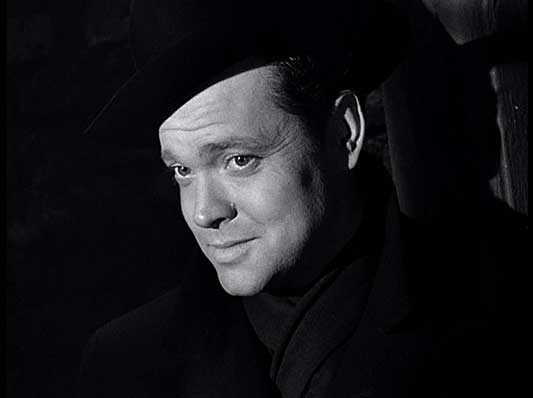
Orson Welles makes one of the greatest entrances in film history in The Third Man
THE THIRD MAN (Carol Reed, 1949)
Quad Cinema
34 West 13th St. between Fifth & Sixth Aves.
Friday, December 7, 9:00, and Sunday, December 9, 8:30
Series runs December 7-13
212-255-2243 quadcinema.com
In order to finance his career as a director (and pay off tax debts), Orson Welles acted in other people’s films and made television commercials, from the sublime to the ridiculous; between 1958 and 1961 alone, he appeared in or narrated nearly a dozen and a half movies. In conjunction with the celebrated release of the long-unfinished project The Other Side of the Wind, about attempts to complete a Hollywood auteur’s final film after his death, the Quad is presenting “Actor for Hire: The Other Side of Orson Welles,” running December 7-13 and consisting of thirteen movies the Boy Genius acted in but did not write or direct. The very best of them is The Third Man, screening December 7 and 9. (Among the rarer, less-well-known entries are Henry Hathaway’s The Black Rose, Matt Cimber’s Butterfly, Henry Jaglom’s A Safe Place, and Bert I. Gordon’s Necromancy.) Carol Reed’s 1949 thriller is quite simply the most entertaining film you’re ever likely to see. Set in a divided post-WWII Vienna amid a thriving black market, The Third Man is heavy in atmosphere, untrustworthy characters, and sly humor, with a marvelous zither score by Anton Karas. Joseph Cotten stars as Holly Martins, an American writer of Western paperbacks who has come to Vienna to see his old friend Harry Lime (Welles), but he seems to have shown up a little late.
While trying to find out what happened to Harry, Martins falls for Harry’s lover, Anna (Alida Valli); is told to get out of town by Major Calloway (Trevor Howard) and Sergeant Paine (Bernard “M” Lee); meets a stream of Harry’s more interesting, mysterious friends, including Baron Kurtz (Ernst Deutsch) and Popescu (Siegfried Breuer); and is talked into giving a lecture to a literary club by old Mr. Crabbin (Wilfrid Hyde-White). Every scene is a finely honed work of art, filled with long shadows, echoing footsteps, dripping water, and unforgettable dialogue about cuckoo clocks and other strangeness. The shot in which Lime is first revealed, standing in a doorway, a cat brushing by his feet, his tongue firmly in cheek as he lets go a miraculous, knowing smile, is one of the greatest single moments in the history of cinema.
Orson Welles stars as Cardinal Wolsey in Fred Zinnemann’s A Man for All Seasons
A MAN FOR ALL SEASONS (Fred Zinnemann, 1966)
Quad Cinema
Saturday, December 8, 1:00, and Tuesday, December 11, 5:00 quadcinema.com
Orson Welles plays the real-life Cardinal Wolsey in Fred Zinnemann’s majestic adaptation of Robert Bolt’s 1962 Tony-winning stage drama, A Man for All Seasons. Paul Scofield won a Tony for the Broadway production as well as an Oscar as Sir Thomas More in the classic film, which earned a total of six Academy Awards, including Best Picture, Best Director, and Best Adapted Screenplay for Bolt. Unable to produce a male heir with his wife, Catherine, King Henry VIII (Robert Shaw) is seeking a divorce in order to marry Anne Boleyn (Vanessa Redgrave), but that would mean going against church doctrine, something the honest and principled Sir Thomas refuses to do. Sir Thomas finds himself at odds not only with the cardinal and the king but also with Thomas Cromwell (Leo McKern) and the ruthlessly ambitious Richard Rich (John Hurt). His friend the Duke of Norfolk (Nigel Davenport) tries to get him to sign a document allowing the king to divorce and remarry, changing the power of the church, begging him, “Oh, confound all this. I’m not a scholar. I don’t know whether the marriage was lawful or not. But damn it, Thomas, look at these names! Why can’t you do as I did and come with us, for fellowship!” Sir Thomas famously replies, “And when we die, and you are sent to heaven for doing your conscience, and I am sent to hell for not doing mine, will you come with me, for fellowship?”
It’s a spectacular moment in a film filled with spectacular moments as More’s wife, Alice (Wendy Hiller), daughter, Margaret (Susannah York), and potential son-in-law, William Roper the Younger (Corin Redgrave), want him to reconsider his choices and the king himself states his case, but Sir Thomas isn’t budging; he’s one of the most principled, brilliant characters ever put on celluloid, in one of the best historical dramas ever made. And in a key scene, Welles has this wonderful exchange with Scofield: “That thing out there, at least she’s fertile,” a dour Cardinal Wolsey says, referring to Anne. “But she’s not his wife,” Sir Thomas responds. “No, Catherine’s his wife, and she’s barren as a brick. Are you going to pray for a miracle?” the cardinal asks, to which More concludes, “There are precedents.”
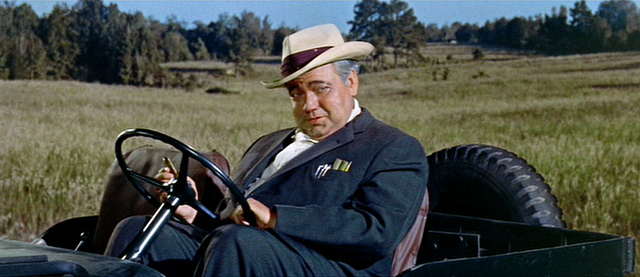
Will Varner (Orson Welles) runs just about everything and everybody in The Long, Hot Summer
THE LONG, HOT SUMMER (Martin Ritt, 1958) & COMPULSION (Richard Fleischer, 1959)
TLHS: Saturday, December 8, 5:40, and Thursday, December 13, 5:00
C: Sunday, December 9, 6:30, and Wednesday, December 12, 5:00 quadcinema.com
In Martin Ritt’s The Long, Hot Summer and Richard Fleischer’s Compulsion, the big, blustery Orson Welles, his sweat practically dripping off the screen, takes center stage though primarily a supporting character. Welles claimed that he hated making The Long, Hot Summer, a fiery Tennessee Williams–like melodrama based on several works by William Faulkner, although clearly inspired by Cat on a Hot Tin Roof. Welles plays Will Varner, a wealthy plantation magnate who essentially owns a small southern town. He is grooming his son, Jody (Anthony Franciosa), to take over his empire, but when ambitious drifter and rumored barn burner Ben Quick (Paul Newman, who played Brick in Cat the same year) shows up looking for work, Will decides to set him against Jody, with the winner capturing the spoils, which in the case of Quick might also include Will’s young but already spinsterish daughter, Clara (Joanne Woodward, who married Newman during production). Shot in blazing CinemaScope, the film, which also stars Angela Lansbury as Will’s girlfriend, Lee Remick as Jody’s shopping-loving wife, and Richard Anderson as Clara’s momma’s boy beau, boils over with sexual energy that lives up to the original trailer’s declaration that “nothing — but nothing! — will be withheld!” The Long, Hot Summer earned no Oscar nominations and was not a box-office hit, but Newman became an international superstar by being named Best Actor at the Cannes Film Festival, while the film was in competition for the Palme d’Or.
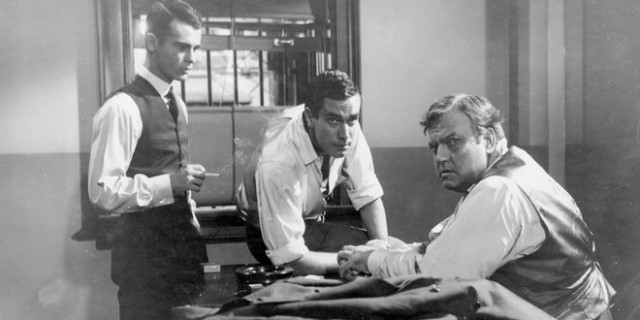
Jonathan Wilk (Orson Welles) meets with clients Judd Steiner (Dean Stockwell) and Artie Strauss (Bradford Dillman) in Compulsion
The next year, Welles and costars Dean Stockwell and Bradford Dillman shared the Best Actor award at Cannes for Compulsion, a searing exploration of crime and punishment in the guise of a teen exploitation flick. (Dig that crazy opening credit sequence!) Based on the novel and play by Meyer Levin that fictionalized the Leopold and Loeb case, Compulsion explores the nature of good and evil as it follows wealthy Chicago law school students Artie Strauss (Dillman) and Judd Steiner (Stockwell) on their mad rampage of murder and rape, determined to commit the perfect crime and get away with it because of their superior intellect. But when fellow student Sid Brooks (Martin Milner) finds a pair of glasses that might be the key to discovering who killed little Paulie Kessler, it’s going to take a lot more than understanding Friedrich Nietzsche to keep Artie and Judd from the hangman’s noose. Fleischer, who had a diverse career that ranged from Violent Saturday, The Vikings, Fantastic Voyage, and Doctor Dolittle to The Boston Strangler, Red Sonja, and Amityville 3-D, adds Hitchcockian flourishes to Compulsion, evoking the homoeroticism of Strangers on a Train and Rope (which was also a fictionalized retelling of the Leopold and Loeb story) while having most of the violence occur offscreen. (Fleischer’s cinematic use of the pair of glasses is also a direct reference to the glasses in Strangers on a Train, while Judd’s study of ornithology, highlighted by the stuffed birds in his bedroom, foresees Norman Bates’s taxidermy obsession in Psycho, made a year later.)
Like The Long, Hot Summer,Compulsion boasts a strong — and familiar — supporting cast, including E. G. Marshall (The Bold Ones) as clever DA Harold Horn, Gavin MacLeod (The Love Boat) as one of his assistants, Diane Varsi (Peyton Place) as Sid’s girlfriend, Edward Binns (12 Angry Men) as a crack reporter, and Anderson (Oscar Goldman in The Six Million Dollar Man) as Judd’s older brother. But it is Welles’s presence that takes over the film in its later stages; playing larger-than-life defense attorney Jonathan Wilk, a character based on Clarence Darrow, he enters the film in a grand manner, as Fleischer opens up a space for him to come through a door and dwarf everyone else. Wilk’s eloquent closing argument about capital punishment is one that should be studied by lawyers, actors, directors, and death penalty proponents — even if Welles required the use of a teleprompter to get him through the powerful speech in a single take. Like The Long, Hot Summer,Compulsion received no Oscar nominations and was a box-office failure. When seen back-to-back, the two films work extremely well together, with smoldering story lines, expert cinematography (by Joseph LaShelle in the former, William C. Mellor in the latter), intense acting, and, yes, Orson Welles.
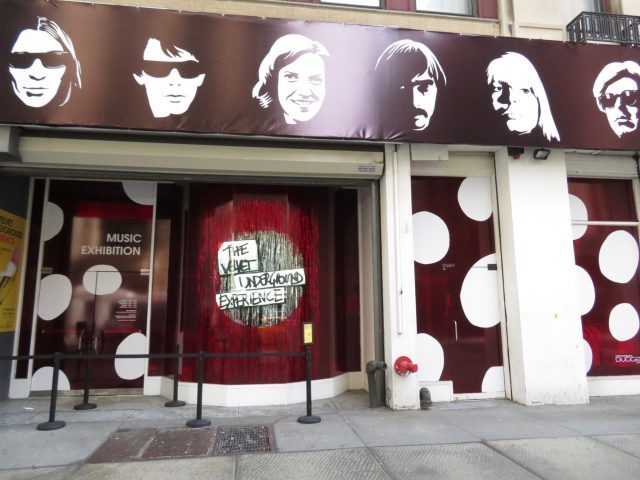
The front cover of Michael Leigh’s 1963 paperback, The Velvet Underground, declares, “Here is an incredible book. It will shock and amaze you. But as a documentary on the sexual corruption of our age, it is a must for every thinking adult.” Fittingly, one of the most influential bands in music history took its name from that tome, one of many facts one can learn at “The Velvet Underground Experience,” a pop-up exhibit continuing in Greenwich Village through December 30. From 1964 to 1970, the Velvet Underground released four studio albums that ultimately helped change the face of rock and roll and thoroughly situated music amid the avant-garde art world. The exhibition consists of hundreds of photographs (by Fred W. McDarrah, Stephen Shore, Nat Finkelstein, Billy Name, and others), archival footage, six new short nonfiction films, and biographical stations dedicated to each band member — Lou Reed, John Cale, Sterling Morrison, Maureen Tucker, Angus MacLise, Nico, Doug Yule, and Walter Powers — in addition to others who played a role in the band’s development, including Andy Warhol, Edie Sedgwick, Danny Williams, Gerard Malanga, Candy Darling, Piero Heliczer, Jonas Mekas, Barbara Rubin, La Monte Young, and Allen Ginsberg. Allan Rothschild’s twelve-minute film goes back and forth between the childhoods of Reed and Cale, revealing fascinating similarities and differences (for example, they were born merely a week apart in March 1942), and Reed’s younger sister, Merrill Reed Weiner, shares intimate details about her brother’s psychological issues. Véronique Jacquinet’s ten-minute work traces the rise of Christa Päffgen, better known as Nico.
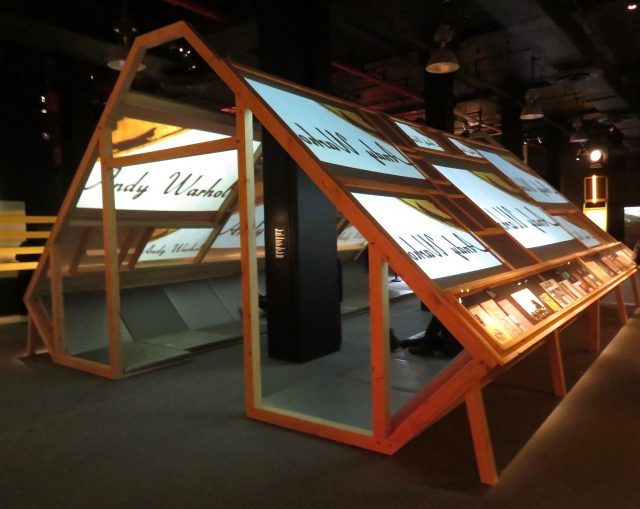
Multimedia pop-up exhibit pays tribute to the Velvet Underground (photo by twi-ny/mdr)
Curated by Christian Fevret, and Carole Mirabello and designed by Matali Crasset, the exhibition is centered by a tentlike structure where visitors can lie down on silver mattresses and watch projections of rare, short films surrounding the band’s debut album, The Velvet Underground & Nico, aka the Banana Album, and the live show known as the Exploding Plastic Inevitable. Warhol’s screen tests of the band run continuously on one wall. Tony C. Janelli and Robert Pietri’s animated short, The Velvet Underground Played at My High School, is a fun film about the band’s first gig at Summit High School in New Jersey in December 1965 (opening for the Myddle Class), which did not exactly go over so well, save for its impact on one fifteen-year-old student. Downstairs is a look at what Greenwich Village was like in the 1960s and 1970s, with clips of Nico, Cale, and Reed’s acoustic reunion show in 1972 in Le Bataclan, a split-screen tribute to Rubin by Mekas, and experimental works from the Film-Makers’ Cooperative, including Rubin’s X-rated art-porn favorite, Christmas on Earth. (There is also a lower level where talks are held on Tuesday nights and concerts on Thursday evenings.) And of course, there’s the music, with multiple versions of such songs as “I’m Waiting for the Man,” “Venus in Furs,” “Femme Fatale,” “Heroin,” and “Sweet Jane” (from the group’s four main albums, The Velvet Underground & Nico, White Light/White Heat, The Velvet Underground, and Loaded) echoing through the space. “The Velvet Underground Experience” is not an exhaustive study of the band, and it does have a lot of peripheral material in the New York City section, probably because the show was originally presented in Paris, but it is still a treat for VU devotees and those curious about a seminal moment in the history of music.
Ronnie Spector will present annual holiday show at City Winery on December 22
Hanukkah is about to start and Christmas is only a few weeks away, so the city is filling up with holiday-themed comedy shows, concerts, and special events. They range from classical performances at the Met and Carnegie Hall to hip-hop, soul, and rock extravaganzas at smaller clubs to Jewish takes on the season. Below is a sampling of some of the cooler events; keep watching this space for more additions.
Sunday, December 2 Hanukkah Family Day, art, music, and more for children ages three and up, with Josh & the Jamtones, Jeff Hopkins, Jewish Museum, free with museum admission (children eighteen and under free), 11:00 am – 4:00 pm
Thursday, December 6 Festival of Light w/ Matisyahu and special guests the Soul Rebels and GRiZ plus friends, Brooklyn Steel, $30-$35, 8:00
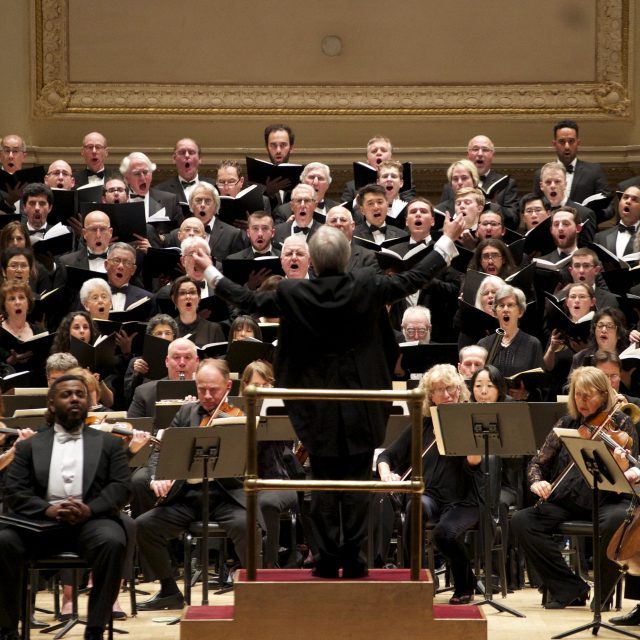
The Cecilia Chorus of New York will perform Handel’s Messiah at Carnegie Hall on December 8
Saturday, December 8 The Cecilia Chorus of New York with Orchestra: HANDEL Messiah, with soprano Shakèd Bar, tenor Michael St. Peter, bass William Guanbo Su, and countertenor Nicholas Tamagna, Carnegie Hall, Stern Auditorium / Perelman Stage, $25-$85, 8:00
Cyndi Lauper & Friends: Home for the Holidays, benefit for True Colors Fund, with Amanda Palmer, Angie Stone, A$AP Rocky, Bebe Rexha, Bishop Briggs, Charlie Musselwhite, Dr. Elmo, Gina Yashere, Natalie Merchant, Regina Spektor, Robert Glasper, Sara Ramirez, Shea Diamond, and the Knocks, hosted by Carson Kressley, Beacon Theatre, $50-$150, 8:00
Sunday, December 9 For the Miracles: A Holiday Celebration, with the Young People’s Chorus of New York City performing Samuel Adler’s The Flames of Freedom and Benjamin Britten’s A Ceremony of Carols, conducted by Elizabeth Núñez, Met Fifth Ave., Grace Rainey Rogers Auditorium, $65 (bring a child for $1), 3:00
Holiday Concert, featuring Scandinavian and American holiday favorites and Saint Lucia procession with traditional gowns and glowing candles, with members of the Swedish Church Choir in New York, Scandinavia House, $25, 5:00
The 12th Annual Menorah Horah Hanukkah Burlesque Show, with the Schlep Sisters (Minnie Tonka and Darlinda Just Darlinda), Sapphire Jones, Zoe Ziegfeld, the Great Dubini, Allegra, host Bastard Keith, DJ Momotaro, Rara Darling, and Madame Brassiere, Highline Ballroom, $25-$50, 8:00
Friday, December 14 Yule Dogs: A Very Mercury Christmas, with Wormburner, Christopher John Campion with Mad Staggers, and special guests Lifeguard Nights, Mercury Lounge, $12-$15, 7:00
Sunday, December 16 Unsilent Night, participatory boombox concert with Phil Kline, Washington Square Park, free, 6:00
Ingrid Michaelson’s twelfth annual Holiday Hop takes place at the Beacon on December 17
Oratorio Society of New York: HANDEL Messiah, conducted by Kent Tritle, with soprano Leslie Fagan, countertenor Daniel Moody, tenor Isaiah Bell, bass-baritone Joseph Beutel, and the Chorus and Orchestra of the Society, Carnegie Hall, Stern Auditorium / Perelman Stage, $28-$100, 8:00
Park Avenue Armory, Wade Thompson Drill Hall
643 Park Ave. at 67th St.
December 4-15, $40-$90, 2:00/7:00/8:00
212-933-5812 armoryonpark.org www.theheadandtheload.com
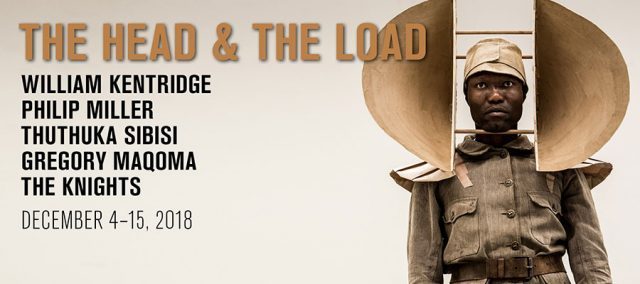
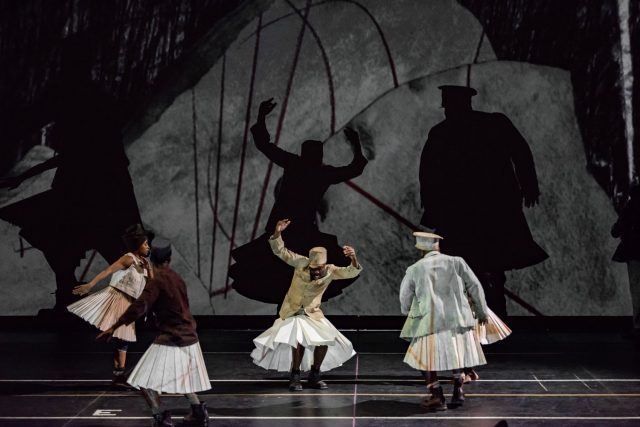
South African multidisciplinary artist and certified genius William Kentridge creates charcoal drawings, live-action and animated films, operas, multimedia installations, museum and gallery exhibitions, sculptures, collages, chamber pieces, university lectures, circus-like processions, and one-man shows, including a recent performance of Kurt Schwitters’s Ursonate Dada speech at Harlem Parish. For his latest unique, complex presentation, he is bringing the eighty-five-minute The Head & the Load to the Park Avenue Armory, where it will run December 4-15. The work was commissioned by 14-18 NOW and Park Avenue Armory along with Ruhrtriennale and MASS MoCA as part of the centenary of the end of WWI. “The Head & the Load is about Africa and Africans in the First World War. That is to say about all the contradictions and paradoxes of colonialism that were heated and compressed by the circumstances of the war,” Kentridge explains on the event website. “It is about historical incomprehension (and inaudibility and invisibility). The colonial logic towards the black participants could be summed up: ‘Lest their actions merit recognition, their deeds must not be recorded.’ The Head & the Load aims to recognise and record.” The title comes from the Ghanaian proverb “The head and the load are the troubles of the neck,” and the work pays tribute to African porters and carriers who served the French, German, and British armies during the war.
The technical aspects of productions are always pristine. Kentridge is credited with concept and design and is the director; his longtime collaborator, Philip Miller, composed the score and handled the music concept and orchestration, while Thuthuka Sibisi is cocomposer and music director. The projection design is by Catherine Meyburgh, with Janus Fouché, Žana Marović, and Meyburgh doing video editing and compositing. The choreographer is Gregory Maqoma, with cinematography by Duško Marović, costumes by Greta Goiris, sets by Sabine Theunissen, lighting by Urs Schönebaum, and sound by Mark Grey. The North American premiere at the armory will be performed by actors Mncedisi Shabangu, Hamilton Dlamini, Nhlanhla Mahlangu, and associate director Luc De Wit; featured vocalists and musicians Joanna Dudley, Nhlanhla Mahlangu, Ann Masina, Bham Ntabeni, Sipho Seroto, N`Faly Kouyate on kora, Mario Gotoh on viola, Tlale Makhene on percussion, and Vincenzo Pasquariello on piano (among other members of the Knights chamber orchestra); dancers Maqoma, Julia Zenzie Burnham, Thulani Chauke, Xolani Dlamini, Nhlanhla Mahlangu; and ensemble vocalists Mhlaba Buthelezi, Ayanda Eleki, Grace Magubane, Ncokwane Lydia Manyama, Tshegofatso Moeng, Mapule Moloi, Lindokuhle Thabede, and Motho Oa Batho. Kentridge, Miller, and Sibisi will participate in an artist talk on December 6 at 6:30 with Dr. Gus Casely-Hayford, placing The Head & the Load in political context.
William Kentridge’s The Head & the Load runs at Park Ave. Armory December 4-15 (photo by Stella Olivier)
“The test is really to find an approach that is not an analytic dissection of a historical moment, but which doesn’t avoid the questions of history. Can one find the truth in the fragmented and incomplete? Can one think about history as collage, rather than as narrative?” Kentridge asks. “Carrying through the idea of history as collage, the libretto of The Head & the Load is largely constructed from texts and phrases from a range of writers and sources, cut-up, interleaved, and expanded. Frantz Fanon translated into siSwati; Tristan Tzara in isiZulu; Wilfred Owen in French and dog-barking; the conference of Berlin, which divided up Africa, rendered as sections from Kurt Schwitters’s Ursonate; phrases from a handbook of military drills; Setswana proverbs from Sol Plaatje’s 1920 collection; some lines from Aimé Césaire.” Meanwhile, Miller and Sibisi explain, “During the First World War, the English Committee for the Welfare of Africans sent hymn books, harmonicas, gramophones, and banjos to the African battalions so that they could entertain themselves. What songs of war, love, and longing might have been made by these African men in the trenches on the Western Front or in the camps of East Africa? . . . What did the Great War sound like to the African soldiers and carriers who fought in it? Their experiences were not considered significant enough to be recorded or archived. We can only imagine the noises they heard or the music they made, through the multitude of voices and sounds we have created in The Head & the Load.” As always with Kentridge, expect the unexpected, and the extraordinary.
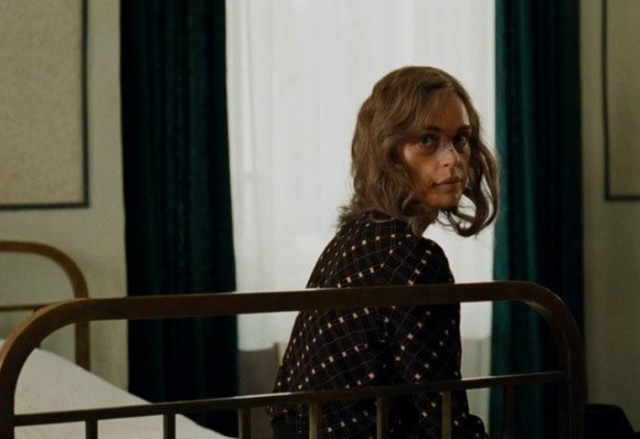
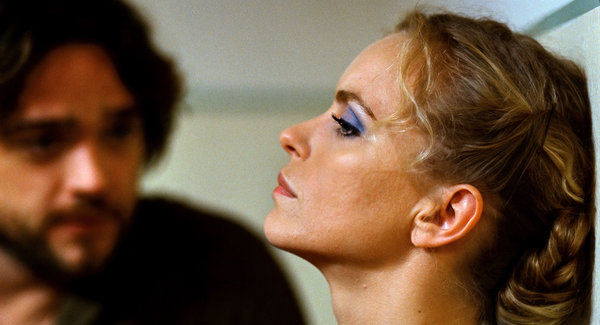
Nelly Lenz (Nina Hoss) tries to recapture her past in Christian Petzold’s Phoenix
PHOENIX (Christian Petzold, 2014)
Film Society of Lincoln Center, Walter Reade Theater
165 West 65th St. between Eighth Ave. & Broadway
Saturday, December 1, 6:45 (introduced by director)
Sunday, December 9, 6:30
Festival runs November 30 – December 13
212-875-5610 www.filmlinc.org www.ifcfilms.com
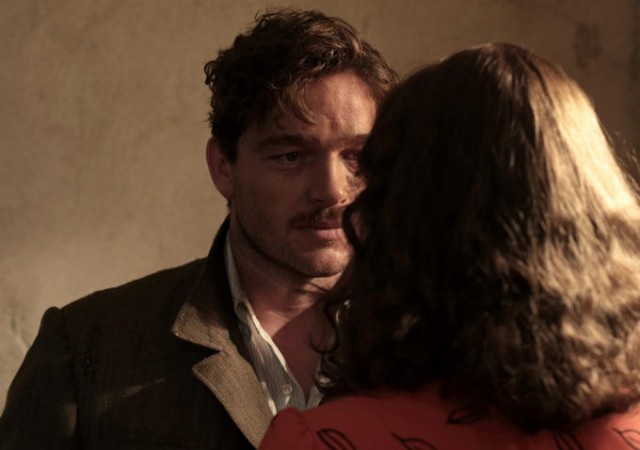
In conjunction with the release of Christian Petzold’s latest film, The State I Am In, the Film Society of Lincoln Center is presenting the two-week series “The State We Are In,” consisting many of the German filmmakers’ previous works, including early television movies, as well as films that influenced him. Screening on December 1 at 6:45 (introduced by Petzold) and December 9 at 6:30, 2014’s Phoenix is a mesmerizing noir set in 1945 Berlin, where an Auschwitz survivor tries to reestablish her identity, but going home turns into a strange, painful, and dangerous journey. Nina Hoss is riveting as Nelly Lenz, a nightclub singer who is the only member of her family to have made it out of the war alive. Reentering Germany from Switzerland, she seems like a ghost or a mummy, her face swathed in bandages after having been severely disfigured by a gunshot wound. Wealthy enough to afford special facial reconstruction surgery, she is offered the chance to look like anyone she wants; the doctor gently suggests an entirely new appearance would be best, but she defiantly demands her own face back. Cared for by a companion, Lene Winter (Nina Kunzendorf), a fellow Jew who helps Holocaust survivors and wants to move to Palestine with her, Nelly seems psychologically frozen, tentative and frightened of the future. Instead of looking forward, she decides to go back to her non-Jewish husband, Johnny (Ronald Zehrfeld), now called Johannes. He has disowned his past so thoroughly that he doesn’t recognize Nelly as his wife, returned from the concentration camp, instead believing her to be a survivor who resembles her just enough to enable him to cash in on Nelly’s inheritance. As he grooms her to walk and talk like Nelly, reminiscent of what Jimmy Stewart does to Kim Novak in Alfred Hitchcock’s Vertigo, she begins finding out things about him that are deeply troubling, including the nightmarish possibility that he might have been the one who betrayed her to the Nazis.
Johnny (Ronald Zehrfeld) doesn’t realize what’s right in front of him in gripping post-WWII noir
Tense and unnerving, Phoenix was inspired by Alexander Kluge’s An Experiment in Love, Hubert Monteilhet’s Return from the Ashes, Harun Farocki’s “Switched Women,” and oral histories from the Shoah Foundation. (Farocki, who passed away in July 2014, collaborated with Petzold on the screenplay.) Hoss and Zehrfeld, who previously worked together in Petzold’s gripping 2012 psychological thriller, Barbara, have an appropriately uneasy chemistry, keeping things off balance as former lovers who pursue an unusual courtship, he unwilling to acknowledge what’s right in front of him, she desperate to be recognized for who she was, and is. It’s a kind of eerie cat-and-mouse game, with more than a touch of Stockholm Syndrome, that intelligently examines a fascinating German amnesia about the war and its victims on a very personal scale. Kunzendorf (Scene of the Crime, Years of Love) is excellent as Lene, a forward-thinking woman who wants to start a new life with Nelly yet is unable to drag her away from her obsession with Johnny, while Zehrfeld (Finsterworld) has just the right amount of trepidation as Johnny pursues his selfish goal. But Hoss, in her sixth film with Petzold (Jerichow, Something to Remind Me), is simply extraordinary, her every movement utterly captivating, portraying complex emotions with remarkable skill. And the ending is simply brilliant, unforgettable. Once it gets past a few minor incongruities, Phoenix rises high, a spellbinding story of a twisted relationship in 1945 Germany that calls upon ancient myth, modern psychology, a nation’s guilt, and love and longing for the past to evoke universal themes — while posing some very difficult questions for everyone.
Andre (Ronald Zehrfeld) and Barbara (Nina Hoss) try to retain their humanity under difficult conditions in 1980 East Germany
BARBARA (Christian Petzold, 2012)
Film Society of Lincoln Center, Walter Reade Theater
Tuesday, December 11, 7:00, and Thursday, December 13, 9:00 www.adoptfilms.net
Christian Petzold’s Barbara is a gripping, eerily slow-paced psychological thriller that explores fear, paranoia, and responsibility. Nina Hoss, in her fifth film with writer-director Petzold, gives a subtly powerful performance as Barbara Wolff, an East German doctor who has been shipped off by the government to a country hospital run by Andre (Ronald Zehrfeld). It is 1980, and Barbara has done something to get on the GDR watch list, causing her to be under near-constant surveillance. She carefully looks around everywhere she goes, wondering if the woman on the bus, the man out for a smoke, or the person on the pay phone is working for the Stasi. She is most suspicious of Andre as he attempts to get close to her, asking her personal questions and trying to spend more and more time with her. Meanwhile, Barbara has secret meetings with various people, including her West German lover, Jörg (Mark Waschke), who wants to get her out of the east. But as much as Barbara wants to live a free and open life, she is also a dedicated doctor who has become attached to two patients: Stella (Jasna Fritzi Bauer), a pregnant woman who does not want to be sent back to a labor camp, and Mario (Jannik Schümann), who has suffered a potentially fatal head injury following a suicide attempt. Petzold (Something to Remind Me, Wolfsburg, Yella), inspired by the likes of Claude Chabrol, To Have and Have Not, and The French Connection, drapes Barbara in a compulsive feeling of paranoia and dread, creating a blanketing atmosphere of mystery and imminent danger in which one wrong move can result in capture, imprisonment, or worse. Wrapped in a cloak of suspicion, Barbara evokes for the viewer what living in 1980 East Germany might have been like. The complex relationship between Barbara and Andre is handled with great skill by Petzold, balancing their individual needs with their responsibilities to their profession and the state. Germany’s official submission for the 2012 Best Foreign Language Film, Barbara is a tense tale that examines the cold war in unique and fascinating ways. It is screening on December 11 at 7:00 and December 13 at 9:00 in “The State We Are In,” which features such other Petzold works as Pilots, Cuba Libre, The Sex Thief, Something to Remind Me, Ghosts, and Jerichow in addition to works he selected, including François Truffaut’s The Woman Next Door, Vincente Minnelli’s Some Came Running, Xavier Beauvois’s The Young Lieutenant, and John Berry’s He Ran All the Way with Jean Renoir’s A Day in the Country; Petzold will be on hand for several introductions and Q&As.


 In order to finance his career as a director (and pay off tax debts), Orson Welles acted in other people’s films and made television commercials, from the sublime to the ridiculous; between 1958 and 1961 alone, he appeared in or narrated nearly a dozen and a half movies. In conjunction with the celebrated release of the long-unfinished project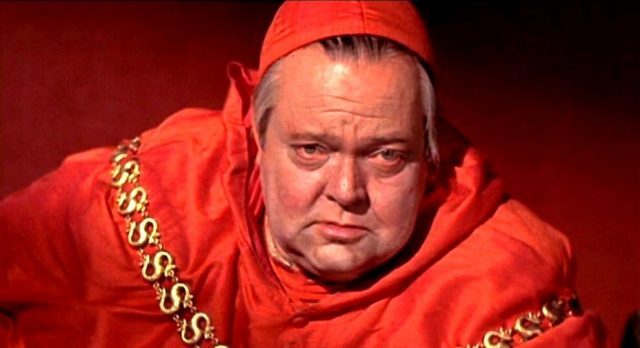
 In Martin Ritt’s The Long, Hot Summer and Richard Fleischer’s Compulsion, the big, blustery Orson Welles, his sweat practically dripping off the screen, takes center stage though primarily a supporting character. Welles claimed that he hated making The Long, Hot Summer, a fiery Tennessee Williams–like melodrama based on several works by William Faulkner, although clearly inspired by Cat on a Hot Tin Roof. Welles plays Will Varner, a wealthy plantation magnate who essentially owns a small southern town. He is grooming his son, Jody (Anthony Franciosa), to take over his empire, but when ambitious drifter and rumored barn burner Ben Quick (Paul Newman, who played Brick in Cat the same year) shows up looking for work, Will decides to set him against Jody, with the winner capturing the spoils, which in the case of Quick might also include Will’s young but already spinsterish daughter, Clara (Joanne Woodward, who married Newman during production). Shot in blazing CinemaScope, the film, which also stars Angela Lansbury as Will’s girlfriend, Lee Remick as Jody’s shopping-loving wife, and Richard Anderson as Clara’s momma’s boy beau, boils over with sexual energy that lives up to the original trailer’s declaration that “nothing — but nothing! — will be withheld!” The Long, Hot Summer earned no Oscar nominations and was not a box-office hit, but Newman became an international superstar by being named Best Actor at the Cannes Film Festival, while the film was in competition for the Palme d’Or.