Metrograph series about grifters includes The Grifters
Metrograph
7 Ludlow St. between Canal & Hester Sts.
December 14-22
212-660-0312
metrograph.com
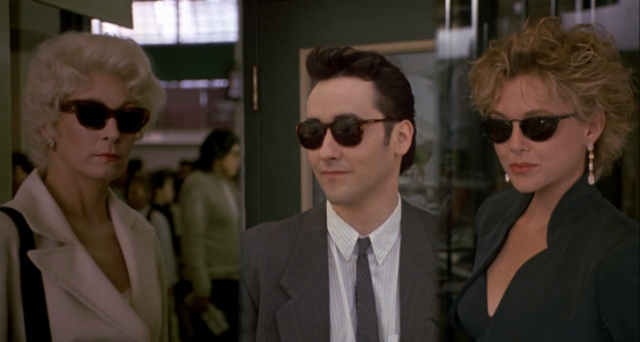
Tales of hustlers, swindlers, con artists, scammers, flim-flammers, and the like have been part of cinema since the early days of the medium. We often find ourselves rooting for the snake-oil salesmen while believing that we would never fall for these elaborate, costly hoaxes. From December 14 to 22, Metrograph is presenting “In the Year of the Grifter,” consisting of sixteen flicks with complicated plots involving lots of fakery and fraud, dating from 1932 to 2013. The series begins with Orson Welles’s Citizen Kane reimagination, Mr. Arkadin, and continues with David Mamet’s House of Games and The Spanish Prisoner, Frank Borgaze’s Desire, Sofia Coppola’s The Bling Ring, and Stephen Frears’s The Grifters, among others. It’s not quite a primo collection, but it has some real doozies. Don’t forget to keep looking over your shoulder while watching these flicks.
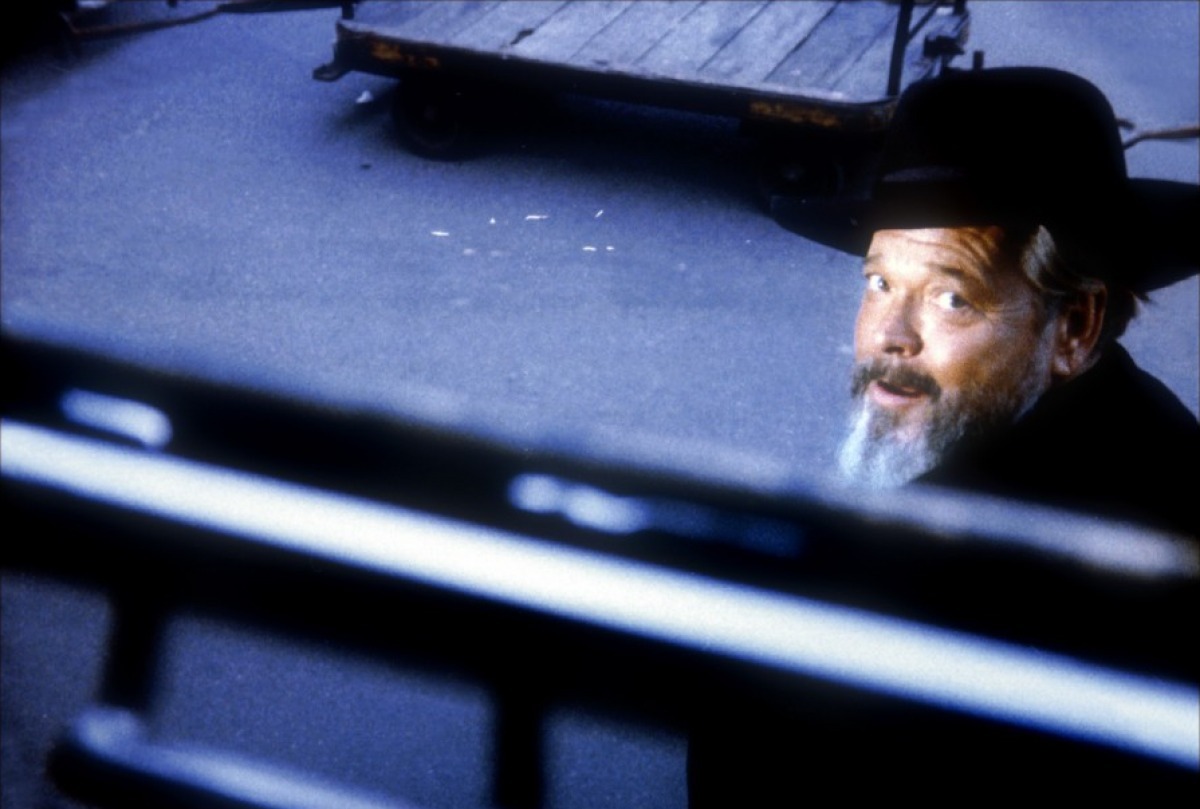
Orson Welles explores cinematic reality and artistic forgery in F for Fake
F FOR FAKE (Orson Welles, 1976)
Sunday, December 16, 6:00 & 10:15
metrograph.com
 Orson Welles plays a masterful cinematic magician in the riotous F for Fake, a pseudo-documentary (or is it all true?) about art fakes and reality. Exploring slyly edited narratives involving art forger Elmyr de Hory, writer Clifford Irving, Spanish painter and sculptor Pablo Picasso, and reclusive billionaire Howard Hughes, the iconoclastic auteur is joined by longtime companion Oja Kodar and a cast of familiar faces in a fun ride that will leave viewers baffled — and thoroughly entertained. Welles manipulates the audience — and the process of filmmaking — with tongue firmly planted in cheek as he also references his own controversial legacy with nods to such classics as Citizen Kane and The Third Man. It’s both a love letter to the art of filmmaking as well as a warning to not always believe what you see, whether in books, on canvas, or, of course, at the movies.

Stockbroker Jordan Belfort (Leonardo DiCaprio) and his team thinks they’re invincible in The Wolf of Wall Street
THE WOLF OF WALL STREET (Martin Scorsese, 2013)
Friday, December 21, 7:00
Saturday, December 22, 1:00
metrograph.com
 Based on Jordan Belfort’s 2007 memoir, The Wolf of Wall Street relates the rise and fall of a fast-talking, high-living stockbroker, played to the hilt by an impressive Leonardo DiCaprio. But Martin Scorsese’s picture, his fifth starring DiCaprio, has trouble walking that fine line between glorifying Belfort’s money, drugs, and women lifestyle and portraying him as a greedy con man who ransacked innocent people’s savings and ruined their lives. In 1987, Belfort gets a job working for rather strange LF Rothschild trader Mark Hanna (Matthew McConnaughey) and immediately gets a taste for the business; however, Black Monday strikes, and he soon finds himself selling penny stocks with a rag-tag group of losers out of a Long Island storefront run by a man named Dwayne (Spike Jonze). But he’s able to excel at the job, taking home big bucks and eventually opening his own firm, Stratton Oakmont, with right-hand man Donnie Azoff (Jonah Hill). Nearly instant success leads to endless partying, strippers, prostitutes, dwarf tossing, cocaine, ludes, and absurdly lavish expenses that enrage Belfort’s father, Max (a hysterical Rob Reiner), when he goes over the books. But nothing can stop Jordan and Donnie as they rake in the dough and do whatever they want, seemingly without consequence, even when the Feds, led by FBI agent Patrick Denham (Kyle Chandler), start sniffing around. Even when it does come crashing down, it still doesn’t seem to have too much of an effect on Belfort and his buddies, who keep feeling invincible.
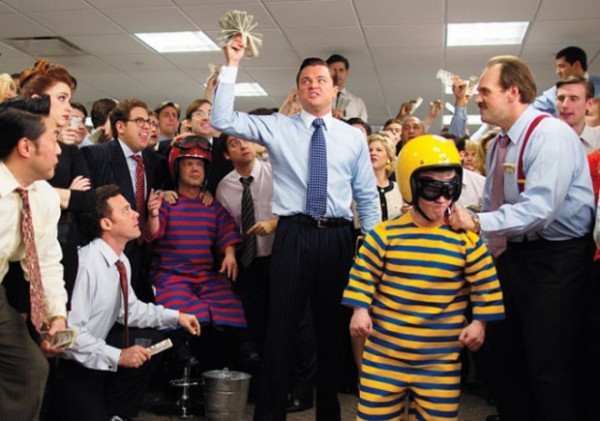
Things get a little out of hand at Stratton Oakmont in Scorsese financial epic
Written by Terence Winter, who previously celebrated criminals in The Sopranos and currently on Boardwalk Empire — two cable series that deal with the good/evil delineation much better — The Wolf of Wall Street is far too long at three hours, and it features a surprising number of bad continuity and synching edits by longtime Scorsese collaborator Thelma Schoonmaker. And the soundtrack lacks the usual Scorsese power, found in such films as Goodfellas, which bears a strong thematic resemblance to Wolf. The large cast also includes Jean Dujardin as Swiss banker Jean-Jacques Saurel, Cristin Milioti as Belfort’s first wife, Margot Robbie as Belfort’s second wife, Joanna Lumley as her aunt, Jon Favreau as his lawyer, Jake Hoffman as Steve Madden, Sharon Jones as a singer, Fran Lebowitz as a judge, and private investigator Bo Dietl as private investigator Bo Dietl. The real Belfort, who recently took to Facebook to explain that he is using one hundred percent of his profits from the book and film to pay back the victims of his shady dealings, makes a cameo appearance at the end of the film as an emcee. Despite its drawbacks — even PETA has attacked the film for its treatment of animals — The Wolf of Wall Street, which was nominated for five Oscars, nails the feeding frenzy that was the financial fury of the late 1980s, which set the table for future economic disasters.
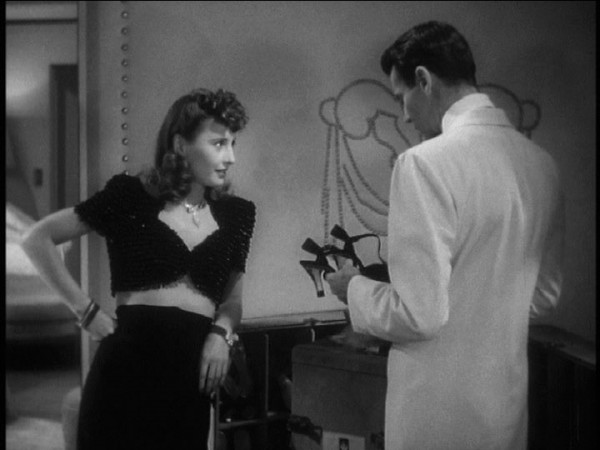
Barbara Stanwyck lures an unsuspecting Henry Fonda into her alluring trap in The Lady Eve
THE LADY EVE (Preston Sturges, 1941)
Tuesday, December 25, 6:15
Wednesday, December 26, 5:00 & 9:15
Monday, December 31, 6:00 & 10:00
metrograph.com
Barbara Stanwyck delivers one of her most nuanced and beguiling performances as the tough-talking title character in The Lady Eve. Usually lumped in with her classic screwball comedies, Preston Sturges’s black-and-white film, based on an original story by Irish playwright Monckton Hoffe (who was nominated for an Oscar), is much darker and slower than its supposed brethren. A brunette Stanwyck is first seen as Jean Harrington, a con artist looking to trick a wealthy man on a cruise ship. At her side is her father, “Colonel” Harrington (Charles Coburn), a gambler and a cheat. As soon as Jean sees rich ale scion Charles Pike (a wonderfully innocent Henry Fonda), she digs her claws into the shy, humble man, challenging the Hays Code as she shows off her gams and leans into him with a heart-pounding sexiness. Pike of course falls for, but when his right-hand man, Muggsy (William Demarest), discovers that she regularly preys on suckers, Charles is devastated. However, in this case, Jean’s feelings might actually be real, forcing her to go to extreme circumstances to try to get him back. Stanwyck is, well, a ball of fire as Jean/Eve, determined to win at all costs. Fonda, not usually known for his comedic abilities, is a riot as poor Hopsie, as Jean calls him; the looks on his face when she ratchets up the sex appeal are priceless, and a later scene when he keeps falling down at a party displays a surprising flair for physical comedy. The opening and closing credits feature a corny animated snake in the Garden of Eden; in The Lady Eve, Stanwyck offers the apple, and Fonda can’t wait to take a bite. And there’s nothing shameful about that.
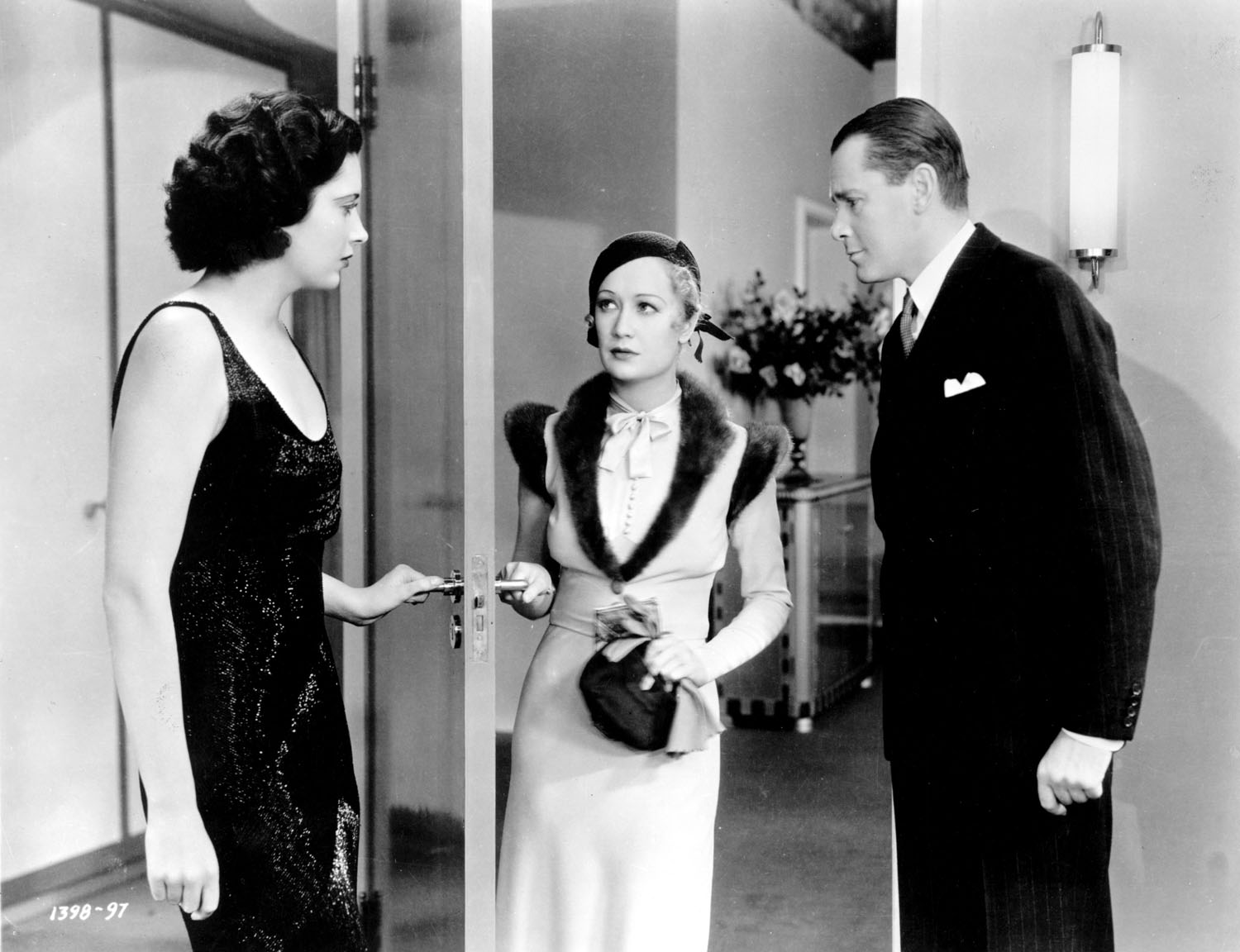
Kay Francis, Miriam Hopkins, and Herbert Marshall are caught in quite a pickle in risqué Ernst Lubitsch classic
TROUBLE IN PARADISE (Ernst Lubitsch, 1932)
Saturday, December 29, 1:15
Sunday, December 30, 3:15
Monday, December 31, 4:00 & 8:00
metrograph.com
“Beginnings are always difficult,” suave thief Gaston Monescu (Herbert Marshall) says at the beginning of Trouble in Paradise, but it’s not difficult at all to fall in love with the beginning, middle, and end of Ernst Lubitsch’s wonderful pre-Code romantic comedy. It’s love at first heist for Gaston and Lily (Miriam Hopkins) as they try to outsteal each other on a moonlit night in Venice. Soon they are teaming up to fleece perfume heir Madame Mariette Colet (Kay Francis) of money and jewels as the wealthy socialite takes a liking to Gaston despite her being relentlessly pursued by the hapless François Filiba (Edward Everett Horton) and the stiff Major (Charles Ruggles). Displaying what became known as the Lubitsch Touch, the Berlin-born director has a field day with risqué sexual innuendo, particularly in the early scene when Gaston and Lily first meet (oh, that garter!) and later as Madame Colet’s affection for Gaston grows, along with Lily’s jealousy. Loosely based on the 1931 play The Honest Finder by Aladár László, which was inspired by the true story of Romanian con man George Manolescu, the 1932 film remained out of circulation for decades during the Hays Code, and it’s easy to see why.
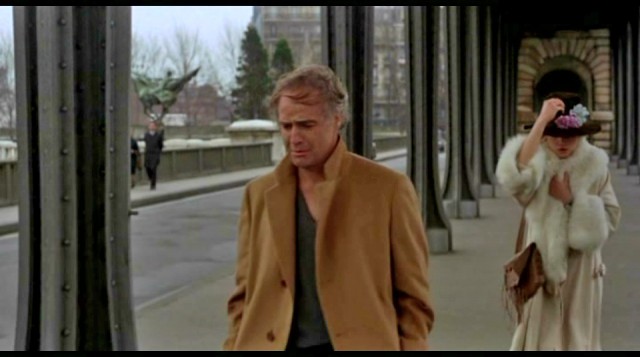
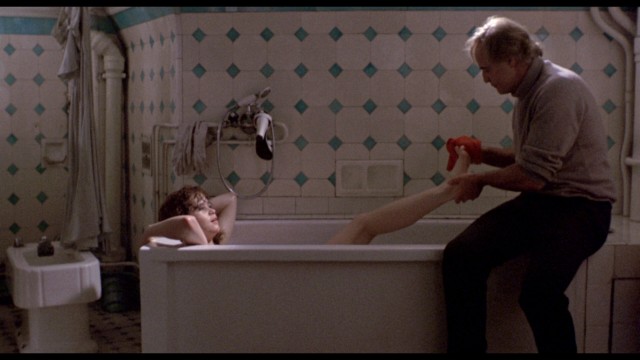
 One of the most artistic films ever made about seduction, Bernardo Bertolucci’s controversial X-rated Last Tango in Paris is part of the Quad’s “Paris Stripped Bare” and “Pictures from the Revolution: Bertolucci’s Italian Period” series in addition to “Rated X.” Written by Bertolucci (The Conformist, The Spider’s Stratagem), who passed away in Rome in November at the age of seventy-seven, with regular collaborator and editor Franco Arcalli and with French dialogue by Agnès Varda (Le Bonheur, Vagabond), the film opens with credits featuring jazzy romantic music by Argentine saxophonist Gato Barbieri and two colorful and dramatic paintings by Francis Bacon, “Double Portrait of Lucian Freud and Frank Auerbach” and “Study for a Portrait,” that set the stage for what is to follow. (Bacon was a major influence on the look and feel of the film, photographed by Vittorio Storaro.) Bertolucci then cuts to a haggard man (Marlon Brando) standing under the Pont de Bir-Hakeim in Paris, screaming out, “Fucking God!” His hair disheveled, he is wearing a long brown jacket and seems to be holding back tears. An adorable young woman (Maria Schneider) in a fashionable fluffy white coat and black hat with flowers passes by, stops and looks at him, then moves on. They meet again inside a large, sparsely furnished apartment at the end of Rue Jules Verne that they are each interested in renting. Both looking for something else in life, they quickly have sex and roll over on the floor, exhausted. For the next three days, they meet in the apartment for heated passion that the man, Paul, insists include nothing of the outside world — no references to names or places, no past, no present, no future; the young woman, Jeanne, agrees. Their sex goes from gentle and touching to brutal and animalistic; in fact, after one session, Bertolucci cuts to actual animals. The film is nothing if not subtle.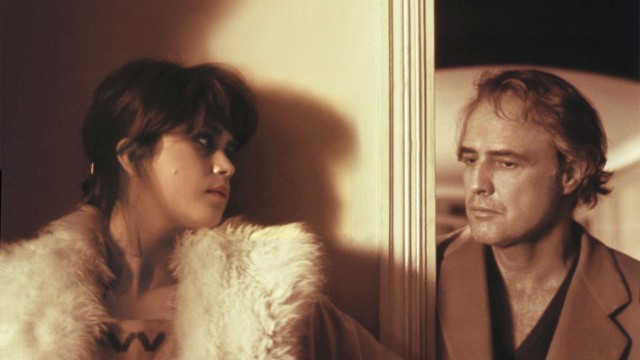
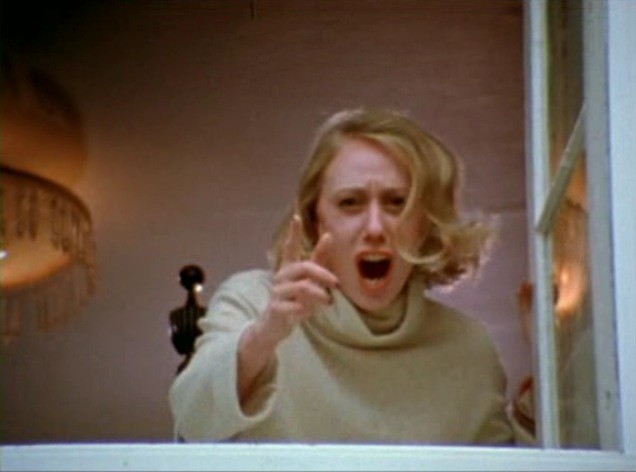
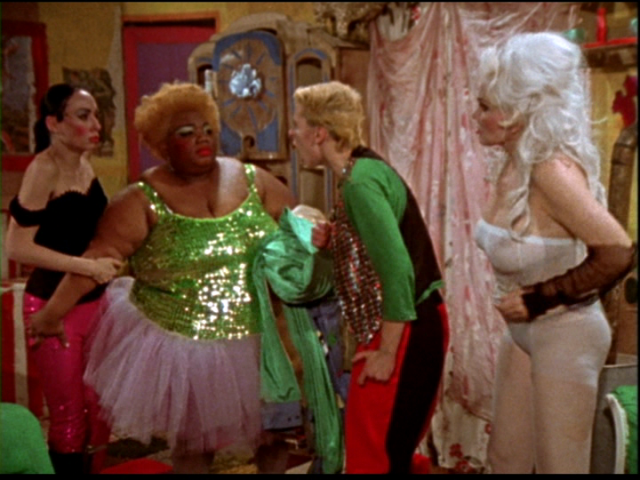
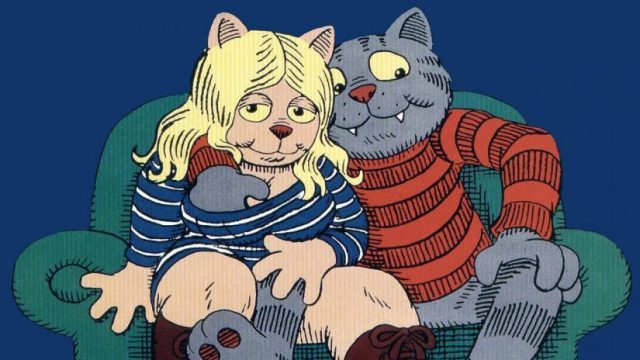
 A turning point in his career, John Waters’s Desperate Living is an off-the-charts bizarre, fetishistic fairy tale, the ultimate suburban nightmare. Mink Stole stars as Peggy Gravel, a wealthy housewife suffering yet another of her mental breakdowns. In the heat of the moment, she and the family maid, four-hundred-pound Grizelda Brown (Jean Hill), kill Peggy’s mild-mannered husband, Bosley (George Stover), and the two women end up finding refuge in one of the weirdest towns ever put on celluloid, Mortville, where MGM’s The Wizard of Oz and Babes in Toyland meet Russ Meyer’s Faster, Pussycat! Kill! Kill! (with some Kenneth Anger, Jack Smith, and Douglas Sirk thrown into the mix as well). “I ain’t your maid anymore, bitch! I’m your sister in crime!” Grizelda declares. Peggy and Grizelda move into the “guest house” of manly Mole McHenry (Susan Lowe) and her blonde bombshell lover, Muffy St. Jacques (Liz Renay). Mortville is run as a kind of fascist state by the cruel and unusual despot Queen Carlotta (Edith Massey), an evil shrew who enjoys being serviced by her men-in-leather attendants, issues psychotic proclamations, and is determined that her daughter, Princess Coo-Coo (Mary Vivian Pearce), stop dating her garbage-man boyfriend, Herbert (George Figgs). (Wait, Mortville has a sanitation department?) Camp and trash combine like nuclear fission as things get only crazier from there, devolving into gorgeous low-budget madness and completely over-the-top ridiculousness, a mélange of sex, violence, and impossible-to-describe lunacy that Waters himself claimed was a movie “for fucked-up children.”