twi-ny recommended events

WHAT THE CONSTITUTION MEANS TO ME

(photo by Joan Marcus)

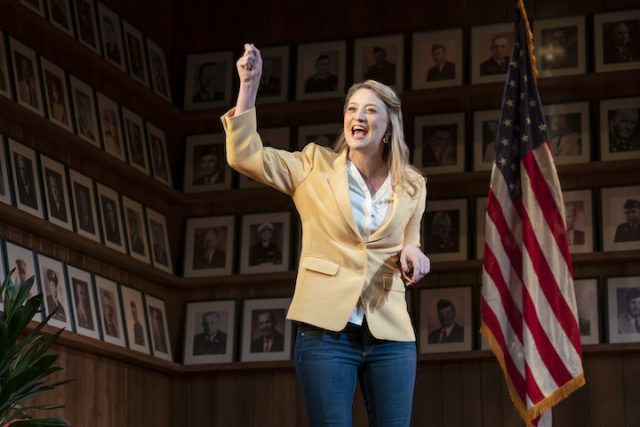
Heidi Schreck examines the US Constitution in Broadway transfer of hit play (photo by Joan Marcus)

Helen Hayes Theater
240 West 44th St. between Broadway & Eighth Ave.
Tuesday – Sunday through July 24, $49-$169
constitutionbroadway.com

The first time I saw Heidi Schreck’s What the Constitution Means to Me, during its run last year at New York Theatre Workshop, it was the day that the Judiciary Committee had voted to advance the nomination of Brett Kavanaugh for Supreme Court Justice to the Senate floor. A somber atmosphere hung over the crowd, which was acknowledged by Schreck, who persevered with hope and humor. The show has now made a wholly successful transfer from the 199-seat NYTW to Broadway, where it is packing them into Second Stage’s 597-seat Helen Hayes Theater. And when I saw it there earlier this month, the foreboding cloud of doom and gloom was gone, replaced by an innate faith that America was going to be okay, as Schreck and the audience were in better spirits, often downright giddy, even as Schreck’s tale goes to dark, intimate places, all the while maintaining a steady focus on exactly “what the Constitution means to me” when “me” is a woman — or anyone except a white man.

In the mid-1980s, Schreck, living in the “abortion-free zone” of Wenatchee, Washington, earned money for college by participating in debates in American Legion Halls about the Constitution. The hundred-minute show re-creates some of those debates, focusing on the Ninth and Fourteenth Amendments, as Brooklyn-based actress, playwright, and television writer Schreck (Grand Concourse, The Consultant) shifts back and forth between her younger self and the woman she is today, able to intelligently face her demons and the mistakes she made, as well as celebrate the triumphs. She is supported by Mike Iveson (The Sound & the Fury, Plenty) as an American Legion Hall moderator and either Thursday Williams or Rosdley Ciprian, high school students who challenge her in a live debate. Rachel Hauck’s set remains intact, consisting of a few chairs and small tables, a central podium, and three sides of a wall displaying more than a hundred framed photographs of legionnaires, uniformly white men in caps. “This hall is not — it’s not a naturalistic representation,” Schreck says. “I got my friend Rachel to help me reconstruct it from my dreams, so I guess it’s like one of those crime victim drawings.” Obie-winning director Oliver Butler (The Amateurs, The Open House) doesn’t make any major changes for the Broadway transfer.
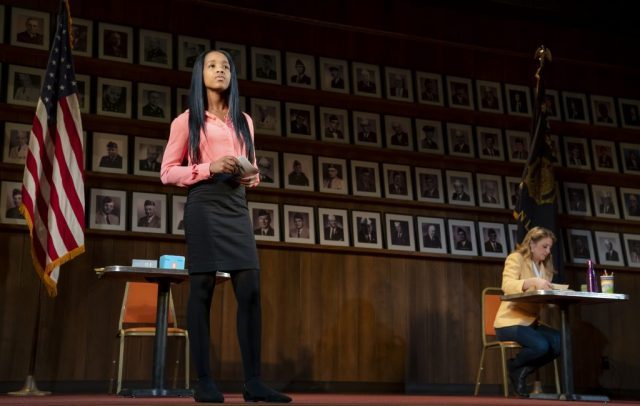
Thursday Williams debates Heidi Schreck in (photo by Joan Marcus)

Thursday Williams debates Heidi Schreck in What the Constitution Means to Me (photo by Joan Marcus)

Since I first saw the show at NYTW, there continues to be threats to the Constitution, which Schreck emphasizes “is a living document. That is what is so beautiful about it. It is a living, warmblooded, steamy document.” Using historical facts and personal anecdotes, Schreck connects to the audience while exploring the ramifications of the numerous interpretations of specific rights and liberties, taking on the white patriarchy and honoring the empowerment of women in the country while also delving into hot-button issues. Discussing Clause Four of the Fourteenth Amendment, she explains, “This is the most miraculous clause in our entire Constitution. It says that we all must be treated equally, that we cannot be discriminated against on the basis of race, sex, gender, sexual orientation, religion, ability, or immigration status. It actually uses the word ‘person,’ not ‘citizen.’ Which means that if you are an undocumented immigrant, you must be given all the protections of Clause Three, the due process clause. You cannot be locked up without a fair trial. You cannot have anything — or anyone — seized from you.” Schreck’s innate happiness in talking about the Constitution is infectious; she was so filled with glee that at one point, crossing the stage over to Iveson, she nearly fell onto him; the two of them broke out in laughter, as did the audience. It was one of several spontaneous moments in the show — which is scripted but includes significant room for improvisation — that will have you leaving the theater with a smile on your face even as you worry about how the Constitution is under attack on a nearly daily basis.
ISABELLA ROSSELLINI: LINK LINK CIRCUS

(photo by Brigitte Lacombe)

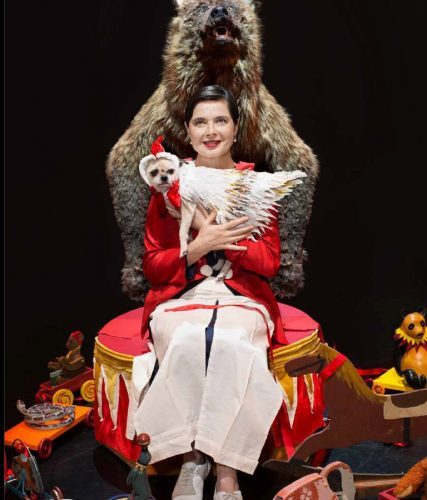
Isabella Rossellini returns as ringmaster in Link Link Circus at Hunter College (photo by Brigitte Lacombe)

Hunter College
The Frederick Loewe Theatre
930 Lexington Ave. at 68th St.
April 18 – May 3, students $10-$15, adults $37-$42
www.huntertheaterproject.org
hunter.cuny.edu

“Everything that I study at school — that is very serious — I try to visualize and make it fun,” says Isabella Rossellini. The sixty-six-year-old daughter of neo-Realist Roberto Rossellini and Oscar-, Emmy-, and Tony-winning Swedish actress Ingrid Bergman is currently working on her master’s degree in animal behavior and conservation at Hunter College, where she will stage her unique one-woman, one-dog show Link Link Circus at the Frederick Loewe Theatre from April 18 to May 3 as part of Gregory Mosher’s Hunter Theater Project. The seventy-five-minute multimedia presentation, which made its US premiere last year at the Bayshnikov Arts Center, looks to be nothing if not fun. The model and star of such films as Blue Velvet and Death Becomes Her and such TV movies and series as Crime of the Century and Alias has an affinity for animals, as displayed in her Sundance program Green Porno, which playfully explored the mating rituals of animals and the environmental protection of marine life. Rossellini is also the author of My Chickens and I, an illustrated book about chickens, and runs an organic farm in Bellport, where she lives. In Link Link Circus, she serves as a ringmaster while also transforming into such scientific figures as Aristotle, Descartes, B. F. Skinner, and Charles Darwin as she delves into the nature of animal intelligence. The set design is by Rick Gilbert and Andy Byers, with puppetry by Schuyler Beeman, animation by Andy Smetanka and Courtney Pure, costumes by Byers and Fanny Karst, music by Byers, and all-important props by Gina Freedman; Rossellini codirects with Guido Torlonia. The Hunter Theater Project, which began last year with Richard Nelson’s adaptation of Uncle Vanya, is a low-price, high-quality initiative that connects the artists and the audience and makes theater more affordable for all.

WILLIAM KENTRIDGE: LET US TRY FOR ONCE

(photo courtesy Marian Goodman Gallery)

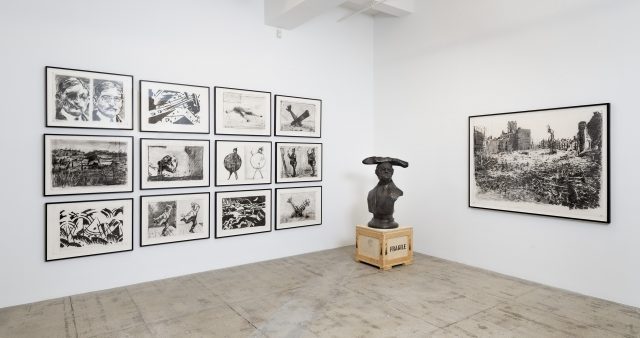
William Kentridge’s “Let Us Try for Once” in infused with the spirit of Dada (photo courtesy Marian Goodman Gallery)

Marian Goodman Gallery
24 West 57th St. between Fifth & Sixth Aves.
Tuesday – Saturday through April 20, free
212-977-7160
www.mariangoodman.com

In 2017, South African multimedia genius William Kentridge staged Kurt Schwitters’s 1932 Dada poem, “Ursonate,” at the Harlem Parish as part of the Performa Biennial. In December, his extraordinary production The Head & the Load, which explored the fate of nearly two million black Africans forced into service by colonialist European countries as porters and carriers during World War I, also incorporated text from “Ursonate.” Kentridge turns to Dada again for the title of his latest exhibition at Marian Goodman, “Let Us Try for Once,” taken from the last sentence of Tristan Tzara’s 1919 Dada Manifesto: “If all of them are right and if all pills are Pink Pills, let us try for once not to be right.” In a promotional video, Kentridge notes that the title “comes out of the sense that everybody’s certainty of their own rightness is behind so much of the violence which is exacted to beat that sense of rightness into others.”

The show is divided into four sections across two floors. In a back room, a two-channel video of Kentridge’s inspired performance of “Ursonate” plays, featuring such language as “rakete rinnzekete,” “fümmsböwötääzääUu pöggiff,” and “rrummpff tillff toooo?” along with visuals and, at the end, musical accompaniment. KABOOM! is a three-channel sculptural installation that is a miniaturized version of The Head & the Load, with audio, video, drawings, and projections. “This was not its starting point of The Head & the Load, but it is what the work itself, the material we were dealing with, pushed us towards,” Kentridge explains in a statement. “By the paradox I mean the contradictory relationships towards Europe — the desire of Africans to be part of Europe, to share in the wealth and the richness of Europe, and wanting to resist Europe and its depredations.”

(photo by twi-ny/mdr)

(photo by twi-ny/mdr)

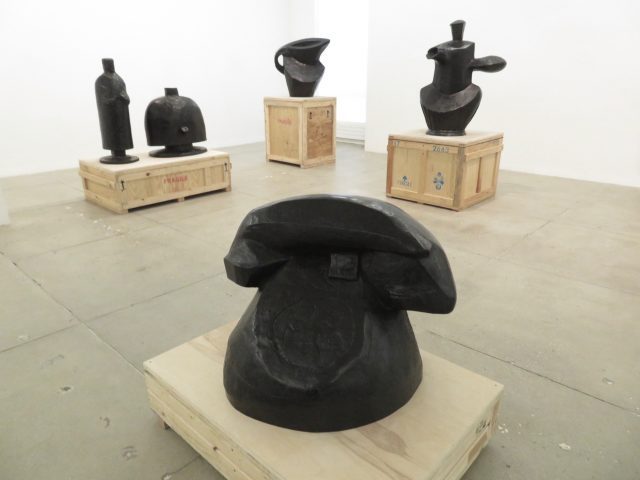
Lexicon is a collection of large bronze sculptures that Kentridge compares to text in a book, representing “the heaviness of words or thoughts,” including a telephone, an ampersand, a movie camera, a knight on a horse, and a pitcher; Processione di Riparazioniste Maquettes (Full Set) is a horizontal procession of smaller laser-cut steel objects, while Paragraph II, three rows of twenty-three bronzes, evokes black type on a white page. In fact, many of these pieces have appeared as images in Kentridge’s videos in which he turns the pages of dictionaries and historical books.

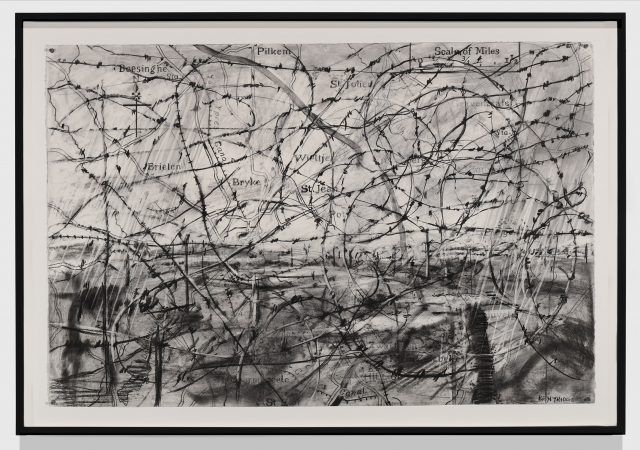
William KentridgeDrawing for 'Wozzeck Opera', 2017Charcoal on paper

William Kentridge, Drawing for Wozzeck Opera, charcoal on paper, 2017 (courtesy Marian Goodman)

The exhibition also offers a sneak peek of his latest opera, Alban Berg’s Wozzeck, which is coming to the Met in December. Kentridge has previously adapted Shostakovich’s The Nose and Berg’s Lulu; at Marian Goodman, preparatory charcoal drawings give a sense of the flavor of his take of Berg’s version of Georg Büchner’s unfinished Woyceck and continues Kentridge’s exploration of the Great War. “The conceit of the production was thinking of Berg’s Wozzeck as a premonition of WWI. This is where war and ideas around it entered the project,” Kentridge notes. “Let Us Try for Once” lends fascinating insight into the recent past, present, and immediate future of this marvelously talented artist.

DIVIDE LIGHT: AN EXCLUSIVE OPERA FILM SCREENING

(photo by Skyler Smith)

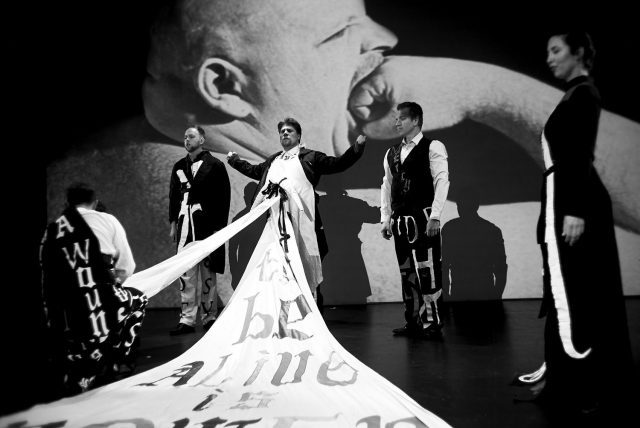
Lesley Dill’s Divide Light will have a special screening April 18 at SVA Theatre (photo by Skyler Smith)

SVA Theatre
333 West Twenty-Third St. between Eighth & Ninth Aves.
Thursday, April 18, $15, 8:00
www.nohrahaimegallery.com
www.dividelight.com

On April 18, multidisciplinary American artist Lesley Dill will present an exclusive screening of her experimental opera, Divide Light, at the SVA Theatre. The opera, based on the complete poetry works of Emily Dickinson, was conceived and created by Dill, with music by Richard Marriott, performed by New Camerata Opera, accompanied by the Curiosity Cabinet String Quintet; the film is directed by Ed Robbins. The multimedia opera, which debuted at the Montalvo Arts Center in the summer of 2008, links the nineteenth-century Transcendental movement to the present day, using words, music, black-and-white and color projections, and extravagant costumes. Among the Dickinson poems in the opera are “For Each Ecstatic Instant,” “I Am Afraid,” “I Am Alive,” “Much Madness,” “The Soul,” and “The Loneliness.” Tickets are $15 and must be purchased in advance; seating is limited.

LAWRENCE WEINER AND GLENN FUHRMAN IN CONVERSATION

flag art foundation book

Who: Lawrence Weiner and Glenn Fuhrman
What: Artist talk in conjunction with publication of The FLAG Art Foundation: 2008-2018
Where: Gagosian Shop, 976 Madison Ave. at 75th St., 212-796-1224
When: Tuesday, April 16, free with RSVP, 6:00
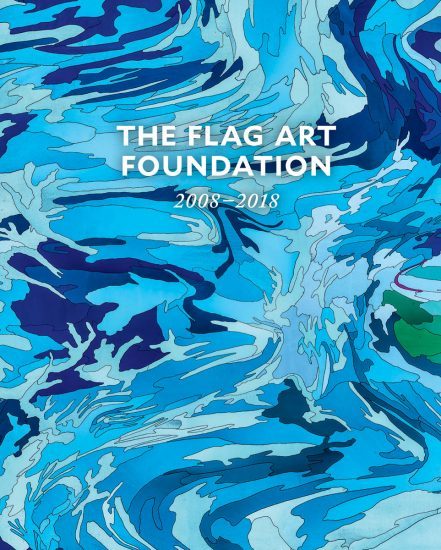
Why: In celebration of its tenth anniversary, the Chelsea-based FLAG Art Foundation has published The FLAG Art Foundation: 2008-2018, a fully illustrated catalog that looks back at its first fifty exhibitions, which has featured such artists as Louise Bourgeois, Mark Bradford, Maurizio Cattelan, Robert Gober, Félix González-Torres, Jim Hodges, Ellsworth Kelly, Charles Ray, Gerhard Richter, and Cindy Sherman. On April 16, gallery founder Glenn Fuhrman and seventy-seven-year-old Bronx-born conceptual artist Lawrence Weiner will be at the Gagosian Shop on the Upper East Side to discuss the history of FLAG as well as its current exhibition “On Board the Ships at Sea Are We,” consisting of works by Weiner, Rachel Whiteread, and Robert Therrien examining scale, materiality, and absence. The catalog includes a foreword by Fuhrman, preface by founding director Stephanie Roach, and original contributions from Ashley Bickerton, Delia Brown, Patricia Cronin, Cynthia Daignault, Lisa Dennison, Sarah Douglas, Elmgreen & Dragset, Eric Fischl, James Frey, Louis Grachos, Stamatina Gregory, Jane Hammond, Hilary Harkness, Jim Hodges, Philae Knight, Josephine Meckseper, Richard Patterson, Jack Shear, Carolyn Twersky, Lesley Vance, Rebecca Ward, and Heidi Zuckerman. Admission is free with advance RSVP.

IN PERPETUAL FLIGHT: THE MIGRATION OF THE BLACK BODY

(photo by Steve Vaccariello)

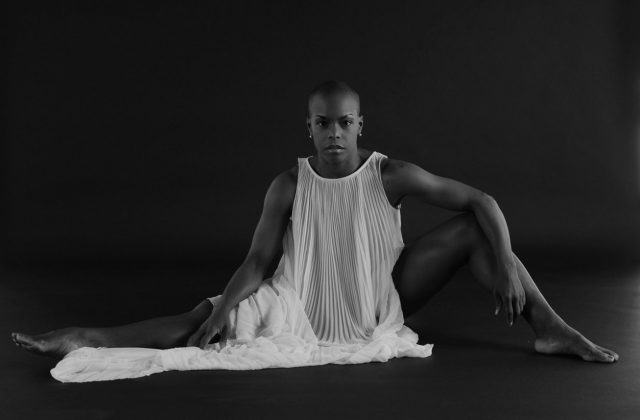
Alvin Ailey dancer and choreographer Hope Boykin will perform at “In Perpetual Flight: The Migration of the Black Body” presentation at Schomburg Center (photo by Steve Vaccariello)

The Schomburg Center for Research in Black Culture
Langston Hughes Auditorium
515 Malcolm X Blvd.
Tuesday, April 16, free with advance registration, 6:30
www.nypl.org

Carnegie Hall’s wide-ranging, multidisciplinary Migrations: The Making of America festival comes to the Langston Hughes Auditorium at the Schomburg Center for Research in Black Culture on April 16 for “In Perpetual Flight: The Migration of the Black Body.” Through dance, music, and theater, the program traces the journey toward liberation of the black body across time in the US, from the slave trade and the Great Migration to the Civil War and the Back to Africa movement, exploring its impact on contemporary American culture. The evening, held in conjunction with the fiftieth anniversary of Dr. Barbara Ann Teer’s National Black Theatre and its current NBT Beyond Walls initiative, features four live performances and presentations by Alvin Ailey dancer and choreographer Hope Boykin, screenwriter, playwright, and director Keith Josef Adkins, Obie-winning actress and singer Kenita R. Miller, composer and sound designer Justin Hicks, NBT CEO Sade Lythcott, and NBT artistic director Jonathan McCrory, utilizing works from the Schomburg Center archives from such seminal figures as James Baldwin, Harriet Powers, Marcus Garvey, Harriet Tubman, and Jacob Lawrence. “This event is allowing us to acknowledge the consistent flight, movement, and navigation black people have been engaged in within this country ever since the black body was ripped from the shores of Africa — human bodies stripped from home and forced into slavery,” McCrory said in a statement. “That perpetual flight has produced four hundred years of migration that have generated moments of agitation, acceleration, acclimation, and aspiration.” Admission is free; advance registration is strongly recommended.

TRIBECA FILM FESTIVAL: FREE FILM FRIDAY

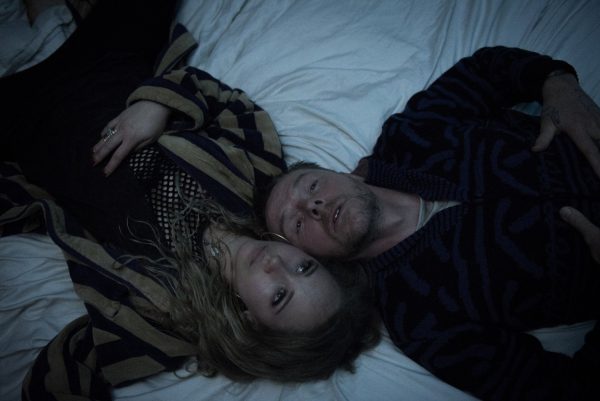
Juno Temple and Simon Pegg star in world premiere at Tribeca Film Festival

Juno Temple and Simon Pegg star in world premiere of Lost Transmissions at Tribeca Film Festival

Tribeca Film Festival
Multiple venues
Friday, May 3, free
Festival runs April 24 – May 5
www.tribecafilm.com

The Tribeca Film Festival continues its tradition of offering free films on Friday this year, with a host of feature narratives, documentaries, and shorts being shown on May 3. Admission is free, but you must reserve tickets in advance.

Tribeca Talks: Master Class — Irwin Winkler on the Art and Craft of Producing, SVA Theater 2 Beatrice, 3:30

Viewpoints: Changing the Game (Michael Barnett, 2019), about transgender teen athletes, Village East Cinema-04, 3:45

Shorts: Road Less Traveled, destination shorts by multiple directors, Village East Cinema-02, 5:00

Section: Viewpoints: 37 Seconds (HIKARI, 2019), staring Mei Kayama, Regal Cinemas Battery Park 11-1, 5:30

Shorts: Down to Earth, sci-fi shorts by multiple directors, Village East Cinema-03, 5:45

Viewpoints: Plucked (Joel Van Haren, 2019), about a stolen Stradivari violin, Village East Cinema-06, 6:00

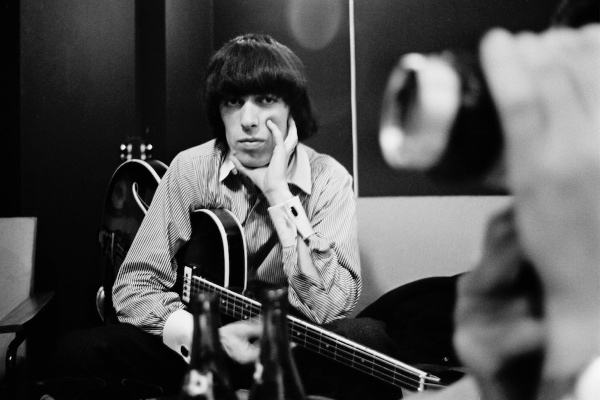
The Quiet One examines the life and times of Rolling Stones bassist Bill Wyman

The Quiet One examines the life and times of Rolling Stones bassist Bill Wyman

Spotlight Documentary: The Quiet One (Oliver Murray, 2019), about Rolling Stones bassist Bill Wyman, Village East Cinema-01, 6:00

Section: Viewpoints: What Will Become of Us (Steven Cantor, 2019), about Sir Frank Lowy, Regal Cinemas Battery Park 11-9, 6:15

Tribeca Critics’ Week: The Weekend (Stella Meghie, 2018), starring Sasheer Zamata, Tone Bell, and DeWanda Wise, SVA Theater 1 Silas, 6:30

Documentary Competition: Our Time Machine (S. Leo Chiang and Yang Sun, 2019), about Chinese artist Maleonn, Regal Cinemas Battery Park 11-3, 7:00

Documentary Competition: Scheme Birds (Ellen Fiske and Ellinor Hallin, 2019), about a Scottish teenager, Regal Cinemas Battery Park 11-6, 8:00

Spotlight Documentary: Lil’ Buck: Real Swan (Louis Wallecan, 2019), about dancer Lil’ Buck, Regal Cinemas Battery Park 11-4, 8:45

Movies Plus: The Remix: Hip Hop X Fashion (Lisa Cortés and Farah X, 2019), Village East Cinema-01, 9:00

Spotlight Narrative: Lost Transmissions (Katharine O’Brien, 2019), starring Simon Pegg and Juno Temple, Regal Cinemas Battery Park 11-5, 9:30

Viewpoints: Wild Rose (Tom Harper, 2018), starring Jessie Buckley, Regal Cinemas Battery Park 11-3, 9:30

Spotlight Narrative: Skin (Guy Nattiv, 2019), starring Jamie Bell, Village East Cinema-07, 9:30

Shorts: On Tour, documentary shorts by multiple directors, Village East Cinema-04, 9:45

Shorts: Funhouse, comedic shorts by multiple directors, Village East Cinema-02, 11:00