twi-ny recommended events

CÔTES DU RHÔNE FESTIVAL

cotes du rhone festival

SECOND
849 Sixth Ave. between 29th & 30th Sts.
Sunday, June 23, $55 (6:00 entry), $80 (5:15 entry), 25% with discount code MINT
www.cdrfest.com

You don’t have to go to southern France to enjoy a Côtes du Rhône culinary experience, as southern France is coming to New York City. On June 23, the Côtes du Rhône Festival takes place at Second, an event space on Sixth Ave., featuring more than sixty regional wines paired with a variety of food dishes. Such sommeliers as Betsy Ross of L’avenue, Fred Dex aka the Juiceman, Nicolas Prieto from the Grand Hyatt New York City, Anna Cabrales of Morrell Wine Bar & Cafe, and Meaghan Levy of the Pierre New York will select whites, reds, and rosés to be served with such plates as assorted country pate, mustards, pickles, and crostini; purple tomato skewers with Reblochon cheese, turnip seed oil, and Shibazi spice; sirloin tartare, fleur de sel, rosé vin, fried capers, cured yolk, and crostini; beef Wellington sausage with grain mustard; Boudin blanc sausage; mussels Suzette, crispy leeks, and sherry and pepper conserva; gnocchi Parisienne, aged comte, yomato jus, and wildflower honey; and praline profiteroles of cocoa choux, hazelnut ice cream, vanilla-tonka chantilly, and chocolate sauce. The menu is prepared by such chefs as Tyler Atwell of Lafayette Grand Café, Kimberly Plafke of Grand Army, Raymond Smith of Blacksmith’s Breads, Drew Buzzio of Salumeria Biellese, Phillip Kirschen-Clark of the Milling Room, Jocelyn Guest and Erika Nakamura of J & E Smallgoods, David Robinson of Formaggio Kitchen, Eric Simpson of the East Pole, Joshua Smith, Mary Dumont, and Mitch Willis and Garth Jobb of Hudson & Charles Dinette and Butcher Shop. Tickets are $55 for general entry at 6:00 and $80 for early-bird VIP admission at 5:15; use discount code MINT to save 25%.

BEFORE STONEWALL: THE MAKING OF A GAY AND LESBIAN COMMUNITY

Documentary follows the beginnings of the gay liberation movement leading up to Stonewall

Documentary follows the beginnings of the gay liberation movement leading up to Stonewall

BEFORE STONEWALL: THE MAKING OF A GAY AND LESBIAN COMMUNITY (Greta Schiller, 1984)
Quad Cinema
34 West 13th St. between Fifth & Sixth Aves.
Opens Friday, June 21
212-255-2243
quadcinema.com

“Unless otherwise stated, the people who appear in this film should not be presumed to be homosexual . . . or heterosexual,” it says at the beginning of Before Stonewall, the 1984 documentary that has been restored for the fiftieth anniversary of the Stonewall riots. Executive producer John Scagliotti, director Greta Schiller, and codirector Robert Rosenberg go back in time to show the evolution of gay liberation that led up to the events of June 28 to July 1, 1969. Narrated by Rubyfruit Jungle author Rita Mae Brown, the film combines new interviews with archival footage of silent movies, personal photographs, songs, intimate recollections, and poignant anecdotes, both painful and funny. “Homosexuality has always been a dirty word,” says artist and writer Richard Bruce Nugent. “I cannot remember, in my seventy-some years, a time when it wasn’t a dirty word. But on the other hand, homosexuality, the practice of it, was not a dirty thing.”

Writer and former dancer Harry Otis, retired bookkeeper Donna Smith, activist and Mattachine Society cofounder Harry Hay, domestic worker and dancer Mabel Hampton, newspaper reporter and WWII army chaplain George Buse, priest Grant Gallup, entertainer Carroll Davis, journalist and archivist Jim Kepner, US government scientist Frank Kameny, poet Allen Ginsberg, and historian and playwright Martin Duberman are among those who share stories about discrimination they experienced and how they fought to maintain their identity. WAC soldier Nell “Johnnie” Phelps’s anecdote about General Dwight D. Eisenhower is one of the best Ike tales you’ll ever hear.

The film looks at censorship, secret parties, all-gay theater, the Hays Code, homosexuality in the military, drag queens, Sen. Joseph McCarthy’s HUAC hearings, same-sex marriage, gay publications, and Black Power as the desire for freedom for gays and lesbians builds, leading to the Stonewall rebellion. “In the sixties, there was a distinct change in the temper and the tempo of the gay movement, partly as a result of the black civil rights militancy,” activist Barbara Gittings says. “We began to get more militant in the gay movement. We began to see that the problem of homosexuality is not really gay people’s problem. It’s a problem of the social attitudes of the people around us, and we had to change their attitudes, and that in turn would help us with our self-image.” Despite how far they’ve come, however, gays and lesbians still have a long way to go in an America that has still not fully accepted them. Before Stonewall opens June 21 at the Quad, with Q&As with Schiller, Rosenberg, and research director Andrea Weiss on June 21 at 6:30, with Rosenberg on June 222 at 7:05, and with Schiller, Weiss, production manager Amy Chen, historical consultant Blanche Wiesen Cook, and Lesli Klainberg on June 23 at 2:50, moderated by Tracy Daniels.

ENDZEIT (EVER AFTER)

Endzeit

Vivi (Gro Swantje Kohlhof) and Eva (Maja Lehrer) hide from hungry zombies in Endzeit

ENDZEIT (EVER AFTER) (Carolina Hellsgård, 2018)
IFC Center
323 Sixth Ave. at West Third St.
Opens Friday, June 21
212-924-7771
www.ifccenter.com
endzeiteverafter.com

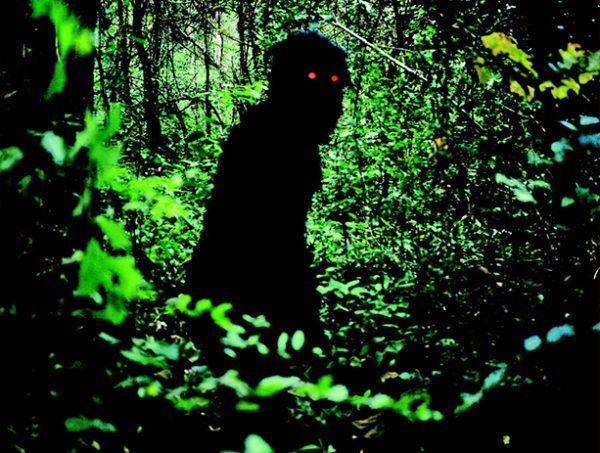
Swedish-born, Berlin-based Carolina Hellsgård follows her 2015 debut, Wanja, with EndzeitEver After, a gripping feminist gothic zombie movie. In a postapocalyptic world, flesh-eating zombies wander hungrily through the land, looking for living souls to consume. Twenty-two-year-old Vivi (Gro Swantje Kohlhof), haunted by the memory of leaving behind her beloved younger sister, Renata (Amy Schuk), and determined to find her, arrives at a fenced-in outpost that is one of only two places where humans have survived. It is run by the warden (Barbara Philipp), who keeps a tight grip on the rules to keep everyone alive. After a zombie attacks, the meek Vivi is soon on the run with tough-as-nails twenty-six-year-old Eva (Maja Lehrer) as they attempt to make it through the Black Forest to the town of Jena. But without much food and water and with zombies liable to jump out at them at any moment, safety is a long way away.

Endzeit

Eva (Maja Lehrer) faces a gardener (Trine Dyrholm) as Vivi (Gro Swantje Kohlhof) looks on in Endzeit

Endzeit is a dystopian tale by and about women: The screenplay was written by Olivia Vieweg, based on her graphic novel; Leah Striker’s cinematography is lush and beautiful; Julia Oehring and Ruth Schönegge serve as editors; Jenny Roesler did the sets; Teresa Grosser designed the costumes, highlighted by a white wedding dress; Franziska Henke composed the eerie score; and the film was produced by Claudia Schröter and executive produced by Ingelore König. Men are inconsequential in this hellish future, where Mother Nature is in charge. There might be a lot of blood and gore and fear, but the land is in full bloom, with gorgeous green fields, healthy, flourishing plants and trees, and warm sunshine. At one point Vivi encounters a gardener (Trine Dyrholm) who appears to be part of the earth itself. Hellsgård and Vieweg have created a different kind of zombie flick, where the protagonists face their individual guilt as they search for freedom in a dangerous landscape bursting with life. It also demonstrates the failure of fences to do only one job — keeping others out. Endzeit opens June 21 at IFC, with Hellsgård participating in Q&As following the 7:45 shows on June 21 and 22.

A BIGGER SPLASH

David Hockney

David Hockney works on his masterpiece in Jack Hazan’s A Bigger Splash

A BIGGER SPLASH (Jack Hazan, 1974)
Metrograph
7 Ludlow St. between Canal & Hester Sts.
Opens Friday, June 21
212-660-0312
metrograph.com

Just in time to coincide with Pride celebrations throughout New York City in honor of the fiftieth anniversary of the Stonewall riots, Metrograph is premiering a 4K restoration of Jack Hazan’s pivotal 1974 A Bigger Splash, a fiction-nonfiction hybrid that was a breakthrough work for its depiction of gay culture as well as its inside look at the fashionable and chic Los Angeles art scene of the early 1970s. This past November, David Hockney’s Portrait of an Artist (Pool with Two Figures) sold at auction for $90.3 million, the most ever paid for a work by a living artist. A Bigger Splash, named after another of Hockney’s paintings — both are part of a series of canvases set around pools in ritzy Los Angeles — takes place over three years, as the British artist, based in California at the time, hangs out with friends, checks out a fashion show, prepares for a gallery exhibition, and works on Portrait of an Artist (Pool with Two Figures) in the wake of a painful breakup with his boyfriend, model, and muse, Peter Schlesinger, who is a key figure in the painting.

It’s often hard to know which scenes are pure documentary and which are staged for the camera as Hazan and his then-parter, David Mingay, who served as director of photography, tag along with Hockney, who rides around in his small, dirty BMW, meeting up with textile designer Celia Birtwell, fashion designer Ossie Clark, curator Henry Geldzahler, gallerist John Kasmin, artist Patrick Procktor, and others, who are identified only at the beginning, in black-and-white sketches during the opening credits. The film features copious amounts of male nudity, including a long sex scene between two men, a group of beautiful boys diving into a pool in a fantasy sequence, and Hockney disrobing and taking a shower. Hockney’s assistant, Mo McDermott, contributes occasional voice-overs; he also poses as the man standing on the deck in Portrait of an Artist (Pool with Two Figures), only to be replaced by Schlesinger later. There are several surreal moments involving Hockney’s work: He cuts up one painting; Geldzahler gazes long and hard at himself in the double portrait of him and Christopher Scott; and Hockney tries to light the cigarette Procktor is holding in a painting as Procktor watches, cigarette in hand, mimicking his pose on canvas. At one point Hockney is photographing Schlesinger in Kensington Gardens, reminiscent of Michelangelo Antonioni’s Blow-Up, which questions the very nature of capturing reality on film.

Hockney was so upset when he first saw A Bigger Splash, which Hazan made for about twenty thousand dollars, that he offered to buy it back from Hazan in order to destroy it; Hazan refused, and Hockney went into a deep depression. His friends ultimately convinced him that it was a worthwhile movie and he eventually accepted it. It’s a one-of-a-kind film, a wild journey that goes far beyond the creative process as an artist makes his masterpiece. Hockney, who will turn eighty-two next month, has been on quite a roll of late. He was the subject of a 2016 documentary by Randall Wright, was widely hailed for his 2018 Met retrospective, saw one of his paintings set an auction record, and is scheduled to have a major drawing show at the National Portrait Gallery next year. In addition, Catherine Cusset’s novel, Life of David Hockney, was just published in English, a fictionalized tale that conceptionally recalls A Bigger Splash, which opens June 21 at Metrograph, with various Q&As and introductions by Hazan, Richard Haines and Alexander Olch, Nick McCarthy, Ryan McNamara, Matt Wolf, and Cusset from June 21 to 30. And if you can’t get enough of Hockney, Anita Rogers is showing “Films by James Scott, Etchings by David Hockney” through July 27, consisting of Hockney’s 1966 series “Illustrations for Fourteen Poems from C. P. Cavafy” and Scott’s 1966 documentary short about the series, Love’s Presentation.

TONI MORRISON: THE PIECES I AM

(photo by Timothy Greenfield-Sanders)

Toni Morrison discusses her life and career in The Pieces I Am (photo by Timothy Greenfield-Sanders)

TONI MORRISON: THE PIECES I AM (Timothy Greenfield-Sanders, 2019)
Film Forum, 209 West Houston St., 212-727-8110
Film Society of Lincoln Center, Francesca Beale Theater, 144 West 65th St. between Broadway & Amsterdam Aves., 212-875-5050
Opens Friday, June 21
www.tonimorrisonfilm.com

At the beginning of Timothy Greenfield-Sanders’s Toni Morrison: The Pieces I Am, artist Mickalene Thomas’s hands are seen putting together a collage of different images of author Toni Morrison, like a jigsaw puzzle, one on top of the other, to the sounds of Kathryn Bostic’s score. It’s a beautiful start to a beautiful film that takes viewers deep inside Morrison’s life and career, from daughter and student to teacher, wife, mother, editor, and award-winning novelist. “She is a friend of my mind. She gather me, man. The pieces I am, she gather them and give them back to me in all the right order,” Morrison writes in Beloved. In the film, Greenfield-Sanders, Morrison’s longtime friend and primary photographer of nearly forty years, and editor and researcher Johanna Giebelhaus gather the pieces that help paint a portrait of the extraordinary person that is Toni Morrison.

(photo by Timothy Greenfield-Sanders)

Toni Morrison and Timothy Greenfield-Sanders collaborate on new documentary (photo by Timothy Greenfield-Sanders)

They incorporate old interviews with Charlie Rose, Dick Cavett, and Bill Moyers, personal photographs, archival footage, and new interviews with Morrison and thirteen of her colleagues — among them Columbia University professor Farah Griffin, activist Angela Davis, New Yorker critic Hilton Als, Random House editor Robert Gottlieb, composer Richard Danielpour, media magnate Oprah Winfrey, and fellow authors Paula Giddings, Russell Banks, Fran Lebowitz, and Walter Mosley — who have nothing but laudatory things to say about her, as both a writer and a human being. The film also includes excerpts from several of Morrison’s books, read by Kim Cattrall, Joel Grey, S. Epatha Merkerson, Whoopi Goldberg, and others, in addition to works by such black artists as Kara Walker, Martin Puryear, Titus Kaphar, Charles White, Elizabeth Catlett, David Hammons, Faith Ringgold, Romare Bearden, and Hank Willis Thomas that subtly complement her words.

The main focus, however, is on Morrison’s status as a black woman writer and her white audience. Early in her career, she was criticized for writing only about blacks and the black experience. “The assumption is the reader is a white person, and that troubled me. They were never talking to me,” Morrison says. “I didn’t want to speak for black people; I wanted to speak to, and to be among . . . us. So the first thing I had to do was to eliminate the white gaze.” One white gaze she has not eliminated is that of Greenfield-Sanders, who is Caucasian; in fact, Morrison is the one who inspired him to make such films as The Black List, The Latino List, The Women’s List, and The Trans List, which document people from diverse communities. (Morrison contributed an introduction to The Women’s List.)

Greenfield-Sanders focuses on such Morrison novels as Sula, The Bluest Eye, Song of Solomon, Tar Baby, and Beloved as well as the nonfiction compendium The Black Book. Cinematographer Graham Willoughby purposely shoots Morrison, who turned eighty-eight in February, straight on, with her looking directly into the camera, while the other subjects are photographed from the side, over the shoulder, adding further prestige and prominence to the grand dame, who is also shot on lovely mornings, working at her riverfront home.

(photo by Timothy Greenfield-Sanders)

Toni Morrison is seen hard at work in her riverfront home in The Pieces I Am (photo by Timothy Greenfield-Sanders)

Perhaps the best thing about this two-hour American Masters production is that after watching and listening to this remarkable woman talk about her approach to writing and the world at large, you’ll want to rush to reread her books, or pick them up for the first time. “Words have power,” she explains. Indeed they do. Toni Morrison: The Pieces I Am opens June 21 at Film Forum and Lincoln Center; Greenfield-Sanders will participate in Q&As following the 7:20 show on June 21, the 12:20 show on June 22 (with Brigid Hughes), and the 2:40 show on June 23 at Film Forum and after the 3:30 and 6:20 shows on June 22 and the 1:00 show on June 23 at Lincoln Center.

TONI STONE

(photo by Joan Marcus 2019)

April Matthis scores as Negro Leagues player Toni Stone in Lydia Diamond play at the Laura Pels (photo by Joan Marcus 2019)

Laura Pels Theatre
Harold and Miriam Steinberg Center for Theatre
111 West 46th St. between Sixth & Seventh Aves.
Tuesday – Sunday through August 11, $79-99
212-719-1300
www.roundabouttheatre.org

April Matthis steps up to the plate and delivers big-time as the title character in Lydia Diamond’s Toni Stone, which opened tonight at the Roundabout’s Laura Pels Theatre. Mathis is utterly engaging as Toni Stone, the first woman to play in the otherwise all-male Negro Leagues. Born Marcenia Lyle Stone in West Virginia in 1921, Stone was a tomboy growing up, with a special affection — and talent — for baseball. “This is what I need. What I’m good at. What I do better than anybody. What I know better than anybody,” she tells the audience at the start of the play. She also explains, “I’m not a big talker. I talk a lot, but I don’t talk big. I have pride, but I wouldn’t say I’m proud. I don’t put more in a story than is really there. And I don’t like it when other people do. So don’t think I’m bragging when I tell you that I do the things I do well, better’n anybody.” That admission is what makes the play work so well, a guideline that Diamond and Tony-winning director Pam MacKinnon follow like a rulebook; the show is not an overwrought melodrama about a woman succeeding where only men had before, or a cliched tale of a superstar lady attempting to balance sports with her home life, or a worshipful celebration of a heroic athlete fighting the status quo and leading her team to a championship. It’s just about Toni Stone, a relatively ordinary woman who was so good at playing baseball that she decided that’s all she wanted to do, just play the game without any of the meta that comes with being black and a woman during the Jim Crow era.

(photo by Joan Marcus 2019)

Indianapolis Clowns players clown around in Roundabout production of Toni Stone (photo by Joan Marcus 2019)

Riccardo Hernandez’s set resembles parts of a ball field, with stadium lighting, three rows of rafters, and dugout benches. Most of the cast, primarily consisting of Stone’s teammates, are always in their uniforms, hanging out in the background like a Greek chorus, taking practice swings, and razzing each other, occasionally joining Stone in the spotlight. (The period costumes are by Dede Ayite, with lighting design by Allen Lee Hughes and choreography by Camille A. Brown.) Stone broke into the Negro Leagues in 1953 with the Indianapolis Clowns, represented here by catcher Willie “Stretch” Gaines (Eric Berryman), chief clown Richard “King Tut” King (Phillip James Brannon), the short, brainy, well-hung Spec Bebop (Daniel J. Bryant), ladies’ man Elzie Marshall (Jonathan Burke), the flashy but not-too bright Jimmy Wilkes (Toney Goins), Woody Bush (Ezra Knight), utility man Rufus McNeal, and the hard-drinking Willie Brown. (King Tut and Spec were real players while the others are fictional composites.) Diamond (Stick Fly, Smart People), who admittedly does not know much about sports, was approached to write the play by independent producer Samantha Barrie and baseball fanatic Mackinnon (Clybourne Park, Who’s Afraid of Virginia Woolf?), who had optioned the 2010 book Curveball: The Remarkable Story of Toni Stone by Martha Ackmann.

Their collaboration results in a well-balanced narrative that avoids banal genre tropes even as the story deals with racism, misogyny, homophobia, and exploitation. Stone, who replaced Hank Aaron on the team, refuses to be turned into a novelty; when she is first signed by Clowns owner Sydney Pollack — “He’s white. He’s the owner of the Clowns,” she says, even though he’s played by a black man — he tells her that he is going to have the pitchers from the other clubs take it easy on her, which enrages her. She just wants to be treated like any other player, a second baseman doing her job. She works so hard at baseball that she doesn’t have the time, or desire, for much of a social life, although she is aggressively courted by politically connected entrepreneur Auralious Alberga (Harvy Blanks). And she confides in an elegant prostitute named Millie (Kenn E. Head), a character inspired by the many madams Stone got to know while barnstorming through the South who would let her stay in the brothels when segregated hotels shut their doors on the Clowns.

Matthis (Measure for Measure, Signature Plays: Funnyhouse of a Negro) hits a home run as Stone, giving a gem of a performance, instantly developing an easygoing, casual rapport with the audience. Just as Stone was the only woman on the Clowns, Matthis is the only woman in the cast, as men take on the other female roles. Mackinnon gets the sports right, which is not always the case in theater, which can sacrifice crucial little details in favor of artistic license. In addition, you don’t need to know anything about sports to get sucked into the innate charm of Toni Stone, which at its core is about the erasing — one could say whitewashing — of women, especially black women, from history. Prior to Ackmann’s book and Diamond’s play, Stone was barely a footnote in the history of baseball and the Negro Leagues, but her legacy is now sealed, without being glorified, which is key, especially because, as it turns out, she was a solid if unspectacular player, albeit a groundbreaker. Toni Stone continues at the Laura Pels through August 11; starting June 21, the Roundabout will have ballpark-style giveaway nights for the first twenty-five ticket holders to check in at the merch booth.

MAKE MUSIC NEW YORK SUMMER 2019

mmny

Make Music New York is back for its fourteenth summer season, celebrating the longest day of the year with more than a thousand free concerts across the city on June 21. There are Mass Appeal participatory events, live music in parks and plazas, unique gatherings in unusual places, and just about anything else you can think of. Below are only some of the highlights, arranged chronologically.

Street Studios, with Greg Banks, Fernando Singleton, DJ Transaction, Thomas Piper, Edson Sean, and Kevin Cruz aka Most Wanted, multiple locations in Brooklyn throughout the day

The Heart Chant, healing vocalizations written by Pauline Oliveros, the Oculus, 33-69 Vesey St., World Trade Center, 12 noon – 3:00

Local 802 presents: Rolando Morales-Matos, Wilson Torres and Raphael Torn, Caribbean Cultural Center African Diaspora Institute, 120 East 125th St., 3:00

On the Waterfront, Pier I, Riverside Park at Hudson River off West 70th St., 4:30 – 7:00

Immigrant Dream, with Percussia, Diversity Plaza, 37th Rd. at 73rd St., Jackson Heights, 5:00

Music in the Oak Grove, with the Billy Newman Quintet and Dan Levinson’s Palomar Jazz Band featuring Molly Ryan, Silver Towers, 100 Bleecker St. between LaGuardia Pl. & Mercer St., 5:00 – 8:00

Mass Appeal Ukuleles, with Makalina Abalos Gallagher, Pilgrim Hill, Central Park, 5:30

Mass Appeal French Horns, with Linda Blacken and the French Horn Nation, Worth Square, Fifth Ave. at 25th St., 6:30

Moondog on the Streets, tribute to Louis Thomas Hardin, Moondog’s Corner, Sixth Ave. at 54th St., 6:00

Mass Appeal Vocals: Mozart’s Requiem, Naumburg Bandshell, Central Park, 6:00

Mass Appeal Harmonicas, with Jia-Yi He, Dana Discovery Center, Central Park, 6:00

Mass Appeal Mandolins, with the New York Mandolin Orchestra, Richard Tucker Park, Columbus Ave. at West 66th St., 6:30

Mass Appeal Guitars, with Ann Klein, Union Square Park, 7:00

Water Night, by Eric Whitacre, Gowanus Dredgers Boathouse, 125-153 Second St., 8:00

The Mp3 Experiment Number Sixteen, by Improv Everywhere, North Long Meadow, Prospect Park, 8:30