twi-ny recommended events

MARIA KOCHETKOVA: CATCH HER IF YOU CAN

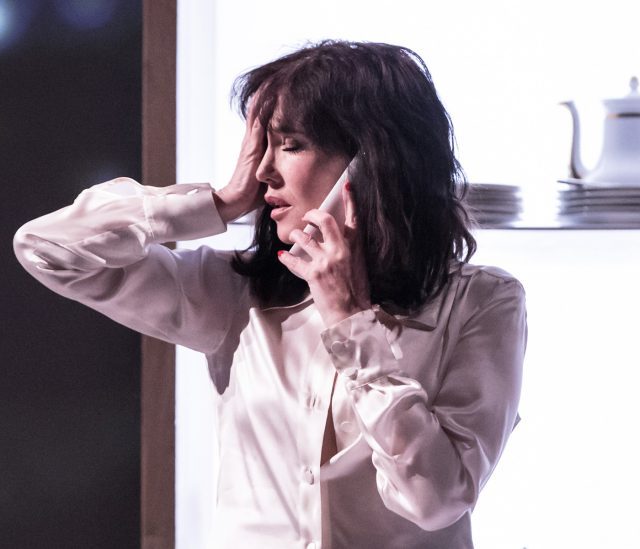
Maria Kochetkova prepares for her first independent, contemporary show at the Joyce (photo by Magnus Unnar)

Maria Kochetkova prepares for her first independent show at the Joyce (photo by Magnus Unnar)

The Joyce Theater
175 Eighth Ave. at 19th St.
July 16-21, $56-$96
212-242-0800
www.joyce.org

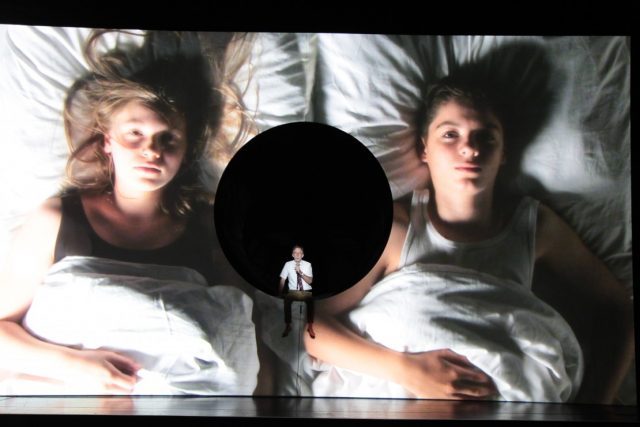
Ballerina Maria Kochetkova wasn’t kidding when she named her first solo project Catch Her If You Can; several of the shows, running July 16-21 at the Joyce, are already sold out, or nearly so. The thirty-five-year-old Moscow-born star trained at the Bolshoi and was a principal with San Francisco Ballet for eleven years, the last two overlapping as a principal here in New York City with ABT. She has spent the last year traveling the world as a guest dancer with such companies as Norwegian National Ballet, Staatsballett Berlin, and English National Ballet, but she has now teamed up with the Joyce Theater Foundation for the special program Catch Her If You Can, consisting of eight works by seven modern choreographers chosen by Kochetkova, joined by four other dancers. “Ballet can be different, ballet can be contemporary, ballet can be exciting, ballet can be theater. I want to show what ballet is now,” she says in a Joyce promotional video.

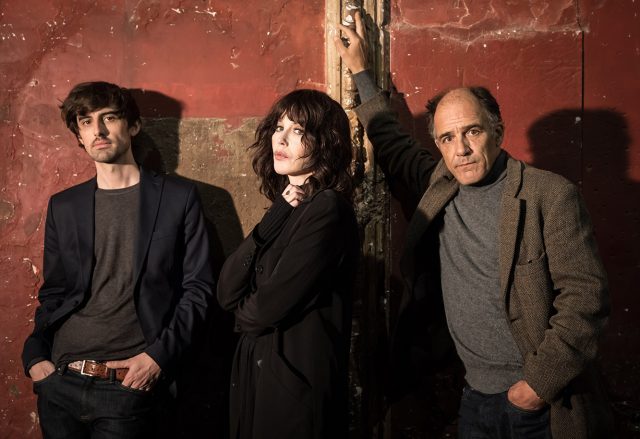
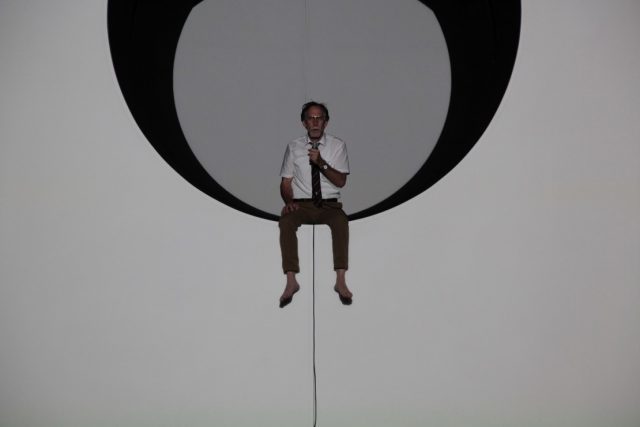
The evening consists of Bach Duet (from New Suite) by William Forsythe, danced by Kochetkova and Sebastian Kloborg; Painting Greys by Myles Thatcher, a solo by Carlo Di Lanno; Tué by Marco Goecke, a solo by Drew Jacoby; Degunino by Marcos Morau, a solo by Kochetkova; the Swan Lake Pas de Deux by David Dawson, with Di Lanno and Sofiane Sylve; Rachel, Nevada by Jacoby, with Kochetkova and Jacoby, At the End of the Day by Dawson, with Kochetkova and Kloborg; and Masha Machine, an intimate and personal solo piece by Jérôme Bel that Kochetkova promises will hold surprises. Kochetkova’s immersion into the world of contemporary dance will not bring an end to her ballet career; she’s schedule to perform in the fall with Norwegian National Ballet again and Dresden Semperoper Ballett, but Catch Her If You Can offers what should be an exciting look at what the future holds for this international favorite entering a new phase, eager to push the bounds of her abilities.

THE BACCHAE

(photo © 2019 Richard Termine)

Dionysus (Jason C. Brown) preaches to his minions in Classical Theatre of Harlem adaptation of The Bacchae (photo © 2019 Richard Termine)

UPTOWN SHAKESPEARE IN THE PARK
Marcus Garvey Park, Richard Rodgers Amphitheater
Tuesday – Sunday through July 28, free, 8:30
www.cthnyc.org

Jesus Christ Superstar meets The Rocky Horror Picture Show in the Classical Theatre of Harlem’s funky “Uptown Shakespeare in the Park!” world premiere of Bryan Doerries’s new adaptation of Euripides’s The Bacchae. The free show, continuing at the Richard Rodgers Amphitheater in Marcus Garvey Park through July 28, has the ebullient energy of NBC’s live television versions of musicals (The Sound of Music, Peter Pan, the aforementioned Jesus Christ Superstar) rather than that of a fully formed stage production as it reinterprets the classical Greek tragedy for the twenty-first century while kicking off the company’s twentieth anniversary. “Ladies and gentlemen, boys and girls, get ready to make some noise for the man you been waiting for. The man that can make all your dreams come true. The preachya that can reach ya, in all the right places. Give it up for Preachya D!!!” a voiceover announces, and Preachya D, better known as Dionysus (Jason C. Brown), enters to much fanfare and proclaims, “I came here as a preacha, as a teacha / I can only hope I can reach you before you run out of time / So betta listen to this rhyme / And then get in line / I hope you ready to learn.”

(photo © 2019 Richard Termine)

Dionysus (Jason C. Brown) listens to King Pentheus (RJ Foster) share his desires in new Euripides adaptation (photo © 2019 Richard Termine)

Dionysus is surrounded by his worshipful followers, a three-woman chorus (Gabrielle Djenné, Rebecca Ana Peña, and Lori Vega), eight dancers (Daniela Funicello, Ashley LaRosa, Brynlie Helmich, Sai Rodboon, Hannah Gross, Madelyn LaLonde, Harmony Jackson, and Kat Files), and a guitar-shredding musician (Alicyn Yaffee). King Pentheus (RJ Foster) doesn’t believe Dionysus is the son of Zeus and is jealous of his minions, known as Bacchettes, while his grandfather, former king Cadmus (Charles Bernard Murray), is ready to go dancing with the Bacchettes, hidden in the mountains, alongside wise old Tiresias (Brian D. Coats). Caught somewhere in the middle is Agaue (Andrea Patterson), Pentheus’s mother and Cadmus’s daughter. After a messenger (Brian Demar Jones) advises Pentheus of the wild rituals going on atop the hill, the king asks Dionysus to bring him there, but Pentheus, of course, is about to get more than he bargained for.

(photo © 2019 Richard Termine)

Euripides’s The Bacchae kicks off Classical Theatre of Harlem’s twentieth anniversary season (photo © 2019 Richard Termine)

Choppily directed by Classical Theatre of Harlem associate artistic director Carl Cofield (One Night in Miami, The Dutchman) The Bacchae takes place on rafters and scaffolding designed by Christopher and Justin Swader, with shadowy, abstract projections by Katherine Freer on more than a dozen vertical screens. Outfitted in Lex Liang’s sexy costumes, the cast communicates the basic narrative through Doerries’s (Antigone in Ferguson, Theater of War) retelling, which includes a lot of description of offstage activities and festivities to move the plot along. The eight woman dancers, members of Elisa Monte Dance, climb all over the stage and into the space on the ground in front of the audience, their ecstatic movements choreographed by Tiffany Rea-Fisher to original music by Fred Kennedy, while Yaffee nearly steals the show as she tears it up with her loud and aggressive guitar playing. The play deals with issues of sexuality, gender, power, and vengeance, but it gets too caught up in itself; the audience is encouraged to take nonflash photos, which is always distracting, and when Preachya D beckons people to stand and dance in their seats, nary a soul got up the night I went, although a handful of people did walk out later. The Bacchae has some cool individual elements, but the shepherds have lost control of their flock as a whole.

SUMMER NIGHT

Summer Night

A group of friends experiences a wild and crazy day in Summer Night

SUMMER NIGHT (Joseph Cross, 2019)
Cinema Village
22 East 12th St. between University Pl. & Fifth Ave.
Opens Friday, July 12
212-529-6799
www.cinemavillage.com
www.samuelgoldwynfilms.com

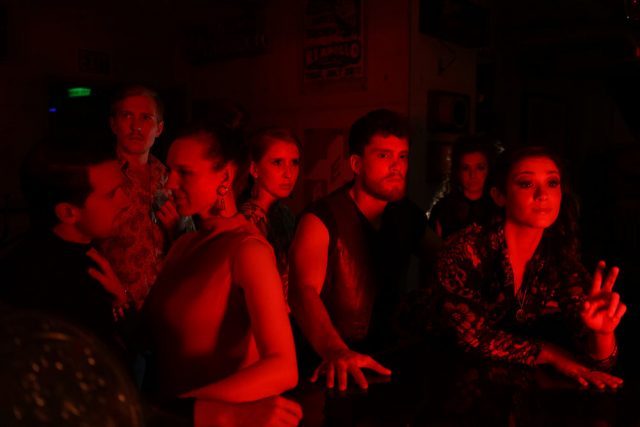
Summer Night, actor Joseph Cross’s directorial debut, offers a twist on the standard ensemble coming-of-age flick: Its protagonists are not a bunch of high school teens looking to get stoned and laid before leaving for college (or not) but a group of older twenty-somethings facing more serious choices about their future. The film, which opens this weekend at Cinema Village, still has to fight genre clichés and mundane digressions as it tells the stories of close-knit friends gathering at a music bar appropriately called the Alamo in their small-town American community on the last night of summer. Jameson (Ellar Coltrane) is the film’s centerpiece, an all-around-good dude with a sound perspective on life who surprises everyone that night by arriving at the show with the impossibly hot, black-leather-clad Harmony (Victoria Justice), who’s not the kind of woman he usually dates. The less-flashy Corin (Elena Kampouris), who is working the door at the Alamo, is more his speed, but as we will learn, most of the characters are deeper than the usual genre stereotypes.

Summer Night

Vanessa (Melina Vidler) is not exactly having the night of her life in debut film from actor Joseph Cross

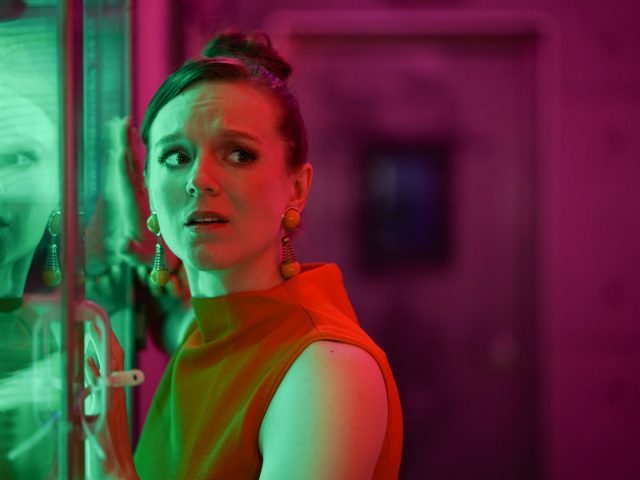
Longtime couple Seth (Ian Nelson) and Mel (Analeigh Tipton) reach a crossroads when she tells him she is pregnant, while Jack “Rabbit” (Bill Milner) is shocked to learn his best friend, and possible true-love romantic partner, Lexi (Lana Condor), has lost her virginity to someone else. Rugged musician Taylor (Callan McAuliffe) unexpectedly meets up with the very sweet, younger Dana (Ella Hunt) after he is mugged in the woods. Bass player Caleb (Hayden Szeto) is a nice guy who just wants to have fun, Vanessa (Melina Vidler) has a thing for Taylor, and Andy (Justin Chatwin), the most outgoing and boisterous among them, secretly wonders whether his time has already passed. Meanwhile, older bar patron Luke (Khris Davis) represents potential stability, having settled down with a wife and kids.

Written by first-time screenwriter Jordan Jolliff, Summer Night takes a while to kick into gear as you figure out whether you want to spend any time with these characters, and there’s too much live music (featuring real bands Ruby the RabbitFoot, Roadkill Ghost Choir, and Deep State) — “Is this, like, all you guys do? Sit around and talk about bands nobody cares about?” Vanessa asks — but Cross, who played Tom the barista in Big Little Lies and Augusten Burroughs in Running with Scissors, eventually finds his groove. The relationship between Caleb and Dana is sweet, and Coltrane (Boyhood, Blood Money) stands out as the group’s conscience as the characters realize there are consequences to their actions, and inactions. The key line just may be when Mel says, “This is not the plan,” with some adapting better than others.

THE SWEET REQUIEM

The Sweet Requiem

Tenzin Dolker makes a strong film debut as a Tibetan refugee living in a settlement in India in The Sweet Requiem

THE SWEET REQUIEM (KYOYANG NGARMO) (Ritu Sarin & Tenzing Sonam, 2018)
IFC Center
323 Sixth Ave. at West Third St.
Opens Friday, July 12
212-924-7771
www.ifccenter.com
thesweetrequiem.com

The immigration and refugee crisis is at the heart of husband-and-wife filmmaking team Tenzing Sonam and Ritu Sarin’s The Sweet Requiem, opening July 12 at IFC. Unfortunately, the film gets bogged down in its agenda-driven narrative. Writer-director Sonam and producer-director Sarin, who were both born in India — Sonam’s parents were Tibetan refugees — have been outspoken regarding the treatment of Tibetans by the Chinese government, as depicted in such earlier works as 2007’s fictional Dreaming Lhasa and the 2010 documentary The Sun Behind the Clouds, but they tend to make their points with a heavy hand, often preaching to the choir. The Sweet Requiem follows that pattern.

The film travels back and forth between the present day, when a grown Dolkar (Tenzin Dolker) is shocked to see Gompo (Jampa Kalsang) at the Tibetan refugee settlement in North Delhi where she and other exiles live, and eighteen years in the past, when Gompo leads a small party, including the young Dolkar (Tenzin Dechen) and her father, Migmar (Rabyoung Thonden Gyahkhang), on a dangerous journey across a frigid, snow-filled landscape as they attempt to escape China and make it to the Indian border alive, knowing that the Chinese military is looking for them. Dolkar works in a threading salon but wants to go back to school, and she has a tight-knit group of friends, including Dorjee (Shavo Dorjee), who is attracted to her, but she is haunted by what happened on the journey, especially to her father and old man Ghen-la (Nyima Dhondup) and by her inability to contact her mother, Tsering (Tashi Choedon), and sister, Wangmo (Lobsang Dolkar), who stayed behind. Desperate to know what’s happening in the land she left, Dolkar watches as a stream of monks set themselves on fire as political statements.

The Sweet Requiem

Gompo (Jampa Kalsang) leads a dangerous journey across the Himalayas to possible freedom in India in The Sweet Requiem

The Sweet Requiem has a strong setup and it looks great, David McFarland’s (mostly) handheld camera moving from the pristinely white Himalayan mountains of the past to the refugee settlement of the present, with its dark and narrow winding corridors. Sonam and Sarin explore the connection between the refugees and the Tibetan culture; several characters wear pro-Tibet T-shirts, but they also attend dance-workout sessions that meld India with Tibet and other cultures. Sadly, such lines as “The spirit of the Tibetan people will never be broken” land like lead; subtlety is not the filmmakers’ forte. But Dechen, in her cinematic debut, gives a poignant performance, and the cinematography and Michael Montes’s score stand out. Opening weekend will feature several Q&As with Sonam and Sarin, joined by Tim McHenry on July 12 at 2:30, Beth Citron on July 13 at 2:30, John Halpern on July 13 at 7:40, and Scott Macaulay on July 14 at 2:30.

THE CRANES ARE FLYING 2K RESTORATION

THE CRANES ARE FLYING

Sergey Urusevsky’s dazzling camera work is a character unto itself in The Cranes Are Flying

THE CRANES ARE FLYING (Mikhail Kalatozov, 1957)
Film Forum
209 West Houston St.
Opens Friday, July 12
212-727-8110
filmforum.org

Even at a mere ninety-seven minutes, Mikhail Kalatozov’s The Cranes Are Flying, having a weeklong revival July 12-18 at Film Forum in a 2K restoration, is a sweeping Russian antiwar epic, an intimate and moving black-and-white tale of romance and betrayal during WWII. Veronika (Tatyana Samojlova) and Boris (Aleksey Batalov) are madly in love, swirling dizzyingly through the streets and up and down a winding staircase. But when Russia enters the war, Boris signs up and heads to the front, while Veronika is pursued by Boris’s cousin, Mark (Aleksandr Shvorin). Pining for word from Boris, Veronika works as a nurse at a hospital run by Boris’s father, Fyodor Ivanovich (Vasili Merkuryev), as the family, including Boris’s sister, Irina (Svetlana Kharitonova), looks askance at her relationship with Mark. The personal and political intrigue comes to a harrowing conclusion in a grand finale that for all its scale and scope gets to the very heart and soul of how the war affected the Soviet people on an individual, human level, in the family lives of women and children, lovers and cousins, husbands and wives.

THE CRANES ARE FLYING

Unforeseen circumstances trap Veronika (Tatyana Samojlova) in wartime Russia in Mikhail Kalatozov’s masterful The Cranes Are Flying

The only Russian film to win the Palme d’Or at Cannes by itself, The Cranes Are Flying is a masterful work of art, a searing portrait of the horrors of war as seen through the eyes of one desperate woman. Adapting his own play, Viktor Rozov’s story sets up Boris and his family as a microcosm of Soviet society under Stalin; it’s no coincidence that the film was made only after the leader’s death. It’s a whirlwind piece of filmmaking, a marvelous collaboration between director Kalatozov, editor Mariya Timofeyeva (Ballad of a Soldier), composer Moisey Vaynberg (the opera The Passenger), and cinematographer Sergey Urusevsky, who also worked with Kalatozov on I Am Cuba and The Unsent Letter; Urusevsky’s camera, often handheld, is simply dazzling, whether moving through and above crowd scenes, closing in on Samojlova’s face and Batalov’s eyes, or twirling up at the sky. Poetic and lyrical, heartbreaking and maddening, The Cranes Are Flying is an exquisite example of the power of cinema.

SECRET HISTORIES — THE FILMS OF KEVIN RAFFERTY & FRIENDS: THE ATOMIC CAFE

America prepares for the bomb in The Atomic Cafe

America prepares for the bomb in The Atomic Cafe, recently restored documentary about the Cold War

THE ATOMIC CAFE (Kevin Rafferty, Jayne Loader & Pierce Rafferty, 1982)
Metrograph
7 Ludlow St. between Canal & Hester Sts.
Saturday, July 13, 6:30
Series runs July 12-14
212-660-0312
metrograph.com

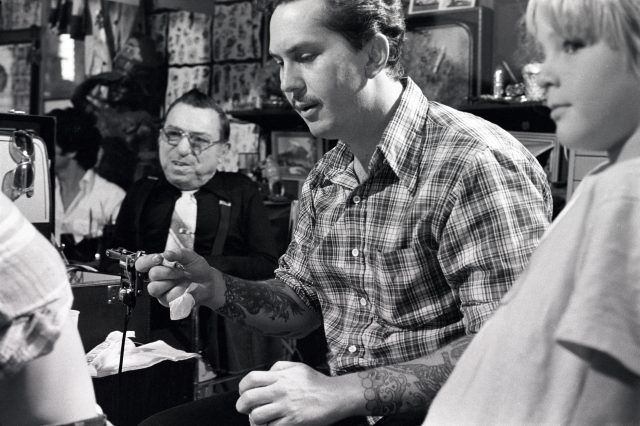
The time is ripe for a 4K restoration of the absurdist 1982 documentary The Atomic Cafe as President Trump deals with the nuclear capabilities and arsenals of Russia, Iran, and North Korea. Kevin Rafferty, Jayne Loader, and Pierce Rafferty were searching archives for propaganda films when they discovered a treasure trove of military and government shorts about the atomic and hydrogen bombs and how the American people should face any oncoming threats. The three filmmakers, who will be at Metrograph on July 13 at 6:30 to introduce a special screening of the 2018 restoration, weaved sensational footage together into an hour and a half of clips that range from the hysterically funny to the dangerously outrageous. Young students are taught to “duck and cover.” Enola Gay pilot Paul Tibbets Jr. describes how easy it was to fly over Hiroshima and drop the bomb but then admits his shock over the eventual destruction it wrought. Presidents Harry S Truman and Dwight D. Eisenhower discuss the impact of the bombs. A radio duo makes jokes about the decimation. Scenes of the horrific damage to Japanese victims are shown in silence. Vice Admiral W. H. P. Blandy defends the Bikini Atoll test, where island residents are assured everything will be fine — as are soldiers who will be in the vicinity of various tests.

While Russia escalates the Cold War — yes, they were our avowed enemy for quite some time, although the film includes President Richard Nixon joking around with Soviet premier Nikita Khrushchev — and a battle between North and South Korea looms, Americans drink “Atomic” cocktails and dance to “Atomic” songs. The execution of Ethel Rosenberg is explained in disturbing detail. A military officer tells the troops, “Watched from a safe distance, this explosion is one of the most beautiful sights ever seen by man,” and in a training film a military chaplain says to a few soldiers, “You look up and you see the fireball as it ascends up into the heavens; it’s a wonderful sight to behold.” Loader and the Raffertys fill the film with a vast array of black-and-white and color footage of nuclear bombs exploding into immense mushroom clouds, accompanied by a wide range of mood-enhancing music. It would be easy to dismiss most of the archival material in the film as ridiculous, outdated propaganda from a bygone era, but in this age of fake news, social media, lies from the White House, a war on journalism, and a president cozying up to enemies and taking issue with longtime allies, it’s more than a little bit frightening too. The Atomic Cafe is screening in the three-day series “Secret Histories: The Films of Kevin Rafferty & Friends,” which runs July 12-14 and also includes 1991’s Blood in the Face, 1992’s Feed, 1999’s The Last Cigarette, and 2008’s Harvard Beats Yale 29-28, offering unique looks at parts of the American experience.

A NIGHT AT NIBLO’S GARDEN

(photo by Maike Schulz)

Mrs. Niblo will join her husband for seventh annual event in Green-Wood Cemetery (photo by Maike Schulz)

Green-Wood Cemetery
Fifth Ave. and 25th St., Brooklyn
Friday, July 12, and Saturday, July 13, VIP entry 6:00 ($75), general admission 7:00 ($40)
718-210-3080
www.green-wood.com

Between 1823 and 1895, Irish immigrant William Niblo (1789–1878) operated three iterations of Niblo’s Garden, a theater on Broadway near Prince Street that specialized in Victorian entertainment. Historic Green-Wood Cemetery takes you back to those times with the seventh annual “A Night at Niblo’s Garden,” two nights of a vaudevillian extravaganza curated by Bindlestiff Family Cirkus, with live music, contortionists, fire-eaters, and more, performing on the banks of Crescent Water, in front of Niblo’s newly restored mausoleum. Niblo will again be portrayed by Ben Feldman, while Mrs. Niblo joins in the fun this year, chosen from social media auditions. VIP entry begins at 6:00 and includes a tour of the mausoleum, refreshments, and prime seats; general admission opens at 7:00. Picnics are encouraged — right where Niblo and his family used to gather for food and drink with family and friends — but no coolers or outside alcohol is permitted.