twi-ny recommended events

SHITAMACHI: TALES OF DOWNTOWN TOKYO

Yasuki Chiba

Yasuki Chiba’s Shitamachi is part of Film Forum series focusing on the popular downtown area of Tokyo

Film Forum
209 West Houston St.
Series runs October 18 – November 2
212-727-8110
filmforum.org

Tokyo’s downtown area known as Shitamachi, which means “low town,” has been a popular setting for movies since cinema began. Southeast of the Imperial Palace, it consists of small neighborhoods going back to the Edo period, filled with traditional Japanese culture particularly for the lower classes. You can explore its many facets in the Film Forum series “Shitamachi: Tales of Downtown Tokyo,” twenty-five films that take place in the geographical area seemingly invented for the movies. Running October 18 to November 7, the festival features a wide range of films, from Yasujirô Ozu’s Record of a Tenement Gentleman and Shôhei Imamura’s Eijanaika to Sadao Yamanaka’s Humanity and Paper Balloons and Nobuhiko Ôbayashi’s Reason, from Kenji Mizoguchi’s Street of Shame and Nami Iguchi’s The Cat Leaves Home to Takeshi Kitano’s Kikujiro and Ishirô Honda’s Godzilla. The series is copresented with the Japan Foundation and programmed by Aiko Masubuchi, who will introduce screenings of Tadashi Imai’s Still I Live On and Satsuo Yamamoto’s The Street without Sun, while Steve Sterner will play live piano accompaniment to Ozu’s Woman of Tokyo. Japanese master Akira Kurosawa was drawn to Shitamachi for several of his tales about class struggle, and Film Forum will be showing four of them, highlighted below.

Takashi Shimura and Toshiro Mifune star in Kurosawa noir DRUNKEN ANGEL

Takashi Shimura and Toshirô Mifune star in Akira Kurosawa noir Drunken Angel

DRUNKEN ANGEL (Akira Kurosawa, 1948)
Friday, October 18, 12:30, 4:50
Saturday, October 19, 5:10, 9:40
Wednesday, October 23, 4:20, 10:15
Friday, November 1, 9:30
filmforum.org

The first film that Akira Kurosawa had total control over, Drunken Angel tells the story of a young Yakuza member, Matsunaga (Toshirô Mifune), who shows up late one night at the office of the neighborhood doctor, Sanada (Takashi Shimura), to have a bullet removed from his hand. Sanada, an expert on tuberculosis, immediately diagnoses Matsunaga with the disease, but the gangster is too proud to admit there is anything wrong with him. Sanada sees a lot of himself in the young man, remembering a time when his life was full of choices — he could have been a gangster or a successful big-city doctor. When Okada (Reisaburo Yamamoto) returns from prison, searching for Sanada’s nurse, Miyo (Chieko Nakakita), the film turns into a classic noir, with marvelous touches of German expressionism thrown in. The terrible incidental music lapses into melodramatic mush, preventing the film from reaching its full potential greatness, but that’s just a minor quibble.

STRAY DOG

Takashi Shimura and Toshirō Mifune team up as detectives tracking a stolen gun in Akira Kurosawa’s Stray Dog

STRAY DOG (野良犬) (NORA INU) (Akira Kurosawa, 1949)
Friday, October 18, 2:30, 8:20
Saturday, October 19, 1:20, 7:10
Thursday, October 24, 12:30, 9:45
filmforum.org

Akira Kurosawa’s thrilling police procedural, Stray Dog, is one of the all-time-great film noirs. When newbie detective Murakami (Toshirō Mifune) gets his Colt lifted on a trolley, he fears he’ll be fired if he does not get it back. But as he searches for the weapon, he discovers that it is being used in a series of robberies and murders — for which he feels responsible. Teamed with seasoned veteran Sato (Takashi Shimura), Murakami risks his career — and his life — as he tries desperately to track down his gun before it is used again. Kurosawa makes audiences sweat, showing postwar Japan in the midst of a brutal heat wave, with Murakami, Sato, dancer Harumi Namiki (Keiko Awaji), and others constantly mopping their brows — the heat is so palpable, you can practically see it dripping off the screen. (You’ll find yourself feeling relieved when Sato hits a button on a desk fan, causing it to turn toward his face.) In his third of sixteen films made with Kurosawa, Mifune plays Murakami with a stalwart vulnerability, working beautifully with Shimura’s cool, calm cop who has seen it all and knows how to handle just about every situation. (Shimura was another Kurosawa favorite, appearing in twenty-one of his films.)

STRAY DOG

Rookie detective Murakami (Toshirō Mifune) often finds himself in the shadows in STRAY DOG

Mifune is often seen through horizontal or vertical gates, bars, curtains, shadows, window frames, and wire, as if he’s psychologically and physically caged in by his dilemma — and as time goes on, the similarities between him and the murderer grow until they’re almost one and the same person, dealing ever-so-slightly differently with the wake of the destruction wrought on Japan in WWII. Inspired by the novels of Georges Simenon and Jules Dassin’s The Naked City, Stray Dog is a dark, intense drama shot in creepy black and white by Asakazu Nakai and featuring a jazzy soundtrack by Fumio Hayasaka that unfortunately grows melodramatic in a few key moments — and oh, if only that final scene had been left on the cutting-room floor. It also includes an early look at Japanese professional baseball. Kurosawa would soon become the most famous Japanese auteur in the world, going on to make Rashomon, Ikiru, Seven Samurai, Throne of Blood, The Hidden Fortress, The Bad Sleep Well, The Lower Depths, and I Live in Fear in the next decade alone.

Takashi Shimura does a stellar job with a rare leading role in Kurosawa’s captivating melodrama IKIRU

Takashi Shimura does a stellar job with a rare leading role in Akira Kurosawa’s captivating melodrama Ikiru

IKIRU (TO LIVE) (DOOMED) (Akira Kurosawa, 1952)
Sunday, October 20, 1:20
Thursday, October 24, 4:50
filmforum.org

In Akira Kurosawa’s 1952 gem, Ikiru, winner of a special prize at the 1954 Berlin International Film Festival, the great Takashi Shimura is outstanding as simple-minded petty bureaucrat Kanji Watanabe, a paper-pushing section chief who has not taken a day off in thirty years. But when he suddenly finds out that he is dying of stomach cancer, he finally decides that there might be more to life than he thought after meeting up with an oddball novelist (Yunosuke Ito). While his son, Mitsuo (Nobuo Kaneko), and coworkers wonder just what is going on with him — he has chosen not to tell anyone about his illness — he begins cavorting with Kimura (Shinichi Himori), a young woman filled with a zest for life. Although the plot sounds somewhat predictable, Kurosawa’s intuitive direction, a smart script (cowritten with Hideo Oguni), and a marvelously slow-paced performance by Shimura (Stray Dog, Scandal, Seven Samurai) make this one of the director’s best melodramas.

The Lower Depths is another masterful tour de force from Akira Kurosawa

The Lower Depths is another masterful tour de force from Akira Kurosawa

THE LOWER DEPTHS (DONZOKO) (Akira Kurosawa, 1957)
Saturday, November 2, 12:50, 8:40
filmforum.org

Loosely adapted from Maxim Gorky’s social realist play, The Lower Depths is a staggering achievement, yet another masterpiece from Japanese auteur Akira Kurosawa. Set in an immensely dark and dingy ramshackle skid-row tenement during the Edo period, the claustrophobic film examines the rich and the poor, gambling and prostitution, life and death, and everything in between through the eyes of impoverished characters who have nothing. The motley crew includes the suspicious landlord, Rokubei (Ganjiro Nakamura), and his much younger wife, Osugi (Isuzu Yamada); Osugi’s sister, Okayo (Kyôko Kagawa); the thief Sutekichi (Toshirō Mifune), who gets involved in a love triangle with a noir murder angle; and Kahei (Bokuzen Hidari), an elderly newcomer who might be more than just a grandfatherly observer. Despite the brutal conditions they live in, the inhabitants soldier on, some dreaming of their better past, others still hoping for a promising future. Kurosawa infuses the gripping film with a wry sense of humor, not allowing anyone to wallow away in self-pity. The play had previously been turned into a film in 1936 by Jean Renoir, starring Jean Gabin as the thief.

OPEN HOUSE NEW YORK WEEKEND 2019

Kings County Distillery at the Brooklyn Navy Yard will offer tours during Open House New York weekend (photo courtesy of Kings County Distillery)

Kings County Distillery at the Brooklyn Navy Yard will offer tours during Open House New York Weekend (photo courtesy of Kings County Distillery)

Multiple venues in all five boroughs
October 18-20, free – $5
212-991-OHNY
www.ohny.org

Although $5 reservations for most of the usual suspects for the seventeenth annual Open House New York Weekend are long gone, there are still plenty of opportunities to go behind the scenes at numerous unique churches, art and design studios, universities, breweries, cultural centers, and other architectural sites, particularly if you’re willing to travel away from midtown and downtown Manhattan. There are hundreds of locations that are open for free, although you might have to wait on long lines, whereas snagging a reservation at one of the below guarantees you admission. Among the classic free sites are the Actors’ Temple, the African Burial Ground National Monument, the AT&T Long Distance Building Lobby, the Bartow-Pell Mansion Museum, the Brooklyn Army Terminal, Castle Williams on Governors Island, the Cathedral Church of St. John the Divine, Central Park’s Belvedere Castle, Central Synagogue, City Hall, Dyckman Farmhouse Museum, the Edgar Allan Poe Cottage, FDR Four Freedoms State Park, the Federal Hall National Memorial, the Fifth Avenue Presbyterian Church, Fort Tilden in the Rockaways, Fort Tryon Park Cottage & Heather Garden, the General Grant National Memorial, the General Society of Mechanics and Tradesmen of the City of New York — and that is only through the beginning of the alphabet. Reservation lines close soon, so you better hurry.

Friday, October 18
Justin Paul Inc, Brooklyn Navy Yard, Brooklyn, 9:00 am, 10:00

Big aLICe Brewing Co, Long Island City, Queens, 9:00 am, 10:30, 12:00

Kepco, Inc., Flushing, Queens, 9:30 am, 11:00 am, 3:00

Crystalyn Kae Accessories at Industry City, Industry City, Brooklyn, 9:00 am, 11:00, 1:00, 3:00

Urban Archaeology, Long Island City, Queens, 10:00 am, 11:00, 12:00

Red White and Blue Enterprises, Woodside, Queens, 10:00 am, 11:00, 12:00, 1:00, 2:00

Legion Lighting & SMASH Industries, East New York, Brooklyn, 10:00 am, 11:30, 1:00, 2:30

Tech Products, Inc., Clifton, Staten Island, 10:30 am, 1:30

Wild East Brewing Company, Gowanus, Brooklyn, 11:00 am, 12:00, 2:00, 3:00

Stickbulb at RUX Studios, Long Island City, Queens, 11:00 am, 2:00, 4:00

urbangreen, Sunset Park, Brooklyn, 1:00, 2:00

Watermark Designs, East New York, Brooklyn, 1:00, 2:00

Transmitter Brewing, Brooklyn Navy Yard, Brooklyn, 2:00, 3:00, 4:00

Caribbean Cultural Center African Diaspora Institute

Caribbean Cultural Center African Diaspora Institute offers walking tours and site-specific art during OHNY Weekend

Saturday, October 19
Morningside Park, Morningside Heights, Manhattan, 10:00 am, 1:00, 4:00

Art and Architecture at Lehman College, the City University of New York, Jerome Park, Bronx, 10:00 am, 11:30, 1:00, 2:30

COOKFOX Architects, Columbus Circle, Manhattan, 11:00 am, 12:00, 1:00, 2:00

Museum of the City of New York, East Harlem, Manhattan, 11:00 am, 12:00, 4:00, 5:00

Caribbean Cultural Center African Diaspora Institute, Harlem, Manhattan, 11:00 am, 1:00

Ridgewood Reservoir, Glendale, Queens, 11:00 am, 1:00

Friends Seminary, Gramercy, Manhattan, 11:00 am, 1:00, 3:00

Square Roots Urban Growers Inc, Bedford-Stuyvesant, Brooklyn, 11:00 am, 1:00, 3:00, 5:00

Van Cortlandt House Museum, Van Cortlandt Park, Bronx, 11:30 am, 1:30, 3:00

HLW, Garment District, Manhattan, 12:00, 1:00, 2:00, 3:00

Plymouth Church, Brooklyn Heights, Brooklyn, 12:30 – 3:00

Kings County Distillery, Navy Yard, Brooklyn, 1:00 – 4:00

Chelsea District Health Center, Chelsea, Manhattan, 2:00, 3:00, 4:00

Maison, Upper East Side, Manhattan, 2:00, 3:00, 4:00

The Delson/Transitional Service for New York, Jamaica, Queens, 2:00, 3:00, 4:00, 5:00

Sunday, October 20
Madison Square Boys & Girls Club, Upper Harlem, Manhattan, 10:00 am, 11:30, 1:00

Morningside Park, Morningside Heights, Manhattan, 10:00 am, 1:00, 4:00

Ridgewood Reservoir, Glendale, Queens, 11:00 am, 1:00

Friends Seminary, Gramercy, Manhattan, 11:00 am, 1:00, 3:00

Van Cortlandt House Museum, Van Cortlandt Park, Bronx, 11:30 am, 1:30, 3:00

Building Energy Exchange, Civic Center, Manhattan, 12:00, 1:00, 2:00

Plymouth Church, Brooklyn Heights, Brooklyn, 12:30 – 3:00

Kings County Distillery, Navy Yard, Brooklyn, 1:00 – 4:00

Grace Church High School, East Village, Manhattan, 1:30, 2:30, 3:30

PAUL CHAN: THE BATHER’S DILEMMA

(photo by twi-ny/mdr)

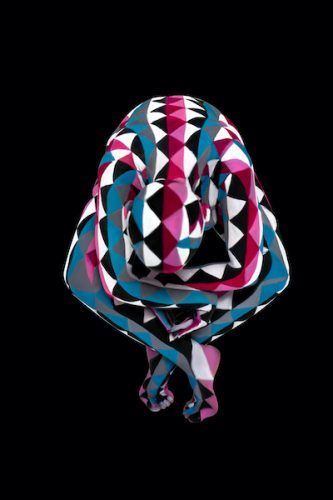
Paul Chan, Khara En Tria (Joyer in 3), nylon, fans, vinyl, polyfil, 2019 (photo by twi-ny/mdr)

Greene Naftali Gallery
508 West 26th St. between Tenth & Eleventh Aves.
Through October 19, free
www.greenenaftaligallery.com

Hong Kong-born, Nebraska-raised artist Paul Chan uses inflatable air dancers to reference art-historical themes and offer his take on the sorry state of the world in “The Bather’s Dilemma,” continuing at Greene Naftali through October 19. Chan, whose video installations include The 7 Lights, in which animated versions of people and debris fall from above, has created a series of beach tableaux in which the air dancers, generally seen as happy synthetic beings flailing about playfully, are weighed down, stuck, facing the problems tearing us apart despite their often bright color schemes. “At every age, overwhelming structural iniquities bring meaningless and arbitrary suffering and pain,” Chan writes in his “Sex, Water, Salvation, or What Is a Bather?” essay for the “Artistic License: Six Takes on the Guggenheim Collection” show on view at the Museum Mile institution through January 12. “And at every age, people organize to resist the best they can to try to stop the calamities from claiming more lives. Progress here means the collective power to stop ourselves from what we are most in danger of becoming. But progress takes a toll, especially on those who want it most. Resistance wears down the spirit, and makes a mess of the body and mind. It is a shame that it feels natural to expect suffering in oneself for the sake of ending it in others, and commonplace to accept this terrible symmetry as the price one pays for progress.”

(photo by twi-ny/mdr)

Paul Chan, detail, La Baigneur 7 (Teenyelemachus), nylon, fan, dye paint on nylon, shoes, concrete, suicide cords, 2018 (photo by twi-ny/mdr)

At Greene Naftali, works such as Khara En Tria (Joyer in 3), 2chained or Genesia and Nemesia, Phenus 1, and La Baigneur 7 (Teenyelemachus) employ specially placed fans to make the figures move in specific patterns with one another, rather than randomly as air dancers usually do. Towels serve as counterweights and also are hung on the walls like canvases. The works recall paintings by Cézanne, Munch, and Renoir but are not celebrations in the sand. Chan continues, “The bather in art breaks with this terrible symmetry by offering an image of another way forward. Works that take up this motif invite us to reflect on how pleasure renews us. They are reminders that pleasing and being pleased – without aggression or guilt – expands our capacity for fellow feeling. Genuine pleasure is rejuvenating. And like that perfect night of sleep, it has a clarifying quality, as if one has emerged from a kind of cleansing. This sense of being cleansed is stimulating and healing, insofar as it helps renew us to more ably face what the day demands.” However, he makes clear: “Progress without pleasure at heart is not progress at all. But pleasure without progress in mind is destructive, deadening, or a bore.”

(photo by twi-ny/mdr)

Paul Chan, Untitled (Katabasis with suspensions), muslin, nylon, polyfil, wire, wood, rope, inkjet on cotton, 2019 (photo by twi-ny/mdr)

Poordysseus is an upside-down bather trapped in a vitrine. The hunched-over, black La Baigneur 7 (Teenyelemachus) includes what Chan calls “suicide cords,” electrical wiring plugged into shoes. The blue Bropheus wears a shirt that says, “Iche Hab Diche Lieb, Mann” (“I love you, man”), and he is situated on a beach towel made of opioid labels and an American flag color scheme. In the back room, smaller models stand on wooden platforms on the wall, studio detritus hanging below. The beach is supposed to be a place of beauty, a respite from the intense pressure of daily life, an opportunity to commune with nature, and one’s fellow human beings, in a carefree manner, despite the possibility of jellyfish and sharks in the water. But Chan also sees at least some hope in “The Bather’s Dilemma”; in the abovementioned essay, he is writing about the Guggenheim show but it also relates to his Greene Naftali exhibit: “Consider the following artworks as spirited invitations that encourage us to recall how enlivening it is to be near or in a river, some lake, or the open sea — and maybe a figure or two, naked or clothed, alone or no, to remember all that has been lost, how close it all is to disappearing, and what it takes to go on.”

WHITE LIGHT FESTIVAL 2019

(photo copyright Hiroshi Sugimoto / courtesy Odawara Art Foundation)

Sugimoto Bunraku Sonezaki Shinju’s The Love Suicides at Sonezaki kicks off Lincoln Center’s tenth annual White Light Festival (photo copyright Hiroshi Sugimoto / courtesy Odawara Art Foundation)

Multiple venues at Lincoln Center
October 19 – November 24, free – $165
212-721-6500
www.lincolncenter.org

Lincoln Center’s multidisciplinary White Light Festival turns ten this year, and it is celebrating with another wide-ranging program of dance, theater, music, and more, running October 19 through November 24 at such venues as the Rose Theater, the Gerald W. Lynch Theater at John Jay College, Alice Tully Hall, and the Church of St. Mary the Virgin. “The resonance of the White Light Festival has only deepened during its first decade, as we have moved into far more challenging times here and around the world,” Lincoln Center artistic director Jane Moss said in a statement. “The Festival’s central theme, namely the singular capacity of artistic expression to illuminate what is inside ourselves and connect us to others, is more relevant than ever. This tenth anniversary edition spanning disparate countries, cultures, disciplines, and genres emphasizes that the elevation of the spirit the arts inspires uniquely unites us and expands who we are.” Things get under way October 19-22 (Rose Theater, $35-$100) with Sugimoto Bunraku Sonezaki Shinju’s The Love Suicides at Sonezaki, a retelling of a long-banned tale by Chikamatsu Monzaemon using puppets, composed and directed by Seiji Tsurusawa, with choreography by Tomogoro Yamamura and video by Tabaimo and artistic director Hiroshi Sugimoto. That is followed October 23-25 by Australia ensemble Circa’s boundary-pushing En Masse (Gerald W. Lynch Theater, $25-$65), directed and designed by Yaron Lifschitz, combining acrobatics and contemporary dance with music by Klara Lewis along with Franz Schubert and Igor Stravinsky.

In Zauberland (Magic Land) (October 29-30, Gerald W. Lynch, $35-$95), soprano Julia Bullock performs Schumann’s Romantic song cycle Dichterliebe while facing haunting memories; the text is by Heinrich Heine and Martin Crimp, with Cédric Tiberghien on piano. The set for Roysten Abel’s The Manganiyar Seduction (November 6–9, Rose Theater, $55-$110) is mind-blowing, consisting of more than two dozen Manganiyar musicians in their own lighted rectangular spaces in a giant red box. Last year, Irish company Druid and cofounder Garry Hynes brought a comic Waiting for Godot to the White Light Festival; this year they’re back with a dark take on Richard III (November 7-23, Gerald W. Lynch, $35-$110) starring Aaron Monaghan, who played Estragon in 2018. Wynton Marsalis will lead The Abyssinian Mass (November 21-23, Rose Theater, $45-$165) with Chorale Le Chateau, featuring a sermon by Rev. Dr. Calvin O. Butts III. In addition to the above, there are also several one-time-only events, listed below.

(photo by Robbie Jack)

DruidShakespeare will present Richard III at the White Light Festival November 7-23 (photo by Robbie Jack)

Thursday, October 24
Jordi Savall: Journey to the East, Alice Tully Hall, $35-$110, 7:30

Tuesday, October 29
Mahler Songs, recital by German baritone Christian Gerhahe with pianist Gerold Huber, Alice Tully Hall, $45-$90, 7:30

Thursday, November 7
Stabat Mater by James MacMillan, with Britten Sinfonia and the Sixteen, conducted by Harry Christophers, Alice Tully Hall, $50-$85, 7:30

Saturday, November 9
White Light Conversation: Let’s Talk About Religion, panel discussion with Kelly Brown Douglas, Marcelo Gleiser, James MacMillan, and Stephen Prothero, moderated by John Schaefer, Daniel and Joanna S. Rose Studio, free, 3:00

Sunday, November 10
Goldberg Variations, with pianist Kit Armstrong, Walter Reade Theater, $25, 11:00 am

Wednesday, November 13
Ensemble Basiani: Unifying Voices, Church of St. Mary the Virgin, $55, 7:30

Thursday, November 14
Attacca Quartet with Caroline Shaw: Words and Music, David Rubenstein Atrium, free, 7:30

Sunday, November 17
Tristan and Isolde, Act II, with the National Symphony Orchestra, conducted by Gianandrea Noseda, featuring Stephen Gould as Tristan and Christine Goerke as Isolde, David Geffen Hall, $35-$105, 3:00

Thursday, November 21
Gloria, with the Orchestra of the Age of Enlightenment and its Choir, conducted by harpsichordist Jonathan Cohen, featuring soprano Katherine Watson, countertenor Iestyn Davies, and soprano Rowan Pierce, Alice Tully Hall, $100, 7:30

Sunday, November 24
Los Angeles Philharmonic: Cathedral of Sound, Bruckner’s “Romantic” Symphony, conducted by Gustavo Dudamel, David Geffen Hall, $35-$105, 3:00

THE HEIGHT OF THE STORM

(photo by Joan Marcus)

Eileen Atkins and Jonathan Pryce play a happy couple dealing with death in The Height of the Storm (photo by Joan Marcus)

Manhattan Theatre Club at the Samuel J. Friedman Theatre
261 West 47th St. between Broadway & Eighth Aves.
Tuesday – Sunday through November 24, $79-$169
heightofthestorm.com
www.manhattantheatreclub.com

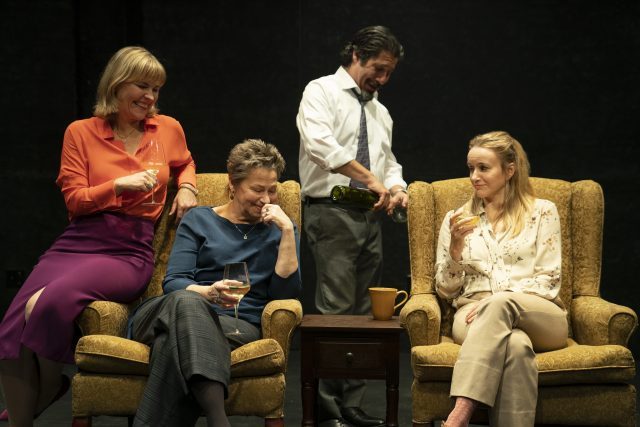
Eileen Atkins and Jonathan Pryce are more than reason enough to see Florian Zeller’s latest intricate family drama, The Height of the Storm, although the play doesn’t quite live up to its lofty ambitions. The follow-up to Zeller’s trilogy of The Father, The Mother, and The Son, this new work shares themes with its predecessors, particularly The Father; as in that story, an elderly man named André (Pryce) with two daughters, Anne (Amanda Drew) and Élise (Lisa O’Hare), is having trouble with his memory. But in this case, there has been a death, but it’s not clear whether it’s André, an extremely successful writer, or his wife, Madeleine (Atkins). References to a recent bereavement are many, yet the two elderly married characters appear in scenes together that do not seem to be flashbacks. “There’s nothing to understand. People who try to understand things are morons,” an ornery André says, which is good advice to the audience as well, who shouldn’t try to think too hard to figure out what’s happening, whether we’re watching the present, the past, or the meanderings of a man suffering from dementia.

Anne is going through her father’s papers at the request of his editor to find more material to publish. Élise and her latest boyfriend, real estate agent Paul (James Hiller), are in from Paris, about to rush back for an important meeting. Madeleine is much calmer, walking through their vegetable garden and making her husband’s favorite mushroom dish. (The play takes place in Anthony Ward’s cozy, high-ceilinged kitchen set.) But when a woman (Lucy Coho) arrives claiming to be an old friend of André’s, his memory is tested yet again. “I had a life. I don’t deny it. But in the end, what’s left?” André opines. “A few faces? A few names lost in the fog? Here and there . . . Not much more. May as well forget everything.”

(photo by Joan Marcus)

A family gathering is interrupted by an unexpected guest in Florian Zeller’s The Height of the Storm (photo by Joan Marcus)

Pryce (Comedians, Miss Saigon), who has won two Tonys and two Olivier Awards, and three-time Olivier Award winner Atkins (Honour, A Room of One’s Own) are impeccable, delivering meticulous performances anchored by the fear that after fifty years of marriage, either André or Madeleine must go first, leaving the other one alone. Drew (Three Days in the Country, Enron), who played Anne in James Macdonald’s production of The Father at the Duke of York’s Theatre in 2016, is staunchly resolute as the daughter trying to keep everything from falling apart. The ninety-minute play features profound lighting by Hugh Vanstone, particularly as it relates to Pryce, who is sometimes cast in darkness while the others remain lit and talking. But director Jonathan Kent (Plenty, Naked) and translator Christopher Hampton (who did the same for the previous three related works) don’t always maneuver fluidly through the narrative; part of the intent is to set the viewer off balance, but too much manipulative confusion is not ideal, especially when accompanied by a clichéd twist. “What is my position? What is my position here? What is my position? My position! What is my position here? My position. Here. What is it? My position . . . what is it?” André frantically demands at one point. The audience is often not sure, which can be both hypnotic and aggravating.

69 METS CELEBRATION

69-mets-celebration

Who: Ed Kranepool, Art Shamsky, Ron Swoboda
What: Fiftieth anniversary celebration of the Mets’ 1969 world championship
Where: Cradle of Aviation Museum, Charles Lindbergh Blvd., Garden City, 516-572-4111
When: Wednesday, October 16, $50-$100, 7:00
Why: Something remarkable shocked the world in the summer and fall of 1969. No, I’m not talking about the lunar landing or Woodstock but something even more amazing: The New York Mets made a seemingly impossible run in August and September to capture the National League pennant and go on to the World Series, where, on October 16, they won Game Five to defeat the heavily favored Baltimore Orioles and become world champions. On Wednesday, October 16, three of the Amazin’s improbable stars, Art Shamsky, Ed Kranepool, and Ron Swoboda, will be in the Cradle of Aviation Museum’s Dome Theater in Garden City to talk about that unlikely victory by a group of misfits based in Queens. General admission is $50; VIP entry of $100 comes with up-front seating and a photo and autograph session.

THE GLASS MENAGERIE

The Glass Menagerie

Amanda Wingfield (Ginger Grace) embraces her daughter, Laura (Alexandra Rose), in dark adaptation of The Glass Menagerie (photo © Chris Loupos)

The Wild Project
195 East Third St. between Aves. A & B
Wednesday – Monday through October 20, $35
thewildproject.com
www.theglassmenagerieplay.com

The front of the program of Ruth Stage’s intimate, streamlined production of The Glass Menagerie, which opened last week for a woefully limited engagement at the Wild Project, is a film-noir-like image of the cast, with Wingfield matriarch Amanda (Ginger Grace), son Tom (Matt de Rogatis), and daughter Laura (Alexandra Rose) dressed in black, staring out at the viewer; Amanda stands far left, stern and tall over the others; kneeling in front of her is Tom, who looks like a cat burglar with a black knit hat pulled tight on his head. He holds a cigarette, at the very center of the photo, that points at Laura, far right, in a sexy shoulder-baring dress with a few sequins, looking as vulnerable as the small, fragile glass animal she is balancing in her hand. In between the siblings sits the gentleman caller (Spencer Scott), in a gray suit and white shirt, peering at Laura. It’s a compelling portrait, and one that gets to the heart of this dark adaptation even though it is fantasy; not only is the scene not in the play, but the three Wingfields never wear those costumes, and the smoking is done with imaginary cigarettes. It’s like a misconstructed memory, a skewed reality. “I give you truth in the pleasant disguise of illusion,” Tom says directly to the audience in the opening monologue. “The play is memory. Being a memory play, it is dimly lighted, it is sentimental, it is not realistic.” In the hands of codirectors Austin Pendleton and Peter Bloch, it is also bold, powerful, and exquisitely rendered.

The Glass Menagerie

Tom (Matt de Rogatis), Amanda (Ginger Grace), and Laura (Alexandra Rose) sit down for a minimalist dinner in The Glass Menagerie (photo © Chris Loupos)

Williams’s semiautobiographical 1944 play is about a domineering mother, a physically disabled daughter, and a desperate son who can’t find his place. But Pendleton and Block, who previously collaborated on Ruth Stage’s epic Wars of the Roses also with de Rogatis, offer a very different take in this intimate version of a dysfunctional family. Jessie Bonaventure’s set is cramped and claustrophobic, with a round kitchen table, a sofa, part of a fire escape, and an alley off to one side. Hovering over it all is a large photo of Amanda’s husband and Tom and Laura’s father, a telephone man who ran off years before and has not been heard from since, although his presence is felt in everything they do. Steve Wolf’s lighting, Jesse Meckl’s sound design, Sean Hagerty’s score, and Arlene’s costumes maintain the eerie mood.

The tale is narrated by Tom, with de Rogatis, in a homey southern accent, making eye contact with all eighty-nine members of the audience, as if each of us is getting our own private telling. Instead of portraying Amanda as strict and manipulative, Grace plays her with a soft tenderness that is heartbreaking, reminiscent of Mary Tyrone in Eugene O’Neill’s Long Day’s Journey into Night. And Rose, in her professional theater debut, is beguiling as Laura, who is not quite as fragile as usual; Rose uses no limp to depict her character’s physical impairment. This is Tom’s memory, after all, his remembrance of what happened once upon a time in 1939 St. Louis, and Pendleton and Bloch have replaced the homoerotic subtext that is often evident in the relationship between Tom and his work acquaintance, gentleman caller Jim O’Connor (sharply played by Scott), with incestuous undertones; when Tom lurks in the background, watching Jim and Laura, he appears jealous and unhappy, leaving when they kiss as if a spurned lover. He does not recall Laura as a physically damaged little girl but as a beautiful young woman who deserves more.

The Glass Menagerie

A gentleman caller (Spencer Scott) woos Laura (Alexandra Rose) in The Glass Menagerie at the Wild Project (photo © Chris Loupos)

There have been two major Broadway revivals of The Glass Menagerie in the last six years, first by John Tiffany, starring Cherry Jones, Zachary Quinto, Celia Keenan-Bolger, and Brian J. Smith at the Booth in 2013, then by Sam Gold, with Sally Field, Joe Mantello, Madison Ferris, and Finn Wittrock at the Belasco in 2017. Pendleton and Bloch’s production might not have big names and a big budget, but its grim, haunting take is a must-see. Here’s hoping it gets extended past its October 20 closing date so more can partake of its ingenuity and inventiveness.