twi-ny recommended events

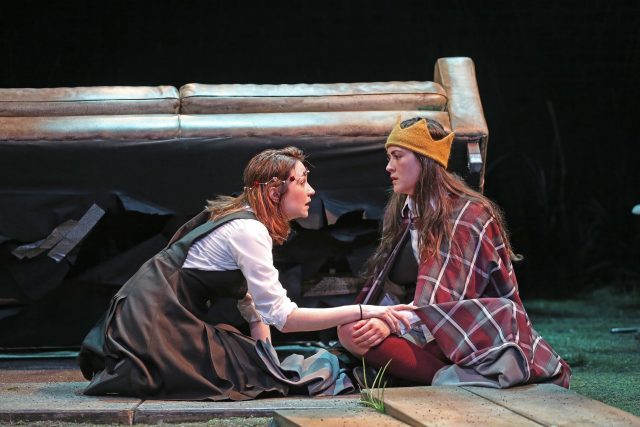
BAM NEXT WAVE FESTIVAL: HAMNET

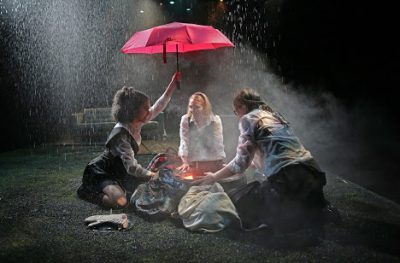
(photo by Ernesto Galan)

Dead Centre makes its BAM debut with Hamnet (photo by Ernesto Galan)

BAM Fisher, Fishman Space
321 Ashland Pl.
October 30 – November 3, $25
718-636-4100
www.bam.org/hamnet
www.deadcentre.org

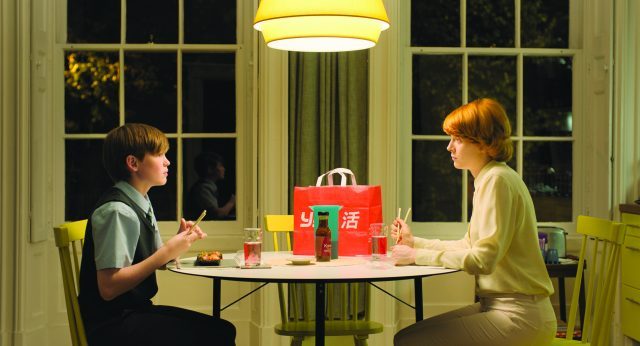
New BAM artistic director David Binder continues his season of BAM debuts with Hamnet, presented by Ireland’s Dead Centre. In 1585, William Shakespeare’s wife, Anne Hathaway, gave birth to twins, son Hamnet and daughter Judith. Hamnet died tragically in 1596 at the age of eleven; three years later, the Bard wrote perhaps his greatest play, Hamlet, at least partly about a young man haunted by the death of his father. Founded in 2012 by Bush Moukarzel and Ben Kidd and based between Dublin and London, Dead Centre has previously staged Beckett’s Room, Lippy, (S)quark!, Souvenir, Chekhov’s First Play, and Shakespeare’s Last Play; all but Lippy deal with writers, including James Joyce and Marcel Proust in addition to Samuel Beckett, Anton Chekhov, and Shakespeare. It has long been debated whether Shakespeare wrote Hamlet specifically in reaction to the death of his son, or whether Hamnet also inspired part of other works. For example, in King John, published in 1623, Constance says, “Grief fills the room up of my absent child.”

“Over centuries of feverish speculation, the most compelling reflections on the presence of Shakespeare’s emotional life in his plays — preeminently, James Joyce’s brilliant pages in Ulysses, but there are many others — have focused on Hamlet,” Shakespeare expert Stephen Greenblatt wrote in 2014 in the New York Review of Books. “This biographical attention to a work deriving from recycled materials and written for the public stage would seem inherently implausible, were it not for the overwhelming impression on readers and spectators alike that the play must have emerged in an unusually direct way from the playwright’s inner life, indeed that at moments the playwright was barely in control of his materials. I will attempt in what follows to trace Hamlet back to a personal experience of grief and to sketch a long-term aesthetic strategy that seems to have emerged from this experience.” The sixty-minute multimedia piece, running October 30 to November 3 at BAM Fisher, features text and direction by Moukarzel and Kidd, with dramaturgy by Michael West, set design by Andrew Clancy, costumes by Grace O’Hara, lighting by Stephen Dodd, sound by Kevin Gleeson, video by Jose Miguel Jimenez, and choreography by Liv O’Donoghue. Aran Murphy plays Hamnet, addressing the audience directly as he shares his tragic tale.

I LIKE WHAT I KNOW: AN EVENING OF ART, HORROR, AND FOOD CELEBRATING VINCENT PRICE

Vincent Price will be celebrated in film, food, and talk at Nitehawk Cinema on October 29

Vincent Price will be celebrated in film, food, and talk at Nitehawk Cinema on October 29

FILM FEAST
Nitehawk Cinema
188 Prospect Park West
Tuesday, October 29, $150, 7:00
nitehawkcinema.com

In addition to being a horror legend, St. Louis-born actor Vincent Price was an art collector and a chef, writing several books with his wife, Mary, including the indispensable A Treasury of Great Recipes, and the Vincent Price Art Museum houses his collection at East Los Angeles College. On October 29, just in time for Halloween, the Prospect Park Nitehawk Cinema will pay tribute to the wide-ranging legacy of the inimitable Price, who passed away in 1993 at the age of eighty-two, with the special one-time-only presentation “I Like What I Know: An Evening of Art, Horror, and Food Celebrating Vincent Price.” Part of Nitehawk’s Film Feast series, the festivities feature short videos of Price’s dedication to art; a conversation with Price’s daughter, author and inspirational speaker Victoria Price, moderated by Nitehawk programmer, curator, and writer Caryn Coleman; a screening of Roger Corman’s 1960 Edgar Allan Poe classic The Fall of the House of Usher, in which Price stars as Roderick Usher; Poe giveaways; and a four-course meal consisting of dishes inspired by the film and Price’s love of cooking, accompanied by wine and cocktails: “The Great Hamlet’s Dagger” (poached shrimp canape served on black bread with Aquavit cream and American paddlefish caviar, chives), “Duck Flambe Belle Terrasse” (roasted duck breast, potato rosti, fine herbs salad, and flambeed cognac sauce), “Kraft Suppe” (braised short rib served with marrow bone, celery and leek gremolata, roasted carrots, spaetzle, and rich beef broth), and tart aux framboise (raspberry tart with Scotch-scented pastry cream).

WAVE HILL: FALL OPERA, NATURE WALKS, PHOTOGRAPHY BOOK

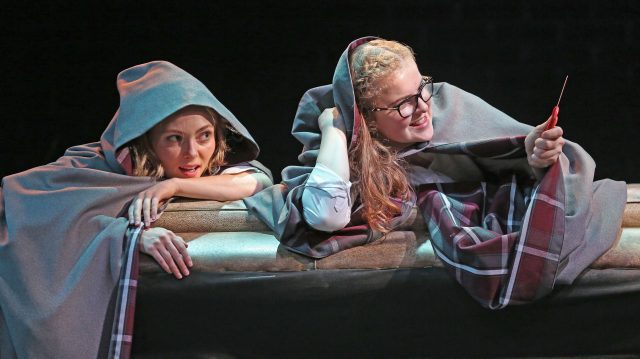
On Site Opera is presenting The Turn of the Screw at Wave Hill (photo by Pavel Antonov)

On Site Opera is presenting The Turn of the Screw at Wave Hill this weekend (photo by Pavel Antonov)

4900 Independence Ave. at West 249th St.
Grounds admission: $10 adults, $6 students and seniors, $4 children 6-18 (free Tuesdays & Saturdays 9:00 am – noon)
The Turn of the Screw: October 25-27, $75
Walks: free with admission unless otherwise noted
www.wavehill.org
osopera.org

There are many ways to experience Wave Hill, the magnificent twenty-eight-acre urban oasis on two former Bronx estates owned by George W. Perkins and transformed by landscape gardener Albert Millard. One of the most unusual, and wonderfully entertaining, is On Site Opera’s adaptation of Benjamin Britten’s 1954 opera The Turn of the Screw, which runs October 25-27, taking place in multiple locations in the Riverdale garden. With a libretto by Mifawny Piper, the chamber opera, based on the 1898 novella by Henry James, is a ghost story set in an English country house where a new governess (Jennifer Check) has arrived to take care of two creepy children, Flora (Ashley Emerson) and her brother, Miles (Jordan Rutter); the house is run by Mrs. Grose (Margaret Lattimore) and is also home to the deceased Peter Quint (Dominic Armstrong), who has a past with Miles, and Miss Jessel (Adriana Zabala), who is uncomfortably close with Flora. The opera begins at the Pergola, overlooking the Hudson River and the Palisades; everyone is given an old-fashioned lantern to carry to light the dark night and help them find their way when the action moves down a path to Wave Hill House, where it continues first in the Mark Twain Room, then in the lovely, cavernous Armor Hall.

The orchestra, conducted by Geoffrey McDonald, features members of the American Modern Ensemble: Max Moston and Victoria Paterson on violin, Philip Payton on viola, Dave Eggar on cello, Roger Wagner on bass, Sato Moughalian on flute, Keve Wilson on oboe, Pascal Archer on clarinet, Charles McCracken on bassoon, Kyle Hoyt on horns, Katie Andrews on harp, Clara Warnaar on percussion, and Jonathan Heaney on keyboards. The opera is directed by Eric Einhorn, with costumes by Amanda Seymour and lighting by Shawn K. Kaufman. There is at least a half hour of standing, so wear comfy shoes, and download the special app that streams the supertitles. The grounds are open for ticket holders, so you can arrive early and wander around on your own. Up next for On Site Opera is Gian Carlo Menotti’s Amahl and the Night Visitors at the Holy Apostles Soup Kitchen December 4-8 and Luigs & Warrender’s Das Barbecü at Hill Country Barbecue Market in the Flatiron District January 26 to February 11.

wave hill book

“Gardening is often likened to painting, but really it has more in common with dance,” Thomas Christopher writes in the new book Nature into Art: The Gardens of Wave Hill (Timber Press, September 2019, $40), which shows off the beauty of the Riverdale gardens with gorgeous photography by Ngoc Minh Ngo. “It’s true that gardeners use color, texture, and form in much the same way as do painters, and there is a similar striving to create a composition or view. But like a dance, a garden is a performance through and with time. Unlike a painting, a garden isn’t static; the planting is just a beginning.” (The word opera can replace dance in that sentence without changing the meaning; you can see dance at Wave Hill every spring and summer.) Christopher and Minh journey through the Flower Garden, the Gold Border, the Monocot and Aquatic Gardens, the Shade Border, the Wild Garden, the Alpine House and Troughs, the Herb and Dry Gardens, the Elliptical Garden, and the Conservatory. They also focus on “Wave Hill Through the Seasons”: “This is perhaps the greatest strength of Wave Hill. Its scenes change from day to day and week to week,” Christopher explains. “The colors wax and wane, the foliage changes hue with the seasons, bursting out in spring, settling into summer, flaring in autumn, and then falling away with winter’s onset to reveal the underlying sculpture of the trunks and branches. Some of the transient beauties are fortuitous, of course, but the main outlines of the seasonal displays, the transformations, are planned as carefully as a dancer works out a sequence of steps.” Some of Ngo’s framed photographs from the book, along with work from a new series, are on view in Wave Hill House in the exhibition “Wave Hill Florilegium” through the end of the year.

You can get a personal look at fall at Wave Hill in a series of guided walks, most of which are free with admission to the grounds and some of which require advance registration.

Saturday, November 2
Artist-Led Woodland Walk, with Bahar Behbahani, tracing water flow on the Conifer Slope and in the Herbert and Hyonja Abrons Woodland, 3:00

Sunday, November 3
Forest Bathing: Celebrating Change and the Changing Seasons, with certified forest therapist Gerti Schoen, adults only, $30, 10:00

Wednesday, November 6
Fall Foliage Walk, with senior horticultural interpreter Charles Day, 1:00

Saturday, November 9
Wings over Wave Hill Weekend: Avian Adventures Family Walk, with environmental educator Olivia Kalin, 1:00

Monday, November 11
Wings over Wave Hill Weekend: Garden Walk — Birds and the Winter Garden, with NYC Audubon birding guide and naturalist Tod Winston and senior horticultural interpreter Charles Day, 11:00

WESTERN STARS

Western Stars

Bruce Springsteen takes a deep look into his life in Western Stars (photo courtesy Warner Bros.)

WESTERN STARS (Thom Zimny & Bruce Springsteen, 2019)
Opens Friday, October 25
brucespringsteen.net
www.warnerbros.com

Bruce Springsteen continues his very public deep dive into his psyche and sense of self with the documentary Western Stars, which opens in theaters on October 25. The movie is part of an unofficial trilogy that began with the 2016 memoir Born to Run and was followed by Springsteen on Broadway. Bruce’s (mostly) one-man show ran at the Walter Kerr Theatre for more than a year, concluding in mid-December 2018, and it earned him a special Tony; Western Stars premiered in early October at the Toronto International Film Festival. In June, Springsteen released his nineteenth studio album, Western Stars, a gorgeous collection of swirling California pop songs, paying tribute to the likes of Jimmy Webb, Burt Bacharach, and Glen Campbell, about characters from the West facing loneliness as they grow older. Bruce opted not to tour behind the album and instead decided to make a film highlighting the music while adding thoughtful, poignant narration, ruminating on character, faith, change, moving forward, and growing wiser with age.

Bruce headed into his hundred-year-old barn on his Colts Neck farm in New Jersey and performed the album live for a small, intimate group of friends and relatives, who sit at small tables as if at a nightclub, politely clapping after some songs. Bruce is joined by his wife, Patti Scialfa, on acoustic guitar and vocals; backup singers including E Street Band violinist Soozie Tyrell; a horn section with regular Bruce sideman Curt Ramm; E Streeter Charlie Giordano on piano and accordion; and a thirty-piece string orchestra. The songs are not mere re-creations from the album but are given more life and breadth here, with dazzling, lush versions of “Hitch Hikin’,” “The Wayfarer,” “Tucson Train,” “Chasin’ Wild Horses,” “Hello Sunshine,” and others; he turns “Stones” and “Moonlight Motel” into powerful duets with Scialfa, who does not sing on the record. (He has called the film a “love letter” to Scialfa.) He also adds a bonus encore that is tremendous fun.

(photo courtesy Warner Bros.)

Bruce and Patti pose for the camera on their honeymoon in Western Stars (photo courtesy Warner Bros.)

In between each song, Bruce talks either on camera or in voice-over about the upcoming tune and/or his state of mind as cinematographer Joe DeSalvo films him around the farm and follows him as he visits with his horses and goes to Joshua Tree National Park in Southern California. Codirected by Springsteen and his longtime collaborator and videographer, Thom Zimny, the film features an inordinate amount of shots of Bruce driving around in cars, donning cowboy hats, examining himself in mirrors, looking out in the distance contemplatively, driving around some more, and putting on more cowboy hats amid close-up after close-up of his expressive face. “The older you get, the heavier that baggage becomes that you haven’t sorted through, so you run. I’ve done a lot of that kind of running,” he admits, waxing philosophic in his gravelly, distinctive voice. “Change — how do you change yourself?” he asks. “It’s easy to lose yourself or never find yourself.” he explains. Zimny intercuts vintage home movies from the Springsteen family archive, including Bruce as a child and, later, in a sweetly romantic moment with Patti at a picnic on their honeymoon, all with new instrumental music playing underneath.

Just as with his autobiography and Broadway show, Springsteen brings up personal flaws and his intense difficulty finding true and complete happiness, powerful stuff coming from an ultra-successful artist in a happy marriage with three apparently good kids. “We all have our broken pieces. . . . In this life, nobody gets away unhurt,” he opines. His vision of the mythological American male in the West is not John Wayne’s, and it’s not Sam Shepard’s or the Beach Boys’ either; in fact, in the title track, the narrator is a minor actor whose claim to fame is that he was shot by the macho Wayne at the end of a movie (“That one scene bought me a thousand drinks / Set me up and I’ll tell it for you, friend”). In the bright-sounding “Hello Sunshine,” Springsteen is not so much welcoming the sun but practically begging it to not go away. “Had enough of heartbreak and pain / Had a little sweet spot for the rain / For the rain and skies of gray / Hello sunshine, won’t you stay,” he sings, with more than a touch of desperation. As he noted on his 1988 Tunnel of Love Express tour, “It’s a dark ride,” but as always with Bruce, it’s another one worth taking.

WHITE LIGHT FESTIVAL: EN MASSE

(photo © David Kelly)

The ten members of Circa Ensemble are trapped in a cube in En Masse (photo © David Kelly)

Gerald W. Lynch Theater at John Jay College
524 West Fifty-Ninth St. between Tenth & Eleventh Aves.
October 23-25, $55-$95
Festival continues through November 24
www.lincolncenter.org
circa.org.au

Australia’s Circa Ensemble returns to Lincoln Center’s White Light Festival for the first time in five years with the death-defying, awe-inspiring En Masse, continuing at the Gerald W. Lynch Theater through October 25. Incorporating acrobatics and gymnastics into contemporary dance with flashes of balletic structures, the Brisbane-based troupe, which presented How Like an Angel at the Union Theological Seminary in 2014, has nothing less than the end of the world on its mind — and what happens after. Created by director and stage designer Yaron Lifschitz with the company, the evening-length work is divided into two related parts. In the first half, the ten extremely talented and brave dancers — Caroline Baillon, Marty Evans, Piri Lee Goodman, Keaton Hentoff-Killian, Cecilia Martin, Hamish McCourty, Daniel O’Brien, Kimberley O’Brien, Jarrod Takle, and Sandy Tugwood — break apart and come together to alternating music by Franz Schubert, Lieders from Schwanengesang (“Ständchen,” “In der Ferne,” “Der Doppelgänger”) and Winterreise (“Der Leiermann,” “Gute Nacht,” “Die Nebensonnen,” “Frühlingstraum”), and electronic music and noise from twenty-six-year-old Swedish composer Klara Lewis (“Msuic I,” “Want,” “Too,” “Beaming”).

(photo © David Kelly)

Tenor Robert Murray beautifully sings Schubert Lieders in En Masse (photo © David Kelly)

The Schubert songs are marvelously sung by tenor Robert Murray, dressed like a vagabond with ratty clothing and carrying a tall, twisted walking stick (the costumes are by associate director Libby McDonnell), accompanied by Tamara-Anna Cislowska on a grand piano. The barefoot performers, wearing jeans and gray T-shirts, move in front of and behind a plastic curtain that comes down and raises again to reveal set changes. A woman crawls across the front of the stage, contorting her lower body into seemingly impossible positions. All ten dancers are trapped in a transparent inflated cube. A parade of solos, duets, and trios marches in the front. Three dancers build a precarious human pyramid, climbing on top of one another. The six men and four women run, jump, slide, get thrown, and threaten to fall against the hard floor — at one treacherous point the audience gasped loudly in unison as a man, fifteen feet in the air, falls, face forward. But Lifschitz has built in various fail safes to try to prevent any potential tragedies, unobtrusively using spotters, and the dancers, who have years of highly specialized circus and acrobatic training, are well-practiced at rolling into somersaults and other moves in case a lift, toss, or carry doesn’t go perfectly.

After intermission, the mood changes. Now that we’re familiar with Circa’s movement vocabulary and impressive skills, we’re not as worried about the safety of the performers, who have formed a kind of postapocalyptic community. All ten dancers are onstage for most of the second half, which is set to Igor Stravinsky’s Le sacre du printemps (“The Rite of Spring”), aggressively played by Cislowska and Michael Harvey on pianos that face each other at the back of the stage, and features dazzling lighting by Lifschitz and Richard Clarke. The situation is not quite as dire as the performers expand their repertoire, creating breathtaking formations, moving in unison, banding together to face the future. It’s no mere pie-in-the-sky hopefulness but a deep-seated belief in the innate instinct of humanity to forge ahead, to do whatever is necessary to survive and thrive. The first act is introduced by a quote from Italian philosopher Antonio Gramsci: “The crisis consists precisely in the fact that the old is dying and the new cannot be born,” while the second starts with a dictum from German philosopher Walter Benjamin: “There is no document of civilization that is not at the same time a document of barbarism.” En Masse is a document showing that something new can indeed be born, even in times of crisis and barbarism.

THE ROOF GARDEN COMMISSION — ALICJA KWADE: PARAPIVOT

(photo by twi-ny/mdr)

Alicja Kwade has created a unique solar system on the Met roof with Parapivot (photo by twi-ny/mdr)

Metropolitan Museum of Art, Met Fifth Avenue
The Iris and B. Gerald Cantor Roof Garden
1000 Fifth Ave. at 82nd St.
Daily through October 27 (weather permitting)
Recommended admission: $25 adults, children under twelve free
212-535-7710
www.metmuseum.org
parapivot slideshow

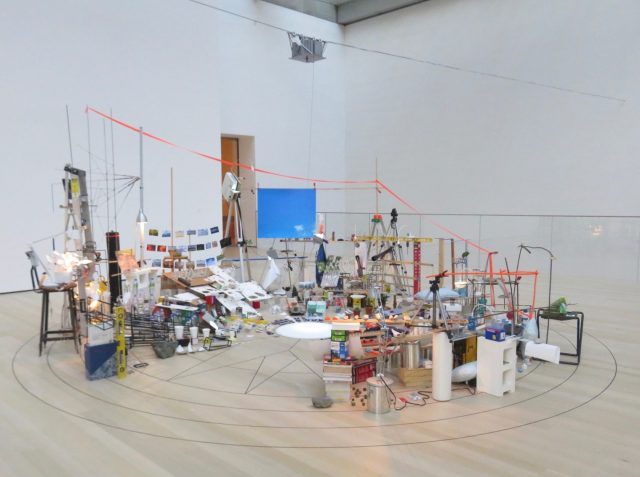
In 2015-16, Berlin-based Polish artist Alicja Kwade turned time upside down and backward in Against the Run, a reconfigured nineteenth-century-style city street clock that stood at the Scholars’ Gate entrance to Central Park. She now focuses her attention on space in her first solo US museum exhibition, Parapivot, continuing on the Met’s roof through October 27. Kwade’s construction consists of nine round, polished stones, evoking planets, precipitously balanced in interlocking steel frames. The daughter of a cultural scientist mother and an art historian father, Kwade’s works often involve scientific inquiry. Overlooking Central Park, Parapivot recalls such earlier pieces by Kwade as Ousia, Changed, Abakus, and But the Same, exploring issues of art, perception, and the natural world.

(photo by twi-ny/mdr)

Polished spheres are like planets in steel-framed construction by Alicja Kwade (photo by twi-ny/mdr)

“The work is not an illustration of something we invented; it’s more like an illustration of us inventing,” Kwade says in a catalog interview with Met chief curator Sheena Wagstaff. “In other words, it’s more like a reflection of ourselves than of something we already did, a sense of what could be a system, what we do, and how we read things.” Thus, Kwade’s solar system will call up different things for different people as they walk around and through it. “I never want to have an answer,” she says in the catalog. “I want to have more questions, but not answers.”

MOUNTAINTOP

Neil Young

Neil Young goes behind-the-scenes of the recording of Colorado in new documentary

MOUNTAINTOP (Bernard Shakey, 2019)
IFC Center, 323 Sixth Ave. at West Third St., 212-924-7771, 7:30
Landmark at 57 West, 657 West 57th St. at Twelfth Ave., 646-233-1615, 7:30
Nitehawk Cinema Williamsburg, 136 Metropolitan Ave., 9:45
One night only: Tuesday, October 22
mountaintopthemovie.com

Neil Young invites viewers behind the scenes of the making of his latest album, Colorado, in the documentary Mountaintop, playing in theaters one night only on October 22 in advance of the October 25 release of the record, the first he’s done with his longtime band Crazy Horse since 2012’s Psychedelic Pill. Directed by Young’s filmmaking alter ego, Bernard Shakey, Mountaintop takes place over the course of eleven days in the Studio in the Clouds in the San Juan Mountains outside Telluride, about nine thousand feet above sea level, where four old white guys come together to make some grand rockin’ music about love and climate change. “You might say I’m an old white guy / I’m an old white guy / You might say that,” Young sings on “She Showed Me Love,” about the attempted murder of Mother Nature. The seventy-three-year-old Canadian legend is joined by seventy-five-year-old bassist Billy Talbot and seventy-six-year-old drummer Ralph Molina — the two surviving original Crazy Horse members, who first played with Young on 1969’s Everyone Knows This Is Nowhere — and sixty-eight-year-old guitar virtuoso Nils Lofgren, who was eighteen when he played guitar and piano on Young’s 1970 solo record, After the Gold Rush. (Coincidentally, Lofgren’s other boss, seventy-year-old Bruce Springsteen, is releasing his documentary about his latest album, Western Stars, on Friday.) Early on, the band says they are having an “oxygen party” to keep them going, passing around tanks like bongs. “It’s old guys; young souls still alive in old souls and the music they make together,” Young writes on his website about the film. It’s hard not to laugh when you see the size of the type on the lyric sheets these old guys are using.

“Right now it’s a piece of fucking gold. It’s original fucking greatness,” Young says of the big-sounding “Rainbow of Colors.” After the calmer “House of Love,” on which Young plays piano and harmonica and Lofgren tap-dances, he says, “It doesn’t have to be good; just be great. You know, just feel good.” Young lives up to his billing as the Godfather of Grunge on the punk-infused “Help Me Lose My Mind”; Lofgren refers to Young’s singing on the track as “reckless narration with pitch,” which gets a chuckle out of Young, who is serious and ornery most of the time, understandably unhappy with the monitors (ironically, mostly on the song “Shut It Down”) and other details of the recording process, and he lets his longtime producer and engineer, John Hanlon, know it again and again. Hanlon, a coffee addict who is suffering from poison oak on his hand, has a meltdown at one point, screaming, “This is the most fucked-up studio I’ve ever fucking worked in in my life. . . I’m about ready to leave this fucking project, okay?” He demands that all cameras be removed from the studio and that the scene of him yelling and cursing not appear in the film, but. . . .

mountaintop

Young, who as Shakey has directed or codirected Rust Never Sleeps, The Monsanto Years, Human Highway, Journey through the Past, and Greendale, and cinematographer C. K. Vollick leave the studio to show time-lapse shots of the snowy mountains, bright stars, and rolling clouds outside, primarily on “Green Is Blue,” a piano ballad about climate change. There are also snippets of Young performing at one of his solo acoustic concerts, where he surrounds himself with a circle of guitars. He employs split screens, a fish-eye lens (think the cover of Ragged Glory), a handheld camera, and one mounted on the floor to mix things up. Lofgren plays the pump organ and an accordion, Young plays the vibes and a glass harmonica, and the four men gather to sing lofty background harmonies. Amid all the technical problems — “I love singing in a wet sock,” Young says about the sound — he and Crazy Horse prove they still have it after half a century, particularly when they turn it up on the majestic “Milky Way,” which borrows generously from “Cowgirl in the Sands,” and the hard-rocking “She Showed Me Love.” “We’re gonna do it / Just like we did back then,” Lofgren, Molina, and Talbot sing on “I Do.” Mountaintop is an irresistible fly-on-the-wall doc about the creative process, about collaboration and genius, about all the little things that can go wrong — and delightfully right — in the making of great art, in this case by a bunch of old white guys trying to save the planet, one song at a time.