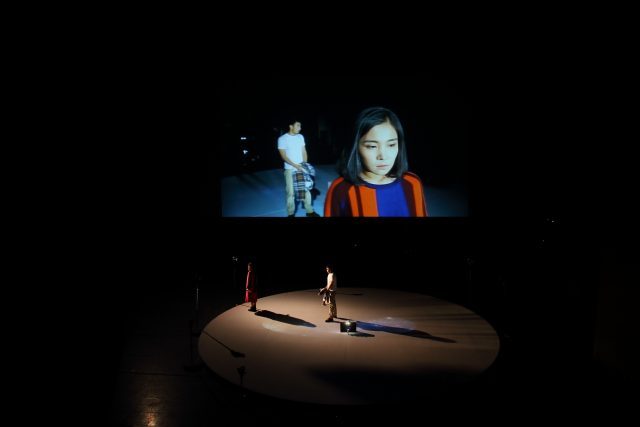
Wang Xiaohuan and Li Jialong star in Nick Payne’s Constellations at Under the Radar Festival (photo by Yang Yang)
Ellen Stewart Theatre, La MaMa Experimental Theatre Club
66 East Fourth St.
January 9-12, $30
Festival continues through January 19
212-475-7710 lamama.org/constellations publictheater.org
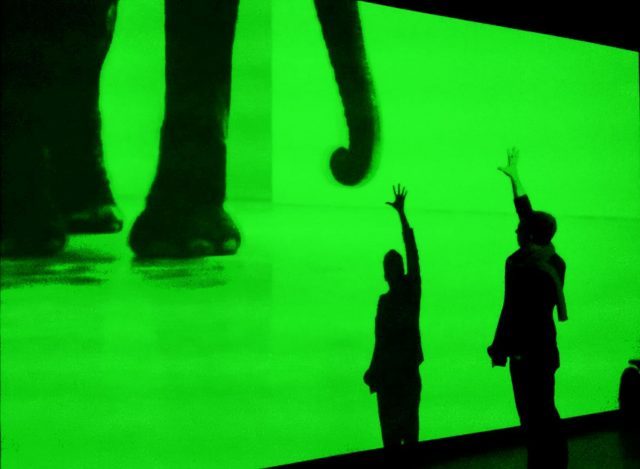
Five years ago, Jake Gyllenhaal and Ruth Wilson starred in Nick Payne’s Constellations on Broadway, a time-bending play set in the quantum multiverse, taking place in the past, present, and future as a beekeeper and a cosmologist repeat scenes over and over again to reveal the intricacies of a relationship. Now artistic director Wang Chong and his Théâtre du Rêve Expérimental are bringing a Chinese twist to the work, which is running January 9-12 at La MaMa as part of the Public Theater’s Under the Radar Festival. The ninety-minute multimedia piece, which features live streaming video and a hamster, stars Wang Xiaohuan and Li Jialong, with music by Li Yangfan, set design by Ji Linlin and Di Tianyi, and lighting by Meng Lingyang. The play takes place on a circular white stage on the floor, surrounded by video cameras. At the center of the floor is a hamster on a wheel in a see-through Lucite case. Wang and Ji enact each scene in front of a different camera — multiple versions of how they met, their first night together, fidelity issues, etc. — resulting in distinct visual perspectives and emotions that are watched on a large screen suspended behind them. In between scenes, director Wang cuts to video of the hamster, who is often running on the wheel in either direction, as if he is making the time go backward or forward by his motion, which is accompanied by celestial projections on the floor.
In writing Constellations, Payne — who previously tackled climate change in If There Is I Haven’t Found It Yet, in which Gyllenhaal made his New York theater debut — was inspired by the work of Columbia physics and mathematics professor Brian Greene, the superstring theorist and author of the highly influential book The Elegant Universe, lending a well-researched scientific edge to the play. Founded in 2008, Théâtre du Rêve Expérimental’s previous productions include Henrik Ibsen’s Ghosts 2.0, Mike Daisey’s The Agony and the Ecstasy of Steve Jobs, Woody Allen’s Central Park West, and such Wang originals as Thunderstorm 2.0 and The Warfare of Landmine 2.0.
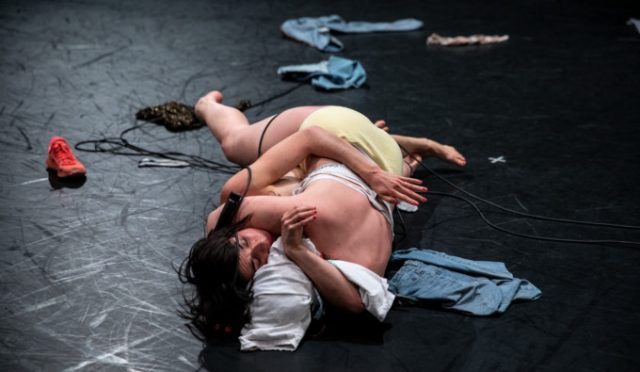
Faye Driscoll’s Thank You for Coming: Space concludes five-plus-year trilogy (photo by Maria Baranova)
LIVE ARTERY
New York Live Arts
219 West 19th St.
January 8-11, $15-$30
Festival continues through January 15 newyorklivearts.org fayedriscoll.com
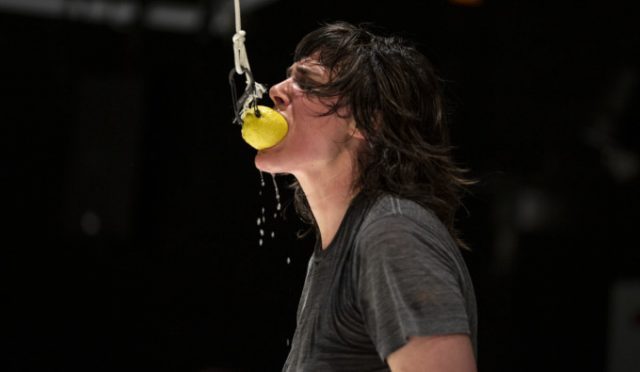
“I think I have always been interested in performance as a ritual of expression, protest, transformation, and basically one gigantic act of mirroring with the performers and audience,” Guggenheim Fellow and Bessie Award-winning choreographer Faye Driscoll explained in a March 2014 twi-ny talk. “I don’t buy this idea that in order to be socially engaged you have to adapt to a certain way of being; I think we are all socially engaged whether we like it or not — or maybe whether we choose to deal with it or not. . . . I am trying through my own formal and aesthetic experiments to expand my perception of this interconnection, and maybe others will feel that or maybe they won’t.” Others have felt that interconnection through her trilogy that began with Thank You for Coming: Attendance in March 2014 at Danspace and was followed by Thank You for Coming: Play in November 2016 at the BAM Fisher.
Driscoll concluded the three-part piece in April 2019 at Montclair State University’s Peak Performances with Thank You for Coming: Space. If you didn’t make it to Jersey, you can catch the work January 8-11 as part of New York Live Arts’ annual Live Artery series, held in conjunction with the APAP conference. Thank You for Coming: Space explores presence and absence, death and grief, taking place in an intimate kinetic installation where it’s just Driscoll and the audience. You do not need to have seen the earlier works in order to join the potent and poignant community that Driscoll creates onstage. Live Artery continues through January 15 with such other shows as Kimberly Bartosik/Daela’s through the mirror of their eyes, Molly Lieber and Eleanor Smith’s Body Comes Apart, and Liana Conyers’s #ImFxckingFunny.
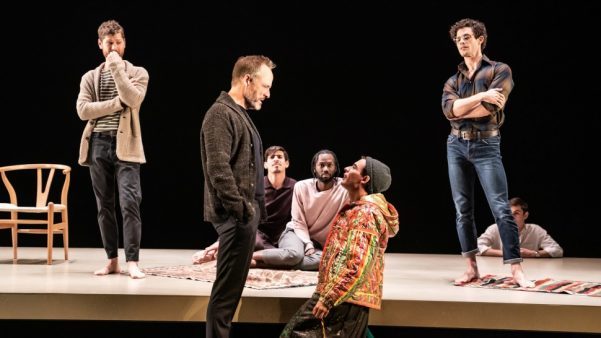
Matthew Lopez’s The Inheritance tackles issues of gay eroticism, literature, and legacy over six and a half hours (photo by Matthew Murphy for MurphyMade, 2019)
Ethel Barrymore Theatre
243 West 47th St. between Broadway & Eighth Ave.
Wednesday – Sunday through June 7, $39 – $199 theinheritanceplay.com
Matthew Lopez’s The Inheritance is a terrific two-and-a-half-hour play — however, it runs six and a half hours in two lengthy installments at the Ethel Barrymore Theatre, each of which requires separate admission. Angels in America meets The Boys in the Band by way of E. M. Forster’s Howards End in the epic drama, which broke the record for winning the most Best Play awards in the West End, including four Oliviers (Best Play, Best Actor for Kyle Soller, Best Director for Stephen Daldry, and Best Lighting Design by Jon Clark). The play is set in contemporary New York City, where Eric Glass (Soller) and Toby Darling (Andrew Burnap) are in love and are considering marriage after seven years together. Toby is a beautiful, magnetic, hard-partying writer who is turning his coming-of-age novel, Loved Boy, into a play; the more grounded Eric works for Jasper (Kyle Harris), a social justice entrepreneur. Eric and Toby are friends with an urbane, wealthy older couple, Walter Poole (Paul Hilton) and Henry Wilcox (John Benjamin Hickey), who host fabulous gatherings at their summer place in the Hamptons. Fate brings actor Adam McDowell (Samuel H. Levine) into Toby’s life; Toby quickly thinks Adam should star in his play. But when Toby meets bedraggled street prostitute Leo (Levine), a double for Adam, various relationships start swirling out of control.
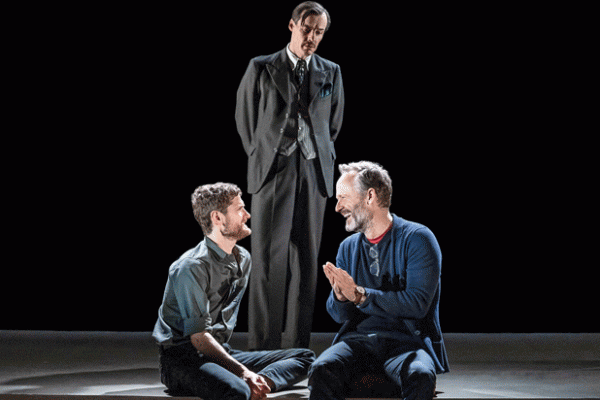
Eric Glass (Kyle Soller) and Henry Wilcox (John Benjamin Hickey) talk about life and love as E. M. Forster (Paul Hilton) looks on in Olivier Award winner (photo by Matthew Murphy for MurphyMade, 2019)
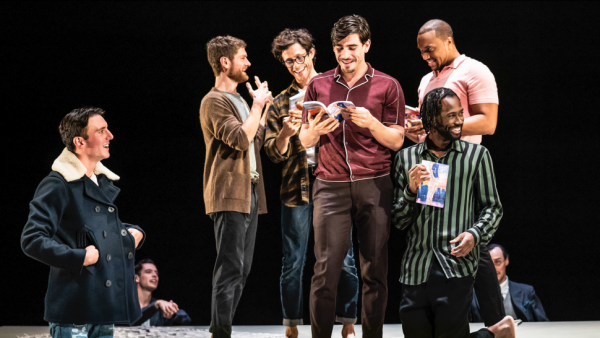
Throughout the play, Forster (Hilton) comments on the plot and interacts with some of the characters, as if he’s the omniscient narrator of a novel. Early on, a Greek chorus of young men speak with Forster about Howards End. “It’s a great book, don’t get me wrong. And the movie’s good. But, I mean, the world is so different now. I can’t identify with it at all,” one man says. “It’s been a hundred years,” adds another. “The world has changed so much,” a third points out. “Our lives are nothing like the people in your book,” a fourth chimes in. Forster asks, “How can that be true? Hearts still love, don’t they? And break. Hope, fear, jealousy, desire. Your lives may be different. But surely the feelings are the same. The difference is merely setting, context, costumes. But those are just details.” Lopez is referring to his play itself, a modern-day reimagining of Howards End that has been transformed into a gay fantasia. The difference in context matters very much, however, and is brought into sharp focus by the presence of Forster, a closeted homosexual who did not have sex until he was thirty-eight and died in 1970 at the age of ninety-one. He would not allow his own gay fantasia, the queer novel Maurice, written in 1912, to be published until after his death, a fact that is discussed in the play, which also deals directly with the AIDS crisis of the 1980s and 1990s.
Hilton (Peter Pan, Anatomy of a Suicide) is sensational as both Forster and Walter; when he reappears onstage after a lengthy absence, the audience erupts into applause, and with good reason: He is essential to the narrative, which too often drifts into melodrama that would even make Douglas Sirk cringe. Levine (Kill Floor) makes a poignant Broadway debut as Adam and Leo, switching between two characters that are polar opposites of each other. Soller is superb as the thoughtful and caring Eric, displaying a tender chemistry with Tony winner Hickey (The Normal Heart, Love! Valour! Compassion!), whose Henry is the seasoned sage of the group and whose painful memories of those lost to AIDS leads to one of the play’s most searing moments. (Hickey will be on hiatus through April 22 to make his directing debut with Plaza Suite and will be replaced by Tony Goldwyn.) Daldry (Billy Elliot,Skylight) tries to keep things moving on Bob Crowley’s minimal set, a large platform around which Eric and Toby’s friends and wannabe writers (including Jonathan Burke, Carson McCalley, Jordan Barbour, Darryl Gene Daughtry Jr., Dylan Frederick, and Arturo Luís Soria) hang out, watch the action, and interject, getting more in the way than adding worthwhile dialogue.
Henry Wilcox (John Benjamin Hickey) has some sharp things to say to the younger generation in Matthew Lopez’s The Inheritance (photo by Matthew Murphy for MurphyMade, 2019)
“With personal relationships. Here is something comparatively solid in a world full of violence and cruelty,” Forster wrote in his seminal 1938 essay “What I Believe,” continuing, “Not absolutely solid, for Psychology has split and shattered the idea of a ‘Person,’ and has shown that there is something incalculable in each of us, which may at any moment rise to the surface and destroy our normal balance. We don’t know what we are like. We can’t know what other people are like. How, then, can we put any trust in personal relationships, or cling to them in the gathering political storm? In theory we cannot. But in practice we can and do.” Lopez (The Whipping Man, The Legend of Georgia McBride) captures that part of Forster’s ethos but also strays from it too often.
There is also a very noticeable lack of women in the story, and only one onstage, the key figure of Margaret, played by the impeccable Lois Smith (The Trip to Bountiful,Marjorie Prime), who sums it all up at the end, but by that time Lopez has long bit off more than he can chew, taking on too much and losing focus of the main plot in favor of emotionally manipulative scenes that lack the necessary subtlety even as he tackles such intense subjects as gay eroticism, class, sex, AIDS, and, most critically, legacy. The Inheritance is filled with delicate, beautiful scenes that will move you deeply, unforgettable moments that exemplify what makes live theater so potent. But it just can’t sustain itself for six and a half hours.
Sophia Petrides’s BREATHING WITH THE ROOM is part of New Ear Festival
Once upon a time, January was considered a relative artistic wasteland, as people suffered from a post-holidays letdown with a dearth of high-quality movies and Broadway shows opening up. But this century continues to fill that void with more and more cutting-edge, experimental, and offbeat music, dance, film, and theater at unique performance festivals around the city. You can catch cabaret at Pangea, opera at Prototype, dance at the 92nd St. Y and New York Live Arts, jazz at JazzFest, Irish theater at Origin’s 1st, avant-garde music and film at New Ear, and a little of everything at Under the Radar. Sadly, the last few years have seen the demise of COIL and American Realness. Below are only some of the highlights of this exciting time to try something that might be outside your comfort zone and take a chance on something new and different to kick off your 2020, especially with the majority of tickets going for about twenty-five bucks.
NEW EAR FESTIVAL
Fridman Gallery
287 Spring St. by Hudson St.
January 6–12, $20, 8:00 www.fridmangallery.com
Monday, January 6 CT::SWaM ExChange, with Ginny Benson, Jeremy Toussaint-Baptiste, Dani Dobkin, Bernd Klug, and a very special guest
Tuesday, January 7
Victoria Keddie exchanges transmissions from Copenhagen, improvised animations and sound by Theodore Darst and Kevin Carey, and a performance by Adelaide Damoah
Wednesday, January 8
Tariq “Black Thought” Trotter of the Roots, with Zachary Tye Richardson, Vuyo Sotashe, Onyx Violins, and Brother Paul Daniels II
Thursday, January 9 Model Home, new commission by Brandon Lopez with TAK Ensemble, and Sa’dia Rehman
Friday, January 10
Susie Ibarra and Dreamtime Ensemble, Allard van Hoorn, and the Dream Mapping Project
Saturday, January 11
Violist Joanna Mattrey, percussionist William Hooker’s quartet, and Sophia Petrides
Sunday, January 12
DeForrest Brown Jr., Muyassar Kurdi and MV Carbon, and SHYBOI
UNDER THE RADAR
Public Theater and other venues
425 Lafayette St. by Astor Pl.
January 6–19 publictheater.org
January 6, 10, 12, 20 Daniel J. Watts’ The Jam: Only Child, with Daniel J. Watts and DJ Duggz, Joe’s Pub, $35
January 8–19 The Shadow Whose Prey the Hunter Becomes, with Michael Chan, Simon Laherty, Sarah Mainwaring, and Scott Price, LuEsther Hall, Public Theater, $30
January 10–19 Selina Thompson: salt., with Rochelle Rose, Martinson Hall, Public Theater, $30
January 11–19 The Truth Has Changed, by Josh Fox & International WOW Company, Newman Theater, Public Theater, $30
January 11 & 17 Waterboy and the Mighty World by the HawtPlates, Shiva Theater, Public Theater, $25
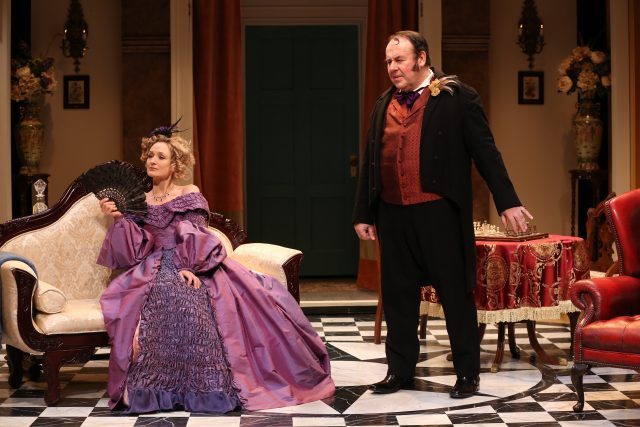
London Assurance is part of Origin’s 1st Irish Festival (photo by Carol Rosegg)
ORIGIN’S 1st IRISH FESTIVAL
Multiple venues
January 7 – February 3 www.origintheatre.org
Through January 26 London Assurance, by Dion Boucicault, directed by Charlotte Moore, Irish Repertory Theatre, $50-$70
January 7–18 The 8th, written and directed by Seanie Sugrue, the Secret Theatre, $20
January 22 – February 2 The Scourge, by Michelle Dooley Mahon, directed by Ben Barnes, starring Michelle Dooley Mahon, Irish Repertory Theatre, $50
January 26 – February 1 Appropriate, by Sarah-Jane Scott, directed by Paul Meade, starring Sarah-Jane Scott, New York Irish Center, $26
January 27–28 Round Room: An Open Studio, by Honor Molloy, directed by Britt Berke, music by Susan McKeown, with Labhaoise Magee, Brenda Meaney, Rachel Pickup, Maeve Price, Zoe Watkins, and Aoife Williamson, the Alchemical Studios, $16
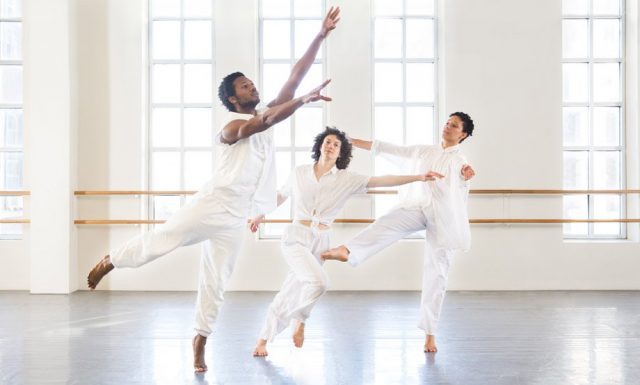
Molly Lieber and Eleanor Smith will present Body Comes Apart at New York Live Arts (photo by Maria Baranova)
LIVE ARTERY
New York Live Arts
219 West 19th St.
January 8-14 newyorklivearts.org
Saturday, January 11 Kathy Westwater: Rambler, Worlds Worlds a Part, $10, 2:00 Kimberly Bartosik/Daela: Through the Mirror of Their Eyes, 5:00
Saturday, January 11, 9:00
Sunday, January 12, 12 noon Molly Lieber and Eleanor Smith: Body Comes Apart, $15
January 12-14 Sean Dorsey: Boys in Trouble, $15
Monday, January 13 Yanira Castro/a canary torsi: Last Audience, free with RSVP, 4:0
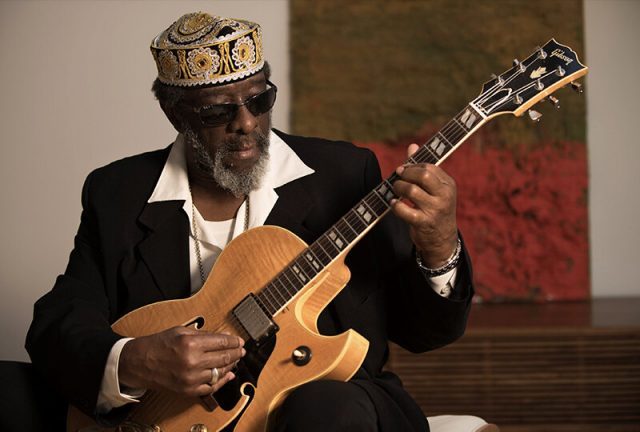
James ‘Blood’ Ulmer will be at the Sultan Room on January 11
January 9, 12, 15–17 Blood Moon, by Ellen McLaughlin and composer Garrett Fisher, Baruch Performing Arts Center, $35-$75
January 11–17 Magdalene, chamber opera cocreated by performer Danielle Birrittella and director Zoe Aja Moore, with poetry by Marie Howe, HERE, $35-$75
January 10–11 Iron & Coal, rock opera by Jeremy Schonfeld, featuring Brooklyn Youth Chorus, Contemporaneous, MasterVoices, Rinde Eckert, and Daniel Rowan, Gerald W. Lynch Theater, $35-$75
January 14–15, 17–19 Ellen West, by poet Frank Bidart and composer Ricky Ian Gordon, Gelsey Kirkland Arts Center, $35-$75
January 15–18 Cion: Requiem of Ravel’s Boléro, by Gregory Maqoma, featuring Vuyani Dance Theatre, Joyce Theater, $10-$75
January 17–18 REV. 23, libretto by Cerise Lim Jacobs, composed by Julian Wachner, featuring Novus NY, Gerald W. Lynch Theater, $35-$75
Harkness Dance Center festival features Catherine Tharin, Kyle Marshall Choreography, and more
92Y HARKNESS DANCE CENTER ARTISTS IN RESIDENCE: ShAIRed SHOW AND MORE!
92nd St. Y
1395 Lexington Ave.
January 10-12, $15 in advance, $25 at the door www.92y.org
Friday, January 10 King by Kyle Marshall Choreography, through the mirror of their eyes by Kimberly Bartosik (work-in progress excerpt), Quarry by Ivy Baldwin Dance, Good Rhythm Wonderful Life by Kazunori Kumagai, noon
Sunday, January 12 Good Rhythm Wonderful Life by Kazunori Kumagai, 3:00 through the mirror of their eyes by Kimberly Bartosik (work-in progress excerpt), 4:0 Of you from here by Catherine Tharin, 4:45 Quarry by Ivy Baldwin Dance, 5:30 A.D. by Kyle Marshall Choreography, 6:15 DECADOSE (excerpts) by cullen+them, 7:15
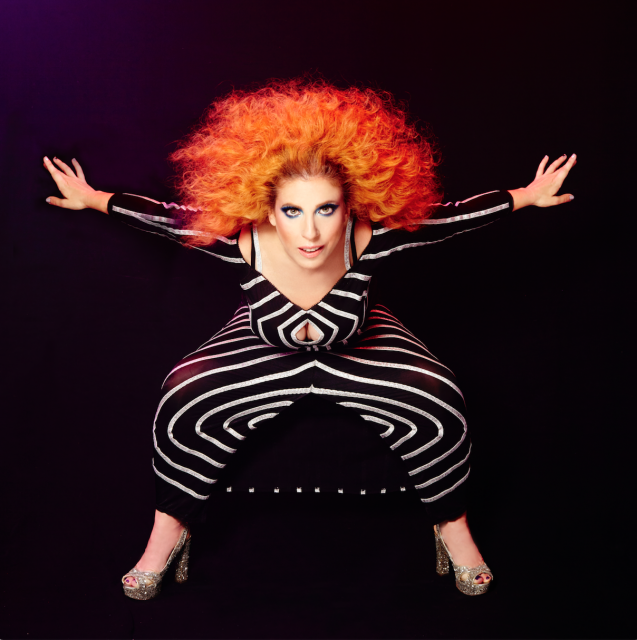
Raquel Cion will perform Me and Mr. Jones: My Intimate Relationship with David Bowie at Pangea Winter Alt-Fest
WINTER ALT-FEST
Pangea NYC
178 Second Ave.
January 10–18 www.pangeanyc.com
Tuesday, January 7, 14, 21
Barbara Bleier & Austin Pendleton, Bits and Pieces, $20-$25 plus $20 food/beverage minimum, 7:00
Friday, January 10
Vicki Kristina Barcelona, the songs of Tom Waits, $15-$20 plus $20 food/beverage minimum, 7:00
Hannah Reimann: Both Sides Now: The Music of Joni Mitchell 1966 – 1974, $20-$25 plus $20 food/beverage minimum, 9:30
Thursday, January 16, 7:00, and Friday, January 17, 9:30
Raquel Cion: Me and Mr. Jones: My Intimate Relationship with David Bowie, $20-$25 plus $20 food/beverage minimum
Friday, January 17
Susanne Mack: Where I Belong, $20-$25 plus $20 food/beverage minimum, 7:00
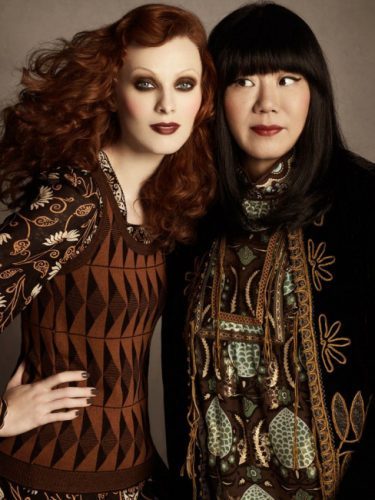
Karen Elson and Anna Sui will talk about music and muses at MAD (photo courtesy Museum of Arts & Design)
Museum of Arts & Design
2 Columbus Circle at 58th St. & Eighth Ave.
Saturday, January 11, $30, 4:00
212-299-7777 madmuseum.org
In conjunction with its current exhibition “The World of Anna Sui,” the Museum of Arts & Design is hosting a series of related events. Next up is “Anna’s Music and Muses,” in which the Detroit-born fashion icon will sit down on January 11 with British musician and supermodel Karen Elson to discuss inspiration and collaboration. Sui, who won the Geoffrey Beene Lifetime Achievement Award in 2009 at the age of forty-five, following in the footsteps of Diane von Furstenberg, Donna Karan, Anna Wintour, Karl Lagerfeld, Calvin Klein, Valentino, and Yves Saint Laurent among other fashion legends, told CBS that year, “I think whenever people talk about the ‘Anna Sui woman,’ they’re talking about someone that’s probably kind of more downtown, and there’s always like this ambiguity: Is she a good girl, or a bad girl?” Forty-year-old Elson, who hails from Greater Manchester, has released two albums, The Ghost Who Walks and Double Roses, is an ambassador for Save the Children, and has two children with former husband Jack White. “The World of Anna Sui” continues through February 23; on January 9, the series “Sui Screens,” featuring films that influenced Sui collections, will present 2006’s Marie Antoinette, followed by a Q&A with director Sofia Coppola, and will conclude February 20 with Ken Russell’s 1971 The Boy Friend, starring Twiggy.
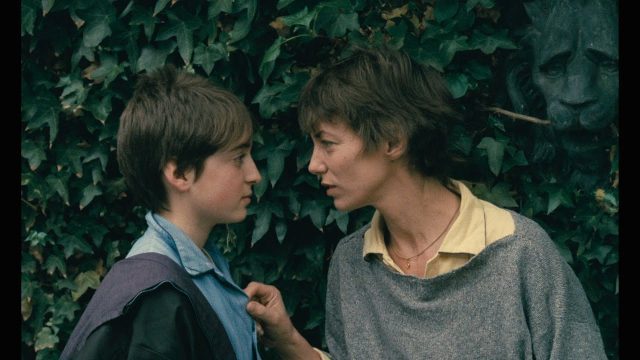
Julien (Mathieu Demy) and Mary-Jane (Jane Birkin) fall for each other in Agnès Varda’s Kung-Fu Master!
KUNG-FU MASTER! (LE PETIT AMOUR) (Agnès Varda, 1988)
Film at Lincoln Center, Walter Reade Theater
165 West 65th St. between Eighth Ave. & Broadway
Monday, January 6, 9:15
Series continues through January 8 www.filmlinc.org
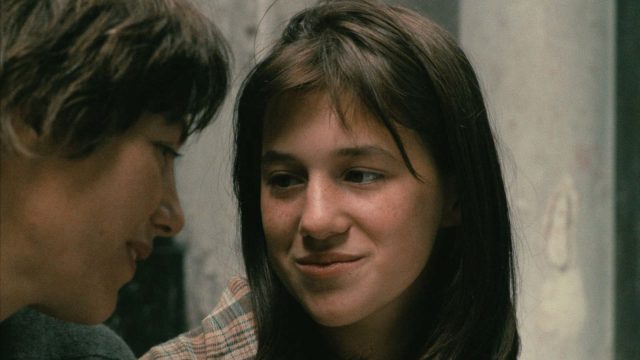
Film at Lincoln Center’s “Varda: A Retrospective” continues January 6 with a real family affair, Agnès Varda’s curiously compelling 1988 drama Kung-Fu Master!, the French title of which is the more appropriate Le petit amour, or “The Little Love.” Written by Varda and English actress, model, and singer-songwriter Jane Birkin from Birkin’s idea, the film stars Birkin as Mary-Jane, a divorced forty-year-old woman living with her fourteen-year-old daughter, Lucy, portrayed with wide-eyed innocence by Charlotte Gainsbourg, Birkin’s real-life daughter with French superstar Serge Gainsbourg, and her younger child, Lou, played by Lou Doillon, Birkin’s daughter with French director Jacques Doillon. Mary-Jane falls in love practically at first sight with one of Lucy’s classmates, fourteen-year-old Julien, portrayed by Mathieu Demy, Varda’s son with French auteur Jacques Demy. Birkin’s parents, actress and playwright Judy Campbell and fine artist and actor David Birkin, play Mary-Jane’s mother and father, while Birkin’s brother, screenwriter Andrew Birkin, plays her brother. And Varda’s daughter, costume designer, actress, and producer Rosalie Varda, will be at the Walter Reade Theater on January 6 to introduce the screening. Varda often liked to blur the line between fiction and nonfiction, but don’t let all that reality confuse you: Kung-Fu Master! is most certainly not a documentary, thank goodness.
Mother and daughter Jane Birkin and Charlotte Gainsbourg star as mother and daughter in Kung-Fu Master!
Somewhat reminiscent of Bertrand Blier’s 1981 Beau-père, in which thirty-year-old Rémi (Patrick Dewaere) falls for his fourteen-year-old stepdaughter, Marion (Ariel Besse), Kung-Fu Master! treads in dangerous territory, exploring a taboo love, even as it does so with care and sensitivity and a tender performance by Birkin. Mary-Jane is well aware that she should not be considering a relationship with a young boy, but she has a yearning to explore the furthest boundaries of desire. However, her choice of Julien is beyond strange, as he is an ordinary teen, who plays Dungeons and Dragons and the arcade game Kung-Fu Master! and has banal conversations with his peers; he is not some hulking, mature figure who is smart and sophisticated for his age. “I know I won’t be around when you start shaving,” Mary-Jane tells Julien. The film also refers repeatedly to the AIDS crisis, which the teenagers are only just learning about and dismiss as somebody else’s problem. Varda never brings the AIDS subplot full circle; perhaps it’s there primarily to emphasize the dangers sex can bring, but she leaves that thread hanging. You’re likely to feel dirty watching Kung-Fu Master!, but you also won’t be able to look away. (Birkin/Gainsbourg fans will also want to check out “Birkin Gainsbourg The Symphonic Starring Jane Birkin” at the Beacon Theatre on March 6, with special guests Iggy Pop and Charlotte Gainsbourg.)
El Museo del Barrio
1230 Fifth Ave. at 104th St.
Monday, January 6, free, 11:00 am – 3:00 pm
212-831-7272 www.elmuseo.org
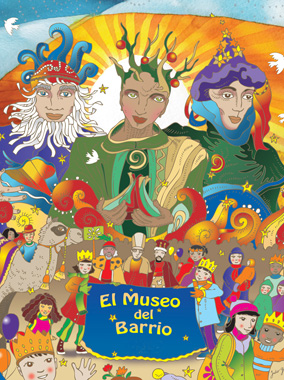
El Museo del Barrio’s celebration of the Epiphany will make its way through East Harlem on Monday, paying tribute to the three kings who brought gifts of gold, frankincense, and myrrh to the manger. The forty-third annual event, titled “Nuestros Barrios Unidos: Celebrating Our Collective Strength,” will feature live music and dance by BombaYo, Los Pleneros de la 21, Annette Aguilar & the Stringbeans, Wabafu Garifuna Dance Theater, and others, large-size puppets, parrandas, floats, and live camels and more animals beginning at 11:00 at 106th St. near Park Ave., then heads north to 115th. At 1:00, the festivities move indoors at the museum, where there will be workshops for children beginning at 1:00, along with live performances by Teatro 220 and Annette Aguilar & the Stringbeans in El Museo’s El Teatro. This year’s king emeritus is poet and author Jesus “Papoleto” Melendez, and the kings are artist and photographer Hiram Maristany, former Telemundo senior anchor Jorge Ramos, and Board of Regents chancellor Dr. Betty A. Rosa, with madrinas Blanka Amezkua, Eileen Reyes-Arias, Nancy Mercado, Ana “Rokafella” Garcia, and Alicia Grullon and padrinos Marcel Agueros, Gabriel “Kwikstep” Dionisio, Gonzalo Mercado, Henry Obispo, and Luis Reyes. Admission to the galleries is free, so be sure to check out “An Emphasis on Resistance: 2019 CIFO Grants & Commissions Program Exhibition” and “Zilia Sánchez: Soy Isla (I Am an Island).”