twi-ny recommended events

BROOKLYN WHISKEY AND SPIRITS FEST

brooklyn whiskey fest

Brooklyn Expo Center
72 Noble St.
Saturday, December 7, $70 (use code WHISKEYBK to save $25), 2:00 – 5:00, 6:30 – 9:30
www.brooklynwhiskeyfest.com

“Too much of anything is bad, but too much good whiskey is barely enough,” Mark Twain famously said. You can test his hypothesis on December 7 at the Brooklyn Whiskey and Spirits Fest. Taking place at the Brooklyn Expo Center, the festival is divided into two three-hour sessions, beginning at 2:00 and 6:30. Attendees will be given a souvenir tasting glass with which they can sample more than one hundred varieties of bourbon, blended, Irish, Scotch, Tennessee, rye, single malt, and Canadian whiskey and craft spirits, including gin, tequila, rum, stout, and more. Among the participants are Iron Smoke, the Fighting 69th Irish Whiskey, BSB Brown Sugar Bourbon, the Vale Fox, Sono 1420, Twinstills Moonshine, Cutwater, Copper Sea Distilling, Black Button Distillery, and Elijah Craig, with experts on hand to talk about their offerings. There will be live music as well as food available for purchase. You can also get a designated driver ticket for $15, but if you’re caught stealing a sip, you’ll be escorted out.

GIBNEY: DOUBLEPLUS 2019

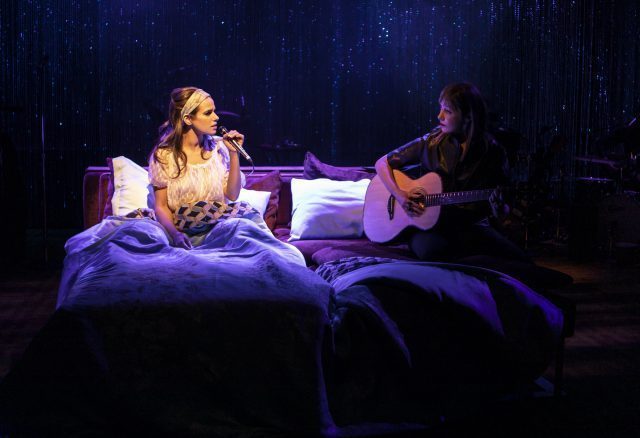
Dana Davenport and Samita Sinha will present new work together for Gibney DoublePlus (photos by Maria Baranova and Yanissa Grand-Pierre)

Dana Davenport and Samita Sinha will present new work together for Gibney DoublePlus (photos by Maria Baranova and Yanissa Grand-Pierre)

The Theater at Gibney 280 Broadway
280 Broadway between Chambers & Reade Sts.
December 5-7, 12-14, 19-21, $15-$20, 8:00
gibneydance.org

Gibney’s annual DoublePlus program, in which established artists mentor pairs of emerging choreographers, kicks off December 5-7 with Pilipinx-American producer, administrator, contemporary performance manager, and Current Sessions founder Alexis Convento curating works by Korean and black American interdisciplinary artist Dana Davenport and composer and vocal artist Samita Sinha. Davenport will present the new movement piece Experiments for ~Relaxation~, while Sinha debuts Kaalo Jol (“Black Waters”), a duet with Sunny Jain on dhol on Thursday and guitarist Grey Mcmurray on Friday and Saturday. The December 6 show will be preceded at 7:00 by a free Living Gallery site-specific performance of Capital-D Dance by Brooklyn-based dancer, writer, and producer Tara Sheena. The series continues December 12-14 with Alexander Diaz’s Getting closer to Coral and Jennifer Harrison Newman’s topologies, curated by Charmaine Warren, and December 19-21 with Laurel Atwell’s We Wield and Hyung Seok Jeon’s Deep Out Agents, curated by Tei Blow.

CHARLOTTE FOREVER — GAINSBOURG ON FILM: MELANCHOLIA

Justine (Kirsten Dunst) faces the end of the world in Lars von Trier’s dazzling Melancholia

CinéSalon: MELANCHOLIA (Lars von Trier, 2011)
French Institute Alliance Française, Florence Gould Hall
55 East 59th St. between Madison & Park Aves.
Tuesday, December 3, 7:30
Series continues Tuesday nights through December 17
212-355-6100
fiaf.org

Danish writer-director Lars von Trier has nothing less than the end of the world on his mind in his controversial 2011 drama, Melancholia, which is screening December 3 at 7:30 in the FIAF CinéSalon series “Charlotte Forever: Gainsbourg on Film.” Yet another of Von Trier’s love-it-or-hate-it cinematic forays opens with epic Kubrickian grandeur, introducing characters in marvelously composed slow-motion and still shots (courtesy of cinematographer Manuel Alberto Claro) as an apocalyptic collision threatens the earth and a Wagner overture dominates the soundtrack. Kirsten Dunst won the Best Actress award at Cannes for her portrayal of Justine, a seemingly carefree young woman celebrating her wedding day who soon turns out to be battling a debilitating mental illness. Her husband, Michael (Alexander Skarsgård), is madly in love with her and does not know quite what he has gotten himself into, especially as the partying continues and Justine’s motley crew of family and friends get caught up in various forms of intrigue, including Gaby, her marriage-hating mother (Charlotte Rampling), Dexter, her never serious father (John Hurt), Jack, her pompous boss (Stellan Skarsgård), Claire, her married sister (Charlotte Gainsbourg), and Claire’s filthy rich husband, John (Kiefer Sutherland), who is hosting the event at his massive waterfront estate.

While most of the film focuses on the wildly unpredictable Justine, the latter section turns its attention on Claire, who is terrified that a newly discovered planet named Melancholia is on its way to destroy the world. But Melancholia is not just about sadness, depression, family dysfunction, and the end of the world. It’s about the search for real love and truth, things that are disappearing from the earth by the minute. Justine works as an advertising copywriter, attaching tag lines to photographs to help sell product; at the wedding, Jack is determined to get one more great line of copy from her, even siccing his young, inexperienced nephew, Tim (Brady Corbet), on her to make sure she delivers. But what she ends up delivering is not what either man expected. Perhaps the only character who really sees what is going on is a wedding planner played by the great Udo Kier, who continually, and comically, shields his eyes from Justine, unable to watch the impending disaster. Just as in the film, as some characters get out their telescopes to watch the approaching planet and others refuse to look, there are sure to be many in the moviegoing public who will shield their eyes from Melancholia, choosing not to view yet another polemical film from a director who likes to antagonize his audience. They don’t know what they’re missing.

LE CONVERSAZIONI: FILMS OF MY LIFE

Laurie Anderson. Photography by Ebru Yildiz / Nicole Krauss. Photography by Goni Riskin.

Laurie Anderson and Nicole Krauss will be at the Morgan Library on December 5 for latest Le Conversazioni presentation (photos by Ebru Yildiz and Goni Riskin)

Morgan Library & Museum
225 Madison Ave. at 36th St.
Thursday, December 5, $20, 7:00
212-685-0008
www.themorgan.org

The ongoing series “Le Conversazioni: Films of My Life” continues December 5 at the Morgan Library with Laurie Anderson and Nicole Krauss sitting down for a discussion with moderator Antonio Monda, the artistic director and cofounder of Le Conversazioni, an Italian festival started in 2006 dedicated to literature but which has since spread to include other disciplines. Anderson is an Illinois-born, New York-based, Grammy-winning musician, filmmaker, composer, and multimedia performance and spoken-word artist who has released such records as Big Science and Mister Heartbreak, made such films as Home of the Brave and Heart of a Dog, and staged such cutting-edge shows as United States Live, Moby-Dick, and The End of the Moon. Krauss is the Manhattan-born award-winning author of Man Walks into a Room, The History of Love, Great House, and Forest Dark. They will be discussing films that influenced their work. The 7:00 event is being held in conjunction with the Morgan exhibition “Verdi: Creating Otello and Falstaff — Highlights from the Ricordi Archive,” which will be open at 6:00 for ticket holders.

A BRIGHT ROOM CALLED DAY

(photo by Joan Marcus)

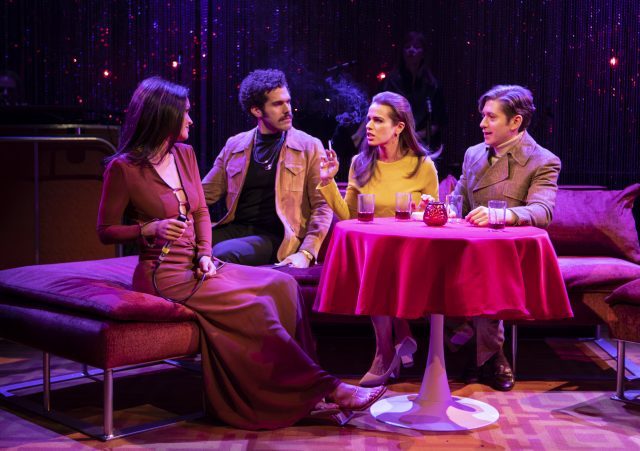
Xillah (Jonathan Hadary) and Zillah (Crystal Lucas-Perry) flank Agnes Eggling (Nikki M. James), in Tony Kushner’s revisiting of A Bright Room Called Day (photo by Joan Marcus)

Anspacher Theater, the Public Theater
425 Lafayette St. at Astor Pl.
Tuesday through Sunday through December 22, $85
212-539-8500
publictheater.org

In October 1987, Tony Kushner’s first play, A Bright Room Called Day, premiered in San Francisco, directed by Oskar Eustis. Inspired by Bertolt Brecht’s 1938 anti-Nazi work The Private Life of the Master Race, Kushner’s play compared the rise of fascism in Germany in 1932–33 with the right-wing Reagan Revolution of the mid-1980s. With fascism and authoritarianism again on the march throughout the world — and, according to many, here in America as well under President Donald J. Trump — Kushner and Eustis are revisiting the drama in an enticing new version continuing at the Public’s Anspacher Theater through December 22. In the original production, the character of Zillah, a young Long Island black woman from the mid-1980s, interrupts the story of a group of bohemians in 1932–33 who are worried where Germany is heading. For this updated iteration, Kushner has drastically rewritten the part of Zillah and has added his alter ego, Xillah, an older white man representing Kushner himself in 2019.

The three-hour play begins with a prologue on January 1, 1932, at a small New Year’s Eve party with actress Agnes Eggling (Nikki M. James), her Hungarian Trotskyite partner, Vealtninc Husz (Michael Esper), opium-smoking actress Paulinka Erdnuss (Grace Gummer), avowed communist Annabella Gotchling (Linda Emond), and the gay Gregor Bazwald (Michael Urie), who may or may not be sleeping with Nazis. Xillah (Jonathan Hadary) first appears in scene two, as Agnes and Paulinka discuss Nazi filmmaking and politics. Xillah walks onto David Rockwell’s cramped, appropriately dingy living room set and says directly to the audience, “Ignore me. I’m not here.” He points at Agnes, who cannot see him, and adds, “She’s about to tell her friend about a meeting she went to, she’s very excited, she — Just watch the scene.” A moment later he explains, “This play, it’s my first play. I wrote it thirty-four years ago. I made this up: the inhabitant of this room, her friends, the room itself, this German room, where it’s 1932 and 1933, and” — he pauses as Zillah (Crystal Lucas-Perry) enters. “Long time no see,” she says to him. He goes on, “I made her up too. She’s this . . . woman in New York, in Reagan America, 1984, 1985. She interrupts the play, at certain intervals she —.” Zillah then cuts Xillah off and tells the audience, “I’m this author-surrogate interruptive-oppositional someone-or-other to whom the playwright neglected to give even a trace of a backstory or anything oppositional to do, to actually do except creep in between the Berlin scenes.” They keep on bickering about whether the original play worked. “Are you here to fix it? Finally?” asks this more potent Zillah, who does a lot more than just creep around.

(photo by Joan Marcus)

Baz (Michael Urie) and Husz (Michael Esper) have a disagreement as Agnes (Nikki M. James) looks on in Tony Kushner play at the Public (photo by Joan Marcus)

The answer, of course, is yes. Although I haven’t seen the play before, this new version feels like it has been fixed — in fact, Kushner might have overplayed his hand, as Xillah and Zillah steal the show. While the Weimar Germany characters discuss how to proceed, joined by communist party representatives Rosa Malek (Nadine Malouf) and Emil Traum (Max Woertendyke), an old ghost from Agnes’s dreams (Estelle Parsons), and the devilish Gottfried Swetts (Mark Margolis) — you’ll be eagerly awaiting Xillah and Zillah’s next interruption. The 1930s material is okay but needs the thrilling energy that the anachronistic characters bring to break up the narrative, especially as performed by the wonderful, grandfatherly Hadary (Gypsy, As Is), who is wise and gentle as Xillah, and the powerful, unstoppable force that is Lucas-Perry Ain’t No Mo’, Bull in a China Shop), a charismatic dynamo as Zillah, taking over the stage every time she appears, injecting humor and potent insight.

“It’s 1932, and they’re placing power above the rule of law. It’s 1985, and they’re cynically exploiting racism and economic anxiety and fear of change,” she declares. “It’s 1932, it’s 1985, and they’re propagating a politics of anti-politics, a hatred of the idea of government itself. They’re replacing history with myths of new mornings, dreams of blood purity, of race and gender and sexual purity. It’s 1932, and it’s 1985, and we are in danger.” Left unsaid is that all of that is true again in 2019, and we are in danger once more.

(photo by Joan Marcus)

Director Oskar Eustis and playwright Tony Kushner take a break during reboot of A Bright Room Called Day after thirty-four years (photo by Joan Marcus)

Kushner (The Intelligent Homosexual’s Guide to Capitalism and Socialism with a Key to the Scriptures; Caroline, or Change), who won the Pulitzer and two Tonys for Angels in America, and Eustis, the artistic director of the Public who helmed the world premieres of Angels and Kushner’s Homebody/Kabul in addition to the controversial anti-Trump adaptation of Julius Caesar at the Delacorte in the summer of 2017, keep politics at the forefront of their work, but here they successfully avoid didacticism, allowing the audience to figure out most of the parallels between the 1930s, the 1980s, and today, but they do get their digs in. Early on, Xillah says, “Most likely Donald Trump — and this is the last time his name will be mentioned tonight because it is a name that is hateful to God — most likely when you leave the theater in a reasonably little while, he will still be president and you will go to bed unhappy.” When you wake up the next morning, Trump will indeed still be president, but A Bright Room Called Day is likely to have given you a fresh new perspective.

THE UNDERLYING CHRIS

(photo by Joan Marcus)

New parents (Hannah Cabell and Howard Overshown) marvel at their bundle of joy in The Underlying Chris (photo by Joan Marcus)

2econd Stage Theater
Tony Kiser Theater
305 West 43rd St. between Eighth & Ninth Aves.
Tuesday – Sunday through December 15, $30-$89
2st.com

In the summer of 2018, Second Stage presented the New York premiere of Tracy Letts’s magnificent Mary Page Marlowe, a ninety-minute intermissionless play in which six actresses portrayed the title character, with a few slight name changes, through eleven nonchronological scenes from her rather ordinary existence. Second Stage is currently running Will Eno’s The Underlying Chris, an extremely clever but not wholly successful eighty-minute intermissionless play in which six actors portray the title character, each time with a slightly different name, through twelve chronological scenes from Chris’s rather ordinary existence. I don’t bring this up to claim that The Underlying Chris is derivative of Mary Page Marlowe, but the similar structure and focus are uncanny as two of the theater’s best writers tackle a similar subject and format.

The Underlying Chris opens with a young girl (Isabella Russo) delivering exit information and introducing the show; she states: “As for the play, the subject is life on Earth. . . . A little more specifically, our story is — it’s a story about, let’s see . . . Identity? Change, maybe. Continuality, if that’s a word. Newness and renewal. Those are words. It’s a story about the moments that shape a life, and the people who shape a moment. And the things we don’t have names for. The essence, I guess, the spirit. And also, mystery. And, meaning.” Having set himself up for big-time responsibility, Eno then proceeds to follow the life of one person from infancy to burial, with a different actor in the title role in each scene, switching genders and color along with names as the protagonist matures from Chris, Christopher, Christine, Kris, and Kristin to Topher, Krista, Kit, Christiana, and Khris, dealing with tragedy, career choices, major and minor milestones, medical conditions, and other key moments that help determine who the character is, was, and will be.

(photo by Joan Marcus)

Louise (Hannah Cabell) and Christopher (Luis Vega) discuss their futures in Will Eno play (photo by Joan Marcus)

It’s not always immediately apparent in each successive scene who the “Chris” character is, but there are several threads that continue through the narrative to maintain continuity; in addition to the protagonist’s name, some kind of take on “Chris,” they experience twinges of back pain while also referencing elements from past scenes, which involve such other figures as Dr. Rivington (Howard Overshown), nurse Gabriella (Lenne Klingaman), young Philip (Nicholas Hutchinson), veterinarian Louise (Hannah Cabell), a radio host (Michael Countryman), amateur actor Roderick (Countryman), the elderly Reggie (Charles Turner), and daughter Joan (Russo and Nidra Sous La Terre). Arnulfo Maldonado’s sets change from a living room and a café to a hospital and a park bench, sliding to one side of the stage or the other as a horizontal black curtain opens and closes (not always all the way), as if the audience blinks and time and space magically shift. “I sometimes feel surprised, being here — like I walked through a door into someone else’s life,” Krista (Lizbeth Mackay) says. And Kristin (Sous La Terre) points out, “Bodies come and go, but the spirit, that’s what I was always interested in. Or, the soul, whatever it is, people’s ideas and feelings, the part of people that moves through the world and changes but also lasts,” which gets to the heart of Eno’s central concern: not so much humanity’s physical presence but our essence, our spirit. “I can see your spirit in these pictures. I see your spirit in you,” Jenny (Cabell) tells Christiana (Denise Burse) while looking at family photographs.

(photo by Joan Marcus)

Kit (Michael Countryman) and Joan (Nidra Sous La Terre) have trouble at the DMV in The Underlying Chris (photo by Joan Marcus)

Directed by Tony winner Kenny Leon (A Raisin in the Sun, the complete August Wilson Century Cycle) The Underlying Chris drags too much, repeating itself and never connecting with the audience the way it so desperately wants to, seeming longer than its eighty minutes. The large cast is fine but no one makes that necessary impact, and the pace is choppy. Eno is a brilliant writer, as shown in such previous works as Thom Pain (based on nothing), The Open House, Wakey, Wakey, and his Broadway debut, The Realistic Joneses, displaying a sharp wit and a skillful cunning in storytelling and character development, but there’s a dissociation between the plot and characters in Chris that is never resolved, keeping us at too much of a distance. We never get a firm grasp on Christopher’s identity, and neither does he, which is part of the point but also leaves a dramatic gap. It’s also a bit confusing in that the story takes place in a timeless present; over the course of eighty years, there are no visible social, political, cultural, economic, or, perhaps most evident, technical advances. “Like with evolution, and most other good ideas, we will go forward looking backward, not knowing our destination until the day we get there, or years later or never,” the girl says in her introduction. Despite some engaging moments, The Underlying Chris doesn’t quite reach its desired destination.

SHOOTING THE MAFIA

Shooting the Mafia

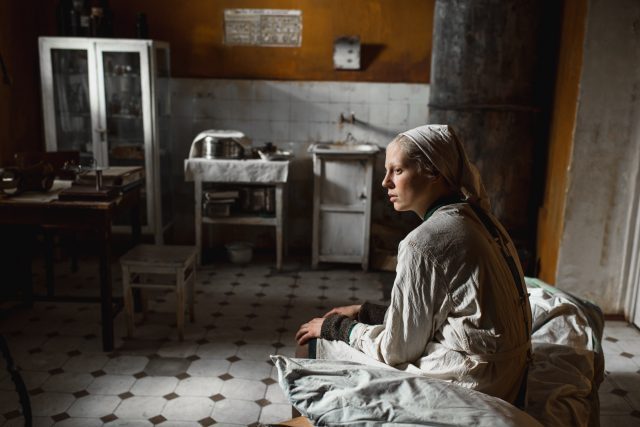
Letizia Battaglia’s stunning photographs of the Cosa Nostra are shown in Shooting the Mafia

SHOOTING THE MAFIA (Kim Longinotto, 2019)
Quad Cinema
34 West 13th St. between Fifth & Sixth Aves.
Through December 5
212-255-2243
quadcinema.com

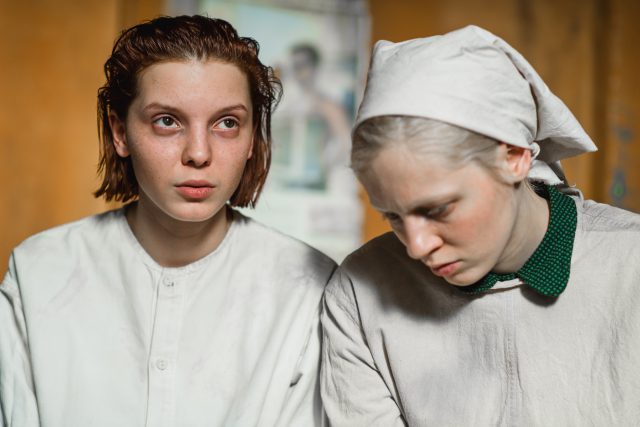
Palermo native Letizia Battaglia took a major turn at the midpoint of her life, becoming a photojournalist at the age of forty, concentrating on brutal crime scenes often involving the Mafia. Now, at the age of eighty-four, her engrossing story is being told in the documentary Shooting the Mafia. The first female photographer to work for a daily Italian newspaper, Battaglia is a bold presence, dominating the screen, displaying a series of distinctive hair colors as she talks about her life and career, discussing her love affair with photography. “The camera changed my life. I began to find myself. Before that, I wasn’t a real person,” she tells director Kim Longinotto. But she wasn’t taking pictures of death for the thrill of it, or for sensationalism. She was determined to show everyone what was happening in Sicily, how the mob operated, leaving a bloody trail behind it as the police, the courts, and the local community looked away. “Photographing trauma is embarrassing. You love these people, but you have to take photos. I couldn’t tell them I was doing it with love,” she says while also explaining that people should not be ruled by fear.

Shooting the Mafia

The fearless Letizia Battaglia takes on the Palermo mob in Shooting the Mafia

At one point, in the town of Corleone, she sets up an outdoor exhibit of her black-and-white photos of Mafia killings and suspected Cosa Nostra leaders; showing such images in public breaks the code of silence and puts her own safety at risk as she receives death threats. She also enters politics as a Green Party councilor. “I wanted to build a better society,” she says. The latter parts of the film focus on the 1986-87 efforts of judges and prosecutors Giovanni Falcone and Paolo Borsellino as they arrest and try a huge group of mafiosos led by Luciano Liggio and Totò Riina. Longinotto (Gaea Girls, Runaway, Dreamcatcher) and editor Ollie Huddleston interweave new interviews with Battaglia, her assistant, Maria Chiara Di Trapani, Battaglia’s former lovers and fellow photographers Santi Caleca, Eduardo Rebulla, and Franco Zecchin, and her current partner, Roberto Timperi, with archival news reports, home movies, family photographs, and clips from Alberto Lattuada’s 1951 film about sin and redemption, Anna. Through it all are Battaglia herself and her stunning photos, haunting pictures that you can’t look away from. “I want to take away the beauty that others see in them,” she says. “I want to destroy them.” Thank goodness she didn’t.