twi-ny recommended events

THE TIES THAT BIND: THE BROTHERS SIZE AT THE SHED

Oshoosi (Alani iLongwe) shares his dreams with his brother, Ogun (André Holland), in sizzling drama at the Shed (photo by Marc J. Franklin)

THE BROTHERS SIZE
The Shed’s Griffin Theater
545 West 30th St. at Eleventh Ave.
Tuesday – Sunday through September 28, $25-$129
646-455-3494
theshed.org

Halfway through the scintillating revival of Tarell Alvin McCraney’s The Brothers Size at the Shed, Ogun Size (André Holland) says to his younger brother, Oshoosi (Alani iLongwe), “He call me Size,” referring to the local sheriff. Oshoosi replies, “Call me Size, too.” Ogun adds, “Like we twins.” Oshoosi responds, “Or the same person.”

Based on Yoruba myth, the play is set in San Pere, Louisiana, near the Bayou, in the distant present, about a pair of very different siblings who deeply care for each other but are on decidedly separate paths: Ogun, named after the god of metal and fire, is a practical, hardworking man who owns an auto repair shop, specializing in bringing damaged cars back to life. Oshoosi, the divine spirit of hunting and contemplation, is a dreamer who just finished a two-year prison stint and is hanging around with his fellow parolee, Elegba (Malcolm Mays), the divine messenger and guardian. “We was like brothers,” Elegba says to Oshoosi, referring to how close they grew while behind bars, adding, “Brothers in need.”

Performed in the round, the story begins with Elegba slowly walking the staging area, pouring out white sand in a large, sacred circle that serves as a kind of spiritual and physical boundary; in Yoruba lore, a magic circle could represent healing, communication with the deities, or ritual sacrifice. The three characters sing a Gospel song, “This road is rough . . . / This road is rough and hard —” Accompanying them is percussionist Munir Zakee, who contributes rhythms that date back to the thirteenth-century diaspora.

Ogun, Oshoosi, and Elegba often stand outside the circle when they’re not part of the action, watching the others, then announcing their entrance; in fact, much of the text is told in the third person, switching from dialogue to stage directions without a blink.

Ogun: Ogun Size Enters / Osi! / Calling for his brother / Osi . . . / Oshoosi!
Oshoosi: Waking from his dream! / What man, what?
Ogun: Get up.
Oshoosi: Comin’ in here turning on lights!
Ogun: That’s the sun.
Oshoosi: Kissing his teeth
Ogun: Oshoosi!
Oshoosi: Don’t you get tired of going through this? / Every morning we go through this.
Ogun: Get yo ass up!
Oshoosi: This hard? / Early in the morning you gotta be this hard?
Ogun: Man don’t bring me that!

After two years in prison, Oshoosi resents being told what to do by his brother. Although Ogun has provided him with a job and a place to live, Oshoosi seems ungrateful, more interested in spending his time with Elegba, finding a woman, and getting a car so he can experience more freedom. Ogun doesn’t trust Elegba, who works at a funeral parlor and who has again attracted the attention of the racist sheriff, who is just waiting for Elegba and Oshoosi to make a mistake.

Ogun has good reason to worry.

Elegba (Malcolm Mays), Oshoosi (Alani iLongwe), and Ogun (André Holland) explore family and responsibility in The Brothers Size (photo by Marc J. Franklin)

The Brothers Size debuted in 2005, when McCraney was still in graduate school. The first of his “Brother/Sister Plays,” which continued with 2008’s In the Red and Brown Water and 2015’s Marcus; or the Secret of Sweet, this revival, a coproduction between the Shed and the Geffen Playhouse, is a searing exploration of male friendship and family responsibility viewed through the lens of racial injustice and rehabilitation. Without becoming preachy, it unfolds at a beautifully rhythmic and poetic pace, with nary a word out of place, highlighted by several stunning dream/nightmare monologues.

There are no props, no furniture on Suzu Sakai’s bold set; the actors never change out of their gray shirts, dark pants, and white sneakers, evoking prison uniforms; Ogun also wears a black knit hat and Elegba a durag-like bandanna. The stark costumes are by Tony winner Dede Ayite, with sharp sound and interstitial music by Stan Mathabane, softly dramatic lighting by Spencer Doughtie, and occasional choreography by Juel D. Lane inspired by Alvin Ailey.

For the first time, McCraney, who shared an Oscar with director Barry Jenkins for Best Adapted Screenplay for the 2016 film Moonlight, is codirecting the play, with Bijan Sheibani (Barber Shop Chronicles, Till the Stars Come Down), and the minimalist production sizzles through all ninety minutes. There’s an excitement each time one of the performers steps over the circle and the plot progresses with a fierce yet touching intimacy.

Mays, a musician, filmmaker, and actor best known for the television series Power Book III: Raising Kanan and Snowfall, imbues Elegba with just the right hint of potential trouble as he inserts himself between the two brothers. iLongwe (Paradise Blue, Antebellum) is gentle and touching as Oshoosi, a young man who wants to turn around his life but has difficulty seeing things through and understanding potential consequences. And Holland (Jitney, Othello), who portrayed Elegba twenty years ago and played the adult Kevin in Moonlight, is electric as Ogun, a proud man who has sacrificed his personal life to help his brother, but while he can fix any car, he’s running out of options with Oshoosi.

The Brothers Size is worthy of an esteemed place in the pantheon of such classic plays about siblings as Suzan-Lori Parks’s Topdog/Underdog, Sam Shepard’s True West, and August Wilson’s The Piano Lesson, a powerful, gripping, timeless tale of freedom and brotherhood.

[Mark Rifkin is a Brooklyn-born, Manhattan-based writer and editor; you can follow him on Substack here.]

A CIVIL WAR LOVE BOAT REUNION: LADY PATRIOT AT THEATRE ROW

Count Stovall and Chrystee Pharris star as slaves during the Civil War in Lady Patriot (photo by Maria Baranova)

LADY PATRIOT
Theatre Row
410 West 42nd St. between Ninth & Tenth Aves.
Tuesday – Sunday through September 20, $70-$90
www.theatrerow.org

There was an infectious buzz in the air on opening night of the New York premiere of Lady Patriot at Theatre Row. Based on a true story, the play is written and directed by Ted Lange, who portrayed Isaac the bartender on The Love Boat, and features two other actors from that hit show, Fred “Gopher” Grandy and Jill “Vicki Stubing” Whelan. Among those in the close-knit audience of ninety-nine were Tony nominee John Douglas Thompson, The Wire star Frankie Faison, Classical Theatre of Harlem producing artistic director Ty Jones, and Bernie Kopell, best known as Dr. Adam Bricker on The Love Boat, which “promises something for everyone.” And for a while, Lady Patriot keeps that promise as well.

The 150-minute play (with intermission) begins in Confederate president Jefferson Davis’s (Gordon Goodman) White House garden in Richmond, Virginia, in July 1861. The Davises’ neighbor Elizabeth “Lizzie” Van Lew (Jill Whelan) is visiting the president’s pregnant wife, Varina (Josie DiVincenzo), who has a taste for absinthe and a shortage of household help; most of the Davis’s enslaved staff is still journeying to meet them. While Elizabeth tends to the herbs, Varina complains — using the N-word over and over — so Elizabeth offers to lend her Mary Bowser (Chrystee Pharris), an experienced midwife. Mary will work hand in hand with the Davises’ longtime slave, Old Robert Brown (Count Stovall), so trusted by Jefferson that the two share some Kentucky bourbon and cigars every day.

Jefferson also trusts Judah P. Benjamin (Derek Powell), a Jewish lawyer from St. Croix who was previously a US senator and is soon promoted from Confederate attorney general to secretary of war. Varina initially doesn’t hide her distaste:

Judah: Mrs. Davis, you are not fond of me, are you?
Varina: Mr. Benjamin, I don’t think about you one way or another. You are a colleague of my husband. He thinks you are valuable to the war effort. I’m a lady. I don’t mix into the affairs of state.
Judah: You are not just any lady. You are the first lady of the Confederate states. Does my being a Jew bother you?
Varina: No.
Judah: Not at all?
Varina: Not in the least . . . however, the fact that you killed our Lord and Savior Jesus Christ . . . does give me pause.

Yet eventually, Judah proves his worth, as does Mary, in a different way. When Old Robert catches Mary reading Jefferson’s private papers — she’s actually a Union spy — she at first denies it as he explains how he remains out of trouble, delivering one of the play’s most potent moments:

“I look a person in dere eyes. A white man’s eyes can’t hold no secret without him telling you . . . it’s a secret. Oh, I’ve seen ’em try to hide a secret, but I been around long enough to recognize a lie or see de truth . . . sitting right dere in dey eye. Know when a white man is scared and know when he’s working himself up to beating a ni–er’s ass. It’s all in dey eyes. If’n I take my shirt off, you ain’t gonna find no scars on my back. Dat ain’t no accident. I know de truth of what I see. I’m gonna ask you a question, little Mary . . . if’n you value Old Robert as a friend, you gonna look me in my eyes and you gonna spread truth all over your words.”

Mary admits that she can read and write, explaining, as she does numerous times, that she is “special.” Instead of reporting her, Old Robert asks her to teach him how to read and write, hiding it from his masters.

The action moves from the White House garden and state room, which are center stage, to Lizzie’s cramped pantry to the left and Jefferson’s home office to the right as the war turns against the Confederacy, and Varina and Jefferson realize that there is a leak, believing it must be from a member of his cabinet. The tension builds as the war drives on to its inevitable conclusion while the characters struggle to maintain their ideals, relationships, and dignity amid the mounting tragedies of slavery and loss around them.

Love Boat veterans Jill Whelan and Fred Grandy reunite onstage in fellow castmate Ted Lange’s Lady Patriot (photo by Maria Baranova)

Lady Patriot concludes Lange’s historical trilogy, which began with George Washington’s Boy, set during the Revolutionary War, and continued with The Journals of Osborne P. Anderson, which dealt with John Brown’s raid on Harpers Ferry in October 1859. He cites more than two dozen sources in a bibliography in the program; he learned about Bowser from a friend and then started extensive research, deciding to focus his story on Lizzie, Mary, and Varina, each of whom he considers a patriot.

Paul Jonathan Davis’s set and lighting and Alex Rockey’s period costumes do a good job of re-creating the look and feel of the 1860s; hovering above the stage are both a Union and Confederate flag, not only a constant reminder that the play takes place during the Civil War but also evoking the divisiveness in contemporary America. Will Mahood’s sound is unobtrusive in the first act but becomes inexplicably overwhelming after intermission, with loud music nearly drowning out the actors’ voices and rifle shots and explosions seemingly right outside that don’t initially alarm any of the characters.

The introduction of a journalist, Mr. Slydell (Fred Grandy), is confusing, particularly when he conceals himself just offstage while listening to a conversation between Lizzie and Mary and later interviews Varina. Scenes go on too long and contain too much speechifying, references to using a strong glue to catch the informant are awkward, and quotes such as “[I’ll] skin him like a cornered badger in a skunk’s holler” feel forced (as does Lizzie’s first-act sentiment, “I’m just a cracker looking for a barrel” and Old Robert saying, “Black don’t crack.).

Among a solid cast, award-winning actor, writer, director, and poet Stovall steals the show as Old Robert, a house slave with a strong sense of decorum and responsibility, a man who knows and understands more than he lets on and dreams of being reunited with his wife and children, who were sold many years before. It’s heart-wrenching when he tells Mary, “Wish I could have seen them grow up. Ernestine, Olive, Sylvester, and Amos . . . dose were mine. Lorraine sure knew how to make beautiful babies. . . . Hell, a gal as pretty as Lorraine . . . you think de master wasn’t gonna give her some children? She had twelve.”

Lange doesn’t hold back racist and antisemitic tropes; the N-word is used a disturbing amount of times, but, in a program note, he asserts, “The authenticity of the language is vital to the historical context of slavery. It should offend us and educate us in the atrocities that it encompassed so that we can learn from the evils of this degrading aspect of American history and demand a more equal society for all Americans.” While that is certainly true, it doesn’t have to feel like we’re in a Quentin Tarantino film.

Grandy, Whelan, and Lange appeared two years ago in Herb Gardner’s I’m Not Rappaport at the Encore in Michigan, but this is the first such Love Boat stage reunion in New York City. It was great to see them together again on opening night, joined by their medical cohort, Kopell. With a few tweaks here and there, Lady Patriot could indeed make another run, setting a course for adventure.

[Mark Rifkin is a Brooklyn-born, Manhattan-based writer and editor; you can follow him on Substack here.]

RESTORING CHAOS: JAPAN SOCIETY CELEBRATES YUKIO MISHIMA CENTENNIAL

YUKIO MISHIMA CENTENNIAL SERIES: EMERGENCES
Japan Society
333 East 47th St. at First Ave.
September 11 – December 6
japansociety.org

“Only art makes human beauty endure,” Yukio Mishima wrote in his 1959 novel Kyoko’s House.

In his short life — Mishima died by suicide in 1970 at the age of forty-five — the Japanese author and political activist penned approximately three dozen novels, four dozen plays, five dozen story and essay collections, ten literary adaptations, and a libretto, a ballet, and a film.

Japan Society is celebrating the hundredth year of his birth — he was born Kimitake Hiraoka in Tokyo in January 1925 — with “Yukio Mishima Centennial Series: Emergences,” comprising six events through December 6. The festival begins September 11–20 with Kinkakuji, SITI company cofounder Leon Ingulsrud and Korean American actor Major Curda’s theatrical adaptation of Mishima’s intense 1956 psychological novel The Temple of the Golden Pavilion, based on the true story of extreme postwar actions taken by a young Buddhist monk. Creator and director Ingulsrud cowrote the script with Curda, who stars in the play. The stage design is by Japanese visual artist Chiharu Shiota, whose international installations, featuring red and black yarn structures, include “In the Light,” “My House Is Your House,” and “Memory of Lines.” Her latest, “Two Home Countries,” runs September 12 through January 11 in the Japan Society gallery, consisting of immersive, site-specific works created in commemoration of the eightieth anniversary of the end of WWII.

There are unlikely to be many empty seats at Japan Society for Kinkakuji and other Mishima events (photo © Ayako Moriyama)

There will be eleven performances of Kinkakuji, with a gallery-opening reception following the September 11 show, a separate gallery talk on September 12, a lecture preceding the September 16 show, and an artist Q&A on September 17. Each ticket comes with free same-day admission to “Two Home Countries.”

On September 27, Japan Society, as part of the John and Miyoko Davey Classics series, will screen Kon Ichikawa’s 1958 film, Conflagration, based on The Temple of the Golden Pavilion and starring Raizo Ichikawa, Tatsuya Nakadai, and Ganjiro Nakamura.

In conjunction with L’Alliance New York’s Crossing the Line Festival, Japan Society will present Le Tambour de Soie (The Silk Drum) on October 24 and 25, Yoshi Oida and Kaori Ito’s adaptation of Mishima’s 1957 Noh play Aya no Tsuzumi, a dance-theater piece about love and aging featuring downtown legend Paul Lazar and choreographer Ito, with music by Makoto Yabuki. The second show will be followed by an artist Q&A. On November 6, Japanese novelist and cultural ambassador Keiichiro Hirano (Nisshoku, Dawn) and Tufts University Mishima scholar Dr. Susan J. Napier will sit down for a conversation discussing Mishima’s life and legacy.

Le Tambour de Soie (The Silk Drum) will be performed October 24 and 25 at Japan Society (photo © courtesy of the Maison de la Culture d’Amiens)

On November 15 and 16, the Tokyo-based company CHAiroiPLIN brings The Seven Bridges (Hashi-zukushi) to Japan Society, a visually arresting adaptation for all ages of Mishima’s short story about four women seeking wishes during a full moon. The series concludes December 4–6 with the US debut of Hosho Noh School and Mishima’s Muse – Noh Theater, three unique programs of noh and kyogen theater comprising performances of works that inspired Mishima: Shishi (Lion Dance), Busu (Poison), Aoi no Ue (Lady Aoi), Kantan, and Yoroboshi. The December 4 performance will be followed by a ticketed soirée, and there will be an artist Q&A after the December 5 show with Kazufusa Hosho, the twentieth grand master of Hosho Noh School, which dates back to the early fifteenth century. In addition, members of Hosho Noh School lead a workshop on December 6.

“This series revitalizes Mishima’s contributions to the world of the arts through a slate of brand new commissions and premieres adapting his writings, as well as a historic US debut for a revered noh company,” Japan Society artistic director Yoko Shioya said in a statement. “This series recognizes not only Mishima’s critical legacy but the ongoing current influence of this essential postwar author on artists today.”

That legacy can be summed up in this line from his 1963 novel Gogo no Eikō (The Sailor Who Fell from Grace with the Sea): “Of course, living is merely the chaos of existence, but more than that it’s a crazy mixed-up business of dismantling existence instant by instant to the point where the original chaos is restored.”

AN APPETIZING TRADITION: NEW RUSS & DAUGHTERS COOKBOOK

Russ & Daughters cookbook is starting a tasty New York City tour

Who: Niki Russ Federman, Josh Russ Tupper, Gabriella Gershenson
What: Book launch and tasting
Where: Temple Emanu-El Streicker Cultural Center, 1 East 65th St. between Madison & Fifth Aves., and online
When: Thursday, September 11, $43 (includes copy of book), 6:00
Why: Latkes, matzo ball soup, smoked whitefish chowder, babka, rugelach, black-and-white cookies, bagels — those are only some of the recipes collected in Russ & Daughters: 100 Years of Appetizing (Flatiron, September 9, $39.99). In 1907, Polish immigrant Joel Russ sold Jewish food in a pushcart on the Lower East Side; seven years later he opened J Russ International Appetizers in an Orchard St. storefront before moving in 1920 to 179 East Houston St., changing the name to Russ & Daughters. The business, currently run by cousins Josh Russ Tupper and Niki Russ Federman, the fourth-generation co-owners, expanded to a popular café at 127 Orchard St. in 2014 and has more recently added an outpost near Hudson Yards. The book, a follow-up to 2013’s Russ & Daughters: Reflections and Recipes from the House That Herring Built, by Mark Russ Federman and featuring a foreword by Calvin Trillin, also includes anecdotes and personal reminiscences from the smoked-fish institution’s storied history.

On September 11, Tupper, Niki Russ Federman, and coauthor Joshua David Stein (Notes from a Young Black Chef, The Nom Wah Cookbook) will be at the Temple Emanu-El Streicker Cultural Center for “A Century of Schmears,” a book launch and tasting with James Beard Award–winning food writer and editor Gabriella Gershenson that kicks off the fall Festival of Jewish Ideas & Culture. You don’t have to grab a number when you enter, as tickets are available in advance and come with a copy of the book. You can also livestream the event at home. The book tour then stops at Platform by JBF at Pier 57 on September 14 with Rozanne Gold, the Center for New Jewish Culture in Brooklyn on September 18 with Daniel Squadron, P&T Knitwear on September 20 with a scavenger hunt, walking tours, and more, and the New York City Wine & Food Festival, where Tupper will host a Smoked Fish Master Class on October 19 at the Institute of Culinary Education.

[Mark Rifkin is a Brooklyn-born, Manhattan-based writer and editor; you can follow him on Substack here.]
A DIFFERENT WORLD: A CELEBRATION OF SONGS SHE WROTE

Who: Michael G. Garber, Miss Maybell, Charlie Judkins
What: Book talk with music
Where: Ceres Gallery, 547 West 27th St. between 10th & 11th Aves., #201
When: Thursday, September 11, free with advance RSVP (suggested donation $15), 6:30
Why: “This book celebrates women who wrote popular songs in the early twentieth century. These female composers and lyricists deserved greater opportunities and fame and to be more highly valued. Generations later, the same could be said for many of their sisters in songwriting in the early decades of the twenty-first century. Hopefully, looking at the past will inspire change in the future. To do this, we must travel in our minds back to what was, in effect, a different world.”

So begins historian, professor, scholar, and artist Michael G. Garber’s Songs She Wrote: 40 Hits by Pioneering Women of Popular Music (Rowman & Littlefield, March 2025, $36), an illustrated journey into that different world, focusing on women’s contributions to popular music, including ragtime, jazz, Broadway, and Hollywood. Featuring a foreword by Janie Bradford and Dr. Tish Oney, the book explores such tunes as Lucy Fletcher’s “Sugar Blues,” Lovie Austin and Alberta Hunter’s “The Down Hearted Blues,” Bessie Smith’s “Backwater Blues,” Dorothy Parker’s “Serenade from The Student Prince,” and Billie Holiday’s “God Bless the Child.”

Charlie Judkins and Miss Maybell will perform as part of book event at Ceres Gallery

On September 11 at 6:30, in conjunction with the Tin Pan Alley American Popular Music Project, Garber (My Melancholy Baby: The First Ballads of the Great American Songbook, 1902–1913) will be at the nonprofit feminist Ceres Gallery for a free book talk with live performances by Jazz Age artists Miss Maybell and Charlie Judkins, surrounded by Carlyle Upson’s nature-based “Submerged” watercolors and Marcy Bernstein’s “Evocative Abstractions” paintings, which Bernstein says “invite viewers to look inward. They’re filled with allusions to the raw energy of creation itself,” a fitting sentiment that applies to Garber’s book as well. Admission is free with a suggested donation of $15.

[Mark Rifkin is a Brooklyn-born, Manhattan-based writer and editor; you can follow him on Substack here.]
NOTHING LASTS FOREVER: TRAVELING IN BARDO WITH ANN TASHI SLATER

Ann Tashi Slater will discuss her new book at Rizzoli with Dani Shapiro on September 10

Who: Ann Tashi Slater, Dani Shapiro
What: Book launch with reading, conversation, and signing
Where: Rizzoli Bookstore, 1133 Broadway & West 26th St.
When: Wednesday, September 10, free with advance RSVP, 6:00
Why: “In a world where nothing lasts forever, how do we live?” writer, speaker, and traveler Ann Tashi Slater asks in her new book, Traveling in Bardo: The Art of Living in an Impermanent World (Balance, September 9, $29). Slater will address that question and more at the book launch at Rizzoli on September 10, where she will sit down with Dani Shapiro, author of such books as Signal Fires and Inheritance and host and creator of the podcast Family Secrets and who provided the foreword to the book.

“In my work, I explore how our personal histories and cultural roots shape us and how we find meaning in a world where everything — including we ourselves — changes and ends,” Slater explains on her website. “Traveling in Bardo interweaves explorations of impermanence in relation to marriage and friendship, parents and children, and work and creativity with stories of my Tibetan ancestors and Buddhist perspectives on the fleeting nature of existence, offering a new way to navigate change and live life fully.”

Slater will also give an in-person and virtual talk on September 12 at Columbia’s Weatherhead East Asian Institute with Lauran Hartley and take part in a Q&A and signing on September 16 at Tibet House.

[Mark Rifkin is a Brooklyn-born, Manhattan-based writer and editor; you can follow him on Substack here. Full disclosure: Mark’s wife is Ann Tashi Slater’s literary agent.]

THE LABOR OF LAUNDRY: LYNNE SACHS, LIZZIE OLESKER, AND FRIENDS AT UNNAMEABLE BOOKS

Who: Lizzie Olesker, Lynne Sachs, Silvia Federici, Veraalba Santa
What: Reading and performance
Where: Unnameable Books, 615 Vanderbilt Ave., Brooklyn
When: Monday, September 8, free, 7:00
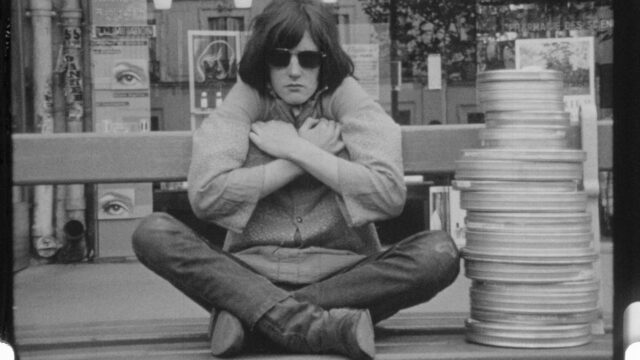
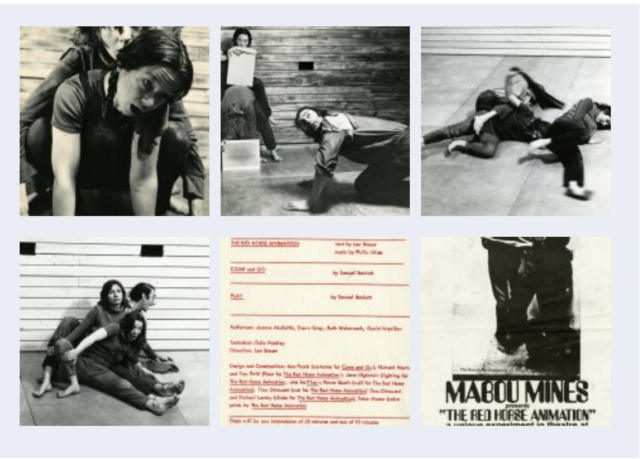
Why:This is not a play. It is something else. / Call it a blueprint, a map, a documentation / of something that has already happened / but could happen again — / a rendering in book form of a performance. / Making a mark, words on a page instead of bodies in space. / A book that contains what’s remembered and what could be. / All of it written down and placed here, into this / Hand Book: A Manual,” Lizzie Olesker and Lynne Sachs write in the introduction to Hand Book: A Manual on Performance, Process, and the Labor of Laundry (Punctum, June 2025, 425). “We are a playwright and a filmmaker who discovered a shared interest in making work that magnifies quotidian elements of life in the city where we live. We met years ago in Brooklyn while sitting on a bench waiting for our young daughters to finish their music lessons. A conversation began about our lives as mothers and working artists. We couldn’t yet know that those early encounters would lead to a ten-year theater and film collaboration. Now in our sixties, our daughters fully grown, we continue to build an experimental model for making live performance and film, engaging in a dialogue on how art-making can alter our understanding of urban life.”

Olesker, an actor and playwright who has penned such shows as 5 Stages of Grief, A Kind (of) Mother, and Night Shift, and Sachs, a fiction writer and filmmaker who has directed such works as Which Way Is East, Your Day Is My Night, and Film About a Father Who, are the coauthors and codirectors of Hand Book, which Sachs describes as “a collection of writings and images from a performance and film set within a neighborhood laundromat.” In addition to sections by Olesker and Sachs, the illustrated, colorfully designed book (by Vincent W. J. van Gerven Oei) features contributions from Margarita Lopez (“A Thousand Pieces a Day”), Jasmine Holloway (“Taking on a Role”), Stephen Vitiello (“Shake, Rattle, and . . .”), Amanda Katz (“Sound of a Machine Door Closing”), Emily Rubin (“Loads of Prose: From the Beginning”), Veraalba Santa (“Score for a Folding Dance”), and others. The foreword, “A New Refusal and a New Struggle,” is by feminist historian, author, and activist Silvia Federici.

On September 8, Olesker, Sachs, Federici, and Santa will be at Unnameable Books in Brooklyn for a reading and performance. There will also be a reading and signing September 13 at noon at Printed Matter’s NY Art Book Fair
at MoMA PS1 and a performance, reading, and signing September 28 at 2:00 at Torn Page with Tony Torn and Alvin Eng. Sachs continues, “As authors, Lizzie and I along with our many collaborators construct a model for making art about essential work that often goes unrecognized. Turning a page becomes a quasi-cinematic encounter, calling to mind the intimacy of touching other people’s clothes, almost like a second skin, the textural care for things kept close to the body.”

[Mark Rifkin is a Brooklyn-born, Manhattan-based writer and editor; you can follow him on Substack here.]