twi-ny recommended events

HARMONY: A NEW MUSICAL

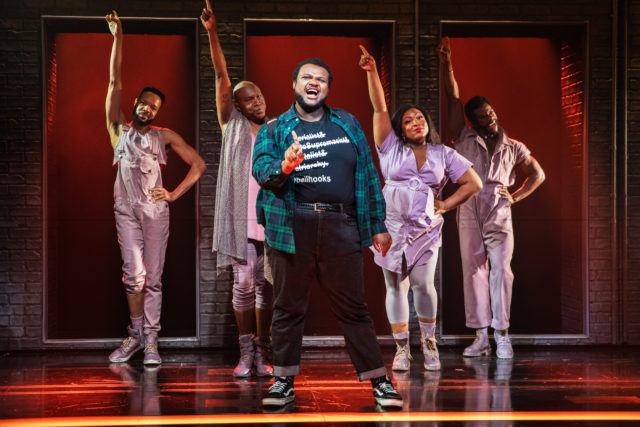
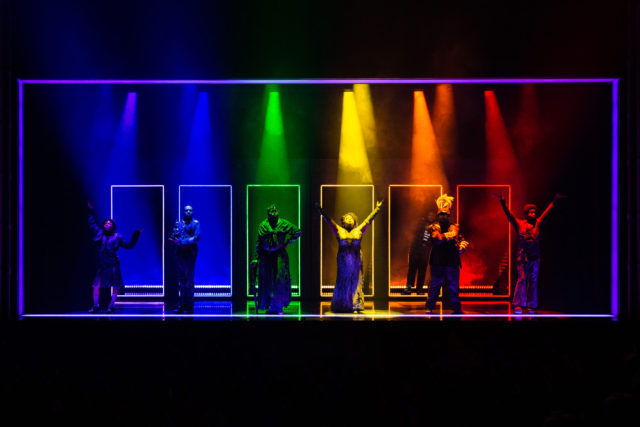
Barry Manilow musical tells real-life story of the Comedian Harmonists (photo by Julieta Cervantes)

HARMONY: A NEW MUSICAL
National Yiddish Theatre Folksbiene
Museum of Jewish Heritage — A Living Memorial to the Holocaust
Edmond J. Safra Hall, 36 Battery Pl.
Through May 15, $79-$129
nytf.org/harmony

“A Bulgarian singing waiter, a doctor, a bass from the Comic Opera, a musical prodigy, a whorehouse pianist . . . and a Polish Rabbi walk into a bar,” Josef Roman “Rabbi” Cykowski (Chip Zien) says near the beginning of Harmony, the biographical musical that opened tonight at the Museum of Jewish Heritage — A Living Memorial to the Holocaust, presented by the National Yiddish Theatre Folksbiene.

Throughout his nearly sixty-year career, Brooklyn-born songster Barry Manilow has won a Tony, two Emmys, a Grammy, and an honorary Clio for his classic jingles and has released more than three dozen albums (including eight gold and eight platinum records) that have sold more than eighty-five million copies. But his favorite creative endeavor is Harmony, the twenty-five-plus-years-in-the-making musical about the Comedian Harmonists, the real-life a cappella German singing group whose international success was ultimately thwarted by the Nazis; composer Manilow and his longtime collaborator, Queens native Bruce Sussman, who wrote the book and lyrics, seek to restore the Harmonists’ legacy in this glittering show.

The story is told in flashback by the older Rabbi, who details how the group formed and became a sensation despite some initial stumbles; he pontificates on many of the choices they made, especially those by his younger self (Danny Kornfeld), while sometimes joining them in song. Originally known as the Melody Makers, the ensemble was put together by actor and composer Harry Frommerman (Zal Owen) and consisted of Rabbi, Comic Opera bass Robert “Bobby” Biberti (Sean Bell), medical student Erich Collin (Eric Peters), piano player Erwin “Chopin” Bootz (Blake Roman), and singing waiter Ari “Lesh” Leshnikoff (Steven Telsey). In addition to their glorious harmonies and goofy charm, they used their voices as instruments, making it sound like they were performing with a band.

Ruth (Jessie Davidson) is ready to fight what’s coming in Germany in Harmony (photo by Julieta Cervantes)

As their fame spreads, Rabbi falls in love with Mary (Sierra Boggess), a Christian who considers converting to Judaism but is also worried about the growing anti-Semitism emerging from the National Socialists, and Chopin marries Ruth (Jessie Davidson), a staunch Jewish activist who is ready to fight against the rise of the far right. As Nazi officers start showing up at their concerts, including a standartenführer (Andrew O’Shanick) and his wife, Ingrid (Kayleen Seidl), who are huge fans, the Comedian Harmonists realize they are caught in the middle of something a lot bigger than themselves and have to take a long, hard look at their personal and professional futures.

Harmony premiered at La Jolla Playhouse in 1997, with Danny Burstein as Rabbi and Rebecca Luker as Mary. (The two got married in 2000 and remained so until Luker’s tragic death in 2020.) Manilow and Sussman, writing partners for more than forty years, have continued to tweak the show since then; today it feels oddly prescient as dictators and the far right gain power around the world and so many oppressed people become refugees as they try to escape bad situations that are only getting worse. It is also an excellent way to celebrate the little-known a cappella group, as there are only limited archival footage and audio recordings available online, in addition to a 1991 German documentary, a 1997 German biopic, and a 2010 English-language book.

The six actors portraying the Comedian Harmonists are terrific, forming a cohesive unit in, well, perfect harmony. Director and choreographer Warren Carlyle (After Midnight, On the Twentieth Century) has fun with the sextet, particularly in a scene in which they have no pants. Characters often enter and leave through the aisles, approximating the feel of watching the Comedian Harmonists in a 1920-’30s theater rather than a contemporary venue. And the Museum of Jewish Heritage is just the right place to stage this show, an institution dedicated to preserving the Jewish experience before, during, and after the Holocaust.

Chip Zien gives a bravura performance as Rabbi Josef Roman Cykowski and others in Harmony (photo by Julieta Cervantes)

The musical is about a tight-knit ensemble, but it’s worth seeing for Zien (Into the Woods; Caroline, or Change) alone; a New York City theater treasure, Zien is spectacular as Rabbi, who can’t help but get emotional as he watches mistakes his younger self and the troupe make. Zien also dazzles by taking on a number of minor roles, changing costumes — and wigs — lightning fast as he transforms himself into Marlene Dietrich, Richard Strauss, and Albert Einstein. (The costumes, which range from humble street clothes to pristine tuxedos to Nazi uniforms, are by Linda Cho and Ricky Lurie, with hair and wigs by Tom Watson.) Zien leaves Ana Hoffman to regale us as Josephine Baker, who did in fact perform with the Harmonists.

Three-time Tony winner Beowulf Boritt’s set is anchored by a wall of mirrors that reflects the performers — and the conductor, who leads the orchestra from a pit in the right side of the audience — and also on which are projected archival photographs, text identifying the time and place, and Nazi symbols. Among the locations are various nightclubs in Berlin, Tivoli Park in Copenhagen, a movie set in Cologne, a night train to Munich, the tailor shop where Mary works, and Carnegie Hall, where the Comedian Harmonists headlined in 1933.

Barry Manilow and Bruce Sussman rehearse with the cast of Harmony (photo by Julieta Cervantes)

At 165 minutes (with intermission), the show, featuring music direction and additional arrangements by John O’Neill, is at least a half hour too long, dragging primarily during the romantic numbers; there’s much more life when the German boy band is performing and when the political tension increases — to a point where the characters are making potential life-or-death decisions.

And as much as Harmony is specifically about the Comedian Harmonists, it also reminds us how we all should be with others, particularly in times of strife. As the cast sings in the title song: “Oom-pah-pah, oom-pah-pah, / Oom-pah oom-pah oom-pah, / Harmony, / We sing in harmony / Like the robins in Herald Square. / Harmony, / The thing is harmony, / Always knowing there’s someone there. / In this joint / All encounters with counterpoint / End in harmony. / And it’s clear / No man’s a solo here. / Not even me! Me! Me! Me! Me! Me! / No solo mio! / Just harmony.”

LA MaMA MOVES! DANCE FESTIVAL ’22

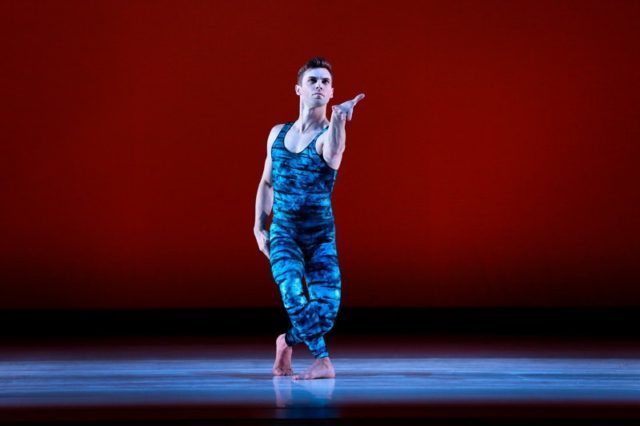
Tiffany Mills’s Homing kicks off La MaMa festival (photo by Robert Altman)

Who: Tiffany Mills Company, Johnnie Cruise Mercer, Jesse Zaritt, Gerald Casel Dance, Pele Bauch, Marina Celander, Compañía Cuerpo de Indias, Valetango Company, John Scott Dance
What: Seventeenth La MaMa Moves! Dance Festival
Where: La MaMa, Ellen Stewart Theatre and the Downstairs Theatre, 66 East Fourth St. between Bowery & Second Aves., and online
When: Thursday – Sunday, April 14 – May 1, $20-$30
Why: Following two iterations in 2021, one online only, one hybrid, La MaMa Moves! Dance Festival is back where it belongs at the Ellen Stewart and Downstairs Theatres, highlighting works by nine dance artists and companies Thursday through Sunday through May 1. “This season’s choreographers are working with a myriad of issues: reexamining the meaning of home, researching postmodern dance as a racial construct, and recognizing the essential need for trust in our everyday lives,” curator Nicky Paraiso said in a statement. “These concerns have arisen in a time of crisis, uncertainty, and also reflection, questioning the ways we respond with our bodies, our minds, our hearts. The artists in this season’s festival have taken on these issues in creative, thoughtful, deeply felt ways.” The shows will be available for streaming following the live performances.

The festival kicks off April 14-16 with the world premiere of Tiffany Mills Company’s Homing, part of the troupe’s twentieth anniversary season, performed by Mills, Jordan Morley, Nikolas Owens, Emily Pope, and Mei Yamanaka and set to music by Max Giteck Duykers. April 15-18 sees a twin bill of Johnnie Cruise Mercer’s journey of coming out and reconciliation, Process memoir 7 (Vol. 5): to land somewhere unfelt, and Jesse Zaritt’s No End of Detail (III), a solo show exploring body rituals and Jewish-American identity. The New York premiere of Gerald Casel Dance’s Not About Race Dance takes place April 22-24, performed by Casel, Styles Alexander, Audrey Johnson, Karla Quintero, and Cauveri Suresh, with live sound design by Tim Russell. That same weekend finds a shared evening of two world premieres, Pele Bauch’s A.K.A. Ka Inoa, which examines names and ethnic identity, and Marina Celander’s Stone She: Space Edition, about humanity’s disconnect with nature, with Celander, Asma Feyjinmi, Michaela Lind, and Katja Otero and millstone design by Emma Oppenheimer.

On April 23, Movement Research will host the offsite afternoon symposium “Secret Journey: Stop Calling Them Dangerous #3,” with the unstoppable Yoshiko Chuma and others. The final weekend consists of the US premiere of Compañía Cuerpo de Indias’s Flowers for Kazuo Ohno (and Leonard Cohen), honoring Ohno, one of the creators of Butoh, and folk legend Cohen; the world premiere of Valetango Company’s Confianza (“Trust”), in which Rodney Hamilton, Orlando Reyes Ibarra, Alondra Meek, and Valeria Solomonoff seek transformation; and the US premiere of John Scott Dance’s Cloud Study, performed by Mufutau Yusuf and Magdalena Hylak, set to music by Ryan Vial.

TAKE ME OUT

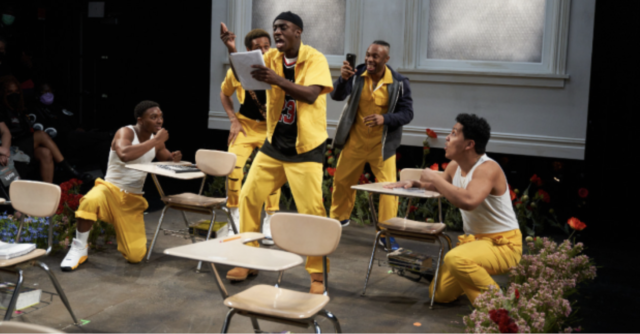
Much of Take Me Out happens in the locker room — with and without uniforms (photo by Joan Marcus)

TAKE ME OUT
Helen Hayes Theater
240 West 44th St.
Tuesday – Sunday through June 11, $79-$199
2st.com/shows

Scott Ellis’s hit Broadway revival of Richard Greenberg’s Tony-winning Take Me Out is well on its way to the playoffs (Tony nominations) and the World Series (Tony wins), but you don’t have to know anything about baseball to root for this compelling tale of ego, homophobia, and winning and losing.

It all starts with the brilliant title itself, which refers to: the traditional 1908 tune “Take Me Out to the Ball Game,” sung by fans during the seventh-inning stretch of every contest; a reverse riff on the chorus of John Fogerty’s 1985 hit, “Centerfield,” in which the former CCR leader declares, “Put me in, coach / I’m ready to play, today”; going out on a date; the public revelation that someone is gay; and the slang for a mob hit, as in “take him out.”

It’s 2002, and the world champion Empires, a stand-in for the Yankees — one backdrop features a silhouette of the Yankee Stadium wooden facade — are off to another good season. The story is narrated in flashback by shortstop Kippy Sunderstrom (Patrick J. Adams), a good friend of superstar Darren Lemming (Jesse Williams), a five-tool centerfielder who comes out of the closet with a sudden, unexpected announcement that he is gay. Darren did not do it to become a role model, to fight for gay rights, or to make a sociocultural statement; throughout the play, Darren’s motivations are private, driven primarily by ego and self-importance.

“Now, I’m not a personal sort of guy, really, and that’s not gonna be any different,” Darren, a handsome mixed-race player reminiscent of Bronx Bomber legend Derek Jeter, tells his teammates. “I mean, don’t expect the free flow of information. Don’t expect the daily update. I’m just here to play ball. I’m just here to have a good time. That’s no different. . . . And if, incidentally, there’s any kid out there who’s struggling with his identity, I hope this sends a message that it’s okay. They can follow their dream, no matter what. Any young man, creed, whatever, can go out there and become a ballplayer. Or an interior decorator.”

But he also tells Kippy, “You think you know me? You think you know my secret? Shit, that wasn’t a secret — that was an omission. I’ve got a secret — but that’s not it.” Even his last name, Lemming, is a warning for others not to follow him.

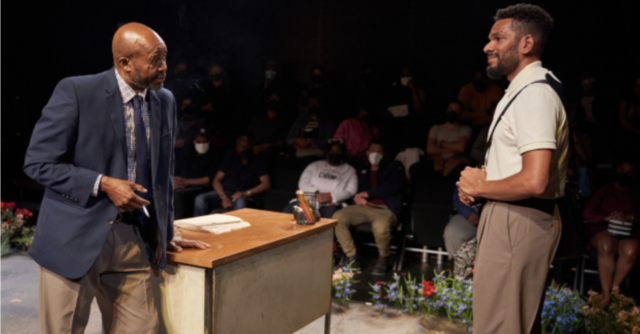
Friends and rivals Darren Lemming (Jesse Williams) and Davey Battle (Brandon J. Dirden) sit down for a chat in Take Me Out (photo by Joan Marcus)

As one would expect, his declaration creates significant problems in the locker room. Emerging from the shower to find a naked Darren, Toddy Koovitz (Carl Lundstedt) complains, “So now I gotta go around worrying that every time I’m naked or dressed or whatever you’re checking out my ass.” Because, of course, every gay man immediately wants to sleep with every male he sees. But Darren always gives better than he gets, telling Toddy, “Why’re ya lookin’ at it’s the question.” As the quippy Kippy noted earlier, after Darren confirmed, “I don’t want to fuck any of you,” he responded, “It’s not about that, Darren. It’s about us wanting to fuck you.”

When their ace pitcher, Takeshi Kawabata (Julian Cihi), slumps, they call up hard-throwing closer Shane Mungitt (Michael Oberholtzer) from Double A, who leads them back on track until he opens his mouth one day and spews forth bigoted remarks that would make even former Braves reliever John Rocker wince.

The tension in the locker room grows to epic proportions as no one can have a civil conversation, exacerbated by Kawabata’s, Martinez’s (Hiram Delgado), and Rodriguez’s (Eduardo Ramos) inability to speak English, a sports trope that enrages more conservative fans who believe that if you play ball in America, you need to speak the language — and the same fans are likely to have problems with a gay player.

“We were Men,” Kippy slyly philosophizes to his teammates. “This meant we could be girlish. We could pat fannies, snap towels; hug. Now . . . What do we do with our stray homosexual impulses?” After not-too-bright new catcher Jason Chenier (Tyler Lansing Weaks) asks if he was talking specifically to him and then turns red out of embarrassment because of the topic, Kippy adds, “We’ve lost a kind of paradise. We see that we are naked.” It’s as if they have taken a bite out of that apple and are being cast out of the garden.

Meanwhile, Darren keeps meeting with his new business manager, Mason Marzac (Jesse Tyler Ferguson), a gay accountant who at first knows nothing about baseball except that Darren is also gay, which makes him fall in love with the sport and worship his client. “A couple of weeks earlier I would have barely recognized the name! Then the announcement — that incredible act of elective heroism — and it was as if I’d known him my whole life — as if he’d been something latent in my subconscious.”

As the Empires prepare for a big game against the club that Darren’s best friend, Davey Battle (Brandon J. Dirden), is on, the world around Darren and the Empires turns into a lot more than just “the mess” Kippy alluded to at the start of the show.

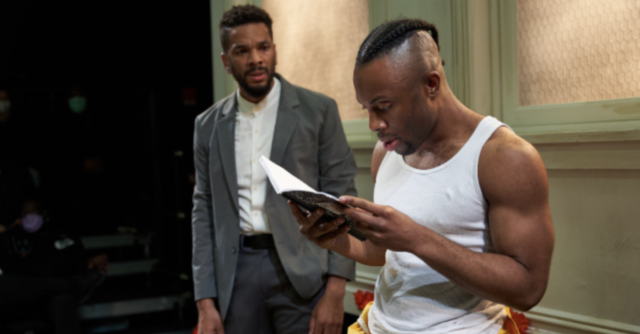
Shane Mungitt (Michael Oberholtzer) has a rude awakening in store in Broadway revival of Richard Greenberg play (photo by Joan Marcus)

Take Me Out is an exceptional drama that uses baseball as an apt analogy for the state of the country. “I have come (with no little excitement) to understand that baseball is a perfect metaphor for hope in a Democratic society,” Mason says. “It has to do with the rules of play. It has to do with the mode of enforcement of these rules. It has to do with certain nuances and grace notes of the game. . . . Everyone is given exactly the same chance. . . . And baseball is better than Democracy — or at least than Democracy as it’s practiced in this country — because unlike Democracy, baseball acknowledges loss.”

In the history of the four major sports leagues, only one NBA player and one NFL player have revealed they were gay and kept playing: Brooklyn Nets center Jason Paul Collins in 2013 and current LA Raiders defensive end Carl Nassib in 2021. The revelation that a baseball superstar in his prime is gay would be a major deal today, but in the twenty years since Take Me Out premiered at the Public, no MLB player and only one umpire, Dale Scott, has come out and stayed on the diamond. Greenberg’s (The Assembled Parties, Three Days of Rain, The Perplexed) play feels fresh and alive in 2022, like it could have been written yesterday, save for the lack of cellphones onstage (and, thanks to strict rules, in the audience as well).

The two-hour play (plus intermission) moves much faster and more smoothly than baseball games. Ellis (On the 20th Century, The Elephant Man) is a superb manager, guiding the actors through David Rockwell’s splendid sets, which range from the ballpark and the locker room to a lounge and actual showers. Linda Cho’s costumes, primarily baseball uniforms, spend nearly as much time off the actors as on. (The nudity is the reason audience members must have their phones sealed in a Yondr pouch that the staff will open for you during intermission and then upon exiting.)

In their Broadway debuts, Adams (Suits, Equivocation) displays an easygoing, likable charm as Kippy, earning the audience’s devoted attention from his very first words, while Williams (Grey’s Anatomy, The Sandbox) shows off his numerous tools as the secretive hotshot Darren. (He will reprise the role in an upcoming television series, according to Deadline.) Dirden (Skeleton Crew, Jitney) excels in his supporting role, like a solid, dependable DH who always gets good wood on the ball and comes through in the clutch.

But the MVP might just be Ferguson (Modern Family, The 25th Annual Putnam County Spelling Bee), who knocks it out of the park every chance he gets. Mason is the glue that holds it all together, the only one who seems to really understand Darren as both a wealthy athlete and a gay man. Ferguson’s growing enthusiasm is infectious, spreading throughout the theater; he’s just the kind of person every locker room needs.

SPOTLIGHT — MICHIYAYA DANCE: you have to look through this to see me

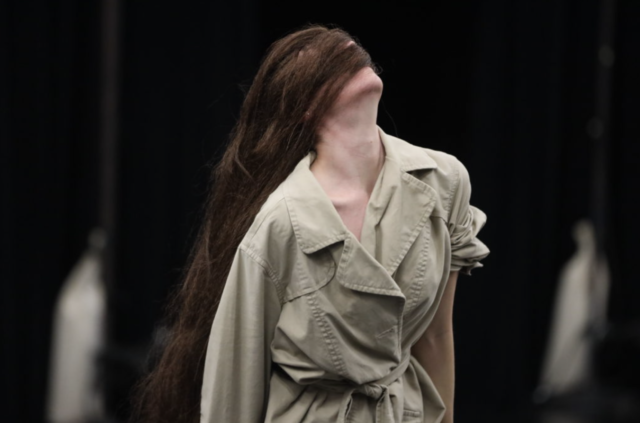
Bree Breeden is the Expander in new work by MICHIYAYA Dance debuting April 14-16 at Gibney 280

Who: MICHIYAYA Dance
What: Spring season
Where: Gibney Dance in-person and online, 280 Broadway
When: April 14-16, $15-$20, 8:00
Why: Cofounded in 2015 by Anya and Mitsuko Clarke-Verdery, “MICHIYAYA is a queer-led dance company that pushes boundaries and centers the divine feminine by creating space for multidisciplinary performances and programming.” The NYC-based troupe will brings its latest work to the Studio H theater at Gibney 280 and online April 14-16, presenting you have to look through this to see me. The new piece, which explores intimacy, nonbinary sensuality, and healing, was created by the cofounders in collaboration with dancers Alex Bittner, Bree Breeden (the Expander), Joy Carlos, Alex Schmidt (the Paradox), and Alexandra Wood (the Sentient), who will be joined by guest artist Gabriella Sibeko (the Transporter). The original score was compose by Grammy nominee Billy Dean Thomas, with costumes by Bones and set design by Christina and Riza Rodriguez of Maria Maria.

ASHWINI RAMASWAMY: LET THE CROWS COME

Ashwini Ramaswamy’s Let the Crows Come soars into BAC April 13-15 (photo by Jake Armour)

LET THE CROWS COME
Baryshnikov Arts Center, Jerome Robbins Theater
450 West 37th St. between Ninth & Tenth Aves.
April 13-15, $25, 7:30
646-731-3200
bacnyc.org
www.ashwiniramaswamy.com

While Baryshnikov Arts Center continues presenting outstanding filmed works on its website, including some of the best pieces made during the pandemic, it has also returned to live, in-person performances. Next up is Ashwini Ramaswamy’s Let the Crows Come, taking place April 13-15 in the Jerome Robbins Theater. A founding member of Ragamala Dance Company, Minneapolis-based dancer and choreographer Ramaswamy experiments with the South Indian Bharatanatyam technique in the sixty-minute dance, which explores ritual and tradition, memory and homeland, and features Brooklyn-born Alanna Morris, whose work focuses on her Afro-Caribbean diasporic identity; Minneapolis native Berit Ahlgren, a Gaga dancer and teacher; and Ramaswamy.

“I have been immersed in the South Indian dance form of Bharatanatyam for over thirty years,” Ramaswamy notes on her website. “The vitality of my choreography stems from extensive training guided by the technical rigor and expressive authenticity that are the hallmarks of my cultural and artistic lineage. The body of a Bharatanatyam dancer moves like an interlocking puzzle, its pieces a display of otherworldly grace.” The original score, inspired by Carnatic (South Indian classical) music, by Jace Clayton (DJ/rupture), Brent Arnold, and Prema Ramamurthy, will be performed live by Arnold on cello, Clayton on electronics, Rohan Krishnamurthy on mridangam, Roopa Mahadevan on vocals, and Arun Ramamurthy on violin. The sound is by Maury Jensen, with lighting by Mat Terwilliger.

“My upbringing in both India and the US has encouraged a hybrid aesthetic perspective, and my work is aimed at immigrants longing to make connections between the ancestral and the current,” Ramaswamy explained in a statement about Let the Crows Come. “I create environments for the stage where past, present, and future intermingle; these worlds capture the disorientation and reorientation of the immigrant settling into a new land and explore how to preserve individuality while creating new spaces of convergence.”

THE EDUCATION OF CORPORAL JOHN MUSGRAVE BOOK EVENT

Who: John Musgrave, Oscar Isaac, Greg Gadson, Ashleigh Byrnes, David Strathairn, Bryan Doerries
What: Book launch of war memoir
Where: Theater of War Productions online
When: Wednesday, April 13, free with RSVP, 7:00
Why: Theater of War Productions regularly produces live readings of classic and classical plays, tying them to what is happening in the world today. On April 13 at 7:00, they will be presenting something a little different, a free event built around John Musgrave’s 2021 memoir, The Education of Corporal John Musgrave: Vietnam and Its Aftermath (Knopf, $27, November 2021). Musgrave (Notes to the Man Who Shot Me: Vietnam War Poems) is a permanently disabled war veteran who has been awarded two Purple Hearts and two Vietnamese Crosses of Gallantry.

He writes in the first chapter: “Service was in my DNA from the very beginning. I was born because of my parents’ service, and I was born to serve. World War II brought my mother and father together, compelling them both to join the effort right after the United States declared war against Japan. My father served as a pilot and my mother as a secretary at a nearby aviation plant, where they first met. So, in a very real way, my older brother, Butch, and I both owe our lives to the bombing of Pearl Harbor. My first conscious memory of our nation being at war was forged when I was just three or four years old, around 1951.”

Actors Oscar Isaac, Greg Gadson (a retired colonel), and David Strathairn will read excerpts from the book, along with Musgrave and Ashleigh Byrnes, the deputy national communications director of Disabled American Veterans (DAV). The readings will be followed by a panel discussion and audience Q&A about war and healing; the evening is directed and facilitated by Theater of War artistic director Bryan Doerries.

AN EVENING WITH DAVID MAMET: IN CONVERSATION WITH BARI WEISS

Who: David Mamet, Bari Weiss
What: Livestreamed book discussion
Where: The Temple Emanu-El Streicker Center online
When: Monday, April 11, free with advance RSVP, 7:00 (with option to purchase book)
Why: “President Trump has been calling out the fake news since he declared he’d run. I’m with him there. In fact, an excellent preparation for dealing with blacklisting (my own) is a career as a playwright. The science of history burgeoned with the invention of movable type; it is now dying through the application of ink eradicator known as ‘the media.’ Soon it will be no more.”

So writes David Mamet in his latest book, Recessional: The Death of Free Speech and the Cost of a Free Lunch (HarperCollins, $28.99, April 2022), in which he pulls no punches about the sorry state of our world. In such chapters as “The Fountain Pen,” “Cause and Effect,” “Reds, Pinks, and Goo-Goos,” and “What’s in a Name,” Mamet delves into religion, politics, the social contract, and his personal life, unpredictably skewering all sides as only he can. For more than fifty years, the Chicago-born Pulitzer Prize winner has been challenging us in such plays as American Buffalo, Glengarry Glen Ross, Speed-the-Plow, and Oleanna, such films as House of Games, The Spanish Prisoner, Things Change, and State and Main, and such books as Bambi vs. Godzilla: On the Nature, Purpose, and Practice of the Movie Business; The Secret Knowledge: On the Dismantling of American Culture; and The Wicked Son: Anti-Semitism, Jewish Self-hatred, and the Jews.

He will be launching Recessional with a free livestreamed event on April 11 hosted by the Temple Emanu-El Streicker Center, moderated by Bari Weiss, the journalist and author of How to Fight Anti-Semitism and The New Seven Dirty Words who famously resigned from the New York Times, explaining, “The lessons that ought to have followed the election — lessons about the importance of understanding other Americans, the necessity of resisting tribalism, and the centrality of the free exchange of ideas to a democratic society — have not been learned. Instead, a new consensus has emerged in the press, but perhaps especially at this paper: that truth isn’t a process of collective discovery, but an orthodoxy already known to an enlightened few whose job is to inform everyone else.” Get ready for a lively conversation that is likely to both enlighten and infuriate but never bore you.