Who: Pamela Adlon, Isaac Mizrahi What: Advance screening and discussion of Better Things (92Y Recanati-Kaplan Talks) Where:92nd St. Y, Buttenwieser Hall, 1395 Lexington Ave. between 91st & 92nd Sts., and online When: Saturday, April 23, $25 in person, $20 online (talk only), 7:00 Why: One of the best virtual talks during the pandemic was 92Y’s conversation between Better Things cocreator, producer, director, cowriter, and star Pamela Adlon and actor and comedian Mario Cantone. Emmy winner Adlon, who plays Sam Fox, a single mother of three girls and a former child star still working in the business, and Cantone, who plays her agent, Mal Martone, cracked up each other, and the online audience, as they talked about the hit comedy and dealt with Zoom issues. After five seasons that began in 2016, Better Things is concluding its run on April 25 with its final, fifty-second episode, entitled, “We Are Not Alone.”
But on April 23 at 7:00, you can say goodbye to Sam; her daughters, Max (Mikey Madison), Frankie (Hannah Riley), and Duke (Olivia Edward); Sam’s expat mother, Phil (Celia Imrie); Rich (Diedrich Bader), Sam’s best friend; Mal; and other characters when the 92nd St. Y presents an advance, in-person-only screening of the finale, followed by a live discussion between Adlon (King of the Hill,Louie), herself a single mother of three daughters, and Brooklyn-born fashion designer and television presenter Isaac Mizrahi, that can also be accessed online. Better Things is an extraordinarily funny and moving show that is, first and foremost, about family, dealing with familiar issues in unique ways as three generations of women face the challenges of daily existence with charm and humor. If you haven’t been watching, start bingeing now.
Who:Jane Lee Hooker, Tom Clark and the High Action Boys What: Record release party Where:Hill Country, 30 West Twenty-Sixth St. between Fifth & Sixth Aves. When: Friday, April 22, free with RSVP, 8:00 Why: At they show in the fun video for “Drive” from their brand-new album, Rollin’, fab New York blues rockers Jane Lee Hooker will not be arriving at Hill Country for their record release party in a snazzy Mercedes convertible. But on April 22, singer Dana Danger Athens, guitarists Tracy Hightop and Tina T-Bone Gorin, bassist Mary Z, and drummer Lightnin’ Ron Salvo will still find their way to the barbecue joint for some tasty tunes from the band, which formed in 2015 and has previously released Spiritus and No B! The new record, made during the pandemic, features such songs as “Drive,” “Jericho,” and “All Good Things,” in which Athens promises “all good things comin’ your way.”
Athens explained in a statement, “Somehow, amidst the chaos of a global pandemic, we were able to write and record what I feel is our best work as a band yet.” Gorin added, “Astounding that some things, like writing music with each other, will always be a beautiful and safe world, even during a worldwide health disaster like Covid-19.” And Hightop said, “We were really able to take our time and do these amazing songs justice. This album is just next level in so many respects. I can’t wait to get out there and play these songs in front of an audience!” Opening up for JLH is longtime city faves Tom Clark and the High Action Boys (Cross-Eyed and Bow-Legged). Expect “all good things comin’ your way.”
Gillian Wearing, Self-Portrait, framed chromogenic print, 2000 (collection of Sherry and Joel Mallin, New York)
GILLIAN WEARING: WEARING MASKS
Solomon R. Guggenheim Museum
1071 Fifth Ave. at 89th St.
Panel discussion: Thursday, April 21, free with RSVP, 2:00
Thursday – Monday through June 13, $18-$25, 11:00 am – 6:00 pm
212-423-3500 www.guggenheim.org
In her five-minute 2018 short film Wearing, Gillian, British artist Gillian Wearing repeats, “I’m Gillian Wearing.”
But who is Gillian Wearing? In the revealing exhibition “Gillian Wearing: Wearing Masks,” continuing at the Guggenheim through June 13, the fifty-eight-year-old Turner Prize winner explores the idea of “Gillian Wearing” through film, sculpture, photography, painting, and installation, putting viewers in the position of asking themselves who they are as well.
Part of the Young British Artists movement of the late 1980s and early ’90s, Wearing focuses on self-portraiture very differently from such near-contemporaries as Cindy Sherman, who disguises herself as real and fictional characters in cinematic and art-historical tableaux as she explores gender and identity, and Lucas Samaras, whose vast output includes an endless array of self-imagery in multiple formats.
Wearing often uses masks — the show was conceived well before the Covid-19 pandemic — on herself and others to challenge who we are and how we are seen. “I do not like to be on this side of the camera. I’d much rather be on the other side of the camera,” she says in Wearing, Gillian. “Watching me being me alienates me from me, and I don’t recognize myself.” In the film, performers, and Wearing herself, wear AI digital masks of her face. “It’s really about putting myself on the line, and that comes from the risk of being judged and laying myself bare to people’s judgments, but . . . such is life.” Those kinds of feelings are not unique to Wearing, particularly in the social media age, when so many people can engage in sophisticated self-display, creating whatever image they want and hiding behind it for myriad reasons.
Gillian Wearing, 60 Minutes Silence, color video projection, with sound, 1996 (Arts Council Collection, Southbank Centre, London)
Spread across four galleries, the exhibition welcomes you into Wearing’s intriguing world, where nothing is quite what it seems. For Signs that Say What You Want Them to Say and Not Signs that Say What Someone Else Wants You to Say, Wearing asked strangers on London streets to write down something about themselves on sheets of paper and then photographed them holding up the signs, which now evoke early Facebook posts. “Everything is connected in life,” one man writes. “The point is to know it and to understand it.”
At first, 60 Minutes Silence might appear to be a photograph of twenty-six uniformed police officers arranged in three rows, but it is actually an hourlong video in which the cops try to maintain their position, moving as little as possible. It’s a kind of reversal, since part of a police officer’s job is to keep a close eye on the public, but now we’re watching them. In addition, seeing the 1996 piece in 2022 makes us think not only of the raging controversy over police brutality but also of diversity: We also can’t help but notice that there are only five women and two people of color. In Confess All on Video. Don’t Worry, You Will Be in Disguise. Intrigued? Call Gillian . . . , people in masks and wigs share extremely personal stories on a split screen in a large booth, again presaging social media.
But Wearing most often is looking at herself. Me and My Ideal Self features photographs of Wearing placed under glass in a custom frame; on the front panel is an elongated photo of Wearing standing in heels on a wooden box, as if not wanting anyone to see what’s inside. She takes self-portraits of herself as her grandparents, her brother, and other family members, of herself at three, seventeen, and twenty-seven (portraits from fifty to seventy appear on the wallpaper), and of herself as seminal photographers Andy Warhol, Diane Arbus, Robert Mapplethorpe, Weegee, Claude Cahun, Henry Fox Talbot, and August Sander, the photographer who set out to document German society in People of the Twentieth Century.
There are also video portraits, a collection of masks, a pair of busts of Wearing nearly kissing each other, a prosthetic Wearing head dangling on an immense charm bracelet with other body parts, and Polaroids she took of herself in the 1990s, sans masks. Throughout it all, her eyes, or the eyes of others in masks of her face, are always visible, looking right at the viewer, a performative take on personal identity, memory, and connection.
On April 21 at 2:00, the Guggenheim will host the free, livestreamed panel discussion “Wearing Masks: The Performance of Identity in Contemporary Art,” with senior curator Jennifer Blessing, photographer and musician Farah Al Qasimi, visual artist Malik Gaines, and multimedia artist Colette Lumiere, moderated by Dr. Ksenia M. Soboleva.
Given the coronavirus crisis and the ongoing debate over mask mandates as variants keep emerging, Wearing has revisited her 2013 Me as Mask, now taking that wax mask of her face, placing a black-bordered blue mask over it, and having it held up on a stick by a disembodied hand, hollow eye holes staring back at us.
“We all wear masks. We’re all actors,” she says in Wearing, Gillian. “Do you feel that you know me a bit now?” The answer is a rousing yes and no.
DIANE ARBUS
Scholars’ Gate, Doris C. Freedman Plaza
Central Park entrance, 60th St. & Fifth Ave.
Through August 14, free www.publicartfund.org online slideshow
In conjunction with the Guggenheim retrospective, Gillian Wearing has gone one step beyond her 2008 self-portrait as photographer Diane Arbus, using the existing photo of Arbus that inspired her picture and transforming it into a life-size statue for the Public Art Fund. The work stands at the Scholars’ Gate entrance to Central Park, in Doris C. Freedman Plaza, on the pavement, not a plinth; she is one of us. The photo of Arbus is part of what Wearing refers to as her “spiritual family,” comprising artists that she has photographed herself in digital masks. As in the photo, the statue depicts Arbus with her medium-format Rolleiflex hanging from around her neck, looking for subjects; she is wearing a dark jacket and white shoes. “A photograph is a secret about a secret. The more it tells you the less you know,” Arbus said in 1971. Wearing now asks what kind of secrets a statue of a photo might hold.
In “An Interview with Myself,” Wearing’s catalog contribution to the Guggenheim show — which includes a thirteen-inch model of the statue and the Arbus quote “If you scrutinize reality closely enough, if in some way you really, really get to it, it becomes fantastic” — she writes about portraying herself as others, “The whole process takes several months, and I liken it to how an actor gets into character. By the time I am in full costume, I lose my actual self a bit. It can be disappointing when the mask comes off and it’s my face again.”
In this case, the mask comes off and it is Arbus, a New York City native who specialized in capturing the daily reality of ordinary folk as well as sideshow performers, strippers, female impersonators, freaks, and others on the fringe. “For me the subject of the picture is always more important than the picture. And more complicated,” Arbus said. That statement relates to Wearing’s work, and specifically her portrayals of Arbus, in beautifully complex ways.
Who: Tracie Thoms, Taylor Schilling, John Turturro, Ato Blankson-Wood, Keith David, Craig Manbauman, Sandy Cayo, Elizabeth Hazlewood, Jumaane Williams, Bryan Doerries What: Dramatic reading and community discussion Where:Theater of War Zoom When: Thursday, April 21, free with RSVP, 6:00 Why: Theater of War Productions teams up with the Greater NYC Black Nurses Association for its latest live, interactive presentation, exploring caregiving and death. On April 21 at 6:00, an all-star cast will deliver a dramatic reading of Sophocles’s Antigone, about one of the daughters of Oedipus and Jocasta who is determined to give a proper burial to her brother Polynices, who has been branded a traitor, his body left to rot.
The fifth-century play will be performed by actors Tracie Thoms, Taylor Schilling, John Turturro, Ato Blankson-Wood, and Keith David, joined by frontline nurses Craig Manbauman, Sandy Cayo, and Elizabeth Hazlewood and New York City public advocate Jumaane Williams; the discussion, which explores the themes of the play as they relate today to the coronavirus crisis and other health issues, will be facilitated by Theater of War artistic director Bryan Doerries and held in conjunction with the Johns Hopkins School of Nursing, the Johns Hopkins Berman Institute of Bioethics, and the Resilient Nurses Initiative — Maryland.
Heather Christian’s Oratorio for Living Things is an exhilarating journey through time, space, and shared human experience (photo by Ben Arons)
HEATHER CHRISTIAN’S ORATORIO FOR LIVING THINGS
Ars Nova at Greenwich House
27 Barrow St. at Seventh Ave. South
Tuesday – Sunday through May 15, $35-$65 arsnovanyc.com/oratorio
Heather Christian’s Oratorio for Living Things is a gloriously exhilarating ninety-minute celebration of life, art, and nature, an immersive journey through the complex quantum, human, and cosmic time and space of our daily existence.
Oratorio is Obie winner Christian’s follow-up to Animal Wisdom, a confessional of music and storytelling dealing with the personal and communal aspects of ritual and superstition, grief and loss, ghosts and the fear of death, and I Am Sending You the Sacred Face, a solo virtual musical about Mother Teresa, performed in drag in a closet by Theater in Quarantine’s Joshua William Gelb.
The Ars Nova production takes place in a reconfigured, in-the-round Greenwich House, where the audience sits in a few steeped rows of rafters, each section separated by a dozen steps; it’s such a small group that you feel specially privileged to be there. Twelve lovely performers (Sean Donovan, Carla Duren, Ashley Pérez Flanagan, Brian Flores, Quentin Oliver Lee, Angel Lozada, Barrie Lobo McLain, Ben Moss, Onyie Nwachukwu, Dito Van Reigersberg, Kirstyn Cae Ballard, and Divya Maus) in casual, carefully considered dress move up and down the stairs and through the tiny center stage area, over which dangles a glowing orb that evokes an unstructured, abstract globe or meteor. At the top of either side is the outstanding band: Johnny Butler on woodwinds, Jane Cardona on piano, Clérida Eltimé on cello, Odetta Hartman on violin, John Murchison on upright and electric bass, and Peter Wise on percussion.
Greenwich House has been transformed into a unique communal space for Oratorio for Living Things (photo by Ben Arons)
Throughout, the singers make warm, intimate direct eye contact with the audience, signaling we are all on this planet together and need to live in unison with one another and nature. Christian’s libretto, which is handed out to each audience member as they’re seated, is in English and Latin; the lights are usually dimmed just enough to still allow you to follow along, but you certainly don’t have to.
As Christian notes in a program letter, “Don’t worry! You do not need a degree in astrophysics, antique languages, or microbiology to ‘get’ this piece. In fact, one would argue that Oratorio for Living Things could function as a Rorschach test. It’s made to engage with you at whatever level you’d like to do so.”
However, it can become a bit distracting when a lot of heads are buried in the white libretto instead of watching the performers, particularly when they’re right in front of them. But this is a judgment-free zone. (The comforting set is by Kristen Robinson, with costumes by Márion Talán de la Rosa, lighting by Jeanette Oi-Suk Yew, and sound by Nick Kourtides.)
The score morphs from classical oratorio to jazz, gospel, blues, and a burst of Godspell-like musical theater as Christian guides us through canticles, hymns, choruses, and poems with such titles as “Beginning (Infinite Fractal),” “Alligatum (membranes),” “Dust to Dust (water),” “Hydrogen and Helium: History of Violence,” and “Vesuvius,” which contains the warning: “Now we have arrived at something truly Frightening.”
In “Memory Harvest,” individual singers recall major and minor moments from their past, one example of which is: “I’m five years old and my cousin is seven years old and we jump from one foot to the other standing on the side of the road across from the train tracks. Our excitement builds as the train approaches, our arms flailing, pump up and down, we want the engineer to pull the chain to blow the train whistle. And he does.”
In “Carbon/DNA Iteration 4: Building DNA via Ticker Tape on Time Spent,” the performers use numbers to quantify life, including such observations as “Three and a half hours throwing away unopened mail / Forty minutes putting lids on Tupperware / Eighteen days looking for a bathroom / One year in the ‘Bag Drop’ line / Eleven days trying to remember why you came into the room / Four hours changing pants / Two and a half years being too cold / Four years and eleven days being too hot.” It’s a gorgeous, often very funny look at the little things that add up, equating a wide range of items that we all have in common and which feel particularly meaningful as we emerge from a pandemic lockdown that severely limited our presence in society and has led to so much grief and loss.
Twelve singers and six musicians envelop the audience in Heather Christian’s glorious Oratorio for Living Things (photo by Ben Arons)
Obie-winning director Lee Sunday Evans (Dance Nation,Intractable Woman: A Theatrical Memo on Anna Politkovskaya) has just the right touch to make it all flow seemingly effortlessly, like a babbling brook where you rest and casually reflect on the beauty of everything. Evans also makes sure we don’t feel like we’re trapped in science class amid mentions of entropy, energy, evolution, chloroplasts, mitochondria, diatoms, and covalent bonds.
Inspired by Italian physicist Carlo Rovelli’s The Order of Time, American astronomer Carl Sagan’s Cosmos, and German composer Carl Orff’s cantata “Carmina Burana,” Christian imbues Oratorio with an existential hope that fuels who we are as individuals and as a harmonic unit. In the libretto, she describes “Fields” as “a brief indulgence in an environment (now established). A reminder that because something is devoid of human consciousness or observation does not mean that it is empty.” In “Vesuvius: Dormancy,” we are told, “Do not mistake dying for stopping,” and in “Vesuvius: Eruption” that “we are in the middle / we aren’t at the end / of a loop.”
Do whatever you can to see Oratorio for Living Things, which has been extended through May 15; this extraordinary shared pilgrimage is sold out, but standby and rush tickets might be available. As Christian writes in the libretto, “A very smart person once said that given the choice between living in a universe where only some things are known and knowable and living in a universe where either everything or nothing was known, they’d take the former. Because out of mystery evolves curiosity, and out of confoundment evolves wonder.” And that is exactly what Oratorio delivers.
Who: Jane Panetta, Jennifer Packer What: Video tour of “Jennifer Packer: The Eye Is Not Satisfied with Seeing” Where:Whitney Museum of American Art YouTube When: Exhibition continues through April 17 Why: While everyone else is crowding into the Whitney Biennial, you should break away from the pack and check out one of the best exhibitions in the city over the last six months, the revelatory “Jennifer Packer: The Eye Is Not Satisfied with Seeing,” on view at the museum through April 17. The Philadelphia-born, New York City–based artist uses painting and drawing to explore communal and personal memory through dramatic use of color while incorporating art historical tropes associated with portraiture and still-lifes.
In an interview with Hans Ulrich Obrist in the catalog, Packer explains, “I like the idea that I’m the only one who can make a certain painting, and I tend to want to push that, whether it’s technically, conceptually, or emotionally. What I also like about painting is, if I say a word, I can make an image that pertains to that word, and that’s my ideal version. I can paint anything and see anything I’d like to see, even things that I’m not sure I want to see. I saw Titian’s The Flaying of Marsyas (c. 1570–1576) when I was in Rome, where he’s strung upside down, and I was thinking about Titian painting this body and deciding how much care to give to Marsyas. I feel the same way: the idea of painting as an exercise in tenderness.”
In paintings such as The Body Has Memory,The Mind Is Its Own Place,Say Her Name,Blessed Are Those Who Mourn (Breonna! Breonna!),Vision Impaired, and A Lesson in Longing, Packer creates eye-catching imagery that demands careful attention from the viewer, as some mysteries are answered but many remain.
Packer, who had two works in the 2019 Whitney Biennial, continues in the interview, “I feel a kind of responsibility. Painting can go where photography cannot. I think my task as an artist is to be more attentive. Everyone should be attentive, but I ask myself to look and reap the benefits and witness pain with that consciousness. I think it’s impossible not to talk about politics, even in the most casual way. I’m thinking about Black representation in portraiture. I’m thinking about walking through the Met and looking at the Rubens, or any other large paintings of that nature, which are about a decadence that was funded through procuring riches from other parts of the world in questionable ways.”
Even if you can’t make it to the Whitney this weekend, there are several worthwhile videos available on YouTube that delve into the exhibit, including a thirteen-minute walkthrough with curator Jane Panetta and an hourlong conversation between Packer and Panetta from February. The title of the show comes from a quote from Ecclesiastes: “All things are full of weariness; a man cannot utter it; the eye is not satisfied with seeing, nor the ear filled with hearing.” Packer’s extraordinary work goes well beyond both those senses.
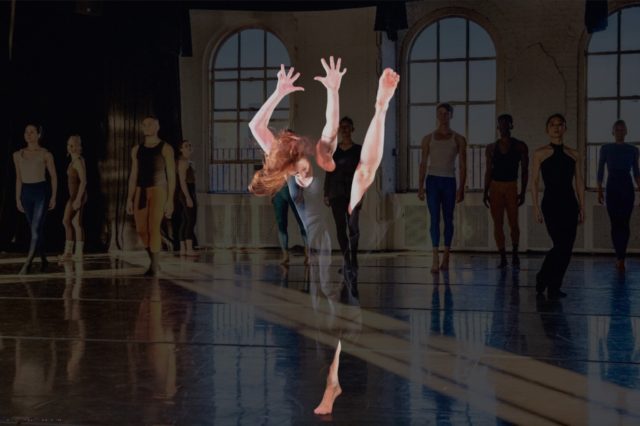
Eiko Otake and Iris McCloughan will team up again for “The Duet Project” at NYU Skirball
Who: Eiko Otake, Ishmael Houston-Jones, DonChristian Jones, Margaret Leng Tan, Iris McCloughan What:“The Duet Project” Where:NYU Skirball, 566 LaGuardia Pl. at Washington Square South When: April 15-17, $35 Why: Following decades of dancing with her husband, Koma, in 2014, after Koma injured his ankle, Eiko Otake began exploring solo work as well as duets with other collaborators. In 2017 she launched “The Duet Project: Distance Is Malleable,” teaming up with a wide range of artists, posing the questions “How can two artists collide and return changed but whole? How can two individuals encounter and converse over their differences with or without words? How can we express both explicitly and implicitly what each of us really cares about?” Among those she’s worked with are painter Beverly McIver, filmmaker Alexis Moh, choreographers Merián Soto and Ann Carlson, dancer Chitra Vairavan, musician Ralph Samuelson, and photographer and historian William Johnston. In her choreographer’s note, Eiko explains, “In my new ‘Duet Project: Distance Is Malleable,’ I work with a diverse group of artists, living and dead. Collaborators come from different places, times, disciplines, and concerns. Together, we try to maximize the potentials of our various encounters so as to reaffirm that distance is indeed malleable.”
“The Duet Project” is now making its New York premiere April 15-17 at NYU Skirball, where Eiko’s unique experiments continue with choreographer, curator, and improvisor Ishmael Houston-Jones, painter, rapper, and organizer DonChristian Jones, avant-garde pianist Margaret Leng Tan, and poet and performance maker Iris McCloughan. As Eiko also explains, “This endeavor is as much about conversation as it is about self-curation, developing instincts, desires, strategies, and tools for encounters with or without words. It is also about developing urges, hesitations, and resistance by looking at each other and taking time. Being physically and mindfully together is memory making. Every encounter is to affirm living and also to prepare for one’s inevitable leaving. My body is always leaning forward to the next encounter.”