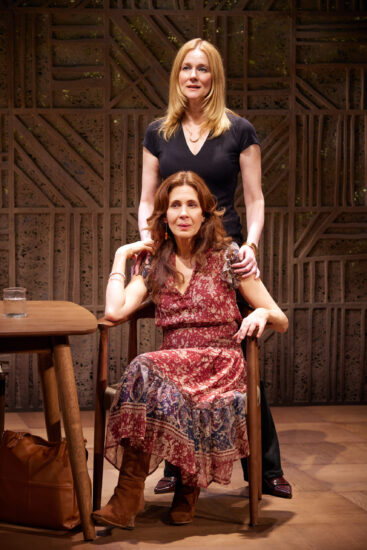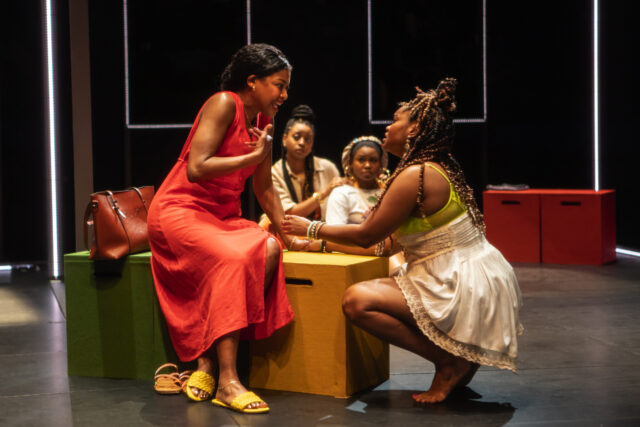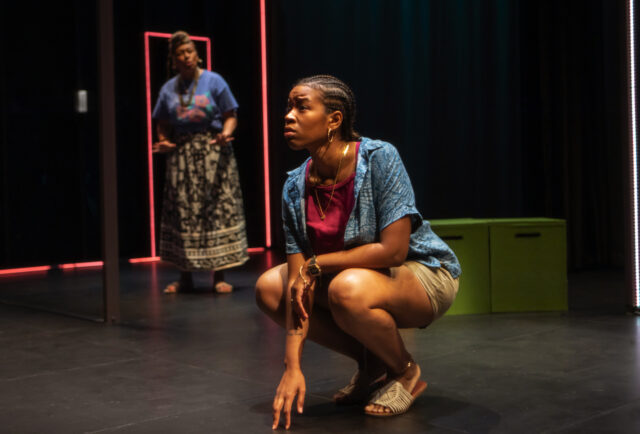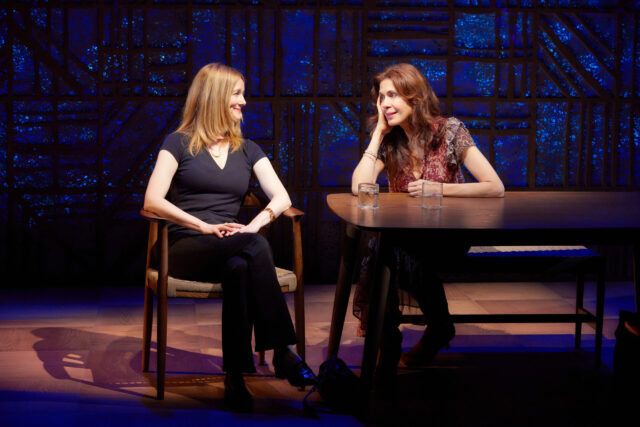
twi-ny recommended events

THE JUNGLE

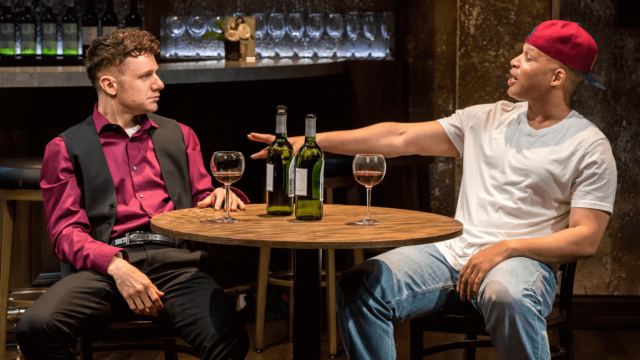
Salar (Ben Turner) makes his case to Sam (Jonathan Case) in The Jungle (photo by Teddy Wolff)

THE JUNGLE
St. Ann’s Warehouse
45 Water St.
Through March 19, $39-$149
718-254-8779
stannswarehouse.org
www.goodchance.org.uk

Amid an ever-growing global immigration crisis, Joe Murphy and Joe Robertson’s bold, breathtaking The Jungle makes a triumphant return to St. Ann’s Warehouse before heading to Washington, DC. It’s political theater of the highest order, avoiding preaching while immersing audiences in all-too-real and frightening situations.

In 2015, Murphy and Robertson visited the Calais Jungle, a makeshift refugee camp where thousands of men, women, and children temporarily lived, erected on a former landfill. Over their seven months at the site, they helped construct a geodesic dome where the people could gather as a community and present plays and poetry. The two writers document the story in The Jungle, which ran at St. Ann’s in 2018–19 but had to delay its encore engagement, scheduled for March 2020, because of the coronavirus pandemic. But it’s now back, and it’s as thrilling as it is heart-wrenching.

St. Ann’s has transformed itself into Zhangal, or the Jungle, with geographical markers, the Good Chance Dome (filled with photographs and artwork from camp residents), tents, graffiti, and a re-creation of Salar’s (Ben Turner) restaurant, which actually received a starred review from food critic AA Gill in the Sunday Times. The large central area features long communal tables and an interconnected series of raised platforms; the diverse cast of twenty-two (some of whom were migrants themselves) weave in and out of the audience, which is seated in sections designated by the countries the refugees escaped from. The framing premise is that we are all attending an emergency meeting “to talk about another proposed eviction of the Jungle.” The narrative then unfolds in flashback.

Beth (Liv Hill) and Safi (Ammar Haj Ahmad) try to help Okot (Rudolphe Mdlongwa) in immersive show at St. Ann’s (photo by Teddy Wolff)

“When does a place become a place?” asks the Aleppo-born Safi (Ammar Haj Ahmad), one of the leaders of the camp and the show’s narrator. “By November in the Jungle I could walk from Sudan through Palestine and Syria, pop into a Pakistani café on Oxford Street near Egypt, buy new shoes from the marketplace, Belgian cigarettes from an Iraqi cornershop, through Somalia, hot naan from the Kurdish baker, passing dentists, Eritrea, distribution points, Kuwait, hairdressers and legal centers, turn right onto François Hollande Street, turn left onto David Cameron’s Avenue, stop at the sauna, catch a play in the theater, service at the church, khutba in a mosque, before arriving at Salar’s restaurant in Afghanistan.” He then poignantly adds, “When does a place become home?”

The dome is named the Good Chance because the refugees believe they have a “good chance” of making it to the promised land, England, either via boat or truck, often arranged by Ali (Waleed Elgadi), a smuggler who charges exorbitant rates for his services. Several Caucasian British citizens work at the camp to help the migrants: Derek (Dominic Rowan), who almost always carries a clipboard with him, trying to organize things; Beth (Liv Hill), who pours her heart and soul into the camp; Paula (Julie Hesmondhalgh), who takes a more practical approach; and Sam (Jonathan Case), who is committed to build as many housing shelters as possible.

They treat the people of the Jungle with dignity, but there are limits to what they can accomplish. They also have the option at any time to go back to their homes, a choice not available to the migrants, who have left because of violence, extreme poverty, religious persecution, military juntas, and other reasons, seeking a better, safer life in the west.

Amal (Aisha Simone Baez) seeks a new life filled with hope and promise in The Jungle at St. Ann’s (photo by Teddy Wolff)

Among the key subplots are Okot’s (Rudolphe Mdlongwa) attempt to be smuggled into London; a deal between French journalist Henri (Max Geller) and Sam to exchange important information; the bitter Norullah’s (Twana Omer) racism; the plight of the adorable Amal (alternately Aisha Simone Baez or Annabelle Tural), a nine-year-old girl from Syria who has been separated from her family; and Salar’s refusal to let his restaurant be torn down when the French government announces that the southern half of the camp will be evicted. Boxer (Pearce Quigley) and Helene (Mylène Gomera) sing; Omar (Mohamed Sarrar) plays the drums; Amin (Habib Djemil) performs daring gymnastics; Maz (Fedrat Sadat) is desperate to get out. Amid all the horror and pain, the ragtag community still finds ways to celebrate life and their unique heritages through music, dance, food, and clothing.

“Great is the hope that makes man cross borders. Greater is the hope that keeps us alive,” Safi says.

Miriam Buether’s set, which extends into the garden outside St. Ann’s, also includes flags, a working kitchen, wall hangings, and other deft touches; there’s a ketchup bottle on every table, but don’t expect to get anything to eat. Catherine Kodicek’s costumes alternate between functional and traditional, highlighting the similarities and differences among the nations. The lighting by Jon Clark and sound by Paul Arditti further immerse the audience into the Jungle, especially at night when the characters use flashlights and whisper in the darkness. The music, ranging from celebratory to mysterious, is by John Pfumojena, with video by Tristan Shepherd and Duncan McLean of real-life news reports projected on several small monitors, instilling a chilling dose of reality.

The cast is extraordinary, embodying the fear that the refugees experience on a daily basis, never knowing what tomorrow might bring. Turner is bold and defiant as Salar, a man who has lost nearly everything but refuses to surrender his restaurant. Haj Ahmad is cool and calm as Safi, who is desperately trying to hold things together but knows it might be a lost cause. Hill excels as the emotionally involved Beth, who represents rescue workers who invest so much of themselves to save others. Omer is stalwart as Norullah, who is balancing that fine line between wanting to escape to England and doing the best one can in the meantime. And Baez is delightful as the little girl who can’t help but smile as chaos surrounds her.

Directors Stephen Daldry (Skylight, Billy Elliot) — who has won two Emmys, an Olivier, and three Tonys and has been nominated for three Oscars — and Justin Martin (Low Level Panic, Prima Facie), who previously collaborated on the 2021 pandemic film Together and are used to working with proscenium stages, do a marvelous job orchestrating the nonstop action, maintaining a furious pace as the injustice builds over nearly three hours (with one intermission). Murphy and Robertson’s dialogue is distinct and powerful, creating well-drawn characters who will touch your soul.

A program insert contains information about how to donate to Good Chance Theatre and the Brooklyn Community Foundation’s Immigrant Rights Fund as well as additional resources about immigration services. (The show is a coproduction of the National Theatre and the Young Vic with Good Chance.)

The artistic directors of Good Chance, Murphy and Robertson also turned the young girl in The Jungle into Little Amal, a twelve-foot-tall puppet that traveled around the world in The Walk, spreading her message about refugees: “Don’t forget about us.” It’s impossible to forget about Little Amal, just as it’s impossible to forget about The Jungle.

MISTY

Arinzé Kene’s Misty is making its North American premiere at the Shed (photo by Maria Baranova / courtesy the Shed)

MISTY
The Griffin Theater at the Shed
The Bloomberg Building at Hudson Yards
545 West 30th St. at Eleventh Ave.
Tuesday – Sunday through April 2, $29-$88
646-455-3494
theshed.org

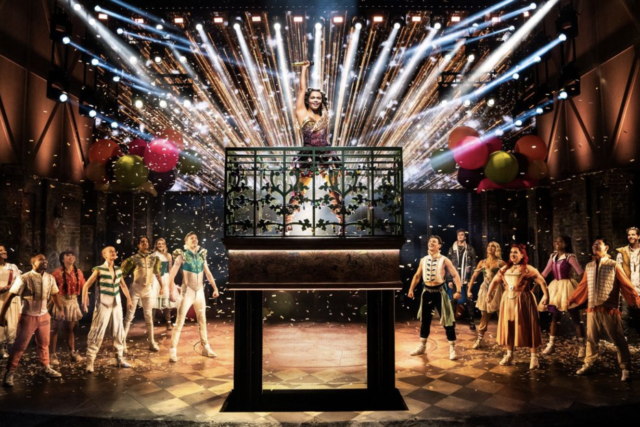
On opening night of Arinzé Kene’s thoroughly inventive and unpredictable Misty at the Shed, the fashionable crowd sipped wine and cocktails as photographers snapped pictures of attendees posing in front of large orange balloons and balls. The balloons and balls are key props in the show, which debuted at the Bush Theatre in London in March 2018 and moved to the prestigious West End that September. The play is a screed against gentrification, what Kene calls “virus invasion . . . modern day colonisation,” in addition to being a fascinating exploration of the creative process itself. Although it is set in London, its themes relate directly to New York City.

In the first scene, Arinzé, standing front and center at a mic, raps, “Here is the city that we live in, / Notice that the city that we live in is alive, / Analyse our city and you’ll find, that our city even has bodily features, / Our city’s organs function like any living creature, / Our city is a living creature, / A living breathing city creature broken into boroughs, / Mostly living creatures are broken into organs, / For the city creature each borough is an organ, / And if we’re saying that the boroughs be the organs now, / You might liken the borough that I live in to the bowel.” A few beats later he adds, “But all is well, / Cos blood cell to blood cell there’s nothing to fear.”

His character is a virus battling against the red and white blood cells, trying to survive in a city undergoing urban renewal, a Black artist getting lost in a world being reconstructed around privilege.

A fight on the night bus sends him on the run from the law, hiding and finding out who his friends are. The story is inspired by something that happened to his childhood friend Lucas; about halfway through the play, we hear a recording of Arinzé talking to Lucas, who promises to “keep honest.”

Balloons thwart Arinzé Kene throughout Misty (photo by Maria Baranova / courtesy the Shed)

Meanwhile, Arinzé is writing the play about the virus and blood cells, hitting various obstacles, including criticism from two of his closest friends, Raymond, a chef, and Donna, a schoolteacher, a married couple portrayed respectively by keyboardist Liam Godwin and drummer Nadine Lee, who perform on opposite ends of the stage, flanking Arinzé. Rajha Shakiry’s set features angled empty frames and cubes sinking underground and a long, rectangular translucent screen with silhouetted furniture behind it. Daniel Denton’s often psychedelic, abstract projections and shots of empty city streets appear on multiple surfaces.

Arinzé uses the structure of the play to comment on Black performance itself, and his narrator suffers a crisis of confidence when Donna and Raymond attack his work-in-progress, calling it a “ni–a play.” Donna thinks it is yet another show about a “generic angry young black man!” written for white people. “I looked around and most of the audience were . . . most of them don’t look like us,” Raymond points out. “They seemed to love it!” Donna adds. Raymond continues, “As soon we walked out Donna turned to me and said ‘Arinzé sold out and wrote a ni . . . an inner city play.’” Donna corrects him, “Nah that’s not what I said. I said ‘Arinzé sold out and wrote a ni–a play.’ You wrote a ni–a play so your work would get put on.” Raymond concludes with a sly note: “The two musicians were dope though.”

As the virus runs for his life and Arinzé gets feedback from his producers (existing audio clips from a pair of very famous speakers) and a little girl (either Ifeoluwa Adeniyi or Braxton Paul) — in addition to several hilarious appearances by the stage managers — Arinzé becomes swamped by orange balloons and rubber balls, surrounded and trapped by the blood cells attempting to destroy what they believe to be a dangerous contagion.

Imaginatively directed by Omar Elerian (Nassim, Islands) with artistic flair — there’s something new to see and hear in every scene, the names of which include “City Creature,” “Locked Out,” and “Jungle Shit” — Misty is a thrilling theatrical experience, loaded with surprises around every corner. Jackie Shemesh’s lighting is bold and provocative, while Elena Peña’s sound ranges from prerecorded messages to Arinzé, Shiloh Coke, and Adrian McLeod’s score, which jumps from subtle, soothing synths to propulsive thumping.

Drummer Nadine Lee also portrays Donna in Misty (photo by Maria Baranova / courtesy the Shed)

Kene (One Night in Miami, Get Up Stand Up!) is a sensational performer, whether rapping, delivering self-deprecating jokes, or fighting a giant orange ball. The play works best when he stays on his metaphorical journey and avoids delving into clichéd and overt sociopolitical rants, which pop up in the second act. (The play feels slightly too long and repetitive at two hours with intermission.)

He effectively argues, “When a virus shakes up a blood cell, the organ doesn’t cope well, the city creature goes pale, the body’s feveral, / Antivirals administered by hypodermic needle go on patrol, in search of us virus people, / As they police through the blood vessels, we scatter like roaches, we scuttle into the shadows like beetles, / They don’t want us roaming in the city creature, they don’t want us multiplying, they don’t want an upheaval.”

Kene is well aware of the jeopardy Black bodies face, and one of his final gestures onstage becomes a major statement, revealing the physical strength that is still not enough to protect him from constant threat that goes far beyond the night bus.

After the show, the crowd was treated to wine, popcorn, and crudités. I couldn’t help but think of the first monologue, when Arinzé declares, “The doors close, the night bus pulls away, so now there’s no getting off, / And if you’re wise enough! You’ll know not all of us! Aboard this bus! Are blood cells . . . / Nah, / One of us is virus. / Geh-geh.” And then, later, when one of the producers asks him, “Is it just me or does that feel a little excessive?”

MONTHLY ANIME: THE PLACE PROMISED IN OUR EARLY DAYS / VOICES OF A DISTANT STAR

The Place Promised in Our Early Days is part of Japan Society double feature celebrating Makato Shinkai

THE PLACE PROMISED IN OUR EARLY DAYS (Makoto Shinkai, 2004) / VOICES OF A DISTANT STAR (Makoto Shinkai, 2002)
Japan Society
333 East 47th St. at First Ave.
Friday, March 17, $15, 7:00
www.japansociety.org

Makoto Shinkai, who took the anime world by storm with his 2002 hit Voices of a Distant Star, a short film made completely on his home computer, followed that up with his first feature-length work, the magical and mystical The Place Promised in Our Early Days. Set in an alternate futuristic post-WWII world, The Place Promised centers on three friends, Hiroki, Takuya, and Sayuri, who make a vow to fly Hiroke and Takuya’s plane, Bela C’ielo, into the Tower, a monolithic structure rising into the sky that symbolizes the postwar division between the Union and US-Japanese forces. With war imminent, an older Takuya and Hiroki find themselves on opposing sides, with Sayuri lost in a coma dreamworld.

Although the plot — especially the science aspects — gets rather complex and confusing, The Place Promised is a beautiful-looking film, both tenderly sweet and harshly depressing, presenting a rather bleak forecast of the future. But stunning visual moments such as a setting sun with an illuminated halo that forms a shining star twinkling into an abandoned factory make it all worth it. Shinkai’s film was deservedly named Best Animated Film at the Mainichi Film Awards, where it topped the much more heralded Steamboy (Katsuhiro Otomo, 2004) and Howl’s Moving Castle (Hayao Miyazaki, 2004).

In celebration of the April 14 North American release of Shinkai’s latest film, Suzume, a coming-of-age story about a seventeen-year-old protagonist, Japan Society is screening The Place Promised in Our Early Days on March 17 at 7:00 in its monthly anime series. It will be preceded by Voices of a Distant Star, a devastatingly melancholic and hauntingly gorgeous twenty-five-minute exploration of loneliness as Mikako chases the evil Tarsians through the galaxies with the UN Space Army carrier Lysithea (named after a Greek mythological figure and a genus of red algae) while Noboru, her true love since they were fifteen, waits for her messages, which take longer and longer to reach him the farther out the battle takes her. Tenmon’s piano score is heartbreaking in one of the saddest and most poignant animes ever made.

FIRST LOOK 2023: ART TALENT SHOW

Kateřina Olivová and Darina Alster evaluate potential students in Art Talent Show

ART TALENT SHOW (Adéla Komrzý & Tomáš Bojar, 2022)
Museum of the Moving Image
35th Ave. at 36th St., Astoria
Sunday, March 19, 5:30
Festival runs March 15-19
718-777-6888
movingimage.us

“I think the line between reality and art has been smudged here. . . . You don’t know what’s art and what’s real anymore,” a teacher says in Adéla Komrzý and Tomáš Bojar’s vastly entertaining Art Talent Show, making its New York premiere at the Museum of the Moving Image’s twelfth “First Look” festival, which highlights new, innovative international films. I could say the same thing about Art Talent Show itself, which develops such an intriguing narrative that you might have a hard time convincing yourself that it’s nonfiction; at least I did.

In 2019, Adéla Komrzý was commissioned by rector Tomáš Vaněk and the Academy of Arts (AVU) in Prague to make a documentary in celebration of the institution’s 220th anniversary. Komrzý teamed up with Tomáš Bojar, and they spent four days filming a diverse group of applicants going through the difficult selection process to capture one of the coveted spots, not only creating art but taking written tests and undergoing rigorous personal interviews. Six professors in three departments agreed to let the cameras follow them: Vladimír Kokolia and Eva Červená from Graphic Design, Kateřina Olivová and Darina Alster from New Media, and Marek Meduna and Petr Dub from Painting.

They ask such questions as “What do you think is the role of art in today’s society?” and “What is the worst thing you have done in your life?” and get a wide range of answers from the unnamed students, who sometimes go off on tangents or freely admit they have no idea. Some try to be completely honest, others struggle to assert their identity, and a few use the opportunity to respond as if giving a performance. We learn as much, if not more, about the teachers than we do about the students, especially one who goes off on her own tangent about her sexuality and another who seems to savor grilling the applicants a bit too much. Meanwhile, a pair of older women who work at the reception/security desk gossip about it all.

The hundred-minute film provides compelling insight into the next generation of artists, even via this small sample; many of them talk about how they are making art for themselves, rather than as part of something bigger or considering how their work could influence society and the world at large. Most of them appear to have no interest in art history, instead focusing solely on what they are doing, as if they exist in a vacuum. It also serves as a microcosm of what is happening outside art school, where kids and teenagers are obsessed with social media, trying to figure out who they are in full view of others.

Inspired by Claire Simon’s Le Concours, about an annual French student contest, Komrzý (Intensive Life Unit, Viva Video, Video Viva) and Bojar (Two Nill, Breaking News) avoid reality-show pizzazz, instead trying to be as unobtrusive as possible, choosing the fly-on-the-wall route; at times they set up their cameras in rooms and operate them remotely so their physical presence will not affect the discussions between teachers and students.

The professors reveal their own predilections, especially Olivová, who dresses in colorful childlike costumes and wears kitten ears, offering the students encouragement, whereas Kokolia puts them through a much more direct and almost accusatory investigation. In a promotional interview, Dub explains, “I also realized that the presence of the crew will make us all — both [teachers] and applicants — step out of our comfort zones. However, this is what the art is principally based on: constant searching and crossing borders, whether social or artistic ones. I am not a big fan of safe zones as they blunt our perception, relation to reality, and possibilities of art experiments which are necessary to prevent existential sterility.” Scenes in which the teachers evaluate the artwork and debate topics for the students to address should give pause to the thin-skinned applying to similar programs.

“I don’t know whether to write ‘definite pass’ or ‘definite fail,’” one teacher says about a specific test. Art Talent Show is a definite pass, acing its subject.

“First Look” runs March 15-19 at MoMI, comprising more than fifty shorts and features, with many filmmakers on hand for Q&As. The opening night presentation is Babak Jalali’s Fremont, starring Anaita Wali Zada and Jeremy Allen White, paired with Ruslan Redotov’s Away, two very different refugee tales. The closing night film is C. J. “Fiery” Obasi’s Mami Wata, centered around a powerful mermaid goddess in a West African community.

ESTROGENIUS FESTIVAL: BAN(NED) TOGETHER

ESTROGENIUS FESTIVAL: BAN(NED) TOGETHER
The Kraine Theater, 85 East Fourth St.
UNDER St. Marks, 94 St. Marks Pl.
Arts on Site, 12 St. Marks Pl.
721 Decatur Street Community Garden, Bushwick
March 15 – April 2, sliding scale $20
www.estrogenius.nyc

Since 2000, the EstroGenius Festival has been celebrating “the artistry of femme, nonbinary, nonconforming, and trans womxn artists.” The 2023 edition, presented by FRIGID New York and Manhattan Theatre Source, launches March 15 with “Funny Women of a Certain Age,” an evening of comedy with Amanda Cohen, Jessie Baade, Laura Patton, and Carole Montgomery. The festival, curated by maura nguyễn donohue, Melissa Riker, and John C. Robinson, kicks into high gear March 18 through April 2 with nearly two dozen productions taking place at the Kraine Theater, UNDER St. Marks, Arts on Site, and the 721 Decatur Street Community Garden in Bushwick, from concerts and plays to discussions and burlesque.

On March 19 at 3:30, Joya Powell and Pele Bauch team up for the open dialogue “Who We Are | Ban(ned) Together,” getting to the heart of this year’s theme: “Ban(ned) Together,” a response to the overturning of Roe v. Wade and the violence being committed against trans and femme bodies.

Claire Ayoub heads down memory lane in her solo show The GynoKid. Marina Celander shares the family-friendly story The Tale of An-Noor, incorporating dance and puppets. In the duet Develop(ing) Together: BEAR, c/s movement projects investigates balance, exhaustion, and tolerance. Molly Kirschner’s BiPolar Brunch brings together four characters seeking connection. Alt-folkers Brokeneck Girls perform songs from The Murder Ballad Musical.

“An Evening with Peterson, Savarino & Wells” features Muriel “Murri-Lynette” Peterson’s Black Enough, Kim Savarino’s Blue Bardo, and Portia Wells’s Inside Flesh Mountain, Part II. Anabella Lenzu examines herself as a woman, a mother, and an immigrant in Solo Voce: The Night You Stopped Acting. Hip-hop takes center stage with Yvonne Chow’s #Unapologetically Asian and an excerpt from Janice Tomlinson’s PRN. There are also works by sj swilley, Emily Fury Daly, Vanessa Goodman, Donna Costello, Kayla Engeman, Leslie Goshko, Soul Dance Co., and Petra Zanki, among many others.

LOVE

Part of the audience sits onstage at Alexander Zeldin’s Love at Park Ave. Armory (photo by Stephanie Berger Photography/Park Avenue Armory)

LOVE
Park Ave. Armory, Wade Thompson Drill Hall
643 Park Ave. at Sixty-Seventh St.
Monday – Saturday through March 25, $54-$168
www.armoryonpark.org

Park Ave. Armory is home to dazzling theatrical productions and art installations that can happen nowhere else. It is also home to Lenox Hill Neighborhood House’s Women’s Mental Health Shelter. So there is extra relevance to its latest show, writer-director Alexander Zeldin’s staggering, simply titled Love.

Originally presented by the National Theatre in London in 2016, Love takes place in a temporary housing facility in England. Natasha Jenkins’s creaky set features a shared kitchen on one side, a single, filthy bathroom on the other, and a pair of horizontal tables in the middle, behind which are two small apartments. In one, the fiftysomething Colin (Nick Holder) cares for his elderly mother, Barbara (Amelda Brown), who uses a cane and moves excruciatingly slowly. In the other, apprentice electrician Dean (Alex Austin) and his pregnant wife, Emma (Janet Etuk), who is studying to become a massage and wellness therapist, are packed together with Dean’s two children from his previous marriage, eight-year-old Paige (Amelia Finnegan or Grace Willoughby) and fourteen-year-old Jason (Oliver Finnegan).

Also staying at the facility are two lonely, solitary figures, Sudanese refugee Tharwa (Hind Swareldahab), who has been separated from her family, and Adnan (Naby Dakhli), an injured Syrian refugee who has recently been granted asylum.

Approximately ninety audience members are seated on the stage, either in a few rising rows on either side of the set or, mostly, in scattered chairs as if they’re also in the facility. Lighting designer Marc Williams keeps the house lights on for much of the ninety-minute play, implicating everyone in the homeless crisis, with jarring, sudden jolts of instant darkness at the end of some scenes. Josh Anio Grigg’s naturalistic sound and Jenkins’s costumes further immerse the audience in the bleak narrative.

Paige (Amelia Finnegan) shakes hands with new neighbor Colin (Nick Holder) as her parents (Alex Austin and Janet Etuk) look on in Love (photo by Stephanie Berger Photography/Park Avenue Armory)

Dean, Emma, Jason, and Paige are there due to a recent eviction and its aftermath, which embroiled them in bureaucracy. They are further dismayed when they learn Colin and his mother have been in the shelter for twelve months even though the legal limit is six weeks.

“They just cheat you like we’re waiting, fuck, we need somewhere adapted you know our place is like posh flats now,” the ineloquent Colin tells Emma, who responds, “Yeh no obviously I don’t want — the baby — to be born here.” But as time passes and Dean gets buried in red tape, that becomes more and more of a harsh possibility.

On a daily basis, Dean struggles to put any kind of nutritious food on the table, the characters fight over the use of the disgusting toilet, and they each search for the least bit of dignity they can manage. As Christmas approaches, the ever-hopeful and positive Paige practices for her role in the school holiday show, but the bitter and disgusted Jason wants no part of it.

Barbara (Amelda Brown) reflects on her dire situation in Love at Park Ave. Armory (photo by Stephanie Berger Photography/Park Avenue Armory)

Zeldin, whose other works include Beyond Caring and Faith Hope and Charity, did extensive research in developing Love, inspired by John Steinbeck novels; James Agee and Walker Evans’s seminal Let Us Now Praise Famous Men, the 1941 book documenting the lives of three tenant families in the Deep South in words and photos; and the 2014 report “Christmas Families in B&Bs” from the housing charity Shelter, which revealed that more than ninety thousand children would be homeless that holiday season, focusing on twenty families. Zeldin met with them and incorporated their real-life stories into the play through home visits, workshops, and rehearsals. Meanwhile, the latest Shelter report says that 120,000 children are now “waking up in damp storage containers and cramped B&Bs.”

But Love is no mere melodramatic documentary work; instead it is a powerful, harrowing tale of inequality, unfairness, and an incompetent and uncaring government that turns its back on British citizens and refugees despite the laws. The uniformly excellent cast brings to brutal life the demeaning indignity so many unhoused families and individuals suffer through just to have a roof over their head and food on the table. The characters in Love are not asking for handouts or happy to be on the dole; Zeldin presents their disturbing plights with a humane understanding that calls for sociopolitical change without sentimental moralizing.

However, the Christmas angle grows a bit too saccharine, especially when Paige sings “Away in a Manger,” a song about Jesus’ humble beginnings, born in a trough without crib or bed.

Love might be set in England, but it’s all too relevant to what is happening in the United States right now and especially here in New York City, from refugees being bused and flown in from Texas and Florida to gentrification forcing families to leave their longtime communities. Housing insecurity is increasing at alarming rates, and the government can’t agree on any kind of effective action to turn the tide.

Throughout the play, Colin wears an Ed Hardy shirt that proclaims, “Erase All Fears.” It’s going to require a lot more than commercial slogans to institute necessary change.

LETTERS FROM MAX, a ritual

Letters from Max follows the epistolary relationship between a teacher and her student (photo by Joan Marcus)

LETTERS FROM MAX, a ritual
The Pershing Square Signature Center
The Alice Griffin Jewel Box Theatre
480 West 42nd St. between Tenth & Eleventh Aves.
Tuesday – Sunday through March 26, $49-$139
212-244-7529
www.signaturetheatre.org

As you enter the Alice Griffin Jewel Box Theatre at the Signature to see Sarah Ruhl’s Letters from Max, a ritual, a quote from Max Ritvo in handwritten cursive is projected on the back wall of the stage: “Even present tense has some of the grace of past tense, what with all the present tense left to go.” Unfortunately, there was not a lot of present tense left in Ritvo’s too-short life, but his legacy is preserved in the moving play, which centers around the letters, texts, voicemails, and conversations the young, enthusiastic poet had with Ruhl, the award-winning writer of such plays as In the Next Room (or The Vibrator Play) and The Clean House.

In 2012, Ritvo was accepted into Ruhl’s playwriting class at Yale. That began a four-year friendship in which the two shared an intimate and emotional correspondence as Max faced a recurrence of his pediatric cancer, Ewing’s Sarcoma, but did so with charm, whimsy, and hope. They discuss poetry, soup (“Soup is your religion,” Max tells Sarah), Halloween, various medical treatments, Einstein on the Beach, the streets of New York City, the afterlife, the existence of the soul, and reading and writing, with an enchanting honesty and humor.

The story is not a traditional tale of a mentor and mentee; Sarah and Max bring out the best in each other, both learning as their closeness deepens. “You know, in some ways, you are my teacher, not the other way around,” Ruhl says early on.

Sarah Ruhl (Jessica Hecht) and Max Ritvo (Zane Pais) explore life and poetry in Signature play (photo by Joan Marcus)

Hecht is terrific as Sarah, who she knows well, having appeared in Ruhl’s Stage Kiss at Playwrights Horizons in 2014 and pandemic microplay What do you Want What do you Want What do you Want for the Homebound Project; she portrays Ruhl with a tender confidence and just the right amount of mothering. A tireless actor who starred with Mikhail Baryshnikov in Arlekin Players Theatre’s hybrid Chekhov reimagining The Orchard last June and will next appear in David Auburn’s Summer, 1976 with Laura Linney on Broadway beginning April 4, Hecht has a quirky and distinct singsong voice that fits the character, especially when she recites poetry.

Ritvo is alternately played by Ben Edelman and Zane Pais; at each performance, whoever is not playing Max appears as Tattoo Artist Angel — based on a short work Max wrote in Ruhl’s class — and plays Ritvo’s songs, Edelman on piano, Pais on guitar. The actors do not attempt to mimic the real-life Sarah and Max but concentrate on bringing their essence to the stage, as related through their correspondence.

Marsha Ginsberg’s set is centered by a large semicircular object that recalls a zoetrope onto which S Katy Tucker projects words and images and opens up to reveal Max in a hospital bed. In a far corner is a piano; the soft lighting is by Amith Chandrashaker, with sound by Sinan Refik Zafar and costumes by Anita Yavich, highlighted by the angel outfit.

Ben Edelman and Zane Pais switch roles every night in Letters from Max (photo by Joan Marcus)

Ruhl first collected the material in the 2018 epistolary book Letters from Max: A Poet, a Teacher, a Friendship, then adapted it for the play, which was not initially planned but developed after Ruhl gave several public readings of the book. Director Kate Whoriskey (Sweat, How I Learned to Drive), who helmed Ruhl’s Dear Elizabeth, based on letters exchanged by poets Elizabeth Bishop and Robert Lowell, keeps the bells and whistles to a minimum; the show could use some trimming, however, as it gets repetitive and, at times, overly reverential. It would probably fare better at a streamlined ninety minutes instead of two hours with intermission.

In the lobby, the audience is encouraged to write a letter of their own to a loved one they think needs to hear from them. “I hope that this play can be an invitation into ritual or catharsis for whatever grief might be ailing you,” two-time Pulitzer finalist Ruhl explains. The Signature provides pen, paper, envelope, and even a haiku and will mail it for you.

Ultimately, the relationship between Max (Four Reincarnations, Aeons) and Sarah is summed up by these words from Max: “We’ll always know one another forever, however long ever is. And that’s all I want — is to know you forever.” Through these letters, the book, and now the play, Max gets his wish.