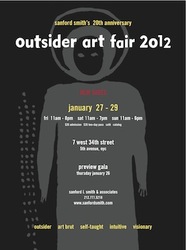
7W New York
7 West 34th St. between Fifth & Sixth Aves.
Thursday, January 26 preview, $35, 6:30 – 9:00
January 27-29, $20 (includes catalog and admissions to programs)
www.sanfordsmith.com
The twentieth annual Outsider Art Fair takes place January 26-29 at 7W New York, featuring more than thirty galleries exhibiting painting, sculpture, and photography by self-taught, primitive, and naive artists, including Galerie Bonheur, Pavel Zoubok, La Galerie les Singuliers, Margaret Bodell Arts, Galerie Bourbon-Lally, Stephen Romano, and the Creative Growth Art Center. Among the special lectures and programs are Charles Russell’s “Groundwaters” talk and book signing, screenings of Is It Art? and The Films of Everything with the Museum of Everything’s James Brett, the conversation “The Roots of the Spirit: American Folk Art Museum at the 2011 Venice Biennale” with Martha Henry and Kevin Sampson, the panel discussions “Dubuffet’s Legacy” with Sarah Lombardi, Harmony Murphy, and Barbara Safarova and “Voices from Inside: Pano Drawings by Mexican-American Inmates” with Henry, Dr. Peter David Joralemon, Barbara E. Mundy, and Deborah Cullen, a look into “Creativity and Madness” with Bruno Decharme, Mieke Bal, and Safarova, and the symposium “Uncommon Artists XX” with Stacy C. Hollander, Carol Crown, Jane Kallir, and Russell, held at the American Museum of Folk Art.
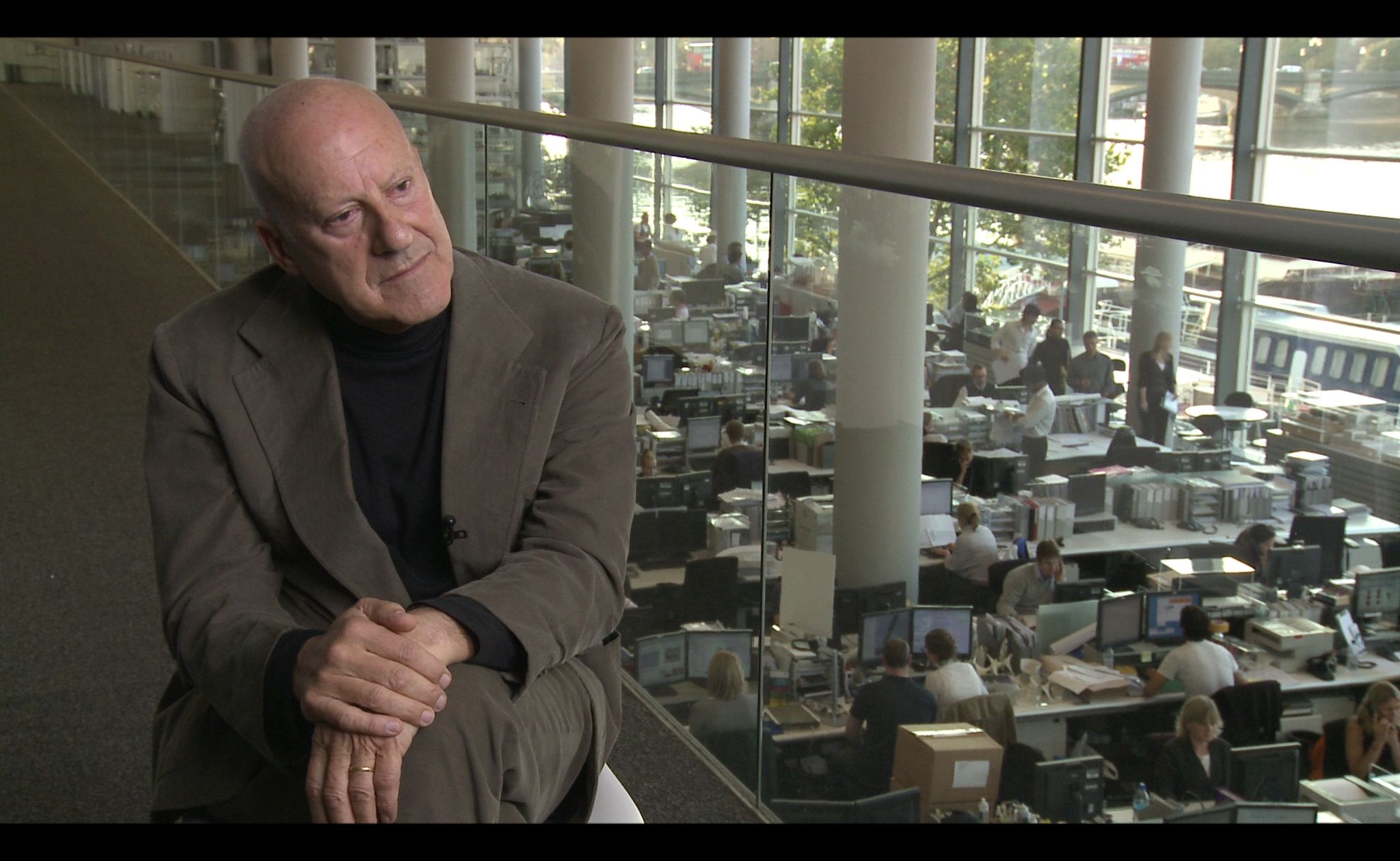
 Born into a working-class family in Manchester in 1935, knighted architect Sir Norman Foster has spent the last forty years building some of the most impressive structures in the world. Titled after a question asked of him by Buckminster Fuller, How Much Does Your Building Weigh, Mr. Foster? examines the life and career of the intriguing character behind such innovative constructions as the London Stansted Airport terminal, the Sainsbury Centre for Visual Arts, the Sage Gateshead, the renovated Wembley Stadium, the Great Court at the British Museum, Millennium Bridge, Hong Kong International Airport at Check Lap Kok, and the futuristic Masdar City in Abu Dhabi. Written and narrated by architecture critic Deyan Sudjic, the director of London’s Design Museum, in a steady but worshipful tone, the film features interviews with artists Anish Kapoor, Richard Serra, Anthony Caro, and Cai Guo-Qiang, journalist Paul Goldberger, musician Bono, and numerous people from Foster + Partners, which employs thousands of men and women around the world. Directors Norberto López Amado and Carlos Carcas also speak at length with Foster himself, who waxes prophetic about artistic creation, environmental responsibility, and integrating his work with nature. The film examines Foster’s drawing method, the importance of building models even in the digital age, and his dedication to improving humanity’s existence on the planet in addition to delving into his personal life, from the tragic loss of his first wife to his obsession with flight and cross-country skiing. Director of photography Valentín Álvarez lovingly moves his camera in and around such remarkable Foster creations as the Hearst Tower in New York, the Reichstag restoration in Berlin, the Millau Viaduct in France, the Swiss Re Tower in London, HSBC headquarters in Hong Kong, and Beijing Airport, shooting them as if they were majestic cathedrals, accompanied by Joan Valent’s evocative score performed by the Bratislava Symphony Orchestra. Amado and Carcas steer clear of any controversy, which has accompanied numerous Foster projects, instead concentrating on his many successes and the mind of the man behind the myth, which is itself a remarkable creation. How Much Does Your Building Weigh, Mr. Foster? flows like one of Foster’s buildings: elegant, organic, unique, and endlessly fascinating.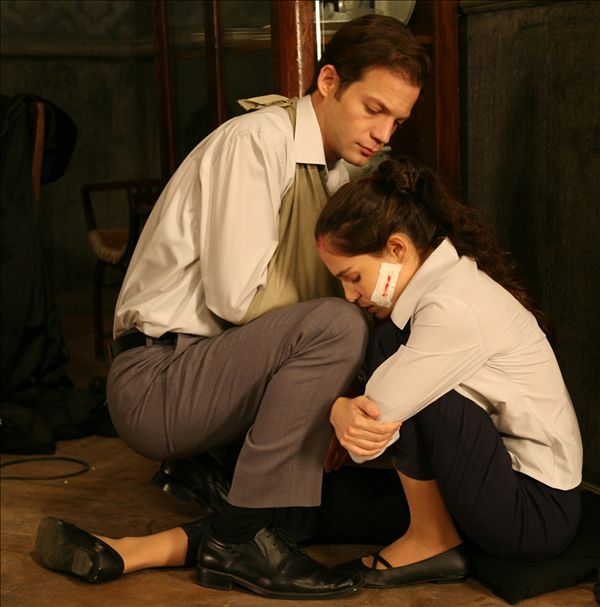
 Following a launch party for her book about how she and two fellow Mossad agents in 1964 captured and killed Max Reiner (Edgar Selge), the notorious “Surgeon of Birkenau,” Rachel Brener (Gila Almagor) immediately learns that there is an old man in a Ukrainian nursing home claiming that he is in fact the doctor who performed horrific experiments on Jewish men, women, and children in the German concentration camp during World War II. Rachel is reunited with Zvi (Alex Peleg) and Ehud (Oded Teomi), who come up with a plan to eliminate the doctor once again to protect a secret that has been haunting them for forty years. But they’re no longer the brash, finely chiseled spies they were when they were young, leading to crises of conscience and other physical and psychological dilemmas. Nominated for four Israeli Academy Awards, The Debt is a tense thriller from director Assaf Bernstein, who cowrote the screenplay with Ido Rosenblum. The story weaves back and forth between the present day, as Rachel meets Ehud in Ukraine and they hash out their plan, neither one having done anything like this in decades, and 1964, when Rachel (Neta Garty), Zvi (Itay Tiran), and Ehud (Yehezkel Lazarov) were younger and more idealistic. The scenes in which the young Rachel visits the doctor, who has become a gynecologist, and pretends she is trying to conceive a child are particularly gripping, setting up a powerful conclusion. The Debt, which was recently remade in English by John Madden with Helen Mirren, Ciarán Hinds, Sam Worthington, Jessica Chastain, and Tom Wilkinson and evokes such films as The Wild Geese, The Boys from Brazil, and QB VII, will open the Brooklyn Israel Film Festival on Thursday night at the Kane Street Synagogue in Cobble Hill, followed on Saturday night by Yossi Madmony’s Restoration, which was named Best Feature at the 2011 Jerusalem Film Festival, and Dolphin Boy on Sunday night, which will be followed by a Q&A with codirector Dani Menkin and producer Judith Manassen-Ramon.