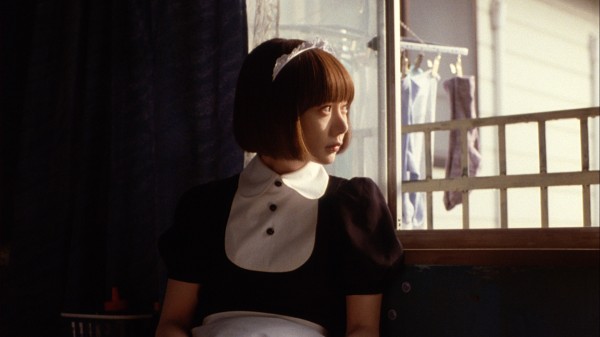
Nozomi (Bae Doona) dreams that there’s more to life in Hirokazu Kore-eda’s AIR DOLL
AIR DOLL (Hirokazu Kore-eda, 2009)
Japan Society
333 East 47th St. at First Ave.
Saturday, March 3, $12, 2:00
Series runs March 2-18
212-715-1258
www.japansociety.org
 Over the last twenty years, Japanese filmmaker Hirokazu Kore-eda has compiled a remarkable resume, directing eight narrative features and four documentaries that investigate such themes as memory and loss. His 2009 film, Air Doll, examines loneliness through the eyes of a blow-up doll come to life. Bae Doona stars as Nozomi, a plastic sex toy owned by Hideo (Itsuji Itao), a restaurant worker who treats her like his wife, telling her about his day, sitting with her at the dinner table, and making love to her at night. But suddenly, one morning, Nozomi achieves consciousness, discovering that she has a heart, and she puts on her French maid costume and goes out into the world, learning about life by wandering through the streets and working in a video store, always returning home before Hideo and pretending to still be the doll. Adapted from a manga by Yoshiie Goda, Air Doll is another beautiful, meditative study from Kore-eda. Nozomi’s wide-eyed innocence at the joys of life comes sweet and slowly, played with a subtle wonderment by South Korean model and actress Bae (Sympathy for Mr. Vengeance, The Host). The film does, however, take one nasty turn and is a bit too long, at more than two hours. But it’s still another contemplative gem from the masterful director of Maborosi, Nobody Knows, and Still Walking. Air Doll is screening on March 3 at 2:00 as part of the Japan Society series “Love Will Tear Us Apart,” twenty-two films over three weeks from Japan and Korea that examine twisted, obsessive, dangerous, and downright crazy sex and romance.
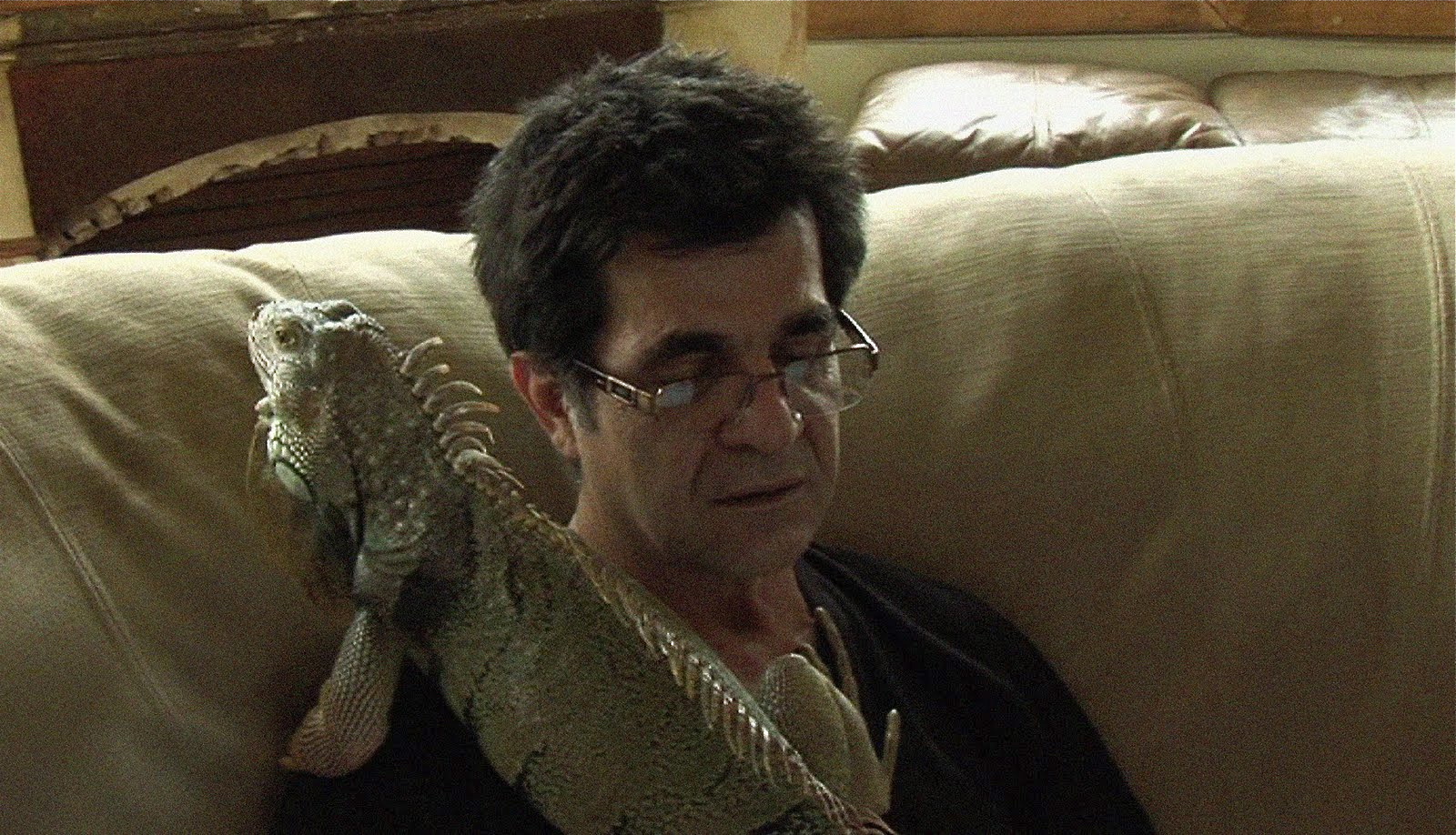
 “You call this a film?” Jafar Panahi asks rhetorically about halfway through the revealing documentary This Is Not a Film. After several arrests beginning in July 2009 for supporting the opposition party, the highly influential and respected Iranian filmmaker (Crimson Gold, Offside) was convicted in December 2010 for “assembly and colluding with the intention to commit crimes against the country’s national security and propaganda against the Islamic Republic.” Although facing a six-year prison sentence and twenty-year ban on making or writing any kind of movie, Panahi is a born storyteller, so he can’t stop himself, no matter the risks. Under house arrest, Panahi has his friend, fellow director Mojtaba Mirtahmasb (Lady of the Roses), film him with a handheld DV camera over ten days as Panahi plans out his next movie, speaks with his lawyer, lets his pet iguana climb over him, and is asked to watch a neighbor’s dog, taking viewers “behind the scenes of Iranian filmmakers not making films.” Panahi even pulls out his iPhone to take additional video, photographing New Year’s fireworks that sound suspiciously like a military attack. Panahi is calm throughout, never panicking (although he clearly does not want to take care of the barking dog) and not complaining about his situation, which becomes especially poignant as he watches news reports on the earthquake and tsunami disaster in Japan. “But you can’t make a film now anyhow, can you?” Mirtahmasb — who will later be arrested and imprisoned as well — asks at one point. “So what I can’t make a film?” Panahi responds. “That means I ask you to take a film of me? Do you think it will turn into some major work of art?” This Is Not a Film, which was smuggled out of Iran in a USB drive hidden in a birthday cake so it could be shown at Cannes, is indeed a major work of art, an important document of government repression of free speech as well as a fascinating examination of one man’s intense dedication to his art and the creative process.