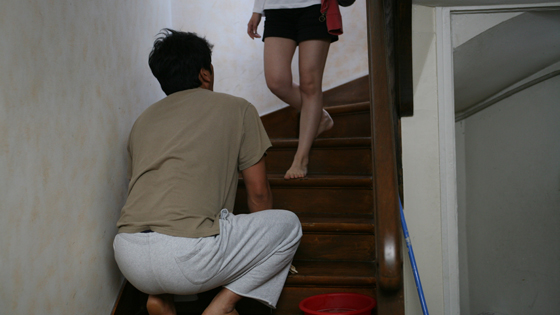
Sungam (Youngho Kim) battles displacement and loneliness in Hong Sang-soo’s NIGHT AND DAY
NIGHT AND DAY (BAM GUAN NAT) (Hong Sangsoo, 2008)
Museum of the Moving Image
35th Ave. at 36th St., Astoria
Sunday, March 18, free with museum admission, 2:00
Series runs March 17-23
718-777-6800
www.movingimage.us
 Korean writer-director Hong Sang-soo returned to the New York Film Festival for the fifth time with Night and Day, a character-driven tale about displacement and loneliness. Youngho Kim stars as Sungam, a married painter in his forties who flees South Korea for France after having been turned in for smoking marijuana with U.S. tourists. A fish out of water in Paris, he settles into a Korean neighborhood, spending most of his time with two young art students, Yujeong (Eunhye Park) and Hyunju (Minjeong Seo). He also meets an old girlfriend, Minsun (Youjin Kim), who is still attracted to him. And every night he calls his wife, Sungin (Sujung Hwang), wondering when he’ll be able to return home. Hong (Woman Is the Future of Man, Tale of Cinema) tells the story in a diary-like manner, with interstitials acting like calendar pages. Sometimes a day can be filled with talk of art, a party, and a chance encounter, while others can consist of a brief, random event with no real bearing on the plot, reminiscent of Jim Jarmusch’s Stranger Than Paradise, just without the existential cynicism and dark humor. As with 2006’s Woman on the Beach, Hong lets Night and Day go on too long (it clocks in at 141 minutes), with too many inconsequential (even if entertaining) vignettes, but it’s so much fun watching Youngho’s compelling performance that you just might not care about the length. Night and Day is screening March 18 as part of the Museum of the Moving Image’s retrospective of Hong’s work, which also includes Like You Know It All, Woman on the Beach, Oki’s Movie, and The Day a Pig Fell into the Well.
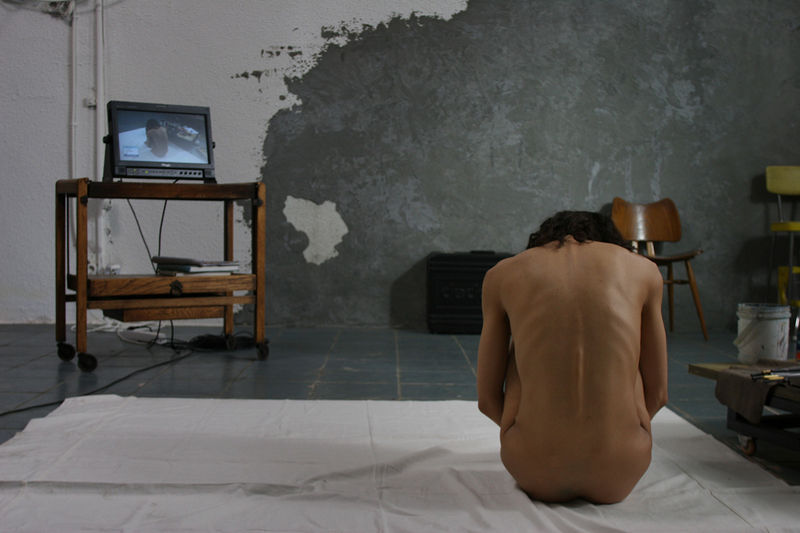

 They don’t come much bigger than Orson Welles in Touch of Evil, as he nearly bursts through the frame as spectacularly dastardly police captain Hank Quinlan. So it is appropriate that the film is screening as part of the Museum of the Moving Image’s ongoing “See It Big!” series, where audiences can best appreciate the size and scope of Welles’s dark potboiler. A deliciously devious corrupt lawman, Quinlan is an enormous drunk who has no trouble breaking the rules to get his man. Charlton Heston took a lot of criticism playing Mike Vargas, a Mexican drug enforcement agent newly married to beautiful blonde Susan (Janet Leigh), who soon finds herself menaced by a dangerous gang as a weak-kneed, pre-McCloud Dennis Weaver looks the other way. The film famously opens with a remarkable crane shot that goes on for more than three minutes, setting the stage like no other establishing shot in the history of cinema. And the final scene with Marlene Dietrich as sultry hooker Tana is a lulu as well, highlighted by one of the great all-time movie lines. What goes on in between is a lurid tale of murder and revenge filled with unexpected twists and turns, featuring appearances by such Welles regulars as Joseph Cotten, Akim Tamiroff, Joseph Calleia, and Ray Collins. There was a lot of hype surrounding the film when it was recently restored to match Welles’s original desires, but the final product lives up to its billing. Touch of Evil is a deeply affecting noir masterpiece.


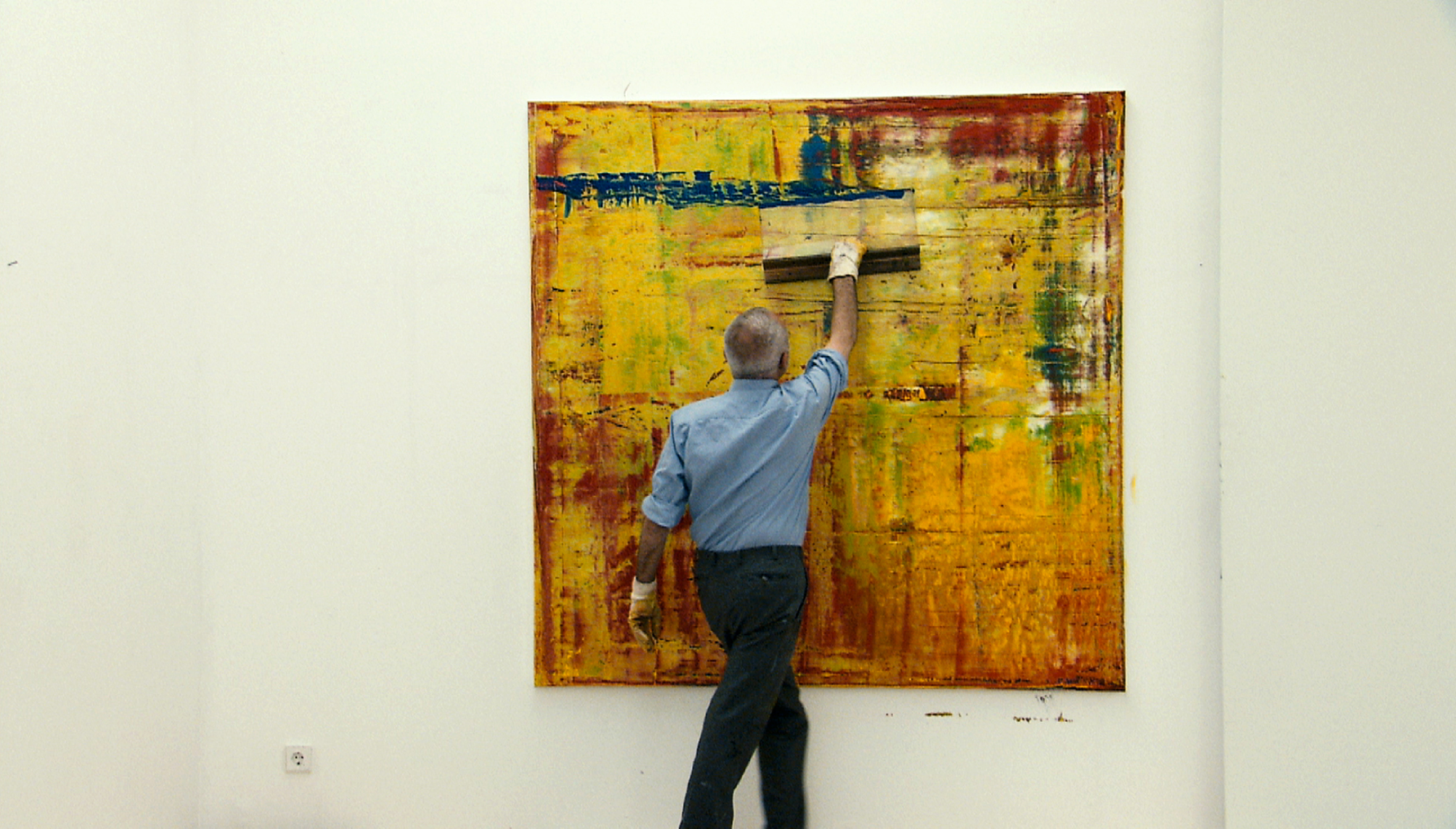
 There’s nothing abstract about the title of Corinna Belz’s documentary on German artist Gerhard Richter, no missing words or punctuation marks. Gerhard Richter Painting is primarily just that: Ninety-seven minutes of Gerhard Richter painting as he prepares for several exhibitions, including a 2009 show at the Marian Goodman Gallery in New York City. In 2007, Belz got a rare chance to capture Richter on camera, making a short film focusing on the stained-glass window he designed for the Cologne Cathedral. Two years later, the shy, reserved German artist, who prefers to have his art speak for itself, invited Belz into his studio, giving her remarkable access inside his creative process, which revealingly relies so much on chance and accident. Belz films Richter as he works on two large-scale canvases on which he first slathers yellow paint, adds other colors, then takes a large squeegee and drags it across the surface, changing everything. It’s fascinating to watch Richter study the pieces, never quite knowing when they are done, unsure of whether they are any good. It’s also painful to see him take what looks like an extraordinary painting and then run the squeegee over it yet again, destroying what he had in order to see if he can make it still better. “They do what they want,” he says of the paintings. “I planned something totally different.” About halfway through the film, a deeply concerned Richter starts regretting his decision to allow the camera into his studio. “It won’t work,” he says. “At the moment it seems hopeless. I don’t think I can do this, painting under observation. That’s the worst thing there is.” But continue he does, for Belz’s and our benefit. Belz (Life After Microsoft) even gets Richter to talk a little about his family while looking at some old photos, offering intriguing tidbits about his early life and his escape to Düsseldorf just before the Berlin Wall went up. Belz also includes clips from 1966 and 1976 interviews with Richter, and she attends a meeting he has with Goodman about his upcoming show, lending yet more insight into the rather eclectic artist. “To talk about painting is not only difficult but perhaps pointless, too,” Richter, who turned eighty last month, says in the 1966 clip. However, watching Gerhard Richter Painting is far from pointless; Belz has made a compelling documentary about one of the great, most elusive artists of our time. “Man, this is fun,” Richter says at one point, and indeed it is; watching the masterful artist at work is, well, a whole lot more fun than watching paint dry. Gerhard Richter Painting opens on March 14 at Film Forum, with Yale School of Art dean Robert Storr introducing the 8:00 screening.