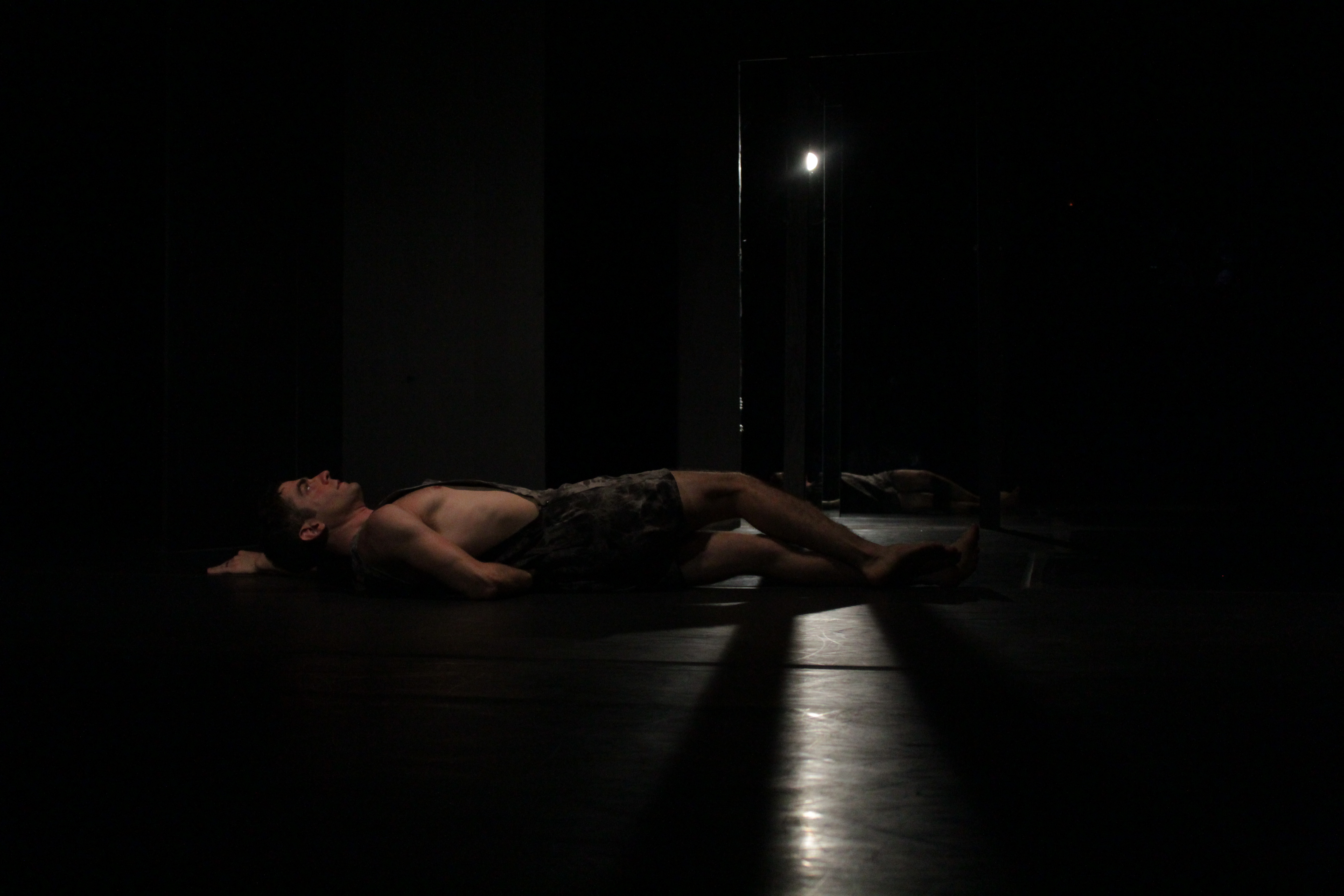
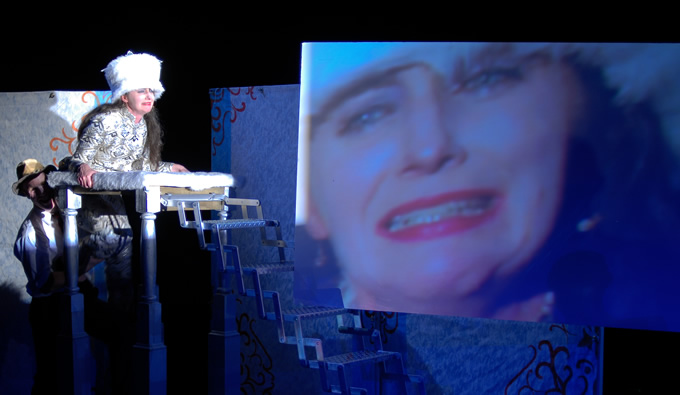
Jack Ferver’s latest show, TWO ALIKE, examines the plight of abused queer youth (photo by RicOrnel Productions)
JACK FERVER & MARC SWANSON: TWO ALIKE
The Kitchen
512 West 19th St. between Tenth & Eleventh Aves.
May 17-19, $15, 8:00
212-255-5793 ext11
www.thekitchen.org
jackferver.org
“Jack’s an extremely, if obsessively, dedicated creator,” says composer and sound artist Roarke Menzies of dancer, writer, and choreographer Jack Ferver. “There’s an exacting quality to what he makes.” In such works as Rumble Ghost, A Movie Star Needs a Movie, Swann!!!, and I Am Trying to Hear Myself, the New York City-based Ferver has explored obsession, gender and sexuality, the cult of celebrity, the American dream, and the creative process itself through an inspired mix of text, music, movement, and humor. His latest piece, Two Alike, a collaboration with visual artist Marc Swanson that features an electronic score by Menzies, is a solo performance that examines abused queer youth from the perspective of both a child and an adult. Originally a copresentation of the nonprofit DiverseWorks Art Space and the Contemporary Arts Museum of Houston, Two Alike is now being presented at the Kitchen May 17-19. We corresponded with the amiable and personable Ferver shortly after meeting him at New York Live Arts, where he was seeing his friend John Jasperse’s Fort Blossom revisited 2000/2012.
twi-ny: Two Alike arrives at a time when the abuse of queer youth and bullying in general is front and center in the news. How did the show come about?
Jack Ferver: Marc and I met in 2008 and he saw some of my work (he has pretty much seen all of it by now) and told me he loved it and I did a studio visit and fell in love with his work. It opened a dialogue for us about how we make our work, why we make our work. Of course, that question led back to our childhoods, which seemed to be the best first collaboration. As I worked on the piece, however, the lonely quality of being in a room by myself for hours every day brought up all those early fantasy acts from a very isolated childhood. I was intensely abused by my peers growing up and it was lonely and terrifying. I created worlds by myself to escape and/or confront what was happening to me. And so that early quality of “play” came up and out as I worked on the solo. It was organic and honest and indeed does come at a good time for me to say something about this issue that I feel strongly about as an artist.
twi-ny: At NYLA last week, we spoke briefly about the It Gets Better Project and the responsibility LGBT adults have to LGBT youth. What do you see as the critical issues in that dynamic?
Jack Ferver: What I was talking about was hope, and when you get to have it. Children get to have hope. I had to believe there was somewhere better I would get to when I was a child. I wouldn’t have survived if I didn’t have that. However, I don’t believe in hope as an adult. Adults need to be in reality. Children are killing themselves as a result of ignorance and hatred. Adults who have suffered as children may not be doing so well themselves. That’s the reality. As adults we are responsible, so what are we going to do about it?
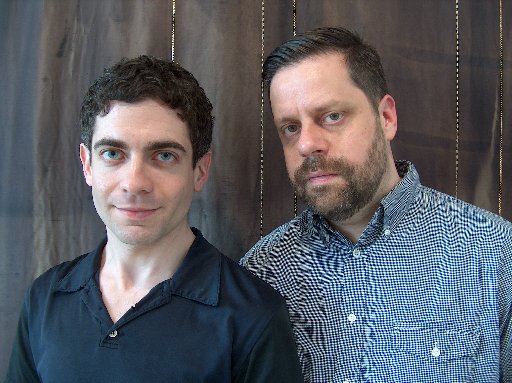
Ferver collaborated with visual artist Marc Swanson on TWO ALIKE (photo by Marc Swanson)
twi-ny: We were at NYLA to see John Jasperse’s remarkable restaging of Fort Blossom. Both of you regularly challenge audiences in the way you explore issues of gender identity and sexuality. Would you agree?
Jack Ferver: I can see that. I donʼt function in categorical thought. Martha Graham (my dance mom) quotes Empedocles in [her autobiography] Blood Memory: “For I have been, ere now, a boy and a girl, a bush, a bird, a dumb fish in the sea.” Artists are the stomachs of society. We digest the indigestible. That means we explore all terrains. Gender and sexuality roles are assigned or taken in hopes of a sense of self, as a branch of the ego. And the ego begins with “Me, not me.” As an artist I make my work so that people donʼt feel as lonely as I have felt. Therefore my work expands into something more akin to “I am you.”
twi-ny: You have a wickedly delicious sense of humor. Where does that come from?
Jack Ferver: My mother.
twi-ny: You have playfully skewered such popular films as Poltergeist, Notes on a Scandal, and Black Swan. Do you have plans to take on any other movies or pop-culture icons?
Jack Ferver: Actually, I leave a few days after closing Two Alike for the MANCC residency to start work on All of a Sudden, which I am creating with my dramaturg/associate director Joshua Lubin-Levy. It is loosely inspired by Tennessee Williamsʼs Suddenly Last Summer and explores the similarities between the artist/dramaturg and the patient/therapist relationship. It will go up in 2013 at Abrons Arts Center. Of course, it was a play before the film, but having played Cleopatra this past year [in Me, Michelle], I feel I am being haunted by Liz in some way.

 Winner of a Special Jury Prize in the Un Certain Regard section of the 2011 Cannes Film Festival, Andrey Zvyagintsev’s Elena is a poignant character study and family drama set in Vladimir Putin’s post-Communist Russia. Nadezhda Markina gives a marvelously understated performance as Elena, a former nurse now married to her second husband, the successful and very direct Vladimir (Andrey Smirnov). Elena’s son from her first marriage, the unemployed Sergey (Alexey Rozin), is in need of money to support his wife, Tatyana (Evgenia Konushkina) and send his son, Sasha (Igor Ogurtsov), to university, but Vladimir is reconsidering helping them out, believing that it’s about time that Sergey got a job and took care of things himself. Vladimir’s hesitation extremely disappoints Elena, especially when Vladimir continues to support his daughter, Katerina (Elena Lyadova), a free spirit who barely acknowledges his existence. After Vladimir suffers a heart attack, Elena fears for her future and that of her family, suddenly facing some hard questions. Zvyagintsev has followed up the critical smash successes The Return and The Banishment with another superbly told tale that makes expert use of the tools of his trade, from the strong, assured script, which he cowrote with Oleg Negin, and the gorgeous cinematography by Mikhail Krichman to the solid acting and the haunting music. Elena is this generation’s Jeanne Dielman, a deliberate, methodical woman who finds herself caught up in a complex situation with no easy way out. The slow pace of the film, which is filled with lingering shots and Philip Glass’s modern-noir score (from 1995’s Symphony No. 3), moves intoxicatingly to the beat of Elena’s heart. Zvyagintsev, who was just celebrated at BAM with a three-day “Next Director” retrospective, will be at Film Forum for a discussion following the 8:00 screening on May 16.
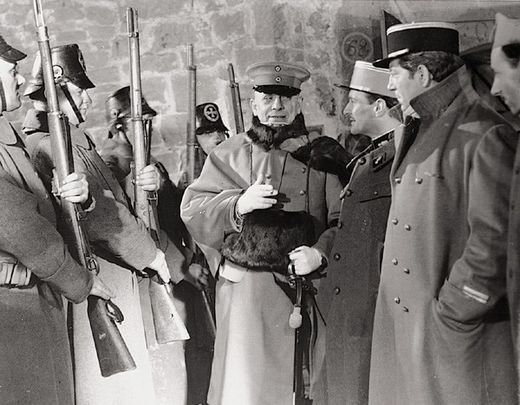
 If you’ve never seen this remarkable cinematic achievement, prepare to be overwhelmed by Jean Renoir’s antiwar masterpiece, screening through May 24 at Film Forum in an all-new 35mm restored print in honor of the film’s seventy-fifth anniversary. The first foreign film to be nominated for a Best Picture Oscar, Grand Illusion is set in a POW camp during WWI, where everyman pilot Lieutenant Maréchal (Jean Gabin), by-the-book Captain de Boieldieu (Pierre Fresnay), lovable Rosenthal (Marcel Dalio), and others are being held by the aristocratic Captain von Rauffenstein (an unforgettable Erich von Stroheim). Proclaimed “cinematic public enemy no. 1” by Joseph Goebbels, Grand Illusion takes on anti-Semitism, class structure, and religion in addition to war, a humanist film that is as relevant as ever seventy-five years after its initial release. Illustrator Paul Davis will be at Film Forum on May 15 following the 7:45 show to sign copies of his specially created poster celebrating the anniversary.